Key Takeaways
- An ERP is a mirror, not a hammer. The high failure rate is not a technological issue; the software merely exposes pre-existing, deeply entrenched cultural dysfunctions within Nepali businesses, particularly the dual-ledger system.
- Resistance is rational, not emotional. Middle managers aren’t just “afraid of change.” They are defending a power base built on information asymmetry and personal networks, which an ERP system renders obsolete by design.
- The “Garbage In, Garbage Out” problem is a feature, not a bug. For many traditional trading houses, ambiguous data is a strategic tool for tax management, negotiation leverage, and maintaining family control. ERPs, by demanding a single source of truth, force a cultural and philosophical crisis.
Introduction
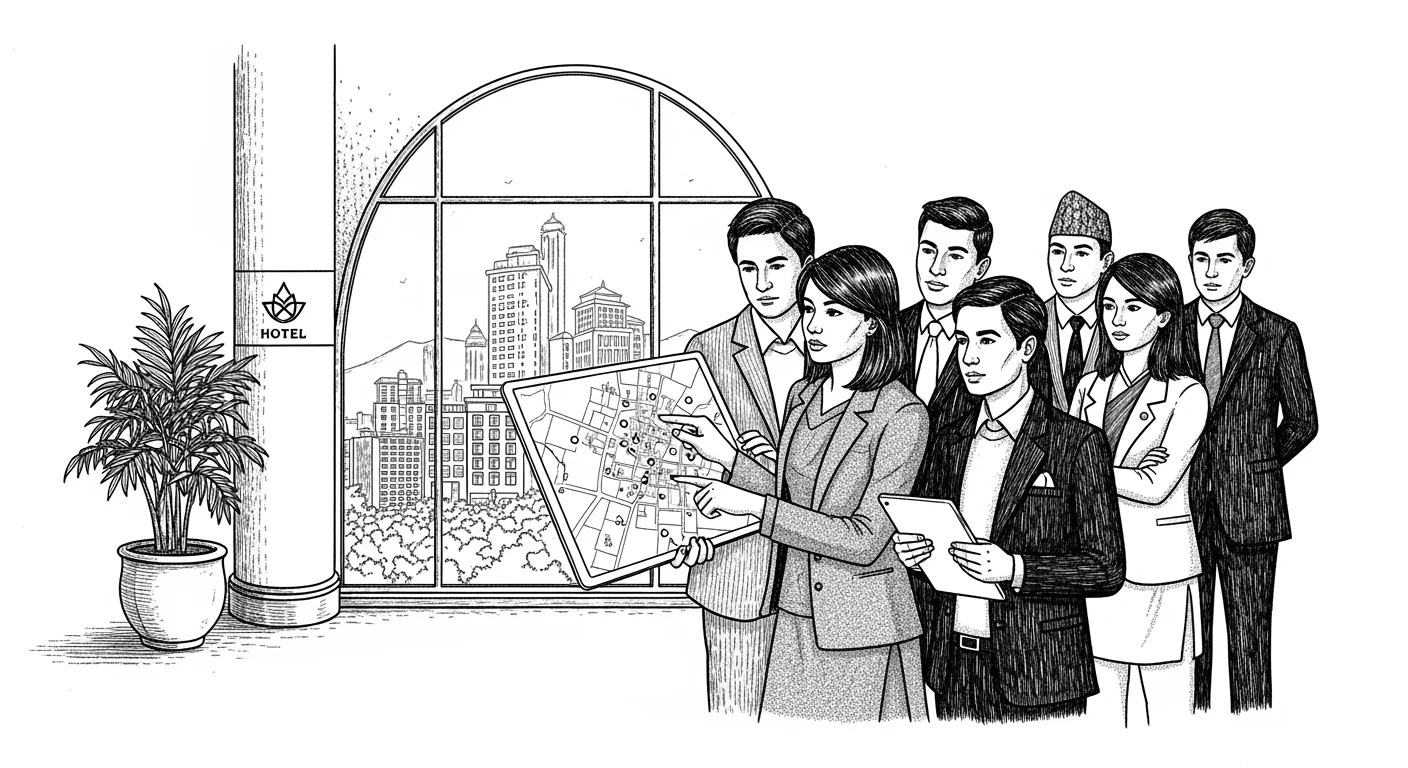
In boardrooms across Kathmandu’s business district, a familiar story unfolds. A respected legacy company, often a powerhouse in trading or manufacturing, invests crores of rupees in a state-of-the-art Enterprise Resource Planning (ERP) system—a sophisticated software suite like SAP, Oracle, or Microsoft Dynamics. The press release celebrates a leap into the digital future. Six months later, the system is a source of chaos. A year later, it is quietly abandoned or operates as a glorified, over-priced accounting module. The initial investment, often ranging from NPR 50 million to well over NPR 500 million, is written off, becoming a cautionary tale whispered at business forums.
The statistics are stark. Industry insiders and implementation consultants consistently report a failure or severe under-utilization rate of approximately 70% for major ERP projects in Nepal. This is not a failure of code or servers; the software itself is world-class, trusted by global Fortune 500 companies. The failure is profoundly, stubbornly, and uniquely Nepali. It is a failure of culture.
This article argues that ERP systems are not failing our businesses; they are simply revealing the deep-seated cultural and structural paradigms that have defined Nepali commerce for generations. The core of the problem lies not in the IT department, but in the fundamental conflict between the absolute transparency demanded by the software and the strategic opacity cherished by traditional business houses. It is a story about the “Garbage In, Garbage Out” data problem, the rational resistance of middle management, and the unwillingness of leadership to undertake the painful cultural surgery that digital transformation truly requires.
The Ghost in the Machine: Why Data is a Four-Letter Word
At the heart of any ERP system lies a simple, non-negotiable principle: a single source of truth. Every transaction, from a purchase order in Birgunj to a sales invoice in Pokhara, must be entered accurately, in real-time, into one unified system. For a modern, data-driven enterprise, this is the foundation of operational excellence. For many traditional Nepali businesses, this is an existential threat.
The reason is the deeply ingrained practice of maintaining multiple sets of records. It is an open secret that many firms operate on a dual-ledger system: the ‘pakka’ book for the tax authorities and official banking, and the ‘kaccha’ book that reflects the actual, far more complex, reality of the business. This is not mere tax evasion; it is a sophisticated, multi-generational system of risk management and strategic ambiguity. The kaccha records contain the unwritten rules of business: informal credit lines to loyal distributors, special ‘discounts’ that are actually rebates, inventory movements that are not officially sanctioned, and cash transactions that lubricate the supply chain.
An ERP has no concept of a ‘kaccha’ book. It cannot process the nuance of a handshake deal or a discretionary discount approved by the ‘Seth’ (founder/patriarch). When a consultant asks the procurement manager to enter the “real” cost of an imported container, the question itself causes a crisis. Which real cost? The one on the customs declaration? The one including unofficial ‘facilitation’ fees at the border? The one shared with the junior family member, or the one known only to the patriarch? The ERP demands a single, auditable number. The business culture has thrived for decades by ensuring no such number exists.
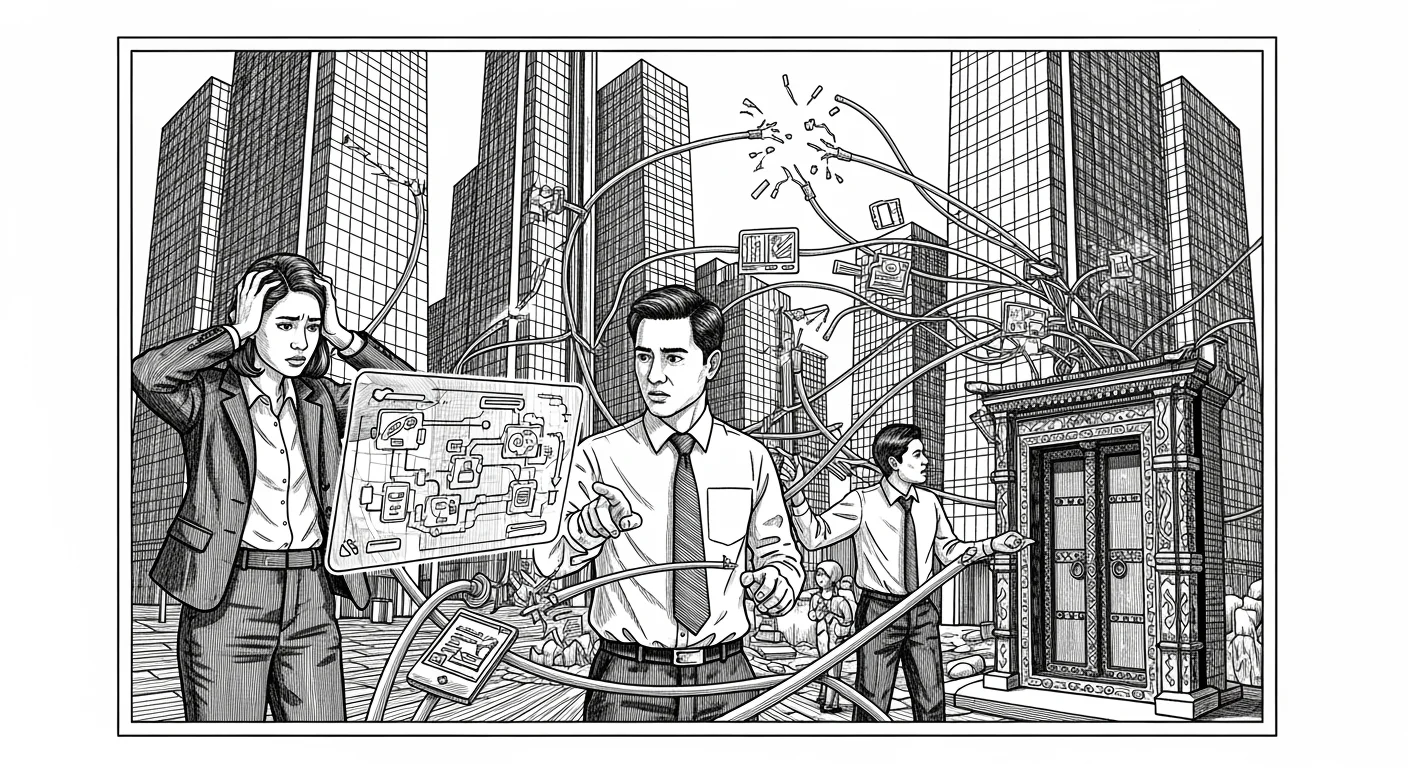
This creates the ultimate “Garbage In, Garbage Out” (GIGO) scenario. Faced with this dilemma, employees either enter the ‘pakka’ data, rendering the ERP’s analytical dashboards useless for real decision-making, or they attempt to invent a sanitized version of the ‘kaccha’ data, creating inconsistencies and data conflicts that bring the system to a grinding halt. The software, designed to provide a crystal-clear X-ray of the business, is instead fed a series of blurry, distorted images. The failure is then blamed on “the system being too complex,” when in fact, the system is too simple and logical for the complex, often illogical, reality it is supposed to model.
The Gatekeepers’ Gambit: Resisting Transparency as a Survival Tactic
While the data problem originates from the top, the active sabotage of an ERP system often happens in the middle ranks. This resistance is frequently misinterpreted by leadership as simple Luddism or laziness. The reality is far more strategic. For a significant portion of Nepali middle management, particularly in procurement, sales, and logistics, their power, influence, and often, a portion of their unofficial income, is derived directly from information asymmetry.
Consider the role of a traditional Procurement Head in a trading house. His value is not just in negotiating prices; it is in his personal relationships with suppliers, his knowledge of who offers the best ‘terms’ (which may not appear on any invoice), and his ability to expedite a shipment through an opaque system. He is a gatekeeper of information and relationships. An ERP system automates and standardizes this. It can run a report showing supplier price history, payment terms, and delivery performance across the board. Suddenly, the Procurement Head’s ‘special knowledge’ is not only democratized but also subject to scrutiny. His power base is annihilated. The system exposes whether his long-favored supplier is, in fact, the most expensive.
Similarly, a veteran Sales Manager’s power comes from his personal ledger of client relationships and creditworthiness. He knows which client can be given a longer credit period and which one needs a follow-up call from him personally. When an ERP’s credit control module automatically flags an overdue account and blocks a new order for a key client, the Sales Manager sees it as the system interfering with his “relationship management.” What is actually happening is that the ERP is enforcing a uniform business rule, stripping away the manager’s discretionary power. His resistance—by ‘forgetting’ to update sales logs, encouraging his team to use old Excel sheets, or complaining that the system is “too rigid”—is a rational act of professional self-preservation.
This resistance is the organizational equivalent of an autoimmune disease. The very people who are supposed to champion efficiency and process improvement are incentivized to fight it. They are not fighting the technology; they are fighting the transparency it brings. The ERP becomes a battleground for the soul of the company: will it be run by standardized processes and transparent data, or by personal fiefdoms and guarded information? In 70% of the cases, the fiefdoms win.
From Trading DNA to Digital Demands: A Structural Mismatch
The challenges of data integrity and managerial resistance are symptoms of a deeper, structural condition: the “path dependency” of the Nepali economy. Path dependency is an economic concept suggesting that the decisions we make today are limited by the decisions we have made in the past, even if the past circumstances are no longer relevant. Nepal’s private sector was largely forged in an era of scarcity, import licenses, and high-margin, low-volume trading. This history created a specific business DNA optimized for a protected, informal, and relationship-driven economy.
This ‘trading house DNA’ values flexibility over process, negotiation over standardization, and opacity over transparency. These were not flaws; they were survival traits in the pre-liberalization era. The problem is that these very traits are antithetical to the logic of a digital-first enterprise. An ERP system is the quintessential product of a process-driven, manufacturing-centric mindset, born from German engineering (SAP) and American corporate efficiency (Oracle). It seeks to systematize, measure, and optimize every single workflow. This is a direct cultural clash with a business model that has historically derived its profits from navigating exceptions and exploiting market imperfections.
In contrast, look at the digital adoption in Bangladesh’s ready-made garment (RMG) sector. Facing intense global competition from giants like Zara and H&M, Bangladeshi factories had no choice but to adopt ERPs to manage complex supply chains, track production efficiency to the minute, and provide real-time data to their demanding buyers. The external pressure forced an internal cultural change. In Nepal, with a large portion of the formal economy still focused on domestic trading of imported goods, this existential pressure is less acute. A large trading house can often afford to muddle through with its inefficient, paper-based systems because its competition is doing the same. The incentive to undertake the painful process of genuine digital transformation is simply not as strong.
Therefore, the ERP implementation is not a simple software installation; it is an attempt to transplant the operational brain of a German manufacturing giant into the body of a Nepali trading house. Without a corresponding change in the underlying business “DNA”—a strategic shift from exploiting market opacity to creating value through operational efficiency—the transplant is almost always rejected.
The Strategic Outlook
Looking forward, the landscape of ERP success and failure in Nepal will not be defined by new software features or better consultants. It will be defined by leadership and generational change. We are approaching a bifurcation point where two distinct types of companies will emerge.
The first scenario, and the most likely for the majority, is the continuation of the status quo. Legacy businesses led by founders or first-generation leaders will continue to view digital transformation as an IT project. They will buy expensive ERPs as a status symbol, delegate the implementation to a CTO or a foreign consultant, and then express frustration when the project “fails” to deliver results. They will spend crores only to end up with a system that creates more work than it saves, further cementing the belief that “this kind of thing doesn’t work in Nepal.” These companies will see their operational costs rise and their ability to compete with more agile, data-driven firms—both domestic and foreign—eroded.
The second, more optimistic scenario will be driven by a new cohort of leaders. These may be second or third-generation family members educated abroad, or professional CEOs brought in to modernize the business. These leaders understand that an ERP is not a technology project but a business transformation project that they must lead personally. They will spend more time redesigning business processes, changing incentive structures, and communicating the “why” behind the change than they will on the software itself. They will make the painful decision to flatten hierarchies, enforce data discipline, and hold managers accountable for transparency. These are the companies that will unlock the true potential of their investment. They will become leaner, faster, and more profitable, creating a formidable competitive moat that their legacy competitors will find impossible to cross.
The Hard Truth: An ERP system is a mirror that forces a company to look at its own reflection. For 70% of Nepali businesses, the image it reflects is one they are not prepared to confront: a culture of opacity, information hoarding, and process ambiguity. The failure of the ERP is not the disease; it is a symptom. The real cost is not the wasted software license fee, but the continued acceptance of an outdated business model in a world that is mercilessly moving on. The question for every CEO in Nepal is not “Which ERP should I buy?” but “Am I willing to change the company the ERP will reveal?”