Key Takeaways
- The shift to luxury is primarily a foreign exchange strategy, not just a tourism one. Every dollar from high-yield tourism has a significantly lower “import leakage” rate and a higher domestic economic multiplier compared to budget travel, directly strengthening Nepal’s precarious balance of payments.
- Global hotel chains like Hilton and Sheraton act as “infrastructure catalysts.” Their non-negotiable operational standards for logistics, power, and connectivity are forcing public and private sector upgrades, creating a positive feedback loop that the volume-based model failed to initiate.
- Ultra-luxury “glamping” in remote regions is a deliberate rebranding tool, not just a niche product. It repositions Nepal’s brand from “accessible adventure” to “exclusive spiritual experience,” allowing it to directly compete with destinations like Bhutan but with a greater diversity of offerings.
Introduction
For decades, the archetype of a tourist in Nepal was clear: a young, hardy backpacker navigating the bustling alleys of Thamel, operating on an average budget of $45 per day. This high-volume, low-yield model, while successful in establishing Nepal on the global adventure map, has strained infrastructure and yielded diminishing economic returns. The country’s foreign exchange reserves, perpetually under pressure from a widening trade deficit, have seen only marginal benefits from the sheer number of arrivals. Now, a quiet but seismic shift is underway. By 2026, the profile of a visitor to Nepal may look dramatically different: a high-net-worth individual arriving via a premium airline, checking into the new Sheraton or Hilton in Kathmandu, and spending upwards of $200 per day before being helicoptered to an ultra-luxury “glamping” retreat in the restricted landscapes of Mustang or Dolpo.
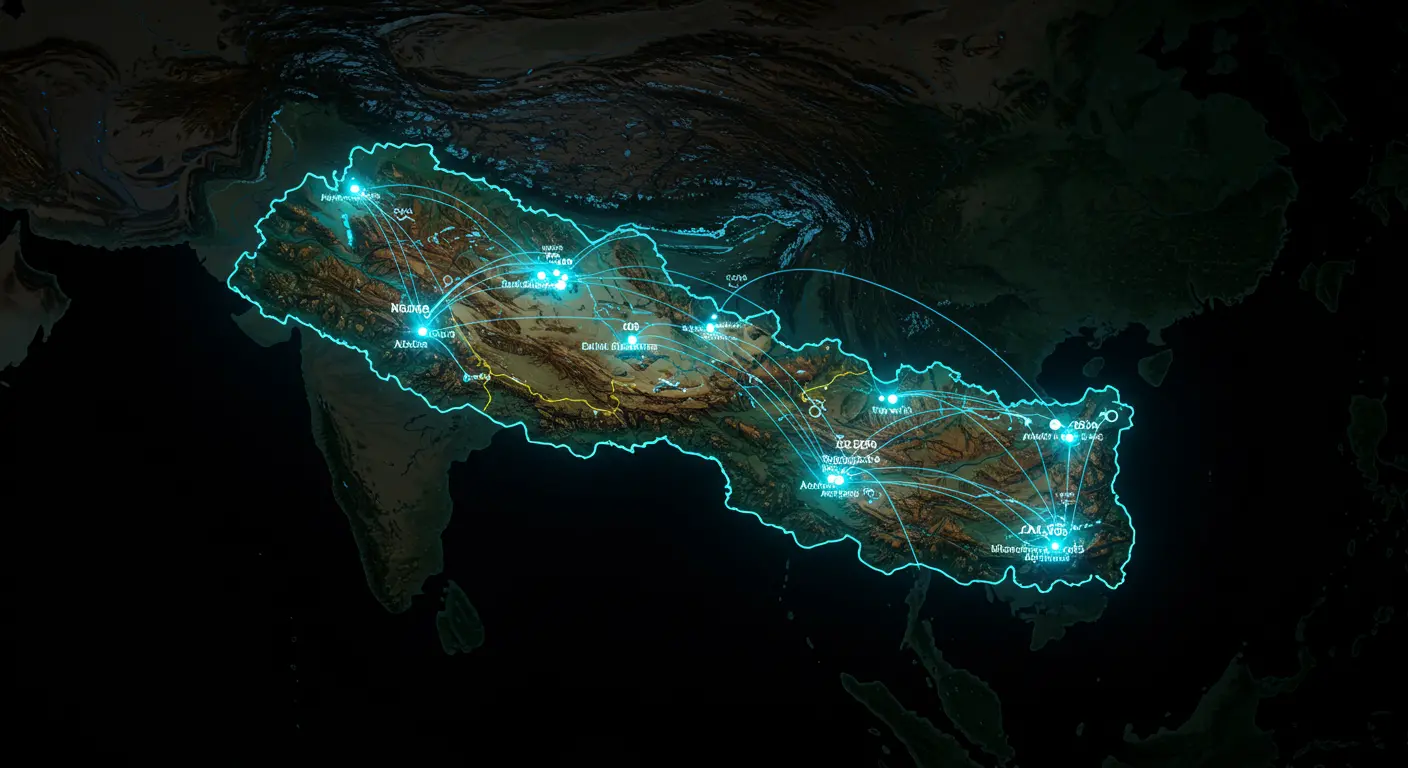
This is not a natural evolution; it is a calculated, high-stakes strategic pivot. This article investigates the mechanisms behind this deliberate shift from volume-based tourism to high-yield experiential travel. We will analyze the cascading economic effects of attracting global hospitality giants and the rise of hyper-exclusive local offerings. More critically, we will deconstruct how this ambitious national rebranding is designed to function as a powerful new engine for bolstering Nepal’s foreign exchange reserves, moving the tourism sector from a simple service industry to a core pillar of macroeconomic stability. The central question for policymakers and investors is no longer “How many tourists can we attract?” but “What is the net economic value of each tourist we host?”
Beyond the Daily Spend: Deconstructing the High-Yield Economic Footprint
On the surface, the math appears simple: a tourist spending $200 a day is worth more than four tourists spending $45 each. However, this linear comparison dangerously underestimates the true economic impact. The core difference lies in an economic concept known as “import leakage.” The traditional backpacker economy, while appearing local, has a high leakage rate. A significant portion of that $45 daily spend evaporates on imported goods: cheap trekking gear from China, foreign-brand confectionery, and Israeli-style hummus made with imported tahini. The guesthouses they frequent often prioritize low-cost construction and furnishings, again sourced from abroad, minimizing the stimulus to domestic manufacturing and craftsmanship.
In stark contrast, the high-yield model is being engineered for low leakage and a high “economic multiplier.” A luxury hotel like the new Dusit Thani or Hilton cannot serve its clientele instant coffee and imported jam. They are compelled by brand standards and customer expectations to establish robust local supply chains. This creates demand for Nepali-grown organic coffee from Gulmi, artisanal cheese from Ilam, and high-quality, locally sourced meat and vegetables. The $200+ per day expenditure of a luxury tourist thus ripples through the domestic economy in a way the backpacker’s budget cannot. It funds agricultural cooperatives, stimulates the high-end handicraft market (a guest buying a $1,000 pashmina shawl injects more net forex than twenty guests buying $50 souvenirs), and supports a professional class of guides and service staff who command higher wages.
Furthermore, the payment mechanisms themselves are different. A significant portion of budget travel operates in a cash-based grey economy, with forex conversions happening through informal channels. This means the US dollars brought in may not fully enter the formal banking system, blunting their impact on the nation’s official reserves. High-end tourism is almost exclusively transacted through the formal banking system. Credit card payments from a Sheraton guest settle directly into a domestic bank account, are fully documented, and are immediately available to the Nepal Rastra Bank for managing the country’s balance of payments. Each transaction from this segment is a direct infusion of hard currency into the formal economy, providing a much-needed buffer against the country’s reliance on remittances and helping to stabilize the Nepalese Rupee.
Hard Hats and Soft Power: The Symbiosis of Global Brands and National Infrastructure
The arrival of international five-star brands like Sheraton, Hilton, and Dusit Thani is more than a signal of market confidence; it is a powerful, albeit unintentional, driver of national infrastructure development. For decades, Nepal’s infrastructure planning has been reactive, struggling to keep pace with population growth and tourism numbers. The quality of Tribhuvan International Airport (TIA), for instance, has long been a bottleneck, creating a poor first impression that undermines the “once-in-a-lifetime” experience Nepal aims to sell. The volume-based tourism model had little leverage to change this; backpackers, by nature, are tolerant of logistical inefficiencies.
High-net-worth travelers are not. The operational calculus for a global chain is unforgiving. A Hilton cannot risk its global brand reputation on unreliable power grids, inconsistent water supply, or chaotic airport logistics. Their entry into the market implicitly forces a conversation about standards. These corporations become a powerful new lobbying group, demanding a level of service and reliability from public utilities that benefits the entire economy. This is a form of “capital deepening” in the service sector—where investment goes beyond just the building itself to include the systems, processes, and standards that support it. Their demand for seamless logistics chains accelerates the urgency for upgrading TIA’s terminals, improving air traffic control, and enhancing road connectivity to new regional hubs like Pokhara and Bhairahawa.
This creates a virtuous cycle. The presence of a Hilton justifies public investment in better airport facilities, and those better facilities, in turn, make it easier to attract other luxury brands and the airlines that serve their clientele. It is a fundamental shift from a supply-driven model (build a cheap guesthouse and they will come) to a demand-driven one (attract a demanding client and the necessary supply-side upgrades will follow). Critically, this pressure extends beyond the capital. As these brands look to expand to secondary cities like Pokhara, they will scrutinize the viability of its new international airport not just for tourist arrivals, but for cargo flights carrying the high-quality provisions their hotels require. Their logistical needs become a de facto blueprint for what is required to transform a regional airport from a domestic airstrip into a genuine international gateway.
From Everest Base Camp to Exclusive Enclaves: The Geopolitics of Luxury Branding
The most visually stunning component of this new strategy is the emergence of ultra-luxury “glamping” in formerly restricted or hard-to-access regions like Mustang and Dolpo. Establishments like Shinta Mani Mustang and the forthcoming resorts in Dolpo are not merely hotels; they are carefully curated geopolitical and marketing assets. By pricing these experiences in the thousands of dollars per night, Nepal is executing a brilliant brand repositioning. It is pivoting away from the crowded, and to some extent, commodified appeal of Everest Base Camp, and creating a new narrative of exclusivity, spirituality, and untouched wilderness. This is a direct competitive move against Bhutan’s famed “High Value, Low Impact” tourism model.
For years, Bhutan has owned the market for high-spend, culturally immersive Himalayan travel, enforced by its mandatory minimum daily package. Nepal, however, possesses a key competitive advantage: diversity of product. While Bhutan offers a singular, state-controlled experience, Nepal can now offer a spectrum. A tourist can now combine the raw, challenging adventure of a classic trek with a subsequent week of pampered, all-inclusive luxury in a region few have ever seen. This “peak and retreat” combination is something Bhutan cannot easily replicate. It allows Nepal to capture market share from its neighbor while retaining its traditional adventure travel base. This strategy effectively re-frames the value proposition: Mustang is no longer just a remote district; it is a globally recognized symbol of exclusivity, akin to the Serengeti or the Galapagos, but with the added allure of Tibetan-Buddhist culture.
This rebranding has significant implications for attracting tourists from Nepal’s giant neighbors, India and China. For the burgeoning class of wealthy Indian travelers, a luxury weekend in Mustang is a more exotic and status-affirming alternative to traditional destinations in Europe. For high-net-worth Chinese tourists, who are increasingly seeking spiritual and wellness-focused travel, the combination of Nepal’s Buddhist heritage and exclusive, secure luxury is a powerful draw. By developing these high-end “enclaves,” Nepal is creating tourism products that align perfectly with the aspirations of the fastest-growing wealth segments in its immediate vicinity. It moves the country’s image from being a destination for a gap year to a destination for a corporate bonus.
The Strategic Outlook
If Nepal executes this pivot successfully, the economic landscape by 2026 could be significantly more resilient. A successful high-yield strategy will create a dual-engine tourism sector: the established volume-based adventure market will continue to provide employment and broad-based income, while the new luxury segment will provide a concentrated, high-impact stream of foreign currency. This will reduce the country’s over-reliance on remittances, grant the central bank greater firepower to manage the currency, and fund the very infrastructure projects that will attract further investment. The forecast is not simply more tourism revenue, but a higher quality of revenue that is more stable, less prone to leakage, and more integrated with the domestic economy. Scenarios for success see this model expanding beyond Mustang to other pristine areas, with each new luxury development pulling local agriculture, handicrafts, and professional services up with it.
Conversely, a mishandled transition poses significant risks. The worst-case scenario is the creation of isolated “luxury islands” where international brands import most of their senior management and high-value supplies, maximizing profit repatriation and minimizing local impact. This would replicate the economic leakage of the budget model, but at a higher price point, leading to local resentment and minimal net forex gains. Failure to streamline the investment process and ensure environmental sustainability could also lead to a “boom and bust” cycle, where initial interest wanes due to poor execution, leaving behind half-finished projects and a damaged national brand. The success of this strategy hinges on its implementation, not its conception.
The Hard Truth: The primary obstacle to this high-yield future is not a lack of interest from tourists or investors. It is domestic regulatory friction. The current legal framework is a labyrinth. Byzantine land acquisition laws make it prohibitively difficult for large-scale resorts to assemble the necessary plots. The absence of a truly empowered single-window approval system for foreign direct investment means investors face a demoralizing gauntlet of competing ministries. Furthermore, environmental impact assessment (EIA) regulations are inconsistently applied, creating uncertainty for developers and threatening the very pristine environments that attract high-end tourism in the first place. Until the government replaces bureaucratic inertia with a transparent, streamlined regulatory framework designed specifically to attract and support high-value, low-volume projects, the shift to luxury will remain a powerful idea struggling to become a reality.