1. Summary
- Key takeaway: Nepal’s small and medium enterprises (SMEs) face a multifaceted crisis in mid-2025, driven by persistent, albeit moderate, inflation. This is reflected in significantly higher transaction costs (especially for imported raw materials and selected services), persistent supply chain vulnerabilities exacerbated by both domestic and global factors, and cautious consumers whose purchasing power is waning.
- Main problems: The combination of these pressures reduces SME profitability, complicates financial planning and threatens business continuity, especially for enterprises with limited financial reserves or high dependence on imports.
- Adaptive measures for SMEs: SMEs are actively, albeit to varying degrees, implementing strategies that include tight cost control, finding alternative sources of supply, adopting digital tools to improve efficiency and market expansion, and in some cases innovating their product offerings. However, the ability to adapt is uneven.
- Support Ecosystem: Government and institutional support (e.g. FY2025-26 budget incentives, FNCCI/CNI initiatives, development partner projects such as REED) offer some relief, but gaps remain in coverage, awareness and comprehensiveness, particularly with regard to access to affordable finance and practical support for supply chain diversification.
- Prospects and key recommendations: The outlook for Nepalese SMEs beyond mid-2025 is assessed as cautiously optimistic, but depends on sustained economic stability, effective implementation of supportive policies, and continued SME resilience. Key recommendations will focus on increasing access to finance, targeted capacity building for supply chain resilience and digitalization, promoting a more stable policy environment, and promoting domestic value chains.
2. Nepal’s Economic Landscape in Mid-2025: A Test for SMEs
2.1 Macroeconomic overview: mixed picture of recovery and persistent pressures
Nepal’s economy is showing signs of recovery in mid-2025, but persistent challenges create a challenging operating environment for small and medium enterprises. GDP growth forecasts for fiscal year (FY) 2025 vary, with the Asian Development Bank (ADB) expecting growth of 4.4%1or 4.9%7, World Bank – 4.5%9, and the International Monetary Fund (IMF) – 4.2% for FY2024/25.11Nepal government forecasts 4.61% growth in FY2024-2512and aims to reach 6% in FY2025-26.13This range of forecasts indicates the presence of uncertainties affecting the economic trajectory.
The main drivers of growth are sustainable consumption, supported by significant remittances from labor migrants1, increasing private and public investment, especially in infrastructure and hydropower1, as well as the restoration of the tourism sector.2These factors create demand that SMEs can tap, but reliance on remittances carries risks associated with changes in global labour markets.
Monetary policy is characterized by cautious accommodation, with some easing of interest rates.2The government aims for fiscal consolidation11, while simultaneously increasing capital expenditures.2The budget for FY 2025-26 is Nepalese Rupees (NPR) 1.964 trillion.13These macroeconomic policies directly affect SMEs’ access to finance, borrowing costs and the overall level of demand through government spending.
2.2 Inflationary environment: constant pressure on business operations
Inflation remains a key challenge for Nepalese SMEs. The annualized Consumer Price Index (CPI) stood at 3.39% in mid-April 2025, down from 4.61% a year ago.21However, in mid-January 2025, the CPI was higher – 5.41%.24, indicating the volatility of inflation processes. Forecasts for the average annual CPI for FY2025 range from 4.9% (IMF25) and 5.0% (World Bank9) up to 5.2% (ADB1), with the government’s target being 5.5%.13, while Nepal Rastra Bank (NRB) aims to keep inflation within its ceiling.2The wholesale price index (WPI) in mid-April 2025 was 4.20%21, indicating continued inflationary pressures in the supply chain. Even moderate inflation of around 5% is significant for low-profit enterprises.
An analysis of inflation components shows a mixed picture. Inflation for food and beverages in mid-April 2025 was 2.45%21, down from 5.22% a year earlier. However, prices of individual items such as ghee and vegetable oils (+11.63%), fruits (+9.07%) and legumes (+6.58%) rose sharply.21Previously, in mid-January 2025, food inflation was higher (7.67%), while vegetable prices jumped by 28.52%.24Such food price volatility directly impacts SMEs in the food and hospitality industries. Inflation of non-food goods and services was 3.90% in mid-April 2025.21Key subcategories with high inflation include miscellaneous goods and services (+8.69%), clothing and footwear (+7.01%) and alcoholic beverages (+6.07%)21, which directly increases costs for a wide range of SMEs.
Inflation also shows regional differences, with the Mountain Region (4.47%) and Koshi Province (4.91%) seeing higher rates in mid-April 202521, indicating localized price pressure. Suggested causes of inflation include a normal harvest and a moderate decline in inflation in India2, decline in world commodity prices1, as well as potential disruptions due to global tariffs1, geopolitical tensions1and domestic supply-side problems. The IMF points to subdued domestic demand as one of the problems.11
Volatility in inflation, not just its level, is a major concern. Large fluctuations in the overall CPI and in the prices of individual components (e.g. vegetables) make forecasting and planning difficult for SMEs. This uncertainty can be more damaging than persistently high inflation, as it interferes with inventory management and pricing, potentially leading to conservative investment decisions and difficulties in cash flow management.
There is also a mismatch between the moderate headline inflation and the specific cost burden on SMEs. Although the headline CPI has fallen to 3.39%21, prices for certain non-food goods and services, such as “miscellaneous goods and services” (+8.69%) and “clothing and footwear” (+7.01%), remain high.21The IPC for consumer goods is also high – 9.83%.21This means that aggregate inflation data may not fully reflect financial stress across different SME sectors, and policy responses need to be more nuanced.
Reliance on remittances is a double-edged sword for SME-led growth. Remittances support aggregate demand1, which benefits SMEs. However, an economy heavily dependent on remittance-driven consumption may be vulnerable to external shocks affecting migrant labor markets. Such demand may also be less resilient than demand driven by domestic production. If inflation erodes the real value of remittances, the expected growth in consumption may weaken.
Finally, there is the risk of policy incoherence or poor implementation. The World Bank points to risks of “policy incoherence due to frequent bureaucratic changes” and “delays in capital budget execution.”9The government’s FY25-26 budget has ambitious revenue targets and relies on loans and grants.28The effectiveness of SME support and a stable macroeconomic environment depend on consistent and well-implemented public policies. Delays in capital budget execution may mean that the expected boost to infrastructure-related SMEs and overall economic activity does not materialize as quickly as expected. Policy inconsistency may create uncertainty for SMEs, hindering investment and long-term planning.
Table 1: Nepal – Key Macroeconomic Indicators and Projections (Focus on Mid-2025)
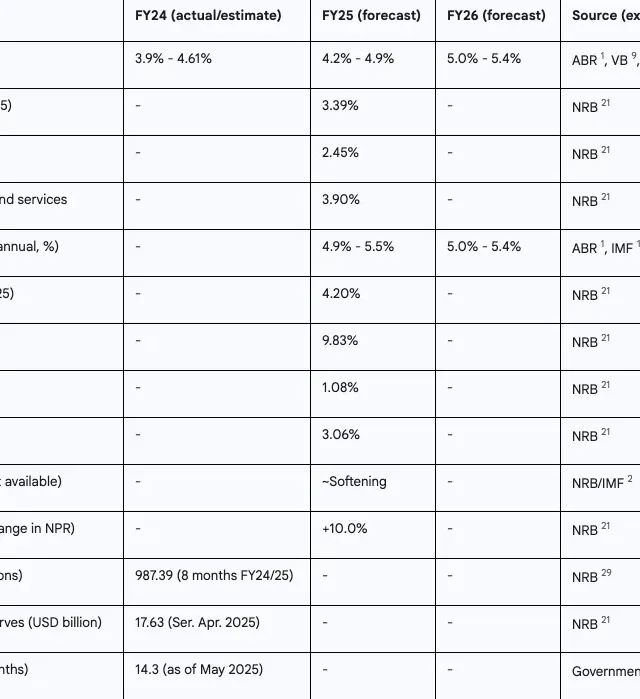
Sources:.1
3. Pressure on Operations: Rising Costs for Nepalese SMEs

3.1 Rising raw material prices: the main driver of cost increases
Rising raw material prices are one of the most pressing concerns for Nepalese SMEs in mid-2025. Enterprises report “rising global raw material prices” as a major pressure factor.30The Confederation of Nepalese Industries (CNI) Industrial Status Report for the second quarter of FY2081/82 (survey conducted in February-March 2025) shows that the “average share of imported raw materials in manufacturing” was 51.72%, significantly higher than the first quarter figure of 35.64%.31This highlights the high dependence on imports and vulnerability to fluctuations in world prices and exchange rates, which directly impacts production costs, especially for SMEs in the manufacturing sector.
Problems with procurement make matters worse. For example, SME Poshilo Foods “faced challenges in sourcing quality local raw materials and had to rely on international markets, which increased production costs.”33This illustrates the dual problem of scarce or poor quality local resources and higher import costs. The Investment Climate Review 2024 notes that Nepal’s geography and poor transport infrastructure increase the cost of raw materials.34This is a structural problem that exacerbates inflationary pressures, as SMEs not only pay more for imports but also face difficulties in accessing quality local inputs.
Specific data on material price growth confirms this trend. Wholesale prices of consumer goods rose by 9.83% year-on-year in mid-April 2025, while those of intermediate goods rose by 1.08%.21This indicates that raw materials and intermediate materials used by SMEs are becoming more expensive. Wholesale prices of construction materials increased by 2.52% in mid-April 202521after declining by 4.28% in mid-January 2025.24This volatility impacts construction SMEs and those enterprises that undertake capital expenditure. Manufacturing SMEs are therefore particularly vulnerable due to their high dependence on imports, making them price takers for many raw materials and exposing them to the risk of both global price fluctuations and changes in exchange rates.
3.2 Energy and Utility Costs: A Hit on Profits?
Despite Nepal’s installed power generation capacity increasing to 3602 MW and providing access to electricity to 99% of the population,12, as well as plans for further capacity increase18, SMEs continue to face challenges in this area. The CNI report for Q2 FY81/82 shows that 61.90% of industrial enterprises still use generators due to unreliable power quality, increasing manufacturing costs by an average of 11.67%.31This indicates problems with the transmission, distribution or quality of electricity, not just its generation capacity. This “reliability fee” places an additional burden on SMEs, forcing them to invest in backup systems and incur fuel costs, which offsets the potential benefits of increasing overall generation.
The government is aware of this problem. The High Commission for Economic Reforms has recommended providing electricity at reduced prices to producers35, and the budget for FY 2025-26 provides for an exemption from electricity charges for IT sector enterprises.36However, the actual impact and reach of such measures for all SMEs needs to be assessed. Petroleum product prices also remain an important component of operational and logistics costs. Although petroleum product imports declined in the first 8 months of FY2024/2529, SMEs still rely on them for transport and, in some cases, for generators. Stability in global oil prices is critical.2Plans to blend bioethanol with gasoline from FY2025-2618are long-term and will not have a significant impact on costs until mid-2025.
3.3 Wage pressure and labour market dynamics: the human cost factor
The Wage Index (WII) increased by 2.62% year-on-year in the third quarter of FY2024-25 (ending mid-April 2025).21This is a slowdown from 5.34% a year earlier and 2.85% in the second quarter of FY24-25.24Despite the slowdown in growth, wages continue to rise, increasing SMEs’ labor costs. Regional differences in IPC are significant, with Sudurpaşım Province recording a high IPC growth of 8.08% in the third quarter.21, while in Koshi (1.16%) or Bagmati (1.92%) provinces the growth rate was significantly lower. This means that SMEs in some provinces face much higher wage pressure.
Comparing wage growth with inflation shows that with the CPI at 3.39% (mid-April) and the CPI rising by 2.62%, real wages on average could have slightly decreased or remained at the same level. However, the increase in the cost of living allowance for civil servants from 2,000 to 5,000 NPR18may create upward pressure on private sector wage expectations, which may be difficult for SMEs to meet. This situation, where wage growth lags behind the cost of living, may lead to low employee morale, falling productivity and increased turnover, even if nominal WPI growth appears moderate.
Availability of labour and its skills are also a problem. Nepal is experiencing an outflow of skilled workers due to labour migration abroad.34The government has declared 2025-2035 as the Decade of Domestic Employment Promotion38, partnering with private sector organizations to create jobs and training. This is a long-term initiative and the benefits will not be seen immediately. Skills shortages can reduce productivity and increase training costs for SMEs.
3.4 Increased cost of commercial space and financing: reduction of overheads and capital
Specific data on commercial rent inflation for SMEs in mid-2025 are limited in the materials provided. However, general inflation of “various goods and services”21may include rental components. Real Estate Listing Sites39show varying rental rates in Kathmandu, but there is no trend data. Rent is a significant ongoing expense for many SMEs, and any increase in it directly impacts profitability.
In terms of interest rates and access to finance, lower interest rates have contributed to increased lending to productive sectors.2The CNI report for the second quarter of FY81/82 shows that the average interest rate on loans was 9.18%, down from 9.86% in the first quarter.31However, businesses, especially SMEs, are still feeling the impact of past interest rate hikes on working capital and overheads.30High interest rates increase the cost of doing business and reduce the profitability of SMEs.30SMEs often face difficulties accessing finance and may receive loans at higher rates than corporate clients.30FNCCI pointed to NPR 600 billion of free funds in banks despite the interest rate cut, blaming the central bank’s restrictive lending guidelines.37Access to capital remains difficult for many startups and small businesses.42This paradox of free liquidity and restrictions on SME lending points to a market failure or regulatory impediment, meaning that lowering the key rate alone is not enough if structural barriers impede the flow of credit to SMEs.
Table 2: Structure of transaction cost pressures on Nepalese SMEs (mid-2025)
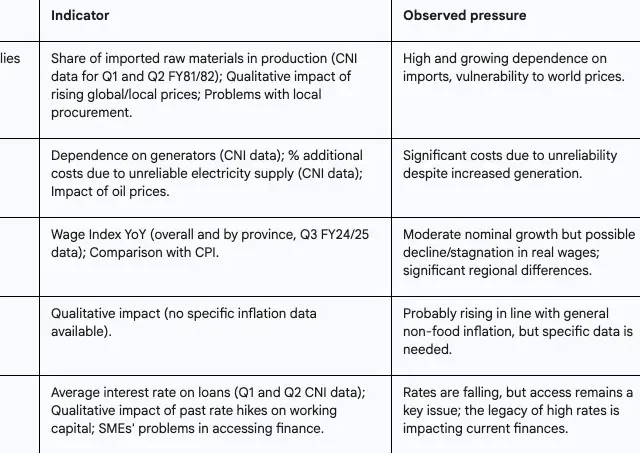
Sources:.21
4. Navigating stormy waters: supply chain disruptions and their consequences

4.1 Internal Logistics Problems: An Internal Brake on Efficiency
Domestic logistics problems continue to be a major obstacle for Nepalese SMEs. Nepal’s mountainous terrain, inland location and poor transport infrastructure systematically increase the costs of raw materials and export of finished products.34This is a long-standing structural problem that is exacerbating the current difficulties. The World Bank notes weak competition in logistics and transport, as well as poor infrastructure, which are limiting exports.44These internal challenges mean that SMEs face higher basic logistics costs and are more vulnerable to any additional disruptions.
The CNI report for the second quarter of FY81/82 identifies administrative barriers on roads, poor road quality and frequent traffic congestion as the main transport and logistics obstacles.31While the government is planning to upgrade key road sections such as the Kalanki-Vasundhara-Dhobikhola road14, these are ongoing projects, the effects of which will not be immediately felt. These issues directly increase transit times and costs for SMEs, affecting delivery schedules and the condition of goods.
4.2 The Complexities of Cross-Border Trade: Global Winds Blowing at Local Businesses
Nepalese SMEs are also vulnerable to global factors. The ADB notes that tariffs and trade uncertainty are a constraint on regional growth.1The proposed US reciprocal tariffs, although suspended, create uncertainty and could undermine preferential access for Nepalese goods.1A 10% increase in US tariffs is estimated to result in a small decline in Nepal’s GDP but will directly affect exporters.45Nepal’s Trade Preference Program (NTPP) with the US to expire by end of 2025 and Generalized System of Preferences (GSP) to expire in 202027increase uncertainty for exports. This “political uncertainty” can be as damaging as physical bottlenecks, as it affects investment in export-oriented manufacturing.
Nepal’s trade is mainly oriented towards India (64%) and China (13%).27India is Nepal’s major trading partner and source of imports, so inflation and supply conditions in India directly impact Nepal.2Problems with trade facilitation with transit countries (such as India for sea access) remain.46Although Nepal has duty-free access to the Indian and Chinese markets, which opens up opportunities47, dependence on a few key partners makes SMEs vulnerable to policy changes or disruptions in these specific corridors.
Nepal depends on imported goods for almost everything.27Global Supply Chain Disruptions Flagged by National Planning Commission (NPC)48 and ABR 49, can disrupt price levels and increase production costs. This directly impacts the availability and cost of key inputs for almost all SMEs. Thus, SMEs in Nepal face the cumulative effect of domestic and international supply chain weaknesses, which exacerbate unpredictability and cost accumulation.
4.3 Customs clearance: delays and additional costs at the border
Customs clearance processes can be complicated due to incorrect documentation, tariffs and classification of goods. Missing documents or incorrect codes lead to delays50, which in turn entails additional fees (storage, downtime, fines), loss of sales and deterioration of customer relationships.50
One of the major challenges in Nepal’s customs operations is the inability to effectively coordinate the activities of various stakeholders and the low level of adoption of automation technologies.46Nepal’s National Single Window (NNSW) system is only partially implemented.46Inefficient customs procedures add time and cost to SME supply chains, reducing their flexibility and competitiveness. Forged certificates, inaccurate invoicing, and falsified documents are common risks in Nepalese customs operations, further complicating clearance.46The lack of fully functional digital single windows means that SMEs still face cumbersome paperwork and interactions with multiple agencies.
Table 3: Key supply chain challenges for Nepalese SMEs (mid-2025)
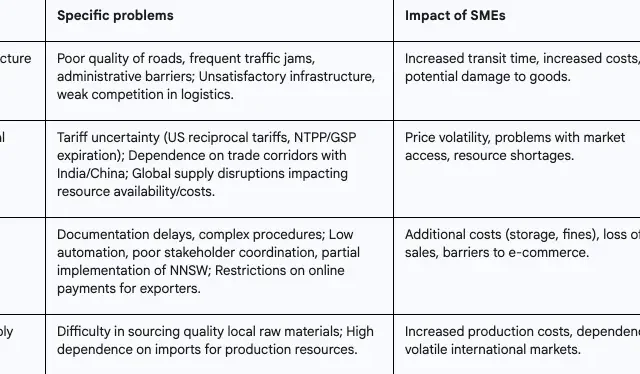
Sources:.1
5. Shifting Sands: Changing Consumer Demand and Market Realities
5.1 The Bite of Inflation: Impact on Consumer Purchasing Power, Confidence and Overall Demand
High inflation, especially for essential goods, puts pressure on household budgets.52Even with moderate inflation in Nepal (around 5% is projected for 2025)1), past high inflation has a lingering impact. In Nepal, the wage index grew 2.62% year-on-year in Q3 FY2024-25, while the CPI was 3.39% (mid-April 2025)21, indicating a potential decline in real incomes for some segments of the population. A decline in purchasing power directly translates into a decline in overall demand for SME goods and services or a switch to cheaper alternatives.
Although specific consumer confidence surveys in Nepal for mid-2025 are not available in the materials provided55, economic uncertainty typically dampens consumer confidence. The IMF notes “subdued domestic demand” in Nepal as a concern.11CNI Q2 FY81/82 report points to low disposable income of Nepalese consumers as a major challenge for businesses.31Low confidence leads to purchase delays, especially for non-essential goods and services, affecting a wide range of SMEs. This “cautious consumer” syndrome, despite the influx of remittances, means that SMEs cannot rely solely on remittance-driven demand and must offer strong value propositions.
Regarding overall domestic demand, the ADB forecasts “robust consumption, supported by higher remittances and moderate inflation.”1However, the World Bank notes that growth in South Asia is slowing, and the growth forecast for Nepal has been downgraded due to flood damage and a weak financial system.56The CNI survey for the second quarter of FY81/82 shows an average growth of market demand for goods/services at 19.67%, with demand in the manufacturing industry growing by 12.93%.31, which is an improvement over the first quarter (13.70% overall and 10.91% for manufacturing32). This suggests some resilience or recovery in demand, but against a backdrop of other cautious signals. Mixed demand signals create uncertainty for SMEs in production planning and inventory management.
5.2 Changing consumer behavior: new priorities and channels
High prices usually cause consumers to prioritize essential goods and services and look for better value for money. Although this is not detailed for Nepal for mid-2025, this is the general global response to inflation. Detailed inflation analysis from NRB21shows the various price changes across categories that influence consumer choices.
The introduction of e-commerce and digital payments has significantly changed consumer behavior. Online shopping in Nepal has evolved significantly by 2025 due to internet access, digital payment adoption, and changing consumer behavior post-COVID-19.58E-commerce platforms like Daraz, SastoDeal, HamroBazar are prominent.60Digital marketing has a significant impact on consumer purchasing decisions: 78% of Nepalese consumers surveyed use social media to research new products, and 52% make purchases after interacting with ads/influencers.60However, issues remain, such as distrust of online payments and a preference for in-person shopping for some.61The ready-to-eat packaged food market in Nepal is growing due to changing lifestyles, urbanization and demand for convenience, with online retail gaining popularity.62This means that SMEs must increasingly use digital channels for sales and marketing, which requires investment in technology and digital skills. However, there is a risk of a “digital divide” emerging between SMEs that are able to adapt to online trends and those that are lagging behind.
There is also a trend towards conscious consumption: demand for environmentally friendly and sustainable products is growing, consumers are looking for biodegradable packaging and organic goods.58This opens up opportunities for SMEs that can fill this niche, but also creates challenges in terms of supply and certification.
5.3 Sectoral impacts: uneven impacts on SMEs
The impact of changing consumer demand is uneven across different SME sectors. Retail is likely to be under pressure from consumers looking for bargains and essential goods. SMEs in the non-essential retail sector may see a decline in demand. Those selling clothing and footwear are facing high inflation on raw materials.21The growth of e-commerce presents both opportunities and competition.
The hotel and restaurant business benefits from the recovery of tourism.2However, the volatility of food inflation21directly affects the costs of restaurants. The average profitability in the hotel and restaurant business is 5-10%, while 15-20% is considered a good indicator.42The transition to online booking platforms is critical.42
In the services sector as a whole, inflation for non-food goods and services is at 3.90%21indicates rising costs for service providers. Demand for services in general is expected to increase, driven by tourism and domestic activity.16In particular, IT services are an area of growth.42
The manufacturing industry is under double pressure: from high costs of imported raw materials31and potentially subdued domestic demand for certain products. FY2024 saw production contract due to weaker domestic demand.16However, CNI data for early 2025 show some recovery in demand and income growth in manufacturing.3This sectoral bifurcation in demand recovery means that SMEs need to closely monitor trends in their niche, and diversification may be critical for those operating in slow-recovering sectors.
6. Resilience in Action: Adaptation and Innovation in Nepalese SMEs
6.1 Strategic Cost Management: Belt Tightening and Resource Optimization
Under intense pressure from rising operating costs (Section 3), Nepalese SMEs are forced to resort to cost management strategies. Although direct evidence of specific cost-cutting measures by a wide range of Nepalese SMEs in mid-2025 is limited in the submissions, the Shawbrook study (albeit UK-focused but reflecting general SME concerns) shows that almost half (47%) of SMEs prioritise cost management.64The Nepal government’s budget also includes a policy of austerity and reduction of current expenditure.65Potential areas for SMEs include negotiating better terms with suppliers, reducing waste, improving energy efficiency (where possible given reliability concerns), optimising inventory to reduce storage costs and carefully reviewing all non-essential costs. These practical steps help SMEs reduce pressure on profitability.
6.2 Adjusting supply chains: seeking stability and efficiency
SMEs are actively seeking ways to improve the stability and efficiency of their supply chains. The REED project has supported Poshilo Foods and Harilo Agro Industries to partner with suppliers to address challenges in sourcing quality raw materials locally and outside Pokhara, respectively.33This points to a strategy of actively seeking new or more reliable sources of supply, which is critical to reducing dependence on individual or problematic suppliers.
The Need to Manage Working Capital in the Face of Rising Costs and Sluggish Cash Flow30suggests that SMEs will focus on optimizing inventory levels to balance availability and costs. Article by Aramex50offers strategies such as the use of experienced freight forwarders, pre-clearance programs, multimodal transportation, and technology to streamline customs procedures and reduce logistics costs, which are applicable to Nepalese SMEs. Optimizing supply chains is a priority for the ready-to-eat food market.62Implementing technologies such as AI, blockchain and IoT to improve supply chain efficiency, real-time tracking and predictive analytics50, is a global trend that can provide significant benefits in managing complex supply chains.
6.3 Embracing Digital Transformation: Going Beyond a Basic Online Presence
Digitalization is becoming an integral part of SME strategy. Increased access to the Internet and smartphones is stimulating the adoption of digital technologies.58Digital Marketing Has a Significant Impact on Consumer Behavior60, and e-commerce platforms are growing.58In the Asian Development Policy Report 202567highlights how digital technologies empower SMEs, for example, social media and email marketing help to cost-effectively reach global customers, and internet/social media use is associated with higher sales for micro-enterprises in India.
SMEs use digital tools for marketing and sales (social media, e-commerce platforms, digital advertising58), as well as for operational activities, although specific data on adoption in Nepal is limited. Growing adoption of digital payment systems42simplifies transactions for SMEs and consumers, facilitated by the IFC’s support.69Digital transformation is therefore not just one adaptation strategy, but a platform that enables many others, such as entering new markets and optimizing costs.
6.4 Product/service innovation and market repositioning: adapting to new realities
Innovation is key to staying relevant in the face of changing consumer preferences and economic conditions. The growth of the ready-to-eat packaged food market62shows that SMEs are meeting the demand for convenience. Poshilo Foods’ redesign of traditional products such as satu42, is an example of product innovation. The emergence of demand for environmentally friendly and sustainable products58Creates a niche for SMEs to innovate in product offerings and packaging. Analysis by Arun Tamang42offers a variety of innovative business ideas for SMEs in the fields of tourism, agriculture, technology, renewable energy and handicrafts. Diversification of markets, as in the case of Poshilo Foods, which has started exporting to India and the US with the support of the REED project33, reduces dependence on a single market and opens up new opportunities for growth. The current challenging period, while difficult, can also be a catalyst for innovation, helping SMEs turn challenges into opportunities to develop more sustainable and relevant business models.
6.5 Case study: sustainability in practice
Poshilo Foods (supported by the REED project)29):
- Problems:Procurement of quality local raw materials, high production costs due to international procurement, lack of knowledge of food processing standards.
- Adaptation/Support:Training, assistance in developing quality/processing SOPs, assistance in establishing partnerships with suppliers, business consulting, financial planning, development of a 5-year business plan, digital marketing strategy.
- Result:Expanded market coverage, started exporting to India and the USA, significantly increased sales volume, created jobs.
Harilo Agro Industries (with the support of the REED project29):
- Problems:Ensuring consistency in quality standards, finding reliable suppliers of raw meat outside Pokhara.
- Adaptation/Support:Quality audit, quality management training for staff, development of a raw material quality control system, technical guidance on meat processing/hygiene, assistance in establishing partnerships with suppliers, business consulting.
- Result:Significant income growth, job creation, improved supply of raw materials and product quality.
These cases demonstrate how targeted support can help SMEs overcome specific operational challenges and achieve growth. SME responses to economic pressures range from reactive cost reduction to proactive adaptation, including innovation and the development of new markets. External support, as the REED case shows, can stimulate proactive adaptation.
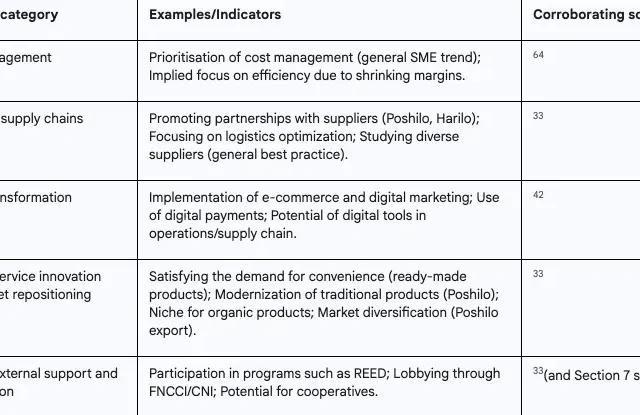
Table 4: Observed adaptation strategies of Nepalese SMEs (mid-2025)
Sources:.33
7. Support Ecosystem: Assessing Assistance to Nepalese SMEs
7.1 Public policy and budget support (focus on FY2025-26)

The budget for FY2025-26 is NPR 1.964 trillion.13Key allocations related to the business environment include education, physical infrastructure, urban development, energy and agriculture.19These general government spending and sectoral priorities create a broader enabling (or unfavorable) environment for SMEs.
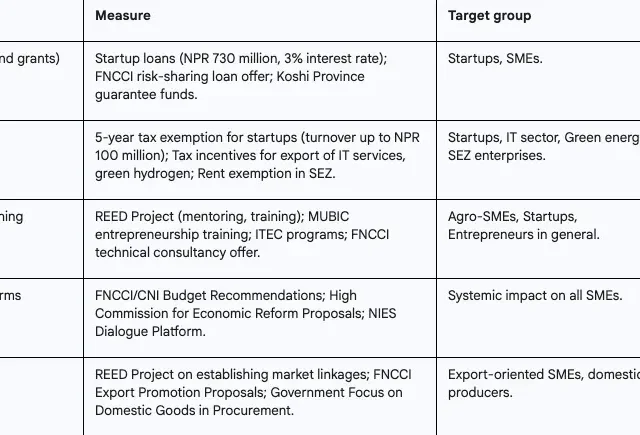
Special provisions and incentives for startups and SMEs include provision of NPR 730 million (NPR 73 crore) for loans to startups at a concessional rate of 3%.14The measure is aimed at promoting entrepreneurship, especially among young people. Start-ups with a turnover of up to NPR 100 million will be exempt from income tax for up to 5 years.36Tax incentives have also been introduced for the IT sector (75% tax exemption on income from export of IT services, 5% income tax for individuals/entities exporting IT services from Nepal), green energy (tax exemption on green hydrogen production equipment, 5-year tax holiday for manufacturers) and digital payments.14Newly established businesses in special economic zones (SEZs) and industrial zones will be exempted from rent for the first three years, and the monthly rent rate in SEZs will be reduced.19The recommendations of the High Commission for Economic Reform include providing electricity and land at reduced prices for producers.35
Broader policy reforms include measures to improve the investment climate, such as amendments to laws47, including an amendment to FITTA to allow foreign investment through venture capital/private equity funds.71Efforts are being made to reduce bureaucratic barriers, for example by digitalising company registration, creating a one-stop shop for approvals and reducing minimum capital requirements for FDI.63There is a commitment to improving public procurement in favour of domestic goods.31These direct measures aim to support SMEs, particularly start-ups and businesses in priority sectors, but their effectiveness will depend on accessibility and implementation.
7.2 Role of sector bodies (FNCCI, CNI) and development partners (World Bank, ADB)
The Federation of Nepal Chambers of Commerce and Industry (FNCCI) actively provides policy recommendations for budgets with a special focus on economic issues and business growth.37Key proposals for FY25-26 include: technology-enabled business services, ‘Invest in Nepal’ campaign, merger of Investment Board and Department of Industries, unified tax code, relaxation of restrictive lending guidelines of the Central Bank, refinancing for SMEs affected by cooperative/microfinance issues, tourism/export incentives, risk-sharing lending schemes (up to NPR 10 million), incentives for startups/SMEs, consideration of electricity as industrial feedstock, pilot of multi-rate VAT, reduction in taxes on manufacturing, reduction in income tax rates and increase in tax-exempt minimum. FNCCI has also proposed a ‘100 Startups, 100 Investors’ campaign and setting up of ‘Startup Growth Centres’72, and also advocates for the formalization of the informal economy.72
Confederation of Nepalese Industries (CNI) conducts ‘Industrial Status Surveys’31, providing data and analysis on business performance, problems and trust levels to inform policy discussions. CNI advocates for a long-term industrial development strategy, tax regime reform, control of unauthorized imports, quality standards for imports, promotion of domestic products and sustainable use of natural resources.31
The World Bank finances projects such as the Rural Enterprise and Economic Development (REED) Project, supporting rural agribusinesses and SMEs through diagnostics, training, incubation, mentoring and market linkages.33Bank publishes Nepal Development Updates and Country Economic Memoranda9, providing analysis and policy recommendations. It also supports the implementation of digital financial services (DFS) for MSMEs in collaboration with the NRB.69
The Asian Development Bank (ADB) provides economic forecasts (ADO reports1) and supports sustainable growth through investment in infrastructure, access to basic services and protection from disaster/climate risks.4ADB Highlights Potential for Sustainable Energy, Regional Power Trade4, as well as the importance of digital transformation for inclusive development.67ADB also co-finances projects such as the SASEC Power Transmission and Distribution System Strengthening Project.77
Other initiatives include the launch of the Uday Guarantee Fund and the Uday Challenge Fund in Koshi Province (NPR 600 million, co-financed by the Swiss Agency for Development and Cooperation) to guarantee loans to SMEs.78, the Midwestern University Business Incubation Center (MUBIC) entrepreneurship and innovation training program79and various ITEC (Indian Technical and Economic Cooperation) entrepreneurship development programmes.80This indicates the formation of a multi-level support system involving provincial governments and educational institutions.
7.3 Effectiveness and Gaps: Preliminary Assessment
The REED project demonstrates tangible results for participating SMEs (Poshilo, Harilo) in terms of market expansion, income growth and job creation.33Policy reforms such as lower capital requirements for FDI and digital registration are positive steps.63Tax incentives for start-ups and specific sectors (IT, green energy) can stimulate growth if they are easily accessible.14
However, there are significant gaps and challenges. Access to finance remains a critical issue: despite government schemes and FNCCI offerings, SMEs still face onerous collateral requirements, high effective interest rates for some, and difficulties accessing formal finance.30FNCCI points to the Central Bank’s restrictive instructions that prevent lending despite banks’ liquidity.37This “last mile” problem in delivering support means that even well-designed policies may have limited impact on the ground.
Many SMEs are unaware of existing incentives and support schemes51, and the reach of programs such as REED is limited to a certain number of SMEs. Weak coordination between government agencies and inconsistent policy implementation remain challenges.9The effectiveness of budget allocations depends on the timely and effective execution of capital expenditures.2Policy instability indicated by FNCCI72, and the cancellation of previously granted benefits51create uncertainty. Much of the economy remains informal72, and these SMEs may have difficulty accessing official support. Finally, despite various initiatives, the FNCCI notes that discussions on economic reform remain fragmented and a holistic vision is needed.47Strengthening government institutional capacity to implement, monitor and evaluate policies is as important as developing good policies.
Table 5: Key measures of state and institutional support for SMEs (focus on FY 2025-26)
Sources:.13
8. The Way Forward: Long-Term Prospects, Challenges and Opportunities for Nepalese SMEs
8.1 Forecast of SME sustainability and growth after 2025: expert opinions
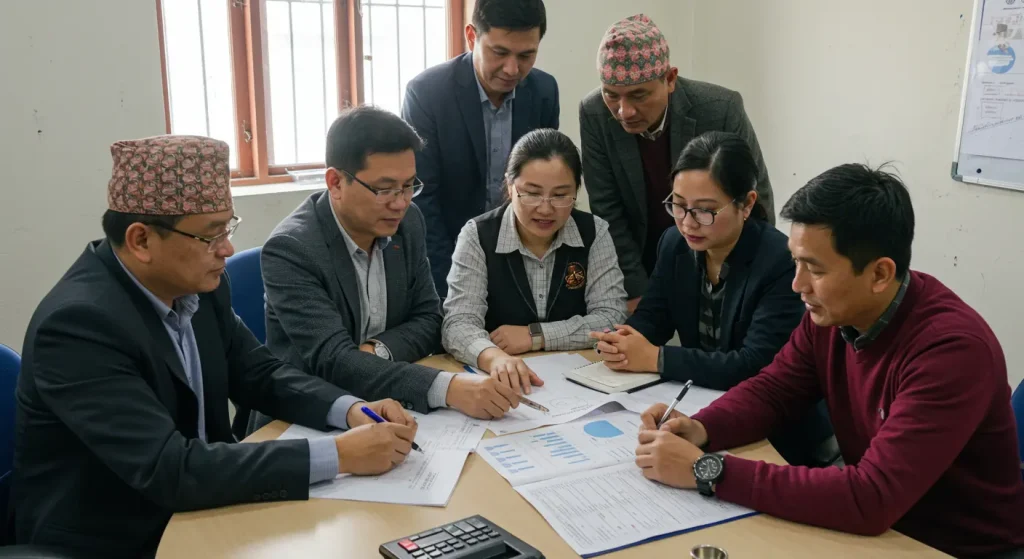
Various international and national organizations have given cautiously optimistic forecasts for the Nepalese economy and, by implication, the SME sector beyond 2025, while emphasizing the need for structural reforms and stability. The World Bank projects growth of 5.4% in FY26 and FY27, driven by the services sector, but points to risks related to the asset quality of the financial sector, policy inconsistency, and delays in capital budget execution.9The FY25 H1 update notes accelerating GDP growth (4.9%) but also challenges in the financial sector (NPL at 4.9%).17ADB expects Nepal economy to grow 5.1% in FY20261and highlights the potential in the areas of sustainable energy and digital transformation.4IMF forecasts Nepal’s real GDP growth at 5.4% in FY2025/2611and notes that sustained implementation of structural reforms is needed to promote sustainable and inclusive growth.11IMF Analysis75suggests that measures such as private sector-led credit guarantee schemes, SME-friendly insolvency frameworks and support for SME-MNC linkages in FEZs could maximise long-term benefits. The United Nations Department of Economic and Social Affairs (UN DESA) expects GDP growth to accelerate in 2025, driven by infrastructure projects, monetary easing, financial sector reforms and a revival in tourism.15The FNCCI and CNI express cautious optimism, dependent on policy stability and private sector support, calling for a “Decade of Investment” and a long-term industrial strategy.31
8.2 Persistent and Emerging Challenges for SMEs Beyond 2025
Despite the positive outlook, Nepalese SMEs will continue to face a number of significant challenges. Structural constraints such as inadequate infrastructure (transportation, reliable power supply), limited private sector capacity, and trade difficulties due to being landlocked will persist.15Access to finance remains a critical long-term issue, despite some improvements. Onerous collateral requirements, high effective interest rates for SMEs and a lack of tailored financial products are persistent challenges.30
Policy instability, bureaucratic red tape and inconsistent enforcement of laws continue to hold back investment and growth.28The need for a stable, predictable tax regime remains urgent.28The shortage of skilled workers and the mismatch of skills with labour market needs are also major obstacles.34Climate change and extreme weather events pose a growing threat, particularly to agribusiness and tourism.15Finally, Nepal’s upcoming graduation from the least developed country (LDC) category in 202615will lead to the loss of some trade preferences, which will require SMEs to become more competitive in international markets.
8.3 Opportunities for SME Development and Growth

Despite the challenges, there are also significant opportunities for Nepalese SMEs. Digitalization and technology adoption offer ways to improve efficiency, market reach, and innovation.42The growing IT and business process outsourcing (BPO) sector provides opportunities for technology-oriented SMEs.42The development of a green economy, including renewable energy sources (hydropower, solar energy) and energy efficiency, is creating new niches.36
Regional economic integration and improved trade links, especially with India and China, could expand markets.47The recovery and further growth of the tourism sector, including niche tourism (ecotourism, cultural, adventure), opens up opportunities for SMEs in the hospitality and related services sector.42Modernization of agriculture and development of agribusiness with an emphasis on high value-added products and export crops are also promising areas.35Finally, a growing middle class and domestic urbanization are creating demand for a variety of goods and services that flexible and innovative SMEs can satisfy.62
8.4 Strategic imperatives for a sustainable future for SMEs
Realizing the potential of SMEs and overcoming challenges requires concerted efforts across several strategic areas. Creating a stable and predictable policy and regulatory environment is fundamental.28There is a need to significantly improve SMEs’ access to diverse and affordable financial resources, including loans, venture capital and guarantee schemes.14Investments in human capital development through market-driven training and skills development programmes are critical to improving SME productivity.38
Continued investment in infrastructure (transport, energy, digital communications) will reduce operating costs and increase competitiveness.34There is a need to actively promote innovation, technology adoption and digitalisation among SMEs.42Simplifying business procedures, reducing bureaucracy and fighting corruption also remain priorities.34Finally, supporting SMEs to adapt to climate change and move towards sustainable business practices will ensure their long-term viability.58
9. Comparative Regional Perspective: SMEs in South Asia
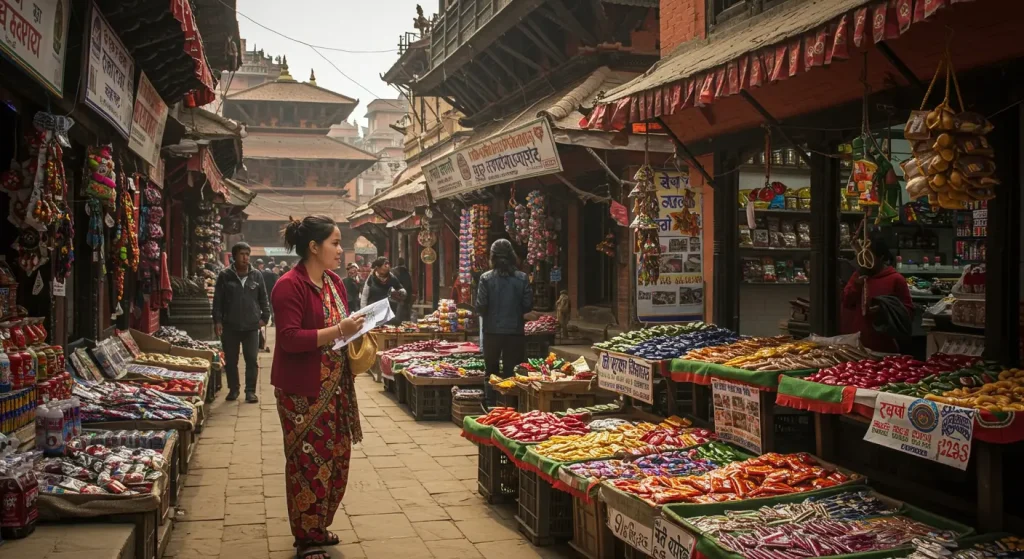
The challenges faced by Nepalese SMEs are largely similar to those experienced by their counterparts in other South Asian countries such as India, Bangladesh, Pakistan and Sri Lanka, albeit with some national specificities.
Common Issues in South Asia (2024-2025):
- Inflationary pressure: All countries in the region are experiencing inflationary pressures to varying degrees, although the level and dynamics vary. For example, Nepal’s inflation is projected to be around 5.2% in FY2025.49, in India – 4.3%49, and in Bangladesh – up to 10.2%.49Pakistan Inflation Expected to Drop Sharply to 6.0%49, and in Sri Lanka the acceleration was up to 3.1%.49High inflation, especially food inflation, reduces the purchasing power of the population and increases operating costs for SMEs throughout the region.
- Supply chain disruptions: The region as a whole is susceptible to supply chain disruptions caused by both global factors (trade tensions, geopolitical conflicts) and domestic issues (infrastructure constraints, extreme weather events).49In India, extreme weather conditions are seriously disrupting food supply chains.49In Bangladesh, supply chain constraints are keeping inflation high.49
- Access to funding: Limited access to formal finance is a chronic problem for SMEs in South Asia.49High interest rates (although trending downward in some countries), stringent collateral requirements, and complex documentation make it difficult to obtain credit. In Nepal, despite monetary easing, private sector credit growth has been modest and non-performing loans have risen.49In Pakistan, only 7% of SMEs have access to formal finance.84
- Changes in consumer demand: Reduced purchasing power due to inflation and economic uncertainty is changing consumer behavior. Consumers are becoming more cautious, focusing on essentials and looking for value for money. In Nepal, consumption is supported by remittances, but overall demand remains subdued.49Consumption in India is expected to rise on rising rural incomes and moderate inflation.49In Bangladesh, private consumption was supported by remittances, but overall economic activity slowed.49In Sri Lanka, consumption remains weak due to eroded purchasing power.49
- Fiscal restrictions: Many South Asian countries face limited fiscal space and high levels of public debt.56This limits the ability of governments to provide large-scale support to SMEs. The World Bank notes that government revenues in South Asia are, on average, lower than in other developing regions, indicating the need for improved tax policy and administration.56
Adaptation strategies and government support (comparison):
- Nepal: The government is implementing fiscal consolidation measures, but also plans to increase capital spending and offers tax breaks for start-ups and certain sectors.14Monetary policy is being eased. Industry associations (FNCCI, CNI) and international partners (WB, ADB) are actively working to support SMEs.
- India: The government is focusing on supporting crop diversification and improving post-harvest infrastructure to combat food inflation.49Monetary easing expected. Rs 50,000 crore Self-Reliant India Fund launched to provide equity financing to MSMEs.97However, MSMEs in India still face challenges in access to finance, technology, formalization and markets.83
- Bangladesh: The government aims to simplify business regulations through the BICIP programme.49The central bank has introduced a single floating exchange rate. However, SMEs in Bangladesh are in dire need of better marketing knowledge, access to raw materials and financial support.98CPD notes the lack of structural changes in the budget to support SMEs in the context of the economic downturn.99
- Pakistan: The government is implementing a reform programme to strengthen private investment and is focusing on empowering women.49The Central Bank has cut its key interest rate.92However, access to finance remains a major barrier for SMEs.84
- Sri Lanka: The government continues fiscal consolidation and debt restructuring under the IMF program.49VAT on digital services and capital gains tax increases are planned. The economy is showing signs of recovery, but purchasing power remains low.54
Effectiveness of support measures:
The effectiveness of government support measures for SMEs in the region is mixed. While some initiatives, such as regulatory simplification or targeted credit programs, can be beneficial, common challenges such as limited access to finance, bureaucracy, corruption, and policy instability often offset their positive impact. World Bank and ADB reports point to the need for deeper structural reforms to create a truly enabling environment for SMEs in South Asia.49 SMEs in the region have often adapted by cutting costs, seeking niche markets, adopting digital technologies (albeit unevenly), and diversifying suppliers.66 However, their ability to adapt varies greatly depending on their size, sector, and access to resources and information.
10. Conclusion and recommendations
The analysis shows that Nepalese SMEs operate in a challenging economic environment in mid-2025, characterized by moderate but volatile inflation, which puts significant pressure on operating costs. Rising prices of imported raw materials, unreliable power supply leading to additional costs, modest wage increases amid rising cost of living, and persistent difficulties in accessing affordable finance are key factors compressing SME profitability.
At the same time, supply chain instability, caused by both internal logistical problems (poor infrastructure, inefficient customs procedures) and external factors (global tariff uncertainty, dependence on key trading partners), exacerbates production risks and costs. Changing consumer demand, caused by declining real incomes and increasing economic uncertainty, makes consumers more cautious and value-oriented, which requires SMEs to be flexible in pricing and assortment.
Despite these challenges, Nepalese SMEs have demonstrated resilience by actively implementing various adaptation strategies. These include cost management, sourcing alternatives, optimizing logistics, increasing the use of digital technologies for marketing, sales, and operations, and innovating products and services to meet changing market needs. However, adaptability is uneven and often depends on firm size, sector, and access to resources.
The existing support ecosystem, including government programs (e.g. soft loans for start-ups, tax incentives), industry association initiatives (FNCCI, CNI) and projects of international development partners (World Bank, ADB), provides some assistance. However, significant gaps remain in the coverage, accessibility and effectiveness of these measures, especially in terms of ensuring the “last mile” of support delivery to SMEs and addressing systemic issues with access to finance.
Recommendations:
To enhance resilience and promote sustainable growth of Nepalese SMEs, the following recommendations are proposed:
For the Government of Nepal:
- Ensuring macroeconomic stability and policy predictability: Focus on containing inflation volatility and ensure consistency and transparency of economic policies, including the tax regime and regulatory environment, to reduce uncertainty for businesses.
- Improving access to finance:
- Review and simplify the Central Bank’s regulatory instructions on SME lending to eliminate the gap between available liquidity in the banking system and SME lending needs.
- Expand and strengthen credit guarantee schemes to reduce banks’ risks when lending to SMEs, especially those that lack sufficient collateral.
- Encourage the development of alternative financing mechanisms such as venture capital and crowdfunding platforms targeting SMEs.
- Investment in infrastructure and trade facilitation: Accelerate the implementation of projects to improve transport and energy infrastructure (especially reliability of power supply). Continue digitalization and full integration of Nepal’s National Single Window System to simplify customs procedures and reduce costs.
- Targeted support for digitalization of SMEs: Develop and implement programmes to improve digital literacy of SMEs, provide access to affordable digital tools and support the adoption of e-commerce and digital payment systems, especially for businesses outside major urban centres.
- Promoting the development of local value chains: To stimulate the development of local suppliers of high-quality raw materials and components to reduce dependence on imports and strengthen internal economic ties.
For Financial Institutions:
- Development of specialized financial products for SMEs: Create credit and other financial products that take into account the specifics of cash flows, collateral opportunities and the needs of SMEs in various sectors.
- Simplification of lending procedures: Reduce bureaucratic requirements and processing times for SME loan applications.
- Improving financial literacy of SMEs: Conduct training programs for SMEs on financial management, business plan preparation and access to finance.
For Industry Associations (FNCCI, CNI):
- Strengthening information and educational work: Actively inform SMEs about available support programs, changes in legislation and best business practices.
- Promoting cooperation and clustering of SMEs: Encourage the creation of cooperatives and industrial clusters for joint purchasing, marketing, access to technology and representation of interests.
- Continuing constructive dialogue with the government: Provide feedback from SMEs on the effectiveness of policies being implemented and facilitate the development of more effective support measures.
For Small and Medium Enterprises (SMEs):
- Active implementation of digital technologies: Use digital tools to optimize internal processes, expand market reach through online channels and improve customer engagement.
- Diversification (suppliers, markets, products): Reduce risks by searching for alternative suppliers, exploring opportunities to enter new markets (including export markets) and adapting product offerings to changing consumer needs.
- Improving efficiency and cost management: Implement lean manufacturing methods, optimize resource use (including energy) and strictly control operating costs.
- Investing in skills and knowledge: Continuously improve the qualifications of personnel and management competencies, especially in the areas of digital technologies, financial management and marketing.
- Finding and using available support programs: Actively explore and use opportunities provided by government, industry and international SME support programs.
Implementation of these recommendations will require coordinated efforts from all stakeholders and will create a more conducive environment for Nepalese SMEs to thrive, which in turn will contribute to inclusive and sustainable economic development of the country.
[elementor-template id=”1573″]
Source used
- ADB projects 4.4 percent economic growth for Nepal in 2025
- Nepal’s Economic Growth Forecasted at 5.1% for 2026: ADB
- ADB: Nepal To Grow By 4.4 Percent | New Spotlight Magazine
- Nepal: Economy | Asian Development Bank
- Nepal’s Economic Growth to Accelerate to 4.4% in 2025: ADB | NepalEnergyForum
- ADB projects 4.4 percent economic growth for Nepal in 2025 | The Annapurna Express
- Nepal’s economy to grow by 4.9 percent in 2025: ADB – myRepublica
- Asian Development Bank (ADB) Projects 4.9% Economic Growth for Nepal in FY 2024/25
- Nepal’s Economy Expected to Remain Resilient in Face of Economic Shocks, says World Bank
- Nepal News Evening Economic Brief – April 3, 2025
- IMF Executive Board Completes the Fifth Review under the …
- Economic growth projected at 4.61 percent this fiscal year – The Kathmandu Post
- Finance Minister unveils Rs. 1,964.11bn budget – The Rising Nepal
- Budget for the financial year 2082/83 [Live] – ekantipur
- 2025 Monitoring Report – the United Nations
- Macroeconomic Update: Nepal (September 2024) – Asian Development Bank
- Nepal Development Update, April 2025 – World Bank
- Nepal’s record Rs1.96 trillion budget makes bold promises amid a bleak outlook
- Nepal’s Fiscal Year 2025-26 Budget Explained: Key Highlights and Priorities
- Nepal govt announces budget of nearly Rs 2,000 billion for 2025-26 – The Economic Times
- www.nrb.org.np
- Consumer price inflation stood at 3.39 pc in mid-April: NRB – B360 – Business 360°
- Inflation eases slightly – The Rising Nepal
- Year-on-year consumer price inflation at 5.41 percent: NRB Report – The Rising Nepal
- Nepal and the IMF
- Nepal – IMF DataMapper
- Tariff escalations and Nepali economy – The Kathmandu Post
- A missed opportunity – The Kathmandu Post
- Macroeconomic Snapshot of 8 Months: Inflation at 3.75%; Foreign Reserves Reach USD 17.27 Billion; Remittance Surges 9.4% – || ShareSansar ||
- The Impact Of Rising Interest Rates On Doing Business In Nepal …
- cni.org.np
- cni.org.np
- Nepal: Supporting Local Businesses to Thrive – World Bank
- 2024 Investment Climate Statements: Nepal – State Department
- Everything You Need to Know About High-Level Economic Reform Commission Report – Nepal News
- Tax breaks offered to IT, startups, and green energy – The Kathmandu Post
- FNCCI submits policy recommendations for FY 2025/26 – Bizness …
- Govt declares 2025-35 as Internal Employment Promotion Decade – myRepublica
- Rent Commercial Properties at Kathmandu – Lalpurja Nepal
- Commercial Space for Rent – Property Karobar
- FNCCI submits economic policy recommendations for Nepal’s 2025/26 fiscal year budget
- Fastest Growing Business in Nepal – 2025 Market Analysis – Arun Tamang
- In-depth analysis of economic situation and business opportunities in Nepal (Kathmandu region) for 2025-2030 – Digital Agency Yaralink
- Unlocking Nepal’s Growth Potential : Nepal Country Economic Memorandum 2025
- US tariff shift poses modest risk to Nepal’s economy, but uncertainty grows
- Supply Chain Risk and Mitigation for Landlocked Nepal – myRepublica
- NIES:-Nepal International Economic Summit 2025 – FNCCI
- Nepal’s Sustainable Development Goals – Needs Assessment, Costing and Financing Strategy: An Update
- www.adb.org
- Customs delays are costing you: Here’s how to beat them
- www.adb.org
- Inequality reduction elusive in FY 2025–26 budget – Daily Sun
- Bangladesh sets ambitious goal of capping inflation at 6.5pc – The Financial Express
- Sri Lanka Development Update 2025 – World Bank
- CONSUMER CONFIDENCE INDEX survey – Ipsos
- South Asia Overview: Development news, research, data | World Bank
- South Asia’s Growth Prospects Dimming Amid Global Uncertainty – World Bank
- The Evolution of Online Shopping in Nepal: A 2025 Perspective!! – iWishBag
- E-COMMERCE IN NEPAL TRENDS, HURDLES & GROWTH – B360 – Business 360°
- The Impact of Digital Marketing Strategies on Consumer Behavior in Nepal – ResearchGate
- Impact of Digital Marketing Tools on Consumer Behavior in Nepal
- Nepal Ready To Eat Packed Food Market Report | Market Size, Industry Analysis, Growth Opportunities, & Forecast (2025-2030) – DigiRoads Research
- Why Global Companies Are Incorporating in Nepal in 2025 – Digital Consulting Ventures
- SMEs under pressure: rising costs and inflation remain top concerns
- Budget Implementation – The Rising Nepal
- SUPPLY CHAIN OPTIMIZATION FOR SMEs
- Harnessing Digital Transformation for Good: Development Policies for Asia and the Pacific
- Harnessing Digital Transformation for Good: Asian Development Policy Report 2025
- Digital Financial Services in Nepal – International Finance Corporation
- The Biggest Global Supply Chain Risks of 2025 – Xeneta
- Future Outlook: Is Nepal the Next Hotspot for Foreign Business Incorporation?
- Focus budget on entrepreneurship and production; Declare a …
- Publication: Nepal Development Update, April 2025: Leveraging …
- Nepal: World Bank Report Outlines Key Reforms to Boost Growth …
- Fostering Entrepreneurship and SMEs to Support Economic Diversification in Oman in
- Asian Development Outlook (ADO) April 2025
- OPEC Fund approves over US$600 million in new financing to strengthen connectivity, human capital and economic resilience
- Koshi Province launches funds to support SMEs, boost economic growth – Business 360°
- Mid-West University Announces Application Open for Entrepreneurship and Innovation Training Program – Edusanjal
- national institute of entrepreneurship and small business development , noida – ITEC :Indian Technical and Economic Cooperation
- OECD Financing SMEs and Entrepreneurs Scoreboard: 2025 Highlights
- Small and Medium-Sized Enterprises in Nepal: Examining Constraints on Exporting
- Enhancing MSMEs Competitiveness in India – NITI Aayog
- From challenges to opportunities: The journey of persistence, resilience, and growth | SME Finance Forum
- Characteristics of Better- Performing Nepali SMEs and Implications for Policy – SOAS Research Online
- Enabling Environment for Sustainable Enterprises in Nepal | International Labour Organization
- Unleashing it: advancing Nepal’s digital economy – Institute for Integrated Development Studies
- Nepal’s ambitious energy vision – The Kathmandu Post
- The MCC Debate and U.S.-Nepal Ties in Flux – Observer Research Foundation
- Monthly E-Newsletter of South Asia Watch on Trade, Economics and Environment | Volume 21, Issue 06, June 2024 – Sawtee
- Circular Economy for Nepal’s Sustainable Development Ambitions – ResearchGate
- Pakistan inflation rises 3.5% in May, exceeding forecast – The Economic Times
- 2025 supply chain sustainability trends: A year of change and opportunity
- 2025’s supply chain challenge: Global trade disruption – Thomson Reuters tax
- South Asia Development Update April 2025 | Economic Outlook – World Bank
- Strong Economic and Fiscal Reforms will Help Bangladesh Sustain Growth Amid Global Uncertainty – World Bank
- summary of economic survey 2024-25 – PIB
- Startups boom but go bust for caregivers’ neglect | The Financial …
- Budget lacks structural changes: CPD | The Daily Star
- Pakistan inflation inches up 3.5% year-on-year in May 2025 – Arab News
- Sri Lanka’s Economic Rebound – Cornell SC Johnson College of Business
- Economic resilience in East and South Asia supports global growth amidst challenges, according to UN flagship economic report
- ‘Uncertainty’ is the watchword among chief economists – The World Economic Forum
- Regional collaboration could unlock South Asia’s economic potential
- Asia 2025: the year of business resilience – Control Risks