Key Takeaways
- The Customs Calculus has fundamentally changed. High duties and opaque valuation methods like sandarbha mulya (reference pricing) have made the traditional dropshipping model of low-value, high-volume arbitrage mathematically non-viable, shifting the focus from per-unit margins to bulk import economics.
- Consumer psychology is the primary non-tariff barrier. Nepal’s deep-seated “Trust Deficit”—a rational response to a history of inconsistent quality and poor service—is a more significant hurdle than logistics. Consumers are no longer willing to risk prepayment for unbranded goods from anonymous Facebook pages, rendering the classic dropshipping value proposition moot.
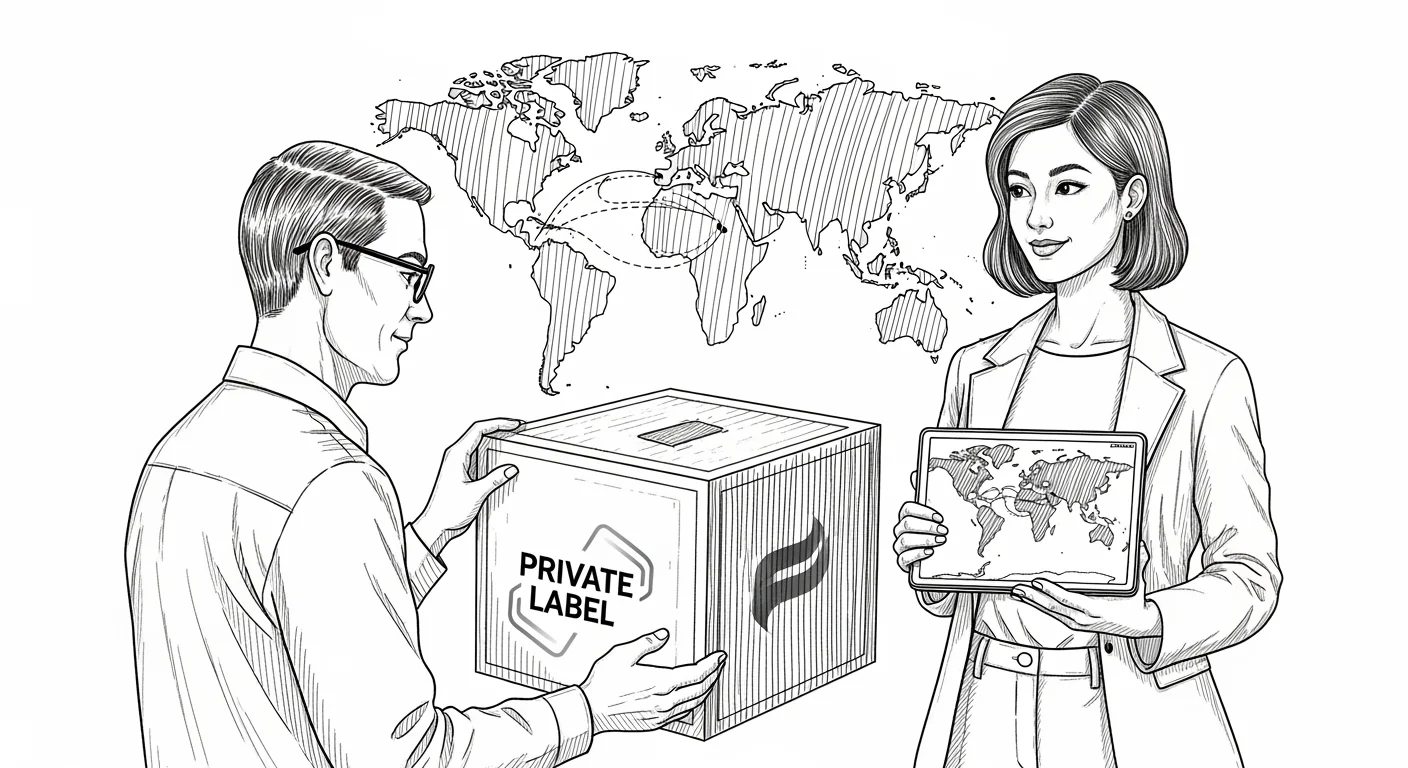
- The future is a shift from arbitrage to assets. Successful e-commerce players by 2026 will not be dropshippers in the traditional sense, but “micro-brands.” They will use the private label model to build brand equity—a tangible asset—by controlling product curation, packaging, and local inventory, thereby solving for both trust and delivery time.
Introduction
There was a brief, intoxicating moment, roughly between 2019 and 2021, when the promise of dropshipping cascaded through Nepal’s aspiring entrepreneurial class. The narrative was seductive: a laptop, a stable internet connection, and a flair for Facebook advertising were all one needed to tap into the global factory of AliExpress and sell quirky gadgets to a burgeoning domestic market. It was the digital gold rush, a seemingly frictionless path to wealth with zero inventory risk. That era is definitively over. The “General Store” model—peddling an indiscriminate mix of USB-powered fans, phone holders, and novelty lights—has collapsed under its own weight, crushed by two uniquely Nepali realities: punitive customs barriers and a profound consumer trust deficit.
The dream of a low-barrier entry into e-commerce has collided with the harsh realities of Nepal’s political economy and sociocultural landscape. While novice entrepreneurs lament long shipping times and high taxes, they are merely observing the symptoms of a much deeper structural shift. The failure of the first wave of dropshipping was not a market glitch; it was an inevitable outcome. The very model that promised risk-free arbitrage—selling products you never touch—is precisely what makes it untenable in a high-friction, low-trust environment like Nepal. The critical tension is no longer about finding a winning product on a Chinese sourcing site.
Instead, the sharpest minds in Nepali e-commerce are orchestrating a strategic retreat from the general store and advancing towards a more defensible, capital-intensive fortress: the private label brand. This is not merely a tactical adjustment; it is a fundamental re-imagining of the business model. It signals a maturation of the market, where the winning strategy is no longer about arbitraging information asymmetry, but about painstakingly building an asset that cannot be easily replicated: brand trust. This article will dissect the anatomy of the general store’s failure and map the strategic pivot to private labeling, providing a clear-eyed outlook on what it will take to survive and thrive in Nepal’s e-commerce landscape by 2026.
The Anatomy of a Failed Model: Deconstructing the Customs and Logistics Bottleneck
The initial appeal of dropshipping was its apparent circumvention of traditional import-export complexities. By shipping individual parcels directly to consumers, entrepreneurs believed they could operate in a grey zone, beneath the radar of formal commercial import regulations. This assumption has proven to be fatally flawed. The Nepali state, heavily dependent on import duties for revenue (historically comprising nearly 50% of total tax revenue), has an institutional imperative to scrutinize every package crossing its borders. This has manifested in a customs regime that is not merely expensive, but systematically hostile to the small-parcel, high-volume nature of classic dropshipping.
The first blow is the duty structure itself. Nepal’s customs tariff is a complex matrix of customs duty, VAT (13%), and often excise duty, which can cumulatively turn a $5 product from AliExpress into a $15 liability for the consumer upon arrival. More pernicious, however, is the valuation method. Customs officials are not bound by the declared invoice value, which they rightly suspect is often under-reported. Instead, they frequently employ a system of reference pricing, known as sandarbha mulya. This means a customs officer values an incoming product based on a pre-determined reference book or their own market assessment, which is almost always higher than the actual transaction price paid by the dropshipper. This opaque and discretionary process obliterates predictable margin calculations, turning every sale into a high-stakes gamble. A dropshipper might sell a gadget for NPR 2000 expecting a 30% margin, only for the customer to be presented with an NPR 1500 customs bill at the post office, leading to a rejected delivery and a total loss for the seller.
Compounding the customs barrier is the logistical labyrinth. The standard 30-to-60-day shipping time from China via postal services like Cainiao or ePacket is an eternity in the age of instant gratification. Nepali consumers, now accustomed to the 24-48 hour delivery windows offered by locally-warehoused platforms like DarazMall, perceive this waiting period as unacceptable. The problem extends beyond the international leg of the journey. Nepal’s domestic “last-mile” delivery infrastructure remains underdeveloped, especially outside the Kathmandu valley. A package that successfully clears customs can languish for weeks in a regional post office. This chronic unpredictability poisons the customer experience. Every missed delivery and unexpected delay erodes trust, directly feeding into the more formidable barrier: the consumer’s deep-seated skepticism.
The Bedrock Barrier: Nepal’s Consumer Trust Deficit
If customs duties represent a calculable, albeit painful, cost, Nepal’s consumer trust deficit is a far more pervasive and qualitative barrier. It is the invisible friction that grinds the gears of anonymous e-commerce to a halt. This deficit is not an irrational paranoia; it is a learned, rational response shaped by decades of experience with a market flooded with low-quality Chinese imports (chyangra-chyungra goods), bait-and-switch sales tactics, and a near-total absence of a consumer protection framework that enforces warranties or returns.
The classic dropshipping model is structurally incompatible with this low-trust environment. Consider the typical customer journey: an individual sees a slickly-produced video ad on Facebook or TikTok for an unbranded gadget. The seller is a brand-new page with no physical address, no phone number, and a generic name like “Nepal Gadget Store.” The only call to action is to “DM for price” or fill out a form. To a Nepali consumer, every element of this interaction screams “high risk.” They have been conditioned to ask critical questions that the dropshipping model cannot answer: Who are you? Where is your shop? What if the product is broken? How do I return it? The anonymity that makes dropshipping financially attractive to the seller is precisely what makes it terrifying to the buyer.
This is why Cash on Delivery (COD) is not merely a “payment option” in Nepal; it is the primary risk-mitigation tool for the consumer. It is not about a lack of digital payment adoption. It is a strategic choice to shift the risk back onto the seller. The buyer insists on inspecting the goods before handing over cash, transforming the delivery agent into a de facto quality inspector. For a dropshipper whose product is sealed in a package from China, this is a non-starter. This dynamic explains the extremely high rates of delivery rejection for dropshipped items. The moment the customer is asked to pay an unexpected customs fee or is unable to verify the product’s quality on the spot, their trust evaporates, and the sale is lost. The low-barrier-to-entry advantage is thus negated by a high barrier to final transaction completion.
The Pivot to Private Label: From Arbitrage to Asset Building
Faced with the twin impossibilities of unpredictable costs and insurmountable skepticism, the savviest entrepreneurs are abandoning dropshipping not as a concept, but as a logistical method. They are evolving towards the “private label” model. This is not simply about putting a logo on a product. It is a strategic choice to internalize key functions of the value chain to solve the specific problems of the Nepali market.
Private labeling attacks the customs and logistics problem at its root. Instead of shipping one hundred unique products to one hundred different customers, a private label entrepreneur identifies a promising niche—say, premium home organization products. They then work with a supplier on Alibaba or a dedicated sourcing agent to order 500 units of a curated selection of 3-4 products. This move to bulk importation fundamentally changes the economic equation. First, it allows for negotiation of per-unit costs and freight, often using more reliable air or land cargo routes instead of the slow postal service. Second, it professionalizes the customs process. A commercial bulk import, while subject to full duties, is a predictable and formal transaction. The entrepreneur works with a customs agent, clears the entire shipment at once, and knows the exact landed cost of every single unit. This replaces the chaos of per-parcel reference pricing with predictable, scalable accounting. The goods are then warehoused locally—even if it’s just a spare room in a house—instantly solving the long-shipping-time problem. A customer in Kathmandu can now receive their order in 24 hours.
More importantly, the private label model is the only viable weapon against the trust deficit. By focusing on a specific niche, the entrepreneur builds a brand. The “Ghar Sringar” (Home Decor) store is infinitely more credible than “Nepal Random Deals.” The entrepreneur invests in professional packaging, develops a consistent brand identity, and can offer a genuine returns policy because they physically possess the inventory. This transforms the business from a faceless arbitrage operation into a tangible, accountable entity. The customer is no longer buying a random product from a random page; they are buying from a specialized brand that stands behind its curated selection. This process of brand-building is slow and requires more upfront capital than dropshipping, but it creates a durable competitive advantage—a moat. The asset being built is not just a stockpile of inventory; it is brand equity and customer trust, the most valuable and scarce commodities in Nepal’s e-commerce ecosystem.
The Strategic Outlook: Navigating Nepal’s E-Commerce Landscape by 2026
Forecasting the trajectory of Nepali e-commerce requires moving beyond tactical advice and assessing the structural forces at play. The shift from general dropshipping to private labeling is not a trend; it is the first phase of an industry-wide maturation. The landscape in 2026 will be defined by the interplay between prevailing policy and the accelerating sophistication of both consumers and sellers.
In a scenario where the current customs regime persists—a highly likely outcome given the government’s fiscal pressures—the consolidation towards capital-intensive models will accelerate. The “barrier to entry” for serious e-commerce will no longer be technical skill but access to capital. We will see the rise of a new class of digital merchants who are essentially next-generation importers and brand managers. They will operate lean, digital-first businesses but will rely on traditional strengths: supply chain management, inventory financing, and brand marketing. The dream of the lone entrepreneur with a $29 Shopify plan becoming an e-commerce magnate will be relegated to history. Survival will require an investment of at least NPR 10-15 lakhs to finance initial bulk inventory and marketing, effectively closing the door on most hobbyists.
A more optimistic, though less probable, scenario involves policy rationalization. Should the government, for instance, significantly raise the *de minimis* threshold (the value below which imports are tax-exempt) from its current negligible level to a meaningful figure like NPR 10,000, it could partially revive a niche form of dropshipping. This would not be for cheap gadgets but for high-value, low-volume items where customers are less price-sensitive about shipping times (e.g., specialized hobbyist equipment, rare books). However, even in this scenario, the trust deficit would still heavily favor established brands, making it a difficult market for new, anonymous entrants.
The most probable future is a hybrid one. The most successful operators will use dropshipping not as a primary business model, but as a lean market research tool. They might test demand for a new type of water bottle by dropshipping a small number of units for a month. If the product data and customer feedback are positive, they will immediately abandon the dropshipping fulfillment method and place a large private label order to build a long-term brand around it. This “Test-then-Invest” strategy combines the low-risk discovery of dropshipping with the moat-building potential of private labeling.
The Hard Truth: The romantic era of “passive income” from Nepali e-commerce is over. The market is formalizing. The future does not belong to the clever arbitrageur who finds an obscure product. It belongs to the disciplined brand-builder who understands that in Nepal, trust is not a given; it must be earned through capital investment, operational excellence, and a relentless focus on the customer experience. The game has shifted from finding what to sell, to building a reason for customers to buy from *you*. This is a far more difficult, but ultimately more valuable, endeavor.