Key Takeaways
- Export volume is a vanity metric; celebrating the record 1,100 MW of power exported to India masks the critical weakness of Nepal’s position as a price-taker, not a price-maker, in a volatile spot market.
- India is not a single buyer, but a complex auction house. Nepalese power is sold on the Indian Energy Exchange (IEX) in a day-ahead market, subjecting producers to extreme price volatility and competition against subsidized players, unlike the stable, long-term contracts many Indian producers enjoy.
- The real “Alpha” for investors is not in generation, but in arbitrage and infrastructure. The most strategic and profitable ventures will be in energy storage (like Pumped Storage Hydro) and modernizing Nepal’s domestic transmission and distribution grid to create a high-value internal market.
Introduction
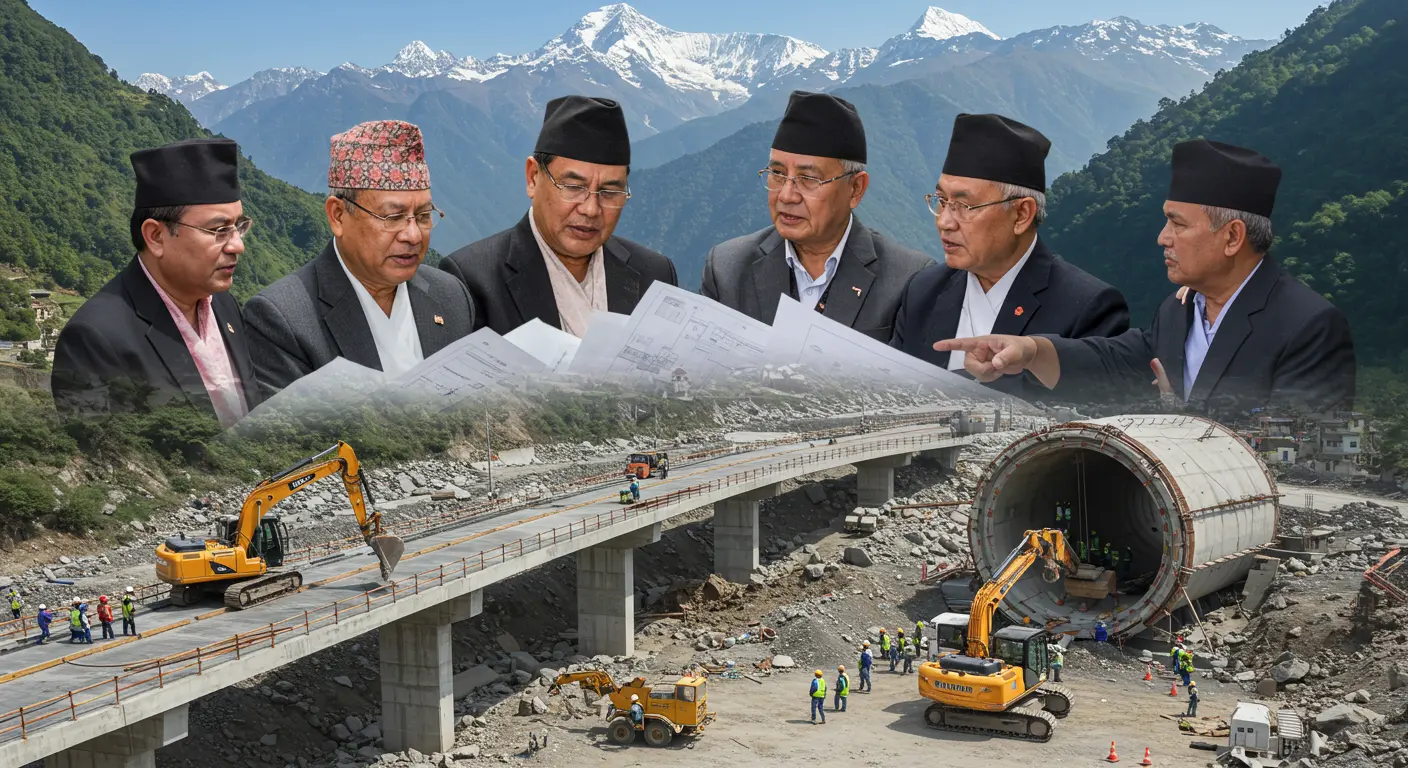
The headlines have been glowing, painting a picture of unprecedented success. Nepal is now exporting over 1,100 MW of electricity to India, a figure that represents a monumental leap in our nation’s productive capacity. For a country long plagued by power deficits, this surplus is a symbol of progress, a testament to the colossal investment poured into our river systems. It feels like a moment of arrival. But for the discerning investor and the strategist, this celebration is premature. Behind the record-breaking export numbers lies a dangerous structural flaw, a geopolitical monopsony that has trapped Nepal in a low-price paradox: we are selling more power than ever, yet we have almost no control over its price.
This is the “Single Buyer” risk, where India, by virtue of geography and infrastructure, stands as the only viable customer for our hydropower surplus. A monopsony is the inverse of a monopoly; it’s a market structure with many sellers but only one dominant buyer. This asymmetry of power fatally undermines our negotiating position. While the Nepal Electricity Authority (NEA) heralds export revenues, the independent power producers (IPPs) who generate this electricity often receive prices that barely cover their costs, if at all, especially during the wet season when supply peaks. We have built the factories but have given a single client the power to set the price for our entire output. This dynamic transforms our national ambition from being a regional energy powerhouse to being a low-cost, seasonal supplier to a neighbor with near-infinite market leverage.
This analysis will dissect the mechanics of this pricing trap, moving beyond the celebratory headlines to reveal the underlying economic and geopolitical realities. We will explore how the structure of the Indian power market inherently disadvantages Nepalese producers and why comparisons to Bhutan’s model are misleading. Most critically, we will argue that for savvy investors and policymakers, the strategic path forward—the real “Alpha”—is no longer in simply building more generation capacity. It lies in mastering the arts of energy storage, domestic demand creation, and building a modern grid that turns our greatest vulnerability into our most powerful asset.
The Illusion of a Single Market: How Indian Power Trading Actually Works
To understand Nepal’s predicament, it is essential to first dismantle the simplistic notion that we are selling power “to India.” In reality, we are selling power *on* the Indian grid, primarily through its dynamic, real-time marketplace: the Indian Energy Exchange (IEX). This is not a simple bilateral transaction but a relentless, high-frequency auction, and Nepal is entering this complex arena with significant structural disadvantages.
The NEA participates mainly in the IEX’s Day-Ahead Market (DAM). Here, prices are determined every 15 minutes through a double-sided auction mechanism, matching bids from buyers (distribution companies, or DISCOMs) and sellers (power generators). This is where the trap is sprung. A vast majority of Nepal’s hydropower projects are “Run-of-River” (RoR). This means they cannot store water; they must generate electricity as the river flows. Consequently, during the monsoon season, when our rivers are swollen and generation capacity is at its peak, Nepal is forced to sell this “must-run” power into the IEX. This massive influx of supply, combined with India’s own monsoon-driven increase in hydro and wind generation, frequently causes prices on the exchange to crash, sometimes to near zero. Nepalese producers are thus in the perverse situation of generating the most power when its market value is at its lowest.
This contrasts sharply with the arrangements for a large portion of India’s own domestic generators. Many Indian power plants, particularly thermal and state-owned projects, operate under long-term Power Purchase Agreements (PPAs) with state DISCOMs. These are typically 25-year contracts with a pre-determined tariff structure, insulating them from the daily volatility of the spot market. While they also participate in the IEX to sell surplus power, their core revenue is secured. Nepalese IPPs, whose offtaker is the NEA, are indirectly exposed to the IEX’s mercurial prices because the NEA’s ability to pay is tied to the revenue it earns from this very market. It’s a profound asymmetry: our producers are tethered to the most volatile segment of the market, while a significant portion of their Indian competition enjoys state-guaranteed price stability.
The economic term for this is being a “price-taker.” Nepal, with its relatively small (though growing) volume, cannot influence the market price. We must accept the price determined by the gargantuan supply and demand dynamics of the Indian subcontinent. When we bid our power into the IEX, we are competing against every other generator on the Indian grid, from massive coal-fired plants in Chhattisgarh to vast solar farms in Rajasthan. Without the ability to store our energy and sell it strategically during high-priced peak hours, we are relegated to being a supplier of last resort and first curtailment.
The Geopolitical Monopsony: Price-Taker, Not Price-Maker
The market mechanics of the IEX are only half the story. The other half is raw geopolitics. The reason Nepal is a price-taker is because India is a monopsonist buyer, a status rooted in physical infrastructure and strategic policy. All of Nepal’s high-voltage cross-border transmission lines terminate in India. To sell power to any other nation, such as Bangladesh—a country with a significant power deficit and a stated desire to import from Nepal—we must use Indian transmission infrastructure. This transit requirement grants New Delhi an effective veto over our energy diplomacy.
The 2021 procedure issued by India’s Ministry of Power, titled “Procedure for Approval and Facilitating Import/Export (Cross Border) of Electricity,” lays this out in stark terms. It effectively states that entities from countries sharing a land border with India will only be allowed to trade on the IEX if they do not also have a border with a third country with which India has a conflict. This is a thinly veiled policy aimed at excluding Chinese investment and influence in Nepal’s hydropower sector from accessing the Indian market. While seemingly a security measure, its commercial implication is to reinforce India’s monopsony. It sends a clear signal to international investors in Nepal: if you wish to sell power to India, your project’s financing and ownership structure must be palatable to New Delhi. This narrows our pool of potential investors and ties our energy development inextricably to the geopolitical interests of our southern neighbor.
Many point to Bhutan as a model to emulate. The “Bhutan Model” is based on long-term, government-to-government (G2G) agreements for specific projects, where India provides financing and guarantees the purchase of power at a pre-agreed tariff. This approach provides revenue certainty and de-risks projects, something sorely lacking in Nepal’s IEX-dependent model. However, this comparison is fraught with peril. While Bhutan has achieved price stability, it has done so by ceding a significant degree of strategic autonomy. Its prices are negotiated, not discovered in a competitive market, and are often lower than what peak power could command. Bhutan is locked into a single-buyer relationship by contract, whereas Nepal is locked in by infrastructure. Both paths lead to the same destination of dependency.
Nepal’s current path of allowing private sector IPPs to proliferate while the sole export route remains politically constrained creates the worst of both worlds. We have embraced the risks of market competition without access to a truly free and diversified market of buyers. Our private sector is taking on immense debt to build generation assets whose profitability is ultimately contingent on the spot price in a single foreign market and the goodwill of that market’s gatekeeper.
Domestic Drag: The Underdeveloped Engine of Consumption
The obsession with becoming the “powerhouse of South Asia” through exports has created a profound and dangerous strategic blind spot: the chronic underdevelopment of our own domestic market. While we chase low-margin export revenues, we are failing to build a high-value, captive consumer base at home. This is not just a missed opportunity; it is the core reason our energy sector is so fragile. A robust domestic market would act as a strategic buffer, capable of absorbing our energy surplus at predictable, regulated prices, thereby reducing our desperate reliance on the Indian spot market.
Nepal’s per capita electricity consumption languishes at around 351 kWh, a fraction of the world average (approx. 3,400 kWh) and significantly below our neighbors like India (approx. 1,255 kWh) and China (approx. 5,900 kWh). This is not due to a lack of generating capacity—we are now in a surplus. It is due to a failure of policy, imagination, and infrastructure. The two primary bottlenecks are the state of our domestic transmission and distribution (T&D) network and the lack of a coherent national policy to drive electricity adoption.
Our T&D grid is archaic and inadequate. While we have built massive generation plants and high-voltage export corridors, the “last mile” infrastructure that delivers power to homes and industries is crumbling. Frequent outages, voltage fluctuations, and an inability to connect new industrial loads are common, even in major urban centers. This grid weakness means we cannot reliably utilize our own generated power. It is a national embarrassment to have load-shedding in parts of the country during a time of energy surplus. Upgrading this T&D network is not an expenditure; it is the single most important investment in our energy security.
Simultaneously, our policies to spur electricity consumption are hesitant and inconsistent. The most glaring example is the schizophrenic approach to electric vehicles (EVs). One fiscal year sees favorable tax cuts that spur adoption, only to be reversed or diluted in the next, creating crippling market uncertainty. A decisive, long-term policy to make EVs the default choice for transport is a low-hanging fruit. Similarly, a concerted “Made in Nepal” campaign for electric cooking, backed by subsidies and awareness, could shift millions of households from expensive, imported LPG gas to cheap, clean, domestically produced electricity. Furthermore, where is the aggressive courting of energy-intensive industries like data centers or green hydrogen pilot projects? These industries seek precisely what Nepal has in abundance: clean, low-cost power. Yet, they also require absolute grid reliability—the very thing our domestic T&D network fails to provide.
The Strategic Outlook: Finding the Alpha Beyond Generation
For the strategic investor, the conclusion is clear and stark: continuing to pour capital solely into new Run-of-River generation projects is a high-risk, low-return proposition. It is an investment in a commodity whose price we do not control and whose only path to market is controlled by a single, powerful gatekeeper. The game is rigged. The “Alpha”—the opportunity for superior returns—is no longer in generation, but in solving the structural bottlenecks that create the pricing trap.
The future of profitable energy investment in Nepal lies in three key areas:
- Energy Storage: This is the game-changer. The ultimate solution to the RoR problem is to build large-scale energy storage, primarily through Pumped Storage Hydro (PSH) projects. PSH projects act like giant batteries. They use cheap, surplus electricity (either our own during the monsoon or even imported from India during its off-peak hours) to pump water to an upper reservoir. This water is then released to generate highly valuable electricity during peak demand hours when prices on the IEX are at their highest. This transforms Nepal from a simple price-taker into a sophisticated energy arbitrageur—an “energy banker.” We would no longer be forced to dump our monsoon surplus at fire-sale prices. Instead, we could store that energy value and dispatch it when the market pays a premium. Investment in PSH is an investment in pricing power itself.
- Transmission & Distribution Modernization: The unglamorous but essential work of rebuilding our domestic grid represents a multi-billion dollar investment opportunity. This involves creating smart grids, upgrading substations, and expanding the distribution network to every corner of the country. This accomplishes two goals. First, it creates a reliable domestic market capable of absorbing our surplus, guaranteeing a stable baseline of revenue for producers. Second, it de-risks the investments in demand-creation platforms like EVs and industrial electrification. For private capital, this could take the form of public-private partnerships (PPPs) for specific grid-enhancement projects, offering stable, long-term returns underpinned by regulated tariffs.
- Demand Creation Platforms: Instead of waiting for the government, private enterprise can lead in building the ecosystem for electricity consumption. This means investing in nationwide EV fast-charging networks, creating financing and service models for industrial clients to switch from fossil fuels to electricity, and even developing specialized industrial parks co-located with power sources, guaranteeing 24/7 reliable power to attract high-value tenants like data centers. These platforms create a captive, high-value domestic market for our energy.
The Hard Truth: Nepal’s hydropower risk profile has inverted. Ten years ago, the risk was in generation—would the project be built? Today, the risk is in offtake—will the power be sold at a profitable price? Chasing export dreams without first building a resilient domestic market and mastering energy storage is like building a world-class factory with only a single, unreliable dirt road to market. The single buyer risk will persist as long as we remain a simple generator. Our strategic imperative must shift from producing kilowatts to managing energy value. The next era of fortunes in Nepal’s energy sector will not be made by those who simply build another power plant on another river. It will be made by those who build the batteries, the smart grids, and the new industries that finally put Nepal in control of its own energy destiny.