The Roof of the World in the Grip of a Health Crisis
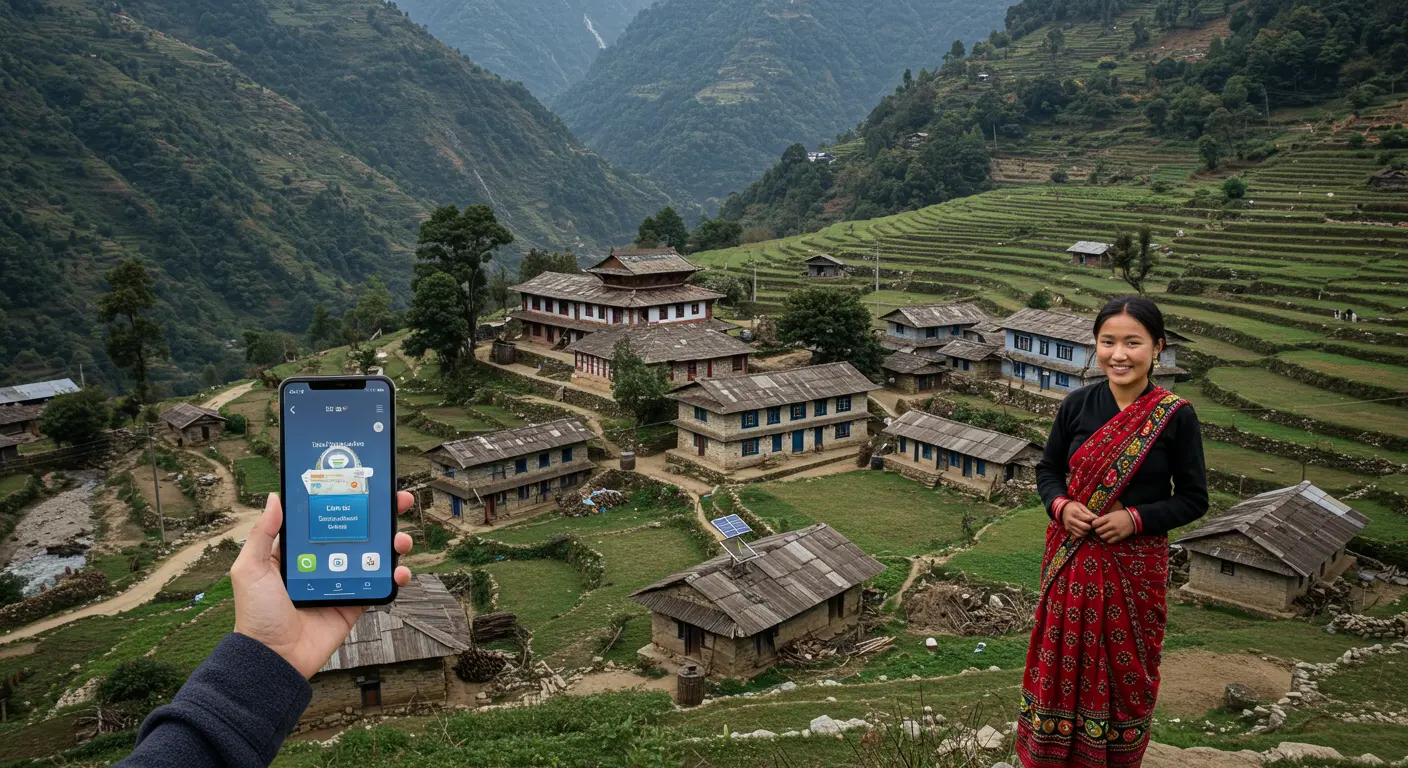
Imagine a resident of a remote Nepalese village, lost among the majestic peaks of the Himalayas. For him, a simple illness such as pneumonia or complications during childbirth turns into a death sentence. The nearest hospital may be several days away, a grueling trek along dangerous mountain trails.1In emergency situations, the only hope is expensive and risky helicopter evacuation, which is only available to a few.3This is not a scenario from an adventure movie, but a harsh reality for millions of Nepalese.
Nepal’s health crisis is not just a collection of individual problems, but a complex systemic collapse that experts increasingly call a “syndemic” – a situation in which several epidemics and adverse social factors mutually reinforce each other, creating a vicious circle.4Geographical isolation, compounded by the fact that 75% of the country’s territory is mountainous, is just the tip of the iceberg.5The country suffers from a catastrophic shortage of medical personnel: there is one doctor per 25,000 patients, while the WHO recommended rate is 1 per 1,000.6Most of the qualified specialists are concentrated in the capital Kathmandu, leaving rural areas with virtually no medical care.7
Added to this is the “triple burden of disease.”9On the one hand, Nepal still struggles with high levels of infectious diseases such as tuberculosis and diarrhea, as well as some of the highest maternal and child mortality rates in the region.10On the other hand, the country is facing an avalanche-like increase in non-communicable diseases (NCDs). Cardiovascular diseases have become the leading cause of death among both men and women.9Moreover, Nepal ranks first in the world in mortality from chronic lung diseases such as COPD, with a rate of 182.5 cases per 100,000 population.13This phenomenon is closely linked to poverty and the lack of modern infrastructure: the use of biomass (wood and dung) for cooking in poorly ventilated areas leads to chronic smoke poisoning, especially among women and children.9

The existing infrastructure is not able to cope with these challenges. Hospitals, mostly located in cities, are overcrowded and poorly equipped.12Their work is paralysed by frequent power outages, which forces them to rely on diesel generators and makes it impossible to use modern equipment.1This systemic dysfunction is not only costing patients their lives, it is also driving out the country’s most valuable resource: talented professionals. Doctors, engineers, and IT specialists are leaving in droves in search of better opportunities abroad, exacerbating the talent shortage and brain drain.3

Table 1: Nepal’s Health System in Numbers
Amid these seemingly insurmountable obstacles, a quiet revolution is taking shape in Nepal. Armed with smartphones and the cloud, a new generation of local tech entrepreneurs is challenging the old system. They are not waiting for roads and hospitals to be built. Instead, they are building digital infrastructure that erases borders and distances. These startups are creating a new model of healthcare that is accessible, effective, and tailored to Nepal’s unique circumstances. They are proving that innovation can be the most powerful medicine for an ailing system.
Digital Lifeline – Telemedicine Reaches the Unreachable

The Rise of the Digital Health Ecosystem
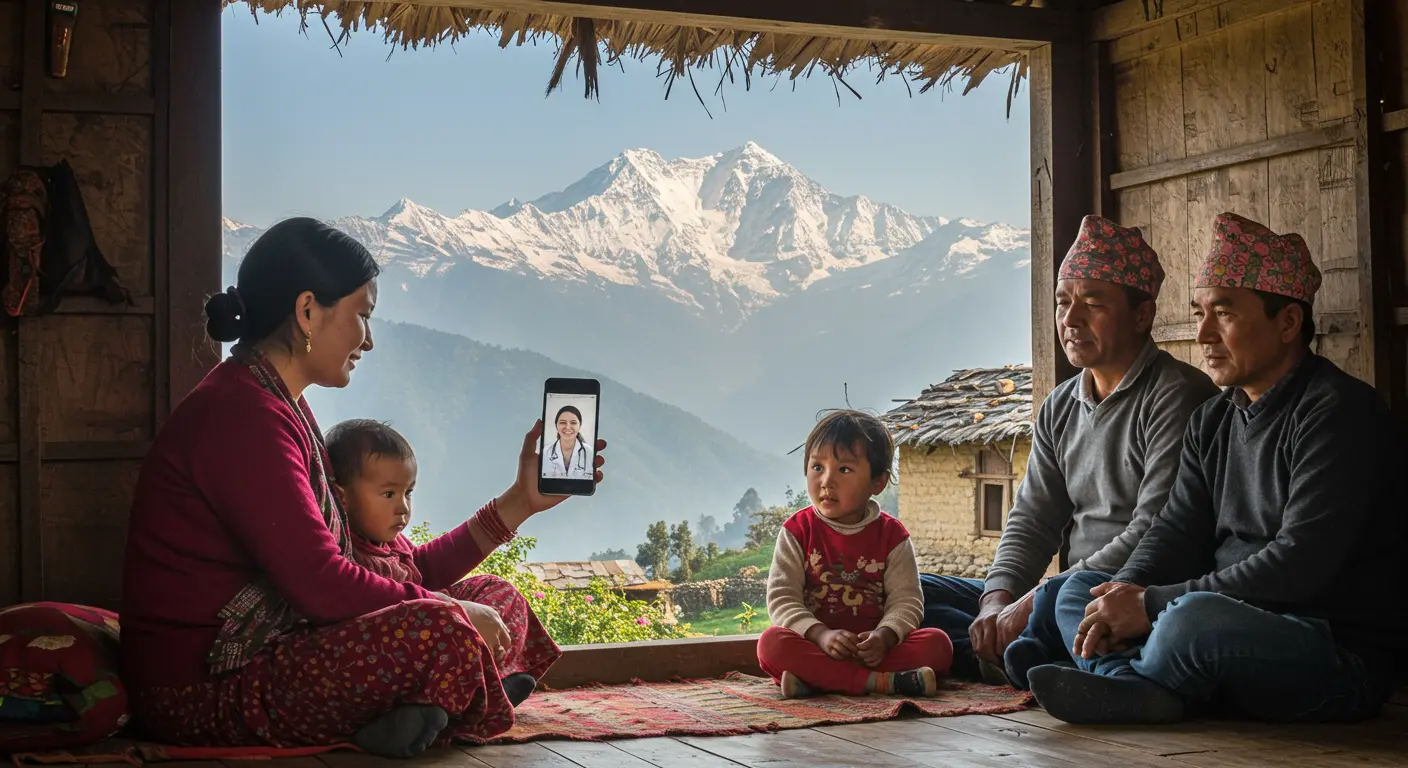
The COVID-19 pandemic has been the impetus for the digital transformation of healthcare in Nepal, as in many countries around the world. As lockdowns paralysed the country and hospitals were overwhelmed, demand for contactless healthcare services skyrocketed.20Telemedicine has evolved from a niche concept into a vital necessity.22This shift has received support at the highest level. The Nepalese government has adopted a strategic program called “Digital Nepal” (Digital Nepal Framework), in which healthcare was named as one of eight priority sectors.23The initiative set ambitious goals: the creation of a National Digital Healthcare Program, a centralized telemedicine center, and the introduction of electronic medical records (EMR) version 2.0.20
International partners have played an important role in laying the foundation for this ecosystem. The World Health Organization (WHO) and EU Humanitarian Aid (ECHO) funded the launch of the first national teleconsultation centre at Bir Hospital in Kathmandu.26The toll-free center has enabled thousands of people across the country to get advice from licensed doctors on COVID-19 and other illnesses, proving the model’s viability.26
This fertile ground has given rise to local startups offering increasingly complex and comprehensive solutions to the market. Their development shows how the country’s tech ecosystem is maturing: from simple consumer apps to complex B2B platforms that solve fundamental system problems.
Case Study: Jeevee – The Digital Front Door to Healthcare
If there is one company that has become synonymous with digital healthcare for Nepalis, it is Jeevee. Founded by entrepreneur Abhushan Jyoti Kansakar, the startup positions itself as a one-stop shop for all health and wellness needs.27Jeevee is a classic B2C (business to consumer) product that solves the main problem of the patient – the problem of access.

The heart of the platform is a multifaceted service that includes:
- E-commerce: Jeevee offers a wide range of health, baby care and beauty products. The company makes a point of working directly with brands and authorized distributors to ensure 100% authenticity of the products – a key factor in a market flooded with counterfeits.30
- Telemedicine: The Namaste Doctor feature allows users to book online consultations with doctors. The platform offers both free and paid (pro) versions, which include video calls with specialists, priority access, and the ability to upload lab reports to discuss with the doctor.29This democratizes access to specialists and allows for sensitive topics such as sexual or mental health to be discussed in a private setting.
- Digital recipes: This is one of Jeevee’s key innovations. A user can simply take a photo of a paper prescription and upload it to the app. A pharmacist on Jeevee’s side digitizes it, after which the medication can be ordered for home delivery. Not only is this convenient, but it also creates a digital history of the patient’s prescriptions.20
Founder Abhushan Jyoti Kansakar’s mission is to use technology to solve the problem of grueling queues and long waits to see a doctor by making healthcare more efficient and accessible.32Based on user reviews, Jeevee successfully meets this challenge by offering a convenient service at competitive prices, often lower than your local drugstore.29
Case: Cogent Health – creating a digital backbone for the system
If Jeevee is the façade of digital healthcare, Cogent Health is its foundation. This B2B startup does not deal directly with patients. Its mission is to solve the problems hospitals face: inefficiencies, paper chaos, and data fragmentation. As a subsidiary of F1Soft International, Nepal’s largest fintech conglomerate, Cogent Health is uniquely positioned and equipped to tackle this complex challenge.34
Led by CEO Daniel D. Shrestha, the company develops and implements comprehensive web-based hospital management systems with the electronic medical record (EMR) at its core.36CogentEMR is more than just billing software. It is an integrated platform that covers the entire hospital lifecycle.39:
- Patient registration and billing.
- Pharmacy and drug inventory management.
- Laboratory and radiology modules with equipment integration.
- Clinical modules for doctors with customizable forms for different departments (therapy, intensive care, emergency care).
- Integration with the national health insurance system to simplify claims.
Daniel D. Shrestha’s vision goes far beyond automating individual hospitals. His goal is to createinteroperable digital healthcare ecosystem.38He argues that digitalisation is “inevitable” and aims to ensure that patient data can move seamlessly between departments, labs and, ultimately, between different healthcare settings.34This will put an end to the practice of patients being forced to carry around piles of paper tests and reports.
The effectiveness of this approach has already been proven in practice. Cogent Health systems have been implemented in dozens of hospitals in all seven provinces of Nepal.34One illustrative study conducted at BTFCC Cancer Center demonstrated that after implementing their EHR, the quality of medical documentation, including medical history and physical examination notes, increased exponentially (e.g., medical history documentation increased from 26.5% to 82.5%).41This is direct evidence of how technology improves the quality of medical care.
The emergence of both a B2C player like Jeevee and a B2B company like Cogent Health in the market is a testament to the maturity of the Nepali tech scene. It is capable of producing not only simple apps but also complex infrastructure solutions. The real breakthrough will happen when these two worlds merge: when a doctor consulting a patient via the Jeevee app can access the patient’s complete medical history from the CogentEMR system installed at a partner hospital with a single click.
Cogent Health’s key strategic advantage is its close ties to the fintech industry. It is no coincidence that it is part of the F1Soft group, which includes Nepal’s leading payment gateway eSewa.34Healthcare and finance are inextricably linked. As Daniel D. Shrestha points out, of the billions of dollars spent on healthcare in Nepal, almost none flows through digital channels.43By integrating billing, digital payments, and claims processing into its EHRs, Cogent Health is solving one of the biggest headaches for both patients and clinics. This fintech foundation gives the company a huge competitive advantage and a clear path to sustainability.
Lab in a backpack – mobile diagnostics that conquers terrain

The Last Mile Problem: Why Diagnostics Doesn’t Work in the Mountains
Even if telemedicine allows a patient in a remote village to connect with a doctor in Kathmandu, a definitive diagnosis often requires a lab test. And here the technology collides with the unforgiving reality of Nepal’s geography. Transporting samples—blood, sputum, tissue—over mountain trails can take days, if it’s possible at all.2During this time, the precious biological material may deteriorate, rendering the analysis meaningless.
An even bigger problem is the so-called “cold chain.” Many vaccines, reagents, and tests require storage at a strictly defined low temperature from production until use.44In Nepal, with its difficult terrain and constant power outages, maintaining an uninterrupted cold chain in rural areas is virtually impossible.45This makes many modern medical advances inaccessible to the majority of the population. It is to solve this seemingly unsolvable problem that one of Nepal’s most innovative startups was created.
Deep Dive: Biovac Nepal – Reinventing Diagnostics for the Real World
Biovac Nepal is not just an IT company. It is a biotech startup engaged in the research, development and production of vaccines and diagnostic systems. Its founder, Dr. Dibesh Karmacharya, is a PhD scientist who, after many years of successful career in the US, returned to his homeland with a mission to solve fundamental problems of his country.47Biovac’s philosophy is not to import Western technology, but to create solutions that are specifically designed for the harsh realities and constraints of Nepal.

Innovation #1: Portable, on-site diagnostics.
Biovac’s key achievement is the creation of a “lab in a backpack.” The company uses and adapts advanced portable devices such as the Biomeme Thermocycler (for PCR analysis) and the Nanopore MinION (for DNA/RNA sequencing) to detect and identify pathogens directly on site – in a village, on a farm, at a water source.50 This technology is a game-changer:
- She eliminates the need for sample transportation, solving the “last mile” problem.
- The results of the analysis can be obtained in the mode real time, which is critical during disease outbreaks.
- The data can be geo-tagged and transmitted via 3G mobile network to a central database, creating a powerful tool for epidemiological surveillance and early warning of epidemics.51
The effectiveness of this approach was proven during the COVID-19 pandemic, when the Biovac team used portable sequencers to analyze wastewater in Kathmandu to track the spread of the virus and identify new strains.53
Innovation No. 2: Thermostable vaccine.
Biovac’s second breakthrough solves the cold chain problem. The company has developed and launched the Ranigoldunga™ vaccine against Newcastle disease, a viral disease that is devastating poultry in Nepal.45 What makes this vaccine unique is that:
- She thermostable, that is, it retains its effectiveness at room temperature for up to 30 days.46
- It comes in the form of tablets, which can be simply dissolved in water or dropped into the bird’s eyes.56
This seemingly simple solution has a huge impact. It makes vaccination accessible to farmers in the most remote villages where there is no refrigeration or electricity.
The vision of the founder, Dr. Dibesh Karmacharya, is to “connect knowledge with action” and see opportunities where others see only problems.57He deliberately left behind a comfortable life in the West to find a “sense of belonging” by solving Nepal’s pressing problems.58His approach is a shining example of how true innovation in developing countries is not a blind copying of Western models, but constraint based designBiovac is not trying to change Nepal to suit technology, it is creating technology to suit Nepal.
Notably, the company’s initial focus on veterinary medicine (poultry vaccines) is a strategic move to improve human health. In rural Nepal, poultry is a critical source of protein and income for families.46By protecting poultry from diseases, Biovac directly combats malnutrition and stunted growth in children, and also strengthens the economic stability of farms.45This approach, known as One Health, recognizes the inextricable link between the health of people, animals and the environment.59By building animal disease surveillance systems, the company is essentially building an early warning system for potential pandemics that could be transmitted to humans. It’s a deep, long-term strategy that addresses the root causes of public health problems.

Table 2: Key Innovators in Health-Tech in Nepal
Creating an ecosystem against all odds
The journey of Nepal’s health-tech startups is one of overcoming. They are building a future on a foundation full of cracks, but also relying on unexpected growth points that create a unique, albeit fragile, innovation ecosystem.

Tailwind: Factors driving growth
Despite all the challenges, digital health in Nepal has several powerful drivers.
- High mobile penetration: In Nepal, the number of active mobile connections exceeds the population (120-140%), meaning that almost every person has a mobile device.61This creates a basic platform for delivering digital services.
- Government support and policy: The government has demonstrated political will for digitalization. The Digital Nepal program, the declaration of 2024-2034 as the “IT Decade,” the allocation of budget for ICT projects, and the development of legislation to support startups create a favorable backdrop.64While implementation often lags behind declarations, these steps signal recognition of the sector’s importance.
- International aid and investment: Organizations such as WHO, USAID and the World Bank play a key role by providing funding, technical expertise and assistance in implementing pilot projects such as telemedicine centers or the introduction of electronic health records.26This support not only provides critical resources, but also serves as a seal of quality, attracting further investment.
- Growing talent pool: Every year, Nepalese universities graduate thousands of IT specialists and engineers, creating a talent pool for the growing industry.16Moreover, Nepal is becoming an attractive platform for outsourcing high-tech services to Western companies, which helps improve the skills of local specialists.69
Headwind: Obstacles and Chasms
However, innovators face enormous barriers, the main one being the deep digital divide.

The Great Digital Divide: This gap represents not one, but three interconnected problems that create a nearly insurmountable barrier to scaling digital solutions.
- Access Problem: High mobile phone penetration masks a harsh reality: internet penetration is only around 50%.63The gap between the city and the village is huge. While 79.3% of households in the Kathmandu Valley have access to the internet, in rural areas the figure is only 17.4%.70The quality of communication, especially mobile Internet, often leaves much to be desired.61
- Accessibility Issue:The cost of data and smartphones is prohibitive for many Nepalis. By some estimates, buying a smartphone can cost up to 33% of a person’s monthly income, making it a luxury item for the poorest.71
- The Skills Challenge (Digital Literacy):This is the deepest and most hidden part of the divide. According to the World Bank, 91% of Nepali adults cannot perform basic digital tasks, such as copying and pasting text.71There is a huge gender gap, with women having significantly less access to technology and the skills to use it.72This means that even with a free smartphone and free internet, the vast majority of the target audience in rural areas simply won’t be able to use the medical app.
- Infrastructure deficits: Chronic power outages remain the Achilles heel of any digital initiative that requires servers and equipment to run continuously.19Outside Kathmandu, there is virtually no modern IT infrastructure such as technology parks.16
- Policy and funding gaps: Despite loud statements, government support often remains on paper. The funds for startups promised in the past have never been fully implemented.64The regulatory framework in sensitive areas such as patient privacy and legal liability in telemedicine consultations is still under development, creating legal uncertainty for businesses.8
- “Brain drain”: The shortage of skilled mid- and senior-level managers, as well as the exodus of top technical talent abroad in search of higher pay and stability, seriously limits the ability of Nepalese companies to grow and scale.16
Against this backdrop, Nepal’s health-tech ecosystem is becoming a testing ground for a new global model of IT outsourcing. Whereas developing countries were previously attracted to simple, routine tasks, Nepal is now becoming a hub for highly intelligent, specialized work. Leading American healthcare companies are opening engineering hubs in Kathmandu not for call centers, but for developing complex analytical platforms, AI-based systems, and software compatible with international standards such as HL7/FHIR.69This is a sign of moving up the value chain. Startups like Cogent Health and Biovac are not just serving the local market – they are creating world-class technologies. Dr. Karmacharya’s announcement of plans to export vaccines is a clear example of this.56This opens up the prospect for Nepal to transform itself from a recipient of humanitarian aid to an exporter of advanced technological solutions, creating a new, sustainable engine for the national economy.
Conclusion: The Path to Health Without Borders
The story of Nepal’s health-tech startups is more than just a tale of technology. It’s a story of resilience, ingenuity, and a deep commitment to their country. In the face of one of the world’s worst health crises, made worse by geography and poverty, local entrepreneurs didn’t wait for outside help. They took matters into their own hands, proving that innovation born from real needs and constraints can be far more effective than one-size-fits-all solutions.
Companies like Jeevee, Cogent Health, and Biovac Nepal are creating a new paradigm. Jeevee is building a digital bridge between patients and doctors. Cogent Health is building a digital foundation for hospitals, making them transparent and efficient. And Biovac Nepal is rewriting the rules of the game in diagnostics and prevention, creating technologies that work where others fail. Together, they are shaping the contours of Nepal’s future healthcare system—a system where access to quality care is independent of where you live.
But their success is just the first step on a long and difficult journey. Technology is a powerful tool, but it is not a panacea. It takes a coordinated effort to turn the innovations of individual startups into a national transformation.
The way forward requires a two-pronged approach:
- Bottom to top: Continued support for grassroots innovation by entrepreneurs who best understand local issues. This requires creating a more favourable investment climate and simplifying bureaucratic procedures.
- Top down: Decisive and consistent action by the state and its international partners. The number one priority must be to bridge the triple digital divide. Investments must not only be made in laying fibre optics in rural areas (Access), but also in programs that make smartphones and Internet traffic accessible to the poorest segments of the population (Availability), as well as in large-scale nationwide campaigns to improve digital literacy, especially among women and older people (Skills ).
Without addressing this fundamental problem, cutting-edge digital health solutions will remain the preserve of the urban elite. Nepal needs long-term, predictable policies that support startups at all stages of their life cycle, from seed funding to international expansion. Policies that create conditions for retaining talent in the country, rather than exporting it.
The journey to “health without borders” has just begun. It is fraught with danger and uncertainty. But the innovators working on the “roof of the world” today have already proven that this goal is not just a utopian dream, but an achievable reality for the people of Nepal.farmers, women entrepreneurs, small shopkeepers — and help them build a more secure and prosperous future for themselves and their families. The goal is not just a digital Nepal, but a financially accessible Nepal for all.
Source used
- A New Hospital in Rural Nepal Brings Disaster Resilience, Carbon Neutrality, and State-of-the-Art Care – Direct Relief
- Healthcare in the Himalayas – Drones to the Rescue – She Maps
- A new hospital in rural Nepal brings disaster resilience, carbon neutrality, and state-of-the-art care – ReliefWeb
- Transforming health in Nepal: a historical and contemporary review on disease burden, health system challenges, and innovations – PubMed Central
- A new era for women’s health in rural Nepal – HMA – Hospital Management Asia
- Medical assistance in Nepal – TrekRussia.ru
- A Short-Term Medical Mission in Rural Nepal: Chief Complaints, Medications Dispensed, and Unmet Health Needs
- Potential Of Telemedicine In Nepal
- Battling NCDs in rural Nepal | NCD Alliance
- Human rights in Nepal – Wikipedia
- Top Public Health Issues in Nepal – Challenges and Solutions
- Health in Nepal – Wikipedia
- Nepal Leads World in Lung Disease Deaths: News 1, 26.08.2022
- Nepal | Climate and Clean Air Coalition
- Medicine and treatment in Nepal – Countries – Travel.ru
- Barriers to Local Digital Innovation in Nepal – Nepal Economic Forum
- NEPAL
- Nepal – WHO Data
- Challenges and opportunities for implementing digital health interventions in Nepal: A rapid review – PMC
- Nepal’s Healthtech Innovations: Opportunities to Strengthen Rural Healthcare
- The Scope of Telemedicine in Nepal during COVID-19 Pandemic – PMC
- Telemedicine in Nepal – Wikipedia
- Nepal’s Quest for a Digitized Healthcare System: The Importance of Electrification | NIPoRe
- Digital health system in Nepal – The Kathmandu Post
- Digitalising Nepal’s health sector – Healthy DEvelopments
- Nepal’s first teleconsultation centre to bridge barriers in treatment
- Aabhushan Kansakar – NYEF Startup Awards
- Nepalese Young Entrepreneurs Forum Grand Meet – Kathmandu College of Management
- Nepal’s health-tech industry is here to stay | Nepali Times
- Jeevee on the App Store
- Jeevee -Health, Baby & Beauty for Android – Download the APK from Uptodown
- Aabhushan Jyoti Kansakar || Health Tech In Nepal || Episode 62 – YouTube
- Nepalese Young Entrepreneurs’ Forum Held Entrepreneurship World Cup Nepal-Bhutan Joint National Finals 2021 For First Time in Nepal – || ShareSansar ||
- Digitalization of healthcare system is inevitable in Nepal | The Annapurna Express
- Annual List Of 100 People To Watch : BUSINESS
- Cogent Health Pvt.Ltd – Himalayas.app
- Digitalization of healthcare system. – Cogent Health
- Meet Cogent
- Cogent Health: Homepage
- Electronic Medical Record – Cogent Health
- An Updated Case Study: Successful Implementation of an Electronic Medical Record System at BTFCC in Nepal – Binaytara
- An Updated Case Study: Successful Implementation of an Electronic Medical Record System at BTFCC in Nepal – ResearchGate
- How Financial Services Companies are Moving into the Healthcare Sector – Access Health
- Staying on track: Nepalese health worker delivers vaccines along mountain trails
- Agriculture Technology To Feed The Future Of Nepal – One to Watch
- Newcastle disease burden in Nepal and efficacy of Tablet I2 vaccine in commercial and backyard poultry production | PLOS One
- Biovac – One to Watch
- How can our economy work when we are depending on exporting labour to other countries?
- Management Team – Center for Molecular Dynamics Nepal | CMDN
- Biovac Nepal
- Diagnostic Services with portable field-based detection … – Biovac
- Rapid genomic surveillance of SARS-CoV-2 in a dense urban community of Kathmandu Valley using sewage samples | PLOS One
- Rapid genomic surveillance of SARS-CoV-2 in a dense urban community using environmental (sewage) samples | medRxiv
- Rapid genomic surveillance of SARS-CoV-2 in a dense urban community using environmental (sewage) samples – medRxiv
- Newcastle disease burden in Nepal and efficacy of Tablet I-2 vaccine in commercial and backyard poultry production | bioRxiv
- Drug authority approves new Nepali vaccine against Newcastle disease found in birds
- Community based Rural Health Care in Nepal | Dr. Biraj Man Karmacharya | TEDxKathmanduUniversity – YouTube
- Dibesh Karmacharya Interview | On the cutting-edge |M&S INSPIRE | M&S VMAG – YouTube
- Dr. Dibesh Karmacharya | Research Communities by Springer Nature
- Invited Speaker Announcement: Dr. Dibesh Karmacharya
- Digital 2023: Nepal — DataReportal – Global Digital Insights
- Nepal’s persistent digital divide: From high penetration to inclusion – The Himalayan Times
- Digital 2024: Nepal — DataReportal – Global Digital Insights
- What is a startup? The government has a definition now – The Kathmandu Post
- STATE-OF-DIGITAL-RIGHTS-AND-SAFETY-IN-NEPAL-2024-1-1-2.pdf
- Blog – Digital Literacy Key to Achieving Nepal’s National Digital Goals – Ambition Guru
- Year 2081 in review: Nepal’s digital transformation amid progress and perils
- USAID Launches Health Direct Financing Project to Strengthen Nepal’s Health System
- Why US Healthcare Services are Being Built in Nepal – Techkraft Inc
- Digital Rights Weekly/Year 3/ Issue 26
- Nepal’s potential in digital sector faces regulatory, skill and cost issues
- Connecting the Unconnected: Bridging the Digital Divide through Grassroot Initiatives in Sri Lanka and Women’s Empowerment in Nepal – NetMission.Asia
- Challenges and opportunities for implementing digital health interventions in Nepal: A rapid review – Frontiers
- Publication: Nepal Development Update, April 2024: Nepal’s Economy on a Recovery Path but Private Investment Remains Low