The Spirit of Invention in the Himalayas
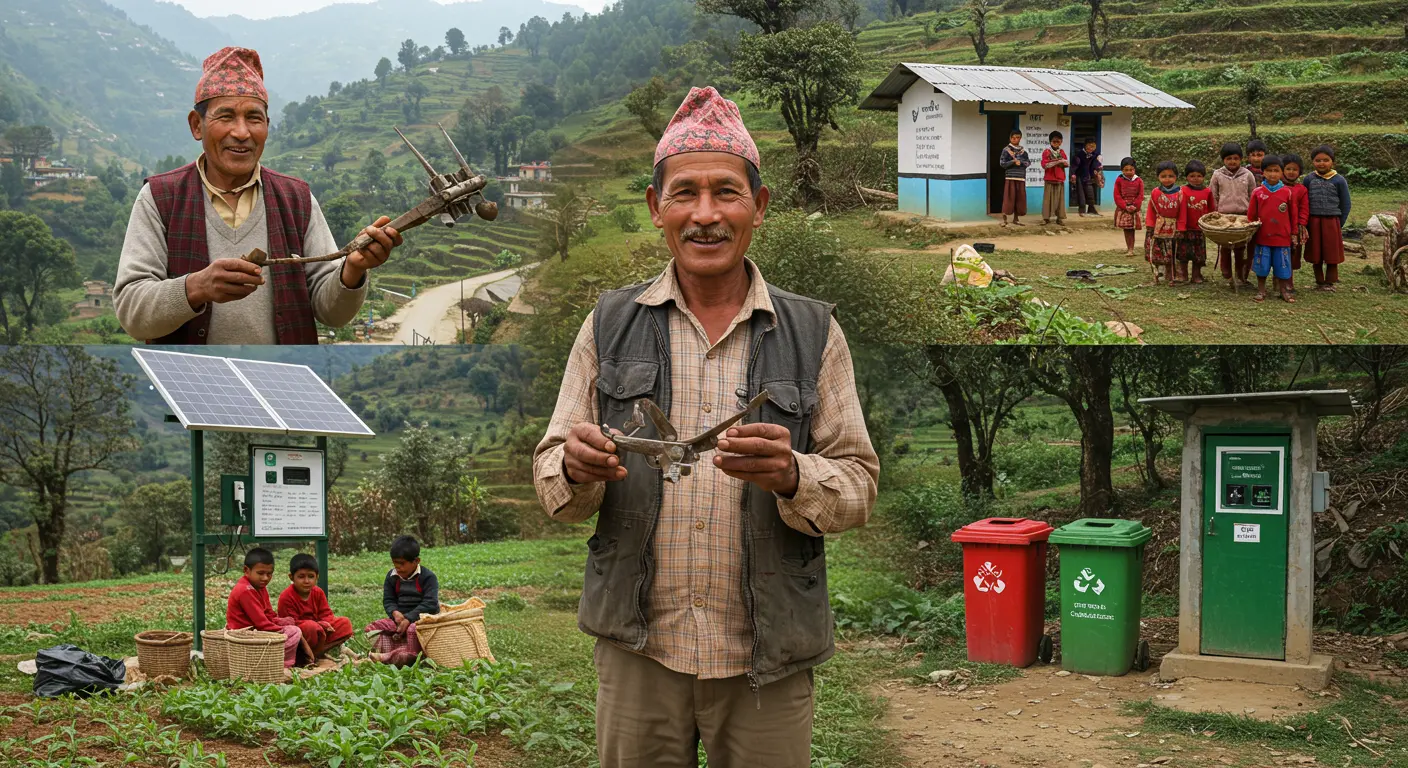
Imagine a farmer named Gopal Malhari Bhise. One day, while watching another man struggling to carry sacks of flour on his bicycle, he wondered: what if the bicycle could be used for more than just transportation? Soon, he dismantled the rear wheel of his bicycle and, using scrap materials, built a unique weeding device that allowed him to cultivate the land without a tractor or bullocks.1This simple yet brilliant story is the perfect embodiment of the concept known as “jugaad”.
Term “jugaad”, which comes from Hindi, describes not just an improvised solution created from meager resources, but an entire philosophy.2It is the art of doing more with less, finding opportunities in difficulties and turning limitations into advantages.2It was originally a survival tactic on the streets of India, where washing machines were turned into yogurt makers.3Today the principles Jugaad — flexibility, cost-effectiveness and inclusiveness — are being studied and implemented by global corporations such as Philips, Google and GE, seeing them as the key to innovation in the face of global economic instability.3
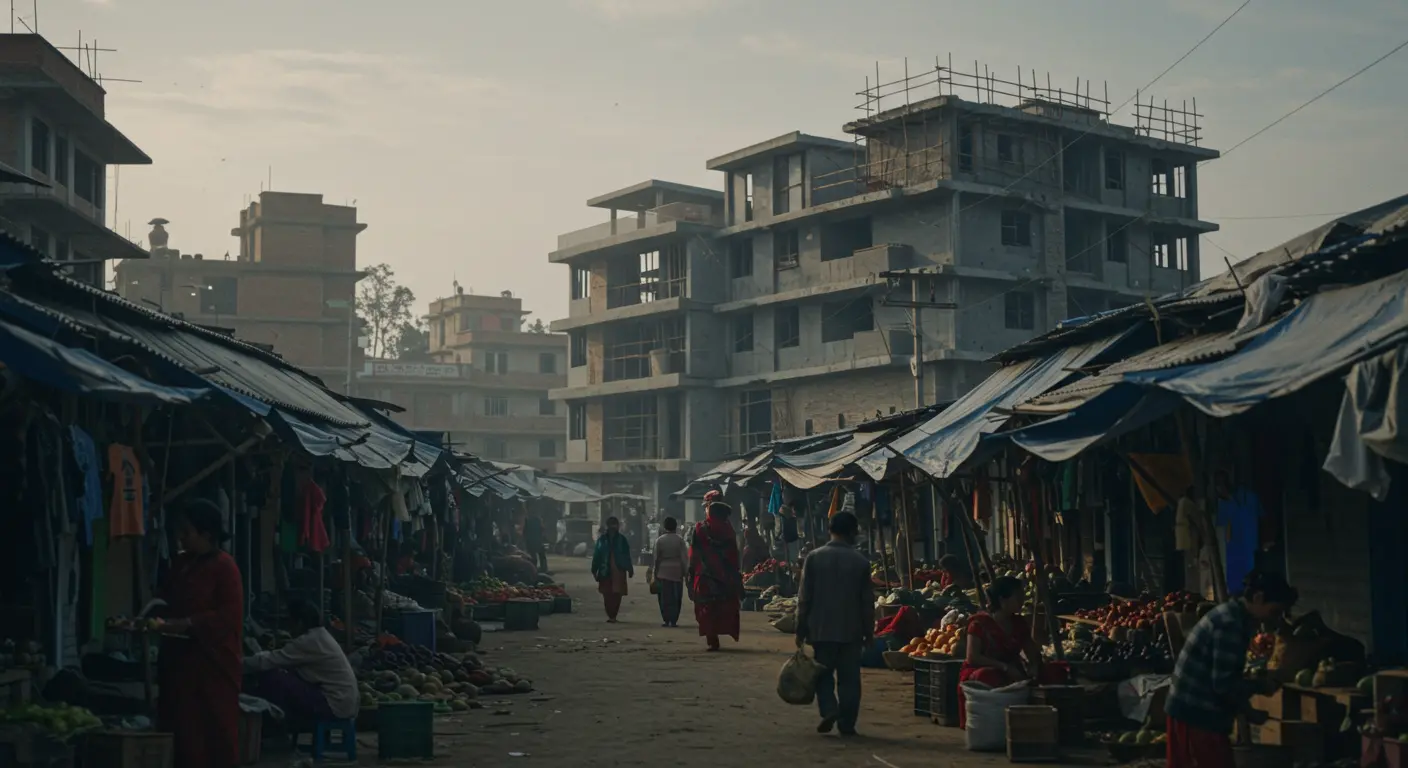
Nowhere is this spirit more evident than in Nepal. A quiet revolution is unfolding in a country struggling with deep socioeconomic and geographic challenges. Faced with systemic inefficiencies and gaps in public services, ordinary citizens and grassroots innovators are applying the principles ofJugaad to create solutions that are often more effective, sustainable, and locally tailored than large-scale government programs. This report explores how this bottom-up ingenuity is not only solving everyday problems in energy, agriculture, waste management, and education, but also creating unique and viable business models from scratch.
Landscape of Necessity: Why Grassroots Innovation Isn’t a Choice, but a Lifeline
To understand why Jugaad has become a vital necessity for Nepal, we need to look at the unique paradox of its economy. According to the World Bank, the country has made impressive strides in reducing poverty, cutting it in half in just seven years.6However, this success was achieved not through domestic economic growth, but almost exclusively through remittances from migrants, which account for up to 30% of the country’s GDP.6This creates a unique environment for innovation: people have a little more resources, but they lack formal opportunities and reliable government services.

This background is compounded by systemic problems that make centralized solutions ineffective.
- Economic stagnation: Nepal’s economy lags behind its South Asian neighbours due to low productivity, a weak industrial sector and limited job creation, fuelling a massive migration of youth abroad.7
- Geographical and ecological vulnerability: The country’s closed, mountainous location is a natural barrier to development.6In addition, Nepal is one of the most vulnerable countries in the world to climate change and natural disasters, which regularly cause economic losses.9
- Public Service Gap: Chronic inefficiency is a hallmark of the government system. It is characterized by excessive bureaucracy, lack of accountability, and a significant digital divide between urban and rural areas, which has hampered efforts to implement e-government.11Even after the transition to federalism, local governments face challenges in managing resources and providing quality services in health and education.13
It was this vacuum that had formed between the needs of citizens and the capabilities of the state that became fertile ground for prosperity Jugaad. The documented failures and ineffectiveness of government programs are not just the backdrop to this story; they are the primary catalyst for the emergence and success of grassroots solutions. This contrast between what the state fails to do and what local innovators achieve is the central tension driving this quiet revolution.
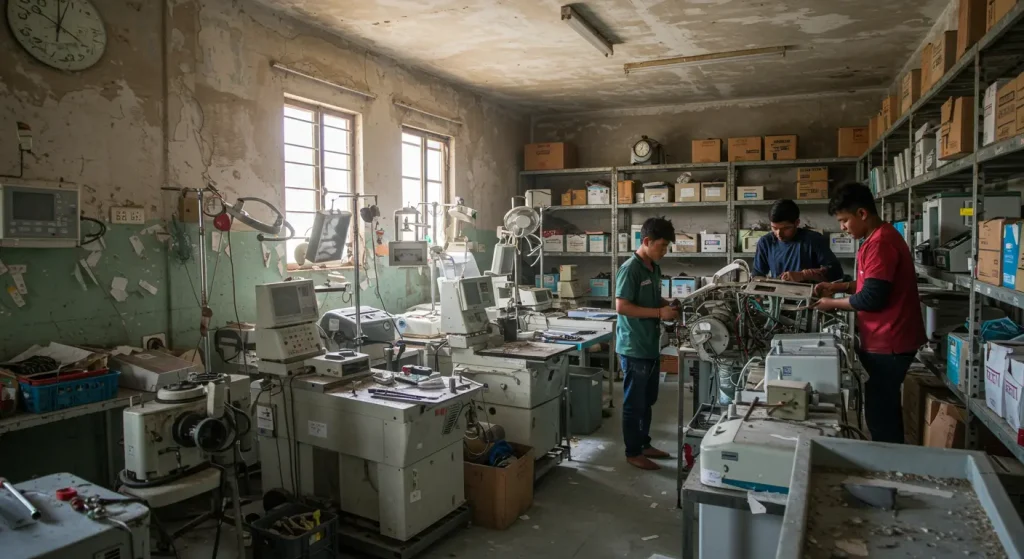
Let’s take a concrete example: Nepal’s public hospitals have accumulated hundreds of pieces of faulty medical equipment that the system cannot or will not repair.15At the same time, urban waste management systems are so inefficient that even waste sorted at the household level ends up mixed in the same garbage truck and sent to landfill.16In response to these systemic failures, grassroots initiatives are emerging. The National Innovation Centre is taking on the repair of medical equipment, and social enterprises such as Creasion and Clean City are creating working waste management systems. Thus, success in Jugaad is directly proportional to the failure of the formal system. It thrives by filling the vacuum of competence and action left by the state, making it a more powerful and necessary force than it would be in a country with effective governance. This relationship is causal, not accidental.
The Main Engine of Progress: How Mahabir Pune’s National Innovation Centre is ‘Hacking’ the System
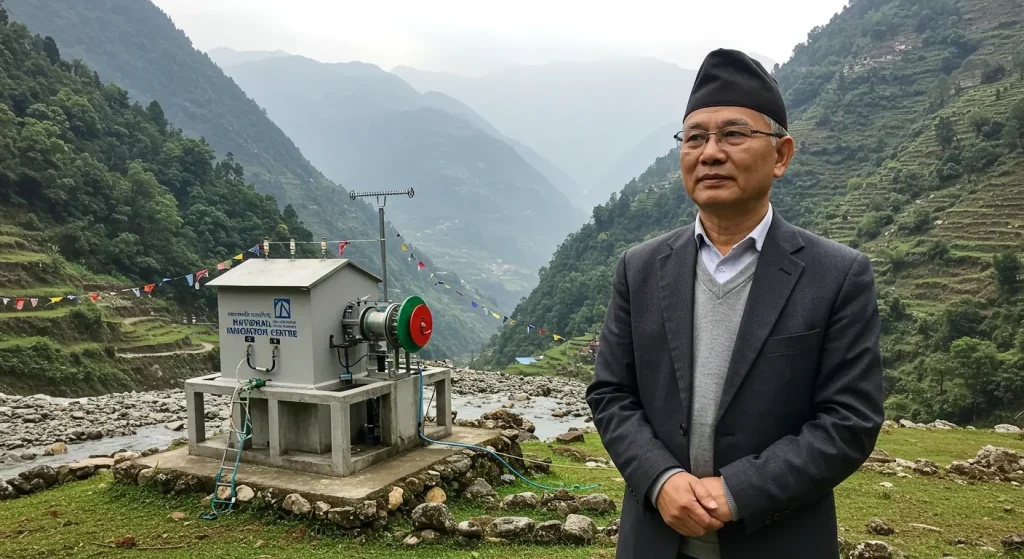
At the center of this innovation ecosystem is one of Nepal’s most colorful figures, Mahabir Pun. A winner of the prestigious Ramon Magsaysay Award, he is famous for bringing wireless internet to remote villages in Nepal.18Its flagship project, the National Innovation Centre (NIC), is essentially Jugaad at the meta-level: an institute created to support and scale grassroots innovation across the country.
What makes NIC unique is its revolutionary business model. Rather than relying on unpredictable donations, Poon plans to fund the center’s research and development by building and operating a 10-15 MW hydroelectric power plant. The electricity will be sold to the national grid, providing a steady income to support innovators.20This is a brilliant example of thinking. Jugaad: using one of Nepal’s key resources (hydropower) to solve another key problem (lack of R&D funding).
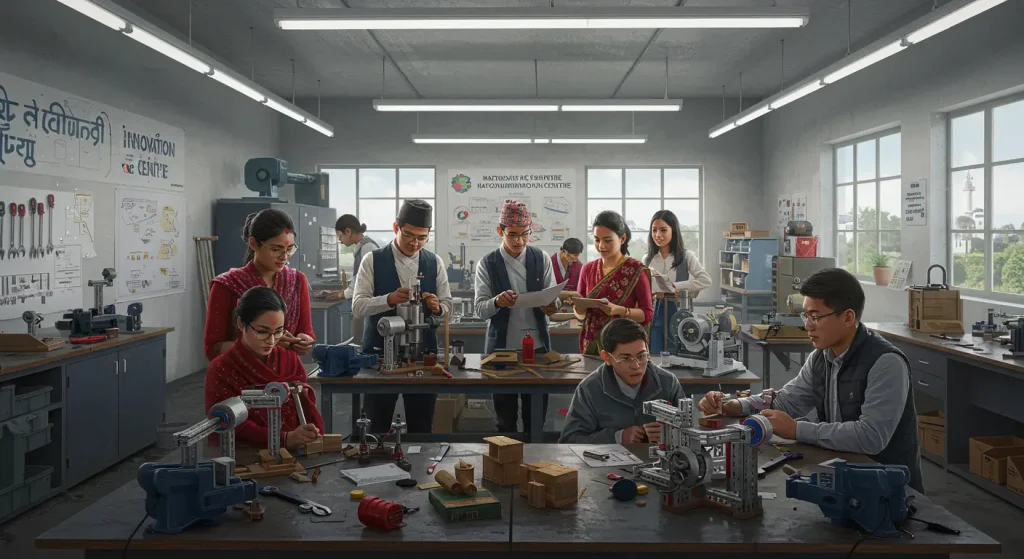
NIC is not just another innovator; it functions as an “operating system” for Jugaad in Nepal. It provides a platform, resources (funding, tools, mentoring) and an institutional framework that enables disparate grassroots ideas to develop, prototype and scale, fundamentally changing the innovation landscape. Jugaad-solutions often remain isolated and are difficult to scale. NIC was created to solve precisely this problem. It institutionalizes the innovation process by providing a structured path from idea to product, including support for prototyping, development, and protection of intellectual property.20An open-door policy (“We don’t require academic qualifications,” says Poon) democratizes innovation, making it accessible to anyone with a viable idea, not just those with formal degrees.19And the self-sustaining financing model ensures long-term independence from NGOs and government structures.
Case: Repairing the failures of the healthcare system

One of the most striking examples of NIC’s work was a project to repair medical equipment in public hospitals.15
- Scale and Impact: The center repaired 484 pieces of equipment, including 36 ventilators and 23 dialysis machines, at a total cost of 243 million Nepali rupees. The equipment had been gathering dust in warehouses for years due to minor faults, such as burnt-out power supplies or rodent-damaged wires. Hospitals, often financially motivated to buy new equipment, simply ignored the opportunity to repair it.15
- Meaning: Not only did the project save the government millions, but more importantly it got life-saving equipment back on the road for thousands of patients. It demonstrated how a small, nimble team of enthusiasts can outperform a large bureaucracy.
Case: Technologies for the “last mile”
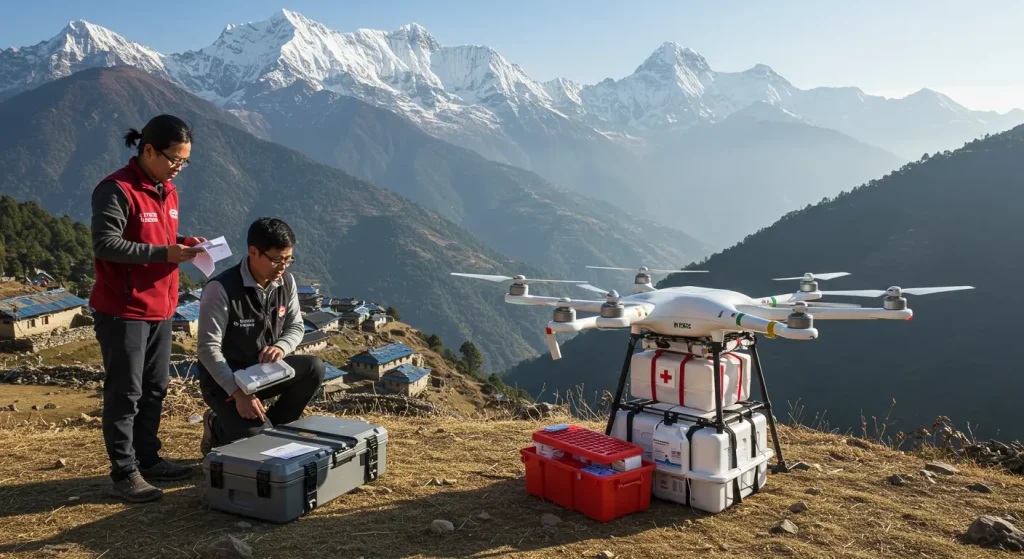
NIC is not resting on its laurels. Current projects include developing medical drones to deliver medicine and collect samples in remote villages.21The initiative aims to create a fully integrated telemedicine network linking rural clinics with urban hospitals. The center also supports the creation of affordable incubators for newborns, water filtration systems, and projects in agriculture and artificial intelligence. All of this is being developed by motivated youth, whom NIC supports regardless of their formal education.19
Cultivating Resilience: Rethinking Agriculture from the Bottom Up
Nepal’s agriculture sector, which employs more than 60% of the population, operates far below capacity due to underinvestment, lack of irrigation and vulnerability to climate change.9But here too farmers use Jugaad to build a more sustainable and profitable future.
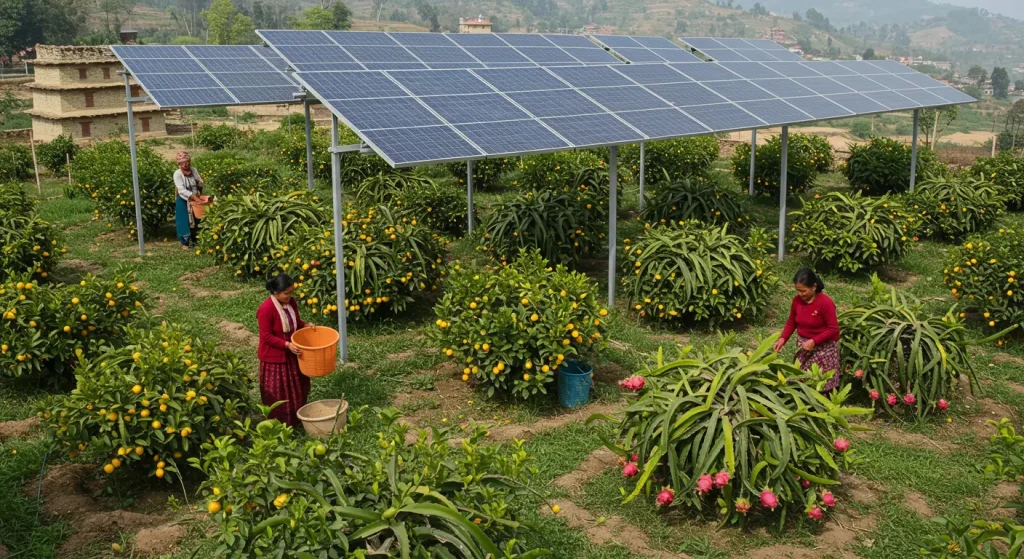
Innovations in Nepalese agriculture are evolving from simple “hacks” (like a modified tool) to complex, integrated “systems” that combine multiple types of value. These are no longer just smart solutions; they are smart, sustainable business models. If at an early stage Jugaad often a single-purpose tool, like a bicycle plow1, then more recent examples demonstrate a higher level of thinking. An agrovoltaic project is not simply about producing energy or growing crops; it is about doing both on the same piece of land, while also addressing water and public infrastructure (school, health center). It combines energy, water, food and social benefits into one integrated model. Similarly, an agroforestry model combines food production, soil restoration, biodiversity conservation and a financial instrument (carbon credits). This evolution shows that thinking JugaadWhen applied systemically, it can create multifaceted solutions that are much more sustainable and valuable than their single-purpose counterparts.
Water-saving agriculture
IDE-Nepal has pioneered the development and promotion of Low Cost Drip Irrigation (LCDI) systems.24These kits, costing only $25-$30, save 50-60% of water compared to traditional irrigation methods. This simple technology allows small farmers to grow high-value vegetables during the dry season, often recouping their investment in a single harvest and significantly increasing family income.24This is in stark contrast to large, expensive and slow state-run irrigation projects.26
Creative and regenerative solutions
- Agrovoltaics: A UNDP-supported pilot project in the village of Tinghare is demonstrating the future of agriculture. Here, solar panels are installed above farmland. This single system provides clean electricity to the community, powers pumps for drinking water and irrigation, and allows high-value crops such as lemons and dragon fruit to be grown under the panels.28
- Biofertilizers and natural protection against pests: Farmers are setting up their own businesses to produce and sell vermicompost (organic fertilizer made from worms), solving the chronic shortage of chemical fertilizers and improving soil health.29Simple yet effective practices such as planting marigolds as a natural insect repellent are also becoming popular.30
- Regenerative agroforestry: Projects that integrate trees into agricultural landscapes help reverse soil degradation, increase biodiversity and create new sources of income from timber, organic products and even carbon credits.23
Power and Connectivity for the Nation: The Rise of Community Energy
Historically, Nepal has suffered from a severe energy crisis with long power outages and slow grid expansion to rural areas, creating a huge need for decentralized solutions.31Grassroots energy initiatives in Nepal are not just a temporary replacement for the national grid; they are building a fundamentally different type of energy infrastructure – decentralized, community-owned, resilient to shocks, and built from the ground up on modern, market-based digital payment systems.
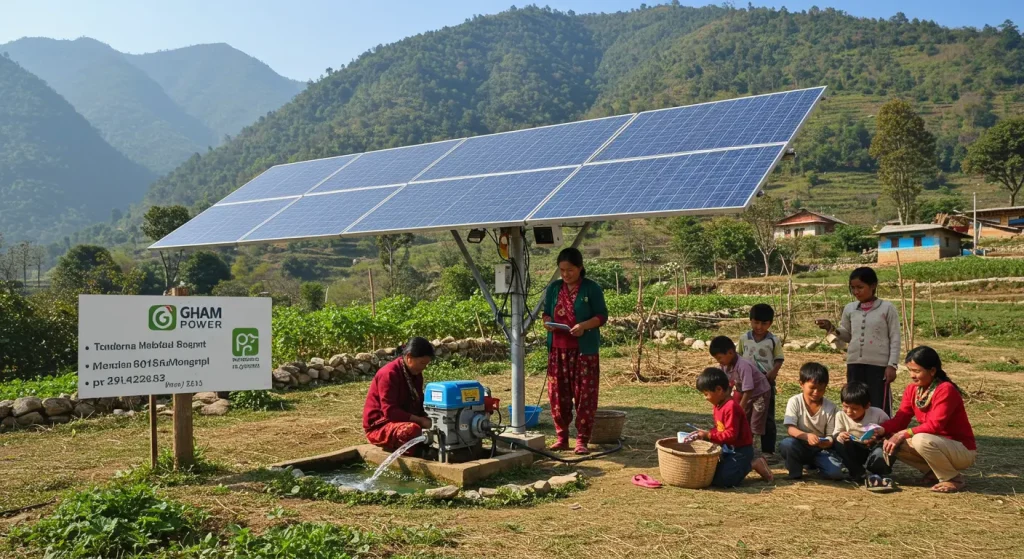
The traditional path to energy development is the slow and expensive construction of a centralized national grid. Nepal’s innovators, faced with the failure of this model, did not try to replicate it on a smaller scale. Instead, they leapfrogged it. Gham Power’s use of PAYG, smart meters, and mobile money31— is a technology that is often implemented into existing networks in developed countries; in Nepal, it has become a fundamental business model. Community-owned models31, and proven stability of micro hydroelectric power plants after an earthquake32demonstrate a system that is more socially and physically robust than one that is managed from above. Gham Power’s strategic shift towards productive use systems demonstrates sophisticated market adaptation, proving that it is not just about social good, but about building a viable, scalable business. This is a blueprint for a new generation of utility, not a stopgap.
Solar Microgrids Gham Power
Gham Power has pioneered Nepal’s first community-owned solar microgrid project.31Their innovative business model combines grant funding and commercial loans with a pay-as-you-go (PAYG) system, using smart meters and mobile money (eSewa) for payments.31This made electricity accessible and affordable. Gham Power’s key insight was that financial sustainability depended on “productive end use.” Households using energy just for lighting weren’t enough; they needed commercial customers. This led them to pivot to providing solar irrigation systems to farmers, which directly increased farmers’ incomes by 30-100% and created a more reliable customer base.31
Microhydro Innovators
History knows other heroes, such as Bir Bahadur Ghale, who, without formal engineering training, electrified thousands of rural homes by creating hydro-mini-grids.33The resilience of these local networks is striking: for example, a micro-hydroelectric power station in the village of Barpak was restored after the 2015 earthquake and became the basis for the community’s recovery, keeping flour mills running and communications facilities operational.32
From Waste to Wealth: Social Entrepreneurs Building a Circular Economy
Nepal’s cities like Kathmandu are choked by garbage. Every day, 1,200 metric tons of solid waste are generated, much of it ending up in overflowing landfills, and efforts to separate waste at the household level are undermined by mixed collection.16
The most profound impact of these waste management enterprises is their ability to formalize a previously informal, dangerous, and marginalized sector. They are not just cleaning up cities; they are building an entirely new, dignified, and “green” economic value chain from scratch. Waste collection in Nepal has traditionally been carried out by poor and marginalized people without protective equipment, fair wages, or respect.34Companies like Creasion and Clean City are purposefully integrating these workers into their formal operations.34They provide tangible benefits: protective equipment, training, formal employment, fairer wages, and even insurance coverage.34Clean City has a particular focus on women’s empowerment.35By linking these pickers to pressing machines and a network of processors, they transform them from informal pickers into micro-entrepreneurs within a structured supply chain.34It is a powerful act of social and economic engineering that solves an environmental problem (waste) by creating a solution to a social problem (marginalization and unsafe work).
Case: Creasion and the “green route”
Social enterprise Creasion has developed an innovative ‘reverse transport’ model, using empty return trips of trucks to transport plastic waste from Kathmandu to recycling facilities.36The GreenShift Nepal project established a network of recycling centres along major highways, run by youth ambassadors, forming a so-called ‘green route’.34
Case Study: Clean City and Women’s Empowerment
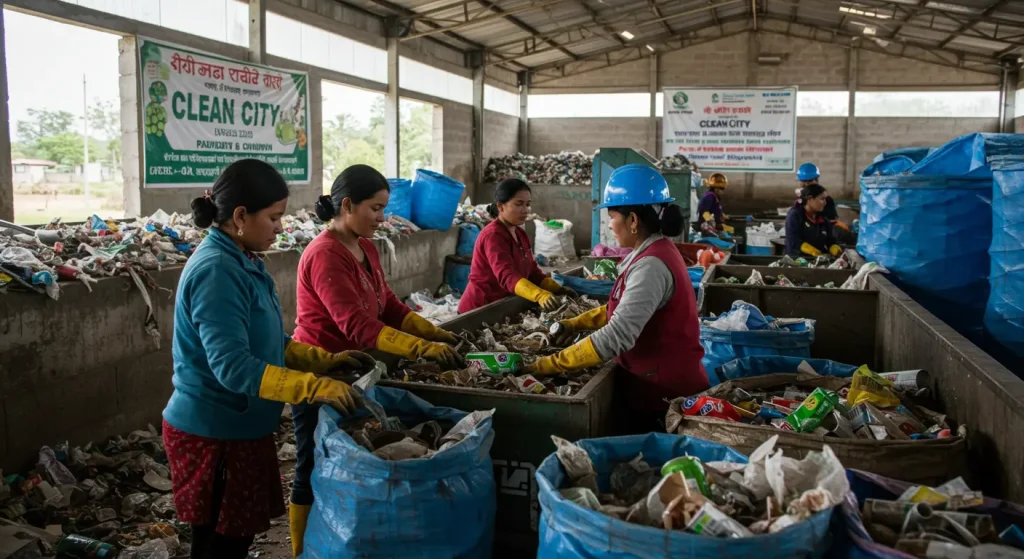
Another example is Clean City, a social enterprise in Chitwan created to build a self-sustaining community-based waste management system.35Their model is based on waste separation at source, composting and recycling with the aim of reducing landfill waste by 90%.35But their greatest achievement is social. The company employs predominantly women (more than 70% from marginalized communities), providing them with fair wages, protection, training, and financial independence.35
Learning by doing: Community education that produces results
Nepal’s education system faces serious challenges: inequalities in access due to geography, gender and ethnicity, and difficulties in maintaining quality.38And here grassroots initiatives demonstrate amazing effectiveness.
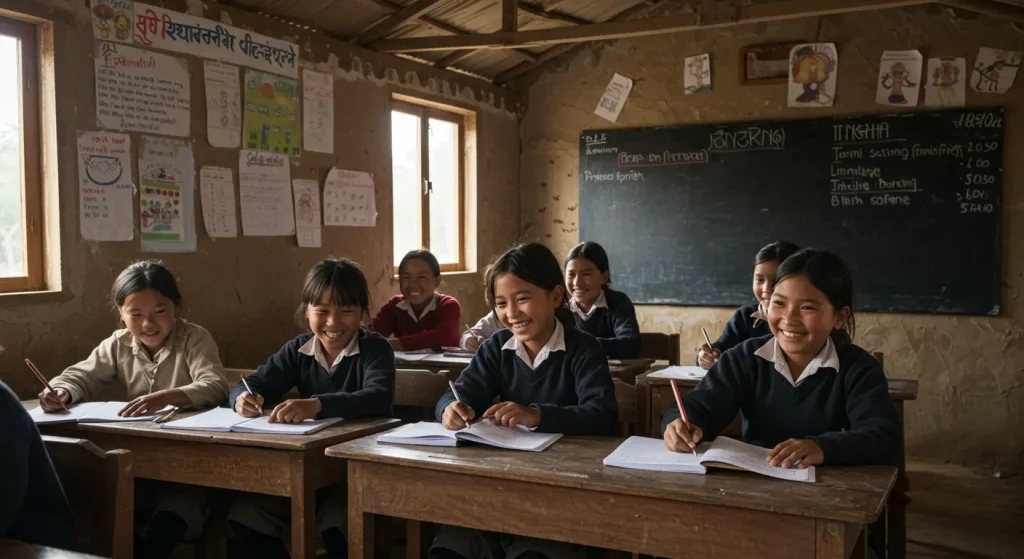
Their success is due to their holistic, human-centered approach. They understand that education is not a stand-alone product, but part of a complex network of social, economic, and cultural barriers. They design their solutions for the entire system, not just one part of it. While a government approach can focus on building a school or standardizing a curriculum13, grassroots projects show that even if there is a school, children (especially girls) will not attend if they cannot afford it, cannot get to it, or are forced into early marriage for social and economic reasons.40NAFAN-RYTHM’s solution is systemic: they provide scholarships (an economic barrier), transportation (a logistical barrier), and life skills programs (a socio-cultural barrier). Similarly, Community Learning Centers (CLCs) recognize that a community needs more than just schooling for children. By offering adult literacy and vocational skills, they make the center relevant and valuable to the entire community, creating a virtuous cycle of learning and economic improvement.
Case: NAFAN-RYTHM Partnership
This partnership developed a comprehensive approach to education for the marginalized Chepang community.40The results are stunning:
- School attendance increased from 60% to 95%.
- Attendance reached 90%.
- Literacy and numeracy rates increased by 35%.
- Most impressively, 70% of girls previously condemned to early marriage (the fate of 60% of Chepang girls) remained in school.40
The secret of their success is that they eliminate barriers on the path to education: provide transportation, scholarships, mentoring and life skills workshops (hygiene, health care).40
The Rise of Community Learning Centers (CLCs)
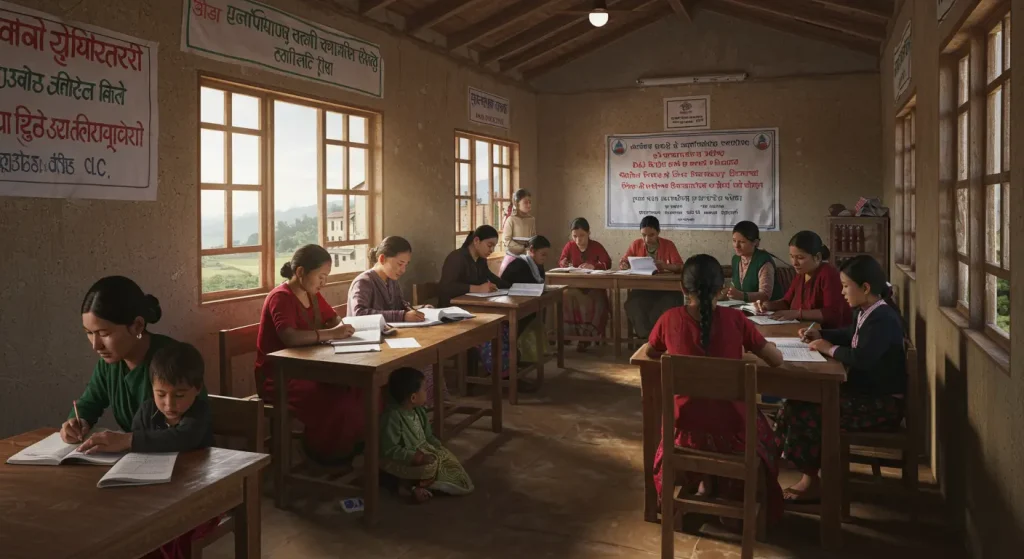
In rural areas where formal schools are inaccessible or ineffective, CLCs become vital community hubs.41They serve many functions: they offer not only primary education for children, but also literacy courses for adults (especially women), vocational training (sewing, carpentry, computer skills) and health education. They are institutions of continuous, practical learning for life.41
Conclusion: The Jugaad Plan: Lessons from Nepal’s Quiet Revolution
History Jugaad In Nepal, it’s a story of evolution: from clever hacks to complex systems, from individual survival to community resilience, and from informal solutions to formal, sustainable business models. Nepal’s innovators aren’t just solving their own problems; they’re creating a blueprint for a more sustainable and resourceful future for everyone.
From their experience, we can draw key principles of this new model of innovation:
- Accept limitations as a catalyst: Scarcity forces you to focus on what matters, which leads to cost-effective and breakthrough solutions.2
- Build systems, not just products: The most effective innovations are integrated models that combine multiple types of value, such as agrovoltaics or holistic education.28
- Community ownership is sustainability: Decentralized community-owned models (in energy, waste management) are more reliable and sustainable than top-down directives.31
- Empower the marginalized: The most effective solutions often come from the most vulnerable groups, especially women, and empower them, delivering both economic and social benefits.29
In an era of global austerity and complex challenges, principles Jugaad — lean, flexible, and inclusive innovation — is more relevant than ever. The quiet revolution in Nepal shows that the most powerful solutions often emerge not from corporate boardrooms, but from the minds of ordinary people who dare to reimagine the world with what they have at hand.
Sources used
- Jugaad Innovations Transforming Rural India
- Jugaad Innovation: Book Written by Navi Radjou, Jaideep Prabhu & Simone Ahuja
- Jugaad Innovation: How to Disrupt-it-Yourself
- The Power of Desperation and Jugaad in My Entrepreneurial Journey
- Buy Jugaad Innovation in Nepal
- Climbing Higher: Toward a Middle-Income Nepal
- Nepal: World Bank Report Outlines Key Reforms to Boost Growth, Create Jobs
- Nepal – World Bank Documents and Reports
- Economy | Nepal | World Bank Data360
- Nepal Overview: Development news, research, data | World Bank
- E-Governance in Nepal: Challenges and Opportunities
- Service Delivery by Government in Nepal: Problems and Suggestions
- Public-Service-Delivery-Challenges-and-Opportunities-in-Federal-Nepal.pdf
- Public Service Delivery – Challenges and Opportunities in Federal Nepal
- National Innovation Centre repairs 484 medical devices in …
- Insights into Nepal’s Waste Management: My Observations & Reflections
- Assessment of Current Waste Management Practices in Nepal: Challenges and Opportunities for a Circular Economy
- Clemson University to welcome Nepal’s national innovator for lecture, networking reception
- Mahabir Pun’s dream of National Innovation Center, Nepal – NIC
- Mahabir Pun National Innovation Center Nepal
- Mahabir Pun, Nepal Chairman National Innovation Center
- NIC | Projects – National Innovation Center Nepal
- Regenerative Agroforestry for Sustainable Farming, Nepal
- Low Cost Drip Irrigation, Jhikhu Khola watershed, Nepal
- Low-cost technologies – SMALLHOLDER IRRIGATION TECHNOLOGY: PROSPECTS FOR SUB-SAHARAN AFRICA y0969e
- 52130-001: Mechanized Irrigation Innovation Project – Asian Development Bank
- Nepal: Modernizing Irrigation System for Economic Growth and Poverty Reduction
- Nepal: Transforming Lives with Agrovoltaic Farming | United Nations Development Programme
- Supporting Female Farmers in Nepal with Innovative Biofertilizer | Bayer Foundation
- Regenerative Agriculture Helps Nepali Farms Bloom – iDE Global
- Gham Power: Lessons learned from The Rural Electrification Micro …
- Energy – Gorkhaly Foundation
- Micro-hydro off-grid solutions in Nepal: from grassroots innovation to a leading nation
- Prayaash strengthens waste workers for zero waste Nepal | AEPW
- From waste to a waste-to-energy model in Nepal – Florence School of Regulation
- Disrupting Waste Management – B360 – Business 360 Nepal
- OUR STORY | Clean City
- LET US LEARN NEPAL: MULTIPLE PATHWAYS TO LEARNING | UNICEF USA
- Education | UNICEF Nepal
- The Ripple Effect of Education: Impact on Life in Rural Nepal
- Community Learning Center in Nepal – Empowering Communities
- How UNDP’s initiative in sustainable waste management is promoting inclusion
- Annual Report 2024- UNDP Nepal pdf
- Annual Report 2023 | UNDP NEPAL
- Annual Report – 2022 – United Nations Development Programme