Political Carousel in the Himalayas
Situated between two Asian giants, India and China, Nepal’s political landscape has long been characterized by turbulence. But 2024 has been the epitome of this chronic instability, with a kaleidoscopic shift in alliances that has cast doubt on the country’s ability to implement long-overdue economic reforms. The year began with one ruling coalition, and by midsummer, a previously unthinkable one had emerged.
In March 2024, Prime Minister Pushpa Kamal Dahal, better known as “Prachanda,” the leader of the Communist Party of Nepal (Maoist Centre), made a dramatic political about-face. He broke his alliance with the country’s largest party, the Nepali Congress (NC), and formed a new left-wing coalition with his main opponent, the Communist Party of Nepal (Unified Marxist-Leninist), or CPN-UML.1This alliance, however, proved short-lived. Already in July, the political scene was transformed again. The two largest and historically hostile forces – the CPN-UML led by Khadga Prasad Sharma Oli and the Nepali Congress – agreed to form a “grand coalition”. This maneuver led to Prachanda’s resignation and KP Sharma Oli’s return to the prime minister’s post for the fourth time.1
The formation of this alliance of former bitter rivals was a landmark but also highly risky development. The new government, with a comfortable majority in parliament, was presented as a government of “national consensus,” capable, in theory, of overcoming political paralysis and pushing through key legislation.7But the move has raised a fundamental question, the answer to which will determine Nepal’s future for years to come: Is this “grand coalition” a genuine attempt to achieve stability and kick-start economic reform, or is it just another cynical power-sharing deal in an endless cycle of self-serving politics that is doomed to fail and further exacerbate the economic stagnation that is plaguing the nation?
Chronic Instability: The Anatomy of Nepalese Politics
The events of 2024 are not an anomaly, but a symptom of a deep, systemic disease that has afflicted Nepalese politics. Since the abolition of the monarchy and the declaration of a federal democratic republic in 2008, the country has been trapped in a continuous cycle of the formation and collapse of fragile coalition governments.6The electoral system, which combines majoritarian and proportional principles, has led to a fragmented parliament, where no party can obtain an absolute majority. As a result, coalition government has become a political inevitability, a “fait accompli.”7

The political arena is dominated by three key figures and their parties, forming a complex triangle of power:
- CPN-UML (Communist Party of Nepal – United Marxist-Leninist) led by current Prime Minister KP Sharma Oli. Oli is an experienced and often controversial politician known for his abrasive style and nationalistic rhetoric.5
- Nepali Congress (NC) — the country’s oldest party, traditionally considered centrist and pro-Indian. It is led by former Prime Minister Sher Bahadur Deuba.11
- CPN (Maoist Centre) under the leadership of former rebel leader and multiple-time prime minister Pushpa Kamal Dahal (Prachanda). Although his party is only the third-largest in parliament, Prachanda has wielded his position skillfully, often playing the role of “kingmaker” and shifting alliances to maintain influence.6
Analysis shows that coalition changes are rarely driven by ideological differences. The driving forces are the personal ambitions of leaders, behind-the-scenes agreements on the division of ministerial portfolios, and the struggle for power.12The frequent breaks and reconciliations between Oli and Prachanda are a clear confirmation of this.2This “intense party politics and ideological tribalism” invariably leads to poor governance and lack of continuity in public policy.10
The formation of a “grand coalition” in 2024 was partly a response by the two establishment parties (NC and CPN-UML) to the growing influence of new, smaller parties such as the National Independent Party (RSP). These new forces, which had achieved success in recent elections, had begun to exert a disproportionate influence on policy, receiving key ministerial posts in exchange for supporting fragile coalitions, to the increasing irritation of the old political heavyweights.13
This context allows us to understand more deeply the true nature of the current alliance. The unification of the two largest, ideologically opposed parties was presented to the public as a step necessary to solve specific problems, such as amending the constitution and reforming the electoral system.7But there is a different logic behind this rhetoric. The traditional model of coalitions with small parties has proven chaotic and unstable.2The old elites, represented by the CPN-UML and NC, perceived this chaos and the rise of new political forces as a direct threat to their long-standing dominance. Thus, their alliance is not so much a step towards stability as a defensive maneuver, a “coalition of convenience” based not on a common vision of the future, but on a common interest in regaining control over the political system. Their goal is to change the rules of the game, in particular the electoral law that led to such fragmentation of power.7
This makes the current coalition an extremely risky venture. It concentrates power in the hands of two parties, but at the same time it concentrates risks. The success of this alliance depends entirely on personal relationships and compliance with the power-sharing agreements between Oli and Deuba.8If this “coalition of last resort” collapses over the same personality conflicts that have plagued Nepalese politics for decades, it could trigger a profound crisis of faith in the entire democratic system, demonstrating that even a government with a large majority cannot provide stability. Such an outcome could give a powerful boost to anti-system movements, including the already growing protests calling for the restoration of the monarchy and Nepal’s status as a Hindu state.8

Economy on pause: unrealized potential and structural barriers
At first glance, Nepal’s economic outlook appears moderately optimistic. Leading international financial institutions are forecasting faster growth. The World Bank expects Nepal’s economy to grow by 4.5% in fiscal 2025 and by an average of 5.4% in 2026-27.15The Asian Development Bank (ADB) gives a similar forecast: 4.4% growth in 2025 and 5.1% in 2026.17The drivers of this growth should be the recovery of the tourism sector after the pandemic, an increase in hydroelectric power generation and a stable inflow of remittances from migrant workers.15
But behind these positive figures lies a foundation of deep structural problems that make this growth fragile, dependent and non-inclusive.
- Dependence on money transfers: Nepal’s economy is critically dependent on remittances sent home by millions of Nepalis working abroad, which account for about a quarter of the country’s GDP.21They have played a decisive role in reducing extreme poverty, but at the same time they are evidence of the state’s failure to create sufficient jobs within the country.21
- Massive outflow of youth and unemployment: Chronic political instability and economic stagnation are pushing young people out of the country. Every day, more than 2,000 young people leave for study or work abroad, seeing no future at home.23Youth unemployment remains alarmingly high, at around 20.8% in 2024.24This “brain drain” and labor force is a colossal loss for national development.
- Industrial stagnation and trade deficit: Manufacturing is in decline, and exports have not made a real contribution to economic growth for decades.21This results in a huge and growing trade deficit, as the country is heavily dependent on imports, primarily from India.6
- Low investment and productivity: Both private and public investment remain low. Capital budget expenditures are not fully met year after year.10Overall labour productivity remains weak.21
The gap between macroeconomic indicators and the real situation of citizens is particularly striking. Official data show record low inflation, which fell to 2.77% in May 2025, the lowest level in four years.29But for most Nepalese families, these are just numbers on paper. In reality, they face a severe cost-of-living crisis: prices for basic foods, rent, and education continue to rise.29
This paradox is explained by the fact that low inflation is not a sign of a healthy and affordable economy, but rather a symptom of a “policy-induced economic downturn.”32The Confederation of Nepal Industries (CNI) confirms that demand in the economy is critically low, with industries operating at only 30-40% of their capacity.32This suppressed demand naturally keeps prices down, but it also means economic stagnation. The growth that is recorded is mainly due to external factors (remittances), not to vigorous domestic economic activity. Less money circulates within the country, which slows inflation, but also means a lack of development.29
This gap in perception of reality creates a dangerous situation. The government and international organizations may report “positive” data on GDP and inflation, but this masks the economic difficulties that ordinary citizens and businesses face. This undermines trust in state institutions, which is already at an extremely low level – for example, only 44% of the population trusts political parties.12Ultimately, this frustration translates into public discontent, protests and social unrest, creating an additional layer of instability that discourages investors and further slows down reforms.14

When Politics Slows Down Progress: Blocked Reforms
The connection between political instability and economic stagnation in Nepal is not abstract. It manifests itself in concrete, tangible failures, where political battles directly block economic development.
Parliamentary paralysis and the budget process
The most striking example of how politics slows down the economy was the situation with the discussion of the state budget for 2025-2026. Opposition parties, in particular the National Independent Party (RSP) and the National Democratic Party (RPP), blocked the work of parliament for several weeks. Their main demand was the resignation of the Minister of the Interior and the creation of a parliamentary commission to investigate his alleged involvement in a corruption scandal related to the issuance of visas.35As a result of these protests and obstructions, key pre-budget debates were left “in limbo.” The most fundamental process of economic governance of the state was paralyzed by a single political conflict, clearly demonstrating how the struggle for power puts the entire economic life of a country on hold.35
The Hydropower Saga: A Nation’s Potential Held Hostage
Hydropower is, without exaggeration, Nepal’s main economic asset. The country has a colossal hydropower potential estimated at 83,000 megawatts, of which about 45,000 MW are economically viable.19Developing this sector is key to achieving two strategic objectives: reducing the huge trade deficit by moving away from fossil fuel imports and turning Nepal into a major exporter of electricity in the region, primarily to India and Bangladesh.6
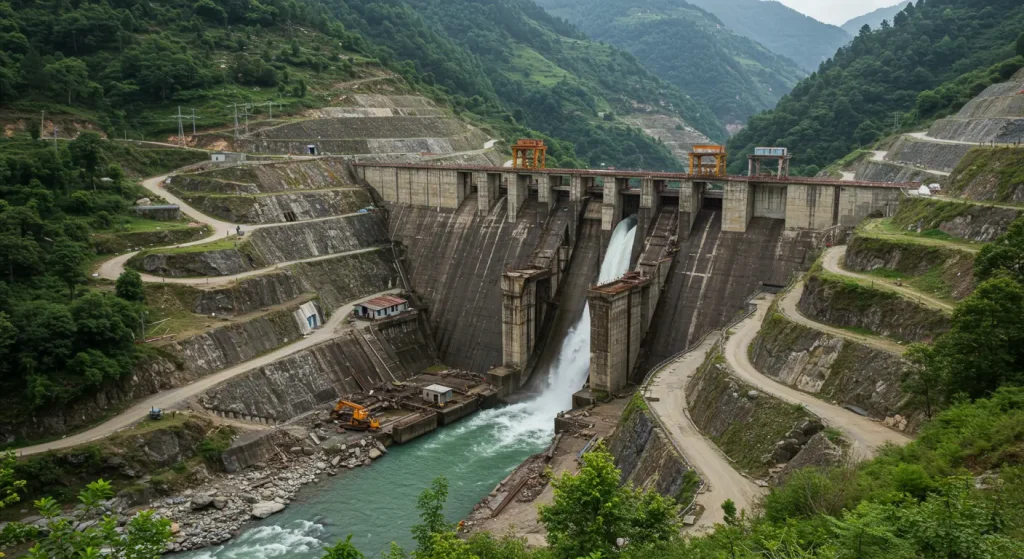
In practice, however, the sector’s development is chronically delayed, and the reasons for this are primarily political and bureaucratic. Frequent changes of government lead to constant revision of policies, cancellation of previously concluded contracts and redistribution of projects.37The fate of the Budhi Gandaki hydroelectric project is a textbook example of this problem. The contract for its construction was first awarded to a Chinese company as part of the Belt and Road initiative, then, after a change of government, transferred to India, and eventually returned to Nepal’s own control.38Such unpredictability makes long-term planning impossible. In addition, projects are bogged down for years in bureaucratic red tape associated with the overlapping powers of various departments, protracted procedures for obtaining permits and environmental approvals.37
The situation is aggravated by the fact that hydropower in Nepal is not just an economic sector, but an arena for geopolitical struggle for influence between India and China.38Every major project is viewed through the prism of the interests of these two powers, adding another layer of complexity and risk on top of already volatile domestic politics. For any private investor, domestic or foreign, investing heavily in such an environment becomes an extremely risky proposition.
Business Disappointment and the FDI Gap
The private sector, represented by organisations such as the Federation of Nepal Chambers of Commerce and Industry (FNCCI) and the Confederation of Nepalese Industries (CNI), has a unanimous voice: businesses are tired of instability. Entrepreneurs constantly complain about the lack of a predictable legal framework, sudden changes in tax laws and restrictive central bank directives that stifle investment activity despite ample liquidity in the banking system.32

The most accurate barometer of this risk is the gap between promised and actual foreign direct investment (FDI). On the one hand, there has been a surgedeclaredinvestments. In the first nine months of the current financial year, FDI commitments reached NPR 57.97 billion, almost double that of the same period last year.34This growth is largely due to the simplification of procedures, such as the introduction of an “automatic route” for registering investments.
However, if you look atreal influxcapital, the picture is dismal. Actual FDI remains abysmally low at just Rs 8.49 billion in the eight months, less than 0.1% of GDP.34This huge gap between promises and reality speaks volumes. It shows that foreign investors see potential in the Nepalese economy, especially in sectors such as tourism, information technology and services.34But they are not prepared to risk their capital in conditions of total political uncertainty and unpredictability. They are taking a wait-and-see attitude, making non-binding promises but postponing real investments until they see signs of genuine and long-term stability. The government’s attempts to solve problems by passing decrees bypassing parliament, as was the case with amendments to economic legislation, are perceived by businesses not as a solution, but as the creation of dangerous precedents that undermine faith in the rule of law.45
Roadmap to Prosperity: What Needs to Be Done?
Despite the bleak picture, there is broad consensus among international experts and local stakeholders on what steps need to be taken to unlock Nepal’s economic potential. The roadmap for these reforms is detailed in World Bank reports, notably the Country Economic Memorandum.22It is based on four key areas.
Making More of Migration
Economic strategy must go beyond simply counting remittances. A systemic approach to managing migration must be developed. Policies should aim to reduce costs for migrants, ensure their rights and security through effective bilateral labor agreements, and create programs that help returning migrants reintegrate into the domestic economy by using their accumulated capital and skills to start their own businesses.22
Improving export efficiency
A combination of measures is needed to address the chronic trade deficit. This includes increasing competition in key markets, addressing infrastructure bottlenecks (for example, FNCCI proposes upgrading airports and setting up cold storage facilities for agricultural exports), and managing inflationary pressures to maintain the price competitiveness of Nepalese goods.22In addition, it is extremely important to simplify the procedures for tax refunds on imported raw materials for exporters and reduce import duties, which will make exports more profitable.22
Harnessing the Potential of Hydropower
Attracting much-needed investment into hydropower requires developing a clear and, most importantly, stable financing strategy. This could include developing a domestic bond market and creating an effective legal framework for large public-private partnerships. But the key is to radically simplify the licensing process and reduce the bureaucratic red tape that currently discourages investors.19
Stimulating the digital sector
Nepal must accelerate its digital transformation. This requires updating the outdated Telecommunications Act, investing in digital infrastructure, and, critically, addressing the lack of digital skills among the population. Integrating digital literacy into school curricula and creating training courses for different age and social groups must be a national priority.22
A look into the future: hope for stability or another round of chaos?
The prospects for the “grand coalition” before the next elections scheduled for 2027 remain dim. Despite a strong majority in parliament, the alliance is plagued by internal divisions. The leaders cannot agree on a common basis for amending the constitution, and their views on cooperation with China under the Belt and Road Initiative diverge.8The risk that the coalition will fall apart long before the end of its term due to the same personality conflicts remains extremely high.46

For businesses, this means a high degree of uncertainty remains. On the one hand, there are clear opportunities in sectors such as tourism, information technology and hydropower, supported by a young population and the country’s strategic location between India and China.47The government is indeed introducing some legislative amendments aimed at improving the business climate.47On the other hand, all these advantages are outweighed by the main risk – political instability. Business is forced to operate in an environment where government policy is unpredictable, large infrastructure projects are frozen, and all government attention is focused not on economic management, but on political survival.10FNCCI Calls for Invest in Nepal Campaign41sound unconvincing against the backdrop of news about parliamentary blockades and stagnation of FDI. The forecast for business remains the same: cautious pessimism and the expectation of concrete, rather than declarative, signs of stability.
For Nepali citizens, the future also looks bleak. The prospects for creating significant jobs at home remain bleak as industry and manufacturing stagnate and investment fails to materialize. This means that the exodus of young people in search of better opportunities is likely to continue.23As for the cost of living, despite low official inflation figures, real prices for essential goods are unlikely to fall without fundamental improvements in domestic production and logistics. The gap between the statistics and the reality felt in each citizen’s wallet will persist, fueling public discontent.29Ultimately, the well-being of citizens depends directly on the ability of the political class to implement those structural reforms. But until politicians can overcome their internal strife, the economic aspirations of the Nepalese people will remain unfulfilled.49
Conclusion: Waiting for a breakthrough
Nepal is a country of enormous but untapped potential. From inexhaustible hydropower resources to a young and dynamic workforce, all the prerequisites for an economic breakthrough are there. However, this potential remains hostage to a political culture defined by chronic instability, power struggles driven by personal ambitions, and, as a result, a paralyzed state machine incapable of implementing vital reforms.
The current “grand coalition” that unites old enemies is the culmination of this long-standing drama. It leaves open the main question, which has not yet been answered. Is this alliance a last, desperate attempt by the political elite to break the vicious circle and achieve the stability necessary for an economic breakthrough? Or is it just a lull before a new, possibly even more destructive political storm that will finally bury the hopes of businesses and citizens for a predictable and prosperous future.
Sources used
- World Report 2025: Nepal | Human Rights Watch
- A New Coalition in Nepal: Implications for Domestic and Foreign Policies – NUS Institute of South Asian Studies (ISAS)
- Oli, Khadga Prasad Sharma – Wikipedia
- en.wikipedia.org
- K. P. Sharma Oli – Wikipedia
- Nepal in 2024: Political Instability, Geopolitical Contest, and Economic Growth
- Fulfil Statute Revision Promise – The Rising Nepal
- Corruption and crisis define Nepal’s 2024 | East Asia Forum
- Nepal’s democracy fatigue – The Kathmandu Post
- Nepal’s political and economic uncertainty – GIS Reports
- ON THE DOMESTIC POLITICAL SITUATION IN NEPAL – Ministry of Foreign Affairs of the Russian Federation
- Unrest and Uncertainty: The Deepening Crisis in Nepal’s Democracy
- Nepal in 2024: Has Political Instability Finally Come to an End? – South Asian Voices
- Emerging conflicts in Nepal – The Kathmandu Post
- Nepal’s Economy Expected to Remain Resilient in Face of …
- Nepal : Development news, research, data | World Bank
- Nepal’s Economy to Strengthen in FY2025 and Further in 2026 | Asian Development Bank
- Nepal: Economy | Asian Development Bank
- Nepal: Economy | Asian Development Bank
- Nepal’s Economy to Improve in FY2025 | Asian Development Bank
- Unlocking Nepal’s Growth Potential : Nepal Country Economic Memorandum 2025
- Nepal: World Bank Report Outlines Key Reforms to Boost Growth …
- Nepali Youth Caught in the Crossfire – Foreign Policy and Security | IPG Journal
- Nepal Youth Unemployment Rate (1991-2024) – Macrotrends
- Nepal Youth unemployment – data, chart | TheGlobalEconomy.com
- Youth Unemployment Rate for Nepal (SLUEM1524ZSNPL) | FRED | St. Louis Fed
- Nepal Trade Balance | 2001-2025 Data | 2026-2027 Forecast
- Nepal’s Political and Economic Uncertainty Likely to Continue | Hudson Institute
- Nepal market prices mock central bank’s inflation claims – The Kathmandu Post
- Nepal Inflation Rate – Trading Economics
- Nepal’s inflation drops to 2.77% in mid-May 2025, NRB reports – The Himalayan Times
- CNI calls for proactive action to revive economy | The Annapurna Express
- 2025 Monitoring Report – the United Nations
- On automatic route, FDI commitments nearly double – The Kathmandu Post
- Politics – The Kathmandu Post
- Hydropower in Nepal: A long overdue potential flooded with challenges – NepalConnect
- Why Hydropower Projects in Nepal Get Delayed: Understanding the Bottlenecks in Development
- The Great Himalayan Chessboard: China, India, and the Geopolitical Gambit in Nepal
- Nepal’s hydropower development: Predicament and dilemma in policy-making
- Promoting Sustainable Hydropower Practices: The Role of Geopolitical Issues in Nepali Hydropower Projects | Hydropower Nepal
- FNCCI submits economic policy recommendations for Nepal’s 2025/26 fiscal year budget
- FNCCI presents suggestions for policies and programmes for fiscal year 2025/26
- Nepal receives FDI commitment worth Rs 57.97 billion in nine months of current FY
- Nepal Foreign Direct Investment | Historical Chart & Data – Macrotrends
- Nepal’s Crippling Economy: Public Frustration and Government Response – NUS Institute of South Asian Studies (ISAS)
- Political analysis or guesswork? – The Kathmandu Post
- NIES:-Nepal International Economic Summit 2025 – FNCCI
- FNCCI president Dhakal calls for investment-friendly reforms – The Rising Nepal
- Peace politics in Nepal – The Kathmandu Post