Kathmandu Real Estate Market Phenomenon in 2025
Kathmandu, the capital of Nepal, is rapidly transforming into a vibrant South Asian metropolis, attracting population and capital. This growth is accompanied by a booming real estate market, which, as of 2025, is expected to show significant changes driven by rapid urbanization, economic recovery and policy reforms. However, behind the facade of dynamic growth lies a complex picture, characterized by obvious paradoxes. The Nepalese real estate market in general, and Kathmandu in particular, is an attractive but also challenging field for investment and analysis.
The central paradox, which has become particularly apparent by 2025, is the apparent disconnect between several key indicators. On the one hand, there is a rapid, almost dizzying rise in land and housing prices. On the other hand, this rise appears to have little correlation with actual rental yields. And, most importantly and socially acutely, it is dramatically out of touch with the actual purchasing power of the vast majority of the local population. Kathmandu’s rapid urbanization is not simply an increase in the number of residents; it is a concentration of economic aspirations and, as a result, significant speculative pressure on the valley’s limited land resources.1The geographic isolation of the Kathmandu Valley makes matters worse, as land supply is physically limited while demand, fueled by both natural increase and migration, is steadily increasing. This creates ideal conditions for a price rally that can attract speculators, driving prices further away from their fundamental value.
Mention of “political reforms” as one of the factors driving market growth3 requires closer attention. It is necessary to analyze what reforms were carried out and how they affected the market – whether they stimulated balanced development or perhaps created unintended loopholes for speculation and aggravation of existing imbalances. For example, changes in land legislation, taxation or zoning rules could have had both positive and negative consequences for the formation of prices and availability of housing.5
The purpose of this article is to analyze in detail this multifaceted paradox of the Kathmandu real estate market as of 2025. We aim to identify its underlying causes, analyze the socio-economic implications, and assess possible prospects, using simple and accessible language that can be understood by a wide range of readers without special knowledge of economics or real estate.
Dizzying Price Rise: What’s Driving the Market Up?
Kathmandu’s real estate market has shown impressive price growth dynamics in recent years, which has become particularly acute by 2024-2025. This trend affects both land plots and finished housing, turning property ownership in the capital into a privilege for a few. Analysis of specific cases confirms this trend: for example, in the Karyabinayak Homes project, the cost of houses increased by an average of 12% annually from 2017 to 2024.8Land prices in prime areas such as Budhanilkantha reach 3.2-3.8 million Nepalese rupees (NPR) per anna (approximately 32.5 square meters).9Houses in areas like Maharajganj can be priced in crores (tens of millions) of rupees: for example, a house on a 14 anna plot is offered for NPR 9 crore (NPR 90 million), while a house on an 18 anna plot is offered for NPR 18 crore (NPR 180 million).11Interestingly, even as land prices stagnated in most other parts of Nepal, in the Kathmandu Valley, particularly Lalitpur and Bhaktapur, prices continued to rise, highlighting the particular dynamism of the capital region.13
Table 1: Dynamics of average prices for land and housing in selected areas of Kathmandu (2023-2025)

Note: Prices are indicative, based on available listings and posts, and may vary significantly depending on exact location, property features and market conditions. The increase for Karyabinayak Homes is based on a stated annual increase of 12%.
This rapid rise in prices is due to a combination of factors. Urbanization and population growth remain key drivers: Kathmandu is a magnet for people from all over the country in search of better opportunities.3 Economic Development of Nepal, with GDP growth projected to be 4-5% in 20253, contributes to the increase in purchasing power of a certain part of the population.
They play a huge role remittances from Nepalese working abroad (remittances). Accounting for about a quarter of the country’s GDP16, these funds are a powerful source of capital, a significant part of which is directed towards the purchase of real estate.18 Remittances thus act as a “two-faced Janus”: on the one hand, they support the economy and create effective demand, while on the other hand, a significant share of them, according to some estimates, goes into “unproductive consumption… real estate speculation and land purchases.”19 This leads to price inflation without adequate growth in real economic value, creating demand that is not always supported by a real need for housing for habitation, but rather by investment or speculative interest.
Investment demand also fuels the market. With other reliable and clear financial instruments limited, real estate in Nepal has traditionally been seen as a preferred asset for saving and increasing capital.20 Infrastructure development, such as the construction of new roads and the implementation of “smart city” projects, objectively increases the value of adjacent territories.3However, in the context of Kathmandu, where there is “disorderly and uncontrolled growth of built-up areas”4, infrastructure often fails to keep up with growth. This means that new projects can dramatically increase land values in specific locations, but the overall shortage of quality infrastructure in fast-growing areas remains, concentrating demand (and prices) in already well-off areas.
Finally, we can’t discount the role of speculation Analysts point to a “speculative bubble” in the Kathmandu land market, with prices drifting away from their fundamental value.21In the absence of strong government regulation, land brokers and developers have significant influence on price formation.21Mentions of “steady growth” in prices in individual projects8 may mask the high volatility and speculative nature of the market as a whole. The market is heterogeneous: high-quality projects may demonstrate steady growth, while other segments, especially land, are subject to speculative surges, outpacing the growth of prices for finished housing or rental rates, which is an important component of the paradox under study.
Rental Income: Reality vs. Expectations
With property prices in Kathmandu skyrocketing, the question of real rental yields is becoming increasingly important. An analysis of current rental rates and their comparison with the cost of properties reveals one aspect of the market paradox.
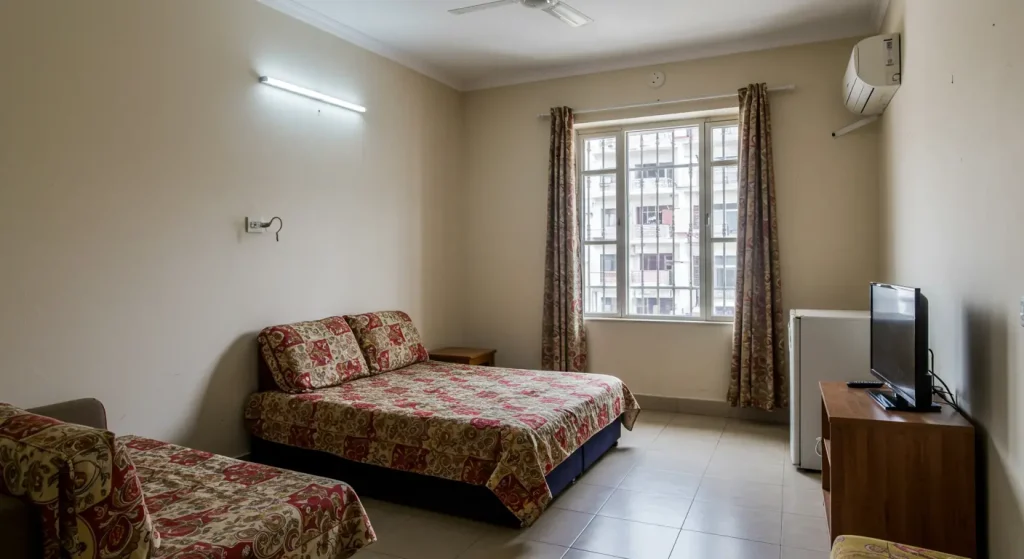
Examples of rental rates in Kathmandu in 2025 vary depending on the area, type and condition of the property. For example, a 2-bedroom (2BHK) apartment in Imadol (Lalitpur) can be rented for NPR 15,000 – 25,000 per month.22In the more central area of Baneshwor, a semi-furnished 2BHK apartment of about 84 sq m (900 sq ft) will cost around NPR 40,000 per month to rent.24Airbnb data for the New Baneshwor area shows that short-term rentals can start from $10 per night, but these rates are subject to seasonal fluctuations and depend on a variety of factors.25General data for Kathmandu indicates that the average rent for a one-room apartment in the city center is around NPR 28,306 and outside the center is NPR 15,333; a three-room apartment in the center can cost around NPR 50,565 and outside the center is NPR 28,521.26
Rental Yield is used to assess the attractiveness of real estate as an investment asset. It is calculated as the ratio of annual rental income to the cost of the property, expressed as a percentage. According to some estimates, the average annual rental yield for residential property in Kathmandu is 4-6%.27At the same time, individual projects such as Karyabinayak Homes have seen rental income grow by 12% per year.8, however, this is an indicator of the growth of the income itself, and not the profitability relative to the current value of the object.
Table 2: Comparative Analysis of Rental Rates and Estimated Yields by Property Type and Area in Kathmandu (2025)

Note: Property prices are estimates for yield calculations and may vary greatly. The yield for Karyabinayak Homes is calculated assuming rental income grows in sync with the value, maintaining a certain level of yield. The yield for Airbnb is calculated based on a median annual income of $1,402 (186,060 NPR at 132.71) and the appraised value of the apartment.
Comparing yields with price growth reveals the first aspect of the paradox. If real estate prices are growing significantly faster (for example, by 10-15% per year or more, as can be assumed from data on some projects8) than rental rates, rental yields inevitably decline. This phenomenon, known as “yield compression,” indicates that investors are willing to pay an ever-increasing premium for the asset itself, anticipating future appreciation rather than high current rental yields. Rental rates may not keep up with rising prices for several reasons, the most important of which is the limited solvency of the bulk of tenants.
The declared yield is 4-6%27may only be achievable in certain market segments, such as properties targeting wealthy locals or expats, or for cheaper properties where the price-to-rent ratio is more favourable. For a significant proportion of high-end properties, particularly those purchased for investment or speculative purposes, the actual rental yield may be significantly lower, especially when taxes, maintenance costs and possible periods of vacancy are taken into account.
Airbnb’s short-term rental data is also worth noting. With an average daily rate of $37, the median annual occupancy rate is just 25.4%, and the median annual income is $1,402 (about 186,000 NPR).28This suggests that even with high peak rates, demand volatility and low occupancy may result in low final returns, which is important to consider for investors targeting the tourism segment.
Thus, the Kathmandu real estate market in 2025 is experiencing a situation where high and rising asset prices do not always translate into commensurately high returns from their operation through rentals. This indicates that a significant portion of the demand for real estate may be driven not so much by the desire to receive current rental income, but by expectations of further appreciation of the asset itself.
Purchasing Power of the Population: Who Can Afford Housing in the Capital?
An analysis of the purchasing power of the population of Kathmandu reveals perhaps the most acute aspect of the market paradox – the colossal gap between the cost of real estate and the real financial capabilities of the majority of the capital’s residents.
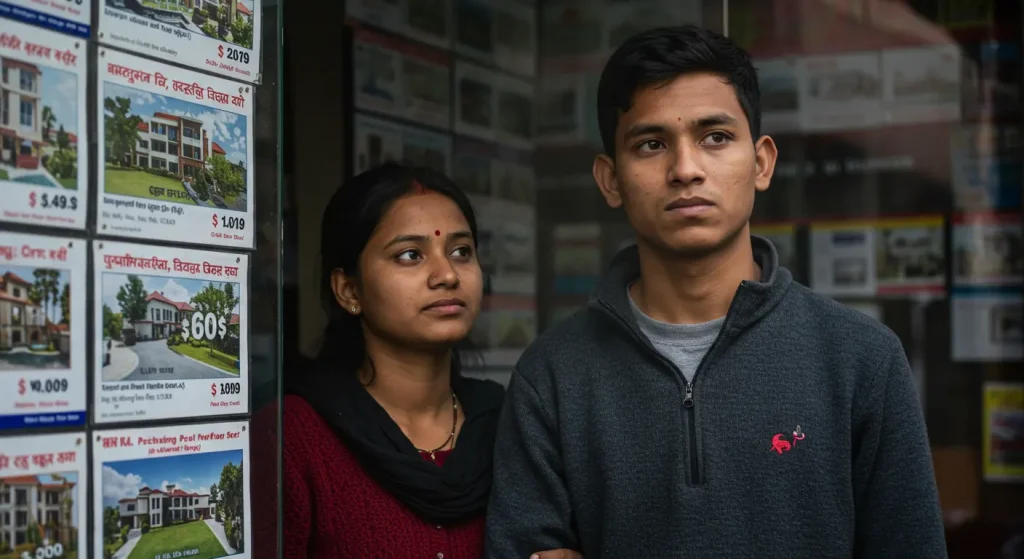
Nepal’s key economic indicators for 2024-25 paint a complex picture. Nominal GDP per capita in 2025 is estimated at around $1,46029, and GDP at purchasing power parity (PPP) is about $5,720.30The average monthly net salary is reported to be around NPR 31,520 (approximately $237 at the exchange rate of early 2025)26, although this figure may be an average for the country and not reflect the full picture of incomes in the capital. Inflation remains a significant factor reducing real incomes: the consumer price index (CPI) at the beginning of 2025 showed an annual growth of 4.16%31, and at the end of 2024 – 6.05%32, while food inflation sometimes reached almost 10%.32The cost of living in Kathmandu, including food, transportation and utilities, also puts pressure on household budgets.26
Table 3: Key Economic Indicators of Nepal Affecting Purchasing Power (2024-2025)

Comparing these incomes with the property prices presented in Section 2 (houses in the tens of millions of rupees, land in the millions of rupees per anna) reveals a chasm. The housing affordability ratio (the ratio of the average house price to the average annual household income) for Kathmandu is astronomical. Even if we assume that household income in the capital is, say, twice the national average (around $5,700 per year), buying a $100,000 house (a very modest option in Kathmandu) would require more than 17 years of the family’s full income, excluding living expenses, taxes, and interest. The problem is compounded by the need for a significant down payment, which is nearly impossible for young people and low-income families to save. Informal discussions, for example on platforms like Reddit, vividly illustrate the middle class’s despair in the face of housing unaffordability in the capital.33
Mortgage lending conditions are also not conducive to solving the problem. Interest rates on mortgages in Nepalese banks in 2025 remain high. For example, Nepal SBI Bank offers floating rates from the base rate (BR) plus 0.50%-2.50% and fixed rates in the range of 10.50%-12.00% per annum.34NIC Asia Bank quotes a rate of 9.50% for some products.35NIMB Bank Base Rate for May 2025 is 5.76%-5.91%36, to which a margin is also added. According to26, the average rate for a 20-year mortgage can be 13.25% per annum. The maximum loan amount usually does not exceed 60-70% of the market value of the property.35
Table 4: Mortgage Terms and Conditions in Some Banks in Nepal (2025)

Note: BR is the bank’s base rate. Conditions may vary and depend on the specific borrower and property.
At such rates, monthly mortgage payments become unaffordable for most of the population. For example, a loan of 5 million NPR (not enough to buy a full-fledged home in a good area of Kathmandu) at 12% per annum for 20 years will require a monthly payment of about 55,000 NPR. This is significantly higher than the average monthly salary. Thus, mortgages are available only to a narrow circle of people with high and stable incomes and significant initial savings.
Inflationary pressure, especially on essential goods, further “eats away” at people’s incomes, reducing their ability to save even for a down payment.31All of this forms the second, and perhaps most acute, aspect of the Kathmandu property market paradox: housing prices exist in a reality that is completely disconnected from the financial means of most of those for whom they are supposed to be intended. This suggests that the market is driven largely by factors unrelated to local effective demand for residential housing, such as capital inflows from abroad, investment by wealthy segments of the population, and speculative expectations.
In Search of an Explanation: Key Reasons for the Paradoxes in Kathmandu Market
The multifaceted paradoxes of Kathmandu’s property market, where skyrocketing prices coexist with modest rental yields and extremely low affordability for the majority of the population, are due to a complex interplay of cultural, economic, social and political factors.
One of the fundamental factors is the cultural significance of land ownership in Nepalese society. Land is traditionally viewed not just as an asset, but as a symbol of status, wealth and the most reliable store of value passed down from generation to generation.20This deeply ingrained cultural attitude creates a persistent demand that may not always be rational in terms of pure economic rental yield. People are willing to pay a premium for land, expecting it to appreciate in the long term and viewing it as a legacy for future generations, even if the current return is low. With other investment vehicles unstable and inflation eroding the value of savings, real estate becomes a safe haven.
The market is significantly influenced by “shadow” economy and informal financial flows Nepal’s economy remains fragile, by some estimates, and relies heavily on remittances and post-disaster reconstruction rather than productivity growth or innovation.19This creates the ground for informal economic activity. Real estate can serve as a convenient tool for legalizing or preserving funds obtained in the shadow sector. A significant discrepancy between the official state valuation of land and its real market value plays a special role here. As noted, land valued by the state at 1 million rupees can cost more than 10 million on the market.40Not only does this create opportunities for capital gains tax evasion and potential money laundering, it also distorts official statistics, making adequate government regulation and planning difficult.
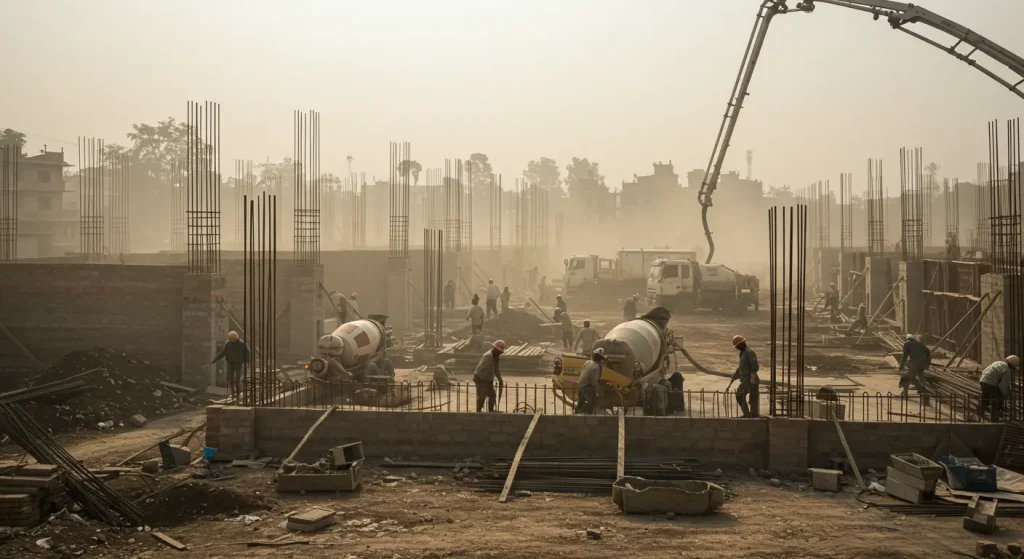
Limited supply of quality housing and serious urban planning problems also contribute to rising prices. The Kathmandu Valley is geographically limited. The pace of official development and government housing programs is extremely slow and does not keep up with demand; the bulk of development is carried out by private initiatives, often by individual landowners.41This leads to chaotic, spotty development, a lack of comprehensive planning and a shortage of quality housing with the necessary infrastructure.2Problems with land zoning and its enforcement exacerbate the situation, creating legal uncertainty and limiting the efficient use of land resources.7
The influence of public policy The real estate market is multifaceted and not always straightforward.
- Land Ceiling: Existing restrictions on the maximum size of land holdings42and recent initiatives to soften them somewhat for the sale of housing built on plots exceeding the limit5, affect the dynamics of supply. However, in conditions of high demand and slow administrative procedures, such restrictions, even if intended for good purposes, can inadvertently restrain the entry of new sites into the market, thereby pushing prices up.
- Taxation: Capital gains tax rates on property sales (5% for holdings over 5 years, 7% (previously 10%) for holdings under 5 years for individuals)6 may influence investment decisions. However, if the tax is calculated on the basis of an undervalued government assessment, its fiscal and regulatory effect is reduced. Relatively low taxes on property ownership (as opposed to transaction taxes) may encourage the holding of assets for speculative purposes.
- Market regulation: The lack of strong and transparent regulation of the land market allows land brokers and developers to dominate pricing, which can contribute to speculative sentiment.21The market is characterized by a significant proportion of informal transactions and fragmentation, where many small transactions form the overall picture, making effective control difficult.
- Foreign Investment Policy: Current restrictions on direct ownership of land by foreigners (although some avenues exist for Non-Resident Nepalese (NRN)20) can, on the one hand, limit the inflow of external capital, and on the other hand, protect the market from excessive external speculative pressure.

Finally, a key factor explaining the disconnect between prices and local incomes and rental rates is that the primary motive for many buyers is investment and capital preservation, rather than an immediate need for a place to live. This is especially true for those who invest funds received from remittances from abroad, or for wealthy segments of the population looking for safe assets.
Thus, the paradoxes of the Kathmandu property market in 2025 are the result of a complex interaction of deeply ingrained cultural beliefs about the value of land, significant informal financial flows (including remittances), a chronic shortage of quality housing supply due to planning issues and
Socio-economic impacts and challenges
The current situation in the Kathmandu real estate market with high prices, disconnected from the population’s income and real rental yield, gives rise to a whole range of serious socio-economic consequences and challenges affecting both individual citizens and the development of the city and the country as a whole.

The most obvious consequence is deepening housing crisis, especially for young people and the middle class. For many young people and middle-income families, purchasing their own home in the capital is becoming a virtually unattainable dream.14This has resulted in an increasing number of people being forced to either live in informal settlements, which by some estimates make up to 15% of the Kathmandu Valley’s housing stock and often lack basic amenities14, or condemned to lifelong rented housing. This situation has a negative impact on social mobility, opportunities to create and strengthen families, as well as on the general sense of stability and prospects for a significant part of the population.
A direct consequence of the unaffordability of housing and the concentration of real estate in the hands of a few is growing social inequality. Property ownership is becoming a key factor in widening the gap between the haves and have-nots.40Data shows that the richest 10% of Nepal’s population earns more than three times as much as the poorest 40%, and their combined wealth is more than 26 times that of the poorest group.45Real estate plays a central role in this concentration of assets. Economic elites often dominate high-income industries, including real estate, which limits economic opportunities for other social groups and perpetuates existing structures of power and wealth distribution.45This not only increases social tensions, but can also lead to a “brain drain” in which young and educated people leave the country not only in search of higher incomes, but also in search of dignity, security and opportunities for self-realization that they do not find in their home countries.45
There are also risks to financial stability. Although Nepal Rastra Bank (NRB) has tightened its policies on real estate financing40, there remains a possibility of a “bubble” forming in the market. Its subsequent collapse could have painful consequences for the economy. In the event of a worsening economic situation or a sharp fall in real estate prices, the banking sector could face an increase in mortgage defaults, which would create additional pressure on the financial system.
Problems of urban development are aggravated by the current situation on the real estate market. Speculative demand and high land prices in central and well-developed areas stimulate uncontrolled and chaotic urbanization in the periphery, often without adequate planning and provision of the necessary infrastructure (roads, water supply, sewerage, social facilities).2This results in excessive strain on existing infrastructure, environmental degradation, loss of valuable agricultural land and green spaces in the unique Kathmandu Valley.19
For investors and bona fide buyers. The current situation also poses certain challenges. The high threshold for entering the market makes it inaccessible to many. In addition, there are risks associated with the legal purity of objects, possible changes in legislation and the lack of transparency of the market.20This requires potential investors to conduct particularly thorough due diligence on all aspects of the transaction.
Kathmandu’s housing crisis is thus not simply a problem of a shortage of affordable homes, but a symptom of deeper structural imbalances in Nepal’s economy. These imbalances include ineffective public policies, high wealth concentration, and an overreliance on remittances that distort market signals and are channeled heavily into unproductive assets such as speculative real estate.14There is a risk of a kind of “reverse Dutch disease”: when significant external income (remittances) is concentrated in the unproductive sector (speculative real estate), this can lead to stagnation of other, more productive sectors of the economy due to the outflow of capital, labor and inflationary pressures, making local production uncompetitive.19
Conclusion – Kathmandu Real Estate Market Outlook and Paths to Balance
The Kathmandu property market in 2025 is a complex and contradictory picture, with impressive price growth, low affordability for most of the population, and moderate rental yields for many investors. This tangle of paradoxes is driven by a unique combination of economic, social, cultural, and political factors specific to Nepal.
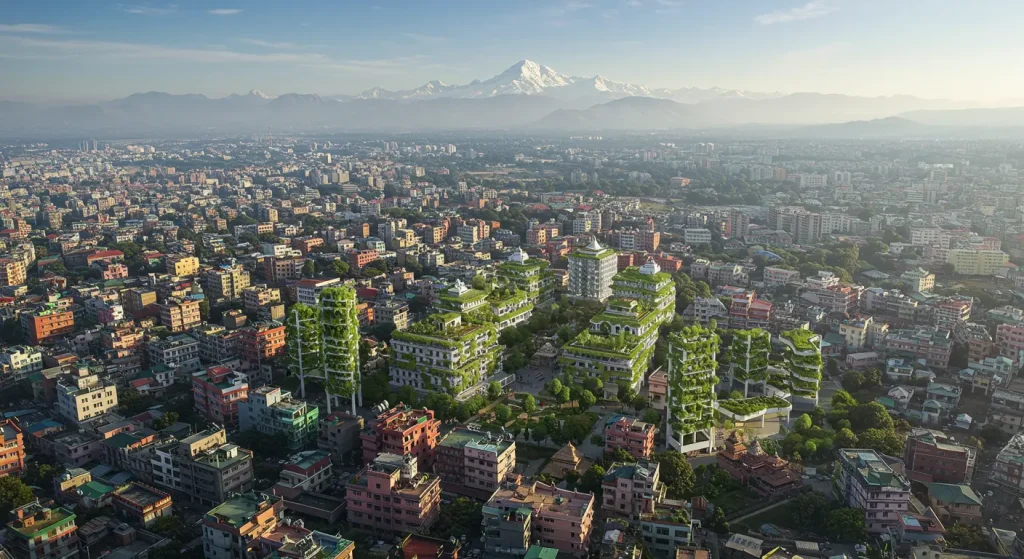
Short-term and long-term forecasts for the market are mixed. In the short term, high pressure on prices is likely to remain, especially if the current drivers – strong remittance inflows, ongoing urbanisation, cultural value of land ownership and limited supply – remain unchanged. Forecasts for 2025 point to continued price growth in major urban centres and increasing demand for affordable housing.3However, in the long term, without addressing fundamental structural issues and dramatically increasing housing affordability, the market risks stagnation or even a painful correction. Sustainable growth based solely on speculative expectations and the influx of external funds into unproductive assets cannot continue indefinitely.
To stabilize the market and increase housing affordability, a comprehensive approach is needed, including the following: possible measures:
- Reforming land policy: Implementation of more flexible and transparent zoning rules, simplification of procedures for obtaining building permits, revision of existing restrictions on the maximum size of land holdings taking into account the needs of modern urban development.
- Stimulating the construction of affordable housing: Development and implementation of public and private-public programs for the construction of housing for various categories of the population, including young people and low-income families.
- Development of a civilized rental housing market: Creating incentives for the construction and operation of apartment buildings, protecting the rights of both tenants and landlords.
- Improving the real estate taxation system: This could include revising capital gains tax rates to reflect fair market value, introducing a progressive tax on second and subsequent homes, or a tax on empty properties to reduce speculative demand and encourage the use of properties for their intended purpose.
- Bringing state land valuation into line with market valuation: This will increase the transparency of transactions, increase tax revenues and ensure fair compensation when land is seized for state needs.40
- Improving urban planning and infrastructure development: Comprehensive planning for the development of Kathmandu and its surrounding areas, prioritizing infrastructure development in new development areas.
- Creating attractive alternative investment instruments: Developing a stock market, offering reliable financial products that could compete with real estate as a means of saving and investing.
- Increasing market transparency: Creation of unified databases of transactions, prices and characteristics of real estate objects.
The analysis confirms that. The paradoxes of Kathmandu’s real estate market do exist and are the result of deep systemic problems. The market operates largely under the influence of investment and speculative demand, fueled by remittances and cultural attitudes, while the purchasing power of the general population remains extremely low. Rental yields for many investors do not match high asset prices, indicating that expectations of future value growth prevail over current economic returns.
It is important to understand that without comprehensive reforms that address not only the property market itself but also broader economic and social issues – such as creating quality jobs in productive sectors, diversifying the country’s income sources, tackling inequality and the “shadow economy” – Kathmandu’s property market risks remaining a “market for the few”, exacerbating social tensions and hindering sustainable development. Addressing these issues will require not only the development of smart policies but also strong political will to implement them, possibly against the short-term interests of certain powerful groups that benefit from the status quo. The path to a balanced property market in Kathmandu lies in ensuring that economic growth is inclusive and housing is affordable to those who need it.
Source used
- Kathmandu – Wikipedia
- Nepal faces the multi-dimensional challenges of rapid urbanization
- Nepal’s Real Estate Market in 2025: Key Trends and Future Predictions – House Land
- Managing Nepal’s Urban Transition – World Bank
- Government moves to ease land ceiling restrictions for real estate firms
- Capital Gains Tax in Nepal: Rates, Laws, and Exemptions
- Zoning Laws in Nepal – Axion Partners
- Analyzing the Return on Investment in Kathmandu Real Estate – Karyabinayak Homes
- Land for Sale in Budhanilkantha, Kathmandu | 3200000 Per Aana – Basobaas
- LAND FOR SALE | Nepal Real Estate Solution-Real Estate In Nepal- Buy,Rent, Sell Property(ghar Jagga) In Nepal
- House for Sale at Maharajgunj – Lalpurja Nepal
- House sale in kathmandu Maharajgunj – fyafullaa real estate
- Land price rise in Lalitpur and Bhaktapur amid national stagnation – myRepublica
- Why cities have urban poor: Rural-to-urban migration in Nepal – Onlinekhabar English
- Nepal’s Economy Expected to Remain Resilient in Face of Economic Shocks, says World Bank
- Harnessing Remittances for Long-Term Growth – myRepublica
- Land for Sale at Tarkhagal, Dadhikot, Bhaktapur – Real Estate | Property in Nepal
- Nepal Receives remittances over 1,191 billion in nine months | New Spotlight Magazine
- Nepal’s growth model is broken by design
- Understanding Land Investment in Nepal: Risks, Returns & Regulations – Project Estates
- Impacts of Exorbitant Land Price in Urban Form – A Case of Kageshwori Manohara Municipality – IOE Graduate Conference
- 2BHK Flat Rent in Imadol, Lalitpur – Nepal Property Bazaar
- 2BHK Flat Rent in Gwarko, Imadol, Lalitpur – Nepal Property Bazaar
- Apartment for Rent in Mid Baneshwor Properties – NepalSpace
- Apartment vacation rentals in New Baneshwor – Kathmandu – Airbnb
- Cost of living in Kathmandu, Nepal in 2025: Clothing, Food, Housing & More – Wise
- Best Property for Investment in Kathmandu | NEPPIN – Your Trusted Real Estate Partner in Nepal
- Kathmandu Metropolitan City, Bagamati Province Airbnb Data 2025: STR Market Analysis & Stats | AirROI
- World Economic Outlook (April 2025) – GDP per capita, current prices
- Economy of Nepal – Wikipedia
- Current Macroeconomic and Financial Situation – English (Based on Seven Months Data of 2024/25) – Nepal Rastra Bank
- Current Macroeconomic and Financial Situation – English (Based on Five Months Data of 2024/25) – Nepal Rastra Bank
- Is it impossible for a middle class guy to afford a house in Kathmandu? : r/Nepal – Reddit
- Interest Rates – Loans – Nepal SBI Bank
- Make your dream a reality with our loans. | NIC ASIA BANK LIMITED
- Best, Competitive and Affordable Interest Rate In Nepal – NIMB Bank
- NIC Asia Bank – #1 Commercial Bank in Nepal
- Property Rights in Ancient Nepal – Ideas
- Land Tenure and Land Registration in Nepal
- Real estate at a crossroads – The Annapurna Express
- URBAN LAND DEVELOPMENT IN NEPAL: A CASE FOR A MANAGEMENT APPROACH – UCL
- Zoning Laws in Nepal – Prime Law Associates
- Land revenue rises by 14 percent in first seven months despite sluggish real estate market
- Documents needed in Malpot to sell your house in Nepal
- How economic inequality is driving youths abroad – The Annapurna Express