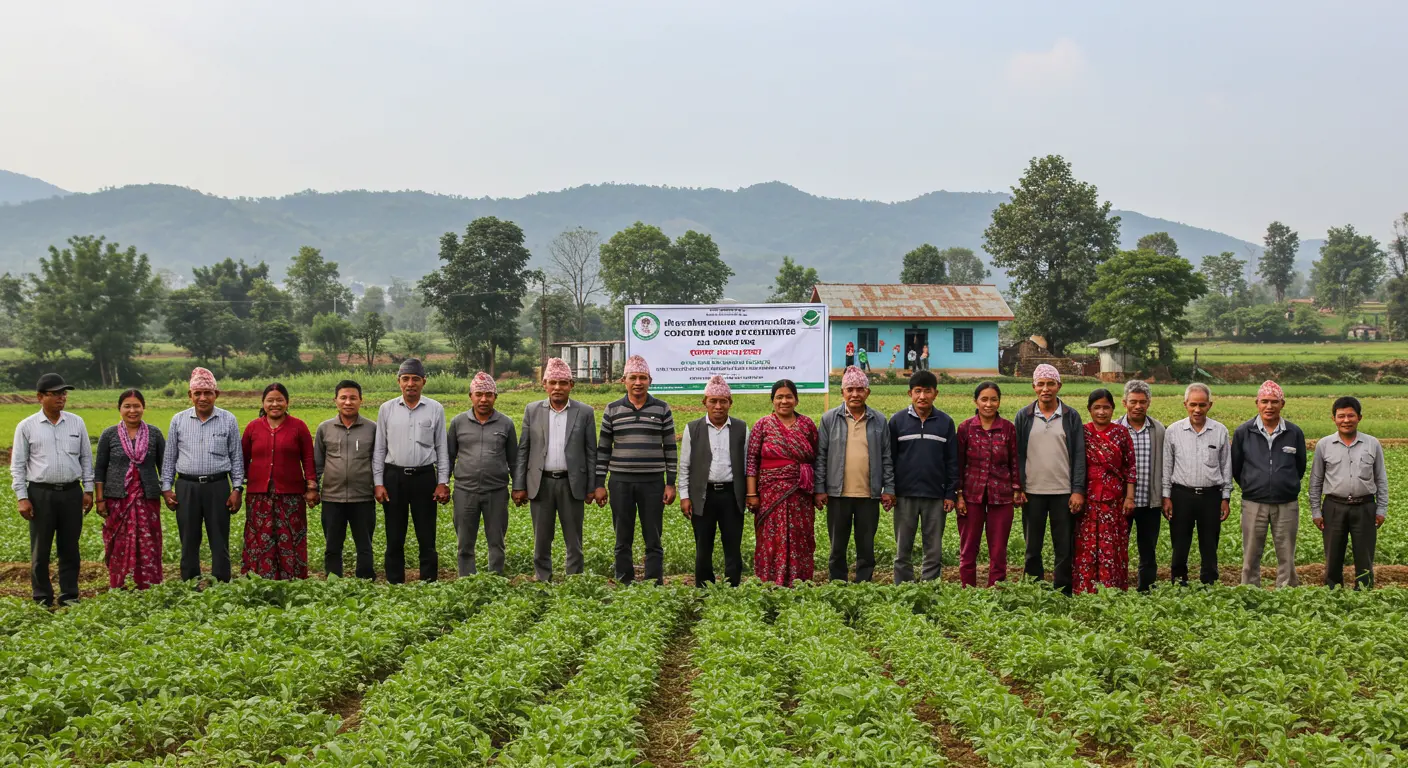
Nepalese Farmer at Crossroads
Nepal’s agriculture presents a fundamental paradox. On the one hand, the sector is the basis of life and employment for the vast majority of the population. According to various estimates, between 62% and more than 70% of all workers in the country work in agriculture.1On the other hand, its economic output is disproportionately small. The share of agriculture in Nepal’s gross domestic product (GDP) has been steadily declining and today stands at around 21-27%.1This disparity – with two-thirds of the population creating only a quarter of the nation’s wealth – is evidence of a deep crisis of productivity and profitability.
The root of the problem lies in the very structure of Nepal’s agricultural sector. It is dominated by small-scale, mostly subsistence farms that are poorly mechanized and focused primarily on self-consumption.5The average farm plot size is only 0.9 hectares7— an area that is insufficient to achieve economies of scale, implement modern technologies, or generate significant profits. Farmers are forced to resort to labor-intensive terracing of slopes to reclaim every bit of arable land from the mountains, highlighting the acute shortage of resources.5

This structural weakness is compounded by a complex of systemic challenges. Soil depletion and erosion, accelerated by massive deforestation for fuel, reduce fertility.6Global warming is disrupting normal farming cycles, and the spread of new pests, such as the white woodworm, is threatening entire plantations.8
This situation creates a classic “poverty trap” for the agricultural sector. There is a surplus of labor, but its productivity remains extremely low. This means that more and more people are forced to share an ever-shrinking economic pie. The lack of surplus prevents farmers from investing in improving their farms – in quality seeds, fertilizers or machinery. Without investment, productivity stagnates, and the cycle closes. This economic stagnation makes agriculture unattractive to young people and provokes labor migration, further weakening the sector. In these circumstances, the individual farmer finds himself in a hopeless situation. However, it is here, at the crossroads between tradition and the need for change, that a powerful solution emerges that can break this vicious circle – the farmers’ cooperative.
Cooperatives: Hope for Collective Strength
The idea of cooperation is a direct and effective response to the challenges that every Nepalese farmer faces alone. At its core, a cooperative is a voluntary association of people for joint economic activity based on the principles of self-help and collective responsibility.7Its main goal is to enable participants to achieve what they cannot do on their own, by transforming disparate small farms into a single economic force.
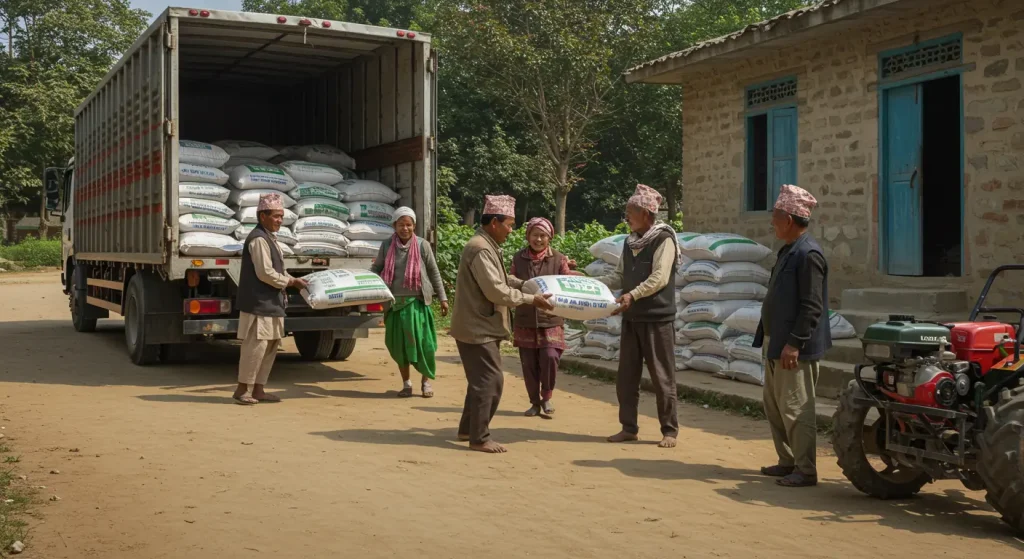
The model of an effective agricultural cooperative is built on three fundamental pillars, each of which solves a specific problem of the farmer.
The first pillar is joint purchases. An individual farmer, buying a small volume of seeds or fertilizers, pays a retail price. A cooperative, combining the needs of hundreds of its members, can purchase everything necessary in large wholesale quantities directly from producers. This allows for significant discounts, reducing the cost of production for each participant.11Moreover, a cooperative can jointly purchase expensive equipment, such as a tractor or processing equipment, which no small farmer could afford.13
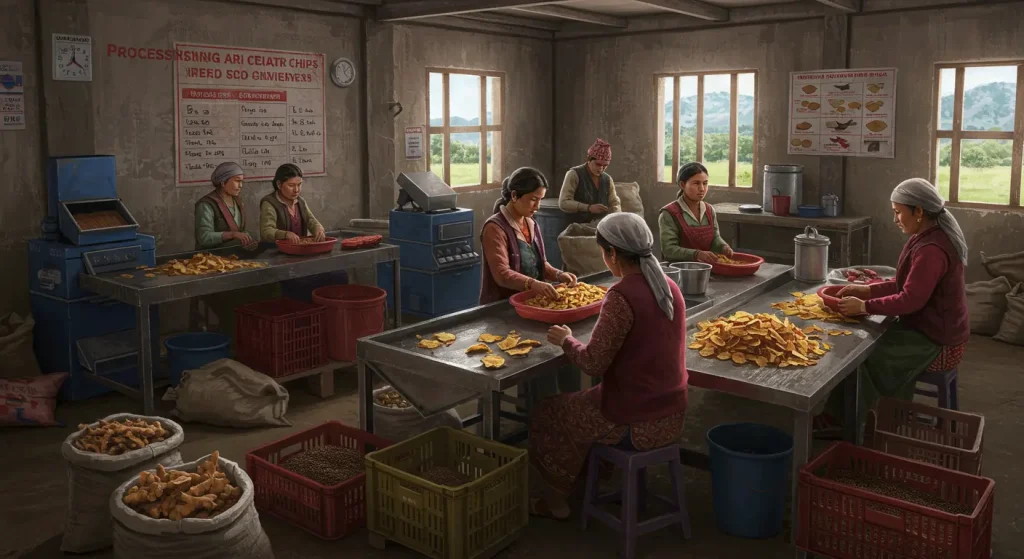
The second pillar is processing and creation of added value. By selling raw materials (fresh milk, raw ginger, coffee berries), the farmer receives a minimum price. The cooperative allows for on-site processing: turning milk into cheese or butter, ginger into dried chips or powder, coffee berries into roasted beans.12Each stage of processing adds value to the product, and this additional profit remains within the cooperative and is distributed among its members, rather than going to intermediaries.
The third pillar is collective sales. It is difficult for a single farmer with his small harvest to reach a large buyer, such as a supermarket chain or an exporter. A cooperative solves this problem by combining the products of its members into large commodity lots.16This not only opens up access to more profitable markets, but also significantly strengthens the bargaining position of farmers. Instead of hundreds of disparate sellers, the buyer is faced with one large supplier capable of providing stable volume and quality, and it becomes much more difficult to dictate their terms.
It is important to note that the idea of collective action is deeply rooted in Nepalese culture. The model of cooperation is based on centuries-old traditions of mutual aid, such asGuthi(community trust funds),Parma(labor exchange) andDhikuri(informal savings and credit groups).18These traditional institutions prove that Nepalese society has a solid foundation of social capital – trust and willingness to work together. The challenge, then, is not to impose an alien concept, but to give existing traditions a modern, professional, and business-oriented form. The failure of many cooperatives in the past was not due to people’s unwillingness to cooperate, but to mistakes in management and strategy.
Lessons from the Past: Why Good Intentions Don’t Always Lead to Success
The history of the cooperative movement in Nepal is full of ups and downs. Understanding the reasons for past failures is key to building a successful model in the future. The modern movement began in the 1950s, just after the advent of democracy, with the establishment of the government Department of Cooperatives in 1953.18Key pieces of legislation were passed in the following decades, notably in 1959 and 1992, with the latest version of the law coming out in 2017.7
However, until 1990, cooperatives were essentially quasi-state structures, tightly controlled by the authorities and not responding to the real needs of their members.7The real explosive growth began after the restoration of democracy and the passage of the Cooperatives Act of 1992. The number of cooperatives grew from 883 in 1992 to a staggering 34,512 in 2017.7This boom was largely a reaction to the failure of the state to provide basic services to the population. Cooperatives came to be seen as a key tool in the fight against poverty, supported by both the government and international organizations.7
However, this quantitative growth did not lead to a qualitative breakthrough in the commercialization of agriculture. The analysis shows several systemic errors that predetermined this outcome.
Firstly, wrong strategic focus the vast majority of cooperatives created focused on providing financial services – savings and loans.7They effectively became rural microfinance institutions rather than agribusinesses. While access to credit was important, this model did not address the core problem of farmers: how to increase production, improve quality, process products, and sell them profitably. Policies aimed at combating poverty through credit were easier and quicker to implement than the complex and long-term work of building production and distribution chains. As a result, energy and resources were directed along the path of least resistance, leading to stagnation in agricultural commercialization.
Secondly, governance issues and excessive fragmentation. The imperfection of the legislation allowed the creation of several small cooperatives with the same goals in one village. This led to the dispersion of resources, unhealthy competition and, ultimately, to the dysfunction and closure of many of them.21Only the 2017 Law attempted to address this issue by introducing a ban on membership in multiple cooperatives with the same objectives.7
Thirdly, ignoring the fundamental small scale problem. Cooperatives have failed to motivate their members to increase production. Research shows that cooperative farmers continue to produce small amounts of produce, much of which is for personal consumption rather than for the market.21A cooperative cannot be commercially successful if its members have nothing to sell.
Finally, lack of real commercial services. Cooperative members themselves admitted that their associations did not help them with marketing, processing or access to markets. The main reasons for joining a cooperative were to gain access to cheap credit or to meet social needs, rather than to run a business together.21
Thus, the “failure” of the cooperative movement in Nepal was not a failure of the idea of cooperation itself, but a failure of a specific strategy for its implementation. The lesson of the past is crystal clear: for cooperatives to become an engine of agricultural growth, it is necessary to shift the focus from the “cooperative as a savings bank” model to the “cooperative as a full-fledged agribusiness” model, oriented towards the entire value chain – from the purchase of resources to the sale of the finished product to the end consumer.
Formula for Success: How Effective Cooperatives Work Today
Despite the mistakes of the past, a new generation of cooperatives is emerging and thriving in Nepal today. They demonstrate how, when done right, collective action can transform farmers’ lives. Their success is built on the practical application of three key functions: joint purchasing to reduce costs, processing to create added value, and collective marketing to reach profitable markets.

Economies of scale: Reduce costs through joint purchasing and access to technology
One of the main problems of a small farmer is high costs and unavailability of modern technologies. Effective cooperatives solve this problem by pooling the resources of their members.
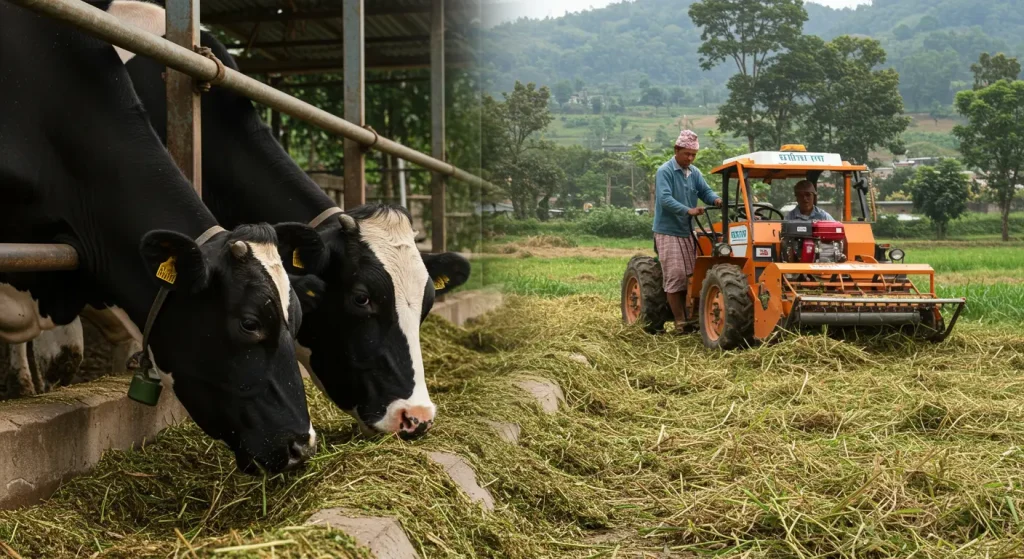
A striking example is Dairy cooperative “Patikhoria” in the Kavrepalanchok district, which received support from the United States Agency for International Development (USAID).13Before joining the cooperative, dairy farm owner Radika Bolahe, like many others, spent several hours a day on the grueling manual preparation of feed for her cattle. It was impossible to buy expensive equipment individually. The cooperative, which unites more than 1,300 members, invested in a common machine for cutting straw and grass. The result exceeded all expectations: now Radika spends no more than 20 minutes on the same work. The feed has become better and more nutritious, which has affected the health of the animals and milk yield. The freed up time and additional profit allowed her to invest in the further development of her farm.
Another illustrative case is Airawati Multi-Purpose Smallholder Farmers Cooperative in the Pyu Thang area.22Local ginger farmers faced a classic market dilemma: During harvest season, the market was overstocked, and middlemen would drive the price down to 20 Nepalese rupees (about 15 US cents) per kilogram. That price barely covered the cost of labor. The farmers couldn’t store the ginger, as it quickly lost weight and went bad. USAID’s Farmer-to-Farmer (F2F) program helped a cooperative find a simple but ingenious solution. Under the guidance of American and Nepalese experts, the cooperative built a communal storage facility for the ginger. The technology was extremely inexpensive and used local materials: mud bricks, earth, and sand. The entire structure cost just 15,000 rupees ($120). This simple innovation allowed the farmers to store their harvest for several months without losing quality. They could now sell their ginger during the off-season, when market prices reached 150-220 rupees per kilogram—an increase of more than 650%. The success was so obvious that the local government agreed to cover 50% of the cost of building such storage facilities for other farmers wishing to follow Airawati’s example.
From Field to Shelf: Creating Added Value through Processing
Selling raw materials is the lowest-profit type of agricultural business. The real profit is created at the processing stage. Successful cooperatives understand this and invest in creating their own capacities to keep the added value for themselves.
History women’s cooperative Galda Social Entrepreneurs Palpa County is a model example of such a transformation.15The cooperative unites 272 women who traditionally grew ginger and sold it raw to local markets or to Indian traders. They were entirely dependent on unstable prices and often faced monopoly from traders. The situation has changed thanks to a partnership with the international NGO Heifer Nepal.
Heifer Nepal helped the cooperative build the entire value chain. First, it provided the necessary equipment: for washing, cutting, drying and packaging ginger. Instead of traditional wood-fired drying, which required a lot of labor and was harmful to the environment, modern solar drying panels were installed. Second, the cooperative went through a complex procedure and received the international organic certificate CERES. This opened the doors to the most demanding and profitable markets in the world.
The result of this work was a direct export contract. The Galda cooperative independently produced, processed and packaged 4,460 kg of dried ginger, which was sent directly to a buyer in Germany. This was a huge breakthrough. The women farmers, who had previously been completely dependent on local middlemen, became direct participants in international trade. Now their goal is to export 20,000 kg of raw and 10,000 kg of dried ginger per year.
Strength in Unity: Reaching Large Markets Through Collective Marketing
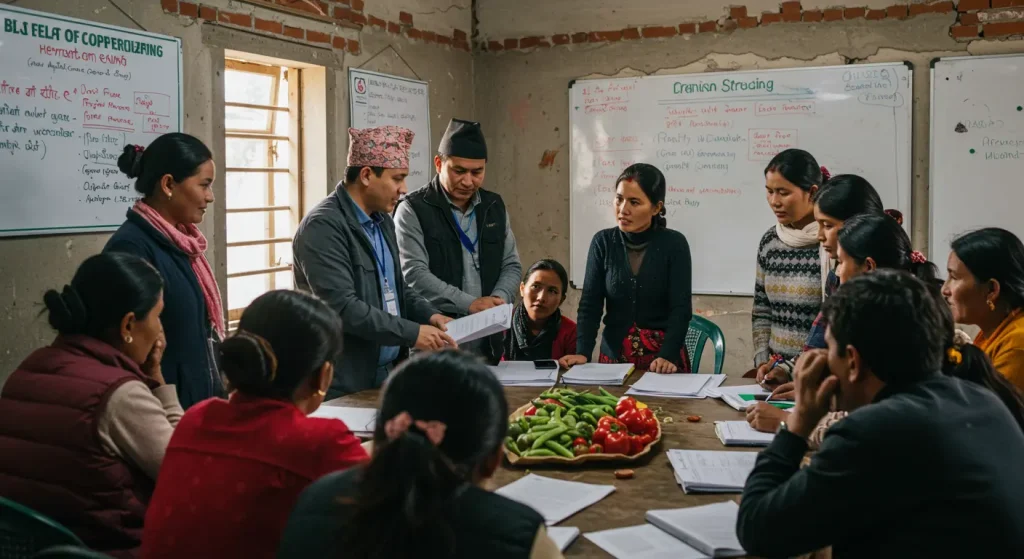
Even a high-quality and processed product needs to be sold. It is difficult for an individual farmer to reach a large buyer. A cooperative, by combining the harvest of dozens and hundreds of farms, becomes a serious player in the market.
This is clearly demonstrated by experience of cardamom growing cooperatives in the eastern hilly regions of Nepal.16Farmers used to operate in a disorganized manner. Each sold his small harvest to local traders at prices they set at their discretion. There was no transparency in pricing, and the farmer’s bargaining power was zero.
With the support of Mercy Corps, farmers began to unite. The key step was training. They were taught how to properly sort and grade the produce: separate large pods from small ones, pink from black. It turned out that buyers were willing to pay significantly more for better-quality, sorted cardamom. Then the cooperatives began to form large commodity lots from the harvest of their members. When farmers came to exporters not one by one, but with an offer of tens of tons of homogeneous products, the situation changed dramatically. Their negotiating power increased many times over. As a result, the price per unit of production (the local unit of weight, “man”) increased from 6,000 to 8,100 Nepalese rupees. Today, Nepal is one of the world leaders in the production of large cardamom, exporting 98% of its harvest and providing more than half of the world market for this spice.23
These examples show that the cooperative model is not a theory, but a working tool. The table below summarizes the key benefits that Nepalese farmers gain through cooperatives.
Table 1: Benefits of Cooperation: Real-life Examples from Nepal

Key Principles for the Future: The Path to Prosperity
An analysis of successful cases allows us to identify several key principles that should underlie the creation and development of farmer cooperatives in Nepal. This is not just a set of recommendations, but a proven formula that allows us to avoid the mistakes of the past and build sustainable and profitable agribusinesses.
Strong governance and transparency.
An effective cooperative is, first and foremost, a well-managed business. Success is impossible without professional management, clear and understandable rules for all members, and absolute financial transparency. It is necessary to implement strict control mechanisms to prevent corruption and misuse of funds that undermine trust, the main asset of any cooperative.24
Education and capacity building.
The success of a cooperative directly depends on the knowledge and competencies of its members. It is not enough to simply unite farmers; they need to be constantly trained. This concerns not only modern agricultural technologies, but also the basics of financial literacy, business planning, quality management and marketing.2International organizations such as the Food and Agriculture Organization of the United Nations (FAO) and USAID play an invaluable role here, providing technical expertise and training programs that turn farmers into agri-entrepreneurs.2
Empowering women.

Involving women in cooperative management and economic activities is not just a matter of social justice, but a powerful economic catalyst. In Nepal, women make up more than 70% of the agricultural workforce, but their role in decision-making has traditionally been minimal.2Examples of cooperatives such as Galda, where women play a leading role, show outstanding results.15When women gain control over resources and income, it leads to immediate positive changes at the family level: children’s nutrition improves, savings increase, and the overall economic stability of the household increases.2
Strategic partnerships.
Successful cooperatives do not exist in a vacuum. They actively build partnerships with a wide range of stakeholders: government agencies, NGOs (Heifer Nepal, Mercy Corps), international agencies (FAO, USAID) and the private sector (exporters, processors).13Umbrella organizations such as the Nepal Agricultural Cooperatives Central Federation (NACCFL) play a vital role in lobbying farmers’ interests at the national level, coordinating efforts and disseminating best practices.27
Market orientation and value creation.
The key difference between successful cooperatives and the unsuccessful ones of the past is their business model. They start not with the question “what can we produce?” but with the question “what does the market want and how can we provide it?” They focus on growing high-value niche crops such as ginger, cardamom or organic coffee, which have high export potential.23They work hard to obtain international certifications (such as organic or Fair Trade) to gain access to premium markets and higher prices.15
An analysis of these principles reveals a deeper pattern. The most impressive cooperative successes in Nepal are not the result of purely grassroots initiatives. They represent a hybrid model that might be called “managed intervention” or “business incubation.” In this model, external partners (NGOs, international agencies) act as catalysts, providing the critical elements that local communities lack: seed capital, modern technology, business expertise, and, most importantly, access to markets. Local farmers have invaluable knowledge of the land and farming techniques, but they often lack specific skills in management, logistics, and international marketing. An external partner fills this gap, setting the flywheel in motion. The long-term goal of such projects is full cooperative self-sufficiency, but the initial impetus usually comes from outside. This is a radical departure from the approach of the past, when cooperatives were created en masse but then left to fend for themselves. Thus, a scalable strategy for Nepal is not simply encouraging cooperation, but creating a systemic program for “growing” cooperatives, within the framework of which promising groups of farmers receive comprehensive support at the most difficult initial stages – from developing a business plan to concluding the first large contract.
Conclusion: A New Era for Nepalese Agriculture

Long stagnant, Nepal’s agriculture is now at the threshold of a new era. The challenges facing millions of smallholder farmers remain enormous, but the path to overcoming them is becoming clearer. Farmer cooperatives, based on modern business principles, offer a real and proven strategy for moving from subsistence farming to profitable agribusiness.
The key lesson Nepal has learned from its difficult history is the need for a fundamental shift in approach. Success comes when a cooperative moves beyond being a village savings bank and becomes a full-fledged enterprise that covers the entire value chain: from the joint procurement of quality inputs and the introduction of technology to the processing of products and their collective marketing in the most profitable markets.
Examples of cooperatives successfully exporting ginger, cardamom and other products prove that this model works. It not only increases the income of individual farmers, but also promotes rural development, empowers women and makes the agricultural sector more resilient to economic and climate shocks.
The path to prosperity requires a joint effort. Farmers must be proactive and willing to learn. Cooperative leaders must ensure transparent and effective governance. And the government and international partners must create a favorable environment and provide targeted support, helping to “grow” new generations of successful agribusinesses. For Nepalese farmers, cooperation is no longer a matter of survival. It is a growth strategy that can unlock the enormous potential of the country’s agricultural sector and secure a worthy place in the global market.ey can grow not only crops, but a more equitable, sustainable, and prosperous future for themselves and their country.
Source used:
- In Nepal, farming families stick together
- Improving the Quality of Life: Farmers’ Cooperatives …
- Information about Nepal – Embassy
- Nepal – EXPORT.BY
- Economy of Nepal: Agriculture, Energy, Tourism
- Economy of Nepal – Wikipedia
- Government Policy and Performance of Agricultural Cooperatives: A …
- Coffee Industry in Nepal
- Nepal Natural Resources Review – Marketing Research
- Agricultural cooperatives: importance, types, pros & cons – Metrobi
- The Impact of Farm Coops: Navigating Tariffs – Farmbrite
- Agricultural Cooperatives: Importance, Types, Pros & Cons – EOS Data Analytics
- Supporting cooperatives around the world also helps farmers | ShareAmerica
- 7 Cooperative Purchasing Strategies for Small Farms That Boost Profitability
- With Love from Nepal to Europe: The Ginger Story – Heifer …
- Spice of Success: Cardamom, Ginger and the Mercy Corps | Happening | ECSNEPAL
- 7 Successful Cooperative Farming Models That Strengthen Communities – FarmstandApp
- Development of Modern Co-operative in Nepal – FINAL SUBMISSION FORMAT INSTRUCTIONS FOR PROCEEDINGS OF BUSINESS AND INFORMATION: PLEASE READ CAREFULLY
- (PDF) Sixty-five Years of Nepalese Cooperative Movement and its Direction – ResearchGate
- MAPPING: KEY FIGURES – Coops4Dev
- (PDF) Agricultural cooperatives and the failure to achieve …
- Farmer-to-Farmer Nepal Host Impact Story – Catholic Relief Services …
- Cardamom cultivation transforms lives in eastern Nepal | The Annapurna Express
- The Potential of Agricultural Cooperatives: Strategies, Benefits, and Challenges – Qaltivate
- Revitalizing Nepal’s cooperative sector – The Annapurna Express
- Gurung – a cardamom and ginger farmer and trainer – News – Site – Swisscontact
- Organizations from Nepal and Lebanon honored for outstanding contribution to transforming agriculture and food systems – Food and Agriculture Organization of the United Nations
- Introduction – NACCFL | Empowering Agricultural Cooperatives and Small Farmers in Nepal
- Nepal farmers brew success with coffee cultivation – BBC News
- From Hills to Cups: The Blossoming Story of Coffee Plantations in Nepal