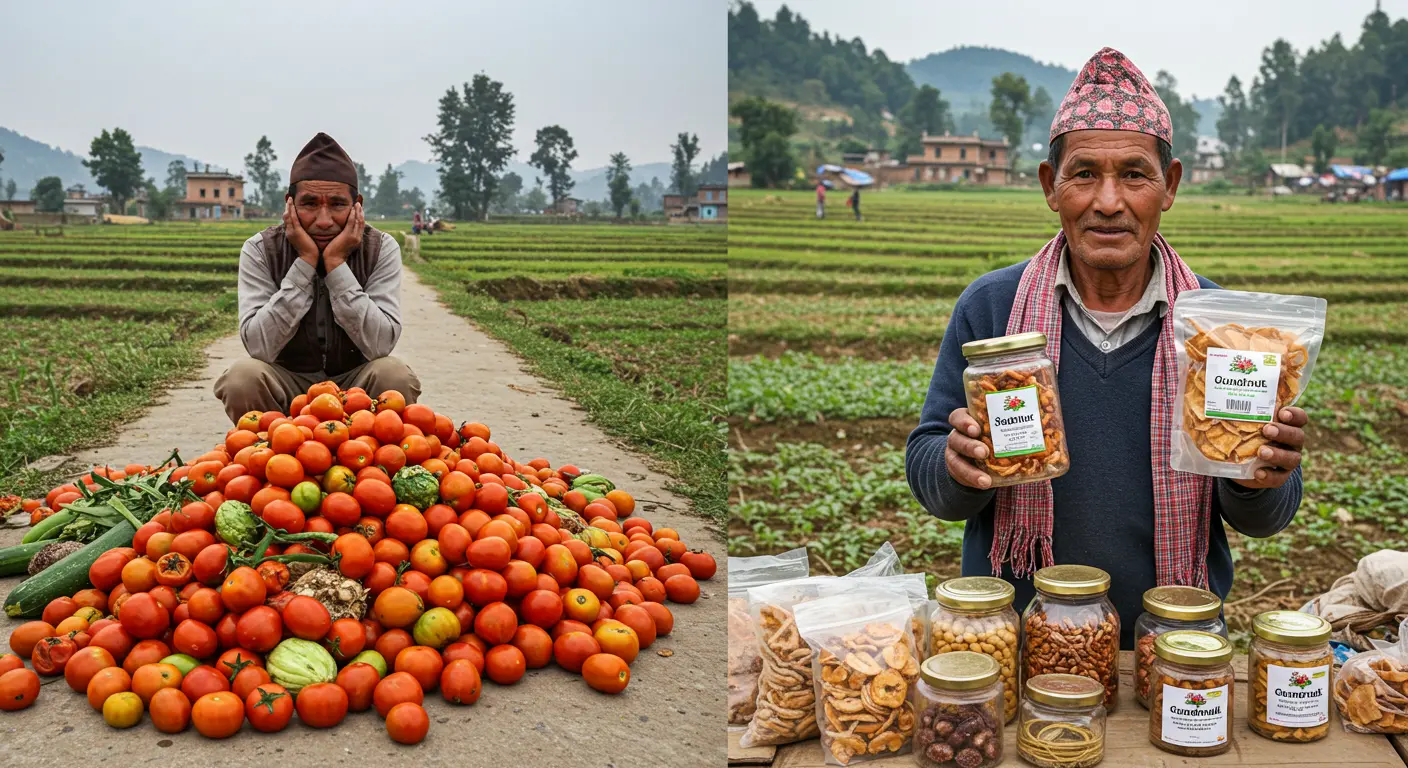
Nepal’s Agricultural Sector at a Crossroads
Nepal’s agriculture presents a fundamental paradox. On the one hand, it is the basis of life for the vast majority of the population: about 62% of all households in the country are employed in the agricultural sector.1On the other hand, its economic output is disproportionately small and continues to decline. If three decades ago agriculture accounted for almost half of the economy, then by 2022 its contribution to GDP had fallen to 23-24%.1This disparity is evidence of extremely low productivity and a systemic crisis that the government is trying to solve with large-scale state programs. But are these programs really helping or have they become an impassable bureaucratic labyrinth?
The root of the problem lies in a complex of interconnected challenges. The most acute of these is the mass labor migration of young people, which leads to a serious shortage of labor in villages.5This phenomenon, in turn, gives rise to the “feminization” of agriculture, with the main burden falling on women, and leads to large areas of arable land remaining uncultivated.8Those who remain continue to rely on traditional, inefficient farming methods on small, fragmented plots of land that are not suited to modern mechanization.3Add to this poor access to markets, poor infrastructure and high vulnerability to climate change impacts such as droughts and floods, and the picture becomes complete.5
Under these conditions, many farmers lose motivation, and the profession itself acquires a low social status.6A vicious circle is created: low profitability and hard work push people out of the village, which further increases the costs and risks for those who remain, reducing their income and motivation. Ultimately, a country with huge agricultural potential is forced to increase food imports to feed its own population.10It is precisely to break this vicious circle that government support programs were created. Their goal is not just to provide assistance, but to make agriculture attractive and profitable again. This study aims to analyze how successfully they are coping with this task in 2025.
PMAMP: Flagship Initiative or Paper Tiger?
Central to the government’s strategy to revive the agricultural sector is the Prime Minister Agriculture Modernization Project (PMAMP). Launched in 2016, the 10-year, US$1.12 billion project is being touted as a “game changer.”12Its stated goals are ambitious: modernization, commercialization, mechanization and achieving self-sufficiency in Nepal’s key agricultural products.12
The project has a clear hierarchical structure, dividing agricultural zones across the country into four levels: Pockets, Blocks, Zones and Super Zones.12Each level specializes in certain crops, such as rice, wheat, potatoes, citrus or dairy products, with the aim of concentrating resources and creating production clusters. On paper, this structure looks logical and orderly. However, an analysis of the efficiency on the ground shows that the reality is far from ideal.
Studies conducted in various PMAMP zones yield mixed results. For example, the potato zone in Bajhang district recorded a high technical production efficiency of 87.75%. However, this success was undermined by the very problems the project was supposed to address: poor access to credit and inadequate extension support from agronomists.15Meanwhile, in the maize zone of Parbat district, 89% of respondents said PMAMP had improved their access to inputs such as seeds and mini-cultivators. But here too, serious challenges remained, particularly with access to irrigation, limiting the overall impact of the program.18
These mixed results point to a fundamental flaw in the project. Historically, Nepal’s agricultural policy has suffered from a “plain bias,” ignoring the unique needs and challenges of farming in the hilly areas where most smallholders live.19PMAMP, as a large, centrally managed project with a vertical structure, seems to reproduce this mistake. Its rigid, hierarchical model is difficult to adapt to diverse local conditions. As a result, the project’s huge budget20and clearly defined goals do not always translate into real assistance on the ground. The centralized distribution of funds makes the program vulnerable to political influence and misuse, when support goes not to those who need it most, but to those who are better connected and located in more accessible areas. Thus, the very design of the project, intended to bring order, in practice can create a labyrinth in which the interests of the average farmer are lost.
Table 1: Key Government Programs to Support Nepal’s Agro-Industrial Complex for 2025

Subsidies: Direct support or a drain on funds?
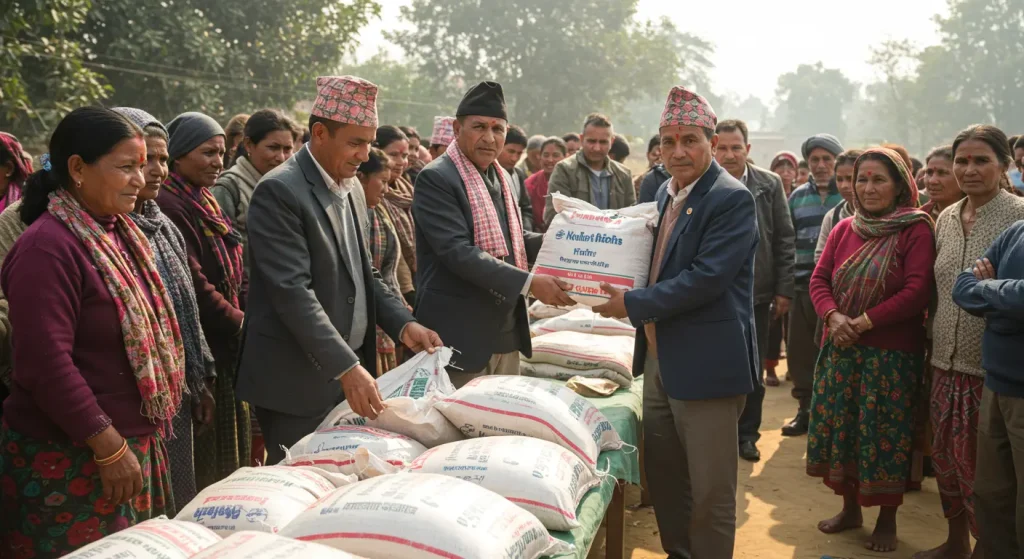
The subsidy system is one of the main instruments of government support for farmers in Nepal. Over the past five years (from 2019/20 to 2023/24 financial years), the government has allocated a colossal amount of 107 billion Nepalese rupees for this purpose.20However, the composition of this expenditure raises serious questions. The vast majority — 81% or Rs 87.35 billion — was spent on subsidising chemical fertilisers. The remaining 19% (Rs 20.3 billion) was distributed directly through various projects, with PMAMP again being the largest channel, with Rs 6.62 billion going through it.20
In addition to fertilizers, subsidies are provided for the purchase of agricultural machinery (usually covering 50% of the cost) and for the payment of insurance premiums, where the state can cover up to 80% of the farmer’s costs.28The aim of these measures is to reduce production costs and encourage farmers to invest in modern technologies.
Despite the huge financial injections, the effectiveness of the subsidy system remains extremely low. For years, there have been complaints that state aid does not reach ordinary small farmers. Instead, the funds end up in the hands of big players and politically connected individuals.20The problem became so acute that the Minister of Agriculture was forced to admit the existence of violations and announce the creation of a special commission to investigate the misuse of subsidies.20
However, the main problem with the system is not only corruption, but also a fundamental political contradiction that undermines efforts to mechanize agriculture. The government actively subsidizes the purchase of tractors and motor blocks, which are subject to a minimum import tax of 1%. At the same time, high duties apply to the import of spare parts and attachments: 15% tax and 13% VAT.12
This policy creates an absurd situation. It is cheap for a farmer to buy and subsidize an entire tractor, but extremely expensive and difficult to maintain and repair. This system benefits importers of equipment, but not farmers, who are left with non-working equipment. This contradiction is a perfect illustration of the “labyrinth”: it leads to documented underutilization of expensive equipment and inefficient operation of Custom Hiring Centers, whose business models collapse under the weight of high maintenance costs.12The system is designed to encourage initial purchase rather than long-term, sustainable use, which fundamentally undermines the whole idea of upgrading.
Soft Loans: Affordable Capital or Debt Trap?
Access to finance is key to modernizing any farm. In Nepal, the main financial institution working with farmers is the Agricultural Development Bank Ltd. (ADBL).31It offers a range of loan products specifically designed for farmers, including the Agro-Tools Purchase Loan and the government’s flagship programme, the Sauliyatpurna Karja (Subsidised Loan).33
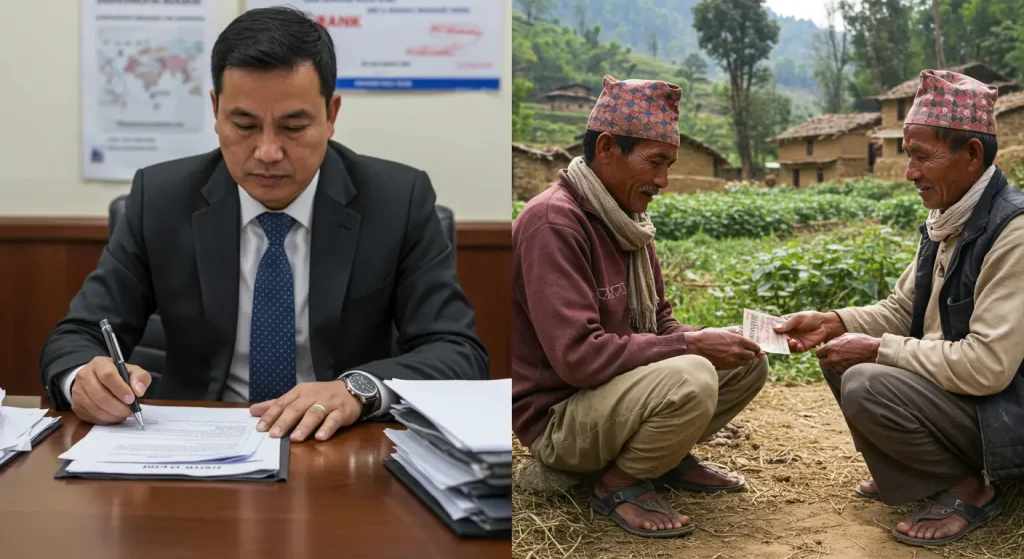
The interest rate on such loans is usually formed from the bank’s base rate (Base Rate) plus a premium. For example, for a loan to purchase equipment, the premium is up to 3%.33Considering that the ADBL base rate was 6.09% as of April 202538, the overall rate for a farmer could be around 9%. Under the “Sauliyatpurna Karja” program, the government additionally subsidizes part of the interest rate, making the loan even more affordable. Similar programs are offered by other banks, such as Nepal Bank Limited.39
But the attractive terms mask a harsh reality: for the vast majority of small farmers, these loans are unavailable. Research shows that farmers face enormous difficulties in obtaining formal credit.22The main barriers are complex and lengthy bureaucratic procedures, the requirement for high collateral (which small farmers often do not have), and the general reluctance of banks to lend to the “risky” agricultural sector.22This results in most farmers being forced to turn to informal lenders – moneylenders, friends or relatives – where the conditions are much harsher.43
To make matters worse, even the funds that are disbursed under the subsidized loan program often fail to reach their intended purpose. A study by Nepal Rastra Bank found that more than 30% of loans disbursed under the Sauliyatpurna Karja program were misused or diverted to other, more profitable sectors.23
This creates a vicious, two-tiered system. On the one hand, well-informed and well-connected borrowers gain access to cheap government money and use it for personal enrichment. On the other hand, the real small farmers for whom the aid was intended are unable to overcome bureaucratic barriers and end up in debt bondage to informal lenders. Thus, the formal system, intended as “real aid,” in practice only reinforces the “maze” of informal, predatory debt that deprives farmers of the opportunity to invest in their farms.
Table 2: Preferential loans for farmers from ADBL for 2025

Agricultural Insurance: A Safety Net with Holes?
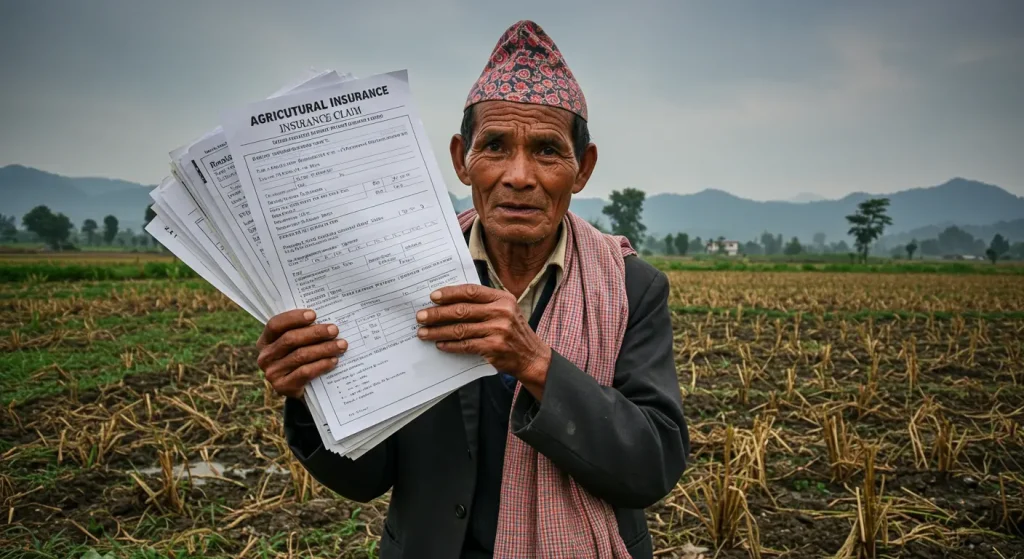
Along with subsidies and loans, the third pillar of government support is agricultural insurance. Given Nepal’s high vulnerability to climate-related disasters, this instrument should serve as a reliable safety net for farmers. The government is making significant efforts to popularize it, offering an unprecedentedly generous subsidy of 80% of the cost of the insurance policy for a sum insured up to Rs 5 million.24Insurance policies cover a wide range of risks, from floods, droughts and fires to damage from pests, diseases and wild animals.29
The regulatory body in this area is the Nepal Insurance Authority (NIA), which is formulating regulations and trying to introduce a modern digital system to simplify procedures.46A new national insurance programme is planned to be launched in 2025 for farmers working in areas with high biodiversity, where damage from wildlife is particularly high.48
Despite all these efforts and huge subsidies, the insurance system is practically not working. Its level of implementation, especially in crop production, remains extremely low.24The reasons for this are rooted in a deep crisis of trust and systemic shortcomings. Farmers either do not know about the existence of insurance products or do not trust insurance companies.25This mistrust is backed up by real-life experience: the procedures for claiming payments are extremely complex, and compensation is delayed for months or even years. The government’s recent decision to allocate Rs 800 crore to clear old debts owed by insurance companies to farmers only confirms the validity of these fears.26
In an attempt to solve the problem of inefficient paperwork, the authorities are betting on digitalization and introducing a new online platform ALIS (Agricultural and Livestock Insurance System).46However, a detailed examination of the user manual for this system shows that instead of solving old problems, it risks creating a new, digital labyrinth. The application process involves many steps: online registration, OTP confirmation, filling out a detailed customer questionnaire, marking the farm on an interactive map, submitting a preliminary request, waiting for a technician to be assigned, filling out a proposal form, uploading documents, and finally approving the draft policy.46For a rural resident with low levels of digital literacy and unstable internet access, this process seems insurmountable. Without massive investment in training and local support, the digital system risks further marginalizing the most vulnerable farmers.
There is also a fundamental flaw in the design of the insurance products themselves. Livestock insurance is slightly more popular than crop insurance, and the reason is simple.24Assessing the loss of an animal is easy – it is a binary event. Assessing partial crop damage from drought or pests is much more difficult, requiring complex monitoring and subjective assessments.24Existing crop insurance products are not designed for practical and inexpensive administration. This makes them unattractive both for insurers (due to high transaction costs) and for farmers (due to the difficulty of proving damages when an insured event occurs).
Mechanization and technology: The path to modernization or a dead end?
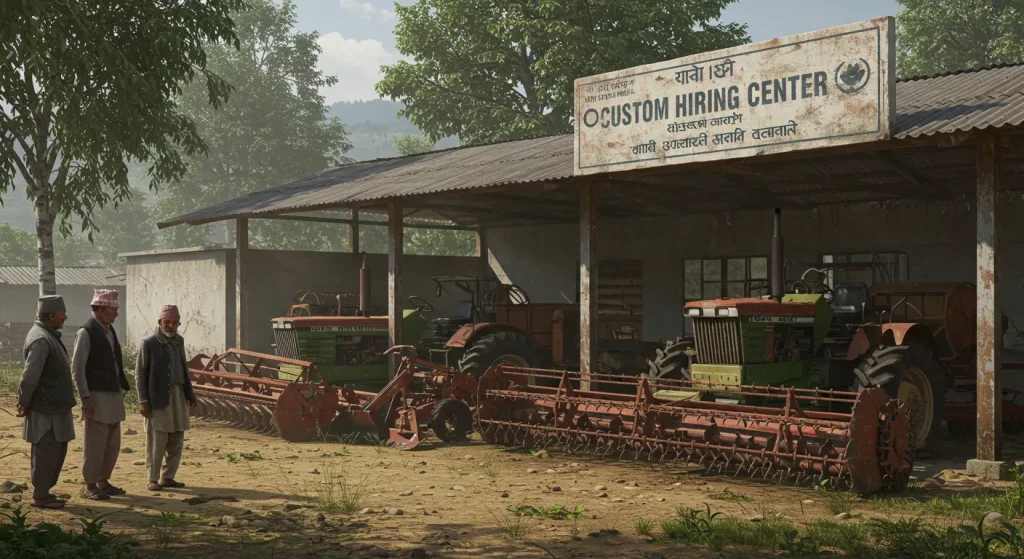
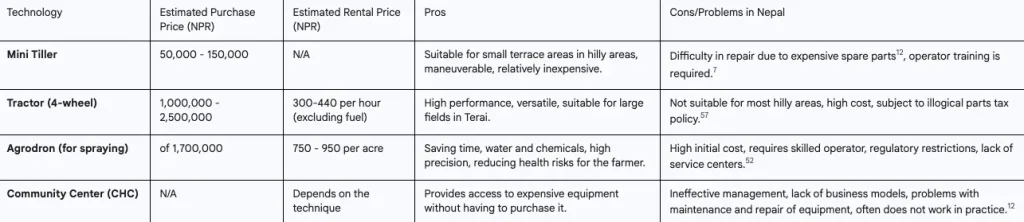
Mechanization is one of the key areas of PMAMP and the overall agricultural modernization strategy of Nepal.13Since most farmers cannot afford expensive machinery, the primary model for providing access has become Custom Hiring Centers (CHCs). The idea is that farmers can rent the machinery they need—tractors, tillers, seeders, or combines—at an affordable price.51The government supports the establishment of such centres and subsidises the purchase of equipment, especially lightweight 5-9 hp mini-cultivators, which are better suited to terrace farming in Nepal’s hilly terrain than large tractors.54
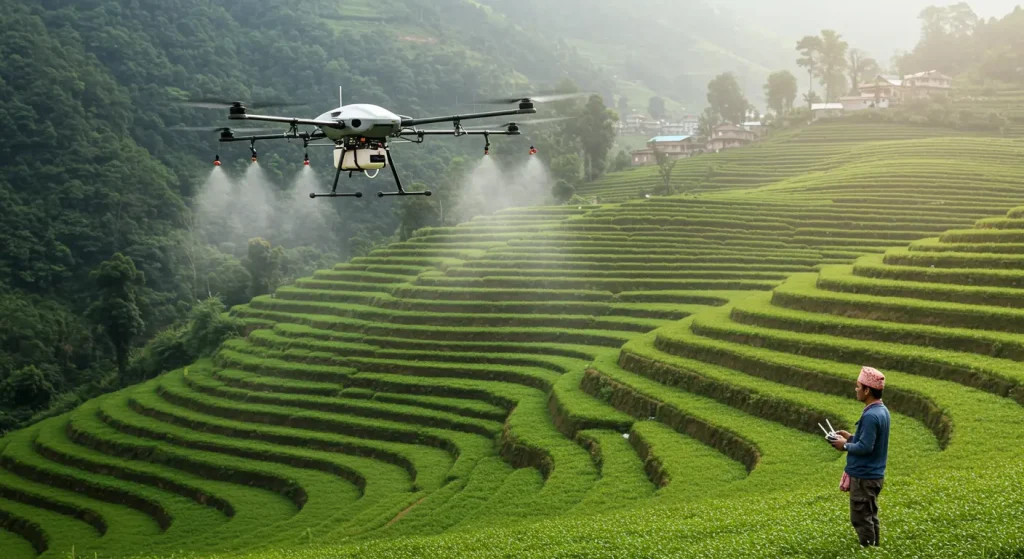
More advanced technologies are on the horizon. Agricultural drones used to precisely spray fields with fertilizers and pesticides and to monitor crop health show enormous potential.52Their use allows to reduce the processing time of one acre from four hours with manual labor to 5-7 minutes, saving 80-90% of water and 25-30% of chemicals.52There are already companies in Nepal offering drone rental services at a price of Rs 750-950 per acre.52
However, as in other areas, the implementation of the mechanization strategy faces serious challenges. The PMAMP project itself acknowledges in its reports that “poor performance of CHCs due to lack of regulations and guidelines” is one of the major challenges.12A review by the UN Food and Agriculture Organization (FAO) confirms this finding, pointing to a lack of sustainable business models and the need for management training.52In practice, many CHCs are turning into simple distribution points for subsidized equipment without any plan for its operation, repair and maintenance.51
This is where the so-called “fragmentation effect” comes into play – the root cause of many good intentions failing. Let’s imagine the path of a farmer. With the help of a subsidy, he gets a mini-cultivator from CHC. This is “real help.” After some time, the cultivator breaks down. The farmer discovers that spare parts are very expensive due to high import duties. This is a “labyrinth.” To buy spare parts, he needs a loan, but at the bank he faces a complicated procedure and a collateral requirement. This is another turn of the “labyrinth.” Finally, it turns out that he did not have sufficient technical knowledge to properly operate and repair the equipment.
This example clearly demonstrates that government programs operate in isolation from one another. The subsidy program provides machinery, but it is not linked to financial programs (affordable loans for repairs), trade policy (fair taxes on spare parts), or agronomic advisory systems (technical training). To succeed, a farmer needs a complete, integrated ecosystem of support, not just a single subsidized asset. It is the government’s failure to create such an ecosystem that turns promising programs into an insurmountable maze for those they were created to serve.
Table 3: Mechanization: Comparison of Technology and Cost in Nepal
Conclusion: How to turn a labyrinth into real help?
Returning to the main question posed in the title, the answer is as follows: Nepal’s government agricultural support programs are both a labyrinth and potential aid. The “real aid” lies in their very existence, in the billions of rupees allocated, and in the correctly formulated goals of modernization, increasing farmers’ incomes, and ensuring food security. However, for the vast majority of smallholders who form the backbone of the country’s agriculture, these programs in practice turn out to be a “labyrinth” of inaccessibility, inefficiency, and injustice.
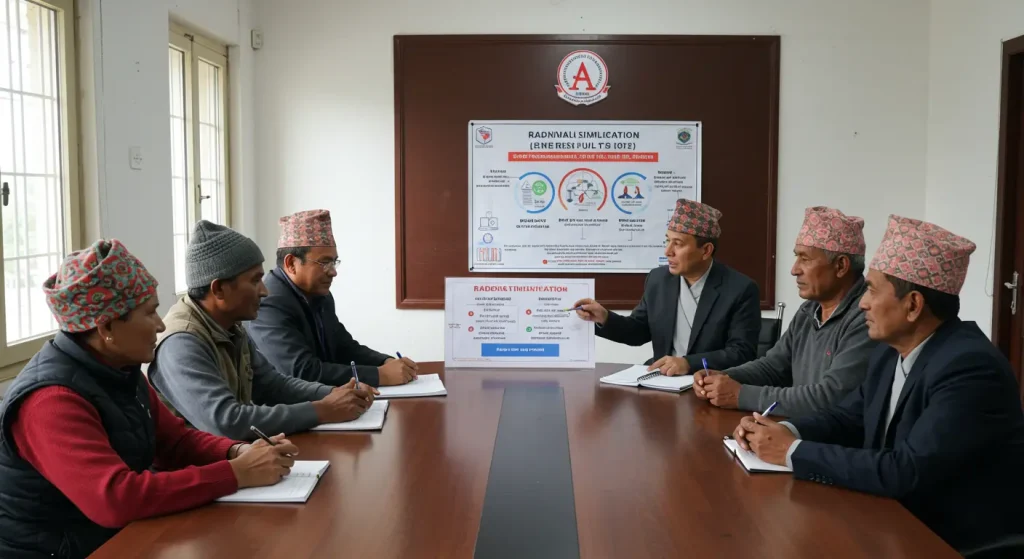
This labyrinth has several dimensions:
- Access Labyrinth: Bureaucratic hurdles, complex loan and insurance application procedures, and high collateral requirements effectively exclude the poorest and most vulnerable farmers from government assistance.
- Labyrinth of implementation: There is a huge gap between the stated goals and their practical implementation, which is most clearly demonstrated in the non-functioning Centers for Collective Use of Equipment and the massive misuse of subsidies.
- The Labyrinth of Politics: The presence of internal contradictions in legislation, such as tax policies that encourage the purchase of new equipment but make its repair economically unprofitable, undermining long-term sustainability.
- Labyrinth of mistrust: Deep-rooted mistrust among farmers of government institutions and insurance companies, born of years of experience of delayed payments, corruption and broken promises.
To transform this maze into real, actionable assistance, Nepal needs to move from a fragmented, vertical, and piecemeal approach to a holistic, farmer-centric support ecosystem. This requires more than just more funding, but a fundamental rethinking of how we operate.
Key recommendations for such a transition include:
- Radical simplification of processes: It is necessary to simplify and standardize the procedures for applying for loans, subsidies and insurance payments as much as possible, making them understandable and accessible to farmers with low levels of education and digital literacy.
- Support Integration: The provision of subsidies, especially for equipment, should be inextricably linked with mandatory training. Farmers should receive not only the asset, but also knowledge on its effective operation, the basics of business planning and financial management.
- Policy reform: Political contradictions should be eliminated. In particular, it is necessary to harmonize tax policy by reducing duties on imported spare parts and components in order to make repairs and maintenance of equipment affordable.
- Local empowerment: The Shared Machinery Centres need to be strengthened, not only by providing them with equipment but also by providing clear operational guidelines and training for their management in the basics of running a business. More control and responsibility should be transferred to local farmer groups and cooperatives.
- Restoring Trust: Ensuring full transparency in the distribution of subsidies and the fastest and fairest possible handling of insurance claims must be a top priority. Publishing lists of beneficiaries and promptly settling claims is the only way to restore farmers’ trust in government institutions.
Only a comprehensive approach aimed at eliminating systemic failures, rather than patching up individual holes, will transform government support from a labyrinth into a real tool for reviving Nepal’s agriculture.n grow not only crops, but a more equitable, sustainable, and prosperous future for themselves and their country.
Source used:
- Nepal’s Agricultural Landscape: Assessing the Government’s Stance
- Agriculture in Nepal – Wikipedia
- (PDF) The Role of Agriculture in Nepal’s Economic Development: Challenges, Opportunities, and Pathways for Modernization – ResearchGate
- Nepal economy shifts away from farming | Nepali Times
- Modernising Agriculture – The Rising Nepal
- The Commercialization of Smallholder Farming—A Case Study from …
- Labor-Saving Farm Technology in Nepal – Policy Brief 9 [A4]
- Smallholder farmers in Nepal: A brief review | cesar
- The contributions of scale-appropriate farm mechanization to hunger and poverty reduction: evidence from smallholder systems in Nepal | Emerald Insight
- fableconsortium.org
- Agricultural Productivity and Poverty Reduction in Nepal – Eastern Illinois University
- Role of PMAMP in Agricultural Mechanization in Nepal
- Standard Expression of Interest (EOI) Document for Shortlisting of Consultants and Consulting Services
- (PDF) Prime Minister Agriculture Modernization Project (PMAMP), Nepal – ResearchGate
- Factors affecting the technical efficiency of potato production under the command area of the PMAMP project in Nepal: The case of Bajhang district
- Full article: Factors affecting the technical efficiency of potato production under the command area of the PMAMP project in Nepal: The case of Bajhang district
- (PDF) Factors affecting the technical efficiency of potato production under the command area of the PMAMP project in Nepal: The case of Bajhang district – ResearchGate
- ROLE OF PRIME-MINISTER AGRICULTURE MODERNIZATION PROJECT ON MAIZE VALUE CHAIN DEVELOPMENT AND TECHNOLOGY ADOPTION (A CASE STUDY – Index Copernicus
- Responsible Agricultural Mechanization Innovation for the Sustainable Development of Nepal’s Hillside Farming System – MDPI
- 107 billion rupees spent on agricultural subsidy in five fiscal years | The Farsight Nepal
- Despite 107 billion in subsidies, Nepal’s agricultural production suffers decline
- credit and financial access in nepalese agriculture: prospects and challenges – Nepal Journals Online
- Over 30 percent of subsidized loans for primary sectors misused: NRB – myRepublica
- Agricultural Insurance Products in Nepal: Practice and Prospects – ResearchGate
- Full article: Agricultural insurance as a climate risk adaptation strategy in developing countries: a case of Nigeria
- Government Allocates Rs 800 Million for Agricultural Insurance Claims – Beemapost.com
- Minister Adhikari claims Rs107.66 billion in agricultural subsidies over five years
- The Government of Nepal (through the Prime Minister?s Agricultural Modernization Project in Banke’s Rice Super Zone) provided a 50% subsidy to farmers for farm mechanization, with emphasis on labor-saving mechanical weeders that have been demonstrated to be ergonomic and easy to use by women farmers. – CGSpace
- Agriculture & Livestock Insurance – Nepal Insurance
- Policy Briefs on Agricultural Transformation
- ADBL: Supporting Agricultural Growth – The Rising Nepal
- Agricultural Development Bank
- Interest Rates Effective From Baisakh 01, 2082 (14April, 2025) – ADBL Bank
- Subsidized Loan – ADBL Bank – Agricultural Development Bank
- Interest Rates Effective From Baisakh 01, 2082 (14 April, 2025) – ADBL
- Latest Interest Rates – ADBL
- Interest Rate Effective From Chaitra 01 (14 March, 2025) – Agricultural Development Bank
- Base Rate – ADBL Bank
- Agriculture Loan – Nepal Bank
- CHALLENGES IN AGRICULTURAL CREDIT ACCESS AND LOAN SIZE DETERMINANTS IN KAILALI DISTRICT, NEPAL – FOOD AND AGRI ECONOMICS REVIEW – FAER
- FACTORS AFFECTING THE FORMAL AGRICULTURE CREDIT ACCESS IN KAILALI DISTRICT, NEPAL
- Credit and Financial Access in Nepalese Agriculture: Prospects and Challenges | Request PDF – ResearchGate
- Credit’s use performance and its determinants on farm household: A case of Chitwan district of Nepal
- Agro Production Loan – ADBL Bank – Agricultural Development Bank
- Livestock Loan – ADBL Bank – Agricultural Development Bank
- Nepal Insurance Authority
- Publication of INSURANCE REGULATION 2081 (2025 A.D.) – Pradhan & Associates
- Reaching the unreached: Nepal scales up agricultural insurance in biodiversity hotspots to tackle human-wildlife conflict | BIOFIN
- (PDF) Agriculture Insurance Business Service in Nepal – ResearchGate
- Farmers’ Risk Perceptions, Attitudes and Management Strategies, and Willingness to Pay for Crop Insurance in Nepal – Pure API – The University of Western Australia
- About us – Custom Hiring Centre – Bardibas Krishi
- Review of and recommendations for Custom Hiring Centers for mechanization in Nepal and the Asian region – FAO Knowledge Repository
- Custom Hiring Centres a top priority for Nepali Provincial Government – ACIAR Research
- Prospects for farm mechanization in mid-hills of Nepal: Stakeholder experiences and vision
- (PDF) DATAVEILLANCE MANAGEMENT USING MICRO DRONE TECHNOLOGY FOR AGRICULTURE PURPOSE IN NEPAL – ResearchGate
- Drones over Nepal | Nepali Times
- DOR Equipment Hire Rate
- Drone Sprayer(10Ltr) – Muktinath Krishi Company