Nestled between the world’s highest peaks and rich cultural traditions, Nepal has tourism potential that extends far beyond the snow-capped Himalayas. It is a land of ancient civilizations, deep spiritual practices, and astonishing biodiversity, offering travelers unique and multifaceted experiences. However, to fully realize this potential in today’s environment, a fundamental rethinking of the national tourism strategy is needed. Past approaches, focused primarily on quantitative growth in visitor numbers, have not only exhausted their potential, but also exposed a number of systemic problems, from infrastructural limitations to environmental pressures. The global COVID-19 pandemic has only accelerated this realization, becoming a catalyst for rethinking the future of Nepalese tourism.
There is a need for “Visit Nepal 2.0” – not just another campaign, but a fundamental paradigm shift. This new strategy should shift the focus from quantity to creating a high-quality, sustainable and, as a result, high-revenue tourism product. This approach is designed to bring tangible benefits to the country’s economy and local communities, while ensuring the preservation of Nepal’s unique natural and cultural heritage for future generations. It is about creating a tourism model where every visitor gets an unforgettable experience, and the country gets long-term benefits and is internationally recognized as a responsible and attractive destination.
1. Reflecting on the Past: What We Have Learned from Previous Travel Campaigns?
The history of tourism promotion in Nepal is marked by a number of ambitious initiatives that, despite good intentions, have not always achieved their intended goals, revealing the systemic vulnerabilities of the sector. Analysing these campaigns, especially the latest major initiative, Visit Nepal 2020, provides valuable lessons for developing a more effective strategy for the future.

1.1 Visit Nepal 2020 Campaign: Ambition and Reality
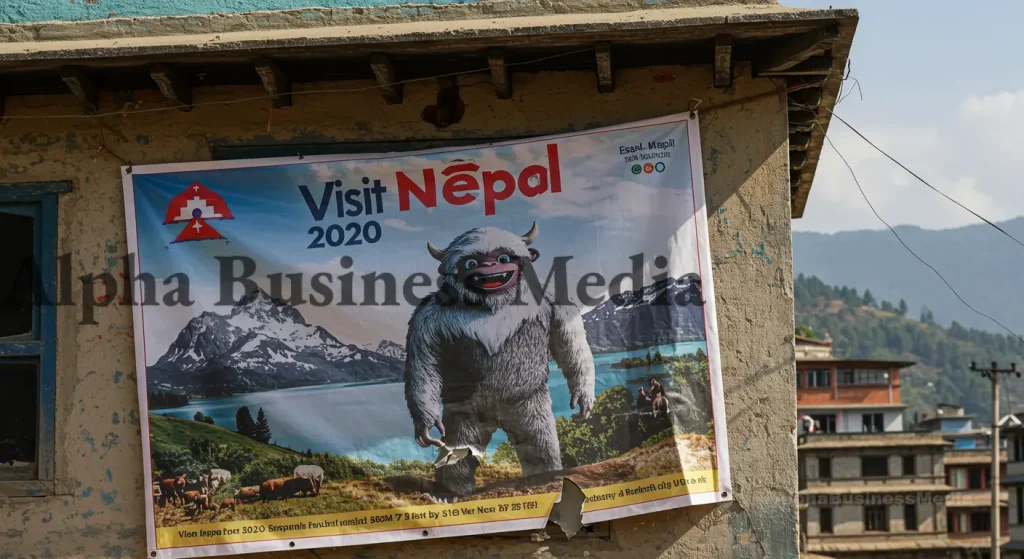
Visit Nepal 2020 (VNY2020) campaign has been billed by the government as a mega programme to become a turning point in Nepalese tourism development.1Its goals were ambitious: to attract two million foreign tourists within a year and create one million new jobs in the tourism sector.1Under the motto “Lifetime Experiences”1The plan was not only to increase tourist flow, but also to diversify the tourist offer, in particular by promoting one hundred new tourist destinations throughout the country, ten in each province.2One of the campaign’s symbols even became the mythical Yeti, designed to add an element of mystery and attract the attention of the global community.3
However, even before the world faced the COVID-19 pandemic, the VNY2020 campaign was heavily criticized by experts and the public. There were legitimate doubts about the achievability of the stated quantitative indicators.4The main complaints were about “sloppy promotion abroad”, a lack of a clear marketing strategy and a general feeling of a “poorly planned campaign”.4There were serious concerns about the readiness of the existing infrastructure to accommodate such a large influx of tourists, as well as about the quality of the services offered and the effectiveness of the promotional efforts themselves.4These problems pointed to deeper, systemic weaknesses in the strategic planning and management of the tourism industry, rather than simply a confluence of unfortunate circumstances.
The COVID-19 pandemic that broke out in early 2020 dealt a devastating blow to the already-criticized campaign. In March 2020, the Nepalese government was forced to officially suspend all VNY2020 activities.5The consequences were catastrophic: mass cancellations of bookings, a sharp rise in unemployment in the sector and significant financial losses for both businesses and the state.6According to the results of 2020, the drop in international tourist flow to Nepal amounted to more than 80% compared to the previous year.7
The lessons learned from the VNY2020 experience are numerous and important:
- Unrealistic goals without proper preparation: Trying to achieve impressive quantitative indicators without first addressing fundamental problems in infrastructure, service quality, marketing and logistics is doomed to failure. Chasing loud figures, such as two million tourists, without ensuring basic conditions leads to inefficient use of resources and undermines confidence in the country’s tourism brand.
- Insufficient risk assessment and lack of flexibility: The campaign proved to be extremely vulnerable to external shocks, highlighting the urgent need to develop more flexible, adaptive and crisis-proof strategies capable of responding to unforeseen circumstances.
- Implementation and coordination issues: Even positive intentions, such as developing new tourism destinations, require a clear plan of action, sufficient and timely funding, and effective coordination between various government departments and the private sector. These components of the VNY2020 campaign appear to have been lacking. Repeated failures to implement large-scale tourism initiatives can lead to “fatigue” among potential investors and international partners, as well as disillusionment within the country.
1.2. Common problems of previous initiatives
The issues identified during the VNY2020 campaign are in many ways a reflection of broader and long-standing shortcomings in Nepal’s tourism policy:
- Focus on quantity, not quality: Historically, Nepalese tourism has sought to increase overall tourist numbers, often at the expense of service quality, environmental quality and traveller satisfaction.
- Infrastructure unpreparedness: Many previous tourism promotion campaigns and initiatives were launched without adequate development of supporting infrastructure. This concerns both transport accessibility (roads, airports) and the quality of accommodation, sanitary conditions and communications.8
- Weak diversification of tourism products: There was an over-reliance on traditional forms of tourism such as trekking and mountaineering in the Everest and Annapurna regions, while the vast potential of other niches – cultural, spiritual, wellness, adventure (other than mountain), MICE tourism – remained largely untapped.
- Fragmented efforts and lack of long-term vision: The tourism industry suffered from the lack of a unified, coherent and long-term national strategy. Priorities changed frequently, and efforts by different agencies were poorly coordinated, leading to a dispersion of resources and a decrease in overall efficiency.
- Underestimating the importance of domestic and regional tourism: Most campaigns, including VNY2020, were primarily focused on attracting tourists from overseas.1The COVID-19 crisis has clearly demonstrated the vulnerability of such a one-sided model. Although detailed statistics on domestic tourism in the materials provided are limited10, its potential to cushion the impact of external shocks and support the industry during periods of low international activity has probably been systematically underestimated. Lack of attention to developing domestic tourism and attracting travelers from neighbouring countries, especially India and China1, makes the industry overly dependent on expensive long-haul markets and global geopolitical and economic stability. A sustainable tourism strategy for the future must necessarily include effective measures to stimulate domestic demand, which can ensure a more stable occupancy of tourism infrastructure and employment of the population.
Key takeaway from reviewing past experience is that Nepal needs a decisive shift from sporadic, overly ambitious, but often poorly prepared and under-resourced campaigns to a systematic, well-thought-out and long-term national strategy. This strategy should be based on a realistic assessment of the country’s strengths and weaknesses, take into account global trends and have a clear focus on achieving quality indicators, ensuring sustainability of development and increasing the overall profitability of the tourism sector.
2. Nepal Tourism Today: Between Challenges and Enormous Potential
Despite the difficulties experienced, Nepal’s tourism sector is showing signs of recovery and has significant potential for further growth. However, there are a number of serious challenges that need to be addressed urgently on the way to its full realization.
2.1. Statistical cross-section of the industry (2022-2024)
Following the sharp decline caused by the COVID-19 pandemic in 2020-2021, when the number of international arrivals fell drastically7, the tourist flow to Nepal has gradually begun to recover. In 2022, the country was visited by 614,869 foreign tourists.7In 2023, this figure increased to 1,014,882 people.7As of the end of 2024, Nepal received 1,147,567 tourists, which is about 96% of the pre-pandemic level of 2019.18This indicates a significant revival of the industry.
The main markets generating tourist flow to Nepal remain neighboring countries and countries with traditionally high interest in the Himalayan region. India continues to lead: 317,772 tourists arrived from this country in 2024, which, however, is 0.7% less than in 2023. In second place is the United States, from where 111,216 people arrived, showing an increase of 10.8%. China rounds out the top three with 101,879 tourists and an impressive increase of 67.3% compared to the previous year.18The UK, Australian and Bangladesh markets also make significant contributions.10
In terms of economic indicators, the average daily expenditure of one tourist was $40.5 in 2022.14and rose slightly to $41 in 2023.16Total tourism revenues in the 2022/23 financial year reached $548 million.17The average length of stay of foreign tourists in Nepal in 2023 was 13.1 days.16Tourism plays an important role in the country’s economy, accounting for about 11.5% of total employment, according to the latest data.17Estimates of tourism’s contribution to GDP vary, with earlier estimates placing it at around 8%11, while statistics for 2023 point to 1.1% of GDP.17
Traditionally, Nepal’s peak tourism seasons are spring (March-May) and autumn (September-November), due to favorable weather conditions for trekking and mountaineering. However, the country has the potential to market itself as a year-round destination by offering a variety of activities in different seasons.20
Table 1: Nepal Tourism Key Indicators (2019, 2022-2024)
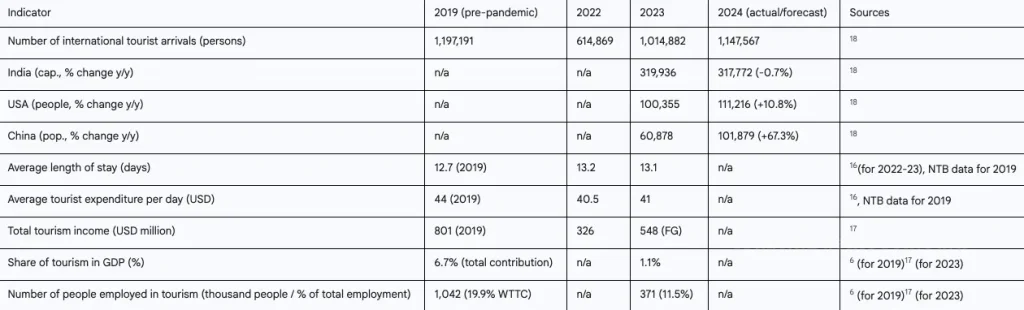
Note: “n/a” means that data is not available in the provided materials for a specific year/indicator. Revenue and GDP data may refer to a financial year (FY).
2.2. Hotel Sector: Construction Boom Amid Low Occupancy
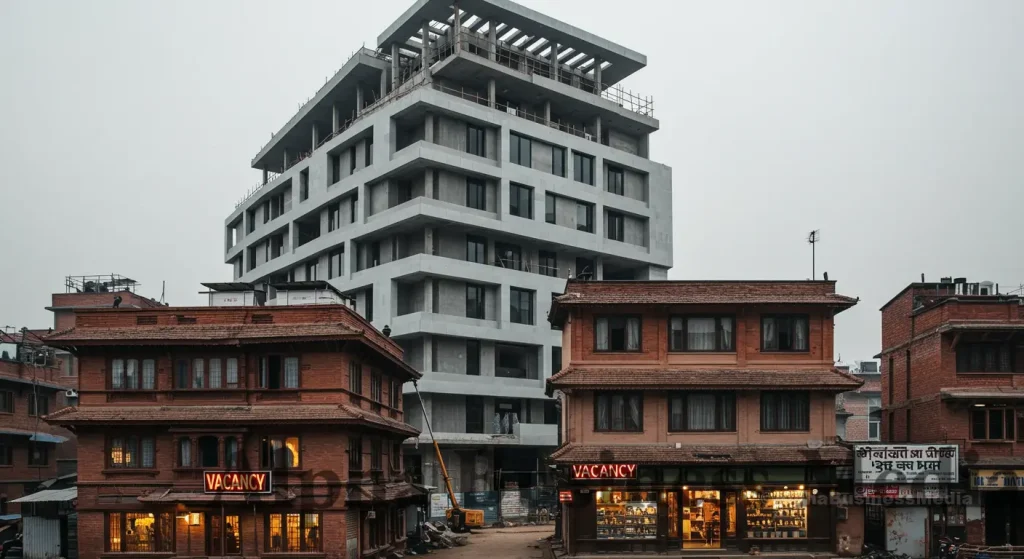
Nepal’s hotel sector is going through a paradoxical period of development: on the one hand, there is a rapid growth in supply, on the other hand, existing hotels are facing serious operational difficulties. In 2019, there were 1,289 hotels in the country with a total of 43,999 rooms. At present, according to the Hotels Association of Nepal (HAN), there are 204 registered star hotels and 11,919 non-star hotels, which together offer more than 225,648 beds.22Moreover, according to World Bank forecasts, more than 20 new five-star hotels are expected to be commissioned in the near future.23The current capacity of the hotel sector is estimated at 3.5 million tourists per year, while the actual number of arrivals is about one million. This means that the utilisation rate of the existing capacity is only about a third of what is possible.22HAN estimates that based on average length of stay, Nepal has the theoretical capacity to accommodate over 6 million tourists annually.22
This significant oversupply coupled with insufficient demand creates serious problems. Low hotel occupancy (according to HAN data for 2017, the average occupancy was around 70%)24, however, current data, given the oversupply, point to lower real figures) leads to increased competition and so-called “price wars”, when hotels are forced to reduce room rates to attract customers. This, in turn, has a negative impact on business profitability.22Many hotel businesses, especially small and independent ones, are struggling financially, struggling with high interest rates on loans and rising operating costs.
Financial problems are aggravated by a shortage of personnel. The decline in hotel revenues does not allow them to offer competitive salaries, which leads to an outflow of qualified specialists abroad in search of better working conditions and career prospects.22An additional problem is the proliferation of unregulated short-term rentals such as Airbnb and unregistered guest houses. This creates unfair competition for legal hotels, which bear the full tax and regulatory burden, and raises questions about the quality and safety of the services provided.22
At the same time, investments in the construction of new hotels continue, which indicates a certain “investment optimism”. The cost of building a new five-star hotel with 260 rooms in the prestigious Lazimpat area of Kathmandu is estimated at about 399.88 crore Nepalese rupees (about $30 million), and the implementation period of such a project is 3.5-4 years.26The theoretical cost of building a 100-room hotel is estimated at $5 million, or $50,000 per room.27This investment boom is likely being fueled by government incentives for large investors.29and the expectation of future growth in tourist flow, associated, for example, with deferred demand after the unsuccessful VNY2020 campaign or the expected increase in the capacity of new international airports. However, if demand does not materialize quickly enough due to persistent infrastructure and marketing problems, this could lead to a wave of bankruptcies in the hotel sector and the freezing of new projects. Such an imbalance between rapidly growing supply and lagging demand could create a “bubble” in the hospitality market, which would negatively affect the banking sector, which actively financed construction, and the overall economic stability of the country. Therefore, more balanced and coordinated planning for the development of the hotel stock is required, taking into account the real prospects for growth in tourist flow.
2.3. Infrastructure bottlenecks
Insufficient infrastructure development remains one of the major obstacles to the growth of Nepal’s tourism industry. These problems create a kind of “infrastructure hub” where the interdependence of various constraints aggravates the overall situation.
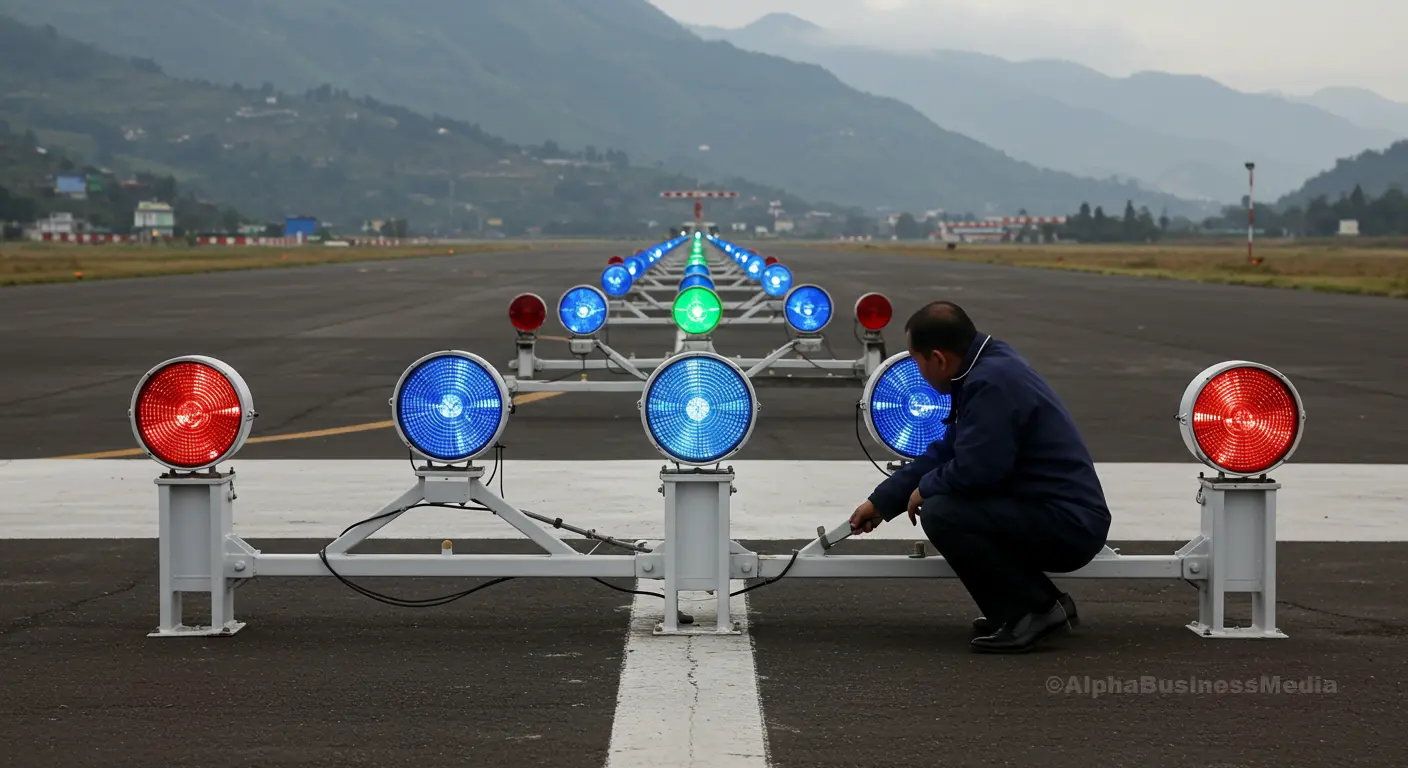
- Air traffic: Tribhuvan International Airport (TIA) in Kathmandu, long the country’s only international air gateway, is operating at capacity.22The newly opened international airports at Bhairahawa (Gautam Buddha International Airport – GBIA) and Pokhara (Pokhara International Airport) are not yet fully operational and have not accommodated the expected significant increase in international flights.10This not only limits the physical capacity of tourists, but also contributes to higher airfares to Nepal due to limited competition and capacity. In addition, the ongoing safety issues in Nepalese airspace, which keep Nepal on the European Union’s “black list”, are also a major deterrent to European tourists.22
- Road network: The road network in Nepal is in poor condition. Many key highways linking major tourist centres are in poor condition, and reconstruction and construction projects, such as the Prithvi Highway or the Narayanghat-Muglin section, are progressing very slowly.22This results in long, uncomfortable and sometimes unsafe journeys, which is particularly deterring for tourists travelling by land, for example from India. An additional, often overlooked, problem is the almost complete lack of modern and hygienic public toilets along major tourist routes.22The World Bank is providing funding to improve the bridge network, which is a positive step, but requires a comprehensive approach to the development of the entire road infrastructure.30
- Common challenges: In addition to air and road infrastructure, there are other problems, such as weak competition in the logistics and transport sector, as well as insufficient development of digital infrastructure, including access to the Internet and digital services for tourists.31
These infrastructure problems create a cumulative negative effect. Even if a country builds world-class hotels and develops unique tourism products, their accessibility to tourists remains low. This directly affects the number of arrivals, average length of stay, and tourists’ willingness to spend money in the country. Addressing these infrastructure bottlenecks requires a comprehensive approach, significant and long-term investment, and political will. Without this foundation, any other tourism development efforts, including marketing campaigns, will have only a limited impact.
2.4 Environmental issues and the need for a sustainable approach
Growing tourist traffic, especially in popular and ecologically sensitive areas such as the Everest and Annapurna region, has led to an increase in environmental problems. The image of “garbage mountains” has become a sad reality: hundreds of tons of solid waste, including plastic, packaging, and abandoned equipment, accumulate every year in Sagarmartha National Park, where Everest is located.32Human excrement is also a major problem, especially in high-altitude camps. Authorities are even considering moving Everest Base Camp to a lower altitude due to the melting of the Khumbu Glacier caused by climate change and human activity, as well as to address pollution.35
Mass tourism puts significant pressure on natural resources: increased water consumption, deforestation for tourism infrastructure and heating, and damage to local biodiversity. These environmental problems not only directly harm Nepal’s unique natural environment, but also undermine its image as a “clean” and “pristine” destination. This is especially critical in the context of attracting wealthy and environmentally conscious tourists, who are the target audience for the “quality” tourism strategy. Negative news and reports about the environmental situation on popular destinations can scare away precisely those travelers who are willing to pay more for an authentic and unspoiled natural experience. Ignoring these problems reduces Nepal’s competitiveness compared to other countries actively promoting the principles of sustainable development in tourism. Thus, without decisive and systematic measures to improve the environmental situation and implement sustainable tourism practices, efforts to attract quality tourists may be futile. “Sustainability” should not just be a trendy slogan, but a real, everyday practice for the entire Nepalese tourism industry.
2.5. Legislative and regulatory barriers
The development of Nepal’s tourism industry is hampered by a number of legislative and regulatory barriers:
- Outdated legislation: The fundamental document regulating the tourism sector – the Law on Tourism – was adopted back in 1978 and in many ways does not meet modern realities and challenges.22
- Lack of priority industry status: Despite its significant contribution to the economy and employment, tourism is not formally recognized as a priority sector. This limits opportunities for receiving comprehensive government support, complicates the resolution of interdepartmental issues and the attraction of targeted funding.22
- Taxation features: The hotel sector faces a higher corporate tax rate (25%) compared to most other sectors of the Nepalese economy (20%). In addition, hotels do not receive electricity subsidies, which increases their operating costs.22At the same time, there are certain tax incentives for large foreign investments in tourism infrastructure.29
- Political instability: The frequent changes of government and political turbulence that have characterized Nepal in recent decades have made it difficult to formulate and consistently implement long-term strategic plans for tourism.22This creates uncertainty for investors and makes it difficult to implement systemic reforms.
These barriers create an unfavourable environment for sustainable tourism development focused on quality and high profitability. Overcoming them is a prerequisite for the success of any new national tourism strategy.
3. The New Paradigm of Visit Nepal 2.0: Quality Over Quantity
Visit Nepal 2.0 is expected to mark a fundamental shift in the approach to tourism development – from chasing quantitative indicators to creating a high-quality, unique and high-value tourism product. This will require rethinking the very concept of “quality tourism” as it applies to Nepal, focusing on attracting target segments with high purchasing power and developing premium offers accordingly.
3.1 Rethinking ‘Quality Tourism’ for Nepal
Quality tourism in the context of Nepal is not simply about providing luxurious accommodation or a standard set of services at a high price. It is, above all, about creating unique, deeply personalized and authentic experiences that leave the traveler feeling a sense of belonging to something genuine and meaningful. This approach involves:
- Shifting focus from quantity to value: Instead of simply counting the number of tourists arriving, the emphasis should be on assessing their total contribution – economic (average bill, length of stay, costs of additional services), environmental (minimization of negative impact) and socio-cultural (respect for local traditions, support for local communities).
- Creating unique and memorable experiences: Quality tourism must offer something that cannot be easily replicated elsewhere. For Nepal, this means using its rich natural, cultural and spiritual heritage to create unique itineraries and programs that justify the higher price tag.
- Personalization and Adaptation: Offers should be tailored as much as possible to the needs and expectations of specific segments of tourists, be they individual travellers, families, corporate groups or highly specialised interest communities.
It is important to understand that for Nepal, “quality” is not only and not so much about external luxury, but about the depth and authenticity of experiences. The country’s competitive advantage lies in its unique culture, breathtaking nature and ancient spiritual traditions.38Therefore, a quality tourism product must harmoniously combine modern comfort with the opportunity to deeply immerse yourself in the local context, offering travelers something they will not find anywhere else in the world. Simply copying Western luxury standards without taking into account and creatively comprehending local features will not lead to the creation of a truly unique and sought-after offer. Success will depend on the ability to integrate authenticity into high-class service and create an unforgettable experience. This, in turn, requires investment not only in “hard” infrastructure (hotels, transport), but also in “soft” – staff training, preservation and development of crafts, creation of high-quality cultural programs, as well as support for local communities that are the bearers of this priceless authenticity.
3.2. Attracting target segments with high purchasing power
The transition to a quality tourism model requires targeted efforts to attract segments of tourists with high purchasing power and willing to pay for an exclusive and meaningful experience. These segments include:
- Affluent Individual Travelers (FITs): People who prefer to plan their trips independently, value flexibility, privacy and a high level of service.
- Travelers looking for an exclusive experience: Those seeking unique adventures, deep cultural immersion, spiritual practices or relaxation in luxurious and secluded locations.
- Specialized groups: Participants of yoga and wellness retreats, scientific and research expeditions, photo tours, pilgrimage tours, corporate incentive programs, etc.
3.3. Development of premium tourism products
To attract these target segments, Nepal needs to actively develop and promote the following premium tourism products:

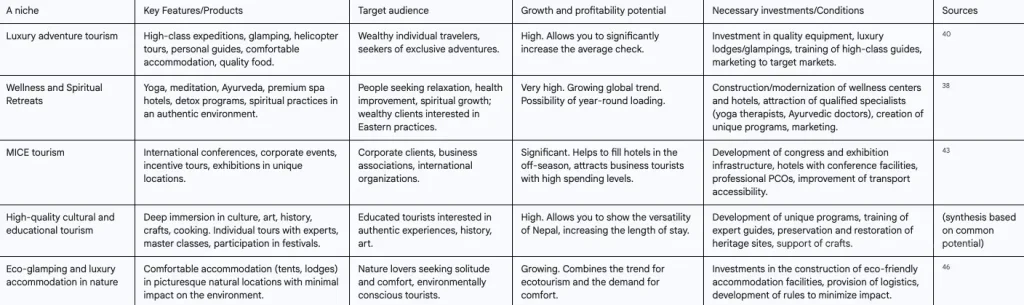
- Luxury adventure tourism: This is not just traditional trekking, but high-end expeditions that combine exciting adventures with maximum comfort. This may include accommodation in stylish glamping40or boutique lodges, personal guides and porters, high-quality meals including gourmet mountain cuisine, and additional exclusive options such as helicopter tours to remote peaks or base camps.41Examples include luxury treks to Everest Base Camp, exclusive safaris in Chitwan and Bardia National Parks with premium lodge accommodation, or fully serviced private mountaineering expeditions.41
- High-end wellness and spiritual retreats: Nepal, with its rich spiritual heritage (Buddhism, Hinduism, ancient shamanic practices38) and peaceful natural landscapes, has great potential for the development of this direction.17We are talking about creating exclusive programs that include yoga, meditation, Ayurvedic treatments, detox programs, sound therapy and other practices to restore physical and mental balance. Key locations for such retreats can be Dhulikhel, Pokhara, Namobuddha, Pharping, Nagarkot, where premium spa hotels and wellness centers already exist or can be created, such as Dwarika’s Resort Dhulikhel, The Pavilions Himalayas, Tiger Mountain Pokhara Lodge.39
- MICE-туризм (Meetings, Incentives, Conferences, and Exhibitions): Positioning Nepal as a unique and attractive destination for international conferences, seminars, corporate events, incentive tours and exhibitions.43This requires further development of the relevant infrastructure, including modern congress centers, hotels with equipped conference halls and banquet facilities, as well as ensuring a high level of logistics and service. Promising locations for MICE tourism are Kathmandu, Pokhara, Lumbini and Chitwan.44A recent example of a successful event is the Nepal India China Expo (NICE) 2025 in Pokhara, which attracted around 800 delegates.45
- Cultural and educational tourism with an emphasis on depth and exclusivity: Instead of a superficial examination of a standard set of attractions, this product should offer immersive programs that allow tourists to deeply immerse themselves in the local culture, art, crafts, culinary traditions and everyday life of Nepalese people. These can be individual tours with art experts, visits to artisans’ workshops with the opportunity to participate in master classes, cooking classes, participation in local festivals and ceremonies as guests of honor.
Diversification of tourism products inevitably requires diversification of target markets and marketing channels used. For example, promoting wellness retreats39requires completely different marketing approaches, messages and communication channels than promoting traditional trekking or mountaineering. Similarly, to attract customers in the MICE tourism segment44or for selling luxury adventure tours41Specialized strategies are needed. A general, undifferentiated marketing campaign aimed at the mass tourist will not be effective in attracting diverse segments of travelers looking for a quality and often niche product. Each of these niches requires its own unique positioning, careful selection of the target audience, and specific promotion tools. Nepal needs to develop its own expertise in niche marketing, actively cooperate with specialized international tour operators and specialized media, and make the most of the opportunities of digital platforms to directly interact with potential customers and build a loyal community around its updated tourism brand.
3.4. Strategies for increasing the average tourist bill
Increasing the revenue from each tourist is a key objective of the Visit Nepal 2.0 strategy. This can be achieved by:
- Development of premium all-inclusive package offers: Such packages should offer not only accommodation and meals, but also a range of exclusive services, excursions and experiences, forming a comprehensive, high-quality product.
- Active promotion of additional services: Encouraging tourists to purchase additional services on site, such as individual excursions, spa treatments, master classes, exclusive dinners, rental of special equipment, etc.
- Encouraging the purchase of high quality local goods: Creating attractive conditions for purchasing authentic Nepalese goods – handicrafts, works of art, high-quality textiles, organic food, tea, spices. This requires the development of appropriate infrastructure (specialized stores, galleries, markets) and quality assurance.
- Increases in length of stay: Offering more varied, rich and long-lasting programs that motivate tourists to stay longer in the country and, accordingly, spend more. This can be achieved by combining different types of recreation (e.g. adventure + culture + wellness) and developing routes that cover different regions of the country.
Table 2: Priority niches for development within the framework of “Visit Nepal 2.0” and their potential
4. Sustainability is the heart of Visit Nepal 2.0
Sustainability must not just be a focus area, but a fundamental principle that permeates the entire Visit Nepal 2.0 strategy. This means ensuring the long-term prosperity of the tourism industry in a way that minimizes negative impacts on the environment, benefits local communities, and preserves Nepal’s unique cultural heritage.
4.1. Principles of “green” and responsible tourism as a basis for strategy
The new strategy should be based on the generally accepted principles of “green” and responsible tourism:
- Integrating sustainability at all levels: Sustainability principles must be embedded into all aspects of tourism activities – from strategic planning and infrastructure design to the operational activities of hotels and tour operators, as well as marketing communications.
- Compliance with international standards: Focus on recognised international standards and criteria in the field of sustainable tourism, such as the criteria of the Global Sustainable Tourism Council (GSTC)47or the WTTC’s Hotel Sustainability Basics initiative.48This will help to ensure trust from international tourists and partners.
- Minimizing negative impact on the environment: Concrete measures to reduce carbon emissions (e.g. through the use of renewable energy sources), economical and rational use of water and energy resources, effective waste management (reduction, recycling, safe disposal) and the conservation of biodiversity.
Many perceive the transition to sustainable practices as an additional cost to business. However, global experience and examples of successful eco-oriented hotels in Nepal itself, such as Tiger Mountain Pokhara Lodge49 или The Pavilions Himalayas 50, as well as the growing global demand for responsible tourism, show that sustainability can and should become a key competitive advantage. It can attract “quality” tourists who are willing to pay more for an environmentally friendly, socially responsible and authentic product. Investments in sustainable technologies and practices (e.g. solar energy, water purification systems, waste management, support for local suppliers and communities) can lead not only to operational savings in the long term, but also to increased customer loyalty, improved brand reputation and the opening of new market niches. Positioning Nepal as a leader in sustainable tourism can attract not only tourists, but also “green” investments, grants from international funds and organizations, and significantly increase the country’s international prestige.
4.2. Solving environmental problems is an urgent task
Accumulated environmental problems require immediate and decisive action:
- Cleaning programs: There is a need to continue and scale up initiatives to clean up waste in the Everest region and other popular tourist areas.34Military units, volunteer organizations, private businesses and international foundations should be more actively involved in this work.
- Waste Management: The implementation of modern, comprehensive waste collection, sorting, recycling and safe disposal systems in all tourism areas is a critical task. This includes the promotion of circular economy principles and a decisive rejection of single-use plastics in the hospitality industry.22
- Regulation of tourist flows: In order to reduce the anthropogenic load on particularly vulnerable natural sites and ecosystems, it is necessary to consider the possibility of introducing scientifically based quotas, restrictions on the number of visitors or temporary bans on visiting.
- Environmental education and awareness: It is important to carry out systematic work to educate both tourists and local residents, including guides and tourism workers, about the principles of responsible behavior in nature and the importance of preserving the environment.
4.3. Development of Community-Based Tourism (CBT)
Community-based tourism (CBT) is a powerful tool for achieving sustainable development goals by providing economic benefits to local people while preserving cultural authenticity and the natural environment.
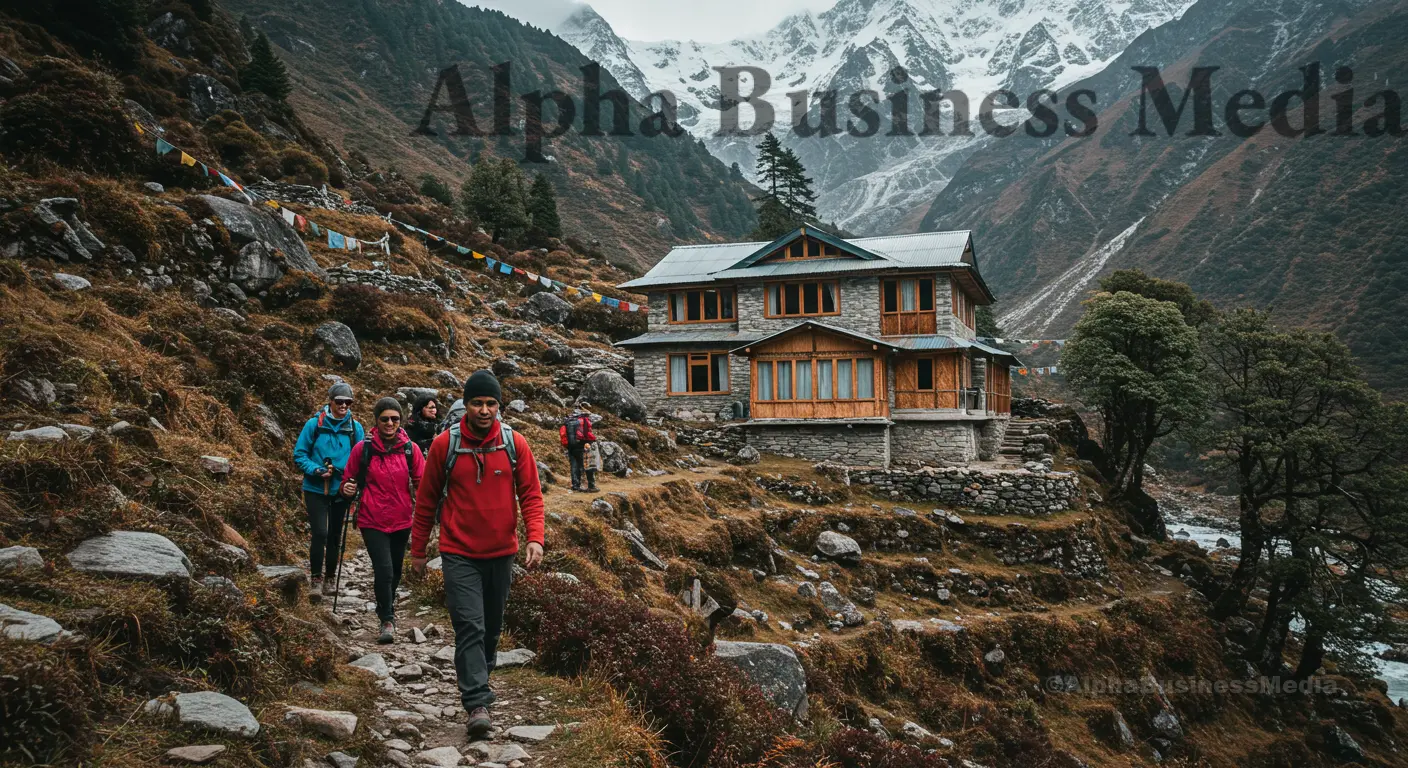
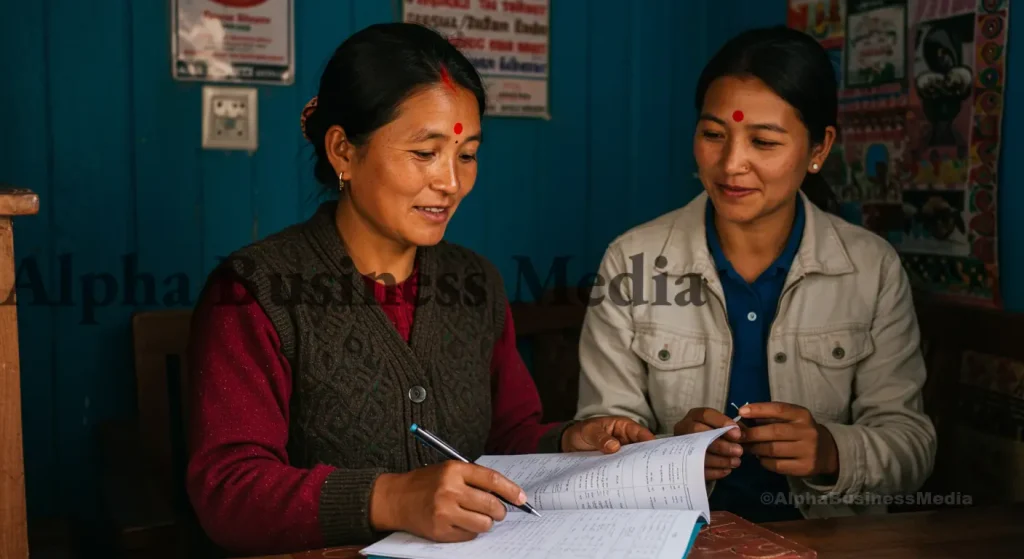
- Successful models as role models: There is a need to study, support and replicate the experience of successful community tourism projects in Nepal. Examples include initiatives such as The Pavilions Himalayas, which actively involves local people in its activities and reinvests part of the profits into social projects.52, Tiger Mountain Pokhara Lodge, known for its responsible approach to nature and support of local communities27, and the Community Homestay Network, which empowers women and promotes rural development through guesthouses.57These models clearly demonstrate how tourism can directly contribute to improving the quality of life of local residents, preserving their unique culture and caring for nature.
- Economic Empowerment: A key principle of CBT is to ensure that a significant portion of tourism revenues remains in local communities. This includes creating jobs directly in the hospitality sector, as well as stimulating demand for local agricultural products, crafts and other goods and services.58
- Preservation of cultural identity: CBT helps to preserve and popularize the unique traditions, languages, customs and knowledge of local ethnic groups, turning them into a valuable tourist asset and a source of pride for the culture bearers themselves.
- Government support for CBT: To scale up successful community tourism models, targeted government support is needed. This could include developing special funding programmes, providing management and marketing consulting services, helping to build basic infrastructure (roads, communications, water supply) in remote areas, and training locals in the basics of hospitality and entrepreneurship.
Community-based tourism is not just about offering “cheap accommodation” in rural areas. It is a unique opportunity for tourists to get an authentic, unvarnished experience of interaction with local culture and life, and for local residents to find a decent source of income and an incentive to preserve their unique identity and environment. In addition, the development of CBT helps diversify the country’s tourism offer, diverting some of the tourist flows from overcrowded and “hyped” attractions to lesser-known, but no less interesting corners of Nepal. Successful CBT projects also help to solve acute social problems, such as the outflow of youth from rural areas to cities or abroad in search of work.58, and promote the empowerment of women, who often play key roles in the management of guest houses.58Thus, support and development of community tourism should be one of the priorities of the Visit Nepal 2.0 strategy as an effective tool for inclusive development, poverty reduction and response to the growing global demand of tourists for “real”, meaningful experiences.
4.4. Preservation of cultural heritage as a unique asset
Nepal’s rich and diverse cultural heritage is one of its major tourism assets. Its preservation and proper use are key to attracting quality tourists and enhancing the country’s attractiveness. This requires:
- Restoration and maintenance of heritage sites: Systematic work on the restoration and conservation of historical monuments, churches, monasteries, ancient city blocks, including those damaged by earthquakes.
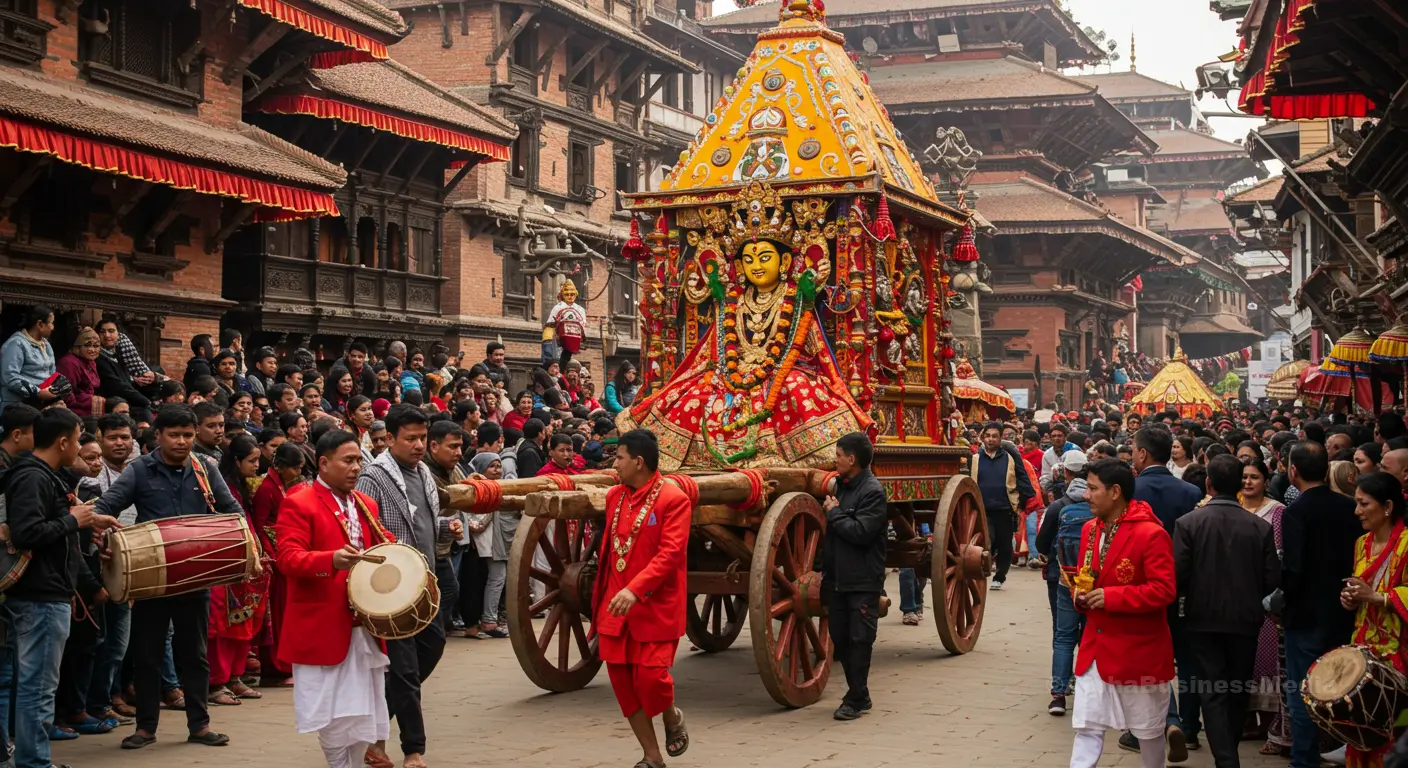
- Supporting living traditions: Promoting the preservation and development of intangible cultural heritage – unique festivals, traditional music and dance, folk crafts, oral traditions.
- Creation of interactive cultural spaces: Development of modern museums, cultural centers, galleries that would introduce visitors to the history and culture of Nepal in an exciting and accessible form.
- Involvement of tourists in cultural life: Providing tourists with opportunities to actively participate in cultural life – for example, through master classes in traditional crafts or cooking, the opportunity to attend authentic festivals and ceremonies (with respect for local customs).
A reasonable balance is needed between preserving cultural and natural heritage and making it accessible to tourists. Nepal’s unique heritage is its greatest asset. However, excessive commercialization or uncontrolled access can lead to its degradation and loss of authenticity, as happened, for example, with the garbage problem on Everest.34On the other hand, excessive and unjustified restrictions can reduce tourist attractiveness and deprive local communities of income. The absence of clear rules, control mechanisms and management plans for key heritage sites leads either to their gradual destruction or to the emergence of conflicts between the interests of preservation and the needs of the tourism business. Therefore, it is necessary to develop and implement sustainable management plans for all significant cultural and natural heritage sites. Such plans should determine the permissible anthropogenic load, mechanisms for financing conservation and restoration work (including at the expense of a portion of tourism income), as well as clear and understandable rules of conduct for visitors.
5. Visit Nepal 2.0 Roadmap: Key Steps to Success
The implementation of the ambitious strategy “Visit Nepal 2.0″ requires a comprehensive approach and coordinated actions in a number of key areas. This is not a one-time campaign with a fixed end date, but a long-term national program that involves a continuous process of improvement, monitoring, evaluation and adaptation to changing conditions. The tourism market is extremely dynamic: the preferences of tourists, the economic situation in the world and in the countries-donors of tourist flow, the competitive environment – all this is constantly changing. A rigid, inflexible strategy will quickly become outdated and lose its relevance. Therefore, a permanent mechanism for regular revision and updating of the strategy is needed with the participation of all stakeholders – government agencies, private businesses, representatives of local communities and the expert community. Success will depend on the ability to learn from the mistakes of the past and quickly respond to new challenges and opportunities.
5.1. Investing in smart and sustainable infrastructure
The creation of a modern, reliable and environmentally friendly infrastructure is the foundation for the development of quality tourism.

- Aviation: The immediate priority is to complete the upgrading of the Tribhuvan International Airport (TIA) in Kathmandu and ensure full operational capacity of the new international airports in Pokhara and Bhairahawa.22This includes attracting new international airlines, expanding the geography of flights and creating a competitive environment. Equally important is the constant improvement of aviation safety standards in order to lift flight restrictions by the European Union.22
- Roads and transport: It is necessary to ensure priority funding and high quality of construction and repair of key roads leading to tourist centers and sites. It is important to develop a system of comfortable, safe and accessible public transport between cities and popular tourist areas, as well as to improve road accessibility to community tourism sites in rural areas.
- Digital infrastructure: In today’s world, digitalization is not an option, but an absolute necessity for a competitive tourism industry. This includes ensuring high-quality and broadband internet coverage in key tourist areas, developing convenient digital services for tourists (online booking of accommodation and services, access to up-to-date information, interactive maps and navigation systems, mobile applications). The lag in digitalization reduces Nepal’s competitiveness, hinders access to information for potential tourists, and complicates effective management of the industry. Investments in digital infrastructure and training of tourism personnel in digital skills should be a priority.
- Sanitary infrastructure: Providing a network of modern, clean and accessible public toilets along tourist routes, at rest areas and in public spaces is an important, though often overlooked, aspect of enhancing the quality of the tourist experience.
5.2. Reforms, regulation and government support
An effective regulatory framework and effective government support are necessary conditions for attracting investment and sustainable development of the industry.
- Legislation update: It is necessary to develop and adopt a new Tourism Law that would meet modern challenges, take into account global trends and create favorable conditions for the development of high-quality and sustainable tourism. It is also important to officially recognize tourism as a priority sector of the Nepalese economy, which will open access to additional government support measures.22
- Simplification of investment procedures: It is necessary to create an effective “single window” mechanism for foreign and local investors in the tourism sector, and to significantly reduce bureaucratic barriers and project approval times.59It is important to ensure guarantees of investment protection and free repatriation of profits in accordance with applicable law.59The minimum threshold for Foreign Direct Investment (FDI) in most sectors is NPR 20 million, but for IT companies that may be related to tourism technology, there may be no such threshold.60
- Tax incentives: Tax policy for the hotel sector should be reviewed. It may be appropriate to reduce the income tax rate for hotels that implement international quality standards, undergo sustainability certification and invest in staff training.22It is necessary to develop a system of targeted tax incentives for investments in priority niches (for example, wellness tourism, the MICE industry, high-quality ecotourism) and for projects implemented in economically depressed but promising regions in terms of tourism.62An example is the existing provision of a five-year income tax exemption for investments above NPR 2 billion in establishing international airlines and major tourism facilities.29
- Standardization and licensing: Introducing mandatory classification (assignment of “stars” or other categories) and licensing for all types of accommodation facilities, including the rapidly developing Airbnb, guest houses and B&B sector. This will ensure quality control of services provided, the safety of tourists and create equal conditions for competition for all market participants.22
- Building codes and safety: Ensure strict compliance with modern seismic building codes (e.g. NBC105:2019) in the design and construction of all new tourism facilities, as well as the renovation of existing ones.63This is especially important for a country located in a seismically active zone.
5.3. Marketing and branding of “New Nepal”
Effective marketing and a strong brand are the key to attracting the target audience and changing the perception of Nepal in the global tourism market.
- Creating a strong and differentiated brand: It is necessary to develop and consistently promote a new image of Nepal that would go beyond the stereotypical perception of the country solely as the “roof of the world” and a place for extreme mountaineering. The new brand should reflect the versatility of Nepal – as a center of ancient spirituality, a unique living culture, diverse adventures (not only in the mountains) and a place for quality, meaningful recreation.
- Promoting Nepal as a Year-round Destination: Active development and marketing of tourist products that are attractive for visiting in different seasons of the year. This will help smooth out the traditional peaks and troughs of tourist activity, ensure a more even loading of infrastructure and stable employment in the industry.20
- Targeted Marketing Campaigns: Instead of general and vague advertising messages, it is necessary to focus on conducting targeted marketing campaigns addressed to specific segments of tourists (e.g., wealthy individual travelers, millennials looking for an authentic experience, families with children, corporate clients for MICE events). These campaigns should be conducted in key donor markets (India, China, the USA, European countries, Australia) and in promising emerging markets (e.g., Southeast Asia). It is important to actively use modern digital marketing tools, work with opinion leaders and travel bloggers, create high-quality and engaging content.
- Diversification of advertising messages: Advertising and marketing materials should reflect the diversity of Nepal’s tourism offerings, moving away from the previously dominant adventure theme and highlighting opportunities for cultural, spiritual, health and family holidays.65
5.4. Development of human capital
The quality of tourism services directly depends on the qualifications and motivation of people working in the industry.
- Training and advanced training programs: It is necessary to create a network of modern training and retraining centers for the hospitality industry, the programs of which would meet international standards. Particular attention should be paid to the quality of customer service, in-depth study of foreign languages, the development of digital skills and training in the principles of sustainable tourism.
- Attracting and retaining talent: It is important to create a working and career environment in the country that will motivate talented people to stay in Nepal and encourage those who have gone abroad to return. This includes competitive salaries, opportunities for professional development, and improving the overall image of working in the tourism sector.22
- Training for Community Tourism: Develop and implement special training programs for rural residents who want to engage in community tourism. These programs should cover the basics of guest house management, guiding, marketing, financial literacy, and entrepreneurship.
5.5. Development of regions and new tourism products

Diversification of the tourist offer and a more even distribution of tourist flows across the country are important tasks.
- Karnali Province and Western Nepal: These regions have significant, but still poorly realized, tourism potential. It is necessary to develop comprehensive master plans for their development and ensure investment in the creation of basic infrastructure for such unique sites as Lake Rara66, Humla district (which can serve as a gateway for pilgrims to Mount Kailash and attract those interested in Tibetan culture and religious tourism38), Bardia National Park (famous for its wildlife and safari opportunities69). It is also important to solve the problem of inefficient use of budget funds allocated for the development of these regions.67
- Creation of “mega-destinations” in each province: To stimulate private investment and comprehensive development of territories, it is advisable to identify and develop one “mega-destination” (or tourism cluster) in each of Nepal’s seven provinces. This will allow for the concentration of resources and the creation of growth points for the entire regional tourism industry.22
- Development of gastronomic tourism: Nepalese cuisine, with its variety of regional dishes and unique flavours, can be an important element in attracting tourists and increasing their satisfaction. It is necessary to actively promote gastronomic tourism, support local culinary traditions and create quality restaurant offerings.22
The scale of the tasks facing Nepal under the Visit Nepal 2.0 strategy requires a new level of interaction between the state and the private sector. Past experiences of public-private partnerships (PPP) may not have always been effective. Today, transparent and understandable mechanisms of cooperation, clear distribution of responsibilities and risks, as well as mutual accountability of the parties are needed. Without active, constructive and interested participation of the private sector, the state alone will not be able to implement such an ambitious strategy. In turn, business needs stable and predictable “rules of the game”, effective investment protection and real support from the state in solving systemic problems (infrastructure, legislation, marketing at the global level). Successful PPP models can become a powerful catalyst for attracting both domestic and foreign investment.59and significantly accelerate the development of the industry. This also applies to expanding cooperation with international financial institutions and development organizations, such as the World Bank, which are already involved in financing infrastructure projects in Nepal.31
Table 3: Comparison of Strategies Focus: Past Approaches vs. “Visit Nepal 2.0”

Conclusion: Visit Nepal 2.0 – Path to a Thriving, Sustainable and Highly Revenue-Producing Tourism Industry
A review of Nepal’s past and current tourism landscape makes it clear that a paradigm shift is needed. The pursuit of quantitative targets without due attention to quality, infrastructure, and sustainability has led to a number of systemic problems, exacerbated by global crises. Lessons learned from previous campaigns, especially the ambitious but prematurely ended Visit Nepal 2020, indicate that the country needs more than just another slogan, but a well-thought-out, long-term, and realistic strategy.
This strategy is called “Visit Nepal 2.0”, which is based on three inextricably linked pillars: quality, sustainability and high profitability. The shift to quality tourism means a shift in focus to creating unique, authentic and personalised experiences for more discerning and affluent travellers. Sustainability means respecting Nepal’s unique natural and cultural heritage, minimising negative environmental impacts and ensuring that the benefits of tourism are equitably distributed and contribute to the improvement of local communities. Increased profitability will be a natural consequence of focusing on quality and attracting more affluent segments of tourists, as well as increasing their length of stay and domestic spending.
The success of Visit Nepal 2.0 is not a given, but a result of focused and coordinated efforts. It will require unwavering political will, effective public-private partnerships, active engagement of local communities and civil society. Significant investments in smart and sustainable infrastructure, reform of the legal and regulatory framework, development and implementation of innovative marketing strategies, and continuous development of human capital in the hospitality industry are required.
Nepal has all the assets – breathtaking nature, ancient culture, deep spirituality and hospitable people – to become one of the world’s leading destinations for quality, sustainable and high-value tourism. Visit Nepal 2.0 is not just a beautiful concept, but an achievable goal and a roadmap to its implementation. Consistent movement along this path can not only transform the tourism industry, but also significantly contribute to the overall economic prosperity and quality of life in Nepal, preserving its unique heritage for generations to come.Domestic tourism is an investment in the future of Nepal, its economy, culture and citizens. And this investment, if approached correctly, can bring rich dividends.goal: to make travel in this amazing country more comfortable, safe, rich and memorable, attracting new customers and ensuring sustainable development of the industry for many years to come.
Source used
- Tourism: Visit Nepal 2020 – SciSpace
- Visit Nepal 2020: Complete Information – Bharal Adventure
- Bigfoot – Wikipedia
- Let’s call off Visit Nepal Year 2020 | Nepali Times
- Impact of COVID-19 on tourism in Nepal – PMC – PubMed Central
- (PDF) From Pre-Pandemic to Post-Pandemic Struggles to Meet Sustainable Development Goals – ResearchGate
- Tourism in Nepal – Wikipedia
- Nepal for Beginners. Why this country can’t be ignored. Facts. What not to do in Nepal – 7 Summits
- Kathmandu and Pokhara Tour | 6 Days Best of Nepal Tour – Peregrine Treks
- Nepal Tourism Statistics 2024 – Great Nepal Treks & Expedition
- Economy of Nepal: Agriculture, Energy, Tourism
- All about trekking in Nepal – Kovinov.com
- Nepal – EXPORT.BY
- Ministry of Culture, Tourism & Civil Aviation
- Tourism (CSA 20305) – UNSD — Global Calendar of Statistical Events
- Nepal Tourism Statistic 2023 – Great Nepal Treks & Expedition
- TOURISM – Investment Board Nepal
- Nepal’s tourism sector sees notable recovery with 13% growth in 2024
- Total Number of Tourists arrival in each months of 2023 – Nepal Trekking Guide
- Rebranding Nepal as a Year-Round Tourist Destination
- Nepal Tourism Statistics | Historical Chart & Data – Macrotrends
- NEPAL HOTEL – Hotel Association Nepal
- Nepal Development Update – World Bank Document
- Hotel Association Nepal issues white paper to curb booming hotel industry
- www.hotelmanagement.net
- Seize Nepal’s Hospitality Goldrush: OHL’s Premium Pivot or Lazimpat’s NPR 800 Crore 5-Star Powerhouse Investment! – || ShareSansar ||
- FAOLEX
- Dusit International Debuts in Nepal with Two Distinctive New Resorts
- Tax Incentives for Businesses in Nepal Remain Unchanged Under Finance Act 2081 –
- Nepal: World Bank Approves $150 Million to Improve Resilience of Bridge Network, Connectivity, and Access to Services
- Unlocking Nepal’s Growth Potential : Nepal Country Economic Memorandum 2025
- Everything We Know About Trekking Is a Lie: Expectations vs. Reality from Trekking in Nepal – Perito Burrito
- Almost a thousand Europeans missing in Nepal – BBC News Russian Service
- Study: How Everest is becoming a dumping ground
- Nepal May Move Everest Base Camp – News | Planet of Hotels
- World Report 2024: Nepal | Human Rights Watch
- 202, October 1, 2024, Regarding the floods in Nepal / REPUBLIC OF TURKEY MINISTRY OF FOREIGN AFFAIRS – mfa,gov,tr
- Sacred Landscapes and Religious Tourism Potential in Humla – Nepal Journals Online
- Luxury Wellness & Retreat Tours in Nepal | Mindful Escapes
- Glamping Market Size and Share, Growth Analysis Report 2032
- luxuryholidaynepal.com
- Best wellness-focused hotels in Nepal for spiritual seekers – Hi DMC
- TOR for 5 Star Hotel – CAAN
- MICE Tourism in Nepal: Ideal Travel Destination for venues
- Nepal: NICE for MICE – TTR Weekly
- Eco-friendly Treks and Tours, Nepal, Travel Costs, Travel Guide, 2024
- Green Tourism Criteria Gains GSTC-Recognized Standard Status
- Hotel Sustainability Basics – WTTC
- The Long Run | Tiger Mountain Pokhara Lodge
- Nepal Reaches New Milestones in Sustainable Development as The Pavilions Himalayas and Right4Children Create Lasting Impact Through Social and Educational Initiatives
- Top 10 Sustainable Hotels In Kathmandu, Nepal – ETIC Journal
- Luxury eco-resort in Pokhara: The Pavilions Himalayas The Farm
- Explore the Wonders of Nepal: Ultimate Getaway Tours Guide
- Tiger Mountain Pokhara Lodge at 25 | Nepali Times
- www.kornersofindia.in
- Tiger Mountain Pokhara Lodge, Nepal – Sustainable Stays 101
- Community Connect 2025: Unveiling Nepal’s Hidden Gems Through Responsible Tourism
- How a community-based tourism & homestay network empowers women in Nepal
- НЕПАЛ – International Corporate Agents Group
- Nepal’s Foreign Investment Process: What Foreign Companies Need to Know in 2025
- Foreign Direct Investment (FDI) Approval Procedure in Nepal
- Government Incentives and Tax Benefits for Foreign Investors in Nepal
- 2b-0036 – National Information Centre of Earthquake Engineering
- NBC105: 2019 Seismic design of buildings in Nepal: New provisions in the code
- Beyond the Thrill: Diversifying Adventure Tourism in Nepal
- Nepal – Everest – Kathmandu – Annapurna – Mustang – Langtang – DX News
- Tourists suffer without support as budgets for Rara, Shey Phoksundo sit idle
- Rara Lake tourism season begins – The Rising Nepal
- Bardia National Park – Full Circle from Tent to Homestay – Inside Himalayas
- Will Russian investors come to Nepal? – Invest-Foresight