Digital Wind Over the Himalayas
As prayer flags flutter in the Himalayan breeze, the winds of digital change are sweeping across Nepal, transforming the country’s economic landscape at an astonishing rate.1In a country known for its ancient temples and the world’s highest peaks, a new story is unfolding – the story of e-commerce. The boom is fueled by a unique combination of factors: rapidly growing mobile internet penetration, one of the youngest populations in Asia, and ever-growing remittances from Nepalis working abroad.1
But building a successful e-commerce platform in Nepal is not simply a matter of copying the global models of Amazon or Alibaba. It is a complex undertaking that requires deep and strategic localization. Success here depends on addressing a unique triad of challenges that underpin any thriving digital business in the region. First, building trust through a user experience (UX/UI) that speaks to Nepali consumers in their cultural and visual language. Second, seamlessly integrating into the local financial ecosystem, where mobile wallets dominate and have become an integral part of everyday life. And third, conquering the formidable “last mile” – solving the most complex logistical challenges in the country’s diverse and often rugged terrain.
This article takes a look behind the scenes of Nepalese e-commerce to deconstruct the operational DNA of successful local platforms. We examine how they overcome these obstacles, turning them into competitive advantages. For entrepreneurs, investors, and executives seeking to understand this dynamic market, this study offers a practical guide to building a digital business on top of the world.
Market on the Rise: Opportunities and Realities of Nepalese E-Commerce

Estimating the exact size of the Nepal e-commerce market is not an easy task, and the discrepancies in the data are themselves an important indicator of the health of the industry. Different analyst reports offer different figures, ranging from US$679.7 million in 2024 by one estimate4up to 888 million US dollars according to another.5Forecasts also vary, but all point to strong growth, with expectations of reaching $1.24 billion by 2028.1This difference in numbers is likely due to the methodology of calculation: some reports may include only official B2C platforms, while others try to take into account the huge but difficult to measure C2C (consumer-to-consumer) sector and social commerce. This ambiguity indicates that the market is still in the process of formalization, with a significant part of transactions taking place in the “gray zone” of social networks, outside the scope of traditional analytical tools.
This growth is driven by a powerful combination of demographic, technological and economic factors. More than 60% of Nepal’s population is under 30 years old, creating a huge audience open to new technologies and online shopping.1This young consumer is mobile first: 95% of internet users access the web via smartphones, making a mobile-first approach not just a recommendation, but an absolute necessity for any e-commerce platform.1Internet penetration in the country has skyrocketed, rising from 39% in 2019 to more than 50% by 2024, with the COVID-19 pandemic driving the surge, which has forced both consumers and businesses to move online.2
The economic context also plays a key role. According to the World Bank, remittances from Nepalis working abroad account for about a quarter of the country’s GDP.3Not only have these funds contributed to a dramatic reduction in poverty, but they have also led to an increase in disposable income, creating a new consumer class with access to global trends and, importantly, experience in using digital financial channels to obtain money.3
Nepal’s competitive landscape is diverse, reflecting the multifaceted nature of the market itself. It is home to both global giants and local innovators, each with their own unique niche.

In addition to these major players, there are also niche leaders such as Foodmandu, dominating the food delivery industry10, and a steadily growing social commerce sector. Thousands of entrepreneurs use Facebook, Instagram and TikTok to sell directly, creating serious competition for formal platforms.6
An analysis of this landscape shows that success comes not through imitation, but through innovation adapted to local realities. For example, evolution Thulo.com from a simple marketplace to a SaaS (software as a service) platform is a direct response to the operational challenges faced by over 10,000 small e-commerce businesses in Nepal.1Thulo.com doesn’t just sell products, it sells decision fundamental problems of the ecosystem: logistics, marketing, finance and compliance. It is a much more complex and defensible long-term strategy that is aimed at eliminating the root problems of the industry, rather than simply competing at the retail level. This demonstrates the maturity of the market, where players are emerging who are building not just stores, but an entire infrastructure for the digital economy.
Design for Trust: Creating UX/UI for Nepali User
The central challenge facing any e-commerce platform in Nepal is overcoming the “trust deficit”.6In a culture where traditional shopping is a tangible experience involving face-to-face interaction, inspection, and haggling, the shift to impersonal digital transactions naturally breeds skepticism. User experience (UX) and user interface (UI) become the primary tools for building this fragile bridge of trust.
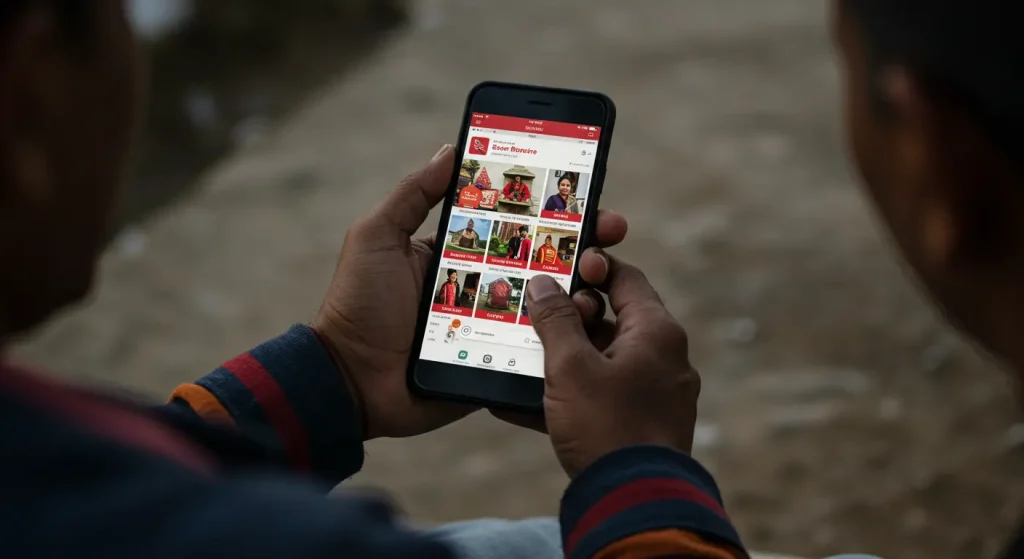
Solution 1: Language as a gateway, not a barrier
Localization is not just translation, but a fundamental requirement for market entry. A study conducted by Daraz when introducing local language support yields staggering figures: even before the official launch of the feature, 20-25% of search queries in the app were entered in the local script or romanized local language (for example, Nepali words typed in Latin script).19This was a clear signal of unmet demand. The results after the launch exceeded all expectations: 85% of new users chose the local language as their primary language, and their conversion to purchase increased by 18%.19This is irrefutable, data-backed proof of the ROI of language localization. Today, leading platforms like Daraz and key payment gateways like Khalti support Nepali, setting the market standard.20
However, a deeper analysis of Daraz data reveals an important nuance in user behavior: they often prefer to enter search queries in romanized Nepali (for example, “sari” instead of “साडी”).19This is because users may be more comfortable or faster typing on an English keyboard, even if they are thinking in Nepali. This means that to be successful, the platform’s search algorithm must be sophisticated enough to understand and correctly interpret such queries, rather than just searching for an exact match. A platform that only indexes products with descriptions in Devanagari will find nothing for the query “sari” and will lose the customer. Thus, the backend technology responsible for search is as important as the language switcher on the frontend.
Solution 2: Culturally Resonant Visual Communication
Design is a language, and to be understood, it must speak in familiar cultural codes. Integrating local artistic traditions, symbols, and motifs is not just decoration, but a powerful signal of cultural affinity and understanding of the audience.23Successful platforms exploit this by weaving elements into their designs that evoke warm and familiar associations for Nepalese. This could include using patterns from the traditional dhaka topi hat, color palettes associated with major festivals like Dashain, or images of iconic sites like the Boudhanath Stupa in banner ads and UI elements.24This approach helps the brand to look not foreign, but local.
Solution 3: An interface that creates transparency and simplicity
For Nepali businesses, a clean, professional and intuitive interface is directly related to trust and credibility.26To overcome skepticism, the UI should be designed with an emphasis on maximum transparency and simplicity. Key elements that contribute to this are:
- Seamless checkout process: A simple, step-by-step process optimized for mobile devices, where each step is clear and understandable.26
- Clear and upfront pricing: All costs, including shipping costs, should be specified in advance. No unpleasant surprises at the last step.12
- Notable user reviews and ratings: Social proof is crucial in a world where you can’t touch a product. Reviews from other customers are the main source of information about quality.12
- High quality images: Large, clear photographs of the product from different angles are absolutely necessary to compensate for the lack of physical contact.26
It is important to understand that the “trust deficit” is not only related to the fear of fraud, but also to the loss of culturally significant aspects of traditional shopping, such as the “pleasure of bargaining” and sensory experience.18An effective e-commerce platform can recreate some of this experience digitally. Features such as live chat with a salesperson to clarify details, video product reviews that show products in action, and flash sales that simulate the excitement and value of a market transaction make the shopping experience more dynamic, interactive, and fun.12This helps to compensate for the loss of the traditional bazaar atmosphere and builds a deeper emotional connection with the user.
Financial Gateway: Integration with Local Payment Systems
If UX/UI builds the bridge of trust, then integration with local payment systems is the gateway through which all commercial transactions pass. In Nepal, this means not just adding a card payment option, but deep penetration into the ecosystem of digital wallets that have become the center of financial life for millions of people.
The Big Three and its importance
The digital payments landscape in Nepal is shaped by three key players: eSewa, Khalti and IME Pay.4These are not just money transfer apps; they are all-in-one platforms through which Nepalese pay for almost everything: electricity (NEA) and water (Khanepani) bills, top up their mobile phone balance, buy movie and plane tickets, and even pay for ride-sharing services.29Their ubiquity means that for any e-commerce platform, integration with them is not an option, but a necessary condition for doing business. The absence of these gateways is equivalent to refusing to accept the most popular forms of payment.
Strategic Merger and New Reality
In 2025, a landmark event shook the market: the merger of Khalti and IME Pay, the first ever Nepalese e-wallet.31The main goal of this merger was to create a powerful competitor capable of challenging eSewa’s near-monopoly position, which had a market share of about 80%.31The synergies of this merger are clear: it combines IME Pay’s strengths in remittances (especially from overseas) and its extensive reach in rural areas with Khalti’s established digital payments platform. For e-commerce, this means a new giant has entered the market, and integration with it is becoming critical.
Easy to integrate and the king of payments – Cash on Delivery (COD)
Despite the apparent complexity, technical integration with these gateways is not a major obstacle. All leading providers offer well-documented SDKs (software development kits) for web platforms (including ready-made plugins for popular systems such as WooCommerce) and mobile applications (Android/iOS), as well as API access.21
However, despite the rapid growth of digital payments, Cash on Delivery (COD) still remain king.9Its popularity is a direct result of that same “trust deficit” and the fact that not all Nepalese have bank accounts or feel comfortable prepaying for an item they have not yet seen.18Thus, any serious e-commerce platform should not only offer COD as an option, but also have a well-established logistics system to manage the collection of cash and its subsequent transfer to sellers.

The dominance of digital wallets over traditional bank cards has important implications for user interface design at the checkout stage. Instead of showing credit card fields by default, as is the case on many global sites, the Nepali platform should highlight “Pay with eSewa” or “Pay with Khalti” buttons. The logos of these wallets should be the most prominent elements, as this is the most familiar and trusted path for most users.
Moreover, the merger of Khalti and IME Pay, which combines digital payments with the largest remittance network, creates a unique opportunity to finance cross-border e-commerce. In the future, a Nepali migrant worker working abroad could potentially use a single app, “IME Khalti,” to directly purchase goods from a Nepali e-commerce site for his family back home. This would vertically integrate and simplify the process, which today consists of several steps (send money -> receive -> purchase). For an innovative e-commerce platform, this opens up the possibility of jointly developing a new product with this payment giant.
The Last Mile: Navigating Complex Logistics Environments

If payments are the circulatory system of e-commerce, then logistics are its skeleton. In Nepal, building that skeleton is a task akin to conquering Everest. The challenges here are multifaceted: from the difficult geographic terrain and poor road infrastructure that make delivery physically difficult and expensive36, to a unique operational anomaly.
The main bottleneck is the lack of a standardized and detailed addressing system.37For the courier, this means that even when he arrives in the right area, he is forced to engage in a time-consuming and expensive round of phone calls to find the exact location of the customer. This problem requires innovative, locally developed solutions, not standard ones.
Solution 1: Hyperlocal Tech Innovation – The Galli Map Case

A striking example of such a solution is the application ‘Galli Map’.37Instead of relying on Google Maps’ inaccurate data for Nepal, the Galli Map team is creating its own, ultra-accurate map. Using cars with 360-degree cameras and drones, they digitize streets and alleys (“galli” in Nepali) and then collaborate with municipalities to link this data to official house numbers. Galli Map’s business model is to sell access to its API to large e-commerce and logistics companies like Daraz and Foodmandu. By integrating this technology, they can significantly improve the efficiency of their couriers, reduce delivery times, and lower operational costs. Galli Map is not just a map, but a critical piece of infrastructure that solves a unique local problem.
Solution 2: Strategic Outsourcing and Hybrid Models
For many e-commerce companies, especially at the initial stage, creating their own logistics network is beyond their capabilities. Outsourcing becomes the solution. Strong third-party logistics providers (3PL) have appeared on the market, such as Nepal Can Move (NCM), Upaya и Kourtier Couriers, which specialize in e-commerce services.38They offer key services: cash on delivery (COD) management, real-time tracking, warehousing and fulfillment.39
Larger players are building complex hybrid models Judge, using Alibaba’s resources, took the path of creating its own logistics division Daraz Express (DEX).41This gives them full control over the quality and speed of delivery, from click to door. DEX is their strategic asset, and the company is even exploring the possibility of switching to electric vehicles to reduce costs and emissions.43
Sastodeal, in turn, chose a more flexible model. They collaborate with a technology company, whose software allows them to manage an entire network of different 3PL partners.45The Vinculum system automatically selects the best courier for each order based on location, manages warehouse stocks and provides end-to-end tracking. This allows Sastodeal to be flexible and scalable without having to invest heavily in its own fleet.
Solution 3: Logistics as a Cross-Border Bridge – Partnership with Flipkart
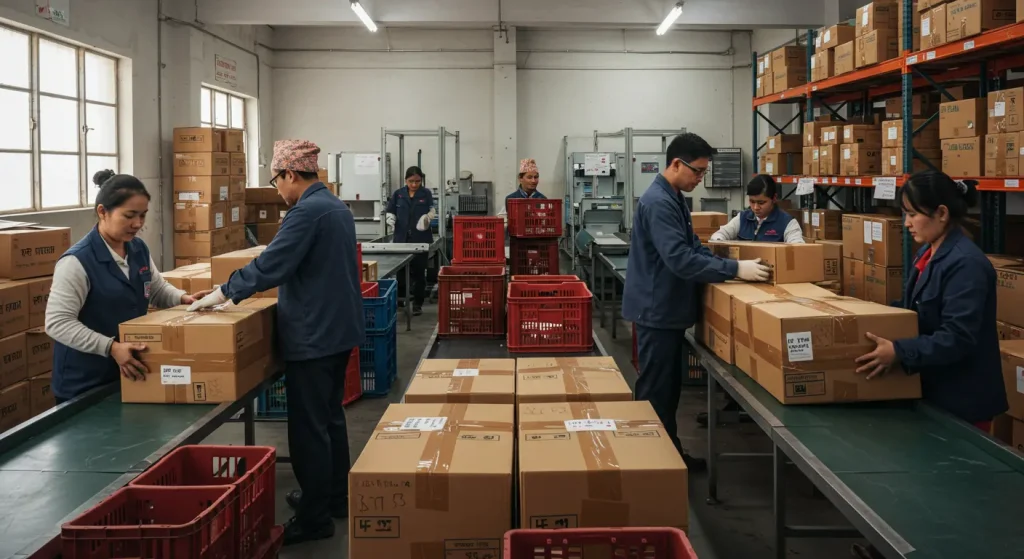
Sastodeal has turned a logistics challenge into its major competitive advantage through a strategic partnership with an Indian giant Flipkart (and its fashion division Myntra).11The mechanics of this partnership are ingenious in their simplicity: Nepali shoppers browse and order products from Flipkart’s vast catalogue on Sastodeal’s website. Sastodeal takes care of all the customer-facing work: payment processing (including COD), customer support, and, most importantly, all the complex last-mile logistics and returns handling within Nepal.48This allows them to offer Nepalese consumers a range of products that would otherwise be impossible to stock in local warehouses, turning their expertise in hyperlocal logistics into a key to the international market.
The evolution of logistics in Nepal shows that the winning strategy is not to have more trucks, but to have the smartest system for managing information, inventory, and routes. The emergence of companies like Galli Map (address solution), Vinculum (logistics management software), and tech-enabled units like DEX prove that technology is becoming the key solution to bridging the gaps in physical infrastructure. Companies that solve the problem of information asymmetry (“Where is the customer? Where is the package? Which courier is best?”) are becoming as important as those who physically move the goods.
Moreover, the Sastodeal-Flipkart model is a ready-made template for e-commerce players in other small countries in the region. A platform in Bhutan or Sri Lanka could replicate this model by partnering with a giant in India or China. In this setup, the unique value of a small platform is its expertise in local logistics, payments, and customer service, which allows it to turn “logistics challenges” into a reliable and defensible “economic moat.”
New Rules of the Game: What You Need to Know About the E-Commerce Law
Almost 25 years after the launch of the first online store, Nepal’s parliament passed a landmark law in March 2025 Electronic Commerce Act (2081 CE).50The act is the first comprehensive legal framework to regulate the rapidly growing sector. Its main goals are to protect consumers, ensure accountability of businesses and create a safe and trustworthy digital marketplace.52
For any business operating or planning to operate in Nepal, understanding this law is not just desirable, it is absolutely essential. The law imposes a number of non-negotiable requirements and sets out severe penalties for non-compliance.
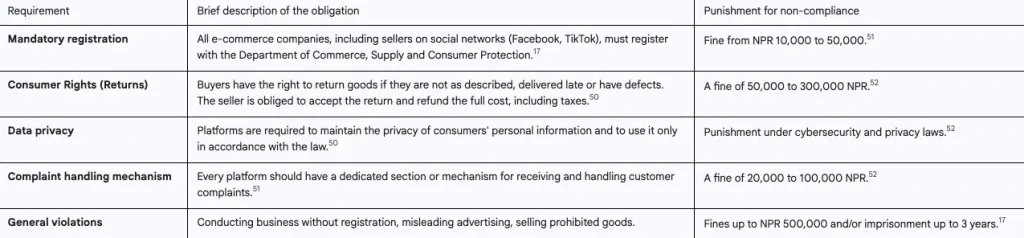
While the law has been generally welcomed as a step towards bringing order, it has also drawn criticism from within the industry, with concerns that the one-size-fits-all approach may prove too burdensome for micro and small businesses.50The requirement to register, create a full-fledged website or app, and implement complex complaint mechanisms could be an unbearable burden for home-based entrepreneurs and small sellers. Critics point out that the law does not differentiate between different business models (D2C, B2B, C2C), applying the same rules to both the giant marketplace Daraz and a solo seller on Instagram.50
The new law is likely to trigger market consolidation and a so-called “flight to quality.” Informal sellers, faced with a high compliance burden, will be forced to either shut down or join large marketplaces like Daraz or Sastodeal that take on compliance for them. An alternative for them could be to use builder platforms like Thulo.com that provide the necessary technical infrastructure on a turnkey basis. Paradoxically, regulation aimed at the entire market could become a powerful growth driver for existing large players offering “compliance as a service.”
In addition, tough penalties for data misuse and clearly defined consumer rights create a new dimension to competition. Platforms can now compete not only on price and product range, but also actively promote their reliability, safety, and full compliance with the law as key advantages. For consumers wary of the risks of online shopping, this “trust guarantee” can be a deciding factor in choosing a platform.
Conclusion: A Roadmap to Success in Nepalese E-Commerce
The path to e-commerce success in Nepal is a masterclass in hyperlocalization. Victory here goes not to the one with the most famous global brand, but to the one who understands and solves the most pressing local problems more effectively. Analysis shows that sustainable and scalable business in this region is built on three pillars.
The first one is trust created through user experience. This requires not just translating the interface, but achieving cultural and linguistic fluency that resonates with the Nepali user. The design must be simple, transparent, and visually familiar.
The second one is deep integration into the consumer’s financial life. The platform needs to be embedded into Nepalese people’s everyday financial habits, which means prioritizing local digital wallets like eSewa and Khalti while respecting the continued importance of cash on delivery.
The third one is mastery in logistics. The challenge of the last mile needs to be transformed from a weakness into a strong competitive advantage. This can be achieved by implementing innovative technologies such as Galli Map, strategic partnerships with 3PL providers, or creating effective hybrid models, as Daraz and Sastodeal have done.
Finally, the new regulatory reality created by the E-Commerce Act has become a fundamental requirement for doing business. This law, although creating certain difficulties for small players, in the long run contributes to the formation of a more formalized, safe and trustworthy market.
For those willing to delve into these nuances and create solutions tailored to Nepal’s unique context, the digital frontier at the top of the world offers enormous opportunities for growth, innovation, and real economic impact.ations around the world.21
Source used
- E-Commerce in Nepal | Nepali E-commerce Market & Facts 101 – Prime IT Sewa
- E-COMMERCE IN NEPAL TRENDS, HURDLES & GROWTH – B360 – Business 360°
- Unlocking Nepal’s Growth Potential : Nepal Country Economic… – World Bank
- UNDERSTANDING E-COMMERCE AND NAVIGATING CHALLENGES AND SEIZING OPPORTUNITIES IN NEPAL (PDF) – ResearchGate
- eCommerce Industry in Nepal 2017-2029 – ECDB
- E-commerce in Nepal | Scenario | Opportunities | Challenges – Makura Creations
- Nepal: World Bank Report Outlines Key Reforms to Boost Growth, Create Jobs – World Bank
- Top 10 Ecommerce sites in Nepal – WaftCommerce
- Business Model of Daraz and How It Makes Revenue in 2025 – IIDE
- Top 5 e-commerce sites in Nepal – OnlineKhabar English News
- Flipkart enables cross-border trade for local Indian MSMEs; partners with Sastodeal in Nepal – NET
- Top 10 List of Online Shopping Sites in Nepal – E-Sell Today
- 21 Best E-commerce Websites of Nepal – Softbenz Infosys
- Thulo: The All-in-One Business Software for Nepal – Business Software in Nepal
- The All-in-One Business Software for Nepal – Thulo.Com
- Thulo.Com Working On Its Mission- Bridging The Digital Gap – Spotlight Nepal
- Breaking Down Nepal E-commerce Bill 2081 – Rewa Soft
- What are the challenges for ecommerce in Nepal? – Quora
- Localizing an E-Commerce App for an Improved User Experience – Dribbble
- Daraz Online Shopping App on the App Store – App Store
- khalti_flutter 2.2.1 | Flutter package – Pub.dev
- Khalti Digital Wallet (Nepal) 12+ – App Store
- Nepalese Graphic Design – Design+Encyclopedia
- Best Graphic Design Agency In Nepal: Create Stunning Visuals – Yeti Studio
- 4540 Nepal Culture Stock Vectors and Vector Art – Shutterstock
- The Importance of UX and UI in Website Design for Nepali… – AppTechnologies Co.
- Daraz App: A Complete Guide – DXB Apps
- Top Payment Gateways in Nepal: Boosting Online Transactions for Companies – NOWPayments
- Khalti: Digital Wallet & Online Payment Services in Nepal – Khalti
- Payment Gateways in Nepal – Sewapoint
- Khalti and IME Pay Merger: A Game-Changer for Digital Payments… – Khatapana
- Khalti – GitHub
- xentixar/esewa-sdk: This PHP SDK provides a simple interface to integrate Esewa payment gateway functionality into your application. With this SDK, you can easily configure payment details, generate payment forms, decode responses, and validate transactions using Esewa’s APIs. – GitHub
- eSewa – Nepal First Payment Gateway – WordPress plugin – WordPress
- Navigating eCommerce and Shipping in Nepal: A Comprehensive Guide – FreightAmigo
- Overcoming Supply Chain Logistics Challenges for E-commerce Companies in Nepal – Knotup
- Addressing Challenges in Nepal’s eCommerce Delivery System – PB Infosystems
- Top Delivery & Courier Services In Nepal – Motar
- Logistics Solutions for E-commerce – Nepal Can Move
- United Nepal Courier & Cargo – A Reliable Courier Service in Nepal – UNCC
- GREEN LOGISTICS IN E-COMMERCE INDUSTRY: A CASE STUDY ON DARAZ NEPAL PVT. LTD. Sujan Kharel1*, Sanjeev Maharjan2* ABSTRACT: 1. I – NEPJOL
- Daraz’s Fully Digitalised Logistics Arm, DEX, Celebrates Third Anniversary – Daraz
- Green Logistics in E-commerce Industry: A Case Study on Daraz Nepal Pvt. Ltd. – ResearchGate
- How Daraz changed the logistics game in Bangladesh – Dhaka Tribune
- Sasto Deal – Case Study 2 – HubSpot
- Flipkart Enables Cross-Border Trade, Partners With Nepalese Ecommerce Platform Sastodeal – Inc42
- Sastodeal, Myntra, India, strengthen partnership to deliver latest in contemporary fashion to Nepal – The Himalayan Times
- Flipkart, Sastodeal Partnership: What It Is & What It’s Not – GadgetByte Nepal
- Flipkart enters Nepali market in partnership with Sastodeal – myRepublica
- e-Commerce Bill Nepal (2025) – Plex Bit Infosystems
- E-commerce law passes, 25 years after online business began – The Kathmandu Post
- E-Commerce Act Nepal 2025: Key Rules, Compliance & Penalties – NotaryNepal.com