New Wave of Change in Nepal
Nepal’s 2022 elections were not just another democratic ritual, but a political earthquake with youth at its epicentre. The event marked the culmination of years of frustration with the new generation, which found expression in the “No, Not Again” campaign, which targeted the entrenched political elite that had been in power for decades.1The result was a stunning success for independent candidates such as Balendra (Balen) Shah, who was elected mayor of Kathmandu, and for new political forces such as the Rastriya Swatantra Party (RSP). These victories were a direct reflection of the discontent of the youth and their determination to take the country’s future into their own hands.1
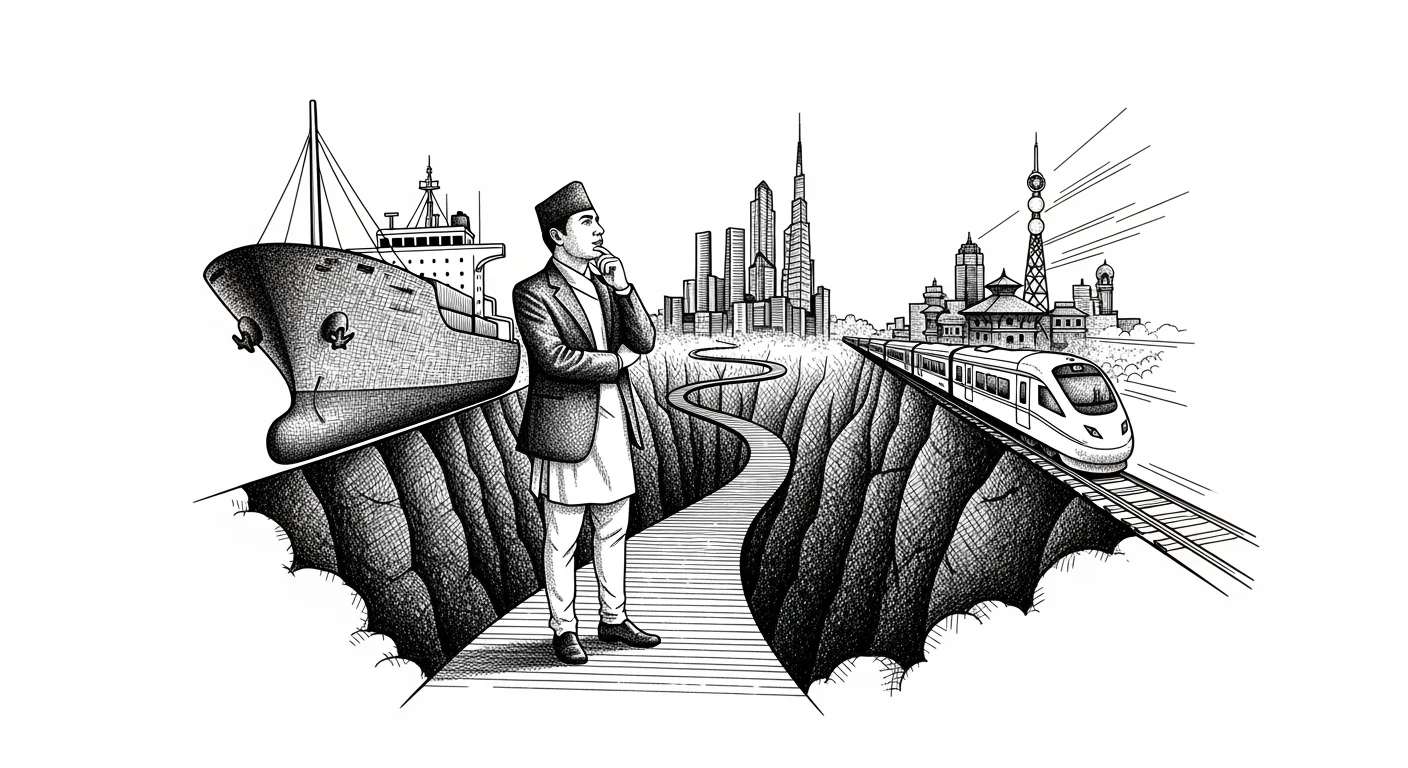
Nepal is at a critical juncture in its development, driven by its large youth generation. Armed with digital technology and a deep sense of disillusionment with the existing system, this demographic is no longer content to be left behind. Young Nepalis are actively reshaping the country’s political landscape, challenging the very foundations of the post-2006 democratic dispensation and initiating a national debate about Nepal’s future. This article examines the demographics, the evolution of activism from street protests to digital campaigns, the pivotal significance of the 2022 elections, and the deep frustrations and systemic barriers that young people face, shaping the nation’s dynamic and uncertain future.
An Unignored Force: Nepal’s ‘Youth Bulk’
Nepal can rightly be called a “young country,” and this is not just a metaphor, but a demographic reality. People aged 16 to 40 years constitute 40.68% of the total population, which creates the so-called “youth bulge” — a demographic phenomenon historically associated with significant social and political transformations.2This age group also makes up more than half of all voters, possessing enormous, although not always realized, electoral potential.6
This demographic dividend is a double-edged sword for Nepal. On the one hand, it can be a powerful engine of development, thanks to the energy, innovation, and fresh perspective of the younger generation.7On the other hand, if the hopes of young people are not fulfilled, this could lead to serious social and political instability.5The economic situation only exacerbates these risks. The youth unemployment rate is a staggering 19.2%, in stark contrast to the national rate of 2.7%.2This economic stagnation is one of the main causes of discontent and demonstrates the failure of the state to create a modern economy that could provide jobs for educated and ambitious youth.5

These tables illustrate a fundamental contradiction: young people, while constituting a demographic majority and the core of the electorate, remain economically and politically marginalized. This gap between their numbers and their real influence breeds deep frustration and becomes a catalyst for activism.
The state’s failure to provide opportunities for self-realization gives rise to another complex phenomenon: the paradox of the remittance economy. Political instability and corruption lead to a lack of jobs, which in turn causes a mass migration of young people, the so-called “brain drain.”9In the last year alone, more than 100,000 young people have left the country.5This migration is, in essence, a political act – a vote of no confidence in the existing system.11However, young people who leave send huge sums of money home. In 2023, remittances accounted for about 25% of Nepal’s GDP, becoming the main source of foreign exchange.5A vicious circle emerges: remittances provide an economic safety net for the state, masking its structural weakness and reducing pressure on the ruling gerontocracy, which is thus spared the need to carry out deep and painful reforms.12It turns out that young people, while protesting against the system, are simultaneously unwittingly subsidizing its survival, which is a deep and tragic national contradiction.
From the Streets to the Screens: New Tools for Activism
Historically, Nepal’s youth have been at the forefront of political change, from the movement against the Rana regime to the People’s Movements of 1990 and 2006.5Traditionally, this activism was channeled through the student wings of political parties, where young people acted as “foot soldiers”.7However, with the advent of the digital age, the nature of activism has changed radically.

Social media platforms such as Facebook, X (formerly Twitter), and TikTok have become critical platforms for mobilization, allowing young people to bypass traditional media controlled by political interests and organize without formal structures.16This has led to a shift from partisan, often violent, protests to more creative, peaceful and issue-based movements not linked to specific political forces.18
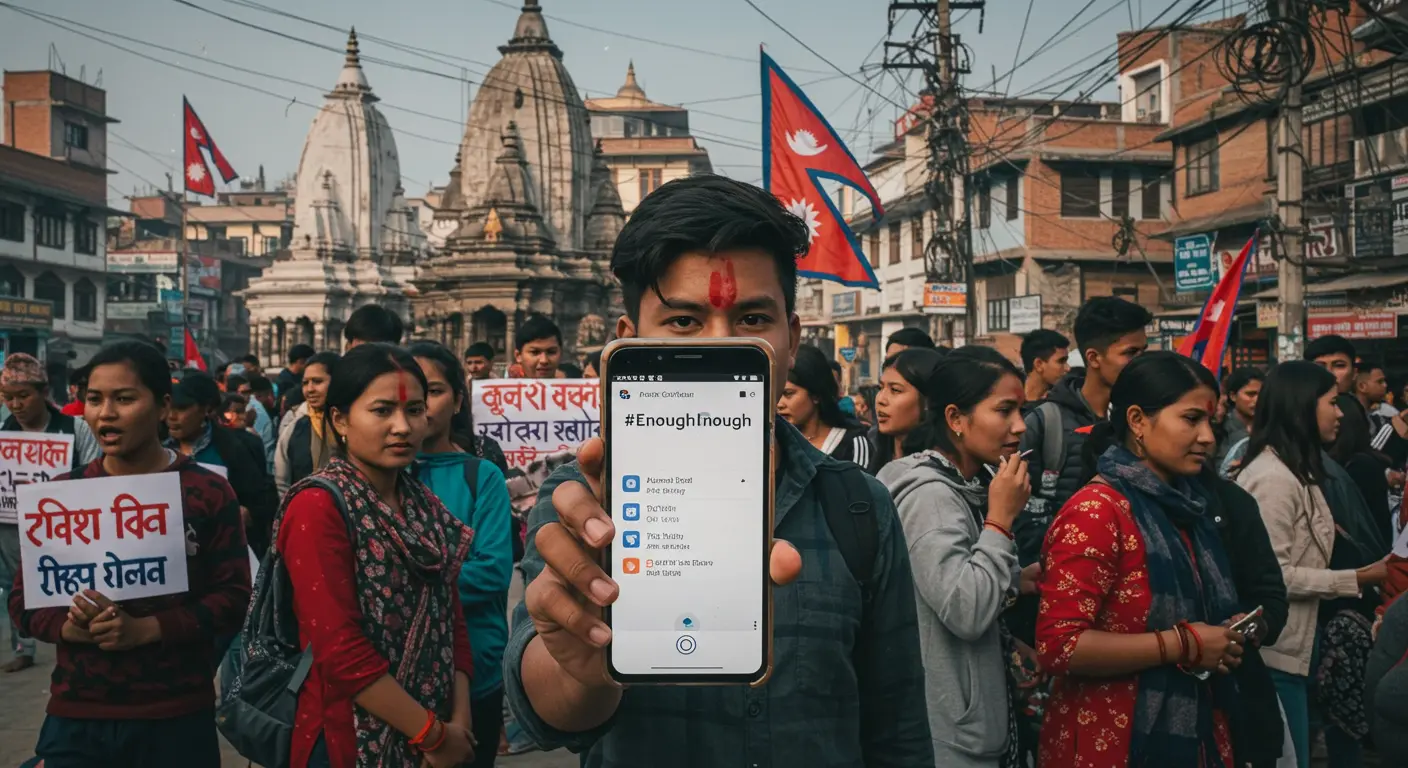
A striking example of this new activism was the #EnoughIsEnough movement in 2020, which emerged as a nonpartisan response to government incompetence and corruption in the handling of the COVID-19 pandemic.17The movement demanded transparency in the spending of Rs 10 billion allocated to fight the pandemic, widespread use of reliable PCR tests instead of cheap rapid tests and improved conditions in quarantine centres.19It all started with a Facebook group that gained 200,000 members within a week, and then grew into peaceful sit-ins and street demonstrations with creative signs and singing the national anthem.18Despite an initial crackdown involving water cannons and arrests, sustained pressure forced the government to make concessions, including scrapping rapid testing and promising transparency.19It was a landmark victory for independent, digitally organized youth activism.
Other campaigns also demonstrate the power of the new tools. The hashtag #BackOffIndia showed how social media can mobilize national sentiment to protest perceived foreign interference, bringing together diverse groups.16In turn, the #DalitLivesMatter campaign became an example of successful localization of a global movement. Young people used the hashtag to connect the global discussion on racial justice to the specific local issue of caste discrimination, initiating a national dialogue.17Also worth mentioning is the #OccupyBaluwatar movement, which protested against gender-based violence and achieved legislative changes, and the environmental activism of the Fridays for Future movement.8
This new wave of activism marks a fundamental break with the past, as youth move from being instruments in the hands of political parties to being independent political actors. However, this independence is fragile and carries the risk of adopting the negative practices of the old system. Historically, parties have used youth wings for violent actions and as a cadre reserve.18New movements such as #EnoughIsEnough were deliberately apolitical, organised by “a loose group with no political organisation or militant groups.”18This demonstrates a rejection of the old model and a deep distrust of all established parties.6There has been a shift in political identity: young people define their political position not through party affiliation, but through specific issues that concern them.
But there is a dark side to the phenomenon. New political forces such as the RSP, which emerged on a wave of anti-establishment sentiment, are now accused of using “cyber armies” to intimidate opponents.20This tactic is reminiscent of the actions of the “Youth Force” and the “Young Communist League” of the old parties.20This points to a dangerous cycle: the tools of digital liberation that enabled independent activism to emerge can be used by new political forces to suppress dissent, echoing the very authoritarian tendencies they were supposedly fighting against. The challenge for Nepali youth, then, is not just to break free of the old parties, but also to avoid reproducing their worst traits in new forms.
Political Earthquake 2022
The 2022 elections at the local, provincial and federal levels saw an unprecedented surge in youth participation not only as voters but also as candidates.1In the local elections, 41% of candidates were young people.7This has produced tangible results: 37 mayors, 106 village council chairmen and thousands of other local officials have been elected from among young people.2In federal elections, the number of deputies under 45 increased from 45 in 2017 to 63.1
The “No, Not Again” campaign was not just a hashtag, but a slogan for a generation’s rebellion against gerontocracy.1It was aimed directly at the ageing leaders of the traditional parties (Nepali Congress, CPN-UML, CPN-Maoist Centre) who had dominated politics for decades.9The campaign was a conscious attempt by young voters to use their votes to change the country’s leadership.
The result of this discontent was the rise of independent candidates and new parties. Balen Shah’s victory in the Kathmandu mayoral election was a seismic blow to the political establishment. It proved that a candidate without a party apparatus could win, and inspired young people across the country.1At the same time, the RSP party, created just a few months before the elections, became the fourth largest in parliament.3It provided a platform for young leaders and technocrats, channeling anti-establishment energy into formal politics and signaling a significant shift in the political landscape.1
The election results sent a clear signal of rejection of the status quo. They showed that widespread public frustration with corruption, mismanagement and stagnant leadership had finally found an effective outlet at the polls.6
However, the success of new political forces has created a new dynamic, and their ability to effect change is severely limited by the need to operate within the existing power structure, creating the risk of co-optation and disillusionment. To enter government, the RSP had to enter into coalition with the very establishment parties it had campaigned against.22This immediately put the “alternative” force in a position of compromise, where its reformist agenda clashed with the entrenched interests of the old guard. It is a classic dilemma for new parties: can they change the system from within, or will the system change them? The RSP subsequently left the coalition and faced serious allegations of corruption and authoritarian behavior, including the cooperative funds scandal and the use of “cyber armies.”20This suggests that the new alternative is already struggling with the same problems of power and patronage that plagued the old parties. This creates the risk of a new round of disillusionment, when voters who had placed their hopes in the alternative see it as a mirror image of the old system.
The Great Gap: Between Hopes and Reality
The aspirations of young Nepalis are clear and pragmatic. Surveys show that their top priorities are concrete and development-oriented: infrastructure, economic prosperity and jobs, education, health care, and good governance.6They demand not a revolution, but a functional and responsive state.
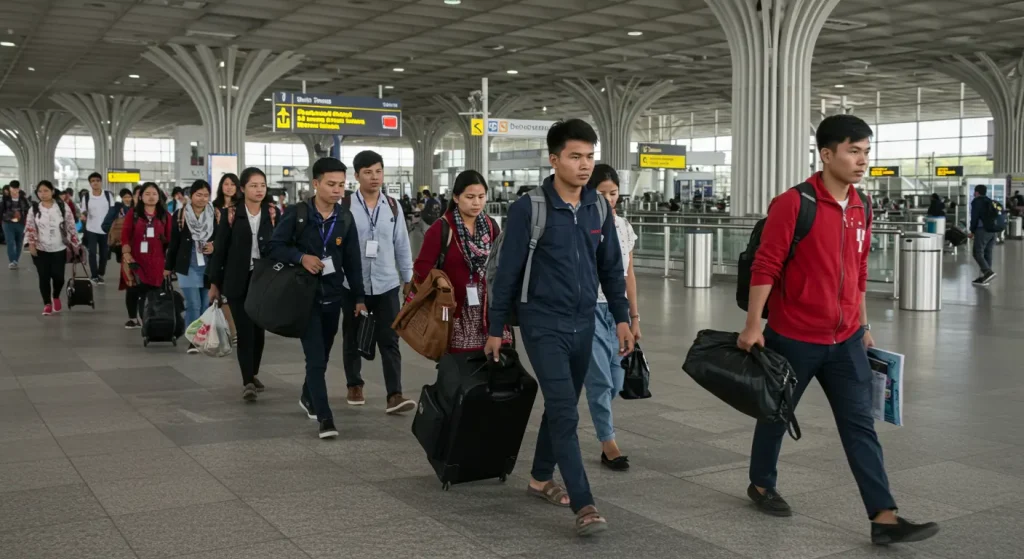
But their aspirations are met with harsh reality: The vast majority of young people (83%) believe that political leaders are only concerned with their own “petty interests.”6They see a system mired in corruption and kleptocratic governance.9Politics is dominated by leaders in their 60s, 70s and even 80s, creating a huge generational gap and a sense that the leadership is out of touch with the needs of the young country.5Frequent changes of government and coalition politics lead to inconsistency and disrupt long-term development projects, further slowing economic growth.10
This gap between hope and reality has created deep pessimism. Almost two-thirds of young people believe the country is heading in the wrong direction.6Trust in political parties is at the lowest level of all government institutions.23
Walls of the Old Guard: Barriers to Power
Nepal’s system is legally designed to limit youth participation. The constitution sets a minimum age for candidates: 21 for local elections, 25 for provincial and federal elections, and a whopping 45 for membership in constitutional committees.7This is not a neutral administrative rule, but a “convenient excuse for politicians to continue to engage in politics after retirement,” which effectively creates a legal barrier to the entry of younger generations into power.7
In addition to legal barriers, there are political and structural ones. The high cost of elections makes participation in them a “dream beyond reach” for young people from poor families or without political connections.24The system favours those with money and connections. Traditional parties use youth wings as a tool but are unwilling to “hand over leadership roles”7, leaving young people out of important decision-making. In addition, societal expectations often underestimate the political abilities of young people, who “find it difficult to be taken seriously by older political leaders.”8
The result of these barriers is glaring underrepresentation. Despite making up more than 40% of the population, young people hold only 5% of seats in the federal parliament, well below the global average of 13.5%.2Thus, the hopes and aspirations of an entire generation are not reflected in the national political agenda.7
Voting with your feet: the brain drain crisis
Political and economic frustrations are directly linked to the phenomenon of mass migration. Some 8 million young people have left the country, with more than 100,000 leaving for work and study in the last year alone.5The number of students going abroad has increased by 75% in eight years.5
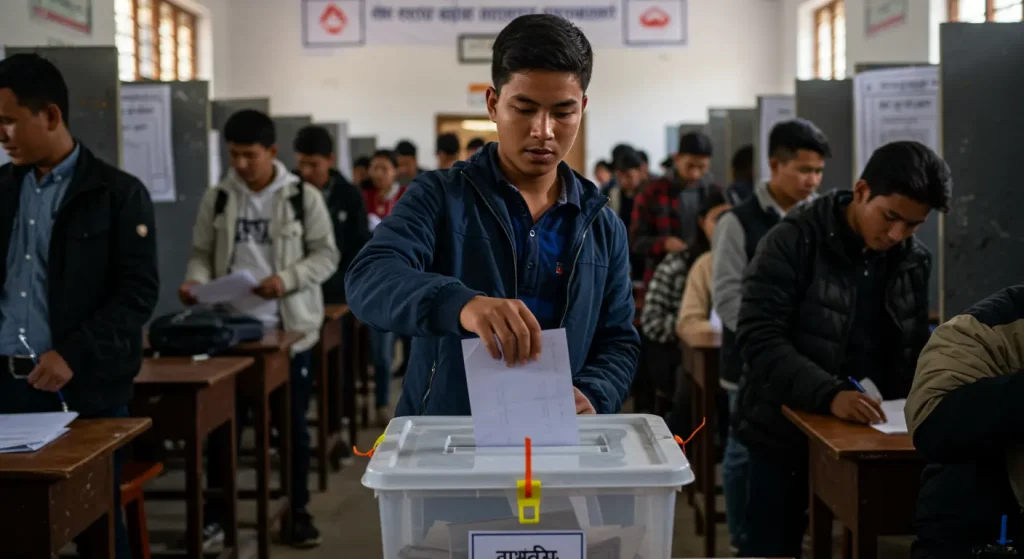
This migration should not be seen simply as an economic choice, but as a political act of desperation and mistrust. It reflects “hopelessness about the desire to stay and contribute to the country’s development.”5Young people are leaving because of political instability, corruption and the lack of opportunities that these problems create.2
In the long term, this “brain drain” represents a colossal depletion of human capital needed for national development.2It leaves an ageing population to run communities and undermines the country’s future potential.5This is perhaps the most damaging long-term consequence of the current political failure.
Contradictory response: involvement and suppression
The political establishment’s response to the youth challenge has been ambivalent. On the one hand, the state often resorts to harsh measures to suppress independent protests. During the “Enough is Enough” movement, peaceful protesters faced police batons, water cannons, and arrests.18This demonstrates an instinctive desire to suppress rather than engage with unsanctioned civic activism. Traditional parties also have a history of using youth wings to intimidate opponents.20
On the other hand, the state is trying to engage youth in dialogue, but on its own terms. The government organizes events like the Nepal Youth Summit, where it issues Youth Declarations and pledges to include youth voices in policymaking.25The Prime Minister and the President attend these events, emphasizing the importance of youth participation.
This dual approach can be seen as a classic state strategy for managing dissent. The goal is to delegitimize and suppress independent, unpredictable street movements while channeling youth energy into controlled, state-sanctioned forums. This allows the government to appear responsive while neutralizing a real threat to its power. Another example of this control is when party leaderships silence their own student unions, as has happened in the past.15
Conclusion: Nepal’s Unwritten Future
In sum, it is safe to say that Nepal’s large, tech-savvy, and deeply disillusioned youth have emerged as the country’s most powerful force for change. Young people have transformed themselves from party foot soldiers into independent activists, and have been able to transform their discontent into a political earthquake in the 2022 elections.
Nepal’s future depends on how the country can bridge the deep gap between the aspirations of this generation and the reality of a political system structurally resistant to change. Gerontocracy, systemic corruption, and legal barriers remain insurmountable obstacles.5
There are several possible scenarios for how events might develop.13The most likely scenario is continued political instability, with new youth parties either absorbed into the patronage system or left in disillusioned opposition, and the brain drain continuing. A less likely scenario is a genuine political transformation, in which new forces succeed in breaking the old system, leading to better governance and economic opportunities that can reverse migration flows. There is also a risk that if the system fails to meet the demands of the youth, widespread disillusionment will lead to further instability, undermining faith in democracy itself and creating the ground for more radical or regressive movements.9
The energy and engagement of Nepali youth is undeniable. They are no longer just the future, they are “active agents of change.”8Constructive use of this energy is not just an opportunity for Nepal, but a prerequisite for its survival as a stable and prosperous democracy. The question is whether the country’s leadership will see this power as a threat to be controlled or as the nation’s greatest asset to be nurtured and supported.
Sources used
- Welcome to IRI
- Prospects of Youth Participation in Political Landscape in Nepal …
- The Demand for a Hindu Rastra in Nepal
- Nepal – Youth Political Participation
- Addressing youth aspirations
- Young People, Politics and Elections
- Youth Participation in Politics: Shared vision and sustainability of federalism in Nepal
- Influence of Youth Engagement on Nepal’s Political Evolution: An Analysis of Emerging Youth-Led Movements
- Nepal’s Restive Streets: Youth, Protests, and the Shadow of …
- Political Instability takes Toll on Nepal’s Economic Development
- Youth struggles in Nepal amid political instability: A call for change
- Nepal’s Crippling Economy: Public Frustration and Government Response
- Nepal’s political and economic uncertainty
- “Let’s See What Happens”: Hope, Contingency, and Speculation in Nepali Student Activism
- Youth Political Engagement and Democratic Culture in Republican Nepal
- The Power of Social Media Sites: A Case of #BackOffIndia Shankar Paudel Abstract This article explores how the hashtag united Ne
- The Power of Social Media in Youth Activism: Amplifying Voices for …
- A Cultural Turn of Youth Activism in Nepal The Outlook: Journal of English Studies
- Nonviolent Youth Protests in 2020 against the Nepal Government’s …
- The Civic Space Severely Under Threat
- Making Sense of Nepal’s Pro-monarchy Protests
- Nepal Country Report 2024
- Unrest and Uncertainty: The Deepening Crisis in Nepal’s Democracy
- Youth Participation in the Governance Process in Nepal
- Nepal Youth Summit empowers youth voices, calls for national and global actions on key issues facing young people
- Nepal Youth Summit empowers youth voices, calls for national and global actions on key issues facing young people [EN/NE]