
Beyond Mountains and Temples: Nepal’s New Economy
When you think of Nepal, your imagination conjures up images of the majestic peaks of Everest, the ancient temples of the Kathmandu Valley and endless trekking trails.1This image is certainly true, but it is no longer complete. In the shadow of the Himalayas, in the bustling cities of Kathmandu and Pokhara, a quiet but rapid revolution is unfolding. What if the greatest peaks Nepal is conquering today are digital?
The world is increasingly talking about the “creative economy” – a sector that is based not on factories and natural resources, but on ideas, talent and technology.3This is an economy where the results of intellectual activity are sold: design, software code, music, video, media content.5It arises at the intersection of culture, technology and entrepreneurship.6That’s the kind of economy that’s emerging in Nepal today, fueled by affordable internet, bold local innovation, and a new generation of creatives. This article looks at how a country known for its ancient culture is building its digital future.
Digital Foundation – How the Internet is Changing the Rules of the Game
The foundation of any modern creative economy is an accessible and reliable digital infrastructure. Nepal has long been considered to have major problems with this, but the situation has changed dramatically.

Debunking the “Bad Connection” Myth
The stereotype of Nepal’s generally slow and unstable internet is no longer true. Despite the rugged mountainous terrain, connection quality in major cities and popular tourist destinations has reached a level that surprises even seasoned digital nomads.7One of them, working remotely from Pokhara, noted that his home has a stable internet connection with a download speed of 300 Mbps and an upload speed of 80 Mbps, as well as battery backup, which solves the historical problem of power outages.8This is not an isolated case, but a new reality for city centers.
This leap has been made possible by increased competition between local operators and their investment in network infrastructure. This technological shift has fundamental economic implications. It lowers the barrier to entry into digital business to the cost of a smartphone and a data package, democratizing entrepreneurship and opening up new opportunities for young people.
Key Players and Availability
Nepal’s mobile communications market is dominated by three major players: Nepal Telecom (NTC), Ncell and Smart Telecom.10Their competition has led to very attractive tariffs, especially for mobile Internet. In addition, international eSIM providers are available for tourists and expats, which makes access to the network even easier.
Table 1: The Digital Foundation of Nepal’s Creative Boom

Source: Compiled based on data from.10
As can be seen from the table, the cost of mobile Internet from local operators is one of the lowest in the region. This makes possible not only consumption, but also the creation of “heavy” content, such as video and streams, which forms the basis for the domestic market of digital products and services.13
The digital divide and its consequences
Despite the impressive progress, it is important to understand that high-quality Internet (4G and especially 5G) is primarily an urban phenomenon.14In remote and high-mountain areas, the connection remains unstable, and the speed drops to 2G or the signal disappears altogether.10This digital divide risks exacerbating existing economic inequalities between developed urban centres and rural areas, concentrating creative economy opportunities in a few spots on the country’s map.
Nepal’s New Business Heroes: From Fintech to Clean Startup
Innovative companies have emerged from the fertile soil of the new digital infrastructure to solve real problems in Nepalese society. Their success demonstrates the model of “infrastructure entrepreneurship”: they do not simply create a product, but build missing links in the country’s economic and social system, using technology as the main lever.

Case 1 – Khalti, the digital wallet of the nation
Launched in 2017, Khalti has become an integral part of Nepal’s financial scene.15It is a digital wallet and payment gateway that allows more than 15 million users to pay for almost everything: from utility bills and mobile phone calls to movie tickets and flights.15The annual transaction turnover through the platform has reached $1 billion, making Khalti not just a successful application, but a systemically important financial institution.15
Khalti’s business model addresses one of Nepal’s key challenges: low penetration of traditional banking services. With a network of over 95,000 physical Khalti Pasals across the country, people even in remote areas can top up their digital wallets with cash and access financial services.15The company’s social mission is supported by the Smart Chhori Campaign, an initiative aimed at equipping women and girls with digital and financial literacy, thereby promoting their economic independence.15
Case 2 – Khaalisisi, technology at the service of ecology
Another shining example is Khaalisisi, a digital platform that is changing the way waste is managed. Using a mobile app, Khaalisisi connects households that want to recycle waste (plastic, paper, metal) with local waste collection entrepreneurs.15This creates an efficient and transparent market for secondary raw materials.
Khaalisisi’s mission is ambitious: to help Nepal become one of the top 20 countries in the world in terms of waste recycling by 2030.15The platform already helps remove thousands of tons of garbage from streets and landfills every year: about 4,000 tons of plastic and 2,500 tons of paper.15But its impact goes deeper. The startup formalizes and makes safer the work of recyclers, providing them with fair prices and a steady flow of orders. In this way, Khaalisisi not only solves a pressing environmental problem in Kathmandu, but also creates new jobs, demonstrating how creativity and technology can bring both profit and social benefit.15
Content Factory: YouTube, Streaming and Media in Nepali
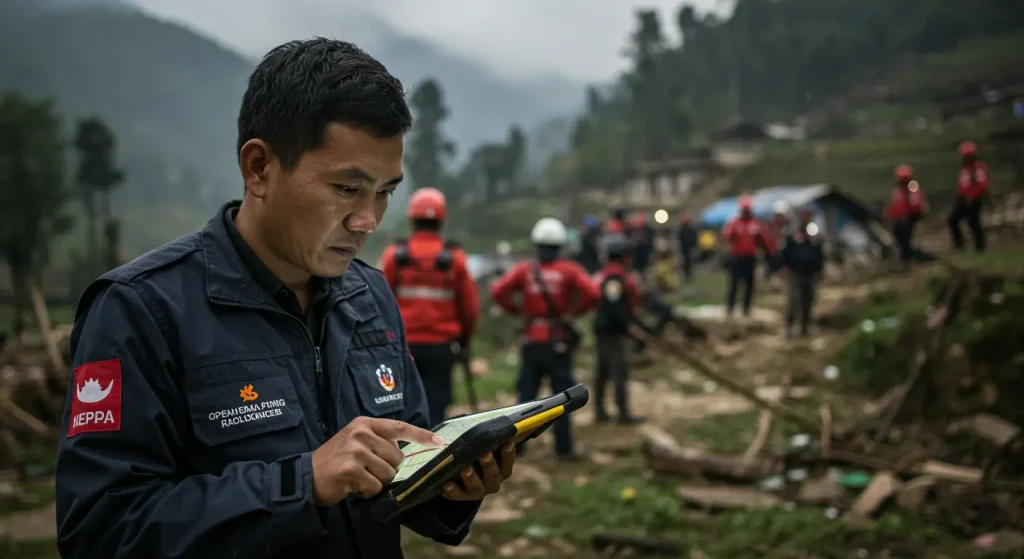
The most visible and dynamic part of Nepal’s creative economy has been the digital content market. Cheap internet and affordable smartphones have created an audience of millions, which in turn has given rise to a whole generation of local content creators, media entrepreneurs, and local platforms.
The Nepali YouTube Phenomenon
YouTube in Nepal is more than a video hosting site. It is the main stage for self-expression, the main source of entertainment and news for millions of people. The scale of this phenomenon is impressive: leading Nepali channels attract audiences comparable to the population of small countries.
Table 2: Snapshot of the Nepali YouTube universe

Source: Compiled based on data from.16Subscriber data is current at the time of source analysis.
This table clearly shows that Nepali YouTube is a full-fledged industry with clearly defined popular genres (music, gaming, movies and entertainment shows) and huge commercial potential.
Case – Sisan Baniya, Face of a Generation
If Nepal’s creative revolution has a face, it’s probably Sisan Baniya. His story is emblematic of the journey the entire industry has taken.18He started in 2007 by filming short “funny videos” on a Sony Ericsson push-button phone.20Today, his personal YouTube channel has more than 800,000 subscribers, and he is one of the most influential media entrepreneurs in the country.21
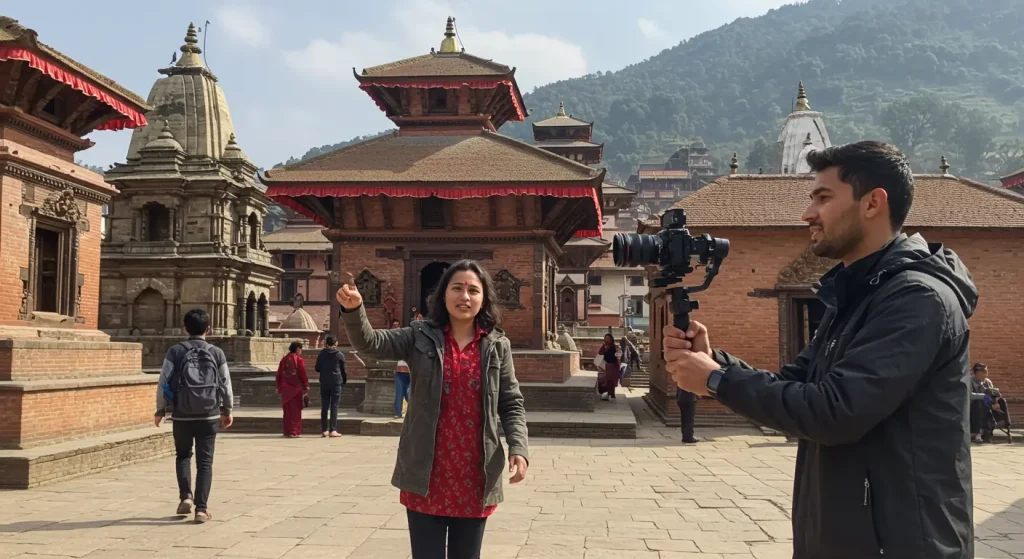
His evolution is indicative. Sisan did not stop at being a popular vlogger. In 2017, he founded the media company Paradygm TV, which became a creative hub for supporting young talent.19He launched a popular podcast interviewing thought leaders from the worlds of business, politics and the arts, and created the Paradygm Sports Network, a sports media network.19In fact, he has built an entire media ecosystem around his personal brand. His content, be it breathtaking vlogs about traveling around Nepal or documentary sketches about local traditions, not only entertains but also shapes a new image of the country, inspiring thousands of young people to pursue creative professions.19
Own streamings – music and cinema
As the market matures, Nepal has begun to sprout its own streaming services, trying to compete with global giants by focusing on exclusive local content and convenient payment methods.
A striking example is Music Roots, an application for listening to Nepali music and watching local movies.26Its business model is flexible: users can sign up for a low-cost subscription (daily, weekly or monthly) or pay per movie view (Pay-Per-View).26The key advantage is close integration with mobile operators NTC and Ncell, which allows users to pay for services directly from their mobile phone balance, solving the problem of low penetration of bank cards.26Another notable player is Geet Music, launched with the support of giant Music Nepal and operator Ncell, also offers a vast library of Nepali and international music.29
The emergence of such platforms is evidence of the emergence of a fully-fledged national digital media ecosystem in Nepal, which includes all links: from content creators to distribution platforms and monetization models.
Forge of Personnel: Where They Teach Creativity and Code
The rapid growth of creative industries would not be possible without an influx of qualified specialists. In response to this demand, Nepal is developing an effective two-tier education system, where universities provide fundamental knowledge, and flexible private academies provide marketable skills.

Academic base – universities
Traditional universities are laying the foundation for training media and design professionals. The leading role here is played by Kathmandu University School of Arts (KUSOA), founded back in 1996.30KUSOA offers a range of relevant programs such as Bachelor in Media Studies, Bachelor of Fine Arts with specializations in Graphic Communication and Studio Art, and Bachelor of Craft & Design.30Other major universities, including Tribhuvan University and Purbanchal University, are also developing programs in fashion, interior design and graphic design.32
The market’s answer is specialized academies
However, university education is inherently sluggish and cannot always keep up with the rapid pace of technological change. This gap is being filled by private training centres that have sprung up in Kathmandu in response to direct industry demand, especially in technology-driven areas such as 3D animation and visual effects (VFX).
Centers like Minor risers, Skill Training Nepal, Animsomaniac And Incessant Rain Academy offer intensive and focused courses ranging from 3 to 20 months.34Their main features:
- Practical focus: The training focuses on mastering specific software packages that are industry standards (Autodesk Maya, Blender, After Effects).36
- Practicing teachers: Classes are taught by specialists with real experience in the industry.34
- Result orientation: The main goal is not a diploma, but a strong portfolio (demo reel) and subsequent employment.35
It stands out especially Incessant Rain Academy, founded by industry veterans with international experience and Hollywood advisors, the academy is open about its mission: to train world-class talent who can work in the global market without leaving Nepal.37The emergence of such centres could transform a country from a consumer of content into an exporter, opening the way to a knowledge economy based on the sale of high-tech creative services.4
Challenges and Prospects: Towards Maturity
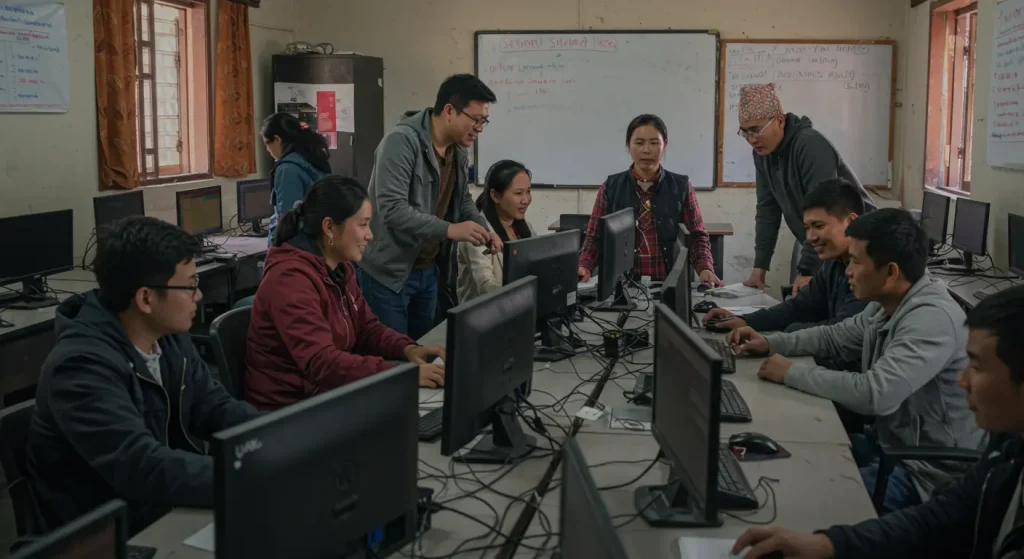
Despite its impressive successes, Nepal’s creative economy faces serious “growing pains.” Its development occurs “bottom-up” – due to the energy and talent of individual entrepreneurs and creators. However, the supporting “top-down” infrastructure – legislation, policy, financial institutions – lags noticeably. This gap is the main obstacle to the transition to the next level of maturity.stay.
Gaps in legislation and policy
The key problem pointed out by international organisations such as UNESCO and the British Council is that the legislative framework lags behind market realities.38During the dialogues organized within the framework of the UNESCO ResiliArt Nepal project, artists and musicians directly stated their pressing concerns: the country has virtually no effective system for copyright protection, no mechanisms for fair payments and royalties.39Many artists simply do not know their rights, and the government has not yet paid due attention to this sector, although its contribution to the economy is constantly growing.39
Growth Financing – Venture Capital
Successful projects require investment to scale. Nepal has a nascent private equity and venture capital market. According to a report by the Nepal Private Equity Association, eight major funds have invested about $66 million in local companies over a ten-year period (2012-2022).40The information technology sector is the leader in terms of the number of transactions, which confirms its investment attractiveness.40
There are already players operating in the market such as Team Ventures, Aadhyanta, Dolma Impact Fund and One to Watch.40In addition to providing funding, they also run acceleration programs (such as GROWTHX Everest or AAP DIAL) that help young companies prepare for raising capital by offering mentorship and strategic guidance.41However, the amount of available capital is still small, creating a “glass ceiling” for the growth of many promising startups.
Expert recommendations
To overcome these challenges, British Council experts propose a number of concrete steps38:
- Conduct a national survey, to assess the real contribution of creative industries to the country’s GDP, including the informal sector.
- Protect and promote the brand “Made in Nepal” through the registration of geographical indications and trademarks for unique local products.
- Moving from the concept of “digital access” to “digital equality”, developing the population’s skills in using digital tools to conduct business and enter national and global markets.
Conclusion: The Future of Creative Nepal
Nepal is confidently laying the foundation for a new economy based on talent and technology. Affordable internet, innovative startups solving real problems, a booming digital content market, and a flexible talent pipeline are all part of its impressive progress.
Today, the country is at a crossroads. Overcoming the challenges of poor legislation and a shortage of smart money will determine whether Nepal can turn the current creative boom into a sustainable, mature knowledge economy. Nepal’s future is being written not only in ancient manuscripts, but also in lines of code, vlogs, and startup business plans. And that future looks incredibly promising.sustainable development. Nepal is showing how to build a future in which cutting-edge technologies speak with a distinct local accent.d restore hope for the future of its citizens in their native land.
Sources used
- Nepal – Greater Asia
- Trekking in Nepal: routes to Everest base camp — Blog – Sport-Marathon
- The Creative Economy: What Is It and Where Did It Come From? – Startup Jedi
- The Creative Economy: Why Do We Need to Develop It? – Ekonomist
- Creative industries – Wikipedia
- What is the creative economy and why develop it? – Blog Anna Fedorova – Snob
- Internet and Communications in Nepal Trekking: Everything You Need to Know Before Going | Mountain Portal
- Internet and electricity in Kathmandu and Pokhara. – Vinsky Forum
- Nepal has a really cool internet infrastructure. : r/Nepal – Reddit
- Communication in Nepal: which SIM card or esim should a tourist choose in 2024 – VC.ru
- eSIM operator — virtual SIM cards for travel – Yesim
- Nepal eSIM from $21.60 | Unlimited Mobile Internet – Yesim
- The Role of Digital Platforms in the Development of the Creative Economy: Research Results – Official Google Russia Blog
- eSIM with cheap mobile internet for Nepal
- Nepal’s Top 10 Startups That Tech Professionals Should Watch Out …
- Top 1,000 youtube Influencers In Nepal | StarNgage Plus
- Top YouTube Channels in Nepal – vidIQ
- exploreallaboutnepal.com
- Sisan Baniya: Nepali Filmmaker, Photographer & Entrepreneur – Explore All About Nepal
- Sisan Baniya: How this Nepali YouTube sensation is using the new medium
- Sisan Baniya – YouTube
- Sisan Baniya – YouTube
- Sisan Baniya, Nepal’s game-changing YouTuber, is looking forward to bigger dreams
- The Real Story: Why Sisan Baniya Entered The Vlogging World! – YouTube
- Sisan Baniya’s Everest Vlog Gave Me A New Life Perspective – Biliz Maharjan
- Daami Music – NT
- Daami Music – Apps on Google Play
- Daami Music – Ncell
- Geet – Music unlimited on the App Store
- Kathmandu University – Centre for Art and Design, Satdobato | Colleges Nepal
- Academic Programs – School of Arts Kathmandu University A QAA certified institute
- Fashion and Interior Designing Colleges in Nepal – Edusanjal
- Nepal’s 4 best Art & Design schools [2025 Rankings] – EduRank
- VFX and Animation Training in Nepal – Mindrisers
- Animsomaniac Animation School | Explore 3D Animation in Nepal
- 3D Animation Training in Nepal
- Incessant Rain Academy: Animation and VFX Training In Kathmandu
- Policy Brief-Creative Green Economy in Nepal-Final Draft
- Youth in the Creative Industry – ResiliArt Nepal | UNESCO
- www.investforimpactnepal.com
- Aadhyanta: The Biggest Venture Capital Firm in Nepal
- Team Ventures: Unlocking Value through Strategic Partnerships