Introduction: Double Challenge on the Roof of the World
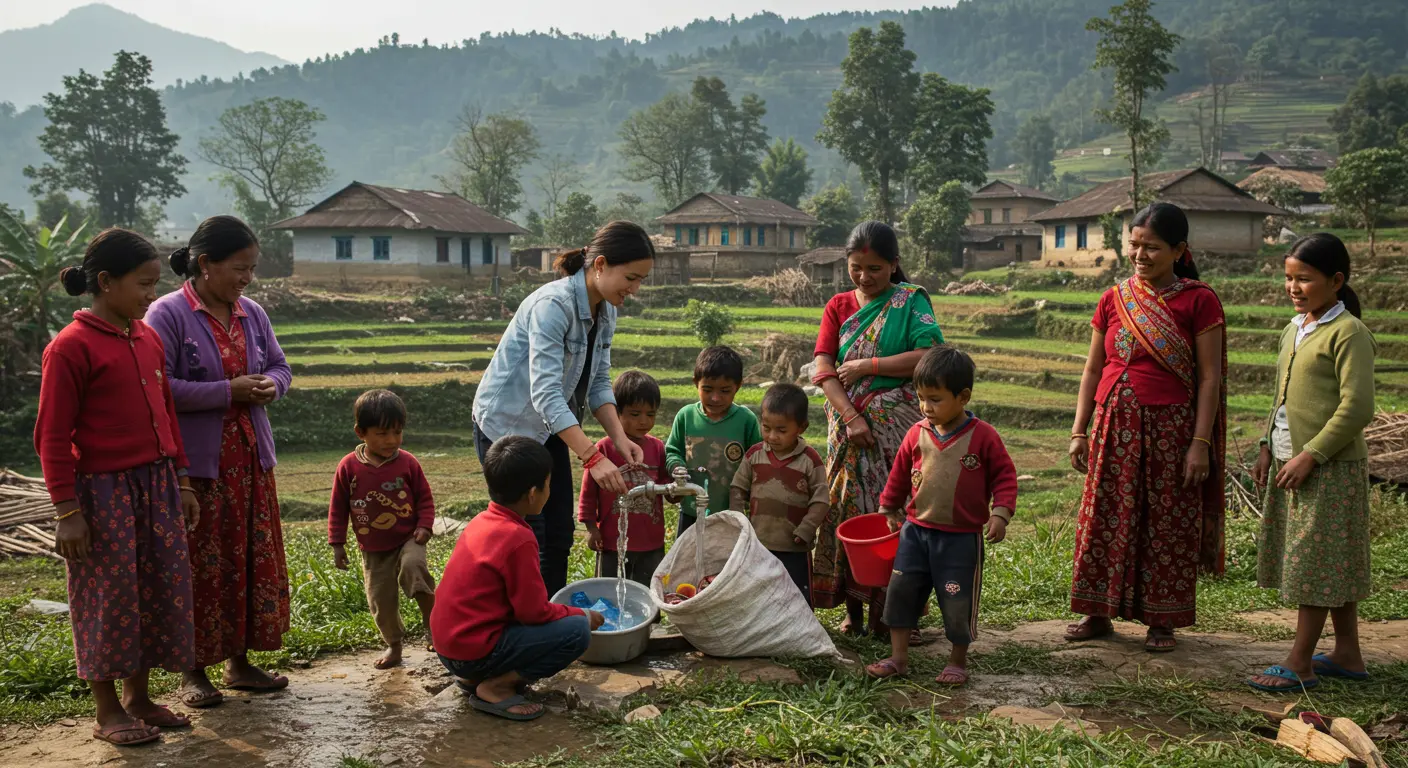
In Nepal’s high valleys and fertile plains, agriculture is more than just an economic sector; it is the backbone of life. It employs more than two-thirds of the working population and accounts for about a third of the country’s GDP.1But today, that foundation is under unprecedented pressure. Nepal’s farmers find themselves on the front lines of a dual crisis: rapid climate change and profound socioeconomic upheaval.
The climate crisis here is not an abstract future threat, but a harsh, everyday reality. Rising average temperatures are weakening crops like cotton and vegetables, making them vulnerable to pest infestations.4The forecasts are frightening: by 2090 the temperature could rise by
1.8−5.8∘C, and the annual amount of precipitation will decrease by 10-20%.5This disrupts normal weather patterns, causing devastating floods and heavy rains, as well as prolonged droughts, which directly impacts food production and water availability.6
At the same time, a quiet social revolution known as the “feminization of agriculture” is taking place. Young men are migrating en masse from rural areas to cities or abroad in search of work. As a result, farm management is increasingly being carried out by women, as well as older people and members of lower castes.2These groups have historically had limited access to information, credit and land rights, making them particularly vulnerable to new challenges.2
It is this societal shift that largely determines which innovations will succeed. There is a pressing need for solutions that bypass traditional barriers, are low-cost and low-labor, and can be adopted without specialized training. In response, a new era of smart agriculture is emerging in Nepal. In the face of this dual crisis, a wave of accessible and targeted innovations—from high-tech mobile apps to low-tech but effective soil management techniques—is providing a lifeline for many farmers. This complex interplay between farmers, local start-ups, non-governmental organizations (NGOs), and government initiatives is forming a unique blueprint for a more sustainable and resilient agricultural future.7
A digital agronomist in every farmer’s pocket

With limited access to agronomic knowledge and an increasingly unpredictable climate, the mobile phone is transforming from a communication tool into a powerful work tool. For Nepalese farmers who have long relied on intuition and outdated methods, this is a revolution.11An entire ecosystem of mobile apps, such as Smart Krishi, IFA Krishi and Nepali Krishi, is emerging in the country, offering farmers up-to-date market prices, weather forecasts and access to expert forums.13But one platform stands out in particular, demonstrating how technology can become the core of a comprehensive support system.
Case: GeoKrishi – an integrated digital platform
GeoKrishi is not just an app, but Nepal’s first fully integrated, data-driven digital agriculture platform.10Its main goal is to remove financial, technical and cultural barriers by providing farmers with personalized, timely and practical advice.17The key feature of the platform is geotagging of each registered farm. This allows for precise advice that takes into account the unique microclimatic and soil conditions of a particular site.17
GeoKrishi’s success lies not so much in the technology itself, but in the support ecosystem built around it that reaches farmers where they are and in a language they understand. The platform doesn’t just offer to download an app and leave the user alone; it builds a multi-layered system that addresses farmers’ real problems, such as low digital literacy, lack of trust in new technologies, and poor connectivity.20This model includes:
- GeoKrishi Farm: An app for individual farmers that provides weather forecasts, market prices, and a unique feature for diagnosing diseases and pests from photos.17
- GeoKrishi Ext: A tool for agronomists and consultants to track farmers’ progress and provide support to them.17
- GeoKrishi Enterprise: A web platform for cooperatives and municipalities designed for data analysis, planning and strategic decision-making.17
- Call center: A three-level support system, where operators answer simple questions at the first level, local experts at the second, and leading agricultural scientists at the third level are involved in solving complex problems.17

The story of a 30-year-old farmer named Bigan from Madesh province illustrates the impact of this system.11Previously, he had been dealing with unpredictable weather and pests through trial and error, often using pesticides incorrectly. That all changed when he learned about GeoKrishi through a joint programme between the NGO Islamic Relief and the Jan Jagaran Youth Club (JJYC).11“At first I wasn’t sure how the app could help,” admits Biegun, “but it changed everything.” He adds: “When my rice showed signs of illness, I uploaded a photo and within minutes I had a diagnosis and a treatment plan.”11
The results were not only agronomic, but also financial. According to Biegun, thanks to the advice from the app “costs for treating plant and livestock diseases have decreased by approximately 40%”.11This is concrete, measurable evidence of the platform’s economic efficiency.
To ensure sustainability and scalability, GeoKrishi is actively developing partnerships with local farmer cooperatives, municipalities, and even mobile operators to provide subsidized data packages and SMS alerts.10With support from the GSMA Innovation Fund, more than 145,000 farmers have already joined the platform, demonstrating the viability of this hybrid model that brings together the private sector, government and local communities.16GeoKrishi thus proves that successful agritech innovation in a developing country is not a product but a comprehensive service, where technology serves only as a channel for delivering much-needed knowledge and support.
Eyes in the Sky: Drones Transform Farm Management

Another technological revolution is taking place in the fields of Nepal, this time in the air. Unmanned aerial vehicles (UAVs), or drones, are rapidly going from a curiosity to an indispensable tool, offering solutions that seemed like science fiction just a few years ago.25Their main and most popular application is high-precision spraying of fields with pesticides, herbicides and liquid fertilizers.25
The efficiency of drones is astounding and backed up by concrete figures. Firstly, it is a colossal saving of resources. Thanks to the technology of fine spraying (droplet size of about 50 microns compared to 500 microns with manual spraying), drones allow reduce water consumption by 80-90%, A chemical costs – by 25-30%.25Secondly, it is an incredible saving of time and labor. One drone can process one acre (approximately 0.4 hectares) in just 5-7 minutes, while a person can process only 3-4 acres in a whole day.25In conditions of acute labor shortage in rural areas, this becomes a decisive factor.9Finally, drones dramatically improve the safety of farmers by eliminating direct contact with hazardous chemicals.25
Table 1: Manual and drone-assisted spraying: a comparative analysis

However, drones have capabilities that go far beyond spraying. They are becoming multi-purpose “eyes in the sky”, performing a wide range of tasks:
- Monitoring and mapping: Drones are used to obtain real-time aerial images, analyze soil, monitor crop health, and even accurately count seedlings.25The SERVIR program, implemented by NASA and the International Center for Integrated Mountain Development (ICIMOD), has adapted the system
CropScape, which uses data from drones and satellites to map rice crops, replacing outdated ground-based survey methods.12 - Disaster Response and Reforestation: Drones proved invaluable after the 2015 earthquake for quickly assessing damage.29Today they are used to survey the aftermath of landslides and even for innovative “broadcast seeding” of tree seeds to restore forests in watersheds.29
The implementation of this technology is supported by both the state and private sectors. Prime Minister’s Agricultural Modernization Project (PMAMP) actively promotes the use of drones by providing farming groups in target areas such as Chitwan district with an 85% subsidy on their purchase.31At the same time, a dynamic ecosystem of local startups is emerging in the country, such as Nepal Flying Labs, Dronepal And Madhukaa Drone Services, which offer a wide range of services, from renting drones for spraying (costing 750-950 Nepali rupees per acre) to comprehensive agronomic surveys.25
Back to the roots, through innovation
Smart farming in Nepal is not just about digital gadgets and drones. Equally important is innovative, climate-resilient practices that combine traditional knowledge with modern science.2These solutions prove that you don’t always need high technology to achieve impressive results. Sometimes the most powerful innovations lie right under your feet – in the soil.

Case: Biofertilizer Revolution from iDE
One of the most striking examples of this approach is the work of the international NGO iDE on the implementation Tricho-vermicompost.9This is not just compost, but a high-quality organic fertilizer obtained from manure and plant residues with the help of earthworms. Its key difference is enrichment with beneficial fungus Trichoderma viride, which naturally suppresses soil-borne pathogens that cause plant diseases.9
The results of the pilot project, implemented in Surkhet district with the participation of over 2,000 farmers, were impressive:
- Agricultural crop yields increased by 15%.9
- More than 68 tons of compost were produced and 22 new jobs were created.9
This innovation has proven ideal for women farmers, who form the backbone of Nepal’s rural workforce. Vermicompost production does not require large investments, large areas, or heavy physical labor, making it an ideal home-based microenterprise. Women can manage it while continuing their household responsibilities, gaining new skills, economic independence, and increasing their status within their families and communities.9
Moreover, this technology creates a new market. Farmers use only 30-40% of the produced compost for their own needs, and sell the surplus to their neighbors. In conditions of chronic shortage and high cost of chemical fertilizers, the demand for high-quality organic matter is very high.9This provides farmers with a stable additional income.
Building on the success of the pilot project, iDE, with support from the Bayer Foundation, plans to scale up the initiative. By 2025, eight community enterprises will be established that will produce 640 tons of vermicompost per year. The program will reach more than 5,000 households, with an expected additional income for farmers will be about 300 US dollars per year from the sale of compost and vegetables grown with its help.9
This example clearly demonstrates the dual nature of “affordable” innovations in the Nepalese context. Affordability is not only about low price. The technology must also be accessible in terms of ease of use. A cheap but complicated tool is useless. Successful solutions, such as iDE’s vermicomposting, are designed from the start to be “easy to operate” and “low maintenance.”9Similarly, GeoKrishi offers SMS alerts for feature phone owners and conducts face-to-face workshops, recognizing that not everyone has smartphones and digital literacy.24Thus, truly accessible innovation is at the intersection of financial and cognitive simplicity, being deeply adapted to the real life conditions of the end user.
Obstacles to modernization
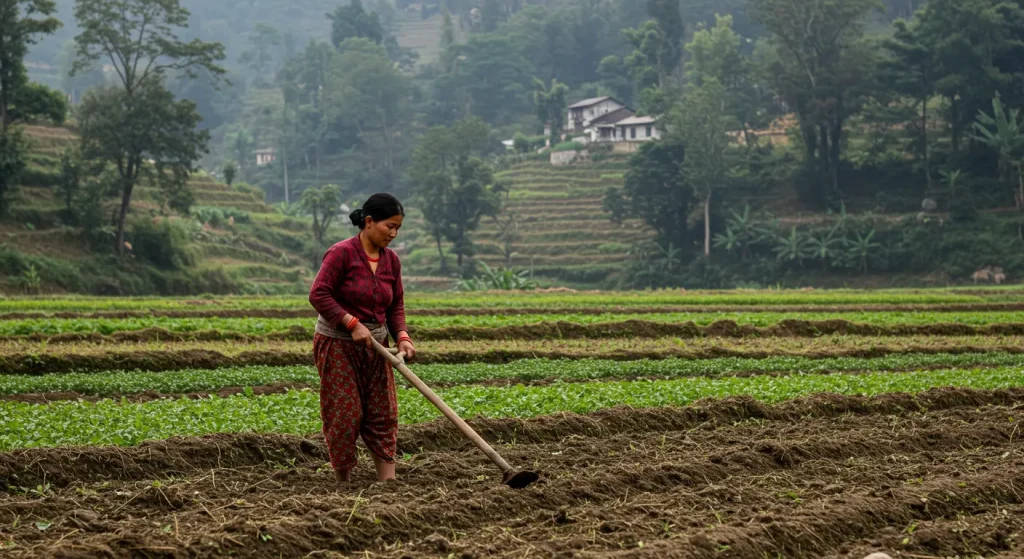
Despite inspiring success stories, the path to scaling up smart agriculture in Nepal is littered with significant obstacles. Promising pilot projects often face systemic barriers that prevent them from being scaled up across the country.20To soberly assess the situation, it is necessary to analyze these challenges.
Table 2: Key barriers to adoption of agricultural technologies in Nepal

These barriers can be grouped into four main categories:
- Infrastructure deficit: Weak infrastructure remains a fundamental problem. Limited internet access, which only 65% of the population has, and unstable electricity supply in rural areas undermine the basis for any digital solutions.22The poor road network complicates logistics, delivery of goods and access of service providers to farmers.22
- Financial restrictions: The high cost of technology is the main obstacle for most small farmers.21The situation is exacerbated by severe land fragmentation: the average farm size is too small to make investment in expensive equipment such as a tractor or drone economically viable.37Only about 40% of farmers have access to formal credit, and complex loan procedures and collateral requirements force many to turn to informal lenders with high interest rates.22
- Social and human factors: Low levels of digital literacy and lack of training make many technologies inaccessible in practice.20There is a healthy skepticism among farmers about innovations, especially if previous experience has been unsuccessful.21In addition, many fear that agritech companies may misuse their data, creating a trust deficit.21
- Politics and bureaucracy: Here lies the main paradox. On the one hand, the Nepalese government is the main accelerator innovation by launching ambitious programmes such as PMAMP, which creates agro-industrial “super zones” and provides generous subsidies for the purchase of machinery.31On the other hand, the same state system is the main. The bureaucratic system is described as a real “labyrinth”.29For example, to fly a drone legally, you need to obtain permission from 12 different government departments, including several ministries and local authorities.29Inconsistency in laws, for example in the area of foreign investment in IT, creates uncertainty and discourages the private sector.46The result is an absurd situation: one agency (PMAMP) can provide a farmer with a subsidy for a drone, while other agencies make its use virtually impossible due to bureaucratic hurdles. This conflict between declared goals and actual practice is one of the most serious obstacles to modernization.
Conclusion: Sowing the seeds of a sustainable future

An analysis of agricultural innovation in Nepal shows that the country is at a turning point. GeoKrishi’s digital ecosystem, resource-efficient drones, and affordable biofertilizers from iDE are not just isolated success stories. They are proof that even in the most challenging climate and socio-economic conditions, targeted and locally adapted innovations can increase yields, reduce costs, and, most importantly, empower the most vulnerable groups, especially women.
But the way forward requires a sober view. Technology is a powerful tool, but it is not a panacea. The success of individual initiatives will not translate into national transformation without the creation of a supportive ecosystem. This requires a coordinated effort by all stakeholders: farmers, the private sector, NGOs and, above all, the state.20
Nepal’s experience shows that key steps along this path should include:
- Harmonization of policies: The “accelerator and brake” paradox needs to be addressed by simplifying and harmonizing regulatory procedures. Creating a “single window” for obtaining permits for the use of agritech such as drones could be a powerful boost for the entire sector.
- Targeted investments in the ecosystem: Funding should be directed not only towards purchasing technology, but also towards creating supporting infrastructure – stable internet, reliable electricity supply, quality roads, as well as large-scale training and digital literacy programs.
- Inclusive financial instruments: It is necessary to develop credit and insurance products specifically designed for small farms, taking into account their specific characteristics and limited ability to provide collateral.
Nepal’s journey of agricultural modernization offers valuable lessons for many developing countries facing similar challenges. Its successes and challenges demonstrate how affordable innovations can be used to combat climate change and ensure food security from the bottom up. The seeds of a more sustainable and prosperous future have been sown. The challenge now is to nurture them carefully to reap a bountiful harvest.
[elementor-template id=”1573″]
Source used
- Economy of Nepal – Wikipedia
- Climate-smart agriculture: learning from three agro-ecological regions of Nepal
- Climate-Smart Agriculture in Nepal – World Bank Climate Change …
- Climate Change in Central Asia: What Are the Consequences? (+English)
- PROMOTING CLIMATE RESILIENT AGRICULTURE IN NEPAL
- Myths and Realities about Climate Change and Agriculture
- New Climate-Smart Agriculture Investment Plan boosts growth and resilience – Food and Agriculture Organization of the United Nations
- FAO Investment Centre | Food and Agriculture Organization of the United Nations
- Feeding the Future: Social Investments Driving Climate-Smart Agriculture in Nepal | AVPN
- Digitising Agriculture in Nepal: GeoKrishi | Mobile for Development – GSMA
- This app saved my farm:’ How technology is helping Nepali farmers fight climate change – Islamic Relief
- Phone to Food: Mapping Rice in Nepal | NASA Applied Sciences
- Smart Krishi – Apps on Google Play
- Mobile apps make access to information dramatically simple in Nepal
- Nepali Krishi – Apps on Google Play
- GeoKrishi | Mobile for Development – GSMA
- Our Solution – Geokrishi – Digitalizing Agriculture in Nepal
- About Us – Geokrishi – Digitalizing Agriculture in Nepal
- Geokrishi Farm जय-कष for Android – Download
- The Role of Agriculture and Agri-Tech Investments in Nepal During a Pandemic
- Key Challenges & Barriers to Agricultural Technology Adoption – Folio3 AgTech
- Time to Harness Technology in Nepal’s Agriculture and FMCG Sectors – Business 360°
- Digital Solution (DS) Category – DVI Databank
- CASE STUDY – Digitising Agriculture in Nepal – GSMA
- (PDF) DATAVEILLANCE MANAGEMENT USING MICRO DRONE TECHNOLOGY FOR AGRICULTURE PURPOSE IN NEPAL – ResearchGate
- DATAVEILLANCE MANAGEMENT USING MICRO DRONE TECHNOLOGY FOR AGRICULTURE PURPOSE IN NEPAL – IRJMETS
- Potential Commercial Uses of Drones – Drone Hub Nepal
- Drone pilot training to boost digital agriculture skills – The Crawford Fund
- Drones over Nepal | Nepali Times
- Evolution of Unmanned Aerial Vehicles in Nepal
- Pesticides sprayed from the drone, farmers of Chitwan excited with mechanisation
- Nepal | Flying Labs
- iDE | Creating innovative market-based solutions in Nepal since 1992 – International Development Enterprises
- iDE – P&G Alumni Foundation
- Supporting Female Farmers in Nepal with Innovative Biofertilizer | Bayer Foundation
- In Nepal, Earthworms Foster Entrepreneurship For Bimala – iDE
- Why Nepal Struggles to Adopt Better Technology, And Alternative Routes to Development
- Assessment of AgriTech Startups in Nepal: Prospects, Challenges, Policy Recommendations, and the Way Forward – ResearchGate
- IMPROVING VALUE CHAIN THROUGH INCENTIVES FOR PRIVATE SECTORS TO PROCESS AGRICULTURAL PRODUCTS IN NEPAL – Daayitwa
- Adoption of Technology in Cardamom Cultivation in Taplejung District, Nepal – International Journal of Environment, Agriculture and Biotechnology (IJEAB)
- Factors affecting the adoption of farm mechanization in Rupandehi, Nepal – Archives of Agriculture and Environmental Science
- Perception, Determinants and Barriers for the Adoption of Climate Change Adaptation Options among Nepalese Rice Farmers – Scientific Research Publishing
- Welcome | Prime Minister Agriculture Modernization Project (PM-AMP)
- Engagement with Prime Minister’s Agriculture Modernization Project in Nepal
- Advancing Nepal’s Drone Industry: Key Insights from the Drone Ecosystem and Capacity Assessment Workshop – Flying Labs
- Developing & Adopting Technology – The HRM Nepal