Exceptional customer service is the cornerstone of any business’s success, but in Nepal, a country with a unique cultural and economic landscape, its importance is multiplied. Nepal’s economy relies heavily on the service sector, which accounts for about 60% of GDP, with inbound tourism accounting for about 8%.1In such an environment, service quality ceases to be a competitive advantage and becomes a vital factor for prosperity. The dominance of the service sector and the significant role of tourism mean that both local consumers and international visitors may already have formed expectations regarding the level of service. Companies need to not only meet these expectations, but also exceed them to stand out from the competition and gain trust. Nepal’s cultural characteristics, where personal relationships, mutual respect and hospitality are deeply valued, make a customer-centric approach particularly effective and organic.

This article offers a step-by-step plan that will take the reader from understanding Nepal’s fundamental cultural underpinnings to building a comprehensive customer service system that can turn casual shoppers into true brand ambassadors. The path to lifelong loyalty in Nepal is not just about transactional benefits; it is about creating a deep emotional connection based on trust, respect, and genuine care. With a low share of industry in the economy, accounting for only 13.5% of GDP,1, may indicate a certain dependence on imported goods and technologies. This, in turn, may affect some aspects of service, such as the speed of repair or replacement of equipment. In this context, creative, human-oriented solutions, proactive service and the ability to effectively manage customer expectations, compensating for possible infrastructural limitations, become even more important.
The presented six-step model covers key aspects – from the initial greeting “Namaste” to long-term strategies for retention and loyalty cultivation.
Step 1: “Namaste” and the Soul of Nepal – Laying the Foundation of Understanding

Building effective customer service in Nepal requires deep immersion into the country’s cultural context. Any strategy that does not take into account local customs, values, and communication patterns risks being superficial and ineffective. This first step lays the foundation of understanding on which all subsequent actions will be built.
The Deep Meaning of Namaste: More Than a Greeting – a Basis for Respect and Connection
The greeting “Namaste” (Nepali: नमस्ते) is a hallmark of Nepalese culture. It literally translates as “bow to you.”2, but its true meaning is much deeper: “In you I greet God.”3This phrase emphasizes the deepest respect for each person, the recognition of the divine principle in him. There is also a more formal form of greeting – “Namaskar”, which is used less often or when addressing a group of people.2Both greetings are traditionally accompanied by the gesture of placing the palms of the hands together in front of the chest or face (anjali mudra), which also expresses respect and humility.2
For businesses, this means training staff to go beyond simply memorizing the word. Employees must understand the deeper meaning of “Namaste” so that their greeting is genuine, comes from the heart, and sets the tone for a respectful and warm interaction from the start. This greeting can instantly put customers at ease and create an atmosphere of trust.
Cultural Pillars: Hierarchy, Collectivism, and Their Impact on Service Expectations
Nepalese society is characterized by several key cultural pillars that directly influence service expectations and customer interactions.
- Hierarchy: Traditionally, Nepalese society is strictly hierarchical. This is reflected in the respect for elders and seniors.4Although the caste system has been officially abolished, its echoes can still influence social interactions.6In a business environment, this means that decisions are often made at the highest levels of management.5, and the opinion of senior employees carries significant weight.
- Practical application: When communicating with a group of clients or partners, the most senior or high-ranking person should be addressed first. When resolving complex situations or making important decisions, approval from a manager may be required, which can sometimes slow down the process. It is important to understand that a strong hierarchy can create certain challenges for quickly resolving customer issues at lower levels if employees do not have sufficient authority. This can conflict with expectations (especially of international clients) regarding speed and efficiency of service. Therefore, companies need to find a balance between respecting the established hierarchy and empowering frontline employees to resolve routine issues.
- Collectivism: Nepalese culture is largely collectivist, which means strong ties within family, community and other social groups.7Decisions are often made with the group’s opinion in mind, and reputation within the community is of great importance.
- Practical application: A positive experience from one customer can quickly spread through their social circle via word of mouth. Likewise, a negative experience can cause serious reputational damage. In a collectivist culture, personal recommendations and reputation within a group are of great importance. This means that one very satisfied or very dissatisfied customer can have a disproportionately large impact on the perception of a brand in their community. Therefore, every customer interaction takes on special importance.
- Patience and Relationship Building: In Nepal, business and personal relationships are often closely intertwined. Building strong relationships takes time, patience, and genuine interest in the other person.4Processes may be slower than in Western cultures, and excessive haste may be perceived negatively.
- Practical application: It is important to devote time to informal communication (“small talk”) before moving on to discussing business issues.4Don’t rush partners or clients into making decisions.
Nepali Art of Communication: Indirect Communication and Reading Non-Verbal Cues

Effective communication in Nepal requires an understanding of its nuances, especially the tendency toward indirect communication and the importance of non-verbal cues.
- Indirect style: Direct refusal, criticism, or disagreement are often considered impolite and can “embarrass the person.”4Instead, Nepalese may use hints, evasive answers, or refer to the opinions of elders. The deep respect inherent in the concept of “Namaste”2, may be one reason for preferring indirect communication. Direct confrontation or refusal may be seen as a sign of disrespect, a violation of the harmony that this greeting symbolizes. If you are greeting “the divine in another person,” then directly pointing out his wrongness or refusing his request may be perceived as a deeply personal insult.
- Practical application: Staff need to develop the skills of “reading between the lines”, being attentive to intonations and omissions. When expressing their own disagreement or refusal, they should also use softer, diplomatic formulations.
- Non-verbal signals: Non-verbal cues play a huge role in Nepalese communication. For example, a slight shake of the head from side to side usually means “yes” or agreement.8Touching another person’s head is considered extremely impolite. The left hand is traditionally considered “unclean”, so when passing objects, food or money, the right hand or both hands should be used, which is a sign of special respect.8It is also important to avoid pointing at people or sacred objects with the foot, as the feet are considered “dirty.”8
- Practical application: Training of staff on the basics of Nepalese non-verbal communication is necessary to avoid cultural misunderstandings and demonstrate respect.
- Language: Although many Nepalese, especially in the tourism and business sectors, speak English, knowing a few basic Nepali phrases (such as “Dhanyebaad” – thank you3, “Mitho cha” – delicious, “Ramro cha” – good/beautiful) will be highly appreciated and will help to establish a warmer contact.
Understanding these cultural aspects is the first and crucial step to building a service that is not only effective but also deeply resonant with Nepalese customers.
Table 1: Key Cultural Aspects of Nepal and Their Impact on Customer Service

Step 2: First Impression – Creating an Unforgettable Acquaintance

Building on this foundation of cultural understanding, the next step focuses on putting hospitality into practice from the very first moment of interaction with a customer. First impressions are often decisive, and in Nepal, where human relationships are so highly valued, they are especially important.
Physical and Digital Space: Reflecting Local Culture and Hospitality
The environment in which customer interactions take place, whether physical or digital, should reflect the company’s values and respect for local culture.
- Physical space: Cleanliness, order and comfort are basic requirements. However, to create a truly Nepalese hospitality, it is worth considering the use of local decor elements. These can be traditional fabrics, handicrafts, works of art. It is important to do this with respect and taste, avoiding kitsch or superficial imitation. A striking example of deep respect for local heritage is The Dwarika’s Hotel in Kathmandu, known for its use of traditional Nepalese craftsmanship in architecture and interiors.10This approach not only creates a unique atmosphere, but also demonstrates a commitment to culture, which is highly valued by customers. The physical space thus becomes not just a place for providing a service, but a powerful tool for shaping the brand’s identity and conveying its values. For the customer, this means interacting with a brand rooted in local identity, which contributes to greater trust and emotional response.
- Digital space: In the digital age, the first encounter with a company often happens online. Considering that Nepal had 37.47 million active mobile connections as of early 2024, equivalent to 120.6% of the total population12, it is essential that a company’s website and social media pages are easy to navigate, especially on mobile devices. Information should be available in Nepali and English at a minimum. Visual content – photos and videos – should reflect the beauty of Nepal and the company’s hospitality, creating an appealing image. The quality of the digital “first impression” becomes critical to building trust, especially if the customer has not yet had physical contact with the company. A poorly designed website or inactive social media pages can create an impression of unreliability, which is especially critical in a culture where trust is built on long-term relationships.4
Preparing the Team: Principles of Empathy, Active Listening, and Cultural Awareness
The staff is the face of the company, and the quality of the first impression directly depends on their training.
- Empathy and active listening: The ability to put yourself in the client’s shoes and understand their unspoken needs and concerns is a key skill. This is especially important in Nepal, where clients’ tendency to communicate indirectly means they may not be able to directly state their desires or concerns.4
- Cultural Awareness: Staff must be aware not only of general Nepalese cultural norms, but also understand the potential differences in expectations when serving locals and foreign tourists.13Intercultural communication training will help staff feel more confident and avoid misunderstandings.
- Appearance and behavior of staff: Neatness, friendliness, a sincere smile and a willingness to help are universal attributes of good service. In the Nepalese business environment, modesty in clothing is valued: for men, this usually means business suits, for women, conservative dresses or traditional saris.4If the interaction takes place online, for example, a video call, then a neat appearance, good lighting and high-quality sound are important.14Above the Himalaya Trekking, for example, emphasizes the importance of its experienced and professional guides who not only know the routes but also have a deep understanding of the local culture, providing a personalized service.15Emphasis on empathy, active listening and small talk skills4 is not accidental. In a culture that values personal relationships and indirect communication, these “soft skills” become “hard” requirements for quality service, requiring deeper training than simply conveying product information.
Personalization from the start: How to make your customer feel special
Even small gestures can make a big difference in a customer’s first impression and show them they are valued.
- Using the client’s name (if known) creates a sense of personalization.
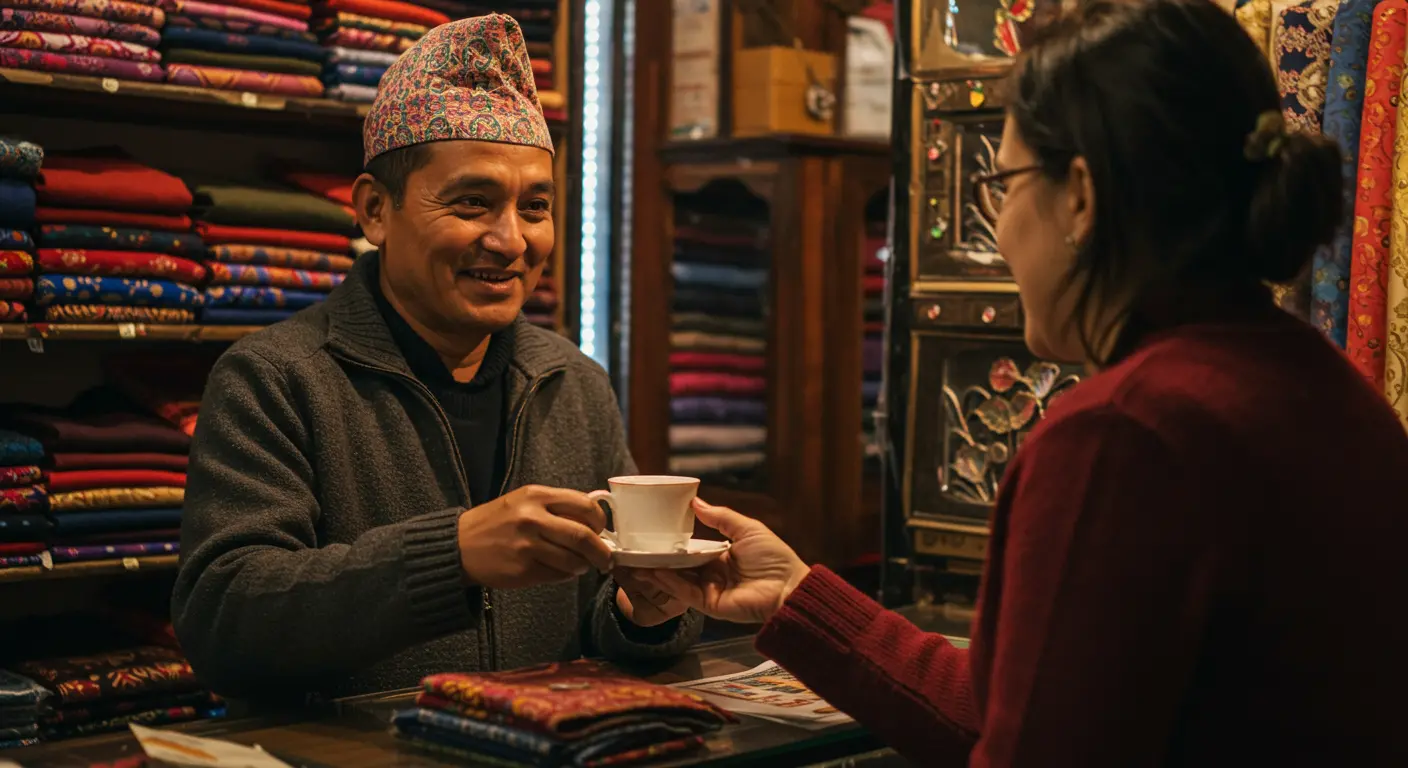
- Offering help with luggage, providing information, or simply offering a cup of tea (tea is an important element of Nepalese hospitality)8) demonstrate concern.
- Showing genuine interest in the client, their purpose of visit or even their journey to the meeting place4 helps to establish a warmer and more trusting contact.
Creating a memorable first encounter is an investment in future loyalty. It lays the foundation for positive long-term relationships and demonstrates that the company values each customer as an individual.
Step 3: The Customer Journey – Exceeding Expectations at Every Step

After a successful first encounter, the company’s job is to maintain and develop the relationship with the client, continually delivering value and exceeding expectations at every stage of the interaction. This is the path from simply satisfying basic needs to forming a deep attachment.
Identifying True Needs: From Standard Requests to Customized Solutions
To truly satisfy a customer, it is important to understand not only their overt requests, but also their hidden needs, expectations, and even fears. In Nepalese culture, where people may avoid asking directly or expressing dissatisfaction4, this requires special attention. Active listening, the ability to ask tactful clarifying questions and observe non-verbal cues help to understand the customer more deeply. For example, Bhat-Bhateni supermarket strives to understand the service needs of its customers, and the study showed that 70% of respondents believed that the company does this effectively.16The company also focuses on customer desires and satisfaction in general.16Using even simple CRM systems to record customer preferences, the history of their requests and purchases allows you to offer increasingly personalized solutions over time and anticipate their needs.
Service as a Problem Solver: Turning Challenges into Opportunities to Build Loyalty
Inevitably, mistakes or problems will arise in the course of business. The way a company responds to them can either destroy the relationship with the customer or, on the contrary, strengthen their loyalty. Responding quickly and effectively to complaints, sincerely admitting the error (if it was the company’s fault) and offering fair compensation or a solution demonstrates responsibility and respect for the customer. It is important to empower frontline employees to resolve routine issues on the spot, finding a reasonable balance with the existing hierarchical structure. In Nepal, where reputation and personal relationships play a huge role, a successful resolution of a conflict situation can leave an even stronger positive impression on the customer and strengthen their trust in the brand more than impeccable but impersonal service.
Transparency and Trust: Pricing, Quality, Keeping Promises

Trust is the foundation of any long-term relationship, especially in business. In the Nepalese context, it is especially important. Customers should have access to clear and understandable information about prices, terms of service, warranties, and return policies. Research shows that reasonable pricing and a clear return policy are important factors in online shopper satisfaction in Nepal.17It is equally important that the declared quality of goods and services corresponds to the actual quality.17Bhat-Bhateni supermarket, for example, strives to ensure that customers are satisfied with both the price and quality of the products offered.16Keeping promises to customers, especially regarding timing, is critical. Above the Himalaya Trekking, for example, guarantees no change in price once a deposit has been made and claims to have never cancelled a tour on its own initiative.15This reliability creates a sense of security and confidence in the company among customers.
Success cases: Lessons from Nepalese Service Leaders
An analysis of the experiences of successful Nepalese companies reveals the key principles of excellent customer service.
- Above the Himalaya Trekking (ATH): This Himalayan trekking and tour company builds its service on several pillars: in-depth knowledge of the region, development of personalized itineraries, offering all-inclusive packages for the convenience of clients, using experienced, licensed, multilingual guides, and strict adherence to safety standards.15The company’s philosophy is to “go the extra mile for our clients – before, during and after the tour.”15ATH also emphasizes its social and environmental responsibility, which resonates with today’s travelers. Their numerous awards and industry recognition attest to the effectiveness of their chosen strategy.15
- The Dwarika Hotel: This Kathmandu hotel is a model of how to integrate cultural heritage into creating a unique guest experience. The hotel’s philosophy is “giving back to guests, Nepal and the planet.”11This is evident in the architecture, which uses salvaged elements of ancient Newari wood carvings, the interiors, which reflect local traditions, and the holistic approach to guest well-being, based on ancient practices.10The Dwarika’s creates not just a place to stay, but a true “sanctuary” offering harmony and peace. High marks for service (4.7/5 by reviews)11indicate that this approach is deeply appreciated by clients.
- Bhat-Bhateni Supermarket (BBSM): Nepal’s largest supermarket chain, Bhat-Bhateni, enjoys strong brand recognition and high customer loyalty, largely due to its long-standing reputation.18The company offers a wide range of products and strives to create a modern and convenient shopping environment.18Research shows that customers generally rate BBSM’s understanding of their service needs, quality management and responsiveness of staff positively.16However, like any large business, BBSM faces challenges such as price competition from smaller local markets and the need to further develop its online presence.18This shows that even market leaders must constantly adapt and improve their service.
The experience of these companies demonstrates that in the conditions of Nepal, with its potential infrastructural and logistical difficulties,19, those brands that not only rise to the challenge but manage to exceed customer expectations (e.g. through deep personalization, exceptional care, or creating a unique cultural experience) build a very strong competitive advantage and lay the foundation for long-term loyalty. It is also important to note that the customer journey does not end with the purchase. In a relationship-oriented culture, after-sales support and effective problem-solving, as emphasized in the Above the Himalaya Trekking philosophy15, are critical to forming lifelong commitment.
Step 4: Digital Bridge – Integrating Technology with Traditional Hospitality

In today’s world, digital technologies are playing an increasingly important role in customer interactions. In Nepal, where internet and mobile penetration is on the rise, the clever integration of technology solutions with traditional Nepalese hospitality offers new opportunities to enhance the customer experience. However, it is important to remember that technology should complement, not replace, the human warmth and personalized approach so valued in the local culture.
Table 2: Nepal Digital Landscape: Customer Service Opportunities (2024)

Online Presence in Nepal: Website, Social Media (Facebook, Instagram) and Their Role
As the table shows, digital reach in Nepal is significant. Facebook is the dominant social platform, providing ample opportunities for marketing, direct communication with customers, posting news and updates, and collecting feedback.12Instagram, with its rapidly growing audience, is becoming an increasingly important channel for visual storytelling, showcasing products and services (especially in the travel, fashion, crafts) and attracting a younger audience.12Presence on other platforms such as LinkedIn (with a noticeable male predominance – 71.6%12), may be appropriate depending on the specifics of the business and the target audience. It is important to note that the noticeable gender imbalance in the use of some social networks requires more fine-tuning of marketing and service strategies. Simply being present on the platform is not enough; you need to understand who exactly makes up your audience there and adapt your content and communication style accordingly.
The quality of a corporate website also plays a key role, especially for online shoppers who value good design, easy navigation and interactivity.17
The Power of Messengers: Effective Communication and Support
Messengers, most notably Facebook Messenger, with its huge user base in Nepal12, are becoming a powerful tool for customer service. They allow you to organize fast and direct support, answer questions in real time, accept orders, and send important notifications (for example, about the status of an order or an upcoming event).21Using chatbots can help automate responses to frequently asked questions, freeing up employees’ time to tackle more complex issues.22Given the popularity of Facebook Messenger and the general benefits of messenger marketing, such as immediacy and automation, messengers could become a primary rather than secondary customer support channel in Nepal, especially for the younger and tech-savvy audience. Viber could also be used for business communications, although specific data on its popularity in Nepal is not available in the materials provided.23
E-commerce: Overcoming logistics challenges and online shopper expectations
Online shopping in Nepal is gaining momentum, fueled by falling technology and internet access costs, convenient payment systems, and interactive mobile shopping apps.17The key factors that influence the satisfaction of Nepalese online shoppers are reasonable price, product quality, clear return policy and most importantly, timely and reliable delivery.17
However, e-commerce development in Nepal faces serious logistical challenges20:
- Complex mountainous terrain and often poor road conditions make transport slow and risky, especially for large or fragile goods. Seasonal landslides can cause further delays.
- Customs procedures can be lengthy, and errors in documentation can lead to delays in import/export operations.
- High shipping costs due to the limited choice of transport options and fluctuating fuel prices.
- Lack of modern warehouse space at key points increases the risk of product damage or delays.
- Last Mile Problems are particularly acute in remote areas with poor infrastructure and no clear addressing system.
Despite these challenges, companies are finding solutions. These include using multimodal transport (a combination of road and air transport), careful strategic route planning using GPS and local knowledge, partnering with regional couriers to expand coverage, implementing digital parcel tracking systems, and offering flexible pick-up points.20In urban environments such as the Kathmandu Valley, small trucks that can navigate dense traffic and narrow streets, such as the Tata Ace EV, are an effective last-mile delivery solution.24
The high penetration of social media and messaging apps creates significant opportunities for digital marketing and communications. However, significant logistical challenges mean that converting this digital reach into successful sales of physical goods requires either significant investment in overcoming infrastructure barriers or developing innovative partnerships. Success in Nepalese e-commerce depends not only on a well-thought-out digital strategy, but also on the ability to build efficient and reliable logistics.
In a culture where personal relationships are highly valued4, the anonymity of online shopping can create a certain amount of mistrust. So integrating elements of traditional hospitality into the digital experience – for example, through personalized messaging, offering video consultations, demonstrating the “face” of the company through stories about the team on social media – can help “humanize” online business and build the trust needed to make a purchase and form subsequent loyalty.
Step 5: From Satisfaction to Commitment – Growing Brand Ambassadors

Achieving customer satisfaction is an important step, but the real goal is to create deep loyalty, where customers not only return again and again, but also become active advocates of the brand, recommending it to their circle. This step focuses on long-term retention strategies and turning customers into true ambassadors.
Loyalty Programs with a Nepali Accent: Value and Recognition
Loyalty programs can be an effective retention tool, but their design must be sensitive to Nepal’s cultural context. Simple discounts or points may be less effective than programs that offer real, tangible value and, importantly, recognition. In a culture that values respect and a certain social status4, loyalty program elements that highlight the customer’s special importance to the company can carry more weight. These could be exclusive offers, invitations to closed events, personalized gifts related to local traditions or customer preferences, or even public (but appropriate and tactful) recognition of their loyalty. For example, the supermarket chain Bhat-Bhateni, which already enjoys high customer loyalty16, is considering ways to further enhance its loyalty programs to improve customer retention.18Loyalty programs should be designed in such a way that the customer feels truly valued and respected, and not just a participant in another marketing campaign.
The Power of Feedback: Continuous Improvement Through Customer Dialogue
Building long-term relationships is impossible without constant dialogue with customers. Creating convenient and accessible channels for collecting feedback – be it online surveys, forms on the website, books of reviews and suggestions at physical service points, communication via social networks or messengers22– is critical. However, simply collecting feedback is not enough. It is necessary to demonstrate to customers that their opinions are truly valued, analyzed and used to improve products, services and processes. This not only helps the company become better, but also builds trust with customers by showing that their voice is heard. Given the Nepalese tendency to communicate indirectly4, receiving honest and detailed feedback can be a challenge. Therefore, the feedback collection process should be structured in such a way that customers feel as comfortable as possible sharing their opinions without fear of “losing face” or offending company representatives. Demonstrating that even small comments or suggestions are taken into account and lead to positive changes will encourage further candor and participation from customers.
Community Building: Uniting Customers Around Shared Values and Brand
People like to feel part of something bigger. Brands can facilitate this by creating communities around themselves. These can be online groups or forums where customers can interact, share experiences related to the company’s products or services, or discuss related interests. Organizing offline events, workshops, or meetups also helps strengthen the bonds between customers and between customers and the brand. In Nepal’s collectivist culture7Brand support for local initiatives, cultural festivals or social projects can resonate and help unite people around common values.
Social Responsibility as a Factor of Loyalty in Nepal
In today’s world, consumers are increasingly paying attention to the social and environmental responsibility of companies. In Nepal, a country with unique nature, rich cultural heritage and certain social challenges (such as the aftermath of the 2015 earthquake25or problems of vulnerable groups of the population26), brands that demonstrate genuine concern for the environment and local community can earn deep respect and loyalty. Above the Himalaya Trekking actively positions itself as an environmentally and socially responsible tour operator.15Similarly, The Dwarika’s Hotel emphasizes its philosophy of “giving back to Nepal and the planet.”11This position becomes more than just a marketing ploy, but an important differentiator that creates a deep emotional connection with customers, especially those who share the values of sustainable development and ethical business. Supporting such a brand becomes an expression of their own beliefs and involvement in positive change.
Turning satisfied customers into loyal ambassadors is an ongoing process that requires consistent efforts, sincerity and a deep understanding of what is truly valuable to Nepalese consumers.
Step 6: Navigating Challenges – Overcoming Obstacles to Excellence

On the path to creating the perfect customer service in Nepal, companies inevitably face a number of unique challenges. Understanding these challenges and developing strategies to overcome them are key to achieving long-term success and building truly strong customer relationships.
Human Capital: Training, Motivating and Retaining Staff in Nepal’s Service Sector
The quality of customer service is directly related to the people who provide it. In Nepal, the field of human resource management, especially in the hospitality and service industry, faces a number of serious challenges27:
- Low wages: Salaries in the hospitality sector are often lower than in other industries such as IT or banking, making the job less attractive.27
- Limited growth opportunities: Lack of clear career paths and opportunities for professional development demotivates employees.27
- High staff turnover and “brain drain”: Qualified and talented specialists often go to work abroad in search of better conditions and prospects.27
- The gap between education and practice: Graduates of educational institutions do not always have the practical skills needed in the workplace, especially when it comes to management competencies.27There is a shortage of qualified personnel, especially at the managerial level.28
- Learning problems: Higher education in Nepal is fee-based, making it inaccessible to many.29There is a general problem of low labour productivity, especially in the informal sector of the economy.30Even government skill development initiatives such as the Nepal Administrative College (NASC) have faced challenges in their establishment and growth.31
- Influence of trade unions: In some cases, trade union activities can create additional difficulties for employers and demotivate staff.27
Solutions: Overcoming these challenges requires a comprehensive approach. Companies need to invest in developing and delivering quality training programs that focus not only on technical skills, but also on developing soft skills, understanding cultural specifics and customer-centric principles. It is important to create effective motivation systems that include not only material rewards, but also recognition of merit, opportunities for career growth and professional development. Creating a strong, positive corporate culture where employees feel valued and respected contributes to their retention. Recognizing the problem of “brain drain” and the shortage of qualified personnel, companies that actively invest in the development, motivation and creation of an attractive working environment for their employees gain a significant competitive advantage, becoming an “employer of choice”.
Infrastructure Realities: Adapting Service Models to Local Conditions
The effectiveness of customer service also depends on the overall infrastructure of the country, which in Nepal has its own characteristics and limitations:
- Common problems: Companies may face a shortage of quality production and office space.19Corruption and bureaucratic red tape can also make it difficult to do business.19Nepal’s economy relies heavily on agriculture, tourism and remittances from abroad.32, indicates that the general infrastructure (transport, energy, communications) may be underdeveloped in some regions.
- Logistic challenges: As discussed earlier (Step 4), difficult terrain, road conditions and other factors create serious challenges for logistics and timely delivery of goods.20
Solutions: Companies need to develop flexible business models that can adapt to existing infrastructure constraints. This may involve using modern technologies to overcome some barriers (e.g., organizing remote work, developing online services, using mobile applications for coordination). Careful planning, managing infrastructure risks, and finding innovative solutions are becoming critical. Instead of viewing infrastructure problems as an insurmountable obstacle, companies can look for creative approaches and strategic partnerships. For example, last-mile logistics problems can be solved through cooperation with a network of local couriers who know the specifics of the region better, or through the development of their own flexible delivery services using adapted transport.24
Balancing Expectations: Meeting the Needs of Both Local and International Customers
Nepal attracts many foreign tourists whose expectations of service may be shaped by their experiences in other countries around the world.13They can expect a certain level of efficiency, standardization and availability of information. At the same time, local customers, whose purchasing power and awareness of quality service are also growing, have their own expectations, influenced by local culture, traditions and standard of living.
Solutions:A successful service must be able to find a balance and satisfy the needs of both groups. This requires:
- Customer segmentation and the possible adaptation of service approaches for different groups.
- Staff training working with clients from different cultures, the ability to understand their expectations and communicate effectively.
- Clear and honest communication about the level of service provided and possible limitations, especially in remote or hard-to-reach areas (e.g. trekking routes in the mountains). In conditions where unexpected difficulties may arise (related to infrastructure, weather, etc.), proactive and honest management of customer expectations becomes an important part of the service. Informing the customer about possible difficulties in advance is perceived as honesty and care, reducing the likelihood of disappointment.
Overcoming these challenges requires companies in Nepal not only to have a strategic vision, but also to have considerable flexibility, creativity and a commitment to quality service.
Conclusion
The journey from the initial “Namaste” to building lifelong customer loyalty in Nepal is a multifaceted process that requires deep understanding, strategic planning, and genuine commitment. These six steps – from laying the foundation of cultural understanding and creating a great first impression to exceeding expectations throughout the customer journey, integrating technology well, implementing long-term retention strategies to turn customers into brand ambassadors, and overcoming Nepal-specific challenges – outline a comprehensive approach to building outstanding customer service.
The key takeaway is that in Nepal, customer loyalty is not only the result of a quality product or service per se, but also, to a large extent, of genuine human relationships. These relationships are built on deep respect symbolized by “Namaste,” on trust earned through honesty and keeping promises, and on mutual understanding achieved through empathy and attention to each customer’s needs.
Success will come to those companies that can achieve synergy between deep respect for Nepal’s rich culture, genuine, human-centered service, and a thoughtful strategic approach. This means not blindly copying Western service models, but thoughtfully adapting them, infusing them with the unique spirit of Nepalese hospitality, warmth, and cordiality.
Lifetime customer loyalty in Nepal is not a myth, but an achievable goal for those businesses that are willing to invest in understanding the local culture, developing and motivating their employees, and most importantly, building long-term, mutually beneficial, and truly human relationships with their customers. Ultimately, it is these relationships that turn casual shoppers into loyal friends and the most effective brand ambassadors.
Source used
- Economy of Nepal: Agriculture, Energy, Tourism
- Namaste – Wikipedia
- Nepali Phrasebook – WordPress.com
- A Guide to Business Etiquette in Nepal | ClickUp™
- Cultural Considerations in Nepal – Rivermate
- Caste – Wikipedia
- Hofstede’s Cultural Dimensions – Think Insights
- Nepal’s Cultural Do’s and Don’ts – Natural Habitat Adventures
- Embracing Nepali Culture and Basic Etiquette – Asian Heritage Treks & Expeditions
- Review: The Dwarika’s Resort In Dhulikhel, Nepal – Luxury Travel Diary
- The Dwarika’s Hotel – Kathmandu – Skyscanner
- Digital 2024: Nepal — DataReportal – Global Digital Insights
- Trekking in Nepal | Forum – 14ers.com
- Relationship Management: Examples of Good and Bad Customer Service
- Why Travel With Us | The Best Travel Company for …
- NPRC Journal of Multidisciplinary Research Exploring Consumer Satisfaction and Service Quality at Bhatbhateni Supermarket
- A Study on Customer Satisfaction towards Online Shopping in Nepal – ResearchGate
- SWOT Analysis of Bhatbhateni Explained in 2025:Key Insights – IIDE
- Reasons that hinder the development of small business
- Top 5 Nepal cargo challenges and Our Solutions
- Six ways to use instant messengers in business – Cossa.ru
- What is Messenger Marketing and Why Does Business Need It – Pact
- Viber Broadcast: Bulk Messages and How to Make Them
- The Role of Small Cargo Trucks in E-commerce and Last-Mile Delivery – Tata Motors Nepal
- US terminates Temporary Protected Status for Nepal – The Economic Times
- Human trafficking in Nepal – Wikipedia
- View of Human Resource Management Challenges in the Hospitality Industry: Insights from Nepal
- Employee Retention Practices in Hospitality Industry in Nepal: Investigating the Moderating Effect of Management Hierarchy, Age Group and Gender | Request PDF – ResearchGate
- Mysterious Nepal – Moskovskaya Street
- Nepal: Addressing the Employment Challenge through the Sectoral Pattern of Growth – International Labour Organization
- The Nepal Administrative Staff College – Its Challenging Origin and Future Demands
- General Statistics: Basic Information about Nepal – Nomad’s Land