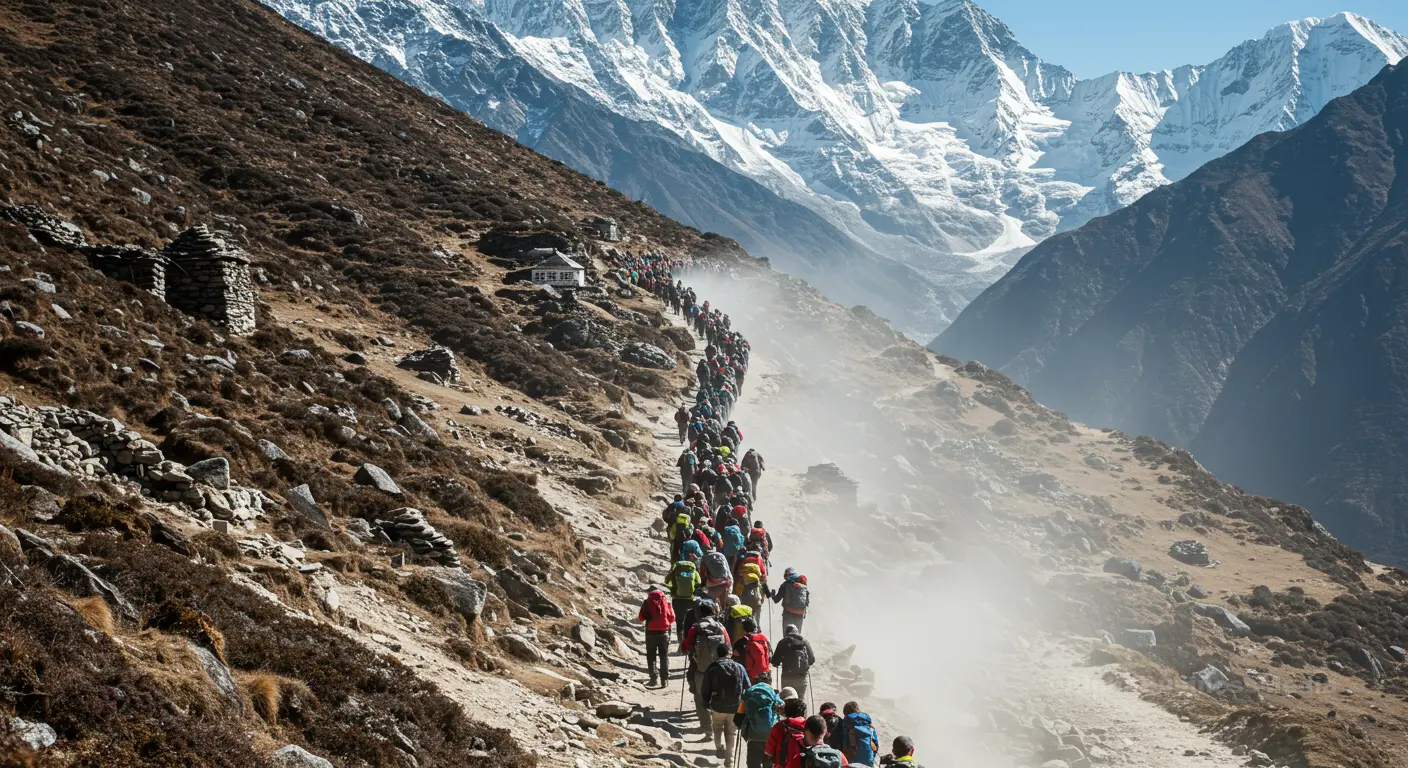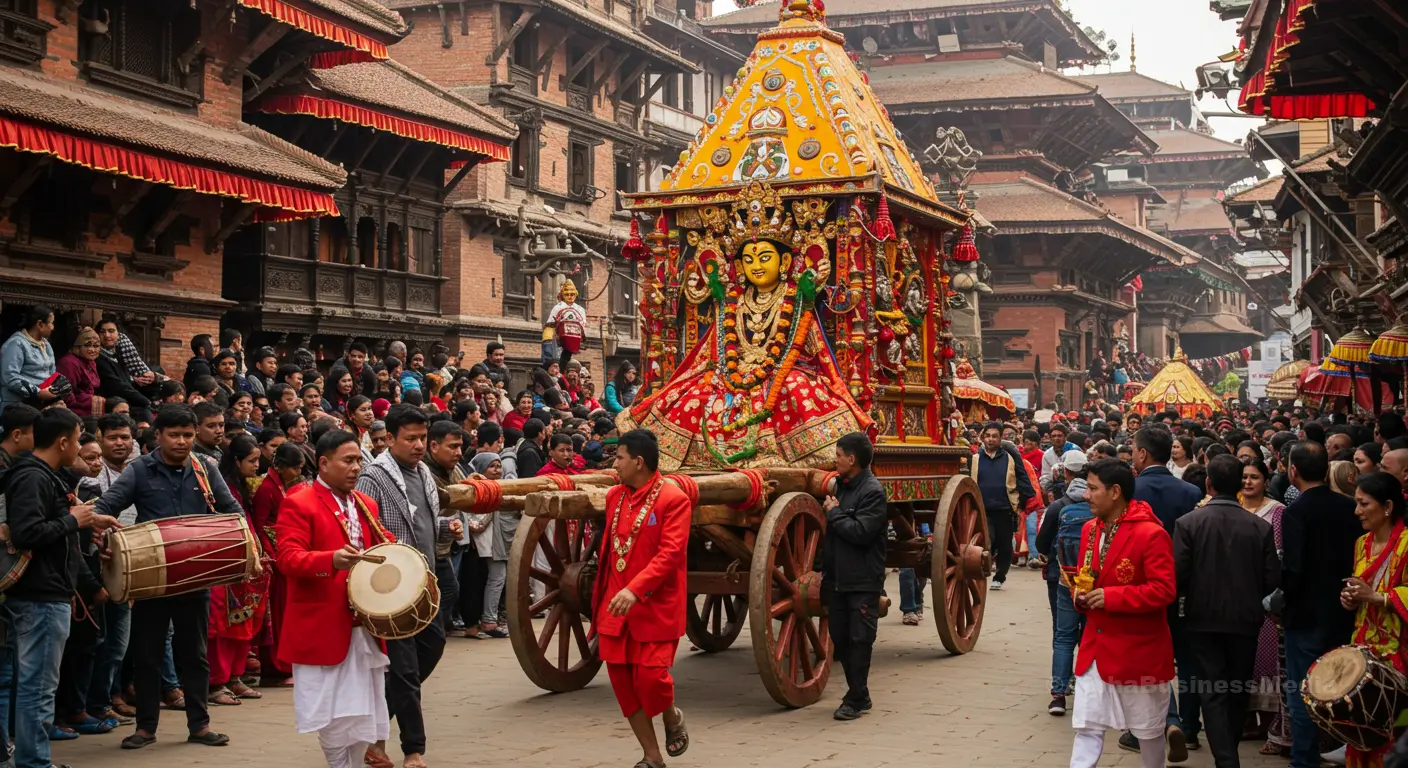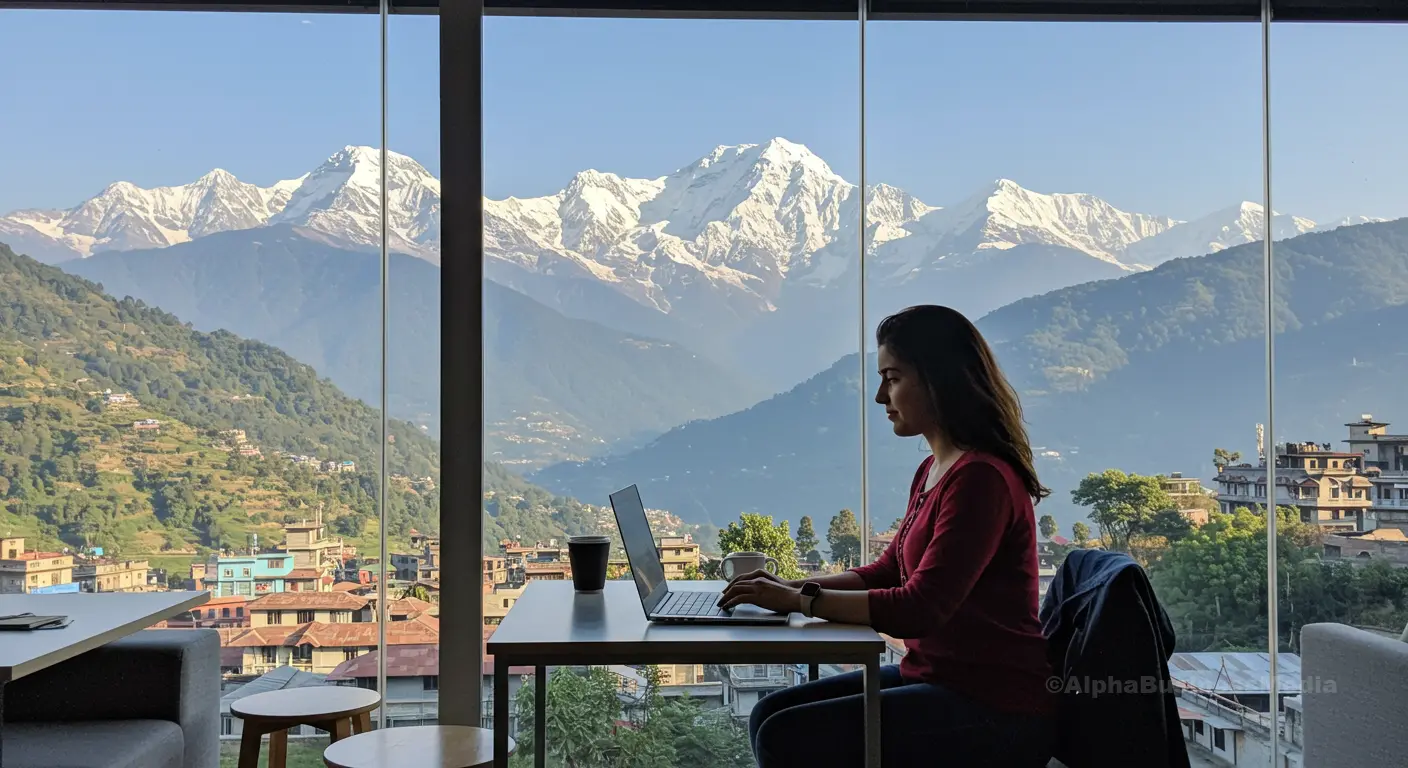
Nepal, a country of majestic Himalayas and ancient traditions, has always attracted travelers. But the traveler himself has changed. Large tourist groups following standard routes are increasingly being replaced by individualists, seekers of unique experiences and those who skillfully combine work with knowledge of the world. In 2025, the Nepalese tourism business faces the need to deeply adapt to these new demands in order not only to maintain its attractiveness but also to open up highly profitable niches.
Classic trekking routes to Everest and Annapurna remain iconic, but the world of tourism is becoming increasingly segmented. Today’s global traveler – whether a solo traveler seeking authenticity or a digital nomad seeking an inspiring location to work remotely – places new demands on the quality, flexibility and content of the tourism product. Alpha Business Media examines how Nepal is responding to these challenges and which destinations promise to be the most profitable in the near future.
Global Tourist 2025: New Faces, New Priorities
Global tourism in 2025 shows strong growth, exceeding pre-pandemic levels.1However, these figures hide qualitative changes in traveler preferences.
Solo Travelers: In Search of Independence and Authentic Experiences

The number of people who prefer to travel alone is growing. These tourists value flexibility, the ability to build their own itinerary and deeply immerse themselves in the local culture. For them, the standard “tourist packages” are not as important as authentic experiences, safety and the opportunity to interact with locals and other travelers. Nepal, with its rich culture and traditions of hospitality, is well positioned to attract this segment, offering safe and rich programs for individual explorers.
Digital Nomads: Working with a View of the Himalayas
The phenomenon of “digital nomads” – people who combine remote work with travel – is gaining momentum. These professionals are looking not just for a pretty picture, but also for comfortable conditions for work (reliable internet, comfortable workspaces) and life for several weeks or months. Nepal, with its relatively low cost of living and unique natural landscapes, can become an attractive destination for this category of tourists if it can provide the necessary infrastructure. The Nepalese government’s proposed visa policy for digital nomads is a significant step in this direction.2
E Experiential and Transformational Tourism: More than Just Attractions
Modern tourists increasingly seek not passive contemplation, but active participation and personal transformation. Travel is becoming a way to learn about oneself and the world, to gain new skills and deep emotional experiences.3These could be cooking classes, volunteer programs, participation in local festivals, or retreats aimed at spiritual development.
Wellness and Slow Tourism: Rebooting in Harmony with Nature

In a world overloaded with information and stress, demand for slow travel and wellness programs is growing. Travelers are looking for opportunities for detox, relaxation, meditation and yoga in a calm, eco-friendly environment.4The Himalayas of Nepal, with their powerful energy and ancient spiritual traditions, are ideal for creating wellness retreats and healing centers.
Sustainable and Responsible Tourism: Travel with Meaning
Environmental awareness and social responsibility are becoming increasingly important factors when choosing a destination. Tourists want to be sure that their travel does not harm the environment and benefits local communities.4Demand for eco-hotels, carbon-neutral tours and programs that support the preservation of cultural heritage will only grow.
Adapting Nepal’s Tourism Industry: Meeting New Demands
Nepal’s tourism sector is gradually beginning to respond to the changing demands of global travellers, although the process comes with a number of challenges.
Infrastructure and Accessibility: Foundation for New Niches
Airport modernization and its impact
Upgrade of Tribhuvan International Airport (TIA) in Kathmandu6and the opening of two new international airports in Pokhara (PIA) and Bhairahawa (GBIA)8were intended to improve international and domestic transport accessibility. However, as practice shows in 2025, the new airports have not yet operated at full capacity and have not led to a radical redistribution of international flows.9TIA, despite temporary difficulties due to reconstruction22, remains the main gateway to the country. However, even the limited operation of new airports and the general modernization of aviation infrastructure24create the preconditions for the development of tourism in the adjacent regions of Pokhara and Lumbini.
Digital Nomad Visa: A Promising Tool

The Nepal government announces a policy to introduce special long-term visas for digital nomads2is a strategically important step. This measure is capable of attracting to the country a segment of tourists who are ready for a long stay and have a stable income. The success of this initiative will depend on the speed of its implementation, the simplicity of the procedures and, importantly, on the parallel development of the necessary infrastructure – high-quality Internet and co-working spaces.
Development of digital infrastructure
To attract digital nomads and meet the demands of today’s online-savvy tourists, Nepal needs to significantly improve the quality and availability of internet connections across the country, especially in popular tourist areas and potential long-term destinations for remote workers.
Development of niche tourism products
The Nepalese tourism industry is gradually moving away from focusing exclusively on mass trekking, offering more diverse and targeted products.
Offers for solo travelers
Tours and services aimed at individual travellers are emerging, with an emphasis on safety, flexibility of itineraries and opportunities for socialising (e.g. small group treks, homestays with the opportunity to immerse oneself in the life of local families).
Wellness retreats and spiritual practices
Taking advantage of the rich spiritual heritage and natural beauty, centers of yoga, meditation and Ayurveda are actively developing in Nepal.4These retreats attract tourists who are looking not only for physical relaxation, but also for spiritual recharge.
Community Based Tourism (CBT) and Homestays

Community tourism programs such as “Community Connect 2025”25, are gaining popularity. They offer tourists a unique opportunity to live with local families, get to know the authentic culture and way of life, and at the same time directly support the economy of rural communities.27This format perfectly meets the demand for authenticity and responsible tourism.
Adventure Tourism: New Horizons
In addition to the classic routes, new trekking destinations are being developed and promoted in lesser-known areas of the Himalayas.28The range of adventure activities is also expanding: rafting, canyoning, mountain biking, paragliding and ultralight flights, especially in the Pokhara area.4
Marketing and Promotion: Reaching the New Tourist

Nepal needs to adapt its marketing strategies to attract new segments of tourists. This includes actively using digital channels, collaborating with international travel bloggers and influencers specializing in solo travel, digital nomadism, wellness and sustainable tourism. It is important to create quality visual content that tells stories and conveys the unique atmosphere of Nepal. National and regional campaigns such as “Visit Pokhara Year 2025″29or initiatives of the province of Koshi32, play an important role, but their effectiveness depends on clear targeting and coordination.
Maximum Income in 2025: Which Niches Are the Most Profitable?
An analysis of current trends and global forecasts allows us to identify several niches in Nepalese tourism that promise to generate maximum income in 2025 and the near future.
Luxury and experiential tourism
The segment of wealthy tourists willing to pay for an exclusive experience, comfort and personalized service remains one of the most profitable. These may be:
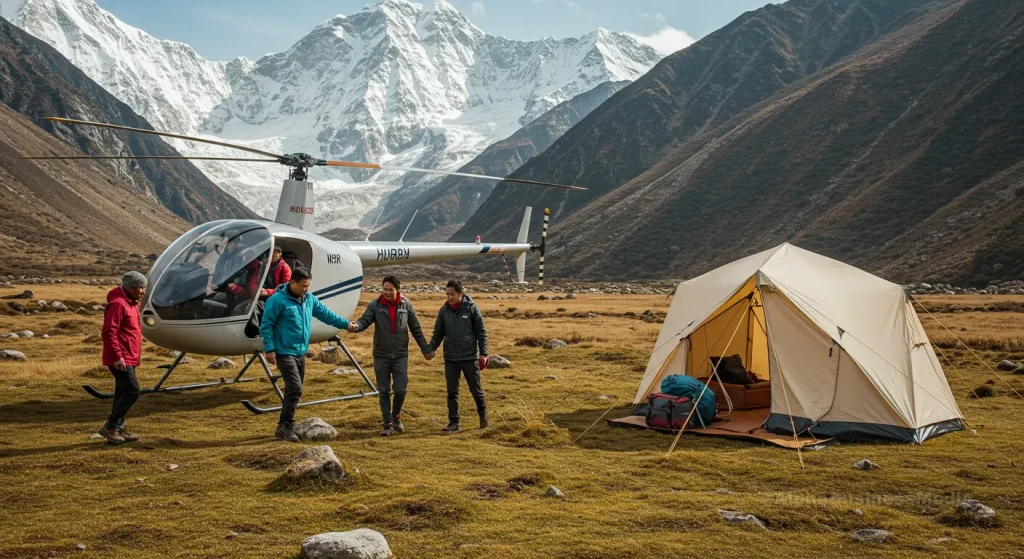
- VIP Trekking and Helicopter Tours: Organization of tracks with an increased level of comfort (quality lodges, personal chefs, lightweight backpacks) and the use of helicopters for transfers to remote areas or return from the route.4
- Boutique Hotels & Glamping: Creating unique accommodations that combine authentic Nepalese style with modern comfort, including glamping in picturesque mountain locations.
- Individual cultural and gastronomic tours: Developing exclusive programs that introduce the deep aspects of Nepalese culture, art and cuisine, with the participation of renowned experts and masters.
Digital nomads and long-term stays
Attracting digital nomads through special visa policies2and the creation of appropriate infrastructure (coworking spaces, reliable Internet) can provide a stable income stream. These tourists usually stay in the country for a long period (several months), rent housing, use local services and contribute to the economy of not only tourist centers, but also lesser-known locations suitable for quiet work.
Specialized adventure and wellness retreats
Programs that target specific interests and offer deep immersion can attract a paying audience:
- High-end yoga and meditation retreats: With the involvement of renowned teachers, in comfortable centers with quality food and additional health treatments.4
- Challenging and exclusive trekking and mountaineering expeditions: To lesser-known peaks or along new, challenging routes that require highly qualified guides and quality equipment.
- Photo tours and ethnographic expeditions: For photographers and researchers willing to pay for unique shots and the opportunity to get to know rare cultures.
Sustainable tourism as a premium product

Growing demand for responsible travel4allows sustainable tourism to be positioned not as a budget alternative, but as a premium product. Tourists are increasingly willing to pay more for accommodation in eco-hotels, participation in nature and cultural conservation programs, and for the guarantee that their money benefits local communities. This is especially true for Nepal, where preserving fragile mountain ecosystems is a top priority.
Challenges and Prospects: Towards an Adaptive Tourism Business
Despite the positive trends and opportunities, Nepal’s tourism industry faces a number of serious challenges in adapting to new demands.
Overcoming infrastructure limitations
Poor road conditions22, high cost and unreliable domestic air travel, and power and internet outages in some areas remain major obstacles. The development of new niches, especially those associated with digital nomads or luxury tourism, requires a dramatic improvement in basic infrastructure.
Quality Assurance and Standardization

When developing new tourism products, especially in the areas of wellness, community tourism or specialised adventures, it is essential to ensure a high level of service quality and compliance with international safety standards. This requires investment in staff training, certification of guides and instructors, and the development of clear standards for accommodation and services.
Balance between authenticity and commercialization
When attracting tourists to local communities and introducing them to authentic culture, it is important to avoid over-commercialization and turning it into a “tourist spectacle.” It is necessary to find a balance that will preserve the authenticity of traditions while providing economic benefits to local residents.
Global economic and geopolitical factors
Nepal’s tourism industry remains vulnerable to global economic downturns, currency fluctuations and geopolitical instability.33A slowdown in global economic growth or trade conflicts could lead to a reduction in tourist flows. Nepal’s inclusion in the FATF “grey list” also creates certain reputational and financial risks.23The tourism business needs to be flexible and ready to adapt to a changing external environment.
Conclusion: The Future of Nepal Tourism is Flexibility and Innovation

In 2025, Nepal’s tourism industry is at a critical stage of transformation. Global traveler demands are changing, and the country must actively adapt to remain competitive and attractive. Moving away from mass-market offerings to more niche, personalized, and high-quality products is not just a trend, it’s a necessity.
Solo travellers, digital nomads, wellness seekers and authentic cultural experiences are the new faces of modern tourism. To attract them, Nepal needs to develop the appropriate infrastructure, offer innovative tourism products and effectively market them in the global market.
The biggest revenue drivers in the coming years are likely to come from niches targeting affluent travelers offering exclusive experiences, as well as the digital nomad segment, which offers long-term stays and sustainable spending. Specialized adventure and wellness programs, as well as premium sustainable tourism, also have high revenue potential.
Overcoming infrastructural barriers, ensuring quality and safety, preserving cultural authenticity, and adapting to global economic challenges are key challenges facing Nepal’s tourism industry. Success in this quest will enable the country to not only increase tourism revenues but also make tourism more sustainable, inclusive, and beneficial for visitors and locals alike. Flexibility, innovation, and a deep understanding of the needs of the next generation of tourists are key to Nepal’s tourism industry thriving in 2025 and beyond.
Source used
- World tourism soars: International tourist arrivals up 5% in 2025 – Travel Radar
- Nepal eyes tourism, economic boost with new digital nomad visa … – The Kathmandu Post
- From Everest to Kilimanjaro: The Biggest Adventure Travel Trends for 2025 – EverTrek
- Nepal Travel Trends 2025: What’s New for Trekkers and Tourists – Mountain Hike
- Green Tourism in Nepal: Leading the Way in Sustainable Travel for 2025 – Binita Karki
- TIA expansion work achieves 60 percent progress – The Annapurna Express
- Rs4.15 billion allocated to develop TIA as boutique international … – The Kathmandu Post
- OECD Economic Outlook, Interim Report March 2025 | OECD
- NEPAL HOTEL – Hotel Association Nepal
- Investors, hoteliers left waiting as flights vanish from Bhairahawa airport – The Kathmandu Post
- Efforts underway for full operation of GBIA – myRepublica
- Gautam Buddha International Airport to operate at full capacity soon … – The Kathmandu Post
- $215.96 million new Pokhara airport sees first passenger flight – The Kathmandu Post
- Parliamentary Report Reveals Widespread Corruption in Pokhara Regional International Airport Project – epardafas.com
- PRIA to begin regular int’l flights after 27 months – myRepublica
- Pokhara Regional Int’l Airport– the first BRI project in Nepal– being inaugurated today – myRepublica
- (PKR Departures) Pokhara Airport Departures – FlightStats
- China CAMC Slams ‘Inaccurate’ Public Accounts Committee’s Report on Pokhara Intl’ Airport – Bizness News
- Pokhara airport: China’s soft power, Nepal’s hard landing – The Kathmandu Post
- 6,800 international passengers at Gautam Buddha International … – Online Khabar
- FORESIGHT AFRICA – Brookings Institution
- Insulate Tourism Sector From Setbacks – The Rising Nepal
- Floods, airport upgrade cut GDP growth by 1 percent – The Kathmandu Post
- Civil Aviation Authority of Nepal (CAAN)
- Community Connect 2025 – Nepal Tourism Board
- Community Connect 2025: Unveiling Nepal’s Hidden Gems Through Responsible Tourism – Community Homestay
- Community-Based Tourism in Nepal: A Sustainable Travel Approach – Footprint Adventure
- Why Visit Nepal in 2025: Ten Reasons – Mountain Monarch
- Experience the Exciting ‘Visit Pokhara 2025’ Campaign – Nepal Hiking
- Nepal’s Tourism Capital Pokhara Gears Up for ‘Visit Pokhara 2025’ – Travel And Tour World
- New Impetus To Boost Pokhara Tourism – The Rising Nepal
- Promotion of tourist destinations underway in Koshi – The Rising Nepal
- The Global Economy Enters a New Era – International Monetary Fund (IMF)
- Global economic outlook, January 2025 – Deloitte
- World Economic Outlook, April 2025: A Critical Juncture amid Policy … – IMF
- World Economic Outlook – All Issues – International Monetary Fund (IMF)
- World Economic Outlook, April 2025; A Critical Juncture amid Policy … – IMF
- Global Economy Stabilizes, But Developing Economies Face … – World Bank
- Ayhan Kose Explains the January 2025 Global Economic Prospects – World Bank
- Global economic outlook uncertain as growth slows … – OECD
- Fitch downgrades global GDP growth forecast for 2025 – AgroReview
- Global Economic Outlook: May 2025 | S&P Global
- Economic Outlook 2025 – PwC
- 2025 global economic outlook: momentum and uncertainty | EY – US
- US Economic Forecast Tariffs | Deloitte Insights
- Global Economic Outlook 2025: A Widespread Growth Slowdown | Morgan Stanley
- KPMG Economics
- Global Economic Prospects – January 2025 – ReliefWeb
- US economic outlook May 2025 – EY
- How Tariffs and Geopolitics Are Shaping the 2025 Global Economic … – CFA Institute
- Shifting ‘superfundamentals’ shake up global economic outlook – World Economic Forum
- April 2025 update to TIGER: The world economy shudders and could stall – Brookings
- Introducing the RSM US Recession Monitor – RSM
- Asset Allocation Committee Outlook – Neuberger Berman
- Emerging markets adapting to a changing world order – Triodos Investment Management
- Global employment forecast downgraded by up to 7 million jobs in … – ILO
- WTO sounds alarm on trade risks and other trade news | World … – World Economic Forum
- Global trade set for mild contraction in 2025, reveals WTO report – Gulf Business
- bit.ly/GEP-January-2025-Full-Report
- Top Ten Global Risks for 2025 • Stimson Center
- Top 5 Geopolitical Threats to Businesses in 2025 – SHRM
- Top geopolitical risks 2025 – KPMG
- 2025 Geostrategic Outlook | EY
- Global trade 2025 – Chatham House
- www.blackrock.com
- Moody’s credit outlooks: research, analysis, and insights
- A new US-Africa blueprint for Trump amid China’s rise – Brookings Institution
- Top 10 geopolitical risks in 2025 Geostrategic Outlook | EY – US
- Chatham House Expert Reveals What’s Changed in Africa in 2025. | YIP Institute
- Foresight Africa 2025-2030 – Brookings Institution
- The end of exceptionalism – HSBC Asset Management Denmark
- Global Energy Outlook 2025 – Resources for the Future
- Global Debt 2025: Rising Risks Ahead – Clairinvest
- 2025 Year Ahead Investment Directions | BlackRock
- 2025 Mid-year Outlook Comfortably Uncomfortable – J.P. Morgan
- Asset allocation in 2025: Between optimism and uncertainty – Candriam
- privatewealth.goldmansachs.com
- UBS House View Monthly Letter | April 2025
- Asset allocation: An eventful start to 2025 | UBS Global
- Global Midyear Investment Outlook 2025: All Eyes on the U.S. … – Morgan Stanley
- 2025 Private Markets Outlook | Adams Street Partners
- Institutional Investors Split on U.S. Economic Outlook – Commonfund
- Institutional Investor Indicators: March 2025 – State Street
- Digital Economy Outlook 2025 – Moody’s
- Top Emerging Market Economies for US Investors in 2025 – Nomad Capitalist
- 2025 global economic outlook – a highly uncertain world – ACCA
- Nepal’s record Rs1.96 trillion budget makes bold promises amid a bleak outlook – The Kathmandu Post
- Blended Finance for SME Growth: Evidence from Nepal – DAI Blogs
- Digital Financial Services in Nepal – International Finance Corporation
- Giving start-ups a head start | Nepali Times
- NRB makes it mandatory for BFIs to invest in financial literacy programs – myRepublica
- $37.2 Bn Urban Air Mobility Market Opportunities and … – GlobeNewswire
- Nepal’s Economy to Strengthen in FY2025 and Further in 2026 | Asian Development Bank
- How Rising Geopolitical Risks Weigh on Asset Prices – International Monetary Fund (IMF)
- Market Outlook 2025 | J.P. Morgan Research
- Baseline Survey on Financial Literacy in Nepal … – NRB
- UK Economic Outlook – April 2025 – KPMG International
- FIU-Nepal Newsletter (May, 2025) – Issue IV – NRB
- AML and Terror Financing Risks As Nepal Returns to FATF Grey List – LexisNexis