A Quiet Revolution on the Roof of the World
In the imagination of many, Nepal is a country of majestic, snow-capped Himalayan peaks, ancient temples and serene monasteries, attracting tourists from all over the world.1But behind this facade lies another reality. Nepal is one of the world’s least developed countries, where daily life for millions of people is a struggle for basic resources that are taken for granted in other parts of the world.2It is an agricultural country where almost a third of the population lives below the poverty line and the GDP per capita is just over US$1,000.2
This harsh reality is compounded by a host of systemic challenges. An economy heavily dependent on agriculture cannot provide jobs for everyone, leading to a massive exodus of young people, especially men, to work abroad. According to the 2021 census, nearly a quarter of Nepalese households (23.4%) have a family member permanently residing abroad.5This demographic shift not only reduces birth rates to record lows, but also leaves villages without a working-age population.5
Against this background, the state, despite numerous five-year development plans, often finds itself unable to solve the fundamental problems of its citizens.6Political instability discourages large-scale foreign investment, while bureaucracy and lack of resources hinder the implementation of effective programs on the ground.3The situation is complicated by deep-rooted social barriers such as the caste system and gender inequality, which limit women and lower castes’ access to education, economic resources and political power.7
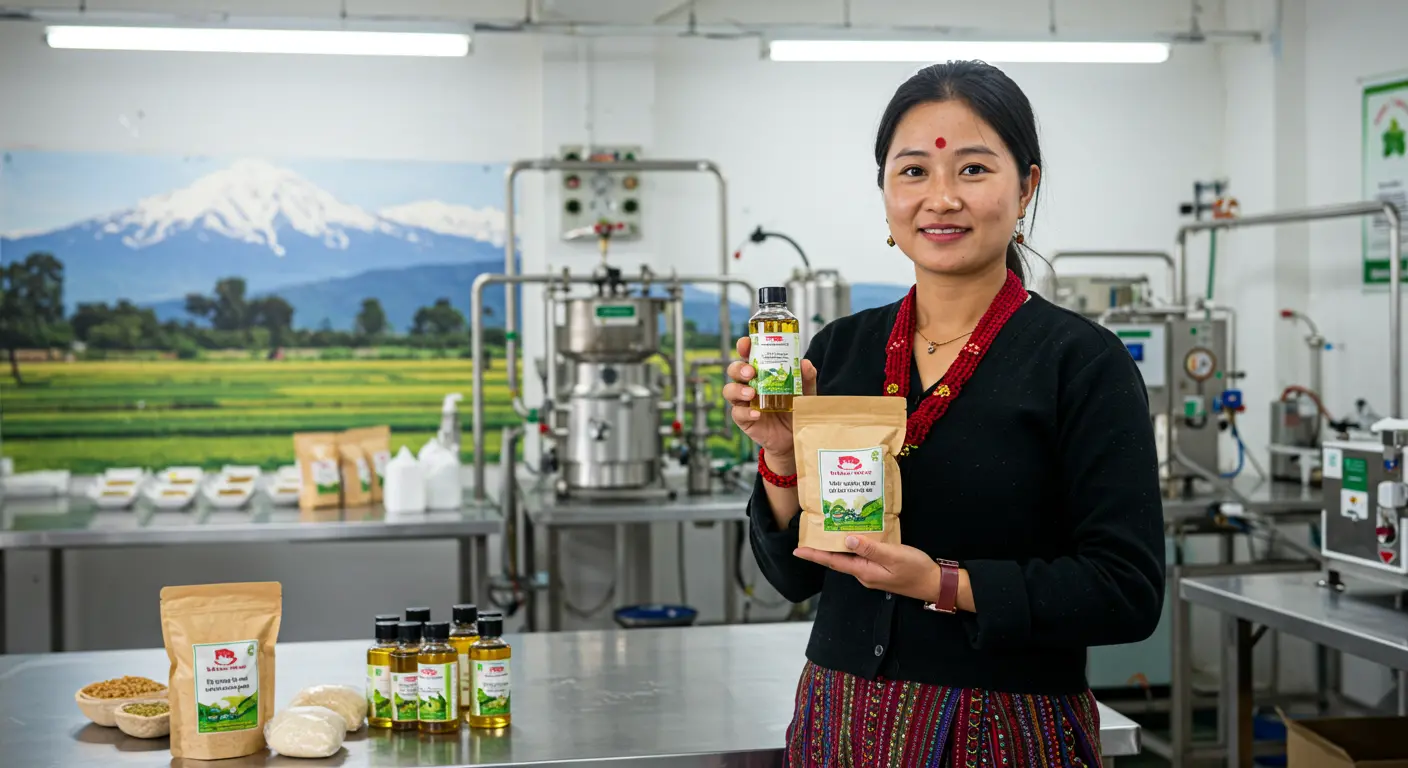
It is in this vacuum, where government institutions and big business often stand idle, that a quiet but powerful revolution is emerging. Its engines are social entrepreneurs and local community initiatives. This is a new generation of leaders who do not wait for help from above, but create sustainable, self-sustaining business models to solve the pressing problems of their communities.9Their approach is not just charity, but a response to a systemic failure. Interestingly, the mass migration of men for work, while a serious problem, has also become a catalyst for change. Left at the head of households, Nepalese women are taking on new responsibilities and increasingly becoming leaders in these grassroots innovations, turning social challenges into opportunities for self-empowerment.5These initiatives prove that solving the most complex problems sometimes requires not huge budgets, but a deep understanding of the local context, entrepreneurial courage and simple but brilliant ideas.
A Drop of Life: A Revolution in Access to Clean Water

The problem is the daily struggle for water
For many Nepalis, especially in rural and remote areas, access to clean water is not a given, but a daily chore. About 20-25% of the country’s population does not have access to safe drinking water.12People are forced to drink water directly from rivers, streams and ponds, which are often polluted, leading to outbreaks of diseases such as dysentery, typhoid fever and cholera.12In some families, water is supplied through the tap only once every three days, which is catastrophically insufficient for large families.13
This problem has not only a medical but also a profound social dimension. The burden of collecting water falls mainly on women and children, who are forced to spend up to three hours a day walking long distances over hilly terrain to bring water home.14It’s time stolen from education, work, and family. Every trip to fetch water is not only physically draining, but also a missed opportunity that perpetuates the cycle of poverty.
Heroes and their solutions – SmartPaani and Best Paani
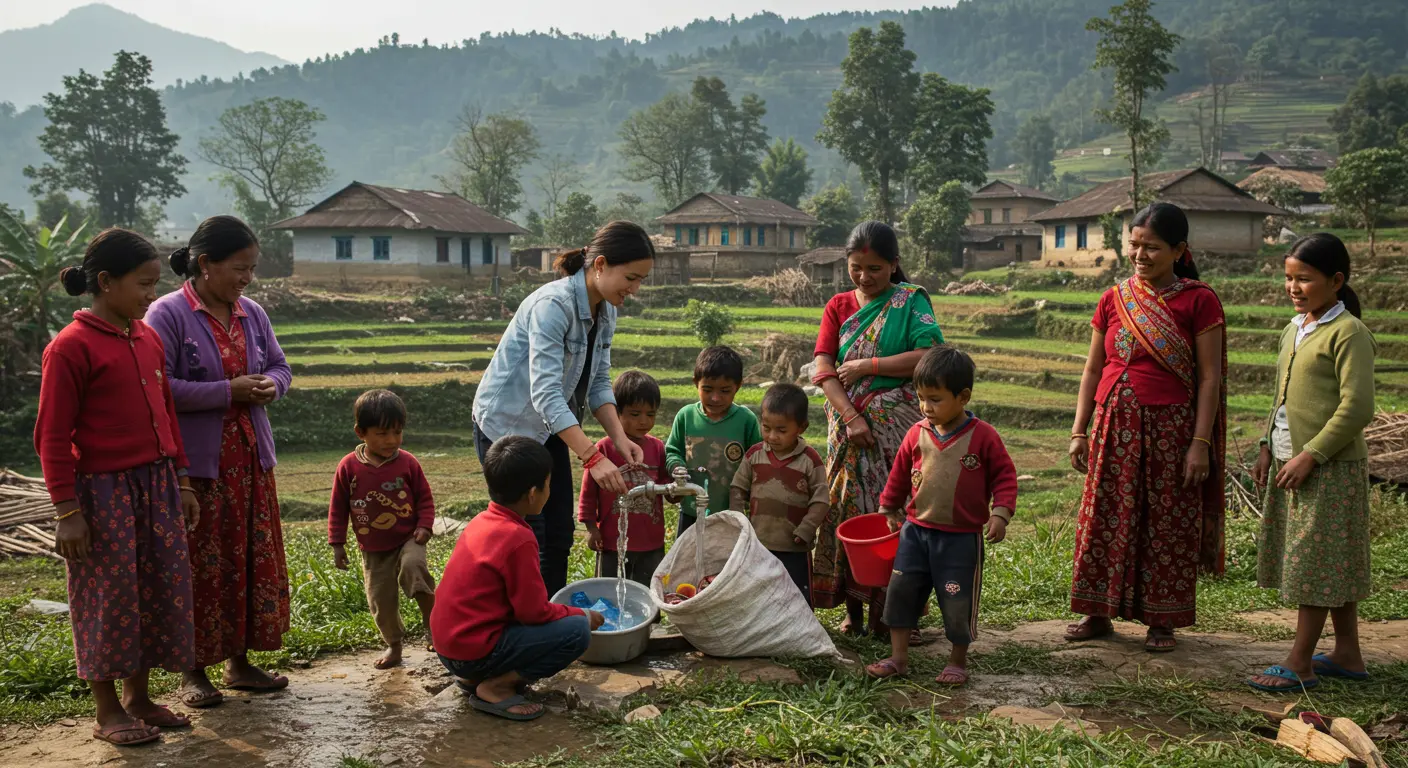
In response to this crisis, social enterprises like SmartPaani and Best Paani emerged, with founders who had personally experienced water scarcity and decided to make it their business. For example, Gokul Dangal, co-founder of Best Paani and a water engineer by profession, began installing rainwater harvesting systems for his family and friends after seeing the government’s water shortages.14His personal experience and technical knowledge formed the basis of the business model. Likewise, the founders SmartPaani was motivated by their own water difficulties and saw a gap in the market.16
The genius of their approach is the simplicity and accessibility of the technology. They use the time-honored method of collecting rainwater from rooftops, but improve it with multi-layered sand and gravel filters. These systems operate by gravity and require no electricity or chemicals, making them ideal for both urban Kathmandu and remote villages.14
However, the real innovation of these companies is not in the technology itself, but in the business model. Unlike many non-governmental organizations (NGOs), which often operate on a “set it and forget it” principle, SmartPaani and Best Paani have brought to the market a commercial product with a focus on long-term service.16They sell not just a filter, but a complete and reliable solution to the water problem, including installation, training and subsequent maintenance. This approach builds customer trust and ensures the sustainability of the enterprises themselves, turning them from temporary projects into full-fledged service providers.
Measurable impact is more than just clean water
The results of these companies are impressive. In three years of its activity, Best Paani has provided access to clean water for 300,000 people.14 SmartPaani has installed systems in over 4,000 households and 300 government schools in ten years, providing clean drinking water to over 75,000 students.16
But the numbers don’t tell the full story. Addressing the water problem sets off a chain reaction of positive social change that goes far beyond health care. When a home or school has a constant source of clean water, it changes the life of a community. Children, especially girls, no longer have to go on hours-long treks to fetch water.14Not only does this allow them to attend school regularly, it also significantly reduces the risks associated with such trips, including kidnapping and violence.14
Women are freed up to devote hours to education, paid work, housekeeping, or childcare. This directly contributes to the economic stability of the family and the role of women in society. Water projects are thus a powerful tool for the empowerment of women and children. They demonstrate that one simple innovation that addresses a basic need can become a catalyst for addressing a range of social issues, from education to gender equality.
Investing in the Future: New Approaches to Education

The problem is the “iron gates” of public schools
Nepal’s public education system is in deep crisis. For many children, it is an insurmountable barrier, popularly called the “iron gate” – this is what they say about the national exams after the 10th grade (School Leaving Certificate, or SLC). Statistics show a huge gap in the quality of education: if in 2015, 89% of private school graduates passed these exams, then among students of public schools, only 33% did so.17Considering that about 80% of all children in the country study in state institutions, this figure indicates a systemic catastrophe.18
The problem is exacerbated by a number of factors. Schools, especially in rural areas, are severely short of textbooks, notebooks and other basic resources.19Low living standards and high tuition fees mean that many families are forced to send their children to work instead of giving them an education.20In addition, access to quality education, especially vocational education, is severely limited due to deep-rooted gender and caste inequalities. The most vulnerable are girls and members of the Dalit caste (the “untouchables”), for whom the path to a decent education and career is often closed.8
Heroes and their solutions — Teach for Nepal and Canopy Nepal
In this difficult situation, organizations are emerging that offer innovative approaches to solving educational problems. Their goal is not just to patch holes in the system, but to change its very essence.

Teach for Nepal (TFN): Innovation in Human Capital.
Modeled after Teach for America, Teach for Nepal has a simple but powerful idea: It recruits the brightest, most motivated university graduates and young professionals to teach in the most challenging rural schools.21 These young people complete a two-year paid fellowship, becoming not just teachers but mentors and role models for their students.23
Their pedagogical innovation is to move away from outdated rote learning methods. TFN interns introduce modern approaches to classrooms: project-based learning, soft skills development (critical thinking, teamwork), and create makerspaces – creative workshops where children can learn by doing, working with electronics, tools and materials for handicrafts.23 They change the very atmosphere and culture of the classroom, making learning interactive and fun.17
Canopy Nepal: Holistic Approach.
Canopy Nepal believes that quality teaching alone is not enough to ensure a child’s success. They take a holistic approach, creating an ecosystem of support around each student from a vulnerable family.24 Their program includes not only educational stipends to cover basic needs, but also psychosocial support, nutritious nutrition, and active parental involvement in the educational process. This helps children not only learn, but also develop into confident, independent individuals.24
Influence – Creating a New Generation of Leaders
The impact of these initiatives is felt on several levels. For students, it is not just about improving their academic performance. Working with motivated and innovative teachers at TFN changes their outlook and life aspirations, instilling in them the belief that they can achieve more, regardless of their background.17The inspiring story of Sita Maya Tamang, a student from a rural school who, with the support of her TFN trainee teacher, was able to attend a prestigious college in Germany, is a vivid example of this.18
But the most powerful and lasting impact of Teach for Nepal is the creation of a unique network of alumni-interns. After a two-year “school of life” in the Nepalese countryside, these young leaders gain invaluable experience and a deep, unscriptural understanding of the root problems of their country.22After completing their internship, they do not leave the field of social change. On the contrary, they continue their mission in different areas: they go into politics, found their own social startups, work in business and non-governmental organizations.22
This is how a new generation of national elites is being formed – people who make decisions based not on abstract theories, but on real, hard-won experience. They know the challenges that ordinary people face and strive to find practical solutions for them. The personal stories of TFN graduates show how this experience transforms them and directs their careers to serve society.26 Thus, Teach for Nepal is more than just an educational program. It is a long-term investment in the country’s future, an incubator for leaders who can bring about systemic change from within.
From Waste to Profit: Transforming the Waste Industry

The problem is the garbage collapse and the caste of “untouchables”
The Kathmandu Valley, Nepal’s cultural and economic heart, is literally drowning in waste. Around 1,200 tons of garbage are dumped in the city’s landfills every day.28Up to 70% of this waste is valuable material that could be recycled. However, Nepal has virtually no modern waste management industry; waste is mostly simply transported from one place to another, creating an environmental hazard and polluting rivers.28
This problem also has a sharp social dimension. The work of collecting recyclable materials is traditionally considered “dirty” and low-status. It is carried out mainly by representatives of marginalized social groups, popularly called “khaalisisi”. Their work is vital to the city, but they face deep social stigma and disrespect. Many waste collectors are not allowed into homes, they are treated with disdain, and their contribution to maintaining cleanliness goes unnoticed and unappreciated.30
Heroes and their solutions – Khaalisisi and Biocomp Nepal
It is this dual problem – environmental and social – that new social enterprises are addressing by offering innovative approaches to waste management.
Khaalisisi: Digital Revolution in the Informal Sector.
The story of Khaalisisi is the story of its founder, Aayushi KC. She left a prestigious and well-paid job at the United States Agency for International Development (USAID) to found what many thought was a “garbage” startup.30 Her idea to connect garbage collectors and citizens through digital technology initially drew laughter and disbelief.31
The core of Khaalisisi’s innovative model is simple and ingenious. It is a digital platform – a website and a mobile app – that functions as an “Uber for waste.”32 It directly connects households, offices, and institutions (recycling vendors) with their nearest informal waste pickers.32 The key innovation here is thatKhaalisisi is not trying to create a new, parallel system from scratch. Instead, the platform digitalizes, organizes and empowers an existing informal network of collectors, making their work more efficient, predictable and profitable. This is a perfect example of adapting modern technologies to local realities.
Biocomp Nepal: Technological Innovation.

Biocomp Nepal, founded by a group of enthusiasts from the Netherlands, took a different approach.34 They started by solving the biggest problem – recycling organic waste, which makes up over 70% of all garbage – and started producing compost for farmers.34 They then took on the biggest challenge – recycling low-grade plastics such as bags, film and wrappers. This type of plastic is almost never collected and is the main polluter of streets and rivers.34Biocomp has developed a technology that enables this “useless” waste to be transformed into new products, such as durable boards suitable for construction, thus creating a complete “waste-to-goods” production chain.10
Influence – creating industry and dignity
The impact of these projects is enormous. In economic terms, they create new value from what was previously considered waste. Thanks to the Khaalisisi platform, recyclers have been able to increase their income by an average of 32-35%.28 Biocomp and companies like it are laying the foundation for a completely new recycling industry in Nepal.
But perhaps even more important is their social impact. These projects are changing the very perception of the waste-picking profession. Khaalisisi has consciously eschewed the stigmatizing word and called its waste-picking partners “Khaalisisi Friends.”36This simple act of rebranding, supported by digital tools and increased revenue, has dramatically changed both how workers perceive themselves and how society views them.37

Work that was previously considered shameful becomes a source of pride and awareness of one’s important contribution to the cleanliness of the city and the protection of the environment.30Deep-rooted social and caste prejudices are being broken down slowly but surely. Thus, innovation Khaalisisi is not only in mobile app or logistics, but also in social engineering: changing the status, dignity and economic opportunities of an entire social group through a well-thought-out business model.
An Ecosystem for Change: What Does It Take to Generate More Brilliant Ideas?
Common features of success
An analysis of successful social enterprises in Nepal, working in areas as diverse as water, education and waste management, reveals common themes across their innovative approaches. These initiatives demonstrate how a deep understanding of local issues, coupled with a sustainable business model, can lead to significant social and economic transformation.

Barriers to Scaling
Despite impressive successes of individual projects, the social entrepreneurship ecosystem in Nepal faces significant barriers that hinder its growth and scaling.

Lack of legal basis: This is perhaps the biggest challenge. Nepalese law still lacks a clear legal definition or special status for a “social enterprise.” As a result, these organizations are forced to exist in a “gray zone” between non-profit NGOs and traditional for-profit companies. This uncertainty creates confusion over taxation, regulation, and reporting, which significantly complicates their operations and hinders their development.38
Access to funding: The hybrid nature of social enterprises creates a “valley of death” for them when it comes to finding capital. Traditional investors are focused on maximizing profits and are often unwilling to invest in projects with a strong social mission. On the other hand, charities and donors prefer to fund purely non-profit initiatives. Social enterprises, which strive to be self-sufficient and simultaneously provide social good, often do not fit into either category.39Although there are international grants and funds that support social entrepreneurship, access to them for Nepalese startups is difficult due to high competition and complex application procedures.41
Changing your thinking: The third major barrier is the inertia of public consciousness. Social entrepreneurs have to contend not only with technical or financial difficulties, but also with established stereotypes and disbelief in new approaches.40Convincing people to pay for services they have come to regard as free (such as waste disposal) or the responsibility of an ineffective government is a difficult task that requires time, patience, and a great deal of education and behavior change.43
Conclusion: Lessons from Nepal – Innovation as Hope
Nepal’s experience is not just a collection of inspiring success stories. It is a living laboratory that clearly demonstrates how, in the context of a weak state and the inefficiency of traditional market mechanisms, grassroots initiatives born within society itself can become the main driver of development and positive change.44
The key takeaway from the analysis of Nepalese social startups is that true, disruptive innovation in the context of a developing country is not so much about cutting-edge gadgets or sophisticated technologies, but rather innovations in business models and social relations. The genius of Khaalisisi is not in the app code, but in its ability to empower an informal network and restore dignity to its workers. The strength of Teach for Nepal is not in its interactive whiteboards, but in creating a pipeline of leaders who understand their country. The success of SmartPaani is not in the uniqueness of its filter, but in creating a sustainable service model that inspires trust.
The quiet revolution taking place in Nepal today demonstrates a universal and profoundly important principle: what is often needed to solve the biggest and most complex problems is not the biggest budgets, but a deep, empathetic understanding of the local context, entrepreneurial courage, and an unwavering belief in the potential of the community itself. This is a valuable lesson that not only developing countries, but also developed countries around the world, can and should learn as they seek new paths to a sustainable and equitable future.
Source used
- Country Information Nepal | Travel Tips
- Economy of Nepal – Wikipedia
- Economy of Nepal: Agriculture, Energy, Tourism
- National Economy in the Context of the World Economy / Nepal / Political Atlas of Modernity
- How the spouses of Nepalese migrant workers survive
- POLITICAL ECONOMIC JUSTIFICATION FOR THE PEOPLE’S WAR IN NEPAL
- Society and Culture of Nepal
- Gender and Caste Issues of Access to Vocational Education in Nepal Scientific article text on the subject
- How Social Entrepreneurship Helps Regions Develop
- Biocomp Nepal Pvt. Ltd – PLEASE Project
- WASH and NTD action for social justice in Nepal
- Living Water Nepal | Chuffed | Non-profit charity and social enterprise fundraising
- There are snow-covered mountains and raging rivers… But there is no drinking water in the capital of Nepal
- SOCIAL ENTREPRENEURSHIP BLOG SERIES … – Bikas Udhyami
- Nepal – Neverthirst
- SmartPaani: Rainwater Harvesting System as a Social Business …
- The Student Experience of Teach for Nepal (TFN) Fellows’ Classrooms
- annual report 2020/21 – Teach For Nepal
- No computers and fresh air. How they study in Nepal – Tina Kandelaki
- Child labor in Nepal – Wikipedia
- Teach For Nepal Fellowship 2025 – Merojob
- Teach for Nepal – Edusanjal
- TEACH FOR NEPAL – Playful Engineering-Based Learning
- Canopy Nepal – HundrED.org
- Swastika Shrestha – Teach For All
- TFN Alumni – Teach For Nepal
- WHY I Joined Teach For Nepal? : Nimmi
- Khaalisisi – UNESCO
- Interview with AAYUSHI KC, Founder & CEO of Khaalisisi – StartupXs
- Waste Management Process – Analysis – AIM2Flourish
- Aayushi KC: The Laxman Rekha | TED Talk
- Khaalisisi – Recycling Starts Here
- Khaalisisi Sec-B | PDF | Recycling | Waste Management – Scribd
- What we do — Biocomp Nepal
- Ms. Aayushi KC – Nepal Infrastructure Summit | A Flagship Event In Nepal
- Khalisisi.com – SlideShare
- From Waste to Worth: Maya’s Impact on Waste Sector – PIN Nepal – People in Need
- Social Enterprises and Social Entrepreneurship – PocketHost
- Challenges of Social Enterprises in Developing Country: Evidence from Nepal
- SOCIAL ENTREPRENEURSHIP – WHY DOES IT MATTER? – Business 360°
- 10 Key Grant Programs That Support Social Enterprises in Developing Countries
- Latest Grants and Resources in Nepal – fundsforNGOs
- social entrepreneurship in nepal
- Social Innovation for Nepal – myRepublica