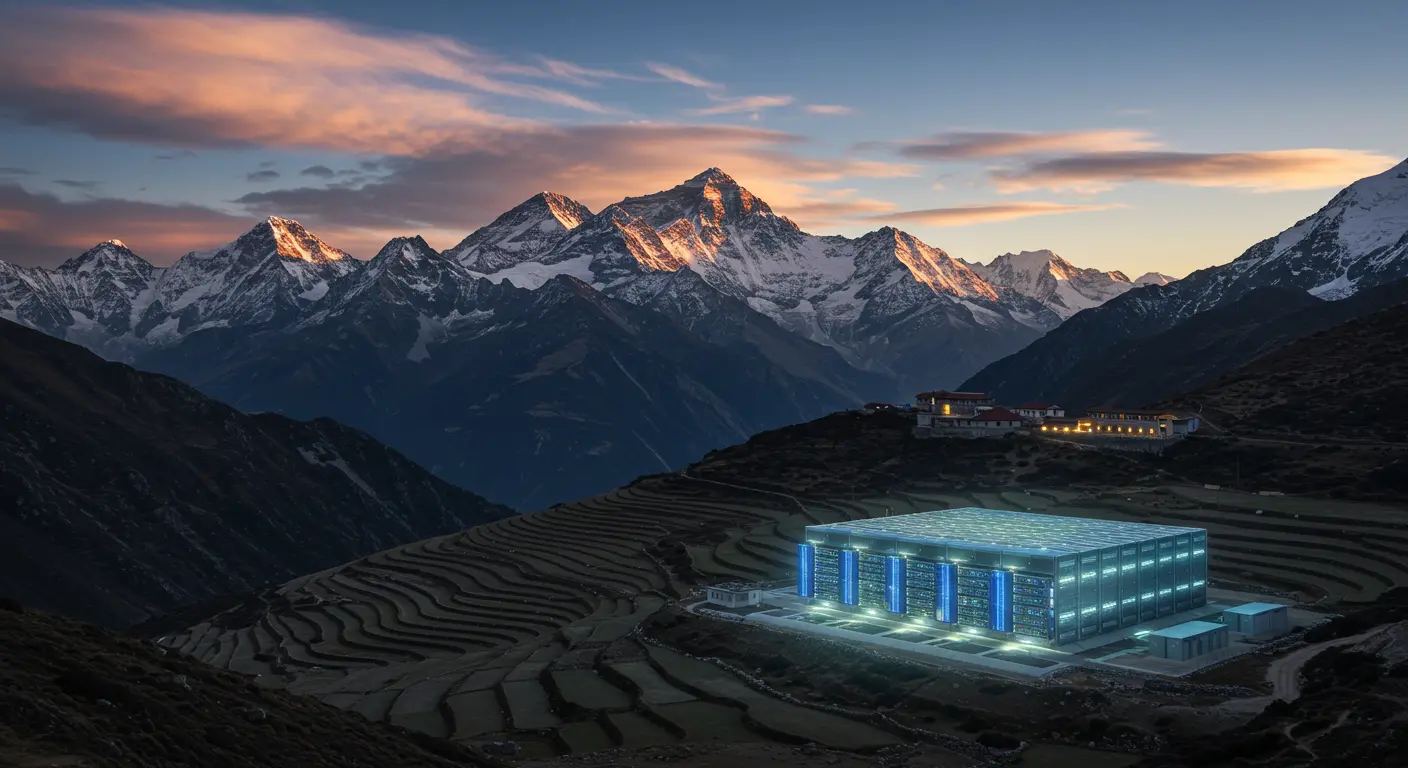
Imagine a tourist standing at the foot of Everest who has just taken a photo and instantly sent it to his friends via a 4G network.1This image, which until recently seemed like a fantasy, now reflects the astonishing reality of Nepal. The country, sandwiched between the world’s highest peaks, is making an impressive technological leap that experts call “leapfrogging.”
The essence of this phenomenon is simple: instead of consistently going through all the stages of technological development, as industrial countries did, developing countries skip over outdated and expensive technologies, immediately introducing the most modern solutions.2A classic example is the abandonment of expensive landline telephone lines in favor of the rapid deployment of mobile communications.3
Nepal has become one of the most striking examples of this “leapfrogging.” The country has turned its geographic and infrastructural limitations into a unique advantage, becoming a real testing ground for innovation based on a “mobile-first” approach — when mobile technologies become the main, not secondary, channel for the delivery of services. From finance and healthcare to education and government services, a mobile phone in the hands of a Nepali has become the key to a new digital era.
Foundation for Innovation: Mobile Communications as a National Idea
Nepal’s technological leap is less a matter of choice than of geographic and economic necessity. The country’s rugged mountainous terrain makes laying traditional infrastructure, such as copper cables for phones or fiber optics for the internet, extremely difficult and uneconomical.1In such conditions, mobile networks that only require the installation of towers have become not just the best, but the only real solution for providing communication in remote villages.1Thus, what was a limitation turned into a strategic advantage, allowing the country to avoid investing in outdated technologies and move straight to 21st century standards.

The results of this strategy are impressive. Today, Nepal is a country where the mobile phone has become an integral part of life.

These figures show that the market for digital services not only exists, but is huge. Mobile penetration of over 124% means that many people have multiple SIM cards.1Almost everyone who uses the Internet does so through mobile devices.6
Both private and public initiatives are behind this growth. Telecom giants such as state-owned Nepal Telecom and privately owned Ncell are competing hard to expand 4G coverage even in hard-to-reach tourist areas and are preparing to launch 5G networks.1Ncell, for example, has also joined the global initiative to ensure digital inclusion for people with disabilities.7
This process is supported at the highest level. The Nepalese government has adopted the Digital Nepal Framework strategy and declared the period from 2024 to 2034 as the “IT Decade.” The goals are ambitious: to create 1.5 million jobs in the IT sector and increase the export of IT services to 3 trillion Nepalese rupees (about 22.5 billion US dollars).5This proves that Nepal’s mobile leap is not a spontaneous phenomenon, but a deliberate government policy.
Revolution in Every Pocket: Transformation of Sectors
The ubiquity of smartphones and affordable mobile internet created a unique environment in Nepal. It dramatically lowered the barriers to entry for entrepreneurs and innovators. They no longer had to convince people to adopt the new technology – the audience was already there. The success of the first mobile apps proved the viability of this model and set in motion a self-sustaining flywheel of innovation: successful services stimulated the emergence of new players in other sectors, which in turn integrated mobile technologies even more deeply into everyday life.
Finance without cuts
In the financial sector, mobile wallets such as eSewa and Khalti have revolutionized the world of finance. These have become household names in Nepal.9eSewa, being a pioneer in the market, set the tone for the entire industry.10Today, Nepalese can pay for almost everything with their smartphones: from an electricity bill, receiving a small cashback, to a cup of tea at a street stall, simply by scanning a Khalti QR code.9These apps are used to buy movie tickets, book seats on buses, and make online purchases.9

This shift to digital payments has a deeper economic impact, too. It is boosting small businesses — for example, a craftsman in the tourist city of Pokhara can now easily accept payments from foreign tourists.9In addition, digital transactions leave a trace, which increases transparency and reduces corruption risks, facilitating the inclusion of the population in the formal economy.9The sector’s growth has not gone unnoticed: Nepal Rastra Bank has introduced new regulations to protect users and ensure system stability, requiring providers to strengthen cybersecurity and develop business continuity plans, indicating the maturity of this ecosystem.12
Health without borders
For Nepal, where most specialist doctors are concentrated in cities and rural areas suffer from a shortage of qualified care, telemedicine has become not just a convenience, but a vital necessity.4Mobile applications have literally erased geographical boundaries, providing access to medicine from anywhere in the country.

Platforms like Mero Doctor, Hamro Doctor and Cura Health have become extremely popular.14They offer a wide range of services:
- Video consultations: Patients can receive consultation from a cardiologist, pediatrician, psychiatrist or other specialist without leaving home.17
- Digital recipes: Following the consultation, the doctor can issue an electronic prescription, and some services, such as Mero Doctor, offer a free follow-up visit within 7 days for clarification.16
- At-home lab tests: The Cura Health app allows you not only to order home testing, but also to compare prices for services in different laboratories.14
- Huge database of doctors: Hamro Doctor platform has thousands of verified doctors registered with Nepal Medical Council and offers consultations in dozens of specialties.17
The government has also recognized telemedicine as a strategic priority, launching projects to create teleconsultation centers that link rural health centers with specialists in city hospitals.4
Education for all
Mobile technologies have also democratized the education sector, making knowledge accessible and affordable. The Digital Pathshala platform, for example, offers professional IT courses in such popular areas as Python or MERN Stack, starting at just 999 Nepalese rupees (about $7.5).20
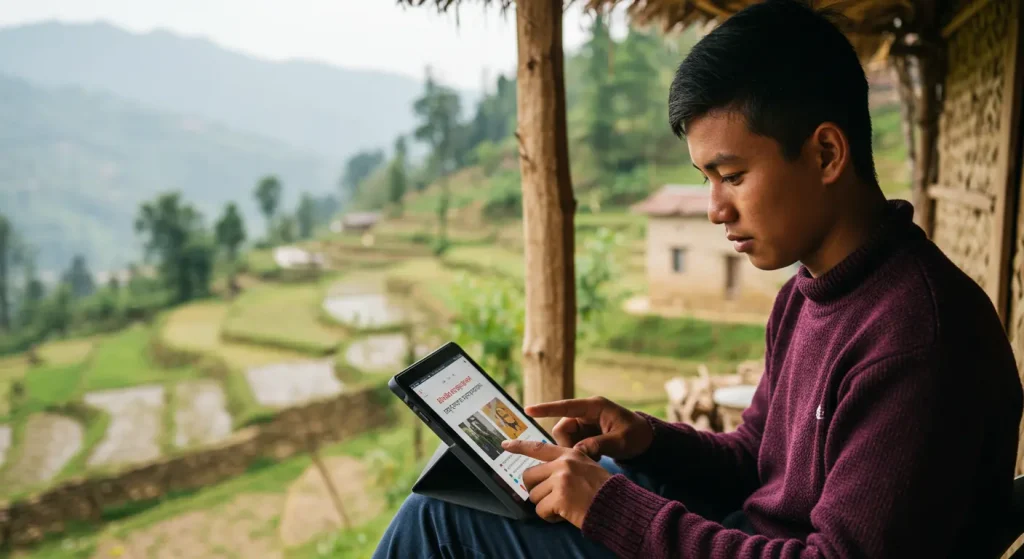
There are many platforms on the market, targeting different audiences:
- Mero School offers courses for students in all grades (1st through 12th), exam preparation materials, and skill development courses such as foreign language learning or graphic design.21
- mySecondTeacher — is an interactive platform with thousands of video lessons and tests, fully compliant with the national school curriculum and designed to help both students and teachers.22
- NepalEdu aims to provide free access to quality educational resources, especially for children in remote and rural areas of Nepal.23
User feedback confirms the real impact of these platforms. Students report that they have improved their understanding of complex topics and are more successful in preparing for exams, while parents appreciate the opportunity to receive support for their children’s learning.20
The state in a smartphone
The Nepalese government has also jumped into the digital race with the launch of its flagship app, Nagarik App (meaning Citizen). Its main goal is to free citizens from bureaucratic hurdles, long queues, and visiting multiple departments to obtain a single certificate.24

Through Nagarik App, you can access key government services:
- Personal documents: View and access digital versions of your ID card, passport, driver’s license and voter card.25
- Taxes and fees: Register your Personal Tax Number (PAN), view your tax payment history and pay your vehicle tax online.25
- Social funds: View personal pension fund (PF) and citizen investment trust (CIT) account statements.25
- Other services: Obtaining a certificate of no criminal record, pre-registering for a COVID-19 vaccination, and even filing complaints with the police.25
The success of the app has been recognized internationally – in 2022, Nagarik App won the prestigious World Summit Award in the Government and Citizen Engagement category.25However, to complete the picture, it is worth noting that users often complain about technical failures and slow operation of the application, which indicates the need for its further improvement.27
Challenges on the way to a digital future
Despite the impressive successes, behind the high penetration rates of mobile internet there is a serious problem – the “digital divide”.6Nepal’s biggest battle for its digital future is no longer on the connectivity front, but on the meaningful use of technology. The challenge has shifted from simply having a SIM card to the ability, affordability and quality of using digital services.
This gap has several dimensions:
- Digital Literacy: While the country’s overall literacy rate is around 71%, digital literacy remains significantly lower.29Many people, especially in rural areas and among the older generation, do not have the skills to effectively use smartphones and apps.30The shortage of qualified IT specialists is felt even in government agencies.29
- Infrastructure problems: Reliability remains a weak point. Frequent power outages and unstable internet connections, especially in rural areas, undermine the effectiveness of telemedicine, online learning, and other digital services.31
- Social inequality: The digital divide is clearly visible between the city and the countryside.32It also has a gendered dimension: for many women, simply owning a phone does not mean full access to digital opportunities due to cultural constraints, lack of skills or financial dependence.33
- Bureaucratic barriers: The implementation of major government digital projects is slow. For example, the World Bank’s Digital Nepal Acceleration project, aimed at accelerating digitalization, was rated “unsatisfactory” due to serious delays in its implementation.34
The Next Stage of Nepal’s ‘Leap’
Nepal has come a long way in turning its geographic weaknesses into technological strengths and making an impressive mobile leap. But the work is far from over. Digital transformation is not just a tech fad for the country, but a key element of the national economic strategy. With the economy heavily dependent on remittances from migrant workers, developing the IT sector is vital to creating high-skilled jobs and diversifying income sources.35This is especially relevant in light of Nepal’s upcoming graduation from the Least Developed Country (LDC) category, which will entail the loss of trade preferences.35
International partners see Nepal’s digitalization as a key to its future prosperity. The World Bank has committed $140 million to the Digital Nepal Acceleration project, and the Asian Development Bank has unveiled a new five-year, $2.3 billion support strategy that includes digitalization as a key priority.37
The future of digital Nepal, including the upcoming rollout of 5G networks, looks promising.1But its success will depend on the delicate balance and synergy between a dynamic, innovative private sector and effective public policies that address the remaining barriers – from improving digital literacy to ensuring a stable electricity supply in the most remote village. How harmoniously this tandem works will determine whether Nepal can take the next, even more ambitious leap in its development.s speak with a distinct local accent.d restore hope for the future of its citizens in their native land.
[elementor-template id=”1573″]
Sources used
- High-Speed Himalayas: Inside Nepal’s Race to Connect Every Peak …
- NGO Leapfrogging: bridging the technological divide
- en.wikipedia.org
- Potential Of Telemedicine In Nepal
- Getting a Job in Tech in Nepal in 2025: The Complete Guide
- Nepal’s persistent digital divide: From high penetration to inclusion
- Ncell becomes Nepal’s first telecom to join GSMA inclusion drive
- Digital health system in Nepal
- Nepal’s Cashless Future: The Rise of Digital Payment Systems
- SWOT Analysis of eSewa: What to Know in 2025
- Digital Financial Services in Nepal
- How NRB’s New Directive Impacts Khalti, Mobile Banking, and Digital Nepal
- Telemedicine in Nepal
- Curahealth.org: Nepal’s Leading Online Telemedicine App
- Hamro Doctor – Apps on Google Play
- Mero Doctor | Online Appointment Booking , Online Ticket Reservation
- Consult Online with top doctors from Nepal
- Consult Top Doctors Online For Any Health Concern – Mero Doctor
- First Online Healthcare Service Provider from Nepal
- Digital Pathshala | Nepal’s Largest Online Learning Platform
- Mero School Nepal | Best Online Learning Platform in Nepal
- Online Learning Platform in Nepal | mySecondTeacher, Nepal
- NepalEdu | Free Education For All | Online classes
- Nagarik App on the App Store
- Nagarik App – Wikipedia
- Nagarik App
- Nagarik App on the App Store (US)
- Nagarik App – Apps on Google Play
- Digital Governance in Nepal: Challenges, Progress & Future Insights
- Digital Literacy in Nepal: Bridging the Gap
- Challenges and opportunities for implementing digital health interventions in Nepal: A rapid review
- Bridging the digital divide in Nepal
- Connecting the Unconnected: Bridging the Digital Divide through Grassroot Initiatives in Sri Lanka and Women’s Empowerment in Nepal
- Digital Nepal Acceleration (DNA) Project (P176543) – World Bank Documents and Reports
- Nepal: World Bank Report Outlines Key Reforms to Boost Growth, Create Jobs
- ADB Launches New 5-Year Strategy for Economic Transformation in Nepal
- World Bank approves $140m for Nepal’s digital transformation
- ADB unveils $2.3 billion plan to boost green, job-rich growth in Nepal