Hidden high in the Himalayas, on pristine, sun-drenched slopes, lies Nepal’s untapped treasure. It’s not precious stones or metals, but something far more valuable in the 21st century: “green gold.” We’re talking about hundreds of species of medicinal and aromatic plants (MAPs), many of which are found nowhere else on the planet. For centuries, local communities have collected these herbs, using them in Ayurvedic and Tibetan medicine or selling the raw materials for next to nothing to middlemen. Now, amid a global boom in all things organic, natural, and healthy, this sleeping giant is ready to awaken.
The global market for wellness, organic cosmetics and natural medicines is worth hundreds of billions of dollars and continues to grow exponentially. The modern consumer in Europe, North America or Japan is looking for more than just a product, but a story. He wants to know where the grass for his tea grew, who picked the flowers for his essential oil and whether the planet was harmed in the production of his cream. And here Nepal gets a unique, almost monopolistic competitive advantage. “Made in the Himalayas” is no longer just geography. It is a powerful brand, synonymous with purity, spirituality and pristine nature.
However, the lion’s share of this “green gold” still flows out of the country in the form of unprocessed raw materials, leaving only crumbs of the real market value in Nepal. The real profit, amounting to millions of dollars, is formed at the following stages: processing, certification, branding and direct access to the end consumer.
This article is not just a market overview. It is a detailed step-by-step guide for a forward-thinking entrepreneur who is ready to build a modern, vertically integrated and highly profitable business. We will tell you how to turn Nepal’s unique natural resources into a product that is in demand on the global market, creating value not only for yourself, but also for local communities and the entire country.
Assessing the Opportunity: Why Now and Why Nepal?

Before investing time and resources, it is important to understand the scope of the potential. Three key factors make the timing perfect for starting a business in this niche.
1. Global Market Boom
The demand for natural products is experiencing an unprecedented rise.
- Essential Oils Market: is projected to reach $15-$20 billion by 2026, growing at a CAGR of 7-9%. The main drivers are growing use in aromatherapy, cosmetics and food products.
- Herbal Medicines Market: is valued at over $150 billion and is expected to exceed $350 billion by 2028. Consumers are increasingly choosing natural alternatives to synthetic drugs for the prevention and treatment of non-critical conditions.
- Organic cosmetics market: Growing by 8-10% per year. Consumers are willing to pay a premium for products without parabens, sulfates and synthetic fragrances, preferring natural oils and extracts.
The key trend that unites all these markets is transparency and certification. The modern consumer wants to see “USDA Organic”, “EU Organic” or “Fair Trade” on the label. He is willing to pay more for a product whose origin can be traced back to a specific farm in the mountains of Nepal.
2. Nepal’s Unique Selling Proposition
Nepal is not just another country for agribusiness. Its USP is unique and difficult to copy.
- Phenomenal biodiversity: With an altitude difference of 60 meters above sea level to 8,848 meters, Nepal has over 7,000 species of flowering plants, of which over 700 are recognized as medicinal. Many of them, such as Yarsagumba or Jatamansi, are endemic.
- The Power of the Himalaya Brand: As already mentioned, this is a powerful marketing tool. A product grown in the “ecologically clean conditions of the Himalayan foothills” is automatically perceived as higher quality and more valuable.
- Rich traditional knowledge: The centuries-old traditions of Ayurveda and Tibetan medicine (Amchi) are not just folklore, but a ready-made knowledge base about the uses and properties of local plants that can and should be used in product development and marketing.
- Support at the state level: The Nepalese government recognizes the potential of the LAR sector and periodically launches programs to support farmers and exporters, although their effectiveness may vary.
3. Low Competition at the Processing Level
Today, the market in Nepal is fragmented. It consists of thousands of small farmers, wild plant collectors and small resellers. There are only a few companies that would build a complete chain from cultivation to the creation of a branded final product and its export. This means that the niche for creating a modern, technological and export-oriented enterprise is practically free.
Choosing a Product Niche: Top 5 High-Value Plants to Start With
Don’t try to cover everything at once. The key to success is to focus on 2-3 plants with high market potential. Here are five proven options that can become the basis of your business.
1. Jatamansi (Nardostachys jatamansi / Himalayan Nard)
- What is this: A perennial plant growing at altitudes of 3000-5000 meters.
- Value: Its roots yield one of the most prized essential oils in aromatherapy. Jatamansi oil is known for its deep, calming, and grounding aroma. It is used in luxury perfumes, stress relief products, meditation blends, and hair care products.
- Market: Demand is consistently high, especially in Europe and North America. The price for 1 kg of pure essential oil can reach $500 – $1000 and more.
- Peculiarities: It is under threat of extinction due to uncontrolled collection of wild plants. Therefore, a business based on sustainable cultivation, rather than collecting, will receive a huge competitive advantage and support from environmental organizations.
2. Tea Tree (Melaleuca alternifolia) / Lemongrass (Cymbopogon flexuosus)
- What is this: These plants are ideal for starting out as they grow well at lower altitudes (foothills and Terai) and are relatively easy to grow.
- Value: They provide a large volume of essential oil that is in high demand. Tea tree oil is a powerful natural antiseptic. Lemongrass is a popular ingredient in cosmetics, household chemicals, and the food industry due to its fresh citrus aroma.
- Market: Mass market. The price per kilogram of oil is lower than that of jatamansi (for example, $40-$80 for lemongrass oil), but this is compensated by the high yield of the product and stable demand.
- Peculiarities: An excellent “entry ticket” into the business. Allows you to practice distillation technology and establish distribution channels before moving on to rarer and more expensive plants.
3. Palmarosa (Cymbopogon martinii)
- What is this: A herbaceous plant related to lemongrass.
- Value: Its essential oil has a delicate floral-rose aroma, which is why it is often used as a cheaper alternative to rose oil in cosmetics and perfumery. It has excellent moisturizing and antiseptic properties.
- Market: Stable demand from major cosmetic brands around the world.
- Peculiarities: Like lemongrass, it is easily cultivated, making it attractive for commercial cultivation.
4. Chamomile (Matricaria chamomilla / Chamomile)
- What is this: A well known plant that can be successfully cultivated in Nepal.
- Value: Blue chamomile essential oil (contains chamazulene) is one of the most expensive and sought-after products on the market. It is used in premium cosmetics for sensitive skin, baby products and medicinal ointments due to its powerful anti-inflammatory properties.
- Market: The demand is particularly high organically certified chamomile in Germany and the USA. The price for 1 kg of oil can exceed $1000 – $1500.
- Peculiarities: Growing requires careful care, but the potential profits are enormous.

5. Winter grass (Gaultheria fragrantissima)
- What is this: An evergreen shrub native to the foothills of the Himalayas.
- Value: The leaves are a natural source of methyl salicylate, the main component of many pain-relieving and warming ointments and balms.
- Market: Constant demand from the pharmaceutical industry and manufacturers of sports goods.
- Peculiarities: It is of interest as a source of raw materials for the production of not just essential oil, but a specific active component.
Step-by-Step Launch Plan: From Field to Export Contract
This is the most important section. We will break down the entire process into seven sequential and clear steps.
Step 1: Deep Research and Niche Selection
Don’t try to grow everything. Focus. Choose 1-2 main plants and maybe one additional one. Analyze the market: who is the end buyer of your future product? Will it be a large cosmetic brand in Europe that needs a certified organic extract? Or a retail buyer in the US who searches online for oil for an aroma lamp? The answer to this question will determine your entire further strategy.
Step 2: Land Use Model – Strength in Community
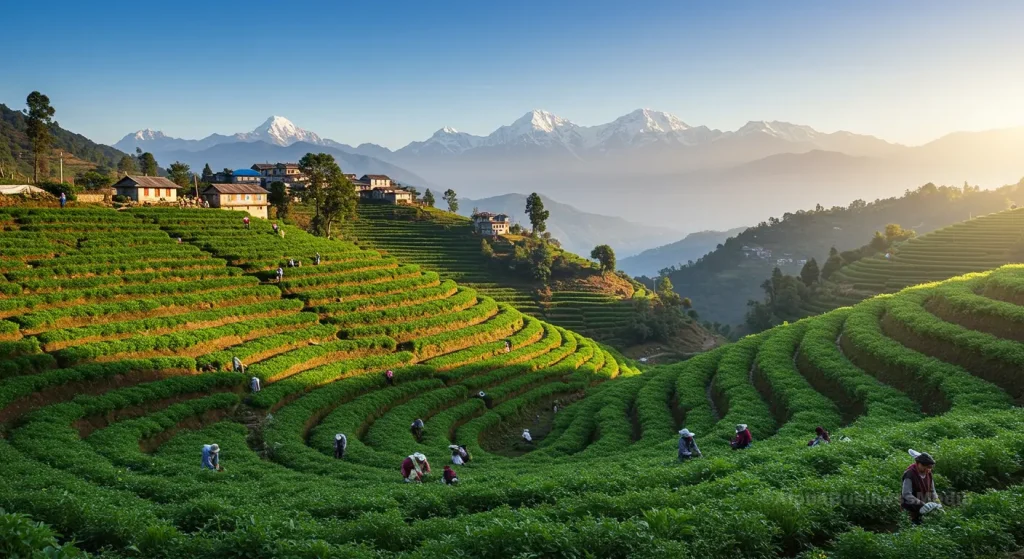
You have two options: rent or buy a large plot of land, or go the smarter, more sustainable route of the Community Farming model. Our recommendation is definitely the second option. The essence of the model is that you do not hire workers, but become a partner for an entire village or group of farmers.
How does this work:
You provide farmers with quality seeds/seedlings, provide training on organic farming methods and, most importantly, guarantee the purchase of the entire harvest at a pre-agreed, fair price.
Your benefits:
- Scalability: It is easy to increase the area under cultivation by involving new households.
- Social responsibility: It’s a powerful marketing trump card. “By purchasing our product, you support 50 farming families in a remote area of Nepal” – that’s the story that sells.
- Loyalty and quality: Farmers who are confident of sales will be more motivated to comply with the technology.
- Organic certification: It is much easier to certify an entire community than dozens of scattered sites.
Step 3: The Heart of the Business – The Recycling Facility
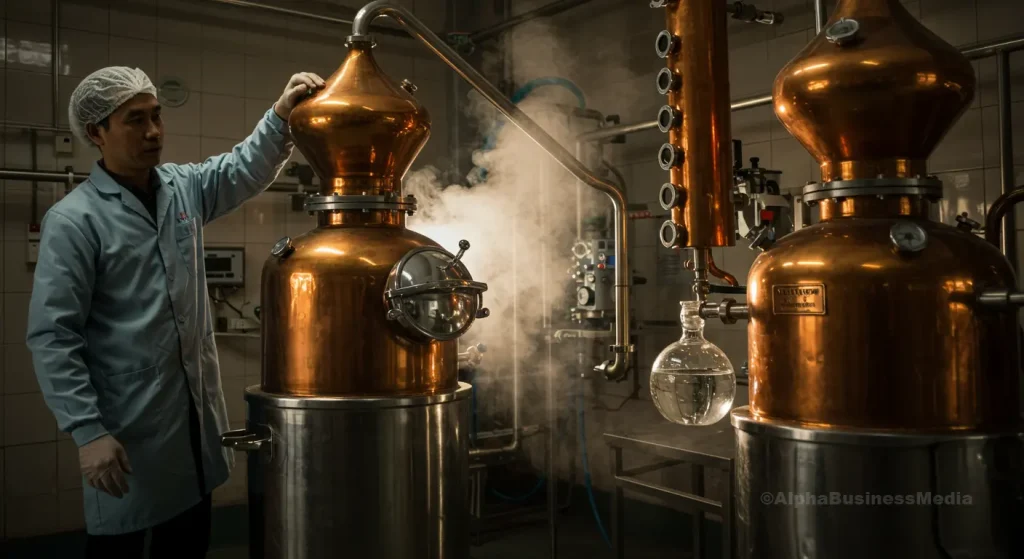
This is where the added value comes in. You will need your own distillation plant or one located nearby.
Equipment:
A stainless steel distiller with a capacity of 200-500 liters is enough to start. The most common method is steam distillation. The equipment can be ordered in India or local manufacturers can be found.
Location:
The installation should be as close to the fields as possible, as many plants (such as chamomile) need to be processed within a few hours of harvesting to avoid losing valuable components.
Energy:
Consider an independent power source: a diesel generator or, preferable for an organic brand, solar panels.
Step 4: Quality Control and Laboratory

Quality is your greatest asset.
Field control:
Develop clear instructions (SOPs) for farmers: when to harvest (time of day matters!), how to dry raw materials correctly.
Laboratory analysis:
To enter serious markets, you will need a Certificate of Analysis for each batch of oil. The main analysis is gas chromatography/mass spectrometry (GC-MS), which shows the exact chemical composition of the oil. At the start, you can use the services of laboratories in Kathmandu or send samples to India / Europe. In the future, it is worth considering purchasing your own, albeit used, chromatograph.
Step 5: Certification – Your Passport to the Global Market
Without this step, you will only be able to sell your product to your local market or resellers.
Organic Certification (USDA, EU):
Start the process from day one. Invite an inspector from the certification body (Ecocert, Control Union) at the stage of soil preparation. The process takes time (up to 3 years for the “transition period”), but the result will pay off all the costs many times over. A certified product costs 30-100% more.
Good Manufacturing Practices (GMP):
This certificate confirms that your production meets cleanliness and safety standards. Mandatory when working with cosmetic and pharmaceutical companies.
Fair Trade:
Fair Trade certification. Ideally complements the community farming model and is highly valued by European consumers.
Step 6: Branding and Packaging – Tell Your Story
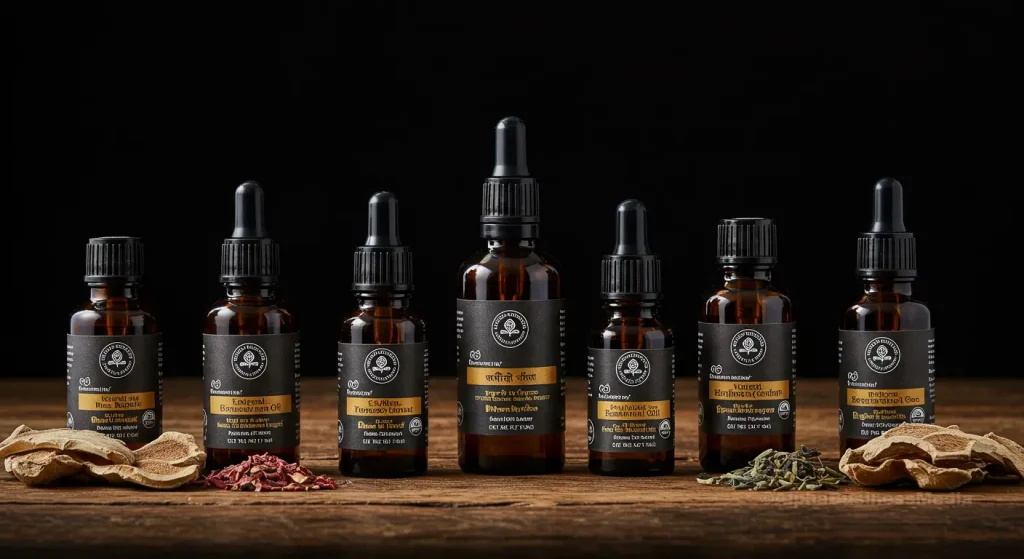
People don’t buy oil, they buy emotions and solutions to their problems.
Brand name:
Should be associated with Nepal, purity, Himalayas (for example, “Himalayan Essence”, “Solu Botanicals”, “Annapurna Oils”).
Visual style:
Use natural colors, minimalist design. Photos and videos of real farmers, fields with mountains in the background are your best content.
Package:
Only eco-friendly materials. For essential oils – bottles made of dark glass to protect from ultraviolet radiation. Outer packaging – made of recycled cardboard or traditional Nepalese lokta paper.
Step 7: Sales Channels and Marketing
B2B (Business to Business):
The easiest way to get started.
- Create a list of 50-100 potential clients (cosmetic manufacturers, aromatherapy brands, ingredient distributors in Europe and the USA).
- Send them samples of your products along with certificates of analysis and your brand history.
- Be sure to attend international industry trade shows such as BioFach (Germany) or SupplySide West (USA).
B2C (Direct to Consumer):
A more difficult, but also more profitable path.
- Create a high-quality online store on the Shopify platform with international shipping options.
- Be active on social media (Instagram, Pinterest), focusing on visual content.
- Collaborate with wellness bloggers and influencers.
Chapter 4. Risk Management: How to Avoid the Pitfalls

Any business is associated with risks. The main thing is to know them and have a plan to minimize them.
Bureaucracy and logistics:
Obtaining export licenses and clearing customs in Nepal can be a complicated process.
- Solution: Hire an experienced customs broker and a logistics company that specializes in agro-exports from the very beginning. Don’t try to save money on this.
Climate risks:
Drought, floods, and hail can destroy crops.
- Solution: Diversification. Grow several types of plants in different locations. Implement agricultural technologies: drip irrigation, rainwater collection systems. Be sure to insure the crop.
Quality instability:
The quality of raw materials and, consequently, the final product may vary from batch to batch.
- Solution: Strict SOPs (standard operating procedures) at every stage – from collection to bottling. Regular laboratory control.
Price volatility:
Global commodity prices can fluctuate.
- Solution: Conclude long-term contracts with B2B clients. Develop your own B2C brand – this will reduce your dependence on commodity prices.
Conclusion: Investing in a Sustainable Future
The herbal and essential oil business in Nepal is much more than just a way to make money. It is an opportunity to create a triple bottom line enterprise:
- Profit: The profitability potential in this sector is enormous, especially when entering export markets with highly processed products.
- Planet: By promoting organic farming and sustainable cultivation of rare species, you are directly contributing to the conservation of the unique biodiversity of the Himalayas.
- People: The community farming model creates stable sources of income for hundreds of people in rural areas, especially women, and promotes sustainable regional development.
The journey from a Himalayan village field to a store shelf in Berlin or New York is not easy. It requires knowledge, patience, investment and strategic vision. But for those entrepreneurs who are willing to think long-term and invest in quality, brand and sustainability, Nepal’s “green gold” can become not just a successful business, but a lifelong pursuit that brings benefits and leaves a positive mark on this planet.