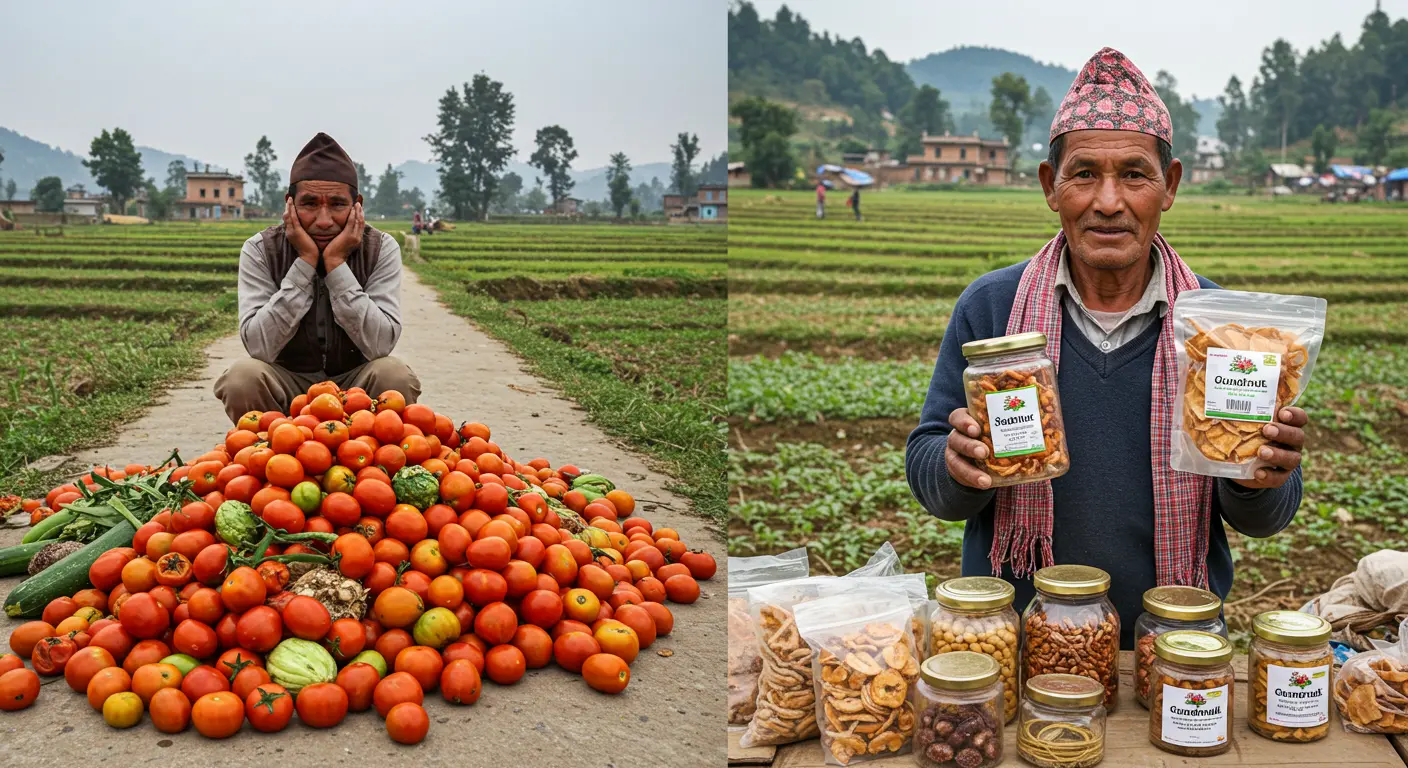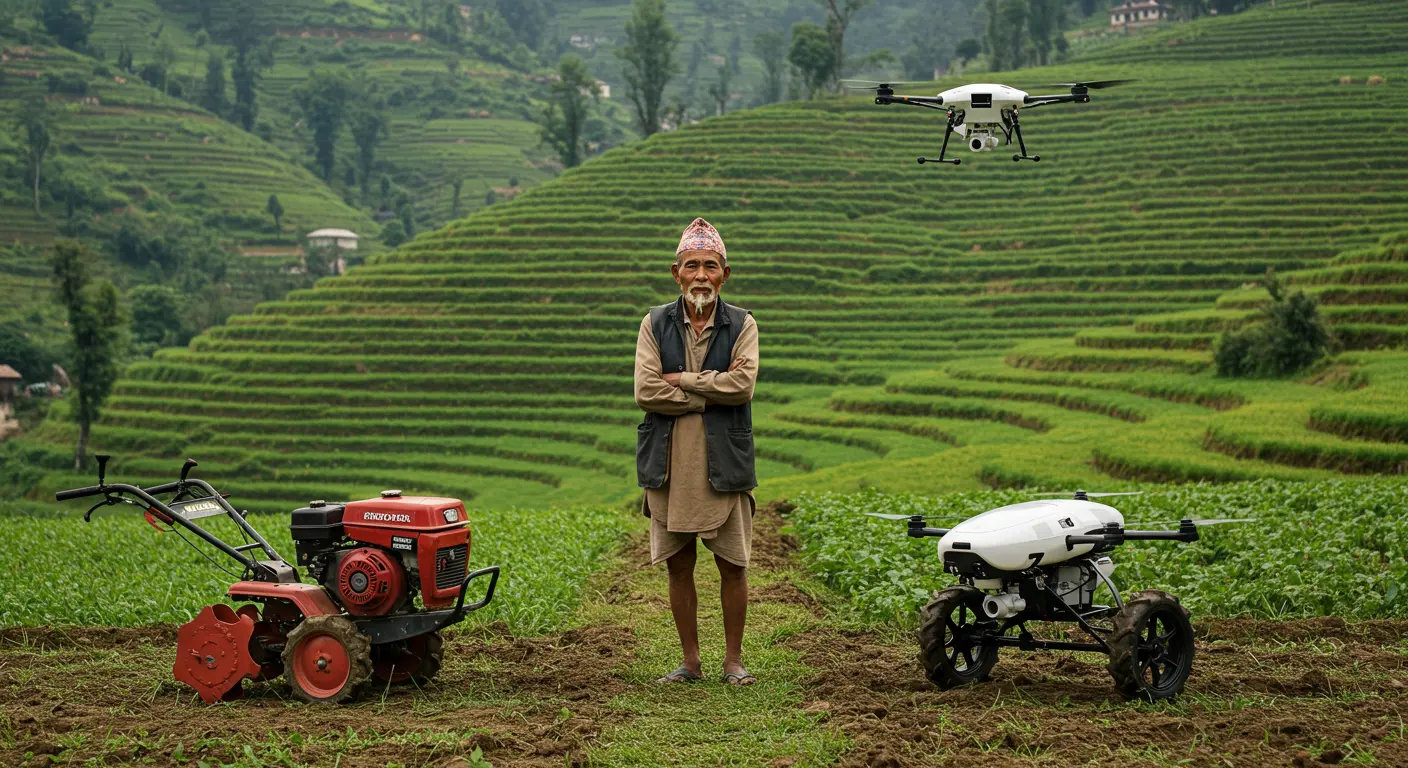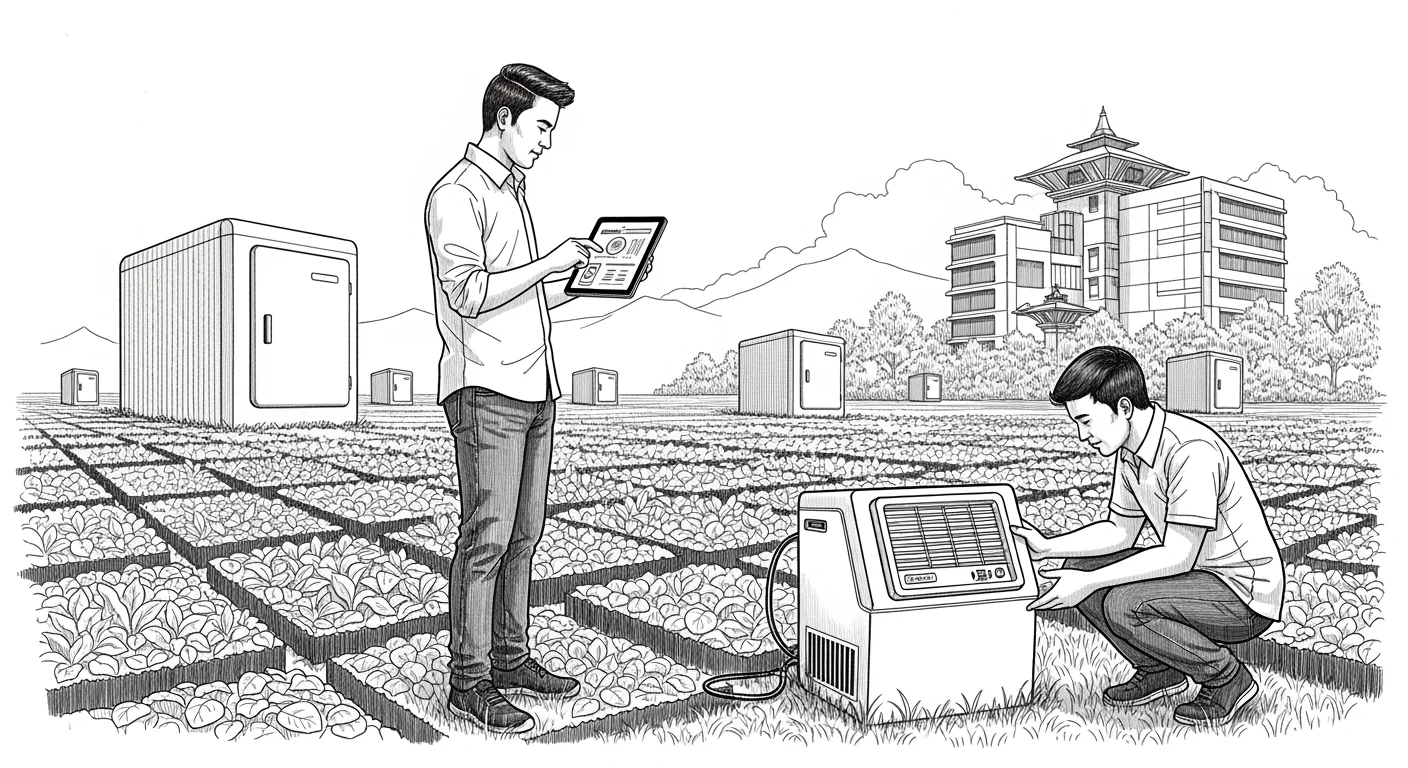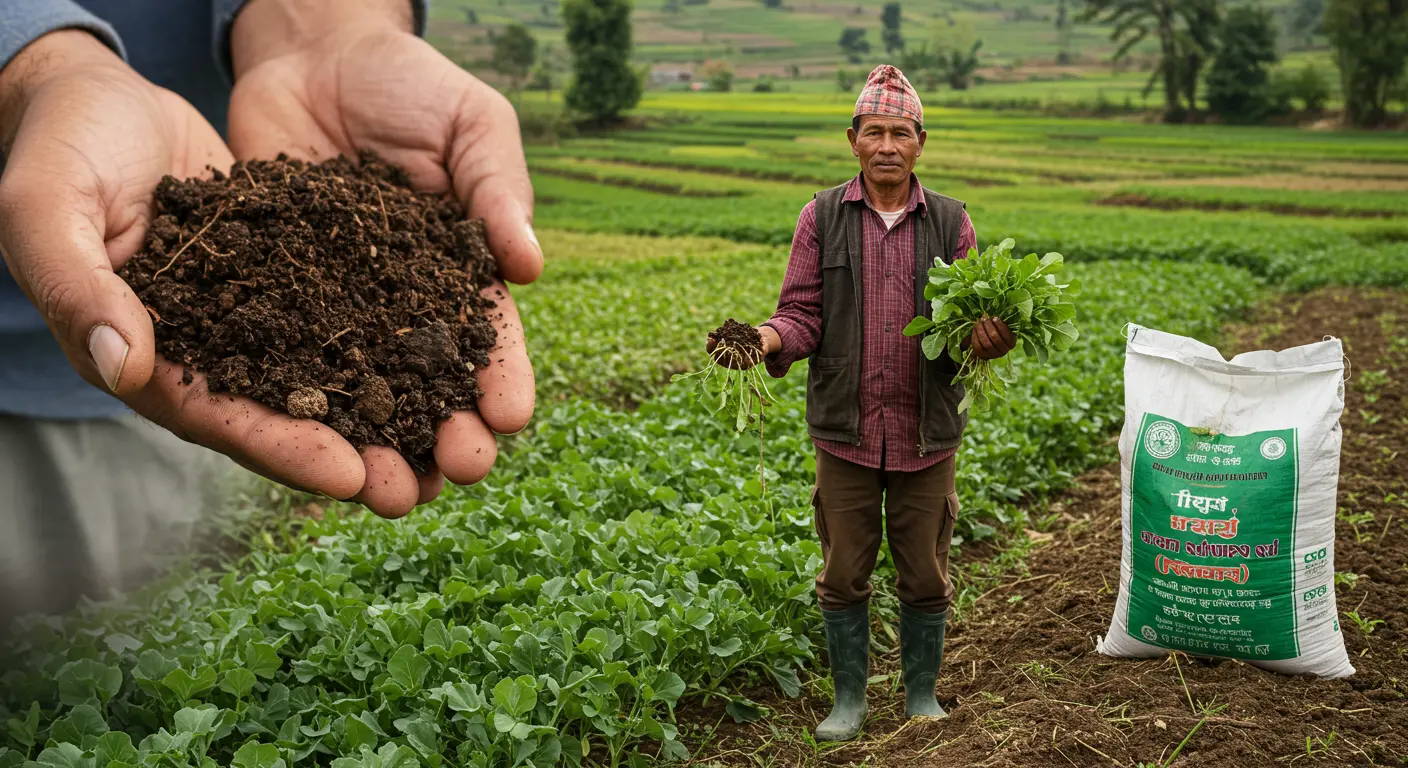
Picture a Nepalese farmer in the middle of planting season. Like millions of his countrymen, he faces a recurring nightmare: vital state-subsidized fertilizers are either unavailable, sold at exorbitant prices on the black market, or arrive too late, after precious time has passed for their application.1This personal story is just one piece in the mosaic of a national crisis.
At the heart of Nepal’s economy lies a stunning contradiction. An agrarian country where agriculture employs about 60 percent of the workforce and contributes significantly to GDP, Nepal is paradoxically entirely dependent on imports of its most important agricultural input, chemical fertilizers.1This dependency has created a fragile and unstable system.
There is a common belief, reinforced by the legacy of the Green Revolution, that high yields and food security are unthinkable without chemicals. This article challenges this belief, arguing that it is precisely this belief that keeps Nepal in a vicious cycle of debt and dependency. The aim of this study is to explore a viable, homegrown alternative, rooted in Nepal’s own agroecological traditions and modern organic innovations. It is a path that promises not just yields, but genuine agricultural sovereignty.7
The High Price of Addiction
Nepal’s dependence on chemical fertilizers is not just an economic problem, but a multifaceted crisis that is undermining the country’s budget, disrupting logistics, and causing irreparable harm to the environment and the health of the nation.

A crushing economic burden
Every year, the Nepalese government spends a huge amount of money on subsidizing the import of fertilizers. We are talking about 28 billion Nepali rupees per year, and a staggering 107.66 billion rupees have been allocated for this purpose in the last five years.9This expenditure item is not just a line item in the budget, but a real black hole, absorbing the lion’s share of all agricultural subsidies – 83.05%.9But the most paradoxical thing is that, despite these colossal infusions, the volume of agricultural production in the country is declining, while dependence on food imports, on the contrary, is growing.10
This system makes Nepal’s food security highly vulnerable to global price shocks. A striking example was the situation when global prices of urea soared from $390 to $1,025 per tonne, and diammonium phosphate (DAP) from $375 to $1,125.2The state budget, calculated at old prices, immediately turned out to be insufficient to purchase even a small part of the required volumes, which clearly demonstrates the complete lack of economic stability.2
Broken and corrupt supply chain
There is a persistent and huge gap between the demand for fertilizers, estimated at 550,000 to 800,000 tons per year, and official supplies, which often do not exceed 400,000 tons.1The procurement process itself is a bureaucratic nightmare: it takes an average of 11 months to import fertilizer, meaning it almost never reaches farmers on time.1
This failure of the official system has given rise to a huge black market. It is estimated that up to 70% of all fertilizer used in Nepal is imported illegally or smuggled from India.1This illegal trade not only deprives the state of revenue, but also floods the market with products of dubious quality, including counterfeit fertilizers that can harm crops and soil.5
This situation is not accidental. The state subsidy policy, designed to help farmers, has in fact become one of the main causes of the crisis. By setting artificially low official prices, the government has made it impossible for legal private importers to compete, effectively ousting them from the market and creating a state monopoly.5However, the government procurement and distribution system proved to be highly inefficient and unable to meet demand.1The resulting vacuum was predictably filled by illegal smuggling from India, where fertilizers are also subsidized.5Thus, subsidies do not solve the problem of deficit, but only redirect flows from the potentially legal private sector to the uncontrolled shadow sector, thereby depleting the state budget.
Political paralysis: the ghost of the factory
For forty years, since a study by the Japan International Cooperation Agency (JICA) in 1984, the Nepalese government has been “discussing” building its own fertilizer plant.9The endless debate, bogged down by disputes over technology (natural gas versus water electrolysis) and project costs ranging from $665 million to more than $1.3 billion, has become a symbol of political paralysis.4While officials argue, billions of rupees flow out of the country every year.
Hidden damage to the environment and health
The intensive use of chemical fertilizers is destroying Nepal’s most valuable asset – its soil. This leads to increased acidity, loss of organic matter and destruction of the fragile soil ecosystem.3Farmers report that they have to apply more and more fertilizer each year just to maintain the same yields – a classic sign of soil degradation.
But it’s not just the land that’s being harmed. Chemical runoff, especially nitrates and phosphates, pollute rivers and groundwater, killing aquatic life and poisoning drinking water supplies.3Studies have linked these chemicals to serious health problems, including stomach cancer and methemoglobinemia (a blood disorder) in infants.15At the same time, 90% of farmers have no idea about the balanced use of fertilizers, and 97% have never analyzed their soil, adding chemicals at random.1
Organic Arithmetic: Debunking the Myth of Yield
The most common objection to organic farming is that it cannot feed the population. This section challenges this myth by shifting the focus from gross yield to more important metrics: profitability, sustainability, and long-term viability.

Yields: A more complex picture
It is generally accepted that organic farming always means lower yields. Some studies confirm this for individual crops such as rice, tea and cabbage, especially in the first years after the abandonment of intensive chemicals.17This initial decline is a well-known problem of the transition period.19
However, this is not a universal rule. A study conducted in the Kathmandu Valley found no significant difference in yield between organic and conventional methods for five of the six major vegetable crops studied, including tomatoes, cucumbers and chillies.18
More importantly, organic systems exhibit greater sustainability. Soils rich in organic matter retain moisture better, making crops more drought-resistant. Research shows that under stressful conditions (drought, heavy rains), organic farms can outperform conventional ones.17This is vital insurance in the face of increasing climate instability.20Over the long term, as soil health is restored, organic farm productivity tends to increase, while conventional farm productivity may stagnate or decline due to soil degradation.19
Profitability: The Metric That Really Matters
The key to making a business case lies in the cost-benefit analysis. While conventional farming can sometimes yield higher gross income, it comes with prohibitive costs for purchased inputs.19Organic farming, relying on on-farm and local resources, dramatically reduces these costs.17
Numerous studies in Nepal confirm that this leads to better financial results. For maize and coffee, net revenues in organic systems were higher due to lower costs.17Extensive research has shown that organic production can be anywhere from 12% less to 73% more profitable than conventional production, depending on the crop and market conditions.22
The most compelling evidence comes from a detailed economic analysis of commercial vegetable farming in the Kathmandu Valley. The data clearly demonstrate that although gross revenues may be lower in organic farming, the significantly lower costs of cultivation result in a higher Benefit-to-Cost Ratio (BCR), making the system more profitable for the farmer.

The economic viability of organic farming in Nepal is an inversion of the chemical model. It transforms the farmer’s largest expenditure (external inputs) into a value-creating activity (increasing fertility on site). This fundamentally reduces the risks associated with market instability and supply chain disruptions. The conventional farmer’s profitability depends on the price and availability of fertilizers, external factors that he cannot control.2This is a huge business risk. The organic farmer’s main resources – manure, crop residues and local plants – are either free or very cheap and, most importantly, always available.7The shift from a cash-intensive to a knowledge-intensive system insulates the farmer from price shocks and supply chaos. Thus, a higher profitability ratio is not just a number; it is a reflection of a more sustainable and autonomous business model.
DIY: Nepal’s Homegrown Solutions
This section is the practical heart of the article, moving from abstract economics to real, on-the-ground technologies. It details how exactly the organic revolution is happening in Nepal, demonstrating accessible and effective methods.

Jholmal: The Farmer’s Fermented Friend
Jholmol is a powerful home-made liquid bio-fertilizer and bio-pesticide based on traditional knowledge and enhanced by modern understanding.24The process of making it is surprisingly simple and uses readily available materials: a plastic barrel, urine and dung from cows or buffalo, water and a mixture of local plants with bitter, pungent or milky properties, such as neem, wormwood, melia and nettle.23Experimental studies have shown that jholmol can increase rice yields even more effectively than chemical fertilizers.25The method is incredibly cost-effective, allowing farmers to avoid an annual chemical cost of 23,000 Nepalese rupees (about US$230).25The success of jhomol has led to its promotion by the International Centre for Integrated Mountain Development (ICIMOD), and the Nepalese government has expanded its use to 14 districts in the country.25
Vermicomposting: Turning Waste into “Black Gold”
Vermicomposting is a simple technology that uses earthworms to convert organic waste (manure, plant residues, kitchen scraps) into nutrient-rich, high-quality compost.27Not only does this practice provide an excellent alternative to chemical fertilizers, it also solves other problems. It puts manure to productive use, reducing the need for women to make and burn dung cakes for fuel, a practice that causes significant indoor air pollution and carbon emissions.29Non-governmental organizations and community projects actively train farmers, especially women’s groups, providing them with starter kits (worms, containers).27One farmer, Tiju, produced 200 kg of vermicompost in just three months, allowing him to successfully farm despite a shortage of fertilizers.29
Integrated Systems: The Wisdom of a Holistic Approach
These methods are not used in isolation, but are part of a comprehensive farming system.
- Green manures and cover crops: This is the practice of growing certain plants, mainly legumes (lentils, cowpeas, crotalaria, sesbania), and then ploughing them into the soil.30This enriches the soil with nitrogen and organic matter, suppresses weeds and prevents erosion.32In Nepal, the use of sesbaniias a green manure along with rice and corn, it has spread to thousands of farms.35In Chitwan district, using lentils as a winter cover crop has proven to be the most effective way to improve soil fertility and yield of the subsequent maize crop.36
- Smart crop rotation: This cornerstone of sustainable farming is a traditional practice that interrupts pest and disease cycles and manages soil nutrients without chemicals.37Common crop rotations in Nepal include rice-wheat-maize and rice-pulses-vegetables, adapted to different ecological zones, from the Terai lowlands to biennial rotations in the highlands.37
- Agroforestry: The ancient practice of integrating trees with crops and livestock is widespread in Nepal.41Trees provide not only food and timber, but also animal feed, fuel (reducing pressure on community forests), and perform essential ecosystem services such as soil stabilization and biodiversity conservation.43
The success of these homegrown solutions reveals a deeper principle: they are based on closing nutrient loops at the farm level. Unlike the linear, extractive model of chemical agriculture (import → use → runoff loss), these practices create a circular, regenerative system that builds natural capital over time. Animal waste is not a problem, but a resource for producing jhomol or vermicompost.24Plant residues are not burned, but used as mulch or returned to compost.44Legumes in crop rotation capture nitrogen from the air—a free resource—and store it in the soil for the next crop.32This creates a self-sustaining cycle: more organics means healthier soil, which keeps plants and animals healthy, which in turn produce more organics. The farm becomes richer in “natural capital” every year, which is the exact opposite of the soil degradation that occurs with chemical farming.13

The Power of Community: Success Stories in Cooperative Environments
This section demonstrates that while organic farming methods are powerful in themselves, their widespread adoption and success are made possible by social organization. Examples of cooperatives that act as agents of change are presented.

The indispensable role of cooperatives
Individual smallholder farmers in Nepal face enormous challenges: land fragmentation, lack of capital, limited access to training, and lack of market leverage.7Cooperatives offer solutions to these problems through collective action. They serve as centers for training, financial services (loans, savings), bulk purchasing of necessary resources, and, most importantly, joint marketing and certification.45
Case Study 1: Panchakanya Agricultural Cooperative – Empowerment through Organic Farming
This cooperative is a shining example of grassroots development led by women.46It was created in 2003 by women farmers who wanted to go pesticide-free.46Today, the cooperative, managed exclusively by its 35-plus members who farm small plots of land (averaging 0.3 hectares), has become a model of success. They have created their own microcredit enterprise to finance purchases and a village center to purchase quality seeds at low prices, demonstrating a high degree of self-organization and financial independence.46As a result, the cooperative not only increased the income of its members, but also brought tangible benefits to the entire community, such as lowering health care costs by reducing exposure to pesticides.46
Example 2: Central Tea Cooperative Federation (CTCF) – Accessing Global Markets
This example shows how cooperatives can scale up to national and international levels. CTCF is an umbrella federation representing 99 member cooperatives and over 6,200 smallholder tea farmers.49The CTCF’s primary role is to help its members achieve the quality standards and certifications needed to enter lucrative export markets. They facilitate organic certification (through Germany’s CERES, for example) and Fair Trade certification, which allows tea to be sold in Europe, the US, and China at premium prices – a feat that an individual smallholder could never achieve.49
A broader support ecosystem
The vital role of non-governmental organizations (NGOs) such as SADP-Nepal, Himalayan Permaculture Centre and ASK Nepal cannot be overlooked.52These organisations are often the main drivers of training, technology dissemination (such as jholmol and vermicomposting) and community organizing, filling the void left by inadequate government extension services.55International institutions such as ICIMOD, FAO and the World Bank provide critical high-level support through research, strategic planning (e.g. the Climate-Smart Agriculture Investment Plan) and funding for pilot projects, lending credibility and resources to the organic movement.57
Cooperatives in Nepal are more than just economic enterprises; they are critical social institutions that build human and social capital, especially for marginalized groups such as women. They function as platforms for knowledge sharing, mutual support, and collective empowerment – fundamental elements needed for a sustainable transition to organic agriculture.
Conclusion: Growing a Self-Sufficient Future

In conclusion, Nepal’s destructive dependence on chemical fertilizers is an economic, environmental and social dead end.2The myth that “there is no alternative” is false. A powerful, profitable, and sustainable alternative already exists, built on Nepal’s own traditions and innovations – from jhomol to vermicomposting – and scalable through the power of community cooperatives.19
Overcoming the last obstacles
It must be acknowledged that there remain serious systemic barriers along the way.
- Contradiction between policy and budget: This is the most glaring problem. While official government strategies and five-year plans pay lip service to organic farming, the national budget says the opposite.7More than half of the agricultural budget is spent on subsidizing chemical fertilizers, while less than 1% is allocated to promoting organic alternatives.62This hypocrisy undermines the entire organic movement.
- The Labyrinth of Certification and the Market: For farmers who have gone organic, the road to market is fraught with obstacles. Official certification is centralized, bureaucratic, and prohibitively expensive for small farms.62In addition, there are no dedicated organic markets, forcing farmers to sell their premium produce alongside conventional produce, often without a price advantage.62
- The gap in research and knowledge dissemination: National research institutes have historically given priority to conventional agriculture, leaving a significant gap in the research and development of organic technologies suitable for Nepal’s diverse agro-ecological conditions.55
Vision of the Future
The solution is not simply to avoid chemicals, but to actively invest in an alternative system. This requires:

- Aligning budgets with policy: Redirect huge chemical subsidies to support organic production, farmer training and cooperative development.
- Decentralization of certification: Promote and subsidize accessible certification systems, such as the Participatory Guarantee System (PGS), that are community-based and more suitable for smallholders.62
- Creation of market infrastructure: Support the creation of specialized organic markets and value chains to ensure that farmers receive a fair premium price for their work.
- Investing in local knowledge: Direct national research and extension services to testing, improving and disseminating home-grown organic practices.
The future of agriculture and food sovereignty in Nepal does not depend on chasing an imported industrial model that has already proven its failure, but on having the courage and vision to invest in its own people, its own traditions, and its own sustainable, organic future.country.
Source used:
- Chemical fertiliser shortage is a perennial problem. It stems from multiple factors,
- Fertiliser crisis could spell economic disaster, experts warn – The Kathmandu Post,
- Nepal’s chronic fertiliser crisis: Can organic be the solution?,
- Green urea plant in Nepal: An overview – The Annapurna Express,
- Behavior of Private Retailers in a Regulated Input Market: An Empirical Analysis of the Fertilizer Subsidy Policy in Nepal,
- In Nepal, farming families stick together,
- Promotion Of Organic Agriculture – The Rising Nepal,
- (PDF) AN OVERVIEW OF ORGANIC FARMING IN NEPAL – ResearchGate,
- Nepal still awaits chemical fertilizer factory after four decades of delay – myRepublica,
- Despite 107 billion in subsidies, Nepal’s agricultural production suffers decline,
- SUPPLY CHAIN OF SUBSIDIZED CHEMICAL FERTILIZERS IN NEPAL,
- Fertilizing Nepalese agriculture: the effects of distribution system on chemical fertilizer use – CABI Digital Library,
- www.researchgate.net,
- An Overview of Agricultural Degradation in Nepal and its Impact on Economy and Environment – ResearchGate,
- Effects of Chemical Fertilizers on Human Health and Environment: A Review – iarjset,
- Organic Farming and its Prospects in Peri-urban Area of Pokhara, Nepal,
- The Relative Efficiency of Organic Farming in Nepal – Sandee,
- Horticultural Practices in Organic and Conventional Commercial Vegetable Farms in Kathmandu Valley,
- ECONOMIC ANALYSIS OF COMMERCIAL ORGANIC AND CONVENTIONAL VEGETABLE FARMING IN KATHMANDU VALLEY – Nepal Journals Online,
- A Comparative Study of Conventional and Organic Farming Systems in Nepal in the Context of Climate Change,
- (PDF) Economic analysis of commercial organic and conventional vegetable farming in Kathmandu valley – ResearchGate,
- determinants and comparative profitability of organic agriculture in indo-china road corridor of nepal – IJSSER,
- This Women’s Group in Nepal is Restoring Soil Health with Biofertilizers,
- ORGANIC FARMING: A RELIABLE STRATEGY FOR SUSTAINABLE AGRICULTURE IN NEPAL – Science Heritage Journal (GWS),
- Jholmal for small-scale farmlands – ICIMOD,
- What is Jholmal? It’s Organic Fertilizer and Pesticide That is More Effective than Chemicals. At No Cost to Nepal’s Family Farmers,
- Changunarayan Vermi-Composting Training for Farmers,
- Vermicomposting – HimalDoc – ICIMOD,
- Vermicompost – It’s All About Worms – United Mission to Nepal,
- Green manure – an environmentally friendly solution to many agricultural problems – asm-agro,
- Cementing the Organic Farming by Green Manures – Nepal Journals Online,
- Technical Note 55- Cover Crops for Green Manure in the Great Basin,
- Green Manure/Cover Crops/Mulching – ICIMOD,
- Green manure – Wikipedia,
- The Problem With Green Manure Cover Crops – ECHOcommunity …,
- Effect of Leguminous winter cover crops on soil fertility and yield of summer maize – Nepal Journals Online,
- CROPPING PATTERN, PRODUCTION STATUS AND FARMER’S INDIGENOUS PRACTICES OF LOCAL CROPS IN HUMLA DISTRICT, NEPAL Hridesh Sharma1* – Semantic Scholar,
- Legumes crop rotation can improve food and nutrition security in Nepal – CABI Digital Library,
- Journal of Nepal Agricultural Research CouncilVol,
- Legumes crop rotation can improve food and nutrition security in Nepal – ResearchGate,
- frtc.gov.np,
- (PDF) AGROFORESTRY SYSTEMS AND PRACTICES IN TERAI AND MID-HILLS OF NEPAL. – ResearchGate,
- Agroforestry scale-up a promising prospect for fragile ecosystems …,
- Organic Farming for Sustainable Agriculture – Forestry Nepal | PDF – SlideShare,
- NEPAL – Movement on Innovative Agricultural Cooperative Ltd (MIACO),
- Organic Farming Cooperatives In Nepal: One That Is Exclusively …,
- CONSTRAINTS MANAGEMENT OF ORGANIC FARMING: EVIDENCE FROM POKHARA METROPOLITAN, NEPAL,
- Nicola Wong, Author at Food Tank,
- Central Tea Cooperarive Federation (CTCF) – HOME,
- Central Tea Cooperative Federation – Agriterra,
- Tinjure Tea Farmer Cooperative Society Ltd.,
- SADP Nepal » About Us,
- Organic Karnali: Resilience-Building Through Agroecology,
- Home – ASK NEPAL,
- ORGANIC AGRICULTURE IN NEPAL: POLICIES AND PRACTICES P. Baral1*, R. Paudel2, S. Kharal3 and A. Khadka4 ABSTRACT Keywords: agro-c,
- 4 Organizations Supporting Agriculture in Nepal – The Borgen Project,
- Exploring agroecological farming for Karnali Province, Nepal – ICIMOD,
- World Bank Documents and Reports,
- Organic Agriculture Development Strategies: – HimalDoc – ICIMOD,
- special report – 2024 fao crop and food supply assessment mission …,
- Organic Agriculture in Nepal: Policies and Practices – ResearchGate,
- What cost for organic farmers to conserve nature? – The Annapurna Express,
- (PDF) ASSESSMENT OF ORGANIC FARMING PRACTICES AND …,
- Smallholder peri-urban organic farming in Nepal: A comparative analysis of farming systems