The Money Transfer Paradox and the Search for a New Engine
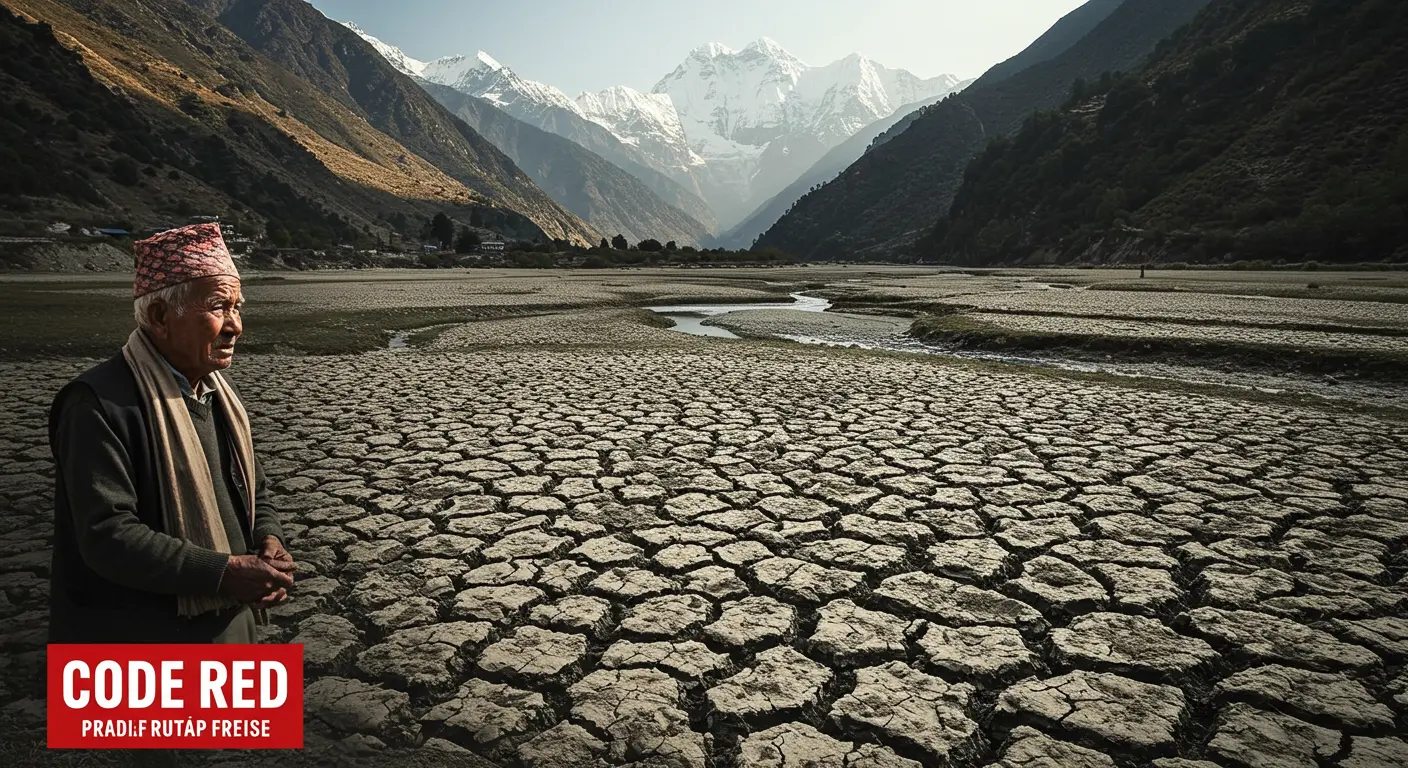
In a small village in the Himalayan foothills, a family gathers around a smartphone. On the screen are the faces of their son and brother, who works on a construction site in Malaysia. Moments later, another remittance hits their bank account – a lifeline that puts food on the table, pays for school, and maintains a decent standard of living. The scene, repeated in thousands of Nepalese homes, captures the essence of the country’s central economic paradox. Nepal has achieved remarkable success in virtually eradicating extreme poverty – an achievement made possible in large part by money sent home from abroad.1
But behind these impressive statistics lies a disturbing reality. This success has been achieved without transformative domestic growth, significant investment, or the creation of quality jobs.1For nearly three decades, the country’s economy has grown at an average rate of just 4.2% a year, lagging behind most of its South Asian neighbors.1Dependence on remittances, which account for about 25% of GDP3, has created a “Dutch disease”-like effect: it has undermined the competitiveness of domestic exports and perpetuated a cycle of migration in which the country exports its most valuable asset – its youth.4

Now, with remittance growth expected to slow and the limitations of the current model becoming increasingly apparent,2, the big question arises: Where will Nepal’s next, more sustainable economic engine come from?
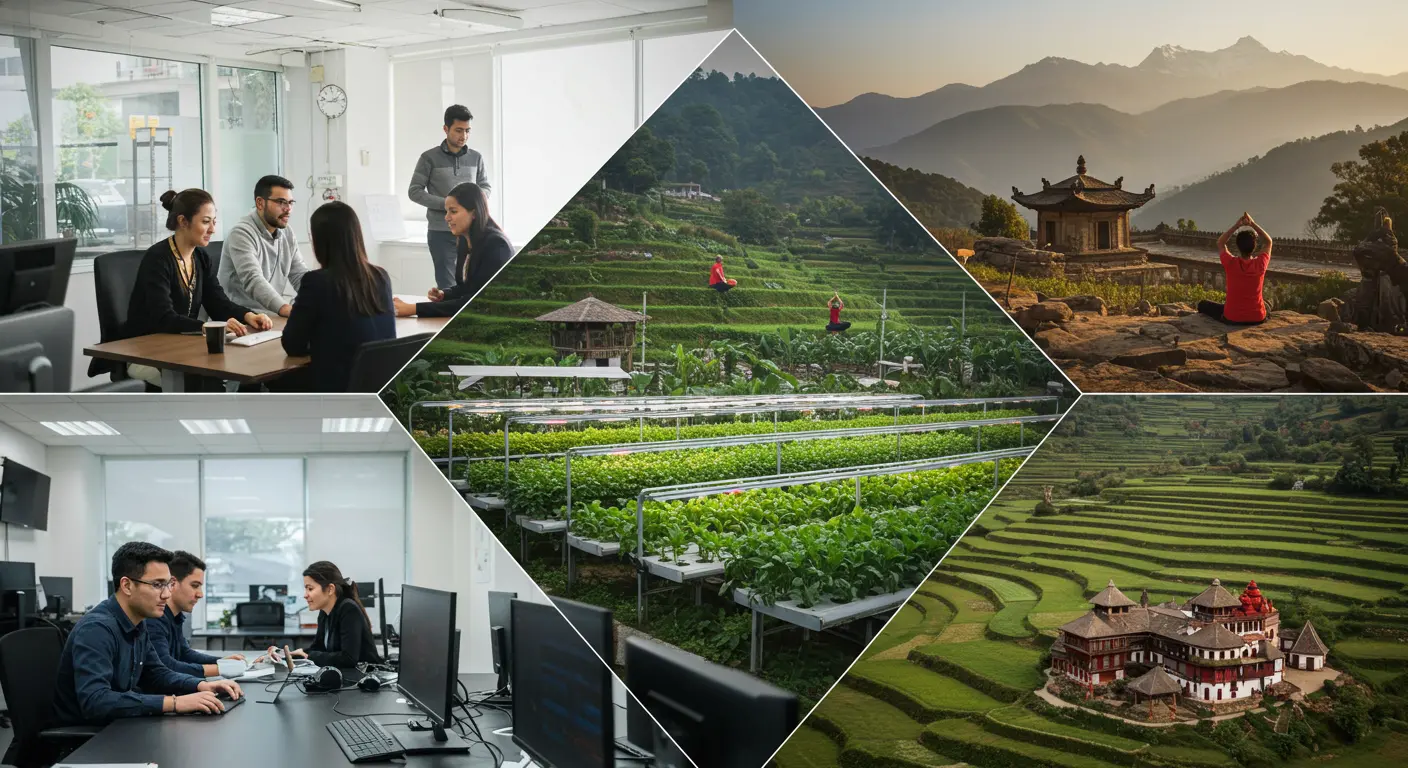
The answer lies not in one silver bullet, but in a strategic and synergistic pivot to a portfolio of undervalued but high-potential industries. Nepal’s future prosperity depends on its ability to leverage its unique strengths—rich culture, young and dynamic workforce, and unique geography—to develop four key sectors: creative (“orange”) economy, high-tech agriculture, a rapidly developing sector digital services and highly profitable health tourism It is these areas that are capable of building a sustainable, inclusive and modern economy.
Current Landscape: The Economy at a Crossroads
To understand where Nepal might go from here, it is important to have a clear understanding of its current economic situation. Today’s economy is a complex mosaic of impressive achievements, traditional pillars, and systemic problems that hold back its true potential.

Economic snapshot
The latest forecasts paint a picture of moderate but steady growth. Nepal’s National Statistical Office (NSO) projects growth of 4.61% in the 2024/25 fiscal year, slightly more optimistic than the World Bank’s 4.5% and Asian Development Bank’s 4.4% estimates.2The services sector remains the dominant force, accounting for over 62% of GDP, followed by agriculture (around 24-25%) and industry, whose share has stagnated at around 13%.5This structure reveals a key weakness: a small industrial base and an agricultural sector that, despite employing a significant portion of the population, makes a disproportionately small contribution to GDP.1

Supports and their cracks
Nepal’s economy rests on three main pillars, each of which has its own vulnerabilities.
- Money transfers: This is the foundation of an economy that has reduced poverty and stimulated consumption.1However, this financial artery is extremely sensitive to economic shocks in migrant-receiving countries (mainly the Gulf states and Malaysia), and its growth is expected to slow.2
- Tourism: A vital source of foreign exchange, it has shown a strong recovery from the pandemic, with more than 1.1 million visitors to the country in 2023/24.10However, the sector is vulnerable to infrastructure problems (such as disruptions due to the upgrading of Tribhuvan Airport2), natural disasters and global crises.2
- Hydropower: Long considered a major potential growth driver, with an economically viable potential of 43,000 MW.16Installed capacity is growing (around 3,157 MW for 2023/2410), and electricity exports to India are increasing.17However, the development of the sector requires huge capital investments and faces bureaucratic obstacles1 and is vulnerable to climate change, which affects river flows.16
Systemic barriers to growth
Any new economic engine will have to overcome the deep-rooted problems holding the country back.
- Infrastructure deficit and geography: Rough mountainous terrain and poor infrastructure, especially roads and power lines, increase production and trade costs, limiting economic growth.4
- Politics and Governance: Political instability, frequent government reshuffles and weak governance undermine the coherence of economic policy and discourage private investors.2The slow implementation of federalism adds another layer of complexity.2
- Challenging business environment: The private sector suffers from high tariffs, a complex regulatory framework and limited access to finance, especially for small and medium-sized enterprises, which form the backbone of the economy.4The rising share of non-performing loans in the financial sector (a record 4.9% in the first half of FY2025) threatens to further tighten lending conditions.2
- Vulnerability to climate and natural disasters: Nepal is one of the world’s most vulnerable countries to climate shocks and natural disasters, which cause significant economic losses and threaten development gains.2
An analysis of these factors reveals a fundamental problem. International development banks such as the World Bank and the ADB agree that Nepal’s main problem is the lack of private sector-led growth and job creation.1This is not just slow growth, but a specific structural failure. While the World Bank states outright that poverty reduction has occurred “without transformative domestic growth, investment or job creation”1, ADB’s new strategy emphasizes a “private sector-led, jobs-focused green economic transformation.”4This is directly related to the huge share of informal employment (82%).2) and mass migration of youth. This suggests that government economic policy is not up to this key objective. The focus is often on large public projects or managing remittances, rather than on creating an enabling environment for diverse private enterprises to thrive. The result is a “vicious cycle of underinvestment”: a weak private sector and difficult business environment discourage capital; lack of investment prevents the creation of quality jobs, which forces people to leave, increasing dependence on remittances. These remittances, in turn, fuel an economy of consumption rather than investment, further sidelining the productive sector. A fundamental policy shift is needed to break this cycle.
The “Orange” Economy: Monetization of Creativity and Culture
While traditional sectors are struggling, a powerful new economic engine is emerging in Nepal – the creative or “orange” economy. The global creative industries market is worth trillions of dollars, accounting for 3.1% of global GDP and nearly 50 million jobs, with significant participation of women and youth.23This presents a huge opportunity for Nepal to turn its rich cultural heritage and growing creative potential into a significant source of high-value exports and soft power.
From Cinema Screens to Global Streaming Services: The Breakthrough of the Film Industry
The Nepali film industry is experiencing a historic boom. In the fiscal year 2081 (2024/25), the total film market (Nepali and international films) reached a record-breaking 2.7 billion Nepali rupees. Most importantly, Nepali films alone collected an impressive 1.8 billion rupees.25Individual films achieve unprecedented success: Poorna Bahadurko Sarangi earned around Rs 750 crore worldwide on a budget of Rs 40 crore.26

This is not just a cultural revival, but a commercial breakthrough. Its success reflects a strong domestic audience and, crucially, growing international appeal.26However, the monetization model is still overly dependent on local cinemas. The future of the industry lies in tapping into digital markets and major OTT platforms such as Netflix and Amazon, although this remains a challenge.27The high popularity of Nepali content on YouTube among the diaspora (for example, 38% of the international audience for “Herne Katha”) proves that there is a global demand.27
The Master’s Touch: Scaling Crafts for the Digital Age
Handicraft exports make a significant and growing contribution to Nepal’s economy, reaching Rs 12 billion annually, with shipments to over 60 countries.28Over the past decade, the sector has achieved a compound annual growth rate of 16%.28Key products include felt, metal, pashmina and paper items.29

It is a traditional sector with modern potential. The growth is impressive, but analysis shows that Nepal still has only a small share (0.5-1%) of the potential market in key categories.28The path to transforming this sector from a cottage industry into a major export industry lies through modern branding, use of e-commerce platforms and protection of Geographical Indications (GI) to ensure premium prices for unique products such as dhaka cloth and lokta paper.28
Digital Canvas: Evolving the Maker Economy
This youth-driven sector faces significant challenges. The digital divide (only 51.6% of the population has access to the internet, mostly in urban areas) limits reach.19Additionally, inconsistent and sometimes restrictive government policies, such as the 2023 TikTok ban, create uncertainty and could stifle the very creativity the economy needs.19The ban was justified on grounds of “social harmony,” but many content creators saw it as an attempt to silence dissent and a blow to a key platform for small businesses and individual income.32
Despite the challenges, the maker economy empowers people and promotes culturally driven development.19Platforms like YouTube and Instagram are already helping Nepali culture, like momos, gain popularity worldwide.33A supporting ecosystem could turn this into a major driver of soft power and economic value.

The growth of creative sectors is happening organically, from the bottom up, often in a political vacuum or even in spite of political obstacles. This highlights the gap between where entrepreneurial energy is directed and where government attention and support is focused. Film industry records25and 16% annual growth in the craft sector28are provided by private entrepreneurs and artists. At the same time, experts and market participants point to the lack of state support. The music industry lacks fundamental protection of artists’ rights, such as fair payment and copyright.34TikTok Sudden Ban32demonstrates a reactive rather than supportive approach to digital creativity. The British Council notes that most policies are focused on big business rather than the small, community-focused models that define the creative economy.30This means that Nepal is failing to institutionalize and scale its creative successes. Without a national strategy for the creative economy that focuses on intellectual property rights, digital literacy, and access to finance, these promising shoots will fail to grow into forests. This omission represents a huge loss in the employment of young people, who are leaving the country in droves. By failing to build a strong creative economy, Nepal is not only missing out on potential export revenues, it is also failing to offer a compelling reason for its creative and entrepreneurial young people to stay and build careers at home.
High-tech harvest: seeding the future of agriculture
Technology is key to unlocking the potential of Nepal’s largest but least productive sector. Agriculture employs the majority of the population but suffers from low productivity, land fragmentation and climate vulnerability.1Technologies offer two paths of transformation.

Farming Without Soil: The Hydroponic Revolution in the Valleys
Urbanization, especially in the Kathmandu Valley, is reducing available farmland while demand for fresh produce is growing. Traditional farming is limited by land scarcity, poor soil quality and water shortages.35
Hydroponics offers a powerful solution. This soilless farming technology uses 80-95% less water and land, can be used in urban areas (such as on rooftops), and allows high-quality, environmentally friendly crops to be grown year-round.36Research in Nepal shows that this is not only possible, but also highly cost-effective. One study in Kathmandu found a benefit-to-cost ratio of 2.32.35The yields are significantly higher: for example, 21 tons of beans can be harvested from one acre using hydroponics, compared to 5 tons using traditional methods.37
Hydroponics is revolutionizing urban food security and high-income agriculture. It reduces dependence on imports, shortens supply chains, and creates new opportunities for agribusiness.35While the initial setup costs may be a barrier, the quick payback period and high ROI make it an attractive investment.35Companies are already emerging in Nepal offering affordable, ready-made hydroponic equipment, lowering the barrier to entry.36
A View from Above: Precision Farming with Drones and Satellites
Traditional extensive farming in Nepal is inefficient and suffers from inappropriate use of expensive inputs such as fertilizers and pesticides, resulting in losses, environmental damage and suboptimal yields.38
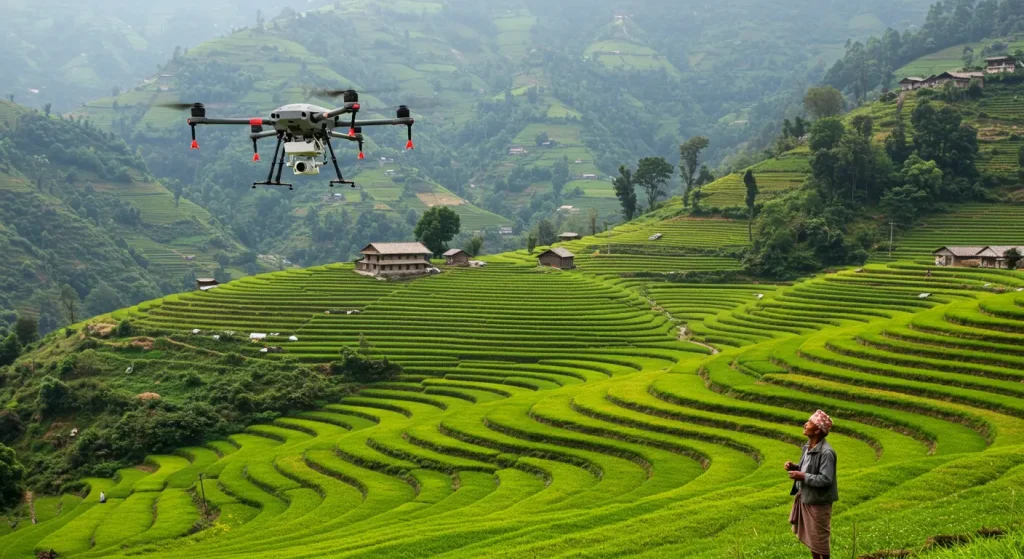
Precision agriculture uses technology to apply the right inputs to the right place at the right time.
- Drones (UAVs): Drones are used to monitor crops, analyze soil, and precisely spray pesticides and fertilizers. This reduces labor costs, saves water, minimizes farmers’ exposure to chemicals, and increases productivity.38The global spraying drone market is projected to grow from $1.39 billion to $11.9 billion by 2028, demonstrating huge potential.40Drones can also revolutionize access to markets by delivering high-value produce straight from the fields, increasing farmers’ incomes.38
- Satellites: Platforms such as KrishiDrishti, developed specifically for Nepal, use satellite data to provide farmers with actionable insights on crop status, soil moisture and weather conditions, enabling data-driven decision making.41
Precision farming directly addresses the underlying problem of low productivity. By optimizing resource use, it can significantly increase farm yields and profitability, boosting the national economy.12The introduction of these technologies could make agriculture more attractive to a younger, tech-savvy generation.38
The adoption of agritech in Nepal represents a potential “leapfrog” that will allow the country to bypass decades of gradual agricultural development and move directly to modern, sustainable practices. However, this is threatened by the gap between the availability of technology and its accessibility to farmers. Advanced technologies such as hydroponics35, drones39and satellite platforms42, are already being successfully tested and implemented in Nepal. But there is a significant risk that these technologies will remain the preserve of a few well-funded research centers or commercial farms and will not reach millions of smallholder farmers. Research points to problems with limited technical capacity35, access to loans for investment44and the low efficiency of existing advisory services.45This could create a “dual” agricultural economy: a small, highly efficient, high-tech sector supplying cities and export markets, while the vast majority of rural farmers remain trapped in low-productivity, subsistence farming. This would exacerbate inequality and fail to address the employment problem. The critical policy challenge, then, is not simply to promote agtech but to ensure that it is democratization through targeted funding, quality training and support for local agritech startups capable of creating scalable and affordable solutions for the average Nepalese farmer.46
Digital Gold Rush: Building Nepal’s IT Hub
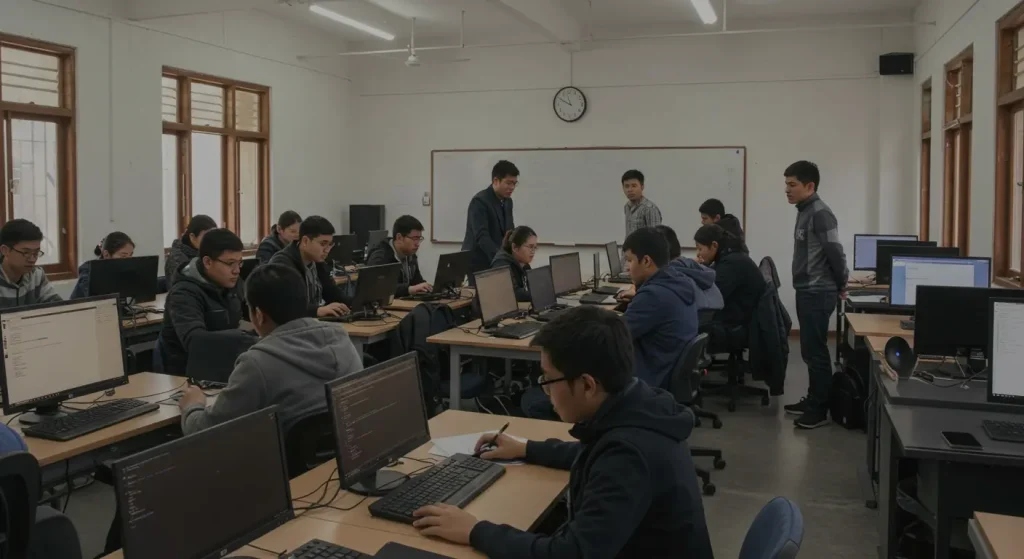
The most compelling candidate for a new economic engine is the information technology (IT) and business process outsourcing (BPO) sector. Its explosive, almost unnoticed growth shows that with strategic focus, it could become Nepal’s top export industry.

An impressive growth story
The data speaks for itself. Nepal’s IT services exports soared to 515.4 million US dollars.49This figure is crucial because it exceeds revenues from the traditional tourism industry 49— a seismic shift in Nepal’s economic structure that has gone largely unnoticed. The government has recognized this potential by setting an ambitious target of increasing IT exports to 3 trillion Nepalese rupees (approx. 21.6 billion US dollars) and create 1.5 million jobs over the next decade.50
Nepal’s Competitive Advantage
This growth is not accidental. Nepal has a unique combination of advantages:
- Cost-effective skilled labor: Nepal offers a large pool of young, tech-savvy, English-speaking graduates at a lower cost than regional competitors such as India.31Every year, more than 20,000 IT graduates enter the labor market.53
- Convenient time zone: The GMT+5:45 time zone allows working in a 24-hour cycle with clients from Europe and the USA, which is a significant logistical advantage for outsourcing.53
- Improving infrastructure: Despite persistent challenges, internet penetration and fibre optic networks have improved significantly, fuelling growth in the IT sector.31
Investment gap
Despite the huge potential and obvious profitability, both domestic and foreign direct investment (FDI) in the IT sector remain low.49There is a critical gap between the sector’s performance and capital inflows. Obstacles include a lack of global visibility (the “Nepal Brand” in tech), infrastructure deficiencies outside major cities, and complex regulations that discourage foreign investors.4
Niche BPO
Within the wider IT sector, BPO is a major employer, with companies such as CMS Nepal and Kantipur Management employing thousands of workers.54These companies serve global clients and increasingly specialize in non-voice services such as data processing, content moderation, and back-office support, as well as higher-value services in health informatics and finance.31

The IT boom represents a fundamental demographic and economic shift that the country’s educational and political systems are struggling to keep up with, creating a critical bottleneck for future growth. IT sector is growing at an explosive rate49, driven by a young, enterprising workforce.53However, development partners and business leaders consistently point to “insufficient human capital” and “skills gaps” as key barriers to growth.4The education system is facing systemic problems, and the number of people entering domestic universities is being reduced, as more and more young people choose to study abroad.4This creates a dangerous mismatch: the IT industry’s demand for skilled workers is rapidly outpacing the domestic education system’s ability to supply them. The current boom is fueled by a relatively small pool of self-taught or foreign-trained professionals, which is not a sustainable model for scaling to a $21 billion industry employing 1.5 million people. Growth will hit a human capital ceiling long before it reaches its goal. This creates a strategic imperative for a radical overhaul of Nepal’s education policy, closely integrated with the private IT sector. The solution is not just more universities, but curriculum reform, industry-led vocational training, and public-private partnerships to build a talent pool. It also reframes the “brain drain” as a source of talent rather than a loss. IfNepal can create an attractive enough domestic ecosystem to attract this highly skilled diaspora back. The IT sector offers the best chance to do so, but only if the human capital problem is addressed proactively.
Soul Economy: Capitalizing on High-Yield Wellness and Spiritual Tourism
This section explores a high-value, niche segment of the tourism industry that leverages Nepal’s most unique and globally recognized assets: its spiritual heritage and natural tranquility. It is about a strategic shift from mass tourism to high-value wellness tourism.

Global trend
The world is seeing a significant shift in travel preferences from simple sightseeing to transformative experiences focused on healing, rejuvenation and mental well-being.56The global wellness tourism market is projected to grow at a staggering compound annual growth rate (CAGR) of 21.1%, while the religious tourism market is projected to grow at 9.1%.57Nepal is ideally placed to ride this wave.
Unique Assets of Nepal
- Spiritual Epicenter: Nepal is the birthplace of Buddha (Lumbini) and home to countless sacred Hindu sites (such as Pashupatinath), monasteries and stupas. This deep spiritual energy is a powerful and unique magnet.56In 2023, 13.1% of all tourists (more than 130,000 people) came for the purpose of pilgrimage.58
- Traditional Healing Practices: The country has a rich, vibrant tradition of health practices, including Ayurveda, yoga, meditation and herbal medicine, which are gaining worldwide recognition.59
- Natural sanctuaries: Serene landscapes, from the Himalayas to the tranquil lakes of Pokhara, create the perfect backdrop for wellness retreats, offering a therapeutic escape from modern life.56

Economic opportunity
- Higher cost: Health tourists tend to spend more per day and stay longer than regular tourists.57Focusing on this segment can significantly increase revenue per tourist, enhancing the overall economic impact of the sector.
- Ecosystem development: The hotel industry is already beginning to embrace this trend, offering hotels and specialized retreats with carefully curated wellness packages.56There are significant investment opportunities in creating more of these high-quality health centres, particularly those that integrate modern health services with traditional practices.60
To become a leading wellness destination, Nepal must address key challenges, including poor infrastructure in some areas, the need for uniform quality standards and international certification, and more concerted and targeted marketing efforts to reach the global wellness community.57
“Health tourism” offers Nepal a strategic way to address the classic tourism dilemma of “volume versus value.” It allows the country to significantly increase tourism revenues without necessarily requiring a massive increase in tourist numbers, thereby reducing the burden on the environment and culture. The average daily expenditure of a typical tourist in Nepal is relatively low (around $41 in 202260), while the government’s goal is to attract millions of tourists.63This creates a potential conflict: large influxes of low-spending tourists can put enormous pressure on fragile ecosystems and infrastructure without generating maximum economic benefit. In contrast, wellness tourism attracts a demographic willing to pay a premium for exclusive, high-quality, and restorative experiences.57A strategic focus on wellness tourism is thus a form of green development, encouraging the preservation of the very assets that attract these tourists: unspoiled nature, tranquil settings, and authentic cultural practices. This strategy has powerful synergies with other emerging sectors. High-tech agriculture can provide organic produce for wellness retreats. The digital sector can create booking platforms and marketing campaigns. The creative economy can provide authentic cultural products that enrich the wellness journey. Investment in wellness tourism is therefore not an isolated strategy; it acts as a “demand driver” that can drive growth and create high-value linkages across Nepal’s emerging economy.
Conclusion: Creating a New Economic Fabric
Nepal is at a defining moment. The old model of consumption, fueled by remittances, is reaching its limits. The way forward is not to find one new engine, but to cultivate a diverse, resilient, and interconnected economic ecosystem.
The analysis shows that the country’s future prosperity depends on synergies between new sectors. The IT sector provides digital platforms for the creative economy (e-commerce for crafts, streaming for films) and wellness tourism (booking and marketing). High-tech agriculture provides high-quality organic products for the wellness and tourism sectors. And the creative and wellness economies create a vibrant, attractive culture that helps retain the young talent needed to grow the IT sector.
Nepal’s greatest untapped resource is not its rivers or mountains, but the ingenuity of its people. By removing political barriers, strategically investing in these emerging sectors, and aligning education with the needs of a modern economy, Nepal can move beyond the remittance paradox. The country has a unique opportunity to weave a new economic fabric that is creative, intelligent, resilient, and capable of generating prosperity for decades to come.diaspora from a source of livelihood into the main driver of its economic and innovative renaissance in the 21st century.
Sources used
- Nepal: World Bank Report Outlines Key Reforms to Boost Growth, Create Jobs
- Nepal Overview: Development news, research, data | World Bank
- Nepal’s economy projected to grow by 4.61 percent: NSO
- ADB unveils $2.3 billion plan to boost green, job-rich growth in Nepal
- Economic growth projected at 4.61 percent this fiscal year
- Economic growth for current FY estimated at 4.61%
- World Bank projects Nepal’s economic growth at 4.5 percent
- Nepal’s Economy to Strengthen in FY2025 and Further in 2026 | Asian Development Bank
- Nepal: Economy | Asian Development Bank
- Current Macroeconomic and Financial Situation of Nepal
- Current Macroeconomic and Financial Situation of Nepal – Nepal Rastra Bank
- (PDF) Future prospects of precision agriculture in Nepal
- Economic Survey projects 4.1 percent economic growth in current fiscal year
- Nepal’s Economy Expected to Maintain Growth Momentum – World Bank
- TOURISM AND ECONOMIC GROWTH: ASSESSING THE ROLE OF TOURISM INDUSTRY IN NEPAL
- Nepal’s energy plan: A pathway to sustainable development | NepalEnergyForum
- Economic Survey 2023/24
- Nepal: In-Depth | Asian Development Bank
- Nepal’s Rising Creator Economy – part 2 – Yarsa Labs DevBlog
- Nepal Development Update – World Bank Documents and Reports
- ADB Launches New 5-Year Strategy for Economic Transformation in Nepal
- Nepal Country Partnership Strategy (2025–2029): ADB and the World Bank Group Joint Strategic Approach
- UNDP is Unlocking the Potential of the Creative Economy in Kyrgyzstan
- How cultural and creative industries can power human development in the 21st Century
- Nepali Cinema Market Hits All-Time High 2.7 Billion Rupees in 2081 – A Milestone Feat!
- Nepali film industry emits bright ray of hope this year
- Navigating the future of Nepali cinema: Markets, monetisation, and new media
- Nepal’s Handicraft Exports Soar to Rs 12 Billion in 2023
- Nepal exports handicrafts worth Rs 3.27 billion in current FY
- Policy Brief-Creative Green Economy in Nepal-Final Draft
- Outsourcing in Nepal: What the future holds for the industry
- Communism’s Clash with the Creative Economy
- Soft Power: The Driving Force Behind Creative Economy – Nepal Economic Forum
- Youth in the Creative Industry – ResiliArt Nepal – UNESCO
- REVIEW ARTICLES EVALUATING THE ECONOMIC FEASIBILITY OF HYDROPONICS IN URBAN AGRICULTURE AT KATHMANDU, NEPAL
- Revolutionizing Agriculture: The Rise of Hydroponic Farming
- Mela Lin – The World Food Prize
- An innovative drones technology in agriculture: A review
- DATAVEILLANCE MANAGEMENT USING MICRO DRONE TECHNOLOGY FOR AGRICULTURE PURPOSE IN NEPAL
- What’s Driving Growth in the Crop Spraying Drone Market?
- KrishiDrishti: Transforming Nepalese Farming into Precision Agriculture with Satellite and Digital Technology
- KRISHIDRISHTI: TRANSFORMING NEPALESE FARMING INTO PRECISION AGRICULTURE WITH SATELLITE AND DIGITAL TECHNOLOGY – Nepal Journals Online
- Application of Hydroponic System – Nepal Journals Online
- What to expect from Agribusiness in Nepal? | 2081 l PIRC
- Performance of Farmer Call Center: A Case of Nepal | PDF – SlideShare
- Shreenagar – Integrated Agri Business
- How Can I Raise 5~10 Lakhs NPR for My Agritech Business? Investment or Loan Options?
- Meet Nepal’s Top Two AgriTECHs – Transforming Agriculture Through Innovative Digital Solutions
- Tech Peak Nepal 2024 highlights Nepal’s IT export potential and investment opportunities
- Decoding the Creative Industry – Thuprai
- Nepal launches major push to become global IT hub – Outsource Accelerator
- Business Process Outsourcing Service in Nepal
- More than just mountains: Why Nepal can be the next top IT outsourcing destination ·
- Top 10+ Non-Voice BPO Companies in Nepal (2025) – TechBehemoths
- Create better customer experience through BPO Services in Nepal – ArenaCX
- A Destination for Spiritual Healing and Renewal – Hotel Association Nepal
- Health Tourism in Nepal: Opportunities, Challenges, and Strategic Directions
- Nepal’s Buddhist Heritage: A Gateway to Religious Tourism – Nepal Economic Forum
- Wellness Tourism in Nepal: Rejuvenate Your Mind, Body, and Soul with Basiyo
- TOURISM – Investment Board Nepal
- (PDF) Health Tourism in Nepal: Opportunities, Challenges, and Strategic Directions
- 14 POTENTIAL OF HEALTH TOURISM DEVELOPMENT IN NEPAL: LITERATURE REVIEW AND FUTURE VIEW Khanal Bishnu Prasad & Tetsuo Shimizu
- Tourism in Nepal – Wikipedia