The Kathmandu Paradox
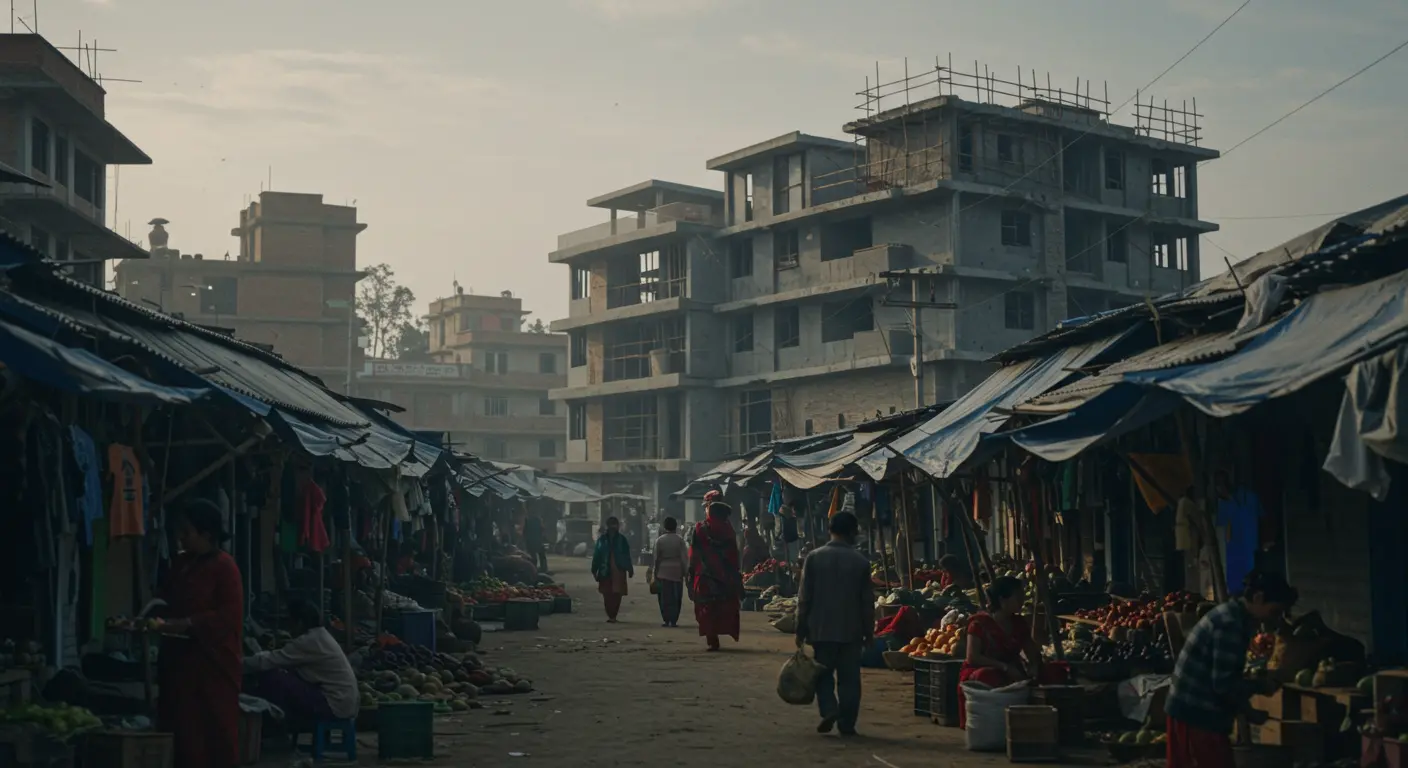
In the bustling alleyways of Kathmandu, where ancient temples cast shadows over buzzing IT hubs and trendy youth-run cafes, a quiet but fateful drama is unfolding. Here lives a generation caught between a past marred by political upheaval and economic stagnation and a future filled with digital opportunity. They are Nepal’s Generation Z, born between the mid-1990s and early 2010s.
Their importance cannot be overestimated. Nepal has what is called a “youth bulge”: 52% of the country’s population are young people aged 7 to 24.1Their collective choices will determine the nation’s trajectory for decades to come, making them perhaps the most important variable in Nepal’s future.

The central question facing the country is simple, but its implications are enormous: Will these young people be forced to migrate abroad, becoming a “lost” generation of talent? Or will they leverage global connectivity to become the “architects” of a new, digital Nepal without leaving their homeland? The government has ambitious goals, such as “Good Governance, Social Justice, and Prosperity,” laid out in the 16th National Plan.3However, these aspirations collide with the harsh reality of chronic political instability and deep structural economic problems that shape this generation’s worldviews and life paths.4
The Great Exodus – The “Lost” Generation?
For a significant portion of Nepal’s youth, the “lost generation” narrative is not just a metaphor, but an everyday reality. For them, migration is not so much a choice as a rational response to a system they perceive as broken. Multiple factors push them toward this decision, creating a powerful flow that carries human capital out of the country.
Factors of Attrition: Legacies of Instability and Trauma
The root of the problem lies in decades of political instability. Frequent changes of government, widespread corruption and political paralysis have undermined faith in state institutions.7This is not an abstract problem; it has concrete consequences in the form of low capital expenditure utilization, stalled development projects and, as a result, lack of job creation.4This political fragility is compounded by Nepal’s complex geopolitical position, which is forced to balance between India and China, sometimes resulting in economic shocks such as trade blockades.10

Against this backdrop, the domestic economy is struggling with deep structural problems. Foreign direct investment (FDI) inflows remain low, with a huge gap between stated commitments and actual investment.13The industrial sector is stagnant and the economy is dangerously dependent on migrant remittances to cover a huge trade deficit.4
The formative event for Generation Z was the devastating earthquake of 2015. Many of them were children or teenagers at the time, and the event left a deep trauma. Not only did it cause massive destruction and the deaths of nearly 9,000 people16, but also exposed the weakness of state institutions in their inability to effectively cope with the aftermath. This experience has likely instilled in the generation a deep-seated pragmatism and mistrust in the system’s ability to provide for their future.18
Two migration flows: forced and calculated
This background has given rise to two powerful migration flows, each of which is depleting the country in its own way.

Labor migration (forced route): This is the most obvious and massive flow. In the 2022/23 financial year, a record number of work permits were issued abroad – 771,327.19The main driving force is the lack of opportunities at home and the inability to provide a decent living on local salaries.20The route is often exploitative, with workers paying exorbitant fees to recruitment agencies (an average of 137,000 Nepalese rupees) for hard and dangerous work in the Gulf states and Malaysia.23This is the most brutal form of the “lost generation” – a drain on the country’s physical strength, where 74.5% of those leaving are unskilled workers.7
Educational migration (path of calculation): This is the second, more subtle but no less significant stream. Over the past decade, more than 639,000 “no objection certificates” (NOCs) for study abroad have been issued.26While ostensibly an educational pursuit, many openly admit that it is a one-way ticket. Most students who leave for countries such as Australia, Japan, Canada and the UK have no intention of returning to Nepal, which they feel has no future to offer them.27This represents a colossal drain on intellectual capital.

It becomes clear that migration is not an emotional impulse or a betrayal of one’s homeland. It is a considered and logical decision based on a sober assessment of reality. When young people face political instability, job shortages, low wages, and memories of institutional failure during national tragedies, leaving becomes the most rational path to personal and professional growth.8The “lost” generation is lost not because it is disloyal, but because the domestic system has failed to provide compelling reasons to stay. This is a fundamental distinction that policymakers and investors must understand: the problem is not with the youth, but with the environment from which they seek to escape.
Project of the Future – Architects of Digital Nepal?
Despite the grim picture of the exodus, there is another, more optimistic story. Nepal’s sizable and growing Generation Z is not waiting for the system to fix itself. Instead, they are using global digital connectivity to build a new, dynamic economy, effectively leapfrogging the country’s structural problems.
The Digital Native Advantage: A New Foundation
Nepali Generation Z are true digital natives, born into a world where technology is an integral part of life.1Internet penetration in the country has increased dramatically, reaching more than 51% of the population, and the number of mobile broadband connections has exceeded 42 million, significantly more than the population.30Although the digital divide between urban and rural areas remains32, the level of connectivity in cities like Kathmandu is more than adequate to support a globally integrated workforce. This digital literacy is the generation’s greatest asset.
New Economy: Clicks Instead of Bricks
On this digital foundation, a new economy is growing that is changing the rules of the game.
IT services boom: This is the engine behind the “architects” narrative. A 2022 report by the Institute for Integrated Development Studies (IIDS) found a booming IT services export sector worth 515 million US dollars, which has grown by staggering amounts 64,2% in just one year.33This growth is driven by more than 100 companies and nearly 67,000 freelancers, 83.5% of whom are young people between the ages of 20 and 29.33The sector already accounts for 1.4% of GDP and 5.5% of the country’s foreign exchange reserves.33

Entrepreneurship and Startup Ecosystem: Nepal has a vibrant startup scene across sectors, from e-commerce (Foodmandu, Sastodeal) and waste management (Khalisisi) to fintech (eSewa, Khalti).34Young people are at the forefront of this movement, dreaming of starting their own businesses.35The government is starting to take notice, launching initiatives like the Youth Startup Programme and announcing the IT Decade with a target of exporting IT services worth Rs 3 trillion and creating 1.5 million jobs.30
Green Frontier: Nepal’s huge hydropower potential (about 45,000 MW is economically viable) and growing carbon credit market (a $45 million deal with the World Bank) represent promising industries for the future.38These knowledge-intensive sectors are ideally suited to a skilled, globally oriented generation.
To illustrate the economic gap between the “exodus” and “architecture” paths, consider the following table.
Table 1: Two Realities: Comparing Career Paths for Nepali Youth

The traditional dichotomy of “leave or stay” is outdated. The IT boom has created a third option: physically stay in Nepal but work for a foreign company and earn a global salary.42This can be called “digital migration.” These people are not “lost” to the country; they are its greatest economic asset. They directly inject foreign exchange into the local economy without the social disruption associated with physical migration. Government plan to introduce a visa for digital nomads45indicates an emerging understanding of this new paradigm aimed at attracting foreign talent to further enrich this ecosystem. This rethinking changes the entire discourse from a simple “brain drain” to a more complex circulation of talent and capital.
The Generation Z Paradox: Values, Voice, and the New Market
To understand where Nepal is headed, it is necessary to look into the soul of its Generation Z. Their digital lives shape their behavior as consumers, their expectations as employees, and their power as citizens, creating a complex and sometimes paradoxical picture.

The New Nepali Consumer: Global Trends, Local Values
Generation Z’s consumer behavior is shaped by global platforms such as TikTok and Instagram.46They rely heavily on social media, peer reviews (word of mouth) and influencers when making purchasing decisions, from restaurant choices to clothing.47E-commerce is booming, with digital payments growing by 210% per year, driven largely by young people.49
However, this is not mindless consumption. Generation Z values authenticity, transparency and social responsibility.51They are willing to pay more for eco-friendly and ethical products and use social media to hold brands accountable for greenwashing or unethical behavior.52This creates a consumer paradox: Nepali Generation Z is not just passively absorbing global trends; it is actively filtering them through the lens of authenticity and social values. For businesses, this means that a brand’s story and ethical stance are as important as the product itself. This is a market to engage with, not just sell to.
#EnoughIsEnough: A Voice That Is Heard
For this generation, digital platforms are not only a place to shop, but also a new public square. Online youth activism has become a powerful political force in Nepal.53Movements such as #OccupyBaluwatar (against gender-based violence) and the #EnoughIsEnough campaign (protesting government actions during the COVID-19 pandemic) have successfully mobilized thousands of people, turning online outrage into real-life protests and political pressure.54
This activism is challenging the old political guard and helping to create a more democratic society, even as the government tries to introduce restrictive social media laws to curb this force.56Digital literacy has become political capital. The ability of this generation to quickly organize and disseminate information, bypassing traditional, state-controlled media, creates a new mechanism for restraining power. This is the narrative of the “architects,” spreading from the economic to the political sphere.
New Workplace: Purpose is More Important than Salary

When Gen Zers do enter the domestic workforce, they have very different expectations. Shaped by a post-pandemic mindset, they prioritize work-life balance, mental health, and flexible hours.44This is a goal-oriented generation, looking for roles where they can make a meaningful contribution and working for companies whose values align with their own.58They expect clear but flexible career paths and opportunities for continuous learning.60
For companies in Nepal (and around the world), this means a fundamental shift is needed. Attracting and retaining Gen Z talent requires a shift away from traditional hierarchical corporate structures to cultures built on agility, transparency, purpose, and well-being. The brain drain is not just about salary, but also about a mismatch of culture and values.
Conclusion: A generation at a crossroads
So Nepal’s Gen Z are not just “the lost” or “the architects.” They are both. It is this duality that defines them. They live in a country with two divergent realities: a stagnant, frustrating physical economy that pushes them out, and a dynamic, hopeful digital economy that pulls them back in or allows them to stay.

Nepal’s future trajectory hinges on a critical choice facing every young person: follow the well-trodden path of migration, or take a risk and build something new at home?
The challenge for policymakers is to make the “architect” path more accessible and attractive than the “exodus” path. This requires urgent reforms in education, investment policy, and digital infrastructure.6For investors, the opportunity lies in recognizing and supporting the burgeoning digital economy and the entrepreneurial talent of this generation.
Nepal’s future is being written today – in code, in startups, in hashtags. Whether this generation will be a story of tragic loss or triumphant creation depends entirely on the choices Nepal makes – and the world watching.the 21st century.
Sources used
- (PDF) Meeting the Needs of Nepal’s Gen Z in the Classroom: a Review of Effective Strategies
- Meeting the Needs of Nepal’s Gen Z in the …
- The Sixteenth Plan – MOEST eLibrary
- IMF Executive Board Completes the Fifth Review under the …
- Fiscal Year 2025-26: Budgetary Outlook: Structural Challenges and Immediate Priorities
- Nepal: World Bank Report Outlines Key Reforms to Boost Growth, Create Jobs
- Outflow of Nepali youth: Causes and concerns
- Youth struggles in Nepal amid political instability: A call for change
- Nepal’s political and economic uncertainty
- Dynamics and Geopolitical Interests in China-Nepal Relations
- Geopolitical rivalry between India and China in Nepal
- Geopolitical Dynamics in South Asia: A Comparative Study of Chinese and Indian Interests in the Sovereignty and Politics of Nepal
- FDI commitments increase, improvement in inflows expected
- Nepal Foreign Direct Investment, 2000 – 2025 | CEIC Data
- Nepal Country Partnership Strategy (2025–2029): Inclusive and Sustainable Growth Assessment
- Nepal earthquakes: Facts, FAQs, and how to help
- What was the impact of the 2015 Nepal earthquake?
- The Impact and Long-Term Consequences of Earthquakes on the Livelihood of Nepalese Individuals and Communities
- Numbers of youth seeking foreign employment opportunities surge
- Numbers of youths seeking foreign employment opportunities surge
- Rise of Foreign Employment and Challenges Faced by Nepali Youth in the Domestic Job Market
- Employment or foreign employment?- Opinion – Kantipur News
- Foreign Labour Migration: Opportunities and Challenges in Nepal
- Nepal: Protect Nepalese migrants from ‘false promises’ of work abroad
- Workers going to Qatar and Kuwait paying hefty amounts as zero cost policy falters, report says
- Over 600,000 students obtained NOC in a decade
- 339000 individuals obtain NOC in four years
- Migration Certificate | Nepali Times
- (PDF) Analysis of Determinants of Youth Migration Intentions in Nepal
- STATE-OF-DIGITAL-RIGHTS-AND-SAFETY-IN-NEPAL-2024-1-1-2.pdf
- NEPAL’S DIGITAL GENERATION:
- Bridging the digital divide in Nepal
- Unleashing it: advancing Nepal’s digital economy
- NEPALI STARTUP ECOSYSTEM : The Growth So Far & The Future
- Youth Entrepreneurship Development Volunteer in Nepal: Empowering Tomorrow’s Innovators
- ‘300,000 youth to get jobs in IT industry in three years’
- Nepal Gen Z Startup Program: Government Initiative for Youth Entrepreneurship
- Nepal: Economy | Asian Development Bank
- Nepal’s Roadmap to Produce 28500 MW by 2035
- Nepal’s Carbon Trade: Big Hopes, Small Gains
- ICT – seepnepal.com
- Salary of IT professionals in Nepal – Share your experience (Mega Thread)
- Nepal’s Booming IT Sector
- How Gen Z’s Demand for Work-Life Balance Is Changing Workplace Culture
- Nepal to launch five-year digital nomad visa for global remote …
- Gen Z’s Materialistic Obsessions
- The Factors of Social Media That Influence Purchase …
- (PDF) Influence of Social Media Usage on Generation Z’s Choice in Selecting Restaurants in Kathmandu
- International Journal of Atharva Consumer Behavior toward E-Commerce among Youth of Kathmandu
- Digital transactions surge at 210% annually
- Digital Marketing’s Influence on Gen Z’s Choice of Academic Institutions in Nepal
- Keeping up with Gen Z and millennial purchasing habits
- The Power of Social Media in Youth Activism: Amplifying Voices for Justice
- Modern-day youth activism: Youth engagement in the digital age
- Influence of Youth Engagement on Nepal’s Political Evolution: An Analysis of Emerging Youth-Led Movements
- Social Media Bill and its impact on emerging youth leaders
- Nepal: Restrictive social media legislation, targeting of journalists and excessive force at protests put freedoms at risk
- Rethinking Retention: Why Purpose-Driven Work Matters More Than Perks in Nepal
- Work-life Balance and Job Satisfaction: Evidence from Female Employees in Nepalese Commercial Banks
- How Gen Z is transforming workplace dynamics
- Nepal: World Bank Group’s New Country Partnership Framework Prioritizes Jobs and Resilience
- Nepal’s Economy to Strengthen in FY2025 and Further in 2026 | Asian Development Bank
- Youth in Numbers-A5