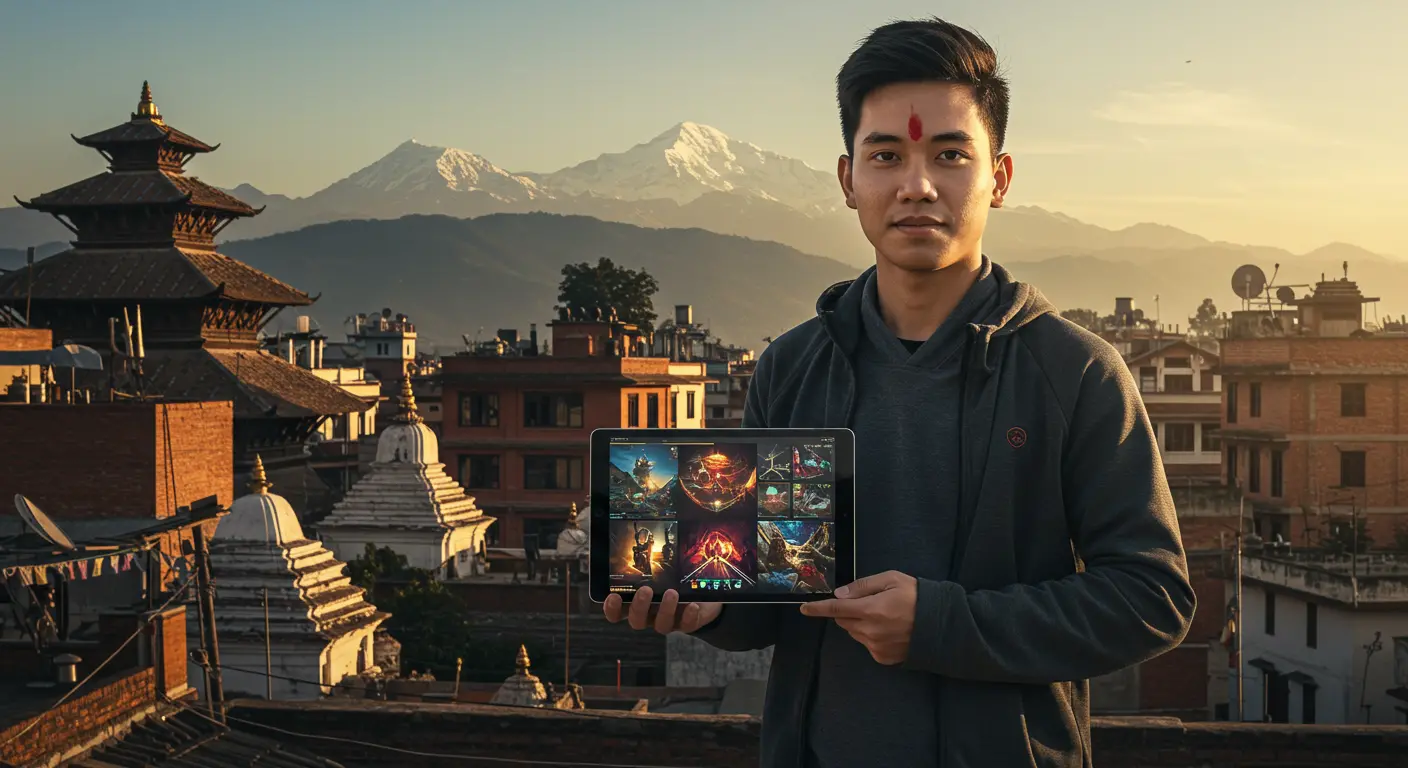
The Faces of Nepal’s Tech Scene
Nepal’s technology sector is a tale of two contrasting realities. The first is a bright and widely publicized success story. The country’s IT services exports reached an impressive US$515 million in 2022, becoming the leading export, growing by more than 20% at the end of 2024.1This is the face of Nepali technology that the world knows: a reliable and cost-effective business process outsourcing (BPO) hub that attracts international clients with its skilled and English-speaking workforce.4
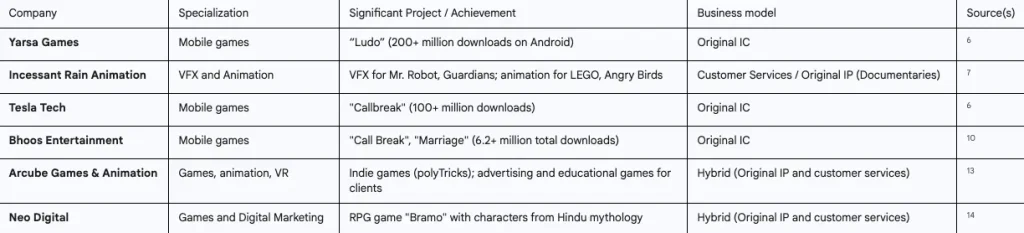
But behind this success story lies another, lesser-known but potentially more valuable reality. It is the story of Pokhara-based Yarsa Games, whose mobile game Ludo has been downloaded more than 200 million times on Android devices alone – an audience larger than the populations of Germany and France combined.6This is the story of Incessant Rain Animation Studios, a Kathmandu-based studio that has created visual effects (VFX) and animation for global hits such as Mr. Robot, Lemony Snicket’s A Series of Unfortunate Events, and LEGO and Angry Birds projects.7
These “hidden champions” prove that Nepal has world-class creative and tech talent. But are they anomalies or the first signs of a nascent industry? This article explores whether Nepal can move beyond its reputation as an outsourcer to become a global creator of its own intellectual property (IP) in gaming, animation, and creative software. We examine systemic issues and, drawing on international success stories, offer a clear and actionable roadmap for building a globally competitive creative tech sector. The core tension lies in the contrast between a successful but less valuable model services and a struggling but more valuable model of creation products/IP The success of the first proves the potential of the workforce, making the difficulties of the second a mystery to be solved.
Current Landscape: Pockets of Excellence in an Emerging Ecosystem
The foundation for a creative industry in Nepal already exists, but it is fragmented and lacking cohesion. However, individual companies are showing remarkable results, proving the potential for growth.

The vanguard of mobile gaming
The undisputed leader in this field is Yarsa Games. Founded in 2016, it has grown to employ over 100 people, 70 of whom work in the gaming division.6Their journey from creating a few unsuccessful card games to the global hit Ludo illustrates the high-risk, high-reward nature of the industry and the power of persistence. After many failures, they stumbled upon a huge success that changed their trajectory.6Their ambitious goal of reaching 500 million users by 2025 is a sign of their global ambition.9
Other key players include Bhoos Entertainment and Tesla Tech, makers of another hugely popular mobile game, Callbreak.6Their focus on digitizing traditional card and board games is a smart strategy that taps into a culturally relevant and established market. Games like Marriage and Ludo Legend resonate with local and regional audiences, as evidenced by the more than 6.2 million downloads of Bhoos games.11
Animation and Visual Effects Center
Incessant Rain Animation Studios (IRAS) is a benchmark for high-quality creative services. Their impressive portfolio includes work on international projects for major clients, including VFX for the series Watchmen and Da Vinci’s Demons, as well as animations for brands such as LEGO and Minecraft.7Most importantly, IRAS has taken a strategic step by opening the Incessant Rain Academy. This is a direct response to the talent shortage as the academy trains artists for careers in VFX, animation and game development by bringing in consultants from the Hollywood ecosystem.8This is a clear example of how the private sector is solving a problem that the public sector has failed to solve.
Hybrid Indie Studios and Service Providers
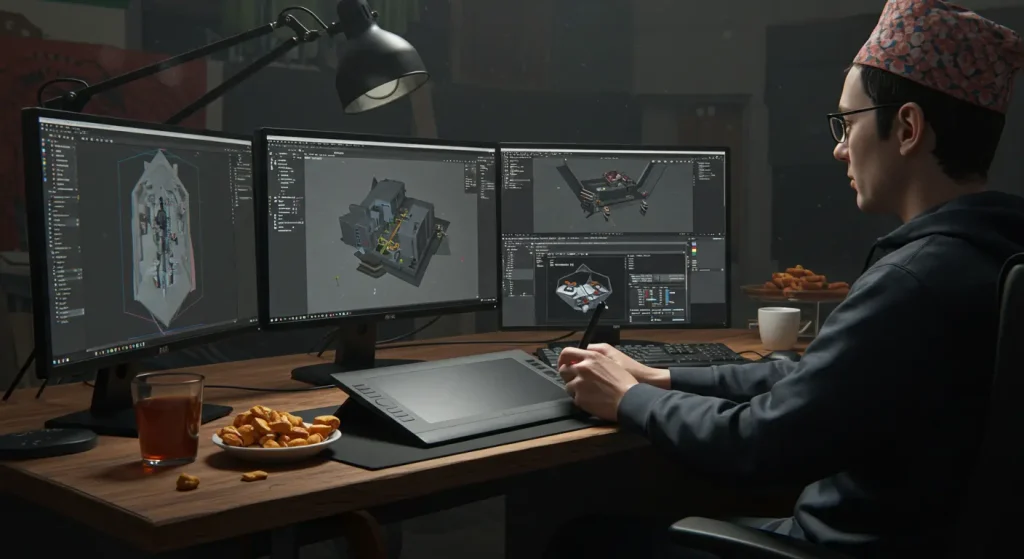
Companies like Arcube Games & Animation and Neo Digital are demonstrating a hybrid business model.13On the one hand, they create their own indie games (such as Arcube’s Naakaa and polyTricks or Neo Digital’s Hindu mythology-themed RPG Bramo). On the other hand, they offer a wide range of services to clients, including 3D animation, virtual reality, and advergame development.13
This dual model is not just a business strategy, but a survival mechanism. In a funding-starved ecosystem, working with clients provides the stable cash flow needed to fund riskier, passion-based projects to create original IP. This highlights the “capital dilemma” discussed below.
Ecosystem in the shade
Beyond these big players, there is a large informal ecosystem of small studios and freelancers.1Conflicting data on the number of animation studios – Lusha indicates 816, while Studio Hog claims that there are 017— are indicative of the problem itself. This “data gap” shows that the industry is so fragmented and informal that even basic metrics are unreliable. The lack of transparency makes it difficult for investors to assess the market and for policymakers to develop effective measures.
Table 1: Nepal’s Creative Technology Vanguard – Key Players and Achievements
Obstacles to the World Stage
Despite the existence of “pockets of excellence,” there are four main obstacles that prevent them from coalescing into a dominant industry.
The Paradox of the Personnel Reserve
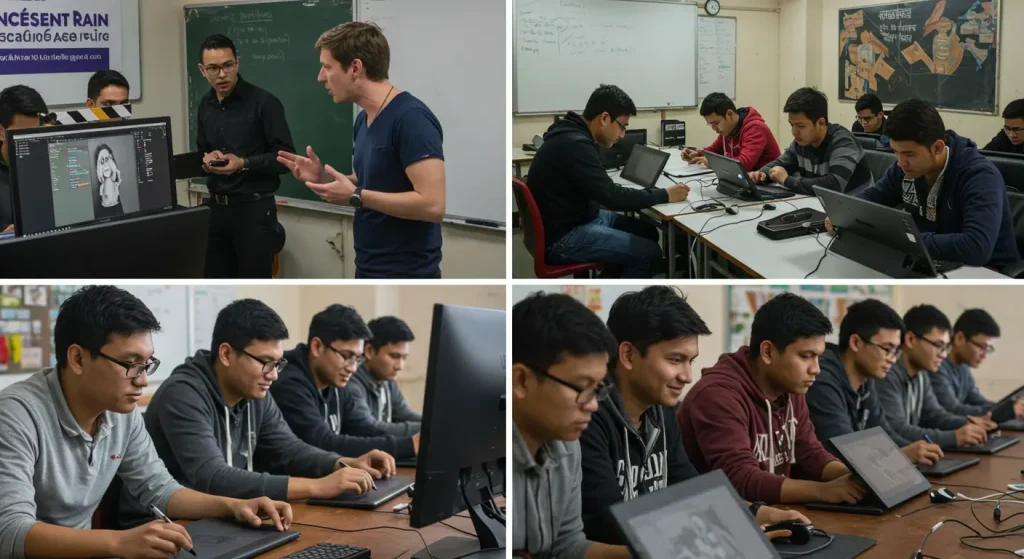
Nepal faces critical shortageexperiencedcreative and technical specialists, despite the fact that more than 10,000 IT specialists graduate every year.18The main factors are the brain drain (skilled professionals moving abroad) and fierce local competition from the high-paying BPO/outsourcing sector.19Creative startups simply cannot compete on salaries with firms serving American and European clients.3This dynamic creates a “gravity well of talent” that draws top talent from the country’s nascent creative industries into the more mature services sector.
The problem starts at the education level. Although ICT policies in education exist, their implementation is weak. Schools lack infrastructure, and teachers lack training and motivation.21Training programs are often out of date, forcing companies to spend months training new employees.19Moreover, the government’s quota system for admission of students to Nepali IT colleges actively restricts the supply of talent, while foreign-affiliated colleges have more freedom, exacerbating the problem.3
Infrastructure gap
Although internet penetration has increased significantly 4, the creative industry doesn’t just need access. It needs high speed, reliable and affordable connection, which remains a problem.1Frequent power outages are also a major obstacle.24
There are no specialised facilities. The government IT park in Banepa, intended as an innovation hub, has not lived up to expectations.25There is a lack of high-end, specialized facilities such as render farms, motion capture studios, and sound stages, which are critical to producing high-quality games and animation. Due to these infrastructural limitations, most development is concentrated in the Kathmandu Valley.19
The Dilemma of Capital
Access to funding is one of the top five challenges for all Nepalese startups.24Creative technologies, being inherently riskier than service businesses, face an even more challenging environment. There is a severe shortage of seed, initial and venture capital.26
The Foreign Direct Investment and Transfer of Technology Act (FITTA) allows 100% foreign ownership of technology companies, which is a positive development.28However, the minimum investment requirement of 20 million Nepalese rupees (around US$150,000) is a significant barrier for creative seed-stage startups seeking smaller initial investments from foreign angel investors.28
In addition, a significant portion of revenue from IT services exports comes through informal channels such as hundi to avoid taxes and bureaucracy.2This money is not formally reinvested, which deprives the formal economy of capital and makes it impossible to measure the true size of the industry. This indicates a deep mistrust of the formal financial system.
Political puzzle
Government initiatives such as Digital Nepal and IT Decade are positive but too general.18They lack specific, targeted measures to address the unique needs of the creative industries (e.g. IP protection, R&D grants, venture capital). There is a strategic mismatch: the government is applying service industry thinking and policy framework to the creative, product-based industries.

Laws are often outdated (such as the transport law that hampered ride-sharing startups) or lacking for new technologies such as AI and the Internet of Things.19This creates a climate of uncertainty that discourages innovation and investment. Kathmandu’s designation as a UNESCO Creative City of Cinema is a major symbolic victory.30However, without a concrete action plan and budget, it risks remaining just a title. The plan must go beyond tourism and focus on building a basic creative ecosystem.31
Roadmap for Creative Tech Revolution in Nepal: A Four-Pillar Strategy
The way forward requires a focused national strategy. Building on the successes of Poland and Vietnam and the cautionary lessons of Finland, a concrete strategy can be proposed with four pillars.
Pillar 1: Building a World-Class Talent Ecosystem
Problem to be solved: The paradox of the personnel reserve.
- Suggested solutions:
- Radical education reform: It is necessary to move from policy documents to actions. Create public-private partnerships in which industry leaders (such as IRAS, Yarsa) will work with universities to develop curricula so that graduates have marketable skills.12
- Eliminating counterproductive quotas: Immediately lift the government-imposed quotas for the admission of IT students to domestic universities so that the supply of talent can meet demand.3
- Creation of the “Creative Talents Fund”: Establish a public foundation inspired by the Finnish Arts Promotion Centre (Taike)33, which will provide small grants to individuals and teams to enhance their skills, participate in international workshops and develop early stage prototypes.
- Promotion of creative professions: Launch a national campaign similar to the Polish campaign to promote programming34to present game development and animation as viable and prestigious career paths, shifting the cultural mindset away from traditional professions.
Pillar 2: Laying the Foundation: Targeted Policies and Infrastructure
Problem to be solved: Political puzzle and infrastructural gap.
- Suggested solutions:
- Launch of Nepal Games and Animation Fund: Create a special state fund based on the model of the very successful Polish GameINN program.34The fund will co-invest in R&D for ambitious projects to create original IP, sharing the risks with private studios.
- Introduction of “Refund for Original IP”: Shift tax incentives from general IT services to incentives for the creation and export of original intellectual property. This could be a cash refund for production costs incurred in Nepal, similar to the Finnish incentive for audiovisual production.35
- Modernization of IP and corporate law: Accelerate the creation of clear, modern rules on intellectual property, digital commerce and new technologies to create a predictable and secure business environment.19
- Privatization and specialization of IT parks: Instead of one state-owned IT park, create a policy to encourage small, private, specialized creative hubs (e.g. GameDev Hub or Animation Cluster) with subsidized access to high-speed internet and reliable electricity.19
Pillar 3: Fueling the Engine: Creating a Conducive Investment Climate
Problem to be solved: The dilemma of capital.
- Suggested solutions:
- Tiered minimums for FDI: Reduce the minimum foreign investment threshold from ~US$150,000 to a more affordable level (e.g. US$25,000) specifically for registered creative technology startups.28This will open up access to critical angel and seed funding from abroad.
- Creation of the NEPSE-Tech index: Work with the Nepal Stock Exchange to create a dedicated index for technology and gaming companies, similar to the Warsaw Stock Exchange’s WIG-Games index.37This will provide a clear path to liquidity for investors and founders.
- Formalization of investment channels: Simplify the process of legally receiving foreign payments for startups and repatriating profits for investors.2This will help combat reliance on informal channels and attract more capital into the formal, taxable economy.
Pillar 4: Promoting the Story: Building a Global Brand ‘Made in Nepal’
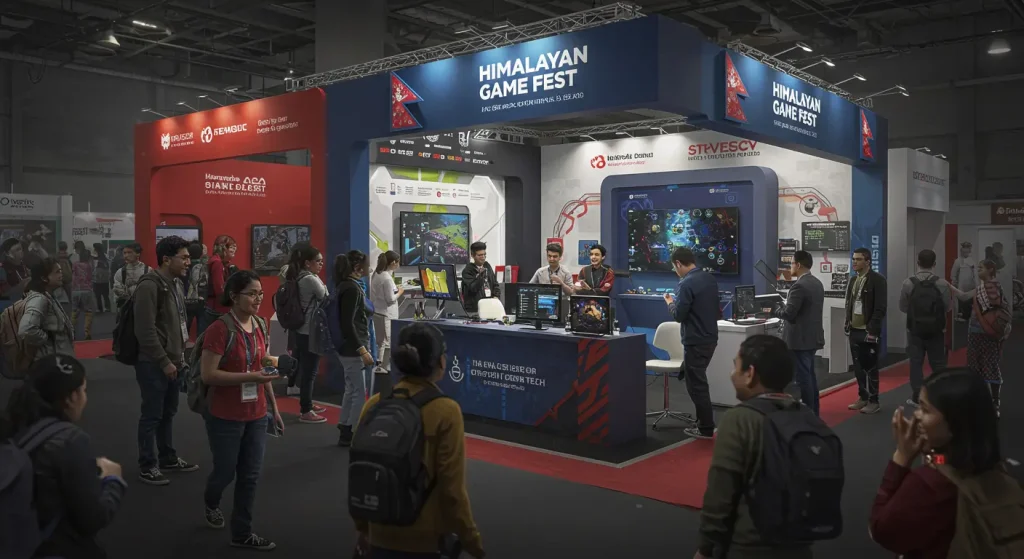
Problem to be solved: Low global visibility and fragmented market access.
- Suggested solutions:
- Launch of the Himalayan Game Fest: Create a flagship international conference on game development and creative technologies in Kathmandu, modeled on Finland’s Slush.39It will become a marketplace where Nepali talent can meet global publishers, investors and the press.
- UNESCO status activation: Transform “Creative City of Cinema” from a title into an action plan.31Use it as a platform for international film and animation workshops, co-production markets and to brand Kathmandu as a hub for creative talent.
- International promotion funding: Create a state program similar to the Polish sectoral promotion program40, which will provide grants to Nepalese studios to participate in major international exhibitions such as GDC (Game Developers Conference) and Annecy (for animation).
- Lessons from Finland’s ‘Supercell Syndrome’41:
The branding message should be based on variety And sustainabilityNepali ecosystem, and not just being home to one or two hits. Promoting a wide range of talent, from mobile games to VFX, will help avoid the trap of being too one-dimensional.
Table 2: Strategic Roadmap for Creative Technology Industry in Nepal

Conclusion: Beyond Outsourcing Is a Creative Everest to Conquer
Nepal is at a critical crossroads. It has proven its technical execution capabilities through a successful outsourcing industry. It now faces a choice: remain a service provider, competing on cost, or move up the value chain and become a creator of high-value, globally recognized intellectual property.
The way forward does not lie in hoping or waiting for new “accidental champions.” It requires a targeted, four-part national strategy that focuses on developing talent, implementing targeted policies, stimulating investment, and building a global brand. The success of countries like Poland and Vietnam shows that this is not a pipe dream; it is a matter of strategic choice and consistent execution.
The journey from a service economy to a creative power is like climbing a new Everest. It is difficult, requires a great deal of preparation and the combined efforts of government, industry and the education sector. However, the view from the top – a thriving, innovative and globally respected creative economy – is a prize worth climbing.
Source used
- Unleashing it: advancing Nepal’s digital economy
- Nepal’s income from IT service exports surges by 20.28 percent in first four months of current FY
- Nepal’s Export of IT Services : Making Big Strides
- Outsourcing in Nepal: What the future holds for the industry
- (PDF) Information Technology Outsourcing in Nepal: Strengths, Challenges, and Priorities
- Yarsa’s Ludo Entertaining 20 Crores- Feature – Kantipur News
- Animation | Incessantrain
- Incessant Rain: Of Living Dreams and Creating Countless Opportunities
- Yarsa Games – Game Studio from Nepal
- Institutional Partner – Samaanta Foundation
- Bhoos Games | Games to Bond with
- Incessant Rain Academy: Animation and VFX Training In Kathmandu
- Arcube Games & Animation – Indie Game Development Studio from …
- Game Development Nepal | Neo Digital
- Are there any game development companies based in Nepal?
- Animation and post production Companies in Nepal | Sales leads list by Lusha
- Animation Studios in Nepal | Studio Hog
- Securing Nepal’s Future as a Tech Hub
- Barriers to Local Digital Innovation in Nepal
- How is Nepal’s IT industry Shaping the Future of the Country?
- Integration of Information, Communication and Technology in Secondary Schools of Nepal: Policies and Practices
- ICT integration in teaching and learning activities in higher education: A case study of Nepal’s teacher
- EXPLORING THE USES OF ICT IN GOVERNMENT SCHOOLS OF NEPAL
- The Five Biggest Factors Challenging Startups in Nepal
- Information Technology/ ICT – Federation of Nepalese Chambers of Commerce & Industry ( FNCCI )
- The Blossoming Prospects of Creative Career in Nepal
- Funding Options for Startups in Nepal
- Incorporating a Tech Company in Nepal: What Foreigners Should Know
- Nepal’s ICT Sector Growth: 1.94% GDP Contribution Expected in FY 2024/25
- Project: Fostering creative sector and promoting cultural expressions in Nepal details
- Kathmandu’s Creative Journey with UNESCO Creative Cities Network
- Vietnam Game Industry Overview in 2024
- Arts Promotion Centre Finland
- Gowin: Polish government will support game developers
- Funding to promote research and development in the creative industries
- Legal bottlenecks must be resolved for Vietnam’s online gaming industry to win
- Why gaming is set to become Poland’s national brand
- Video games in Poland
- Greater Helsinki Boosts Startup Ecosystem with Strong Founder Connectedness
- The Game Industry of Poland – Report 2023
- The Hard Truth About the Finnish Game Industry
- Việt Nam targets US$2.4 billion in gaming industry revenue by 2029
- Vietnam’s Tech-Driven Gaming Industry on Track for $2.42B Revenue