Nepal at a crossroads
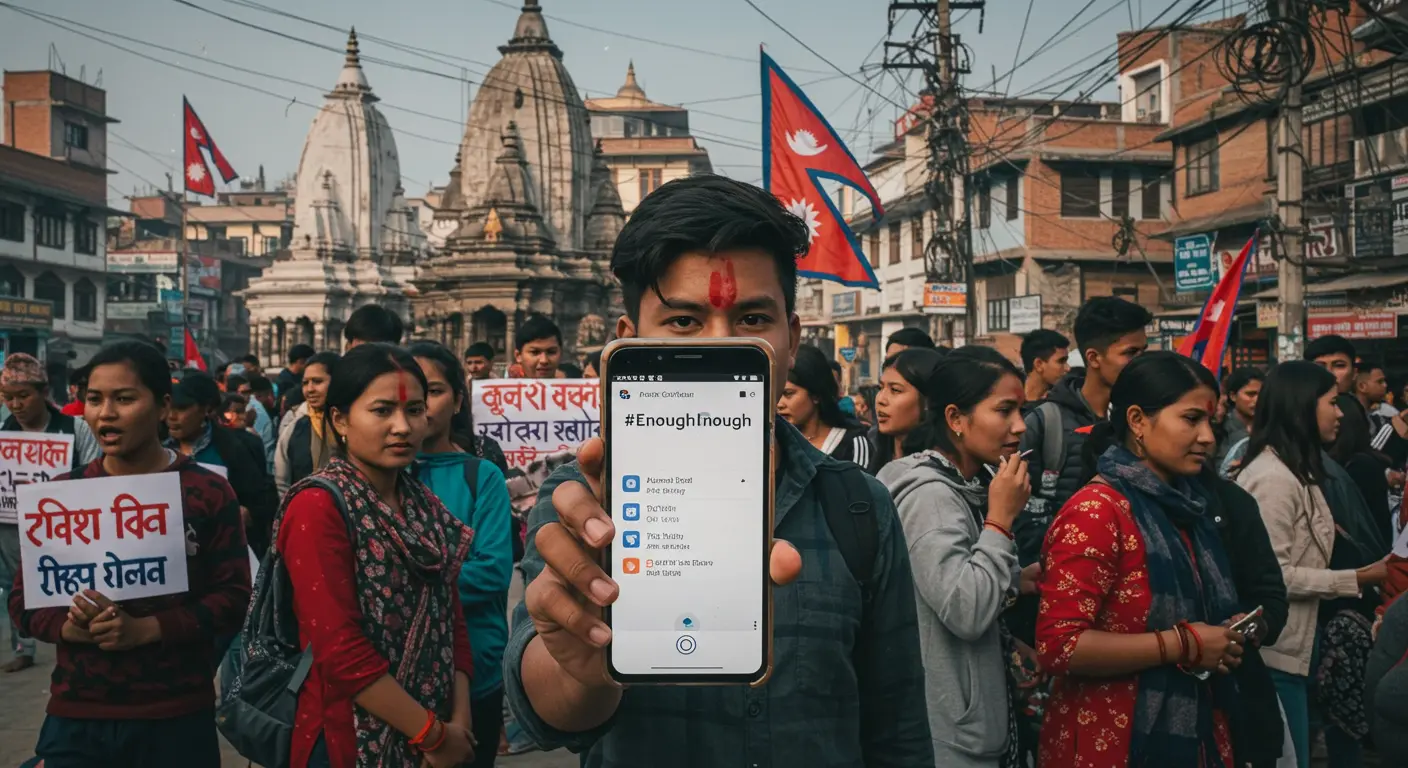
Nepal, a country with breathtaking Himalayan landscapes and enormous potential, is at a critical crossroads. Its path to stability and prosperity is continually undermined by systemic corruption that has permeated every aspect of life, from the highest levels of government to the day-to-day interactions of citizens with the state.1This is not a new problem, but a chronic illness rooted in a historical culture of patronage, nepotism and cronyism that flourished both under the monarchy and after the transition to multi-party democracy.2In recent years, the issue has come to the fore with renewed vigor, triggering a nationwide crisis of confidence and calling into question the very viability of the country’s democratic institutions.
The scale of the problem is illustrated by the Corruption Perceptions Index (CPI), published annually by Transparency International. Nepal has consistently ranked poorly over the years, reflecting deep-seated perceptions of public sector corruption.5According to the 2023 report, Nepal ranked 108th out of 180 countries, with a score of 35 out of 100. Despite a slight improvement from previous years (110th in 2022 and 117th in 2021), the country remains firmly in the “rampant corruption” category.6The 2024 data confirms this stagnation: the score has dropped to 34 points and the rank has changed to 107th place, indicating a lack of any real progress.8
| Year | IVK score (out of 100) | World Rank (out of 180) |
| 2021 | 33 | 117 |
| 2022 | 34 | 110 |
| 2023 | 35 | 108 |
| 2024 | 34 | 107 |
These grim statistics have received a powerful emotional boost from a series of high-profile corruption scandals that have rocked Nepal in recent years. Cases involving fake refugees, the purchase of wide-body aircraft and gold smuggling have catalysed public anger, as they have implicated senior politicians from all major parties, former ministers and top bureaucrats.12These events have led many to ask whether the current wave of arrests and investigations represents a genuine breakthrough in the fight against impunity, or is it yet another round of political theatre in which anti-corruption agencies are used as a tool to settle scores with opponents?
This analysis aims to answer this key question. We examine the details of recent high-profile cases, assess the effectiveness of anti-corruption institutions such as the Commission for the Investigation of Abuse of Authority (CIAA), and analyze the impact of corruption on Nepal’s international reputation and economy. The goal is to understand whether we are witnessing the beginning of real change or merely a clever imitation of a struggle that masks an unchanging system.
High-profile cases that shake the foundations of power
Nepal’s recent history has been marked by a series of corruption scandals that go far beyond the usual bribery. These cases are unique in their scale, cynicism, and the caliber of the people involved. They demonstrate not isolated failures in the system, but a deeply entrenched kleptocracy in which political elites, bureaucrats, and business interests collude to plunder public resources. Analyzing these cases is key to understanding how serious and systemic the corruption problem is in the country.

The Fake Refugee Scam: Selling Hope
One of the most shocking scandals of recent years was the fake Bhutanese refugee scam. The essence of the fraud was that a criminal network, including high-ranking officials and politicians, defrauded more than 800 Nepalese citizens of millions of dollars.15The scammers promised to issue them documents identifying them as Bhutanese refugees left behind by the third country resettlement program and send them to the United States.18To do this, the criminals, in collusion with officials, falsified the report of a government task force originally created to resolve the problem of the remaining 429 genuine refugees, and added hundreds of Nepalese to the lists for money.16
The scale of the conspiracy is staggering. Charges were brought against 30 people, including former Deputy Prime Minister and Energy Minister Top Bahadur Rayamajee, former Home Minister Bal Krishna Khan and then-Secretary to the Government Tek Narayan Pandey.16They were charged with the most serious crimes: treason, organized crime, fraud and forgery.16The charge of treason was based on the fact that turning Nepalese citizens into refugees had caused enormous damage to Nepal’s international image and prestige.18The case has sparked public anger and calls for a thorough and impartial investigation, but the trial is dragging on and there remains public doubt that all those responsible, especially those at the top, will be held accountable.13
Widebody Scandal: Flight into Debt
The purchase of two Airbus A330 wide-body aircraft for the national carrier Nepal Airlines Corporation (NAC) was meant to be a symbol of modernisation and national prestige. Instead, it has become a textbook example of government mismanagement and large-scale corruption.20The essence of the scam was a complex scheme that allowed officials and intermediaries to enrich themselves at the expense of the state.
Firstly, the technical characteristics of the aircraft were changed. Instead of the originally planned aircraft with a maximum take-off weight (MTOW) of 242 tons, capable of performing long-haul flights, aircraft with an MTOW of 230 tons were purchased, which significantly limited their operational capabilities.20Secondly, the purchase was not made directly from Airbus, but through a complex network of intermediaries from Portugal, Germany and Moldova, which led to an inflated price of at least $40 million.20As a result of these shenanigans, the national airline has found itself in a debt trap, with its debt reaching a staggering 31.4 billion Nepali rupees by 2023.20
International confirmation of the bribery came from the United States, where the former head of AAR Corporation, which participated in the deal, pleaded guilty under the Foreign Corrupt Practices Act (FCPA).20In December 2024, Nepal’s Special Court convicted 11 people, including former NAC managing director Sugat Ratna Kansakar, but the investigation is ongoing, with many observers noting the length of the investigation and fearing that key political figures behind the deal will escape justice.20
Gold Rush: Smuggling as a System

Regular scandals involving gold smuggling through the country’s main international airport, Tribhuvan, highlight deep corruption in customs and law enforcement agencies.12One of the most high-profile cases involved the seizure of 60 kg of gold hidden in motorcycle brake pads and 9 kg of gold found in a batch of electronic cigarettes.12These incidents led to the arrest of the ruling Maoist Party’s vice-chairman Krishna Bahadur Mahara.
But the case is notable not only for the scale of the smuggling, but also for its political context. Mahara’s arrest was reportedly ordered by Interior Minister Rabih Lamichhane to demonstrate his resolve in the fight against corruption and to bolster public support.12At the same time, other high-ranking politicians, including the current finance minister, have also been accused of involvement in smuggling networks. This creates a picture of a tangled web of mutual accusations and dirt, in which anti-corruption investigations become a tool of political struggle. Politicians use them to weaken competitors when in power, and they themselves become targets when they move to the opposition. This phenomenon of mutual deterrence and selective justice undermines the credibility of any anti-corruption initiatives.12

Taken together, these three cases paint a disturbing picture. They demonstrate that corruption in Nepal is not just a collection of isolated crimes, but a system that permeates all branches of government and political parties.12The consistency of the methods – manipulation of public procurement, abuse of administrative procedures, use of official position to facilitate illegal activities – indicates the existence of well-established schemes. The involvement of representatives of all major political forces (CPN-UML, Nepali Congress, Maoists) indicates the existence of an unspoken inter-party consensus on the issue of extracting benefits from state resources.12These scandals are thus not simply acts of individual greed, but manifestations of a patronage-based political culture where power is used to provide illicit preferences and protect criminal activity.
The consequences go far beyond financial losses. These scandals deal a devastating blow to public trust, undermining the legitimacy of democratic institutions.2Polls show that an overwhelming majority of Nepalis (68%) believe the country is heading in the wrong direction, and amid widespread disillusionment there have even been calls for the restoration of the monarchy.20This creates a dangerous feedback loop: corruption breeds distrust, and distrust weakens democratic institutions, making them even more vulnerable to corruption.
Anti-corruption guards: toothless tigers or effective hunters?
In the face of large-scale corruption scandals, specialized anti-corruption bodies play a key role in restoring justice and public trust. In Nepal, the main such institution is the Commission for the Investigation of Abuse of Authority (CIAA). However, its activities raise more questions than they answer, and the results of its work appear extremely contradictory.

CIAA: The Paradox of Mandate and Reality
The CIAA is a constitutional body with broad powers to investigate and prosecute officials found guilty of corruption.24On paper, it is a powerful tool, designed to be the ultimate guardian of the law. However, in practice, its effectiveness is seriously questionable, as evidenced by paradoxical statistics. On the one hand, in recent years, the CIAA has shown a surge in activity: in the 2023/24 financial year, 201 cases were brought against 1,545 people, double the number from the previous year.25On the other hand, the conviction rate in cases initiated by the commission has fallen sharply. While it peaked at 88.24% in 2018/19, it has fallen to a historic low of 33% by 2022/23.27This gap between the number of cases filed and the actual convictions requires a deep analysis of the causes of institutional failure.
Anatomy of Failure: Key Factors of Ineffectiveness
There are several systemic problems that transform the CIAA from a formidable corruption hunter into a “toothless tiger.”
Political interference
This is the main and most destructive problem. The process of appointing CIAA commissioners is deeply politicized and part of a power-sharing deal between the leading parties.30This leads to the fact that key positions are filled not by independent professionals, but by loyal “yes men”.30As a result, the commission becomes dependent on “nods” from the ruling elite and cannot act without their tacit approval, especially when it comes to investigations against high-ranking politicians.30Investigations into the most high-profile cases, such as the purchase of TERAMOCS telecommunications equipment, have been stalled for months due to enormous political pressure.34
The “political decisions” loophole
A critical flaw in the legislation is the provision that prohibits the CIAA from investigating “policy decisions” taken collectively by the cabinet.22This loophole is actively used to legalize corruption schemes. Decisions that benefit certain business groups or individuals are artificially passed through the cabinet of ministers to give them immunity from investigation.22The CIAA itself acknowledges the ambiguity of the term and has asked for a clear definition, but to no avail.35
Focus on the “small fish”
The collapse in convictions is largely due to a 2021 Supreme Court ruling that banned the CIAA from conducting so-called “sting operations.”28Before the ban, the commission could boast a high success rate because such operations were easy to carry out and almost always resulted in convictions. However, their targets were usually low-level officials caught taking petty bribes.28The ban on these operations exposed the CIAA’s inability or unwillingness to conduct complex “grand corruption” investigations that require gathering complex evidence and resisting political pressure.28This has reinforced the public perception that the CIAA is going after the “small fish” while the “big sharks” go unpunished.22
The Judicial System: A Compromised Arbiter
Even if a case reaches the court, it does not guarantee justice. Nepal’s judiciary, which should be the last bastion of justice, itself suffers from the same ills as other institutions. In 2021, a report by a commission led by former Chief Justice Hari Krishna Karki found “rampant corruption and irregularities” within the judiciary itself.39The report pointed to political influence in the appointment of judges and even to the fact that some judges themselves act as intermediaries in corrupt deals.40

The recommendations of the Karki report, such as the introduction of an automated system for distributing cases among judges to eliminate the influence of the court president, have been implemented extremely slowly and have met with resistance within the system.41The Nepal Bar Association has repeatedly issued harsh criticism, accusing the judiciary of lacking independence and demanding full implementation of the reforms proposed in the report.37
Nepal’s anti-corruption system is thus a vicious circle of impunity. The investigative body (CIAA) is controlled by the politicians it is supposed to investigate. The law contains a loophole that protects the most senior of them. And the judiciary, which is supposed to render the final verdict, is itself riddled with corruption and political influence. This design virtually guarantees the failure of any serious anti-corruption effort.
Moreover, instead of a coordinated fight against corruption, there is public conflict between institutions. The CIAA blames the Special Court for the low conviction rate, saying the court “does not weigh the evidence with sufficient balance.”44The court, in turn, counters that the cases are falling apart due to weak investigations and a lack of evidence on the part of the CIAA.29The Bar Association accuses the CIAA of pressuring the judiciary.37This public squabble and shifting of responsibility only exacerbates the paralysis of the system and finally undermines the trust of citizens.
International arena: reputational costs and economic risks
Nepal’s endemic corruption is not just a domestic problem. It has tangible and profoundly negative consequences on the international stage, undermining the country’s economy, discouraging investors, and eroding the trust of key development partners.
Economic stagnation and investment climate
The direct link between corruption and Nepal’s poor economic performance is undeniable. The World Bank has repeatedly warned in its reports that unless structural problems, including corruption and political instability, are addressed, Nepal’s long-term economic growth could slow to below 4% per year.45Such growth will prevent the country from achieving its ambitious development goals, including successfully graduating from the least developed country category by 2026. Corruption distorts the distribution of resources, increases the cost of doing business, suppresses competition, and stifles economic growth.3
Nepal remains a high-risk destination for foreign investors. Cumbersome bureaucracy, lack of transparency, inconsistent application of laws and an unreliable judicial system create an extremely unfavourable environment for foreign direct investment (FDI).48The International Monetary Fund (IMF) has consistently emphasized in its recommendations that removing barriers to foreign investment and strengthening anti-corruption institutions are top priorities for Nepal.50However, so far these calls remain largely unanswered.
FATF Grey List: A Financial Verdict
One of the most serious international consequences of Nepal’s weak institutions was the country’s re-inclusion on the Financial Action Task Force’s (FATF) grey list in February 2025.52The FATF is a global standard-setting body in the area of combating money laundering and terrorist financing (AML/CFT). Being placed on the grey list means that a country has been identified as having serious strategic deficiencies in this area.54
Nepal was already on the list from 2008 to 2014 and was removed after implementing a series of reforms.55However, the new designation suggests that these reforms have been superficial or that their implementation has weakened over time. The FATF cited Nepal’s failure to effectively regulate high-risk sectors such as cooperatives and real estate, as well as weaknesses in investigating and prosecuting financial crimes.52
The implications of this decision for Nepal’s economy could be catastrophic. It entails increased scrutiny of all international transactions, which could hamper trade finance and, most critically, remittances from migrant workers, which are a vital source of foreign exchange earnings for the country.52The grey list also discourages foreign investors and makes it difficult to obtain loans on international markets. The Nepalese government has announced that it has begun working on an action plan to get off the list, but it has only two years to do so, after which the country risks being blacklisted with even harsher sanctions.57
This situation clearly demonstrates the direct connection between domestic political failures and international financial risks. The inability or unwillingness of political elites to combat corruption and money laundering within the country led to the weakening of institutions, which, in turn, was recorded by the international regulator and resulted in specific economic threats for the entire nation.52
Erosion of trust among international partners
Systemic corruption also undermines the credibility and effectiveness of aid from international development partners such as the World Bank, the Asian Development Bank (ADB), USAID, and the UK Foreign and International Development Office (FCDO). These organizations explicitly link the success of their programs to good governance and the absence of corruption.58

ADB’s risk assessments for Nepal highlight high levels of threat in the areas of public financial management and public procurement.61USAID’s activities in Nepal have been repeatedly marred by controversies and allegations of misuse of funds, leading to program freezes and funding reviews.63FCDO’s strategy also includes using diplomatic and financial tools to influence improved governance in Nepal.65
Nepal’s history of anti-corruption efforts shows that reforms are often undertaken “under pressure” – in response to demands from international donors or the threat of sanctions, as in the case of the FATF.57However, once external pressure eases, the political will for real change wanes and the system reverts to business as usual. This creates a vicious circle of superficial reforms and subsequent rollbacks that does not promote long-term institutional development.
Finally, the problem of corruption in Nepal has a geopolitical dimension. The country is located between two giants – India and China.67Political instability and weak state institutions, exacerbated by corruption, make Nepal vulnerable to outside influence. The controversy over China’s Belt and Road Initiative (BRI), particularly the debate over whether to finance it through aid or loans, highlights how governance issues are intertwined with geopolitics.23A weak, corrupt state is unable to effectively build balanced relations with world powers, which threatens its sovereignty and stability in this strategically important region.14
Conclusion: Imitation of struggle or the beginning of real change?
An analysis of the current situation in Nepal does not allow us to give a clear answer to the question posed in the title. The country is indeed at a crossroads, and there are arguments both in favor of the version about the beginning of real changes, and in favor of the fact that we are witnessing just another performance.
On the one hand, there is reason for cautious optimism. For the first time in Nepal’s modern history, politicians of the highest rank, including former deputy prime ministers, ministers and even a former prime minister, have appeared before the court.22This is an unprecedented blow to a long-standing culture of impunity in which the “big fish” have always escaped justice. These cases were initiated against the backdrop of a strong public demand for justice, fueled by the media and civil society.13The CIAA’s proactive stance in some cases, such as the Melamchi water supply project, where charges were brought against a number of former senior officials, is also a positive sign.70These events have undoubtedly created cracks in the wall of impunity that seemed unbreakable.
On the other hand, the fundamental problems that feed corruption remain unresolved. Anti-corruption bodies, most notably the CIAA, remain under strong political influence, starting with the appointment process of their leadership.30A critical “political decision” loophole in the law continues to serve as a shield for top officials.35Many investigations are perceived by society as politically motivated, aimed at eliminating competitors rather than establishing the truth.12The conviction rate in complex cases remains dismally low, and the justice system itself, as Karki’s report showed, is in need of profound reform.29The tangled web of corruption, which involves all major political forces, creates a system of mutual responsibility and protection, making it unlikely that all high-profile cases will be brought to fruition.12
Nepal is thus at a critical juncture. The current trials represent a potential breakthrough, but it is extremely fragile. These actions are taking place within a political and institutional structure that is still fundamentally set up to protect corrupt officials rather than fight them.
The real test will not be the number of high-profile arrests, but what comes after them. Will these cases lead to real convictions for high-profile individuals? And, more importantly, will they be a catalyst for deep institutional reforms: ensuring genuine independence for the CIAA, closing legislative loopholes, cleaning up the judiciary, and dismantling patronage networks?
If this does not happen, the current surge in anti-corruption activism risks remaining a bright but short chapter in Nepal’s long and sad history of corruption. The international community, investors, and, most importantly, the people of Nepal are watching closely to see if this time is different.onomic growth and restore hope for the future of its citizens in their native land.
Sources used
- Corruption in Nepal
- An Analytical Study on Political Patronage Corruption in Nepal
- An Analytical Study on Political Patronage Corruption in Nepal
- From Bribery to Nepotism: Fighting Back Corruption in Nepal
- 2023 Corruption Perceptions Index – Explore…
- 2023 Corruption Perceptions Index: Explore the…
- Nepal ranks 108th in Corruption Perceptions Index
- Nepal – Corruption Rank | 2004-2024 Data | 2025-2027 forecast
- Nepal – Corruption Index | 2004-2024 Data | 2025-2027 Forecast
- Nepal ranks 107th in Corruption Perceptions Index
- Nepal is once again in the list of highly corrupt countries: The property details of the Prime Minister and Ministers have started to be hidden
- Nepal’s corruption carousel
- Nepal’s long row of impunity in corruption scandals
- Major Corruption Scandal in Nepal Exposes Deep-Rooted Kleptocracy
- Bhutanese refugees scam
- Supreme Court refuses to release former minister and secretary accused in Bhutanese refugee scam
- Bhutanese Refugee Scam Puts Nepal’s Political Leaders Under Scrutiny
- Nepal court sends 16 to judicial custody in fake Bhutanese refugee scam
- Big shots charged in fake refugee scam sent to jail
- Everything you need to know about Nepal’s wide-body corruption scandal
- The Crisis of Governance at TIA: An Anatomy of Systemic Failure
- Nepal’s Landmark Corruption Case Against Ex-Prime Minister Madhav Nepal
- Corruption and crisis define Nepal’s 2024
- en.wikipedia.org
- Commission for the Investigation of Abuse of Authority – Wikipedia
- Formulation and Implementation of Anticorruption Policies and Strategies in Nepal
- CIAA filed 201 cases of corruption against 1,545 individuals in FY …
- Low conviction rate prompts CIAA to appeal at top court in record numbers
- CIAA fails to meet public expectations to contain corruption
- Making CIAA Relevant – myRepublica – The New York Times Partner …
- Making CIAA Relevant – myRepublica – The New York Times Partner, Latest news of Nepal in English, Latest News Articles
- How to Understand Why Nepal Cannot Solve the Corruption Problem? | News
- Commission for the Investigation of Abuse of Authority (CIAA): An Assessment of Institutional Capacity to Combat Corruption in Nepal
- Digital Rights Weekly/Year 3/Issue 17
- The anti-corruption watchdog has a choice
- CIAA and Corruption in Nepal
- Nepal Bar Association accuses CIAA of piling pressure on courts over low conviction rate
- New Civil Society Report on Nepal: weak implementation of preventive matters impedes strengthening of anti-money laundering system
- Nepal’s eroding judicial independence leaves Supreme Court in limbo
- CJ Raut to present judiciary reform report in full court session
- We worked to curb corruption in judicial sector: NBA General Secretary Khanal
- Supreme Court to implement Karki panel’s report on judicial reform
- NBA initiates reforms to improve strained relationship between bar and bench
- CIAA defends dismal graft conviction rate
- Nepal’s long-term growth may stall below 4 percent, World Bank warns
- Corruption and Underdevelopment in Nepal: A Content Analysis
- (PDF) Corruption and Underdevelopment in Nepal: A Content Analysis
- 2024 Investment Climate Statements: Nepal
- 2023 Investment Climate Statements: Nepal
- Nepal: Staff Report for the 2023 Article IV Consultation, First and Second Reviews Under the Extended Credit Facility Arrangemen
- IMF Executive Board Concludes 2023 Article IV Consultation with Nepal and Completes First and Second Reviews under the Extended Credit Facility
- AML and Terror Financing Risks As Nepal Returns to FATF Grey List
- Financial Action Task Force Identifies Jurisdictions with Anti-Money Laundering, Combating the Financing of Terrorism, and Counter-Proliferation Finance Deficiencies
- Jurisdictions under Increased Monitoring – 13 June 2025
- Nepal – FATF
- Path to FATF compliance after gray listing
- Nepal starts groundwork to exit FATF grey list
- Global Program on Anticorruption for Development
- 38172-012: Support to Anticorruption Institutions | Asian Development Bank
- Anticorruption and Integrity | Asian Development Bank
- OTH: Nepal: Integrated Urban Development Project: Governance Risk Assessment and Management Plan
- Governance Assessment (Summary) – Nepal – Asian Development Bank
- Everything You Need to Know About USAID Aid Freezes: Impact on Nepal, Consequences, and the Future of U.S. Foreign Assistance
- Making sense of USAID in Nepal
- Influencing Framework for UK Development in Nepal | Abt Global
- Tackling a Hard Reform Agenda in Developing Countries: The Case of Anti-Corruption Reforms in Nepal*
- Evaluation of Japan’s ODA to Nepal
- Gravitas | Reports: Nepalese officials masking citizens as Bhutanese refugees – YouTube
- Corruption: Nepal’s cry for help
- Melamchi Project: Corruption case filed against 18
- CIAA sues sitting and former top officials over irregularities in Melamchi water supply project