A New Era for Nepalese Farming
Every farmer in Nepal knows what uncertainty is: the vagaries of the weather, the ever-changing prices at the market, and the sight of young people leaving their villages in search of a better life abroad.1But what if the solution to these problems was right here, on your land? What if your daily chores – cultivating fields, tending livestock, and offering traditional Nepalese hospitality – could become a source of stable income?
This is precisely the opportunity that agrotourism offers. It is not an alien concept, but a natural extension of what Nepal does best: farm and welcome visitors.1It’s about turning your farm into a destination that tourists from all over the world want to visit. Today’s travelers are tired of impersonal hotels; they want authentic experiences, to know where their food comes from, and to share unique, Instagrammable moments on social media.1
This article is a practical step-by-step guide for any Nepalese farmer who wants to turn his land into a tourism magnet, provide a stable income for his family and breathe new life into his community.
Why Agritourism? A Gold Mine for Nepal’s Rural Areas
To understand why agrotourism is so important for Nepal right now, we need to look at the current state of affairs in two key economic sectors: agriculture and tourism.
Agriculture, historically the backbone of Nepal’s economy, is in crisis. Despite employing more than 60% of the population, its contribution to the country’s GDP has plummeted from over 36% to less than 24% in recent decades.3This indicates low productivity and the prevalence of subsistence farming, which barely allows people to make ends meet.2Grain yields are stagnating and Nepal, once a food exporter, is now forced to import grain worth billions of rupees.2The lack of stable income in villages leads to mass migration of young people – today, in every third Nepalese family, at least one member lives and works abroad.3This creates a shortage of labor and results in fertile lands being abandoned.2

At the same time, the tourism sector, which attracts more than a million visitors to the country in good years, faces another problem.8Nepal risks becoming a ‘low-cost mass tourism’ destination.10The average daily expenditure per international tourist in 2019 was just US$48 – almost half the global average.10This means that the country does not use the full economic potential of its guests, offering mainly standard tours.
Agritourism is a strategic bridge that can connect these two sectors and address their key challenges. It directly leverages the assets of agriculture – land, unique products, culture and hospitality – to create the kind of high-value, authentic experiences that the tourism industry lacks. This creates a win-win relationship: tourism provides farmers with a new, stable source of income that is not dependent on crops and market prices, and agriculture provides tourists with the unique product they are looking for.1Thus, agritourism allows:
- Diversify your income: Farmers receive a stable income that supplements their main income from agriculture, which is especially important during low yields or unfavorable weather conditions.1
- Create local jobs: The emergence of a new business in the village gives young people a reason to stay rather than leave in search of work.4
- Increase the value of tourism: Agritourism offers unique, immersive and eco-friendly experiences that modern tourists are willing to pay more for, helping to combat the “cheap” tourism trap.1
- Revive communities: Successful agritourism projects help to revive local identity, culture and pride in their land.5
Your farm, your business: What can you offer tourists?
The basis of any agritourism business is simple: you must have something that guests can enjoy look, something they can do, and something that they can buy.15Look at your daily life through the eyes of a tourist and you will see many possibilities.
Rural Hospitality
This is the foundation of your business. The easiest way to start is to offer accommodation to guests.
- Homestay: Providing a room in your home is the most affordable option to start with, allowing guests to fully immerse themselves in the life of a Nepalese family.1
- Community Homestays: You can team up with your neighbours (minimum of five households required) to create a community project. This makes it easier to manage bookings, organise events and register.16
- Separate cottages: As your business grows, you can build smaller guest houses that will provide guests with more privacy and allow you to charge a higher price.17

A Taste of the Farm
Food is one of the most powerful experiences for a tourist.
- Farm-to-table dinners: This is your greatest advantage. The opportunity to serve guests dishes prepared from products that were picked just a few hours ago in your own garden is a unique experience that cannot be had in the city.13
- Tastings: Organize tastings of your unique products: different types of honey or cheese, local fruits, tea (like in Ilam) or even traditional drinks.19
- Self-harvesting: Allowing guests to pick their own vegetables, fruits or herbs for a fee is easy, interactive and profitable.11
Master classes (Workshops)
Education is what turns a simple stay on the farm into an unforgettable adventure.
- Farm work: Invite guests to participate in rice planting (especially during the festival)Asar 15), teach them to milk a cow, plow the land with oxen, or harvest crops.1
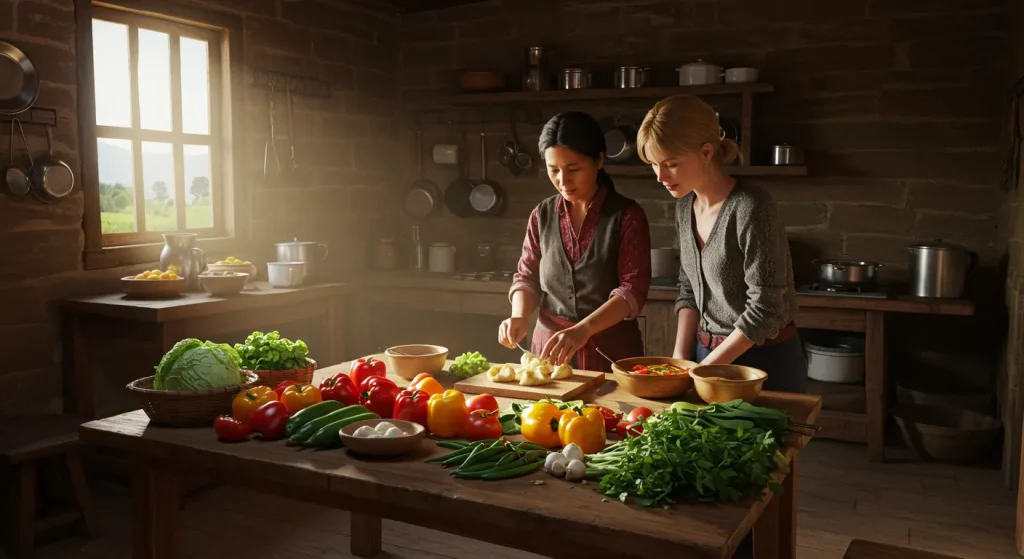
- Cooking lessons: Teach tourists how to cook authentic Nepalese dishes like momos or dal bhat using fresh farm produce.13
- Crafts and skills: Offer workshops on making traditional crafts, creating herbal remedies, or learning the basics of permaculture and organic farming.15
Product Sales
Don’t miss the opportunity to earn extra income.
- Farm shop: Set up a small space where you can sell fresh produce, homemade jams, pickles, honey, dried herbs, and local crafts. Tourists are happy to buy food, drinks, and souvenirs to take home a piece of your region.11
Step by Step: Building Your Agritourism Business
Starting an agritourism business is a straightforward process that can be broken down into four main steps.
Step 1: Planning and Official Registration
Before investing money and effort, you need to plan everything and legalize your activities.

- Define your idea: Think about who your ideal guest is – families with children, adventurers or people looking for privacy and wellness? What makes your farm unique – its location, the crops you grow, your family history?25
- Business legalization: To operate legally and to be trusted by tourists, your business must be registered. This process may seem complicated, but it is necessary.

Step 2: Funding your project
Starting a business will require some initial investment. Create a simple budget that includes expenses for registration, room renovation, furniture, creating a simple website, and purchasing products for the first time.30
Sources of funding:
- Personal savings: The easiest and fastest way.
- Government support: The Nepalese government and provincial governments such as Gandaki have pledged support for agro-tourism, with programmes such as the Modern Green Tourism Village, which provides grants of up to Rs 2.5 million for infrastructure development.14Also, international organizations, such as the World Bank, provide grants for agricultural development, which can indirectly help your project.33
- Loans from banks: The key partner for the farmer is the Agricultural Development Bank Ltd. (ADBL). This is a state-owned bank created to support the agricultural sector.34It offers special credit products for entrepreneurs in the tourism sector.
Step 3: Create a memorable guest experience
Your main product is not the room and the food, but the experience.
- The art of hospitality: Look to best practices such as the Community Homestay Network (CHN) model.16The main standards are cleanliness, safety and basic comfort. Make sure guests have a clean room and access to a clean, functioning toilet and shower.39Offer your guests boiled or filtered water instead of plastic bottles to show your concern for the environment.16The most valuable thing is sincere communication. Make your guests feel like part of your family.38
- Conducting master classes: The best workshops are interactive. Let your guests get their hands dirty!13Create a full farm-to-fork experience by picking vegetables together, taking a cooking class, and finishing it all off with a shared dinner.21Tell us about the basics of permaculture or organic farming as they do at the successful Hasera farm.24
- Organization of tastings: Don’t just serve food, talk about it. Explain the origin of the products, the uniqueness of local varieties.18Create an atmosphere with decorations from your farm, such as wildflowers or vegetables. For larger groups, you can set up tasting stations in different parts of the farm.18
Step 4: Marketing and attracting tourists with a small budget
You don’t need a big budget to get noticed. The most effective marketing for a farmer is to create a product so good that visitors want to tell others about it.
- Create a “digital storefront”: Your presence on the Internet is essential.
- Social media: Use Facebook and Instagram. Post high-quality photos and videos of your farm, food, events and happy guests. It is a free and very powerful tool.43Works especially well when you share photos taken by your guests.
- Booking platforms: Sign up for Booking.com and Airbnb. This will give you instant access to tourists from all over the world. Many successful farms in Nepal use these platforms.17
- The Power of History: Don’t just sell a room, sell an experience. Tell the story of your family, your farm, your passion for farming. This creates an emotional connection that money can’t buy.44
- Partnership:
- Cooperate with travel agencies: Contact tour and trekking companies in Kathmandu and Pokhara. They are always looking for new, authentic places for their clients.30
- Create collaborative packages: Team up with your neighbors—another farm, a local guide, or a craft shop—to create joint deals and discounts.44
This approach creates a self-reinforcing cycle: An authentic and memorable experience (like cooking together or caring for animals) motivates guests to leave glowing reviews and share photos on social media. This user-generated content is far more credible than any advertising and attracts new guests. So your greatest marketing investment is the quality of the experience you provide.
Real View: Difficulties and How to Overcome Them
Agritourism is not a get-rich-quick scheme. It is important to be honest about the challenges you may face.

- Infrastructure problem: This is the biggest obstacle. Nepal’s road network is in poor condition, especially in rural areas. The journey to the farm can be long and tiring for tourists.47Many villages also lack reliable electricity and internet.49
- Solution: Be honest in your marketing – communicate travel times and road conditions in advance. Offer travelers package deals that include transfers from the nearest major city. Team up with other businesses to petition local authorities to repair roads.
- Unstable politics and bureaucracy: Government support can be inconsistent and rules unclear.1
- Solution: Join or create local associations, such as guesthouse community groups. A collective voice is always stronger when dealing with officials.
- Operational risks: There are risks associated with liability (if a guest is injured), the impact of tourists on the environment, and seasonality.12
- Solution: Be sure to research the issue of liability insurance.50Set clear safety guidelines for guests. Develop seasonal offerings (planting in spring, harvesting in fall, cooking classes year-round) to smooth out seasonal variations.
Success Stories: How Nepalese Farmers Are Already Making Money from Tourism
To get inspired, look at those who have already succeeded.

Hasera Organic Farmstay (Dhulikhel)
This is a family-run, certified organic farm and permaculture training centre.51They offer guests a full immersion experience: family living, permaculture training, gardening and cooking classes. More than 90% of the food is grown right on the farm.24Their keys to success are a clear vision (education and ecology) and a deeply authentic experience, which has earned them top marks on Booking.com and Airbnb.45
Prakriti Resort and Organic Farm (Shivapuri National Park)
This example shows the path of growth. Starting with the principles of organic farming, the farm has grown into a full-fledged eco-resort.22They offer comfortable accommodation but retain an agrotourism component, offering sustainable living workshops, herbal garden tours and cooking classes. Their success is based on a combination of comfort and commitment to ecology, as well as a convenient location near Kathmandu.22
Tea Gardens of Ilam
It is a regional success story. Ilam is famous for its tea plantations, and tours to them have become extremely popular, especially among Nepalese tourists.4This shows how an entire region can build its brand around one valuable agricultural product.

Conclusion: Your future is in your hands
Nepal’s agricultural challenges and untapped tourism potential create a unique opportunity for agritourism. By following simple steps—planning, registering, finding funding, creating a unique experience, and marketing smartly—you can build a successful and sustainable business.
Starting an agritourism project is more than just a way to make money. It’s an opportunity to preserve your culture, protect the environment, strengthen your community, and build a prosperous future for the next generation on the land you call home.11Your farm is more than just a piece of land; it is a story waiting to be told and an experience waiting to be shared.
Source used:
- Agro-tourism as an economic development strategy for Nepal
- Modernising Agriculture – The Rising Nepal
- Nepal’s Agricultural Landscape: Assessing the Government’s Stance
- The Potential of Agritourism in Nepal | PDF | Tourism | Agriculture – Scribd
- Potentiality of Agro-tourism in Nepal: Post COVID-19 perspective Malati Kaini* Ph.D. Scholar, email
- Nepal economy shifts away from farming | Nepali Times
- fableconsortium.org
- Analyzing and Forecasting International Tourist Arrivals in Nepal: Trends, Patterns, and Future Prospects
- Tourism in Nepal – Wikipedia
- Harnessing Tourism to Enhance the Value of Biodiversity and Promote Conservation in Nepal – World Bank
- (PDF) Agro-tourism in Nepal: A Rural Development Perspective – ResearchGate
- Agro-Tourism in Nepal – Khabarhub
- Organic Farming and Agro-Tourism in Nepal: Farm Stays for Travelers
- The Potential of Agritourism in Nepal – IOE Graduate Conference
- Agro-tourism in Nepal: A Rural Development Perspective – SciSpace
- Nepal’s Community Homestay Network | GSTC
- Nepal Farmstay Vacation Rentals – Airbnb
- 7 Ideas for Planning Farm-to-Table Events That Celebrate Local Harvests – FarmstandApp
- How to Make Money on a Farm, Orchard, or Vineyard with Events – TicketLeap
- Agritourism Education and Research in Nepal – Juniper Publishers
- Agrotourism in Nepal
- Prakriti Resort & Organic Farm, An Eco-friendly Resort In Nepal – Official Site
- Agri-Tourism Experiences
- Farmstay, Volunteering and Homestay – HASERA Organic Farm Nepal
- Marketing in Nepal | How To Market Your Business In Nepal? – Prajwal Karki
- Tourism License Process In Nepal – CompanyNP
- Travel, Tourism and Trekking License Process in Nepal
- Laws on Hotels Registration in Nepal via Foreign Investment
- Hotel License Process in Nepal । Company Legal & Advisory
- How to Start a Travel Agency Business in Nepal? (Guide)
- Designing Seasonal Farm Events To Attract Agritourism Visitors – The Farming Insider
- Participants call for integrating tourism with agriculture for sustainability – The Kathmandu Post
- World Bank Approves $20 Million Grant to Support Nepal’s Agriculture and Nutrition Sector
- ADBL: Supporting Agricultural Growth – The Rising Nepal
- Interest Rates Effective From Baisakh 01, 2082 (14April, 2025) – ADBL Bank
- Latest Interest Rates – Agricultural Development Bank Limited – ADBL
- Agricultural Development Bank
- About Us – Community Homestay Network
- Community Homestay Network: World’s Greatest Places 2025 – Time
- Getting Local in Nepal’s Community Homestays – Inside Himalayas
- Our Policies – Community Homestay Network
- organichasera.org
- 30 Profitable Business Ideas in Nepal | Start Your Journey Today 2025 – Necojobs
- Big Tourism Marketing Ideas for Little Budgets
- The 10 best farm stays in Nepal | Booking.com
- Agro Tourism Nepal – Nepal Trekking Planner
- What They Don’t Tell You About Traveling Nepal: The Harsh Infrastructure Truth
- Poor infrastructure, scant amenities limit Nepal’s tourism potential
- (PDF) BARRIERS TO DEVELOPING RURAL TOURISM INFRASTRUCTURE, ACCESSIBILITY, AND RESOURCE CHALLENGES – ResearchGate
- 12 Best Tips to Host an On Farm Event – Minnesota Farm Living
- Hasera Organic Farmstay: Farm to Table & Mountain View – Booking.com
- HASERA Permaculture Learning Center – Agroecology Map
- Prakriti Resort and Organic Farm Pvt. Ltd. – Booking.com
- Agro-Tourism in Nepal: An Analysis of Ilam District – Educational Administration: Theory and Practice
- Rural Tourism in Nepal: Opportunity and Challenges – ResearchGate
- TOURISM – Investment Board Nepal