Why Every Kilogram Counts
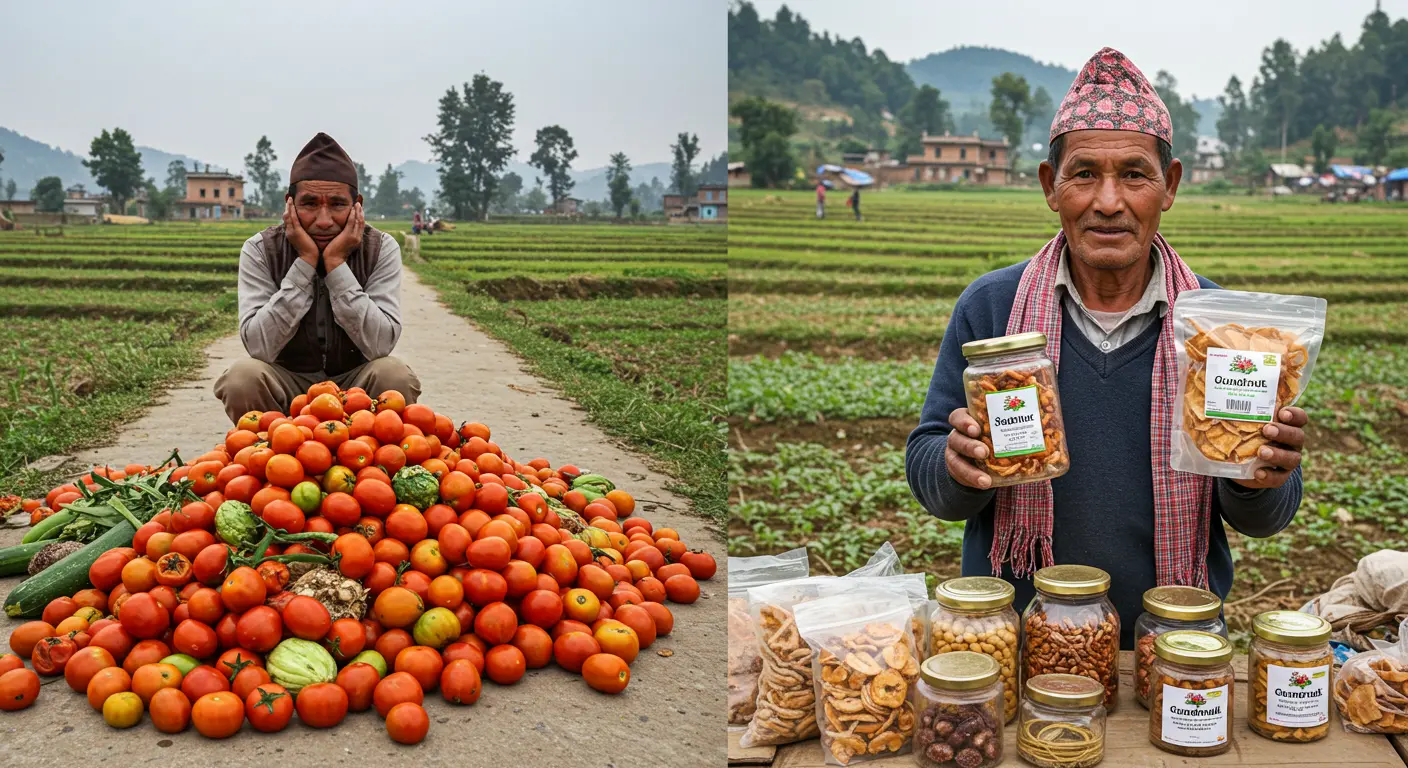
For a farmer in Nepal, every harvested fruit, every ear of rice, represents months of hard work, hope and investment. But the harsh reality is that up to 30% of that harvest can be lost before it even reaches the table.1This figure is not just a statistic. It is based on real stories, like those of farmers in Dhading and Chitwan districts who threw tonnes of tomatoes and cabbages on the streets in desperation due to lack of markets and low prices.3It’s not just wasted food; it’s lost income, wasted energy, and a direct threat to the food security of both the individual family and the entire country.
But what if we looked at this problem not as an inevitable tragedy, but as a solvable business challenge? What if the keys to reducing losses and increasing profits lie not in expensive imported technologies, but in a smart combination of time-tested traditions and affordable modern innovations that are ideal for smallholder farmers in Nepal?4
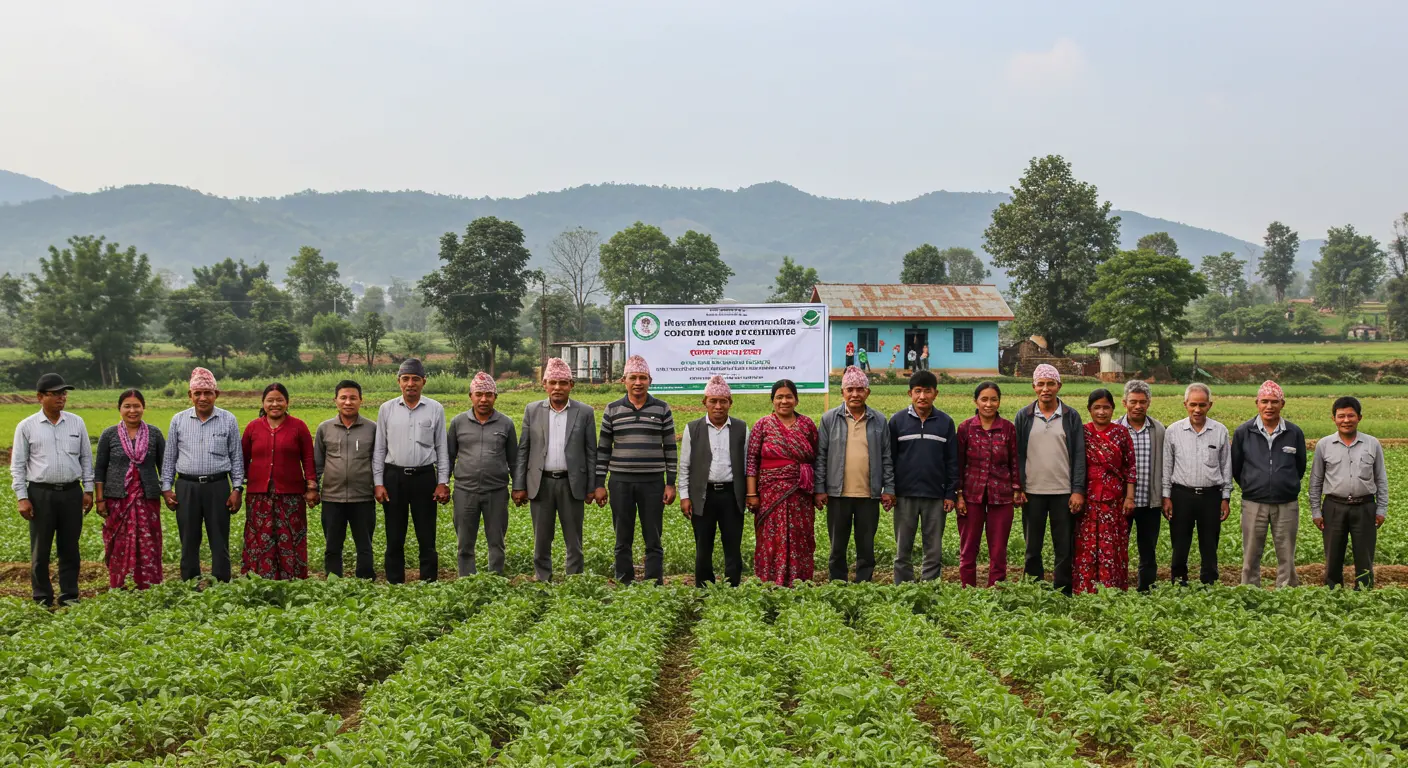
This guide is a practical roadmap for every Nepali farmer looking to turn losses into profits. The path to prosperity is through a holistic approach that begins not after harvest, but well before, with soil health. It continues through smart storage and careful handling, and culminates in creating value-added products and joining forces to reach the market. This article will show how, using accessible and affordable methods, you can not only preserve your crops, but also significantly increase their value, ensuring a stable income and a sustainable future.
A Solid Foundation: Healthy Soil for a Sustainable Harvest
The key idea that is often overlooked is that the fight against post-harvest losses begins not in the warehouse, but in the field. A healthy, strong plant grown in fertile, living soil has natural resistance to disease and mechanical damage. Its fruits are stored better, retain their marketable appearance and nutritional value longer. So investing in soil health is not an additional expense, but the most reliable and cheapest insurance for the future harvest. It is a fundamental shift from reactive control of rot and spoilage to proactive creation of a high-quality and durable product.

Building Living Soil: The Practice of Composting and Vermicomposting
The foundation of a successful farming business is healthy soil. Organic farming methods, unlike chemical ones, work in the long term, improving the structure of the soil, its ability to retain moisture and providing plants with balanced nutrition.6This results in stronger plants that are easier to preserve.
Vermicomposting — is an extremely effective technology for converting organic waste (manure, straw, food scraps) into high-quality fertilizer using earthworms such asStinky Eisenia.9For Nepalese farmers, many of whom keep livestock, this is a virtually free source of a valuable resource. The process is simple: partially decomposed organic waste is placed in a special container or pit and worms are released. After a few months, vermicompost is obtained – a fertilizer rich in nutrients and beneficial microorganisms.9
The benefits of vermicomposting go far beyond simple fertilization. First, it eliminates the need to purchase expensive and often scarce chemical fertilizers, making the farm more resilient to disruptions in the government supply system.9Secondly, vermicompost improves soil health, reduces water pollution and promotes biodiversity.9Thirdly, the earthworms themselves become an additional resource – they can be used as high-protein feed for poultry and fish, which further reduces costs.9Projects like the training in Chanagunarayana, where women farmers are trained in this technology and provided with starter kits, are proving that this method is accessible and highly effective in increasing incomes and farm sustainability.9
Traditional composting also remains an important and accessible method. The simple act of piling up manure, fallen leaves, and other plant debris into piles (heap method) or pits (pit method) is a centuries-old practice in the foothills of Nepal that forms the basis of organic farming.5
“Jholmol”: Homemade Elixir for Plant Nutrition and Pest Control
Jholmol is a shining example of how local innovation can outperform expensive industrial alternatives. It is a liquid biofertilizer and biopesticide that farmers can make themselves from readily available materials.13Its pungent smell repels insect pests, and its composition protects plants from fungal and other diseases, while improving their overall condition.14

The practical recipe for making “Jhomol” is simple. The following ingredients are mixed and fermented in a large plastic barrel15:
- Basis: Water and urine of animals (cows, buffaloes), which in itself is a valuable source of nitrogen, phosphorus and potassium.16
- Leaven: A small amount of fresh manure and forest soil rich in beneficial microorganisms that start the fermentation process.
- Plant components: Finely chopped leaves and twigs of plants with a strong odor or bitter taste, such as wormwood (Artemisia vulgaris or Let’s go), adathoda vascular (Adhatoda vasica or I’m afraid), nim or melia azedarah.15
The mixture is infused for several weeks with periodic stirring. The finished concentrate is diluted with water (for example, in a ratio of 1:7 for young plants and 1:4 for adults) and used for watering or spraying.15
The economic benefits are clear. A study in Kavre district found that farmers spent an average of 23,000 Nepalese rupees (about US$230) per year on chemical fertilizers and pesticides.13“Jholmol” allows to almost completely eliminate these costs. Moreover, experimental studies comparing “Jholmol” with chemicals on two varieties of rice showed that its use leads to a significant increase in yield.14This makes Jholmol not just a replacement, but a more efficient and profitable solution.
The Power of Green Manure and Crop Rotation: Improving Soil Without Excessive Costs
Green manures or green manures, are plants that are grown not for harvesting, but to improve the soil.18They are plowed into the ground before or at the beginning of flowering. The dense foliage of green manure suppresses the growth of weeds, and their powerful root system loosens the soil, improving its structure and water permeability.20Some green manures, such as mustard, release substances that repel pests and suppress diseases such as scab.19
The most valuable are legume green manures: clover, vetch, lupine, cowpea (caupi), sesbania.18In symbiosis with nodule bacteria, they are able to “fix” nitrogen from the atmosphere, converting it into a form accessible to plants. This is a free and natural source of nitrogen, the most important element for plant growth.23In Nepal, the practice of growing sesbania with rice and maize, as well as using various legumes such as lentils and field peas in rotation with maize, has been successfully used.24
The all-rounder — is a scientifically based rotation of crops in one field. It is one of the pillars of sustainable agriculture. Continuously growing the same crop depletes the soil, taking the same nutrients from it, and contributes to the accumulation of specific pests and diseases. Proper crop rotation, including legumes, breaks these negative cycles.27Common crop rotations in Nepal include rice-wheat, rice-legumes, and rice-corn.27More profitable schemes that include vegetables, such as rice-vegetables, are becoming increasingly popular.30Even in mountainous areas, where harsh conditions allow only one crop per year, farmers practice two-year rotations, alternating, for example, potatoes, buckwheat and beans.31
Adopting these practices is a direct path to reducing dependence on an unpredictable and expensive chemical fertilizer supply chain. In Nepal, this system suffers from chronic problems: dependence on imports, constant supply disruptions, shortages during peak seasons, and sharp price fluctuations linked to global markets.32State subsidies, which account for up to 83% of the total agricultural support budget, are often ineffective and do not solve the problem.34A significant part of the deficit is covered by illegal imports from India, the quality of which is not guaranteed by anyone.36In these circumstances, switching to local, self-reproducing sources of fertility, such as compost, “Jholmol” and green manure, is not just an ecological choice, but a strategically correct economic decision. It turns unpredictable external costs into controllable and low internal costs, making the farming business truly independent and sustainable.
Table 1: Overview of low-cost methods for improving soil health

Smart Storage: How to Protect Your Crops After Harvest

Once the harvest is collected, the most important race against time begins. It is at this stage that huge losses occur, which can and should be prevented. Improper storage and rough transportation not only reduce the quantity of products, but also reduce their quality, and therefore the price. The introduction of simple and inexpensive technologies for storing and handling products allows the farmer to preserve the fruits of his labor, extend their shelf life and, most importantly, gain control over the time of sale.
Simple and inexpensive storage: From field to market
Lack of proper storage facilities is one of the main reasons for losses. For example, ginger, a valuable export crop, is often stored in unsuitable conditions, causing the tubers to become soiled and lose their marketable appearance.38The lack of refrigeration capacity forces farmers to sell their entire vegetable and fruit harvest at the peak of the season, when the supply on the market is at its highest and prices are at their lowest.39Solving this problem does not always require expensive equipment.
Cellar Stores:In the hilly areas of Nepal, simple cellars are traditionally used to store crops such as potatoes, cabbage, apples and tangerines. These underground or semi-underground structures use the natural coolness of the earth to maintain low temperatures and high humidity. Experience shows that in such cellars, tangerines can be stored for up to 3 months, and apples – up to 6 months.40This allows farmers to wait out the seasonal price collapse and sell their produce in the winter or spring at a much more favorable price.
Zero-Energy Cool Chambers: This is a brilliant technology in its simplicity and efficiency, which does not require electricity. The chamber is a structure of double brick walls, the space between which is filled with sand. The sand is regularly moistened with water. Evaporating, the water cools the inner chamber, maintaining a temperature 10-15 ° C lower than outside, and high humidity (about 90%). This storage is ideal for short-term storage of most fresh fruits and vegetables, preserving their freshness and preventing wilting.40
Hermetic Bags: For storing grains such as corn and beans, one of the main threats is insect pests and mold that develops due to high humidity. Sealed bags, such as the three-layer PICS (Purdue Improved Crop Storage) bags, are a proven and affordable solution. They create an airtight environment inside. Insects that get inside quickly die due to lack of oxygen, and the dry grains remain protected from external moisture.41This allows preserving the grain harvest without the use of chemical insecticides.
Proper Handling and Containers: The Importance of the First Step
The quality of the product begins to deteriorate from the moment it is collected. Every drop, bump or crush is a potential gateway for infection and the beginning of the spoilage process. Therefore, careful handling and proper packaging are critical.
From “doko” to plastic boxes: Traditional bamboo doko baskets, carried on the back, are part of Nepalese culture, but they are ill-suited for transporting delicate fruits and vegetables.40Their irregular shape and rigid structure lead to bruises, scratches and squashing of products. A simple but very important step forward is to switch to standard plastic boxes. They are durable, have smooth walls, are easy to wash and disinfect, and most importantly, they can be stacked, evenly distributing the weight and protecting products from damage.42The investment in plastic boxes pays for itself many times over due to the preservation of quality and, accordingly, a higher price on the market.
Packhouse operations: For farmer groups and cooperatives, the next step might be to set up a simple packing facility. This doesn’t have to be a large building. Just a clean, shaded area where the produce can be washed, sorted by size and quality, and then neatly packed.42Sorting and grading are key operations that separate premium products for demanding markets from lower-quality products that can be sent for processing. Even the most basic packing facility, managed by a cooperative, allows farmers to offer the market a standardized, high-quality batch of goods, which is always valued higher.
The introduction of these, at first glance, simple technologies of storage and handling of products radically changes the position of the farmer in the market. He ceases to be a “price taker”, forced to agree to any conditions dictated by the buyer at the height of the season.43Instead, he gets the opportunity to control
timeselling their goods. Technologies that extend shelf life turn a perishable asset into a commodity that can be held. This allows you to wait until the seasonal oversupply ends and sell the harvest in the off-season, when demand is high and prices can be several times higher. Thus, a small investment in a storage cellar or plastic boxes is not just an expense to prevent spoilage, but a strategic investment in gaining market power and fundamentally changing the balance of power between farmer and buyer.
Added Value: From Raw Materials to Finished Product
One of the most effective ways to combat losses is to stop considering substandard or excess crops as waste. Primary processing turns what could otherwise rot into a new, valuable and long-lasting product. For a Nepalese farmer, this is a direct path to increasing income, reducing risks and creating his own brand. This step turns the farmer from a simple producer of raw materials into an entrepreneur.

Treasures of Traditions: Preparation of Gundruk, Sinka and Other Products
Nepal has a rich heritage in food preservation and this traditional knowledge can be the basis for a profitable business.44
Gundruk and Sinki: Gundruk is fermented and dried vegetable leaves (usually mustard greens), while sinki is fermented and dried radish roots. The process of making them – anaerobic fermentation followed by sun drying – not only preserves the vegetables for many months, but also creates a unique product with a distinctive taste that is highly prized in Nepalese cuisine. Demand for quality gundruk and sinki is consistently high both domestically and abroad, among the Nepalese diaspora, opening up export opportunities.44
Other dried products: Besides gundruk, there are other traditional drying methods. For example, Sandana and sled– these are thinly sliced and dried slices of radish, and masyaura— dried balls of black lentil paste with finely chopped vegetables. These products are easy to store, transport, and have a long shelf life, making them ideal for selling to remote areas or during the off-season.44
Solar Energy: Using Inexpensive Solar Dryers
Traditional open-air drying, although free, has significant drawbacks: the products become contaminated with dust, insects and are at risk of getting wet during sudden rain, which reduces their hygiene and quality.44A modern and affordable alternative is solar dryers.

Inexpensive plastic solar dryer: The Nepal Agricultural Research Council (NARC) has developed a simple and low-cost model of a dryer that can be made from local materials: a wooden or bamboo frame and UV-stabilized polyethylene film. This design protects the produce from contamination, creates a higher temperature inside and provides ventilation, which significantly speeds up the drying process and improves the quality of the final product. It is ideal for small farms and can be used to dry apple chips, fruit marshmallows (lapsi though) and vegetables.44
Walk-in Solar Drier: For cooperatives or groups of farmers working with larger volumes, a larger model is the tunnel dryer. This is also a bamboo and plastic structure, but larger (e.g. 2.5 by 5 meters) that you can walk into. It can dry up to 200 kg of produce at a time and is great for crops such as mushrooms, spices (ginger, cardamom), coffee beans and apples.44
Example with ginger: Ginger is one of Nepal’s key export crops.45However, most of it is exported to India as fresh produce, which brings minimal profit.38Simple drying of ginger to obtain a product called dry— This is a basic but very important step in adding value. Dried ginger lasts longer, commands a higher price, and can be exported to more demanding and lucrative markets.38Using solar dryers allows you to get clean and high-quality dry.
Simple processing: Pickles, juices and jams
Adding value doesn’t always require complex equipment. Starting small can greatly increase your farm’s profitability.
Basic equipment: To get started, you may need simple devices such as a hand-held coffee berry pulper or a ginger washer.44To prepare juices, jams and pickles at the initial stage, ordinary kitchen utensils are enough.
Product examples: A wide range of products can be produced from excess or substandard vegetables and fruits:
- Pickles (open): Traditional Nepalese pickles made from mango, lemon, radish and cauliflower are extremely popular.
- Jams, jellies, juices and squashes: Apples, plums, kiwis, oranges and other fruits can be easily processed into these long-shelf life products.44Examples of successful implementation already exist: in Nepal, kiwi juice, wine and dried slices are produced, as well as apple juice in the Kalikot district.44

Processing is a powerful tool for diversifying risks. A farmer who grows only fresh tomatoes is entirely dependent on one, highly volatile market, where prices fluctuate and produce spoils quickly.47If this farmer starts producing sun-dried tomatoes from part of the harvest, tomato open and tomato juice, it gains access to three or four different markets. Each of these products has its own consumer, its own price, and, most importantly, its own shelf life. Dried and canned products are not subject to seasonal price fluctuations and can be sold throughout the year. This is a classic portfolio diversification business strategy applied at the farm level. It turns dependence on one unpredictable distribution channel into several stable income streams.
Table 2: Farmer’s Guide to Simple Processing of Produce

Going to Market: The Power of Collective Action
Even the most advanced farming and processing methods will not produce the desired results if the farmer cannot sell his produce profitably. Individual efforts to improve the quality and preserve the harvest are thwarted by the systemic problems of the Nepalese market. The solution lies in unity. Collective action through cooperatives allows not only to strengthen the position of individual farmers, but also to fundamentally change the rules of the game, creating a fairer and more efficient marketing system.
Why Middlemen Win and Farmers Lose
The problem of agricultural pricing in Nepal is systemic. The gap between the price a farmer receives (farm gate price) and the price paid by the end consumer is huge. Research shows that a product that a farmer sells for Rs 10 may retail for Rs 70, and the producer’s share in the final price is only 42-57%.47
The reason is the multi-layered and opaque supply chain. Between the farmer and the consumer there are up to seven intermediaries: local pickers, wholesalers, distributors, retailers.47Each of them adds their own markup, while bearing minimal risks. In this system, an individual small farmer, who has no access to transport, storage facilities, or reliable information about market prices, is completely dependent on the first buyer and has no negotiating power.43The situation is exacerbated by the lack of government regulation and the monopoly of large wholesalers in central markets such as Kalimati in Kathmandu.49
The Advantage of Cooperation: Success Stories
Agricultural cooperatives are a proven institution around the world that enables small farmers to overcome market barriers and increase their incomes.50In Nepal, where the government actively supports the cooperative movement, there are many examples of their successful work.50

The mechanisms for the success of cooperatives are simple and effective:
- Collective marketing and bargaining power: By pooling their harvests into larger lots, cooperative members can reach out to larger buyers and dictate their terms. Research shows that cooperatives can negotiate prices 10-20% higher than those received by individual farmers.52
- Cost reduction: Cooperatives organize common transportation, which is much cheaper than individual transportation. They also eliminate the need to pay commissions to numerous intermediaries.53
- Creation of market infrastructure: Cooperatives set up their own collection centres where produce is aggregated, sorted and packaged. Some go further and open their own retail outlets in cities, such as the Kisan Ko Poko (Farmer’s Pouch) model, creating a direct distribution channel “cooperative to cooperative” or “cooperative to consumer”.55
- Access to resources and finances: Cooperatives often organize centralized purchases of quality seeds, fertilizers, and other resources at wholesale prices, and also provide their members with access to loans on more favorable terms than banks or microfinance organizations.57
The success stories speak for themselves:
- Agricultural cooperative “Panchakanya”: This unique cooperative, run entirely by women, has not only helped its members increase their incomes by switching to organic farming, but has also created its own seed supply centre and an internal micro-credit system to cover their business needs.57
- Cooperative of vegetable and fruit producers “Janagarathi”: The study found that farmers who sold their produce through the cooperative received, on average, Rs 16.40 per kilogram more than their neighbours who worked with middlemen. This was due to a higher selling price and zero transportation and commission costs.54
- Women’s Dairy Cooperative “Sri Kamalamai”: Starting with 13 small self-help groups, the women created a model dairy cooperative. Through partnerships with international organizations (Heifer International) and a major processor (Sujal Dairy), they gained access to a stable market, financing, and new technologies. As a result, the daily milk collection volume at their center increased from 500 to 1,300 liters, providing a stable income for hundreds of women farmers.58
Looking to the Future: Contract Farming and Digital Marketplaces

In addition to cooperation, other models of organizing market relations are emerging that may be useful to Nepalese farmers.
Contract farming — is a model in which a farmer enters into a contract in advance with a buyer (usually a processing company or exporter) for the supply of a certain volume of produce of a given quality at a pre-agreed price.59
- Advantages: This model provides the farmer with a guaranteed market and stable income, protecting against price fluctuations. Often, the purchasing company also provides the farmer with quality seeds, fertilizers on credit, and technical support to ensure the required quality.61Research in Nepal on seed rice and ginger has shown that contract farmers earn 23-58% higher profits than independent farmers.62
- Risks: The main risks are the farmer’s loss of independence in decision-making, the possibility of exploitation by a stronger contractor company, and the risk of ending up in debt in the event of a crop failure.61Moreover, the legal framework for contract farming in Nepal is still under development, which does not always protect the interests of the farmer.64
Digital platforms: Information and communication technologies (ICT) have enormous potential to transform agriculture. Nepal already has both public (e.g. Krishi Bazaar) and private (e.g. GeoKrishi) digital platforms.65They can provide farmers with critical information: accurate local weather forecasts, current market prices in different regions, agronomic consultations, and even plant disease diagnostics from photographs.65However, there are serious barriers to their widespread implementation: low levels of digital literacy (more than 45% of rural residents cannot read or write), limited and expensive internet access (only 39% have it), and often inconvenient design of the applications themselves, not adapted to local conditions (for example, lack of voice control or the ability to work without an internet connection).68
Cooperatives do not simply create a group for joint sales. They build a parallel, fairer and more efficient production and distribution chain that bypasses the inefficiencies and exploitative nature of the dominant system controlled by intermediaries. They shorten and simplify this chain by taking over the functions of collection, logistics and sometimes retail sales, thereby keeping within the cooperative the value that previously “settled” in the pockets of numerous resellers.47Moreover, they address other market problems by providing access to credit and quality inputs that are often denied to small farmers by formal financial institutions.52Thus, a cooperative is not just a marketing association, but an integrated business hub offering a systemic solution to a systemic problem.
Table 3: Comparison of individual and team marketing

The path to a prosperous and sustainable future
The problem of post-harvest losses reaching 30% of the yield is not a death sentence, but a challenge to which Nepalese farmers have effective and affordable answers. This challenge requires an integrated approach, where every step, from soil preparation to selling the finished product, is part of a single strategy to increase profits and build a sustainable farm.
The key strategies outlined in this guide can be boiled down to four simple but powerful principles:
- Build a strong foundation: Start with the most important thing – the health of your land. Invest time and resources in organic methods such as composting, vermicomposting, using “Jhomol” and proper crop rotation with green manure. This is the most reliable and cheapest insurance for your crop, which will free you from dependence on expensive and unreliable chemical fertilizers.
- Control your time:Don’t let the market dictate when to sell. Use simple, low-cost storage, such as root cellars and cold storage, to extend the life of your crop. This will allow you to sell when prices are high, rather than when circumstances force you to.
- Create, don’t throw away: Turn surplus and substandard products from losses into a source of income. Master traditional methods, such as making gundruk, and simple processing technologies – from drying in solar dryers to making pickles and jams. Every kilogram processed is additional profit and a new market.
- Unite for strength: Remember that it is impossible to change market rules alone. Join cooperatives or create new ones. Collective action is the most effective way to get a fair price, reduce costs, and gain access to new technologies and resources. The farmer’s strength is in his unity.
When farmers adopt these practices, they do more than just reduce losses. They build more sustainable and resilient business models for their families and communities. On a larger scale, the combined effect of these efforts strengthens Nepal’s food security, reduces the country’s dependence on imported food and fertilizers, and creates a more equitable and environmentally friendly agricultural sector.72
The tools and knowledge to reclaim the lost 30% of the harvest already exist and are accessible. The future of Nepalese agriculture does not lie in waiting for expensive external solutions, but in actively using local innovation, traditional wisdom and the enduring power of community.
Source used:
- Special Report: 2024 FAO Crop and Food Supply Assessment Mission to the Federal Democratic Republic of Nepal
- Value Chain Development of Fruit and Vegetables in Nepal (2018-2022 / USD 5,500,000)
- Analysis of Efficient Supply Chain Models of Vegetables: Case of Nepal Durga Thapa1 Abstract
- (PDF) AN OVERVIEW OF ORGANIC FARMING IN NEPAL – ResearchGate
- Organic Package of Practices for Production of Vegetable Crops in Nepal – ResearchGate
- The Relative Efficiency of Organic Farming in Nepal – Sandee
- Organic Farming for Sustainable Agriculture – Forestry Nepal | PDF – SlideShare
- Organic Farming in Nepal | Chitlang
- Changunarayan Vermi-Composting Training for Farmers
- Vermicomposting – HimalDoc – ICIMOD
- Vermicompost – It’s All About Worms – United Mission to Nepal
- Agroecosystem of the Mid-Hills – Sustainable livestock production in the mountain agro-ecosystem of Nepal
- Jholmal for small-scale farmlands – ICIMOD
- What is Jholmal? It’s Organic Fertilizer and Pesticide That is More Effective than Chemicals. At No Cost to Nepal’s Family Farmers
- This Women’s Group in Nepal is Restoring Soil Health with Biofertilizers
- ORGANIC FARMING: A RELIABLE STRATEGY FOR SUSTAINABLE AGRICULTURE IN NEPAL – Science Heritage Journal (GWS)
- Going organic for a sustainable future – ICIMOD
- Green manure – an environmentally friendly solution to many agricultural problems – asm-agro
- Green manure – Wikipedia
- Green Manure/Cover Crops/Mulching – ICIMOD
- Annual legume species as green manure/cover crops in low-input farming systems of Nepal
- Green Manure / Cover Crop Legumes | Infonet Biovision Home.
- Technical Note 55- Cover Crops for Green Manure in the Great Basin
- The Problem With Green Manure Cover Crops – ECHOcommunity …
- Effect of Leguminous winter cover crops on soil fertility and yield of summer maize – Nepal Journals Online
- Evaluation of intercropping legumes and green manuring on soil properties in maize field
- Legumes crop rotation can improve food and nutrition security in Nepal – ResearchGate
- Rice-based cropping systems – Indian Council of Agricultural Research Krishi Bhavan
- Rice and Bricks: Environmental Issues and Mapping of the Unusual Crop Rotation Pattern in the Kathmandu Valley, Nepal – ResearchGate
- Conservation agriculture for food security and climate resilience in Nepal – USDA ARS
- CROPPING PATTERN, PRODUCTION STATUS AND FARMER’S INDIGENOUS PRACTICES OF LOCAL CROPS IN HUMLA DISTRICT, NEPAL Hridesh Sharma1* – Semantic Scholar
- Chemical fertiliser shortage is a perennial problem. It stems from multiple factors
- Fertiliser crisis could spell economic disaster, experts warn – The Kathmandu Post
- Nepal still awaits chemical fertilizer factory after four decades of delay – myRepublica
- Fertilizing Nepalese agriculture: the effects of distribution system on chemical fertilizer use – CABI Digital Library
- Behavior of Private Retailers in a Regulated Input Market: An Empirical Analysis of the Fertilizer Subsidy Policy in Nepal
- SUPPLY CHAIN OF SUBSIDIZED CHEMICAL FERTILIZERS IN NEPAL
- Adoption of post-harvest handling practices by ginger farmers in Palpa district, Nepal – Innovations in Agriculture
- Unlocking Potential or Sticking to Tradition in Agri-Value Chain: An Insight from Farmers of Surkhet – GMC Nepal
- Postharvest horticulture in Nepal – MedCrave online
- NAMDP: Sahaj – Nepal Agricultural Market Development Programme (Phase 1)
- Postharvest Management of Horticultural Crops in Nepal
- How Commodity Markets can Empower Nepal’s Agricultural Ecosystem – B360
- IMPORTANCE OF VALUE ADDITION IN HORTICULTURE ABSTRACT
- Nepal – Food and Agriculture Organization of the United Nations
- Ginger Competitiveness Project: Enhancing Sanitary and Phytosanitary Capacity of
- Middlemen rake it in while farmers and consumers suffer
- study on arrivals and pricing situation of major vegetables in pokhara wholesale market, nepal – ResearchGate
- Valley’s vegetable bazaar remains a seller’s market – The Kathmandu Post
- Government Policy and Performance of Agricultural Cooperatives: A Case Study in Chitwan District, Nepal – MDPI
- Agricultural Cooperatives in the United States and Nepal: A Comparative Study – CUNY Academic Works
- Cooperatives as Pillar of Economy to Improve Agriculture Production and Marketing
- Marketing System of Agricultural Cooperatives in Nepal – Society of Interdisciplinary Business Research
- A Case Studies of Janagarathi Vegetable and Fruit Producer …
- Empowering Agricultural Cooperatives and Small … – NACCFL
- Case of Strengthening Vegetable Supply Chain of Cooperatives in Nepal | News | Goodneighbors Global Impact
- Organic Farming Cooperatives In Nepal: One That Is Exclusively …
- Women Pioneering Change in Kamalamai’s Model Dairy …
- Markets and value chains – FAO Knowledge Repository
- Impact of Contract Farming on Farmers’ Income in the Food Value Chain: A Theoretical Analysis and Empirical Study in Vietnam – MDPI
- Contract Farming: Risk Mitigating Approach for Strengthening Farm Security – ResearchGate
- Impact of contract farming of paddy seed on smallholder farm profits: evidence from Nepal
- Impact of Contract Farming on Profits and Yield of Smallholder Farms in Nepal: An Evidence from Lentil Cultivation – IDEAS/RePEc
- (PDF) Contract farming for commercializing Nepalese agriculture – ResearchGate
- 237,3k 51,5k 97% – GSMA
- Digital Landscape in Nepal’s Agriculture Sector – Nepal Economic Forum
- Nepal | Digital Villages Initiative in Asia and the Pacific | Food and Agriculture Organization of the United Nations
- Bridging the Digi-Tech Gap for Female Farmers in Rural Nepal …
- (PDF) Constraints on the use and adoption of information and communication technology (ICT) tools and farm machinery by paddy farmers in Nepal – ResearchGate
- Why Nepal Struggles to Adopt Better Technology, And Alternative Routes to Development
- Information and Communication Technologies (ICTs) in Farming and Its Determinants: A Reference of Dhankuta, Nepal
- World Bank Documents and Reports
- Climate-Smart Agriculture in Nepal
- Special Report: 2024 FAO Crop and Food Supply Assessment Mission to the Federal Democratic Republic of Nepal
- ORGANIC AGRICULTURE IN NEPAL: POLICIES AND PRACTICES P. Baral1*, R. Paudel2, S. Kharal3 and A. Khadka4 ABSTRACT Keywords: agro-c
- Organic Agriculture in Nepal: Policies and Practices – ResearchGate