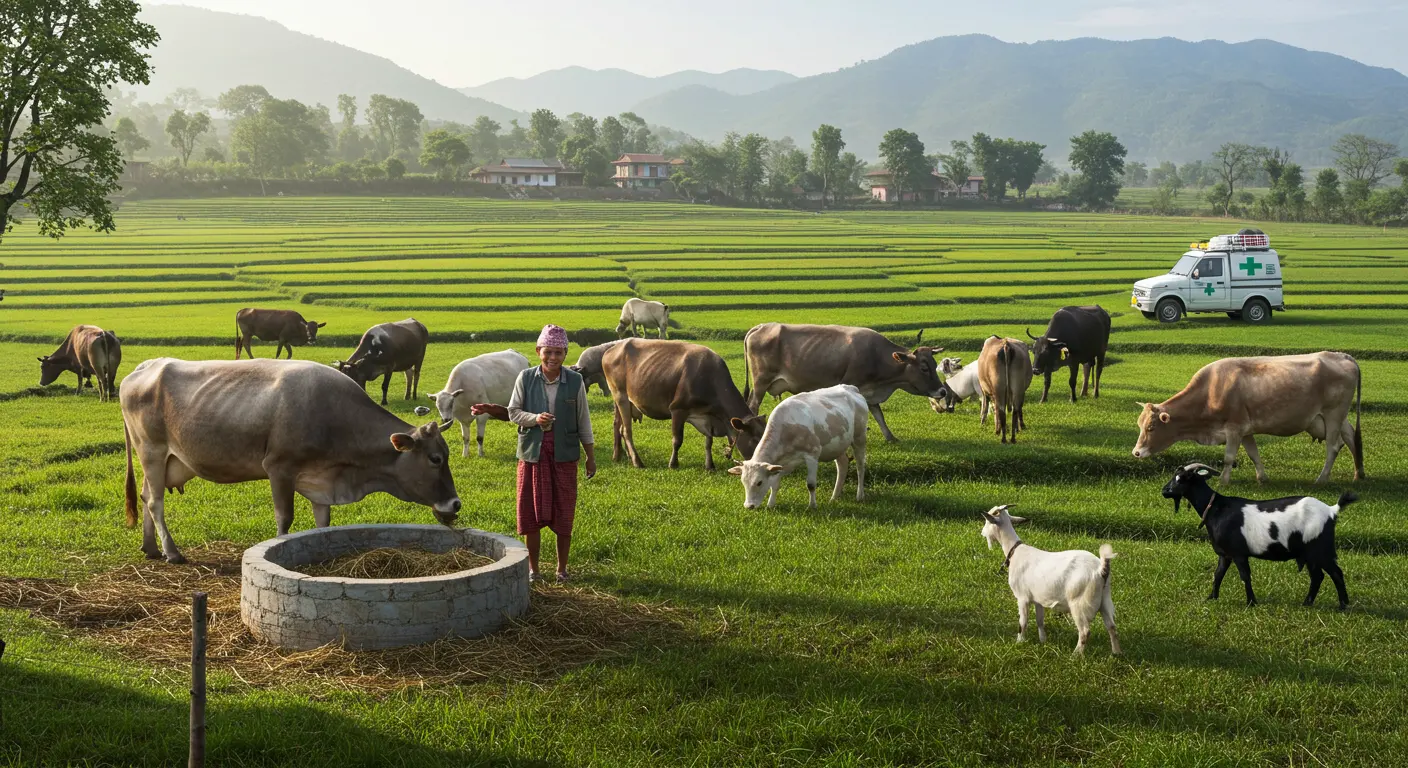
Untapped potential amid systemic challenges
Livestock farming is more than just an economic sector in Nepal; it is the basis of a way of life and the main source of livelihood for the vast majority of the population. It accounts for about half of the gross domestic product (GDP) of agriculture, which in turn accounts for 24% of the country’s total GDP.1More than 52% of the population depends in some way on agriculture and livestock farming for employment and income.1For millions of rural families, especially the poorest, livestock serves not only as a source of food (milk, meat) and income, but also as a kind of “live bank account” – an asset that can be sold in case of unforeseen circumstances.2
However, behind this picture of vital importance lies a fundamental paradox. Despite its enormous social and economic role and the ever-growing domestic demand for milk and meat, the sector’s productivity remains extremely low.1The country, which has unique agro-ecological diversity – from the tropical lowlands of the Terai to the alpine meadows of the Himalayas – is forced to import significant volumes of livestock products to meet its own needs.5
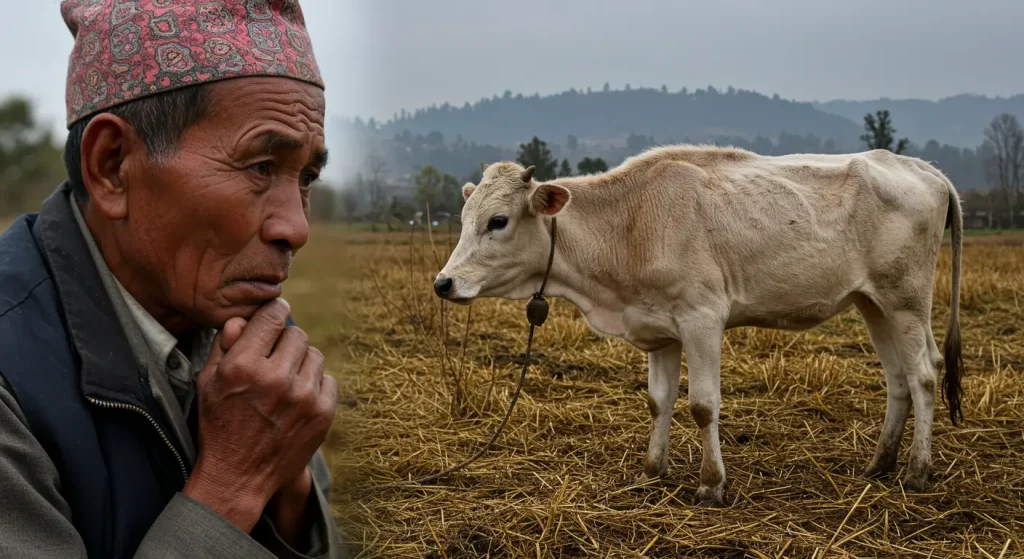
This gap between potential and reality is driven by a complex of interconnected issues that create a ‘low productivity trap’. In this report, we examine four key ‘knots’ holding the sector back one by one and present practical, evidence-based strategies for untying them. The analysis covers the entire value chain, from the foundation of feed, to animal health, logistics, processing and organisational models that can act as catalysts for growth.
Table 1: Key challenges in the livestock sector in Nepal
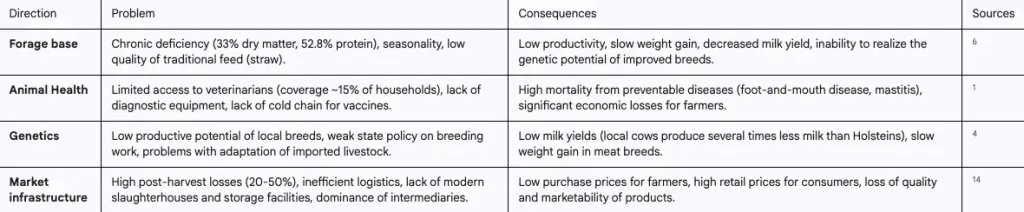
The main difficulty lies not in individual shortcomings, but in their systemic interdependence. For example, investments in high-yielding breeds (genetics) are pointless without solving the problem of feed shortages. Improving logistics will not bring the expected profit if production volumes remain low due to poor animal health. Success is possible only with a comprehensive approach that takes into account all links in the chain.
The foundation of productivity is the solution to the problem of feed shortage
The foundation of any successful livestock enterprise is a stable and high-quality feed base. In Nepal, this foundation has proven to be the weakest link. Feed shortage is not just a seasonal problem, but a chronic condition that systemically limits the development of the entire sector. The overall feed deficit is estimated to be 33% in dry matter, 54.3% in green mass, and 52.8% in protein, which is critical for productivity.6
This problem is particularly acute during the dry winter-spring period (December to April), when natural pastures are depleted. At this time, animals are forced to feed mainly on low-quality by-products of crop production, such as rice and wheat straw, which contain virtually no nutrients.6This diet barely allows animals to survive, and there is no talk of high productivity – be it milk yield or weight gain. However, there are a number of affordable and effective strategies that can radically change the situation.
Innovations in forage production: from silage to agroforestry
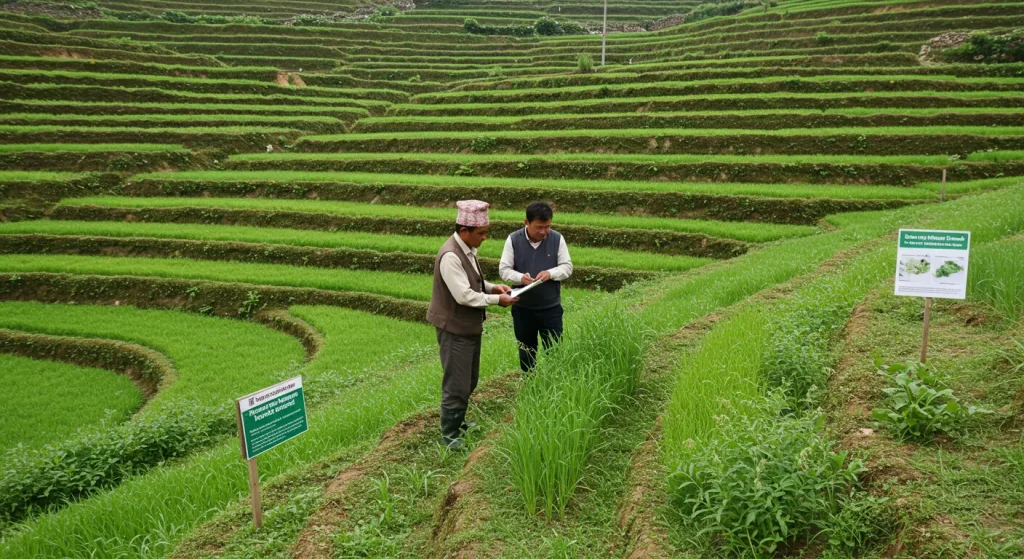
Instead of relying solely on degrading communal pastures and forest resources, farmers can create sustainable forage on their own plots using modern approaches and adapting traditional practices.
Growing modern forage crops. Research and practical experience show high efficiency of introduction of specialized forage crops. Oats, vetch, bersim (Egyptian clover), as well as perennial grasses such as nepir (elephant grass) and mulato, are capable of producing high yields of green mass even on small and marginal plots of land.18Growing these crops on terraces, borders and free patches of land allows the farmer to create a stable, year-round source of nutritious feed, reducing dependence on seasonal fluctuations.20
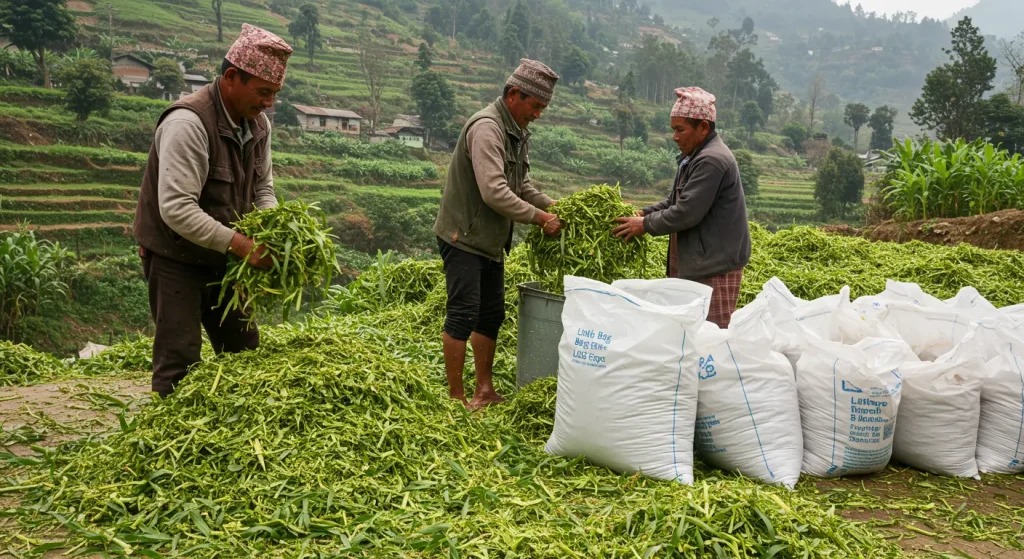
Silage: “canned food” for livestock. Silage is a succulent feed preserved by anaerobic fermentation, a kind of “canned” grass. This method allows preserving the nutritional value of green mass harvested during the period of excess (rainy season) for use during the lean dry season. For small farmers in Nepal, simple and low-cost silage technologies are most suitable:
- Silo pits: This is the most common method. A hole is dug in the ground, the walls and bottom of which are lined with strong polyethylene film to ensure tightness. Chopped green mass (for example, corn harvested at the milky-wax stage of ripeness) is tightly placed in the hole, carefully tamped with feet to remove air, and hermetically covered with film, which is pressed down with a layer of earth. After 2-3 months of fermentation, the feed is ready. High-quality silage has a pleasant sour smell and a yellowish-green color.21
- Silage in bags (LBS – Little Bag Silage): This method, successfully tested in Nepal, is ideal for very small farms. Chopped and slightly sun-dried green mass is tightly packed into strong plastic bags (5-10 kg capacity), carefully releasing the air, after which the bags are hermetically sealed. This approach does not require large investments and allows for the effective use of even small surplus feed.22
Agroforestry: forage trees on the farm. Integrating trees into agricultural land is a traditional practice in Nepal that is taking on new meaning today.24Forage trees such as
Artocarpus lakoocha(locally called Badakhar) and various types of ficus (Ficus semicordata, Bald fig), are an invaluable source of high-protein feed, especially during dry periods.26The leaves and young branches of these trees are readily eaten by livestock. By planting such trees along the edges of fields, on terraces and wastelands, farmers create a kind of “vertical pastures” that provide a stable harvest of nutritious foliage and do not compete for land with staple food crops.19
Addressing the problem of feed shortages is not just one of the tasks, but a fundamental condition for further development. Without a high-quality and stable diet, any attempts to improve the genetics of livestock or increase the effectiveness of veterinary measures are doomed to failure. You cannot expect high milk yields from a hungry cow, no matter how pedigree it is. This is why creating a sustainable feed base should be an absolute priority for any farmer, cooperative, or government program aimed at modernizing livestock farming in Nepal.
Healthy cattle are the basis of profitability
High productivity is impossible without healthy animals. However, for most Nepalese farmers, providing quality veterinary care remains a serious problem. At the same time, the low genetic potential of local livestock limits the very possibility of achieving high indicators, even with ideal care. A comprehensive solution to these two problems – health and genetics – is the second key factor on the path to profitable livestock farming.
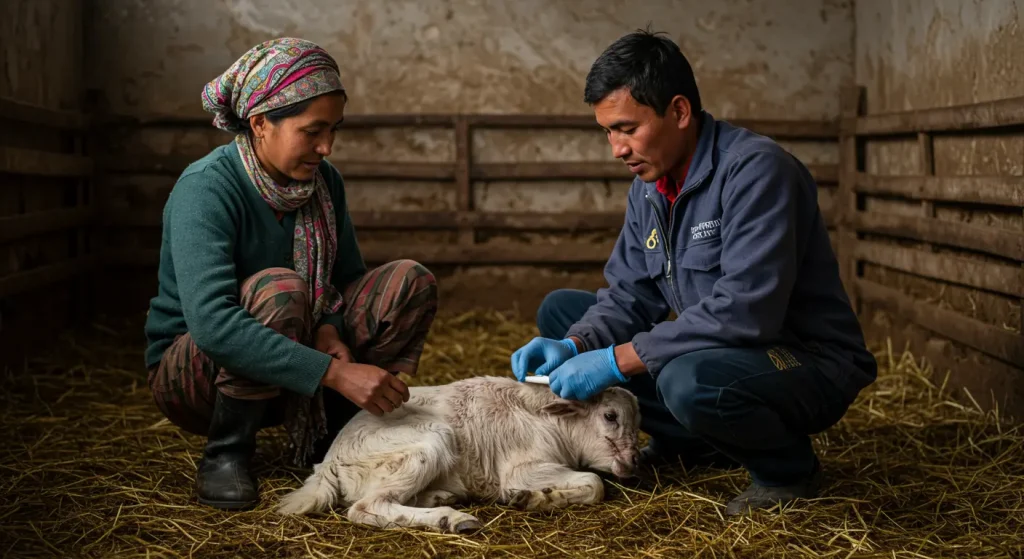
“Doctor at the Gate”: accessible veterinary medicine
Nepal’s veterinary care system has significant gaps. Government services are estimated to reach only about 15% of rural households, leaving most farmers without access to skilled care.4The shortage of veterinarians, especially in remote mountainous areas, the lack of modern diagnostic equipment and the poor cold chain for storing vaccines result in significant economic losses from diseases such as foot and mouth disease, mastitis and various parasitic diseases that could be prevented.1
In response to this challenge, Nepal has developed and proven its effectiveness a unique system of paraprofessionals – Village Animal Health Workers (VAHWs).10These people, often from the same communities, undergo short-term training (from 35 days) and become the first line of veterinary care. Their main advantage is physical and economic accessibility. The study showed that the average distance to the nearest paravet is only 1.4 km, while to a professional veterinarian it is almost 22 km.11They provide a wide range of basic services: technical advice, treatment of common diseases (98% of paravets), artificial insemination (87%) and vaccination (75%).10The success of the paravets is a shining example of how an informal, market-oriented system effectively fills the gaps left by a state structure. Rather than trying to replace this system, governments and international organizations should focus on supporting it: standardizing training, introducing certification, and establishing quality control over the medicines they use.
Another risk management tool is livestock insurance. The Nepalese government offers a program where it subsidizes 80% of the insurance premium, making it very affordable for farmers.30However, insurance penetration remains extremely low at around 1.1%.32The main barriers are the complex and lengthy procedure for receiving payments in the event of the death of an animal and the low awareness of farmers about the possibility of insurance.30Agricultural cooperatives play a key role here, acting as the main channel for disseminating information and helping their members with paperwork.30
Genetic Potential: From Local Breeds to World Leaders
In parallel with improving the health of the animals, a key strategy is to increase their genetic potential. Local breeds of Nepal are ideally adapted to harsh conditions, but their productivity is low. The introduction of improved breeds and their crossbreeding with local ones allows for impressive results.
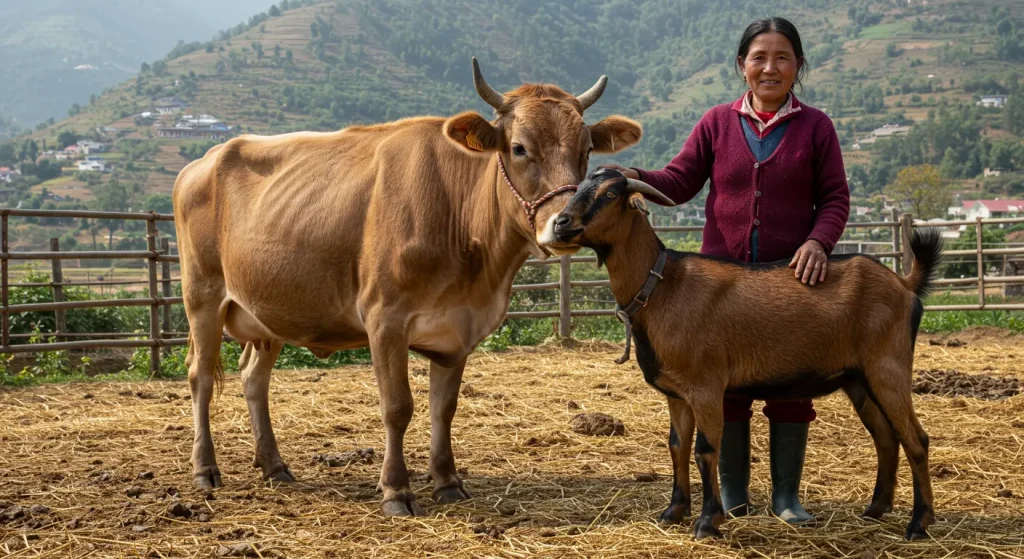
Meat goat breeding. Local breed of goats Kharivery hardy but slow to gain weight. Introduction of the South African beef breed Boerand its use for crossbreeding radically changes the economy of goat breeding. The Bur x Khari crosses demonstrate an average daily weight gain of 100-200 grams. As a result, by 18 months such a goat can weigh 45 kg, while a purebred Khari – only 26-28 kg.12This allows farmers to produce significantly more meat in the same amount of time.
Dairy farming. The potential for improved genetics in dairy cattle is even more impressive. Research in Nepal shows that high-yielding Holstein-Friesian crosses produce an average of 9.3 litres of milk per day, while Jersey crosses produce 7.4 litres.36Purebred Holsteins, with proper feeding and care, are capable of producing over 30 liters of milk per day, which is several times higher than the productivity of local cows.13
A striking example of an integrated approach to genetic improvement is the project «Milky Way», implemented by Heifer International in partnership with the governments of Nepal and South Korea.38As part of this project, 100 highly productive Holstein heifers and breeding bulls were imported into the country to create a national genetic core.13The project was not limited to simply handing over the animals. A Model Dairy Village was established in Kamalamai Municipality, where farmers who received the animals receive intensive training in modern methods of care, feeding and veterinary care.39The central element of this model was the women’s cooperative
Sri Kamalamai, which provides its members with access to finance, veterinary services and, most importantly, a guaranteed market for milk.39The results are impressive: just one year after the project began, milk production in the municipality doubled, demonstrating that the synergy of genetics, knowledge and proper organization can work wonders.40
From farm to consumer – building efficient logistics and distribution
Producing a quality product is only half the battle. An equally important task is to deliver it to the consumer with minimal losses and maximum profit. In Nepal, it is at this stage – from farm to market – that colossal losses occur, which nullify the efforts of farmers and lead to a paradoxical situation: the produce rots in the fields, and consumers in the cities pay exorbitant prices for it.
Combating Losses: Simple Technologies for Preserving the Crop
Post-harvest losses of perishable produce such as vegetables and fruits in Nepal reach a staggering 20-50%.16The main reasons for this disaster are hidden in the details:
- Mechanical damage: The harvest is collected and transported in soft bags, not in rigid containers. The produce is crushed, broken and loses its marketable appearance.17
- No pre-cooling: Vegetables and fruits harvested in the heat continue to “breathe” and quickly lose moisture, which accelerates their spoilage.
- Incorrect packaging and poor logistics: Poor roads, lack of specialized transport and simple overloading lead to huge losses along the way.42
This logistical in efficiency means that during peak seasons, markets become overcrowded, prices fall below cost, and desperate farmers are forced to dump their harvests on the roads in protest.44However, there are simple and accessible technologies that can radically change this situation.
- Plastic Crates (RPCs): Replacing traditional bags with reusable rigid plastic crates is one of the most effective steps. Research shows that this simple change can reduce shipping losses from 30% to 5-6%. Despite the higher initial cost (around $5 per crate), their reusability (up to 200 times or more) makes them a cost-effective investment in the long run.47
- Zero Energy Cooling Chambers (ZECC): This ingeniously simple technology is a structure of double brick walls, the space between which is filled with wet sand. Due to the evaporation of water, the temperature inside the chamber drops by 10-15°C below the ambient temperature, and the humidity is maintained at a level above 90%. Such a chamber is built from local materials, does not require electricity and allows to extend the shelf life of vegetables by 3-15 days, giving the farmer time to find a profitable buyer.50
- Sealed bags (PICS): Three-layer hermetic bags are indispensable for storing grain, including corn for livestock feed. They block oxygen access, which prevents the development of insect pests without the use of insecticides. A study in Nepal showed that the use of PICS bags reduced losses during corn storage by 33%.53
Added value: from raw materials to a unique product
Another way to increase profitability is through processing. Instead of selling cheap raw materials, farmers can produce high-value products that have a long shelf life and are in demand in the market.
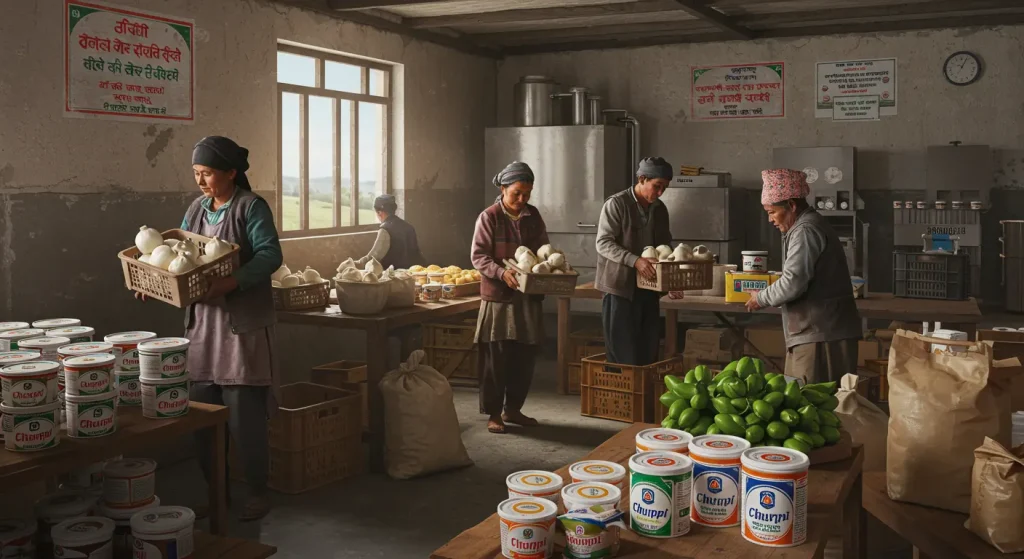
Traditional products with export potential:
- Churpi: This traditional hard cheese made from yak milk or its hybrid (chauri) has become a real hit in international markets. Originally a product for survival in the harsh conditions of the Himalayas, chhurpi has gained incredible popularity in the United States, Canada and Japan as a natural and long-lasting treat for dogs. Over the past five years, exports chhurpi from Nepal has grown almost 3.5 times, reaching 2.91 billion Nepalese rupees. Its production process, which includes boiling milk, separating fat, coagulation, pressing and long-term drying, allows for the creation of a unique and sought-after product.56
- Gundruk and Sinki: These are fermented and dried vegetables (mustard leaves forgundruka, radish for sons), which are an integral part of Nepalese cuisine. These products not only solve the problem of preserving surplus crops, but also have a growing market both within the country and among the Nepali diaspora abroad. Small enterprises such as ‘Mandro Nepal’ show an annual income of up to Rs 3 million, successfully exporting up to 60% of their products.58
Simple processing at farm level:
- Ghee and Paneer: Processing excess milk into ghee (ghee) and fresh cheese (cheese) is a simple and effective way to increase shelf life and add value to a product. Demand for ghee And cheese consistently high in both local and regional markets, such as India.61
- Solar dryers: Low-cost technologies such as the solar “chimney” dryer (costing about $200) allow farmers to turn excess fruits and vegetables into dried products that can be stored for months and sold at a higher price in the off-season.63
- Modern slaughterhouses according to the 4P model:
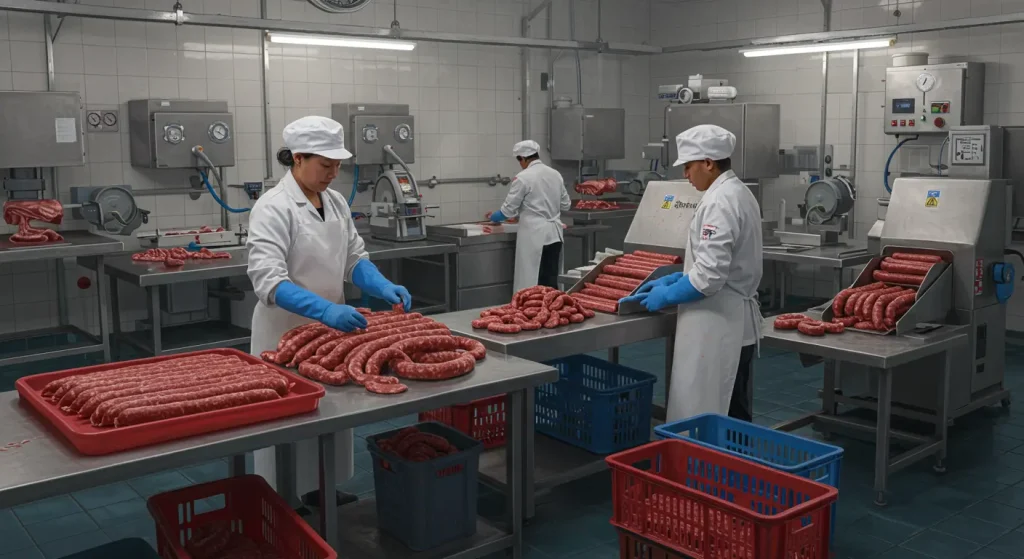
One of the most pressing problems in the meat sector is the lack of hygienic slaughterhouses. To address this, an innovative public-private partnership (4P) model is proposed. In this model, the municipality provides the land, a private investor builds and operates the slaughterhouse, and farmer cooperatives guarantee a regular supply of livestock. Heifer International is actively promoting this model for the construction of modern goat slaughterhouses in major cities such as Butwal and Pokhara.67
So there is a direct, but often overlooked, opportunity to turn the problem of post-harvest losses into a source of stable income. When the price of fresh tomatoes falls below cost at the peak of the season, the farmer is faced with a choice: sell for a song or throw them away.69However, a simple solar dryer or mastering the technology of producing pickles (
open) can turn this unprofitable surplus into an expensive product with a long shelf life that can be sold profitably in the off-season.71The barrier here is not the lack of technology, but the break in the chain of “knowledge – capital – market connections.” And it is cooperatives that are able to close this chain by providing access to microloans for the purchase of equipment and organizing collective sales of finished products.
Strength in Unity – The Role of Cooperatives and Digital Technologies
It is almost impossible for an individual smallholder farmer in Nepal to cope with systemic challenges alone. Fragmented land holdings, lack of access to markets, information and finance make them vulnerable. In these conditions, collective action is the key to success. Cooperatives and modern digital technologies are two powerful tools that can unite farmers’ efforts and take them to new levels of productivity and profitability.

Cooperatives as growth drivers
Cooperatives in Nepal are not just a formal organization, but a vital institution that enables small farmers to overcome barriers that would be insurmountable for an individual.
- Collective Marketing and Supply: The main strength of a cooperative is its association. By collecting produce from dozens and hundreds of its members, a cooperative can form large consignments that are attractive to wholesale buyers and processors. This gives it a strong bargaining position and allows it to achieve higher prices. A study has shown that farmers selling vegetables through a cooperative receive an average price of Rs 16.4 per kilogram higher than those selling individually.72In addition, joint purchases of feed, seeds, fertilizers and ordering of transport make it possible to significantly reduce costs for each individual member.73Cooperatives also serve as a key channel for access to training, new technologies and financial services, including credit and insurance.75
- Success stories – women’s cooperatives: Cooperatives play a particularly important role in the economic empowerment of women. With many men leaving to work abroad, it is women who shoulder the brunt of the farming burden. Women’s cooperatives become a center of support, training, and economic independence for them.
- Atipriya Social Entrepreneur Women’s Cooperative: This goat-focused cooperative in Tanahu is a shining example of success. It brings together 443 women farmers, providing them with training, access to quality feed, veterinary services, and insurance. Through a partnership with Heifer International and local banks, members have gained access to nearly $90,000 in soft loans. A key innovation was the introduction of live-weight sales of goats, ensuring transparent and fair pricing. Despite challenges such as labor shortages due to migration and transportation difficulties, the cooperative has become the leading resource center for the highly productive Boer goat breed in the region.76
- Shree Kamalamai Social Entrepreneurs Women’s Dairy Cooperative: This dairy cooperative in Sindhuli district was set up under the international Milky Way project. What started as 13 small self-help groups has grown into a model enterprise with its own milk collection centre, processing centre and training centre. Partnerships with Heifer International, the government and a private dairy company, Sujal Dairy, have ensured that the farmers have access not only to high-yielding Holstein cows and modern technology (including biogas plants and digital record-keeping) but also, most importantly, a guaranteed market. As a result, the daily milk collection volume at the cooperative has increased from 500 to 1,300 litres.39
Digital transformation of the village
Along with cooperation, digital technologies are opening up new horizons for Nepalese farmers, providing access to information and services that were previously unavailable.
- Platforms for farmers: Several digital platforms are already operational in Nepal. GeoKrishi offers farmers hyperlocal weather forecasts, real-time agronomic consultations, market price information, and even a service for diagnosing plant diseases from a photo sent from a smartphone.77 Application
Kisan App, developed by the Agricultural Development Bank (ADBL), integrates financial services (loans, payments) with access to agronomic information.78 - Challenges and solutions: Despite the obvious benefits, a number of barriers hinder the widespread adoption of digital technologies. The main ones are the low level of digital literacy, especially among the older generation and women, the high cost of mobile Internet, and underdeveloped infrastructure in remote areas.79Many existing apps are not adapted to local realities: they have a complex interface in English, lack voice commands, and are practically useless without a constant internet connection.79
The solution to these problems lies in a hybrid approach that combines digital and traditional methods. For example, the GeoKrishi platform actively collaborates with cooperatives and municipalities, using them as platforms for training seminars and consultations, reaching those who do not have smartphones.77Another promising area is partnerships with mobile operators to provide farmers with subsidized SMS weather alerts and special rates for Internet traffic to access agricultural applications.77
Analysis of successful projects shows that cooperatives play a critical role in the “last mile” of delivering any innovation to the end user. Whether it is new livestock breeds, storage technologies, financial products or digital applications, a cooperative that enjoys the trust of its members becomes the most effective platform for their distribution and scaling. For investors and policymakers, this means that the most effective development strategy is not to try to work with thousands of disparate farmers, but to purposefully strengthen cooperatives and use them as a basis for the implementation of any technological and financial solutions.82
Conclusion: Synergy as the Key to Prosperity
Nepal’s livestock sector, despite its vital importance to the economy and millions of people, is caught in a “low productivity trap.” Analysis shows that this is not the result of one specific problem, but a consequence of a systemic failure, where each challenge—feed shortages, poor animal health, low genetic potential, and inefficient logistics—makes the others worse. In such a situation, spot solutions aimed at addressing only one shortcoming are of little use.
The path to “rivers of milk and banks of meat” lies through creation synergies — an integrated approach in which improvements in one link in the production chain are supported and enhanced by progress in others. Success is possible only when a high-yielding cow is provided with quality feed, protected by affordable veterinary care and insurance, and her milk is delivered quickly and without loss to a processing plant run by an efficient cooperative and using modern technology.
Based on the conducted research, the following key recommendations can be formulated for various participants in the process:
- For farmers and cooperatives: The main priority should be to create our own sustainable forage base by growing modern forage crops and mastering silage technologies. Active participation in cooperatives is necessary to organize collective marketing, joint purchases and gain access to training and new technologies.
- For the private sector and investors: The most promising areas for investment are the processing of products with high added value (such aschhurpi, ghee, dried vegetables) and the development of logistics infrastructure (cold chains, warehouses, packaging centers). The public-private-industry partnership (4P) model can be an effective tool for creating large infrastructure facilities, such as modern slaughterhouses and dairies. There is also significant potential in developing digital platforms adapted to local conditions.
- For the government and donors: It is necessary to revise the subsidy policy with a reorientation from imported chemical fertilizers to support local production of organic fertilizers and high-quality feed. It is necessary to legalize and integrate into the general system the network of paraveterinarians, providing their training and supervision. The most important tasks are also to simplify the procedures for insurance and certification of products, as well as to create a favorable legal and economic environment for the development of cooperatives and attracting investment in agrologistics.
Transforming Nepal’s livestock sector is an ambitious but achievable goal. It requires a coordinated effort from all stakeholders, from the individual farmer to the national government. By integrating proven solutions – from a backyard silo to a digital platform on a smartphone – Nepal can not only ensure its food security, but also turn its “rivers of milk and banks of meat” into a source of sustainable income and prosperity for millions of its citizens.country.
Source used:
- Laying Foundation for the Modern Livestock Sector in Nepal
- Poverty, livestock and household typologies in Nepal
- (PDF) The Role of Livestock in Rural Households in Nepal – ResearchGate
- Why livestock matters in Nepal – The New Humanitarian
- Situation of Livestock, Production and its Products in Nepal – ResearchGate
- Animal Feed Resources and their Management in … – Acta Scientific
- Research Article PROTEIN DEFICIENCY – A CHALLENGE TO LIVESTOCK PRODUCTIVITY ENHANCEMENT IN NEPAL S.B. Singh Kathmandu, Nepal – Agriculture and Forestry University
- Revitalizing animal husbandry in Nepal: enhancing feed management, infrastructure, and productivity for sustainable growth – Onlinekhabar English
- Untitled – Nepal Journals Online
- Assessment of Private Paravets Practices towards Veterinary …
- Determinants of farmers’ choice for veterinary service providers in Nepal Mountains
- Performance of Boer and their Crossbreed Goats in Nepal – A Review – International Journal of Environment, Agriculture and Biotechnology (IJEAB)
- Nepal’s Dairy Sector Marks Major Milestone with First Calf Born by Holstein Cows Gifted from Korea | Heifer International
- Assessment the Goat Value Chain in Mid Hills of Nepal – Cognizance Journal of Multidisciplinary Studies
- When will a state-of-the-art slaughterhouse be built in Pokhara? – myRepublica
- (PDF) Post-harvest practices of horticultural crops in Nepal: Issues and management
- Postharvest Management of Horticultural Crops in Nepal
- PRESENT STATUS AND FUTURE STRATEGY OF FORAGE DEVELOPMENT IN NEPAL – CABI Digital Library
- improved strategies for identifying and – addressing fodder-deficits, in the mid-hills of nepal – GOV.UK
- Extension materials on fodder management for the Mid-hills of Nepal. – CGSpace
- Participatory Silage Making and Hay and Silage Mixed Feeding Technology for Winter Feeding to Goats in Jumla, Nepal
- Poster 5.1: Little bag silage – Ian R. Lane
- Silage-making Tips For Smallholder Farmers – African Farming
- (PDF) AGROFORESTRY SYSTEMS AND PRACTICES IN TERAI AND MID-HILLS OF NEPAL. – ResearchGate
- Agroforestry scale-up a promising prospect for fragile ecosystems …
- Participatory ranking of fodders in the western hills of Nepal – ResearchGate
- Participatory ranking of fodders in the western hills of Nepal – CABI Digital Library
- 144 MILK MARKETING AND DAIRY VALUE CHAIN DEVELOPMENT IN NEPAL IN RELATION WITH CLIMATE RESILIENCE EFFORT IN THE PRESENT CONTEXT
- Village animal health workers in Nepal: the pros and cons of developing a National Skills Test
- Willingness to pay for livestock insurance by dairy farmers in Kavrepalanchowk district, Nepal – Taylor & Francis Online: Peer-reviewed Journals
- Agriculture & Livestock Insurance – Rastriya Beema Company
- Willingness to Pay for Cattle Insurance in Nepal: A Double-Hurdle Model Perspective – gjaas
- DAIRY VALUE CHAIN IN BARABARDIYA MUNICIPALITY IN BARDIYA DISTRICT – LI-BIRD
- (PDF) Boer Goat Production Performance, Constraints and Opportunities in Nepal
- Economic Analysis of Goat Enterprises in Kathmandu District – International Journal of Social Sciences and Management (IJSSM)
- PRODUCTIVE AND REPRODUCTIVE PERFORMANCE OF FARMERS MANAGED DAIRY CATTLE IN WESTERN CHITWAN, NEPAL
- (PDF) Productive and Reproductive Performance of Farmers Managed Dairy Cattle in Western Chitwan, Nepal – ResearchGate
- The Milky Way Program: Transforming Nepal’s Dairy Sector – Heifer International
- Women Pioneering Change in Kamalamai’s Model Dairy Cooperative – Heifer International Nepal
- Heifer International marks 80 years of service – The Kathmandu Post
- A REVIEW PAPER ON POST-HARVEST LOSS ON FRUITS AND VEGETABLES
- Post-harvest practices of horticultural crops in Nepal: Issues and management – Semantic Scholar
- Challenges in Postharvest Handling of Fruits and Vegetables: Reducing Losses and Maintaining Quality – CABI Digital Library
- kathmandupost.com
- Flood blocks Koshi highway, spoils vegetables
- Farmers express dissent by throwing vegetables on road – Nepal News
- Returnable Plastic Crate (RPC) systems can reduce postharvest losses and improve earnings for fresh produce operations
- Benefits of using Plastic Crate compared to Poly Sack during Transportation of Vegetables – Bhutanese Journal Of Agriculture
- Benefits of using Plastic Crate compared to Poly Sack during Transportation of Vegetables | Request PDF – ResearchGate
- Water use optimization in zero energy cool chambers for short term storage of fruits and vegetables in coastal area – PMC
- Zero Energy Cool Chamber | PDF | Refrigeration | Vegetables – Scribd
- (PDF) Study on Zero Energy Cool Chamber (ZECC) for Storage of …
- Assessing the Impact of Hermetic Storage Technology on Storage …
- On-Farm Grain Storage and Challenges in Bagmati Province, Nepal – MDPI
- Developments in the use of hermetic bags for grain storage – OAPEN Library
- Chhurpi: The Ancient Himalayan Superfood That Defies Modern Cheese – Wonder Nepal
- Nepal’s Chhurpi export sees tremendous growth
- www.vahrehvah.com
- Gundruk and Sinki: The Art of Fermenting Vegetables in Nepal …
- A Chitwan couple’s masyaura and gundruk find fans at home and abroad – The Kathmandu Post
- Export Potential of Indian Dairy Products: What’s the Future? – | Kabilai Farm
- Dairy Farming & Dairy Products (Milk, Butter, Ghee & Paneer) – Niir Project Consultancy Services
- Solar Dryer Flat Plate Type 10kg Capacity- Trade Nepal
- Nepali-Led Innovation Shows Promise for Global Food Security: Local Research Team Drives Climate-Smart Solution
- Solar drying for Nepal’s food security – Asia News Network
- Chimney solar dryer | Feed the Future Innovation Lab for Horticulture – 2009 to 2025
- Public-Private-Producer partnership for Abattoir development – Heifer International Nepal
- Abattoir Business Consultant – Heifer Project Nepal – 125509 – JobsNepal.com
- Dynamic support price for farmers- Views – Kantipur News – ekantipur
- Middlemen rake it in while farmers and consumers suffer
- IMPORTANCE OF VALUE ADDITION IN HORTICULTURE ABSTRACT
- A Case Studies of Janagarathi Vegetable and Fruit Producer Agriculture, Cooperative – Review of Integrative Business and Economics Research
- Reviving Nepal’s Agriculture: Embracing Mixed Farming and Cooperative Models for a Sustainable Future – NACCFL
- Nepal Agricultural Cooperative (NACCFL) – CASA
- Role of Cooperatives for Sustainable Livelihood in Bagmati Province, Nepal. – ResearchGate
- From Struggles to Strength: The Journey of Atipriya Women’s Cooperative | Heifer International
- 237,3k 51,5k 97% – GSMA
- Nepal | Digital Villages Initiative in Asia and the Pacific | Food and Agriculture Organization of the United Nations
- Bridging the Digi-Tech Gap for Female Farmers in Rural Nepal …
- Why Nepal Struggles to Adopt Better Technology, And Alternative Routes to Development
- Information and Communication Technologies (ICTs) in Farming and Its Determinants: A Reference of Dhankuta, Nepal
- What is a Cooperative? | Heifer International
- Nepal | Heifer International
- (PDF) Unlocking Potential: Evaluating Nepal’s Cooperative-Backed Vegetable Value Chain
- Unlocking potential: Evaluating Nepal’s cooperative-backed vegetable value chain