New Dawn on Top of the World
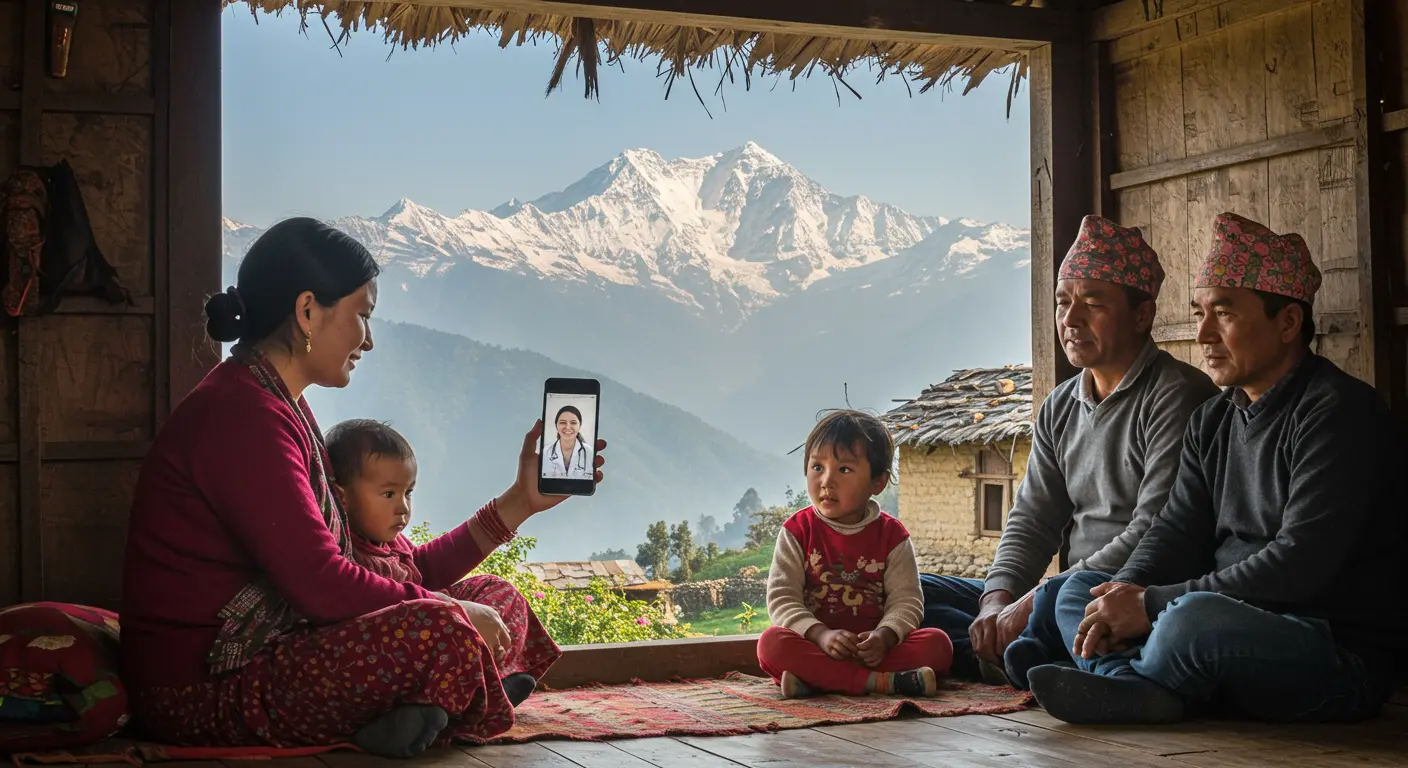
Mention Nepal and the imagination conjures up images of the majestic Himalayas, the ancient temples of Kathmandu, and serene monks. That image is certainly true, but it is no longer complete. Today, a dynamic new story is unfolding against the backdrop of eternal snows – the story of a technological revolution led by a younger generation of Nepalese. Armed not with ice axes but with laptops and smartphones, these innovators are not waiting for change, but actively creating it, solving their country’s most pressing problems with the help of technology.1
This shift is not just a collection of disparate initiatives, but a powerful trend backed by numbers. While there were only about 300 registered startups in Nepal in 2015, by 2023 their number had exceeded 1,500.2This explosive organic growth has not gone unnoticed. In 2024, the Nepalese government took a historic step by formally approving the Startup Support Policy, defining a “startup business” in law for the first time. This is not just a formality. The new policy opened up access to a government-backed soft loan program worth 1 billion Nepali rupees (about $7.5 million), providing young companies with collateral-free loans at minimal interest rates.3This marked a shift from years of promises to real action.
However, this internal rise comes amid serious external and internal challenges. Nepal has fallen to 107th place in the global startup ecosystem rankings, reflecting intense competition and structural issues.4The country continues to struggle with a massive “brain drain”: as of 2022, about 1,700 young people leave Nepal every day in search of work abroad, depriving the economy of its most valuable resource – talent.3Political instability and bureaucracy (ranked 94th in the ease of doing business index) create additional obstacles.3The private equity market, although developing, is still in its infancy compared to neighbouring giants such as India.3
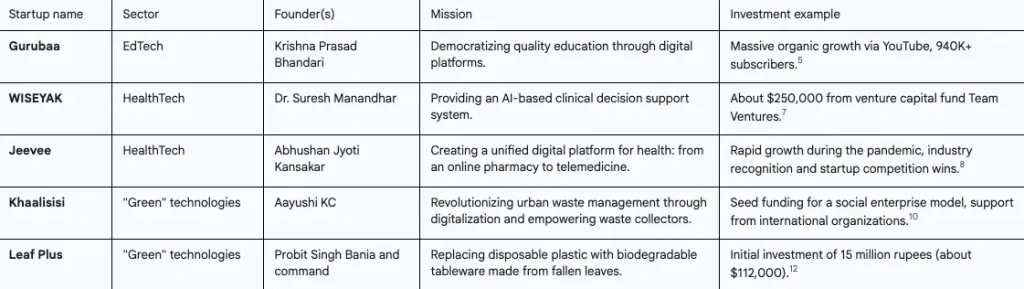
It is in this context – at the intersection of enormous opportunities and colossal difficulties – that the heroes of our study are born. These are the founders of startups who are not just building a business, but solving fundamental problems of Nepalese society in education, healthcare and ecology. Their stories are not only tales of innovation and investment, but also evidence of unbending will, resilience and faith in the future of their country. The table below presents the key players of this new wave of Nepalese entrepreneurship, whose stories we will examine in detail.
Table 1: Profile of young innovators in Nepal
EdTech – Borderless Education for the New Generation

Context: Educational Gap as an Opportunity
Nepal’s education system has long faced significant challenges: geographical remoteness of many regions, a shortage of qualified teachers, and the high cost of quality additional education. These systemic gaps have created fertile ground for a digital revolution. With the growth of internet and mobile penetration across the country, EdTech startups have a unique opportunity to offer solutions that make knowledge accessible, interactive, and affordable.13The government, recognizing this potential, expressed support for the integration of educational technologies into the school curriculum, which became an additional incentive for innovators.13
Spotlight: Gurubaa – Nepal’s Favorite Teacher in Digital Format
The story of Gurubaa is one of how one person can change the educational landscape of an entire country. Krishna Prasad Bhandari, a charismatic and dedicated teacher, became a digital phenomenon.5When he launched his project in 2019, he started with a simple but powerful step: providing free, high-quality video lessons on YouTube. In a country where access to good tutors is limited and expensive, his channel @Gurubaa has quickly won the love and recognition of hundreds of thousands of students by helping them prepare for their most important school and university exams.5
Gurubaa is a platform that solves a specific and pressing problem: it removes barriers to quality training. Today, it is no longer just a YouTube channel with almost a million subscribers, but a full-fledged educational ecosystem. The platform offers more than 60 courses, covering not only academic subjects, but also language certifications and even hospitality training, demonstrating a flexible and student-centered approach.6
The success of Gurubaa and platforms like it has implications far beyond education. They lay the foundation for Nepal’s entire future “knowledge economy,” a vision that the government and think tanks are pushing hard.16For the country to reduce its reliance on migrant remittances and agriculture, it needs a steady supply of skilled workers, especially in technology.3EdTech startups play a key role here. Platforms like Gurubaa raise the overall academic level, creating a more educated pool of potential innovators.
Moreover, the phenomenon of Krishna Prasad Bhandari, dubbed “Nepal’s favourite teacher,” represents a new entrepreneurial archetype unique to the country. His success is based not on business acumen or technological breakthroughs, but on his core identity as an educator, enhanced by digital tools.5He has created a powerful, trust-based brand that is difficult to replicate through traditional marketing. This shows that in Nepal, social capital and respect can be successfully converted into a scalable digital business, opening an inspiring path for professionals from other fields – doctors, artists, engineers – to become entrepreneurs by building on their core expertise and creating communities online.
Other shining examples: Global ambitions from Kathmandu
Nepal’s EdTech ecosystem is not limited to one leader. A shining example of global ambition is our program. This startup has created one of the world’s leading websites for beginner programmers. Every month, more than a million users from all over the world use its easy-to-follow tutorials on Python, C++, C, and R to learn the basics of coding.4Programiz proves that a Nepalese company can create world-class technology products while competing in the global market.
The breadth of the EdTech scene is also demonstrated by other players. Teacher’s Ambition— is a mobile platform for exam preparation, the content of which is specially adapted to the Nepalese curriculum.13 Neema Academy, founded in 2018, is focused on making standardized and quality education accessible and affordable to all through digital channels.13Together, these companies form a dynamic and diverse sector.
Sector Analysis: Monetization and Ecosystem
Business models in Nepal’s EdTech sector are as diverse as the platforms themselves. They range from free, ad-supported models (like YouTube channel Gurubaa) to paid subscriptions, individual course sales, and B2B solutions for integration with educational institutions.13Local incubators and accelerators such as Idea Studio Nepal, National Innovation Center And King’s Incubator, which provide aspiring entrepreneurs with mentoring support, resources, and help find early co-founders at the idea stage.2These support structures create a fertile environment in which educational ideas can grow into sustainable businesses that change the country.
HealthTech – Technologies guarding the health of the nation

Pandemic as a catalyst
Until 2020, the HealthTech sector in Nepal had been growing slowly. However, the COVID-19 pandemic was a powerful and unexpected catalyst that forced the healthcare system and patients to embrace digital solutions with urgency. The pre-existing challenges — the huge gap in healthcare quality between urban and rural areas, the shortage of specialists, and the high transportation costs for patients — were exacerbated to the extreme. In this environment, the demand for contactless and remote healthcare services such as telemedicine and online pharmacies skyrocketed, creating a unique window of opportunity for innovators.18
WISEYAK – Artificial Intelligence to Save Lives
At the forefront of Nepal’s HealthTech is WISEYAK, a startup with ambitions that extend far beyond the local market. Its story is inextricably linked to the personality of its founder, Dr. Suresh Manandhar. With 35 years of international experience in artificial intelligence and machine learning, including as the head of the AI research group at the University of York, UK, he returned to Nepal with a mission to build a world-class tech company.7
WISEYAK is not just another health app. It is a sophisticated platform that uses AI and machine learning to support clinical decision making (Clinical Decision Support). Its technology is designed for hospitals, doctors, pharmaceutical companies and research organizations. The platform helps in diagnostics, patient data management, collection of standardized medical information and remote consultations, aiming to make healthcare more accessible, transparent and efficient.7
Such a complex and knowledge-intensive project required “smart money”. The key moment in the development of WISEYAK was an investment of about $250,000 from Team Ventures, one of Nepal’s leading private equity funds. The funds were strategically deployed to attract top talent and refine WISEMD’s core platform for eventual global launch.7As Team Ventures CEO Tenzin Sonam Gonsar noted, the investment is a testament to the company’s support for “world-class technology solutions founded and led by experienced and passionate entrepreneurs.”7
Jeevee – Digital Pharmacy and Doctor in Your Pocket
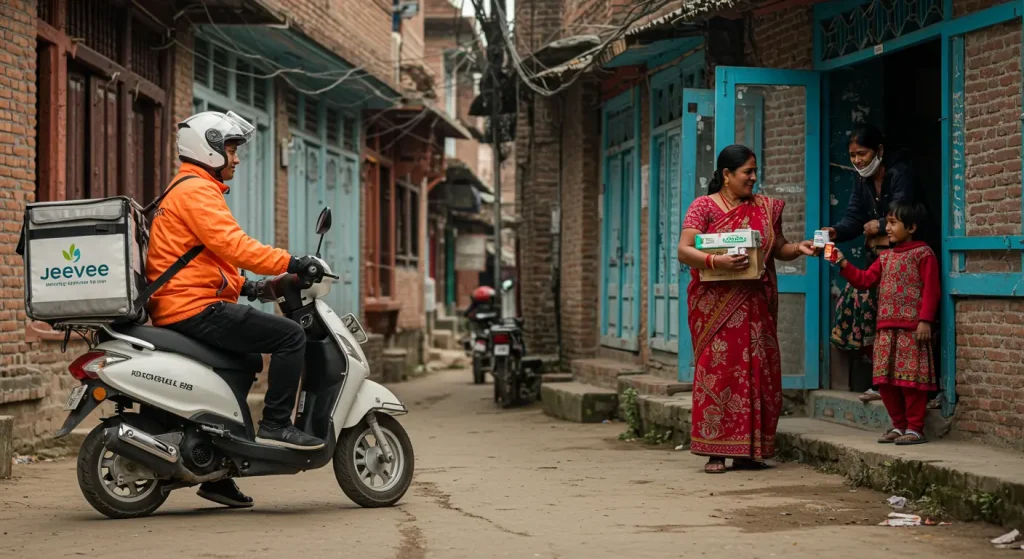
If WISEYAK is an example of deep tech innovation, Jeevee is a story of how timing and a focus on user needs can lead to explosive growth. Founder Abhushan Jyoti Kansakar launched Jeevee in July 2019, just months before the pandemic hit, with the goal of filling a tech gap in the healthcare sector.8
Jeevee has pioneered the e-pharmacy industry in Nepal, giving it a huge first mover advantage.19When the country went into lockdown, the platform became a vital service. Recognizing the urgent need for remote consultations, the team quickly launched a new feature, “Namaste Doctor” (“Hello, Doctor”), which provided online consultations to over 20,000 families in the first days of the lockdown alone.8This success has allowed Jeevee not only to survive but also to grow rapidly. Today, the company has evolved from a simple online pharmacy to a comprehensive e-commerce platform offering a wide range of health, beauty and personal care products, and claims to be the largest HealthTech startup in Nepal.19
Sector Analysis: Attracting Smart Money
The success of WISEYAK and Jeevee is no accident. The strength of Nepal’s HealthTech sector is largely a function of its unique integration into the global tech chain. For over a decade, major US medtech companies such as Cotivity And Leapfrog Technology, created large engineering centers in Kathmandu to develop their products.21This was originally done to reduce costs, but it had an unexpected and powerful side effect.
Nepal has a critical mass of highly skilled engineers with unique expertise in medical data processing, cloud computing, and cybersecurity.21Many founders and leading experts of local HealthTech startups such as TechKraft Inc., are the “veterans” of these outsourcing companies. They bring with them not only technical skills, but also an understanding of global standards, market needs and strict security requirements. Thus, the outsourcing industry, without knowing it, has become a de facto large-scale incubator for the local startup ecosystem, creating a unique “outsourcing to innovation” pipeline.
This explains why the HealthTech sector is attracting serious investors. Funds such as Team Ventures 22 And Business Oxygen (invested in the startup Health at Home)23, they see here not just ideas, but teams capable of creating complex and competitive products.
At the same time, these startups raise important questions. They are not simply selling services, but are actively filling the gaps left by the state healthcare system. The government’s Digital Nepal 2019 program has set ambitious goals, including setting up telemedicine centers, electronic health records, and maternal health systems.18However, the implementation of public projects is often slow. Private companies like Jeevee are already providing these services to the population. In effect, they are building a parallel, private healthcare infrastructure, especially in the area of primary care. This poses a strategic challenge for governments: how to integrate these successful private platforms into the national system to ensure equal access for all citizens and avoid the creation of two-tiered medicine. The success of these startups is both a triumph of innovation and a mirror that reflects the deficit of public infrastructure.
Green Technologies – Sustainability as a Business Model
Context: “Eco-entrepreneurship” as a response to the crisis
Nepal faces acute environmental problems, especially in its fast-growing cities. The Kathmandu Valley alone produces about 1,200 tons of solid waste daily, much of which ends up in landfills without proper sorting or recycling.25In response to this crisis, a new movement has emerged in the country: “eco-entrepreneurship” (ecopreneurship). The government has also recognised the importance of this area by including in its development strategy the goals of creating a “green, sustainable and inclusive” entrepreneurial culture.26
In Focus: Khaalisisi – A Digital Revolution in Waste Management
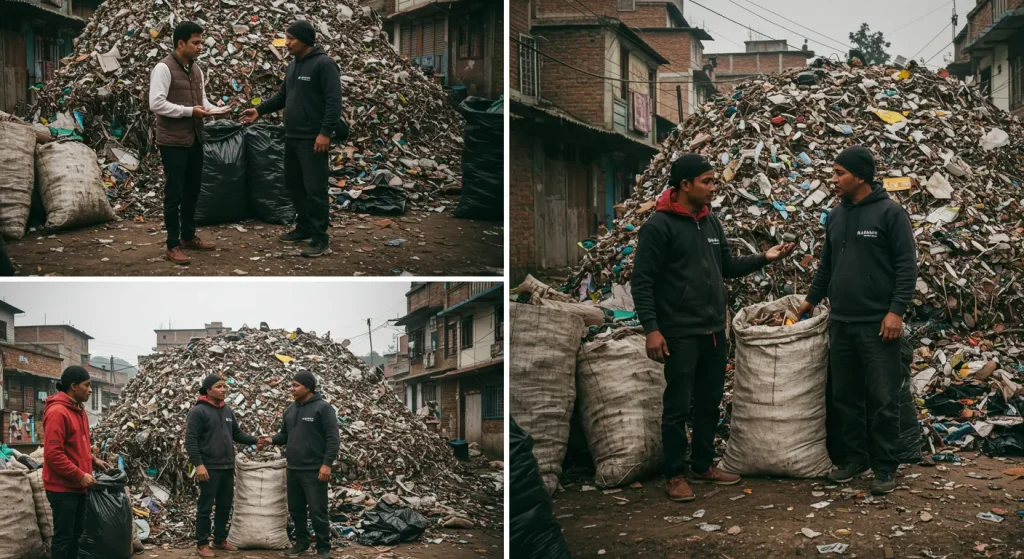
Khaalisisi’s story is an inspiring example of how one person can challenge an entrenched problem. Aayushi KC left a secure and prestigious job at the United States Agency for International Development (USAID) to take on a seemingly thankless task: trash.10Her motivation was to change the inefficient and degrading waste collection system in Kathmandu, where the work of recyclables collectors was not only difficult but also despised by society.27
Khaalisisi’s innovation is that it is not a waste collection company in the traditional sense. It is a digital platform that acts as a bridge, connecting waste “sellers” (households, offices, hotels) with informal recyclables pickers, whom the platform respectfully calls “Khaalisisi friends” (Khaalisisi friends).25Using a mobile app, residents can schedule the removal of sorted recyclable materials, receive a fair price for it, and track their environmental impact.
The impact of Khaalisisi’s activities is felt on three levels. Economic: The platform helps assemblers work more efficiently, increasing their monthly income by an average of 32%.10 Social: Khaalisisi is bringing dignity back to this marginalized profession. “Friends of Khaalisisi” are given branded clothing and ID cards, giving them access to office buildings and apartment complexes that previously barred them. They are no longer called the impersonal “bhaiya” (brother) but are addressed by their first names.10 Ecological: The platform helps divert thousands of tons of plastic, paper, metal and glass for recycling every year, preventing them from ending up in overflowing landfills.28
Leaf Plus – From Fallen Leaves to Eco-Friendly Tableware
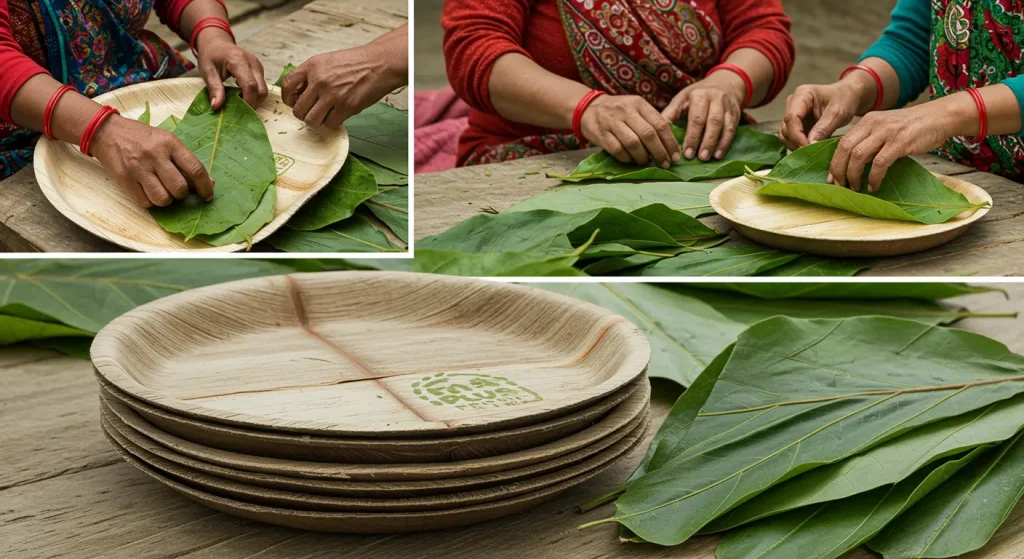
The idea for the startup Leaf Plus was born out of frustration. Three engineer friends, Probit Singh Baniya, Bidhan Pokhrel and Swaviman Acharya, one day ordered street food served on a traditional leaf plate (Tapari), which quickly leaked. This domestic incident gave them an idea: is it possible to create a modern, convenient and at the same time environmentally friendly alternative?12
The product they created exceeded all expectations. Leaf Plus produces 100% natural, biodegradable and, most importantly, microwave-safe disposable tableware. The raw material is fallen areca palm leaves, which are abundantly available in Nepal and were previously considered waste.30This product directly challenges cheap plastic plates that cause huge harm to the environment.32
The company, founded in 2017, today produces between 8,000 and 10,000 pieces per day.32But their journey has not been a bed of roses. The founders are realistic about the challenges: convincing consumers to pay more for an eco-friendly product (a Leaf Plus plate costs Rs 8-25, while a plastic one costs just Rs 1) is a huge challenge.32The company’s business model has a deep social component: women and farmers from rural communities are involved in the production chain, which provides them with additional income.12
Sector Analysis: Passion vs. Profit?
What makes Nepal’s most successful green startups unique is their model, which can be described as “the fusion of tradition and technology.” Unlike other sectors that often copy global business models, these companies build their success by reimagining local practices. Informal workers collecting recyclables (kabadiwala or khalisisi) is a centuries-old tradition. Aayushi KC did not try to replace this system with its trucks; it digitized and formalized the existing network, making it more efficient and dignified.33Likewise, using leaf plates is an ancient practice. The Leaf Plus team didn’t invent the idea; they modernized it by using a different, more durable material and modern manufacturing techniques to create a commercially viable product.12This approach, based on respect for the local context and leveraging existing social structures, is a powerful and unique Nepalese innovation model.

However, it is precisely this focus on social and environmental impact that creates financial difficulties for them. Green startups such as Leaf Plus, Khaalisisi, and also Doko Recyclers (recycling of electronic waste) and Ecoorb Ventures (production of paper from elephant dung)32, have difficulty attracting classic venture capital investments. An analysis of the private capital market in Nepal shows that investors are mainly focused on fast-growing and high-return sectors such as IT, energy and healthcare.35Green projects, with their slower growth cycle, need to change consumer habits and dual (commercial and social) mission, do not fit into this narrow investment paradigm.32
The financial struggles of green startups thus serve as an indicator of the maturity of the entire investment ecosystem. Its growth is evident, but it still lacks depth and diversity. The future success of these companies depends on the emergence of a new class of impact investors and funds in Nepal that value the triple bottom line (financial, social, and environmental) over pure profit. In the meantime, specialized grants and support from international organizations such as the World Wildlife Fund’s (WWF) Greenovation Startup Challenge are critical to their survival.37
Conclusion: The future is being built today
The stories of the innovators featured in this study are not just stories of individual companies. Together, they are weaving the fabric of a new Nepal – one that is more tech-savvy, more resilient, and more self-sufficient. Krishna Prasad Bhandari, Dr. Suresh Manandhar, Abhushan Jyoti Kansakar, Aayushi KC, and the Leaf Plus team are not just entrepreneurs. They are the architects of their country’s future, living embodiments of the ambitious Startup Nation 2030 vision being championed by the government and the business community.26
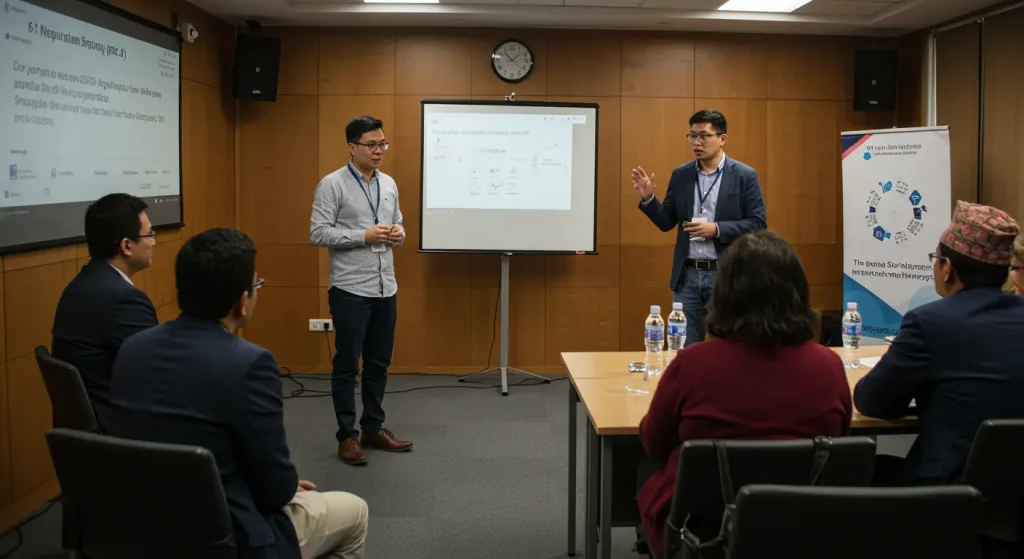
An analysis of the current state of Nepal’s startup ecosystem can be visualized as a balance sheet, where there are both strong assets and significant liabilities.
Assets (Growth Drivers):
- Human capital: A whole generation of passionate, educated, globally minded founders has emerged, focused on solving real problems.
- Government support: The formalization of start-up policies and the launch of a preferential lending program have created an unprecedented foundation for growth.3
- Support infrastructure: There is a growing network of incubators, accelerators and coworking spaces that are nurturing ideas at early stages.2
- Private equity: The private equity and venture capital market is becoming more mature and institutionalized, and new funds are emerging that are capable of investing “smart money”.39
Commitments (Outstanding Issues):
- Funding gap: Beyond initial government lending and a few large funds, there remains a severe shortage of private investment, especially at the seed stage.3
- Bureaucracy and regulatory barriers: Despite progress, complex procedures for registering and running a business remain a major obstacle (94th place in the Ease of Doing Business ranking).3
- “Brain drain”: The mass exodus of talented young people abroad remains the main threat to the long-term development of an innovative economy.3
- Lack of diversified capital: The lack of sufficient impact investors and funds willing to support social and green startups with longer payback cycles is holding back the development of entire sectors.32
Nepal’s journey to becoming a thriving “startup nation” is just beginning, and it will be a long and arduous one. But the energy, ingenuity, and resilience of its young innovators prove that the foundations for a vibrant, authentic, knowledge-based economy are already being laid. The big question for the future is whether the supporting infrastructure – both public and private – can grow fast enough to match the ambitions of its entrepreneurs.
[elementor-template id=”1573″]
Source used
- 10 Best Startups From Nepal – 2023 – Siliconindia
- Top 11 Startup Accelerators & Incubators in Nepal – XYZ Lab
- Launching a Startup in Nepal: New Opportunities, Real Challenges …
- Startup Ecosystem of Nepal – StartupBlink
- Nepal’s Favorite Teacher – Gurubaa | Krishna Prasad Bhandari – YouTube
- Gurubaa – YouTube
- Nepalese PE firm Team Ventures invests in AI healthtech startup …
- Lockdown: An opportunity for some start-ups but a misfortune for others – Fiscal Nepal
- Nepalese Young Entrepreneurs’ Forum Held Entrepreneurship World Cup Nepal-Bhutan Joint National Finals 2021 For First Time in Nepal – || ShareSansar ||
- SOCIAL ENTREPRENEURSHIP BLOG SERIES ISSUE NO. 9: CONVERTING TRASH INTO MONEY: THE STORY OF KHAALISiSi – Bikas Udhyami
- Aayushi KC – Forbes
- Leaf Plus: This startup aims to replace plastic plates with microwavable taparis
- Edtech in Nepal – Falano College
- Gurubaa
- About Us – Gurubaa
- Accelerating Nepal’s Startups | NIPoRe
- 51 Top startups in Nepal for June 2025 – StartupBlink
- Nepal’s Healthtech Innovations: Opportunities to Strengthen Rural Healthcare
- Jeevee is rebranding itself to embody its expansion – BrandGuff
- Nepalese Young Entrepreneurs Forum Grand Meet – Kathmandu College of Management
- Why US Healthcare Services are Being Built in Nepal – Techkraft Inc
- Team Ventures: Unlocking Value through Strategic Partnerships
- Business Oxygen investment portfolio | PitchBook
- Business Oxygen Pvt. Ltd
- Khaalisisi – UNESCO
- Turbocharging green start-ups in Nepal – ICIMOD Blog
- Waste Management Process – Analysis – AIM2Flourish
- Nepal’s Top 10 Startups That Tech Professionals Should Watch Out For in 2025 – Nucamp
- Three young entrepreneurs produce areca leaf plates – The Kathmandu Post
- Leaf Plus – NPEA – Nepal Private Equity Association
- LeafPlus: Home
- Green startups are struggling to scale up – The Kathmandu Post
- Khaalisisi – Cash from Trash – AIM2Flourish
- 8 Nepali startups to help you promote sustainability – OnlineKhabar English News
- nepal’s private equity and venture capital market snapshot: insights from 2012 – 2022
- PE/VC Ecosystem and its Players in Nepal – Team Ventures
- Nepal’s youth kickstart green enterprising solutions – WWF
- Startup Summit Nepal 2024 set to transform entrepreneurial landscape – Business 360°
- MARKET SNAPSHOT – Invest for Impact Nepal
- Alternative Investment Funds: A Silver Lining for SME Finance – Nepal Economic Forum