Himalayan Crossroads – On the Threshold of Change
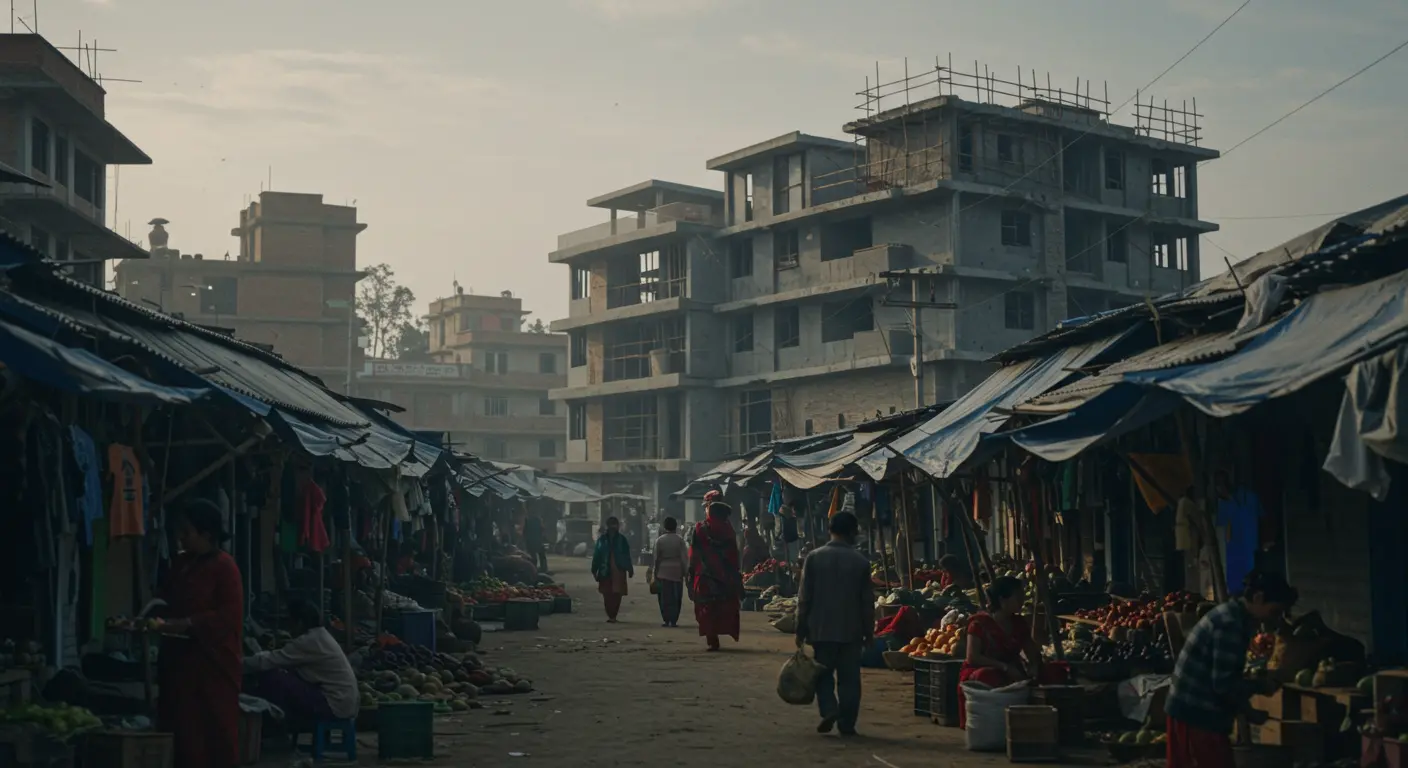
Nepal today is not just a country of Everest and spiritual practices, but a complex economic organism at a critical crossroads. It has demonstrated remarkable resilience to external shocks, including recent natural disasters.1, but its future depends on its ability to overcome deep structural contradictions. International institutions such as the World Bank, the International Monetary Fund (IMF) and the Asian Development Bank (ADB) forecast moderate but stable growth in the coming years. Projections for fiscal years 2025-2027 range from 4.2% to 5.4%.1This growth is expected to be fueled by a recovery in tourism, increased hydropower production and a steady inflow of remittances from migrant workers – the three traditional pillars of the Nepalese economy.1
However, these positive signals are confronted with a harsh reality. The government’s ambitious 16th National Development Plan aims to achieve average annual economic growth of 7.3%, achieve middle-income status by 2030, and significantly reduce poverty.5These goals are continually undermined by systemic problems that are not reflected in standard macroeconomic models. These include chronic political instability, inefficient capital budget execution that hinders infrastructure development, and extreme vulnerability to external shocks, especially climate shocks.2
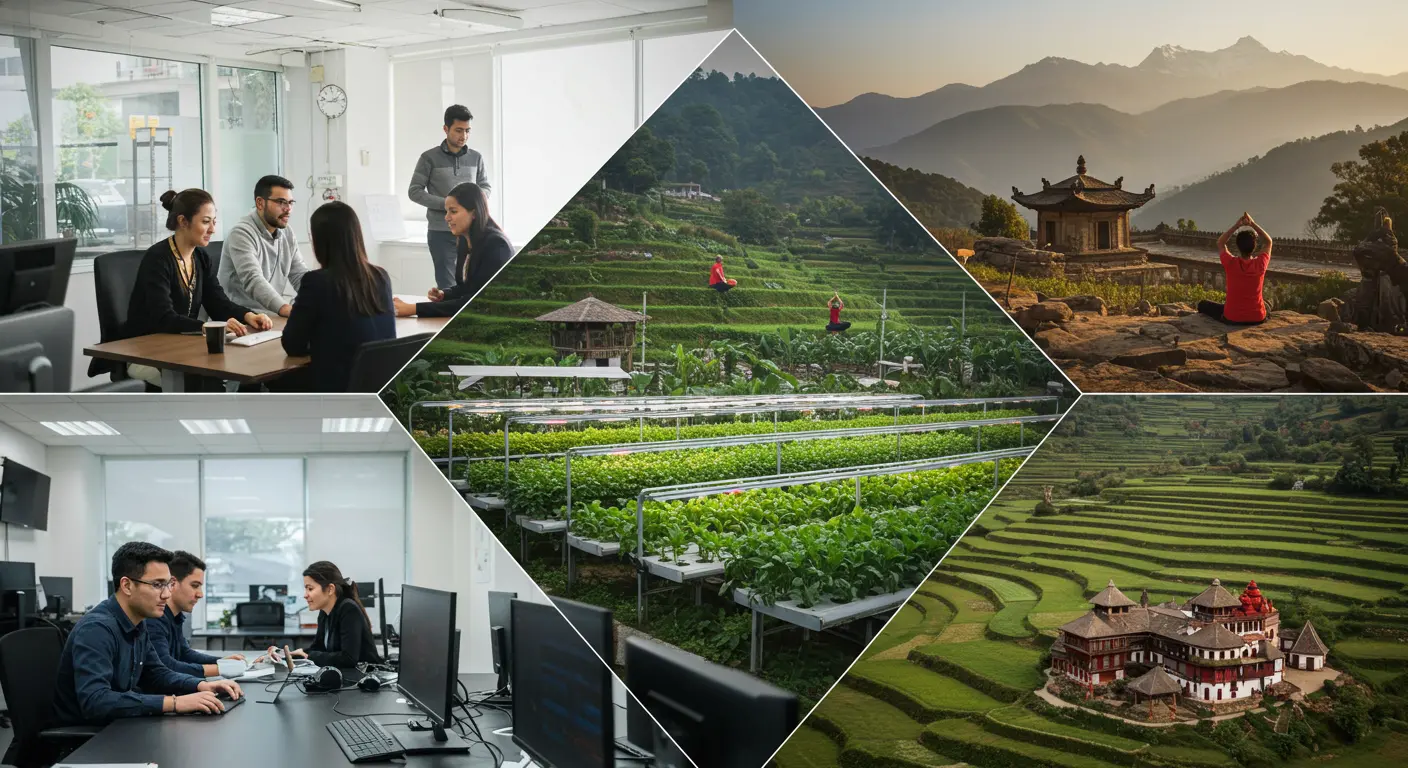
This foresight analysis goes beyond standard forecasts. We conduct an in-depth study of four fundamental pillars of Nepal’s economy, identify three wild cards that could dramatically change the trajectory of development, and based on this, model three plausible scenarios for the country up to 2035. Our goal is to highlight the hidden risks and opportunities that will shape the future of this Himalayan nation and open up new horizons for investors and businesses.
1. Foundation for the Future: Four Pillars and Achilles Heels of Nepal’s Economy
Before we look ahead, it is important to understand the current state of Nepal’s economy. The table below summarizes key macroeconomic forecasts from leading international financial institutions that form a consensus view for the near term.

Table 1: Nepal Economic Dashboard (2025-2027 Projections)

Sources:1
These figures paint a picture of cautious optimism. But they mask deep structural imbalances, which we will examine using four key sectors as examples.
1.1. Money transfers: a lifeline or a brake on development?
Remittances from Nepalese working abroad are the be-all and end-all of the country’s modern economy, accounting for a whopping 23.8% of GDP – one of the highest in the world.2This financial flow serves as a powerful shock absorber, supporting private consumption, ensuring the stability of foreign exchange reserves and allowing the country to import necessary goods.10Remittances have been the main driver of Nepal’s impressive poverty reduction in recent decades.8

However, this dependence has a downside, creating a kind of “Dutch disease” in Nepalese. First, the constant influx of foreign currency leads to an appreciation of the real exchange rate of the Nepalese rupee. This makes Nepalese exports more expensive on world markets, and imports cheaper for the domestic consumer. As a result, local production, especially in the manufacturing industry, loses competitiveness and stagnates, as evidenced by the decline in its share in GDP.12Second, the bulk of remittances are directed toward current consumption rather than investment in productive assets that could create jobs and long-term growth within the country.8
Thus, a paradox arises: remittances, while rescuing Nepal from poverty, simultaneously perpetuate its economic backwardness. They create an economy oriented towards imports and consumption, rather than production and exports. Moreover, this steady flow of money relieves the government of the pressure to implement difficult and painful structural reforms, such as improving the investment climate, fighting corruption, or creating jobs. Social tensions are smoothed out by money from abroad, which drives the country into a “stability trap.” However, there is an unseen opportunity here. The World Bank proposes to redirect this flow by creating special programs for the reintegration of returning migrants and stimulating their entrepreneurial activity.8This approach could transform passive income into active capital for the development of the country.
1.2. Hydropower: “White Gold” of the Himalayas
Nepal’s main hope for an economic breakthrough is its enormous hydropower potential. It is estimated to be 83,000 megawatts (MW), of which about 45,000 MW is considered economically viable.9The government has set extremely ambitious targets: under the “Energy Roadmap 2035”, it plans to increase installed capacity to 28,500 MW and export up to 15,000 MW of electricity, mainly to neighbouring India.13The implementation of these plans will require gigantic investments of about 46 billion dollars.9

Successful development of this potential can completely transform the economy. Firstly, it will allow to radically reduce the country’s chronic trade deficit by exporting electricity and simultaneously reducing imports of fossil fuels (petroleum products), which currently eat up a significant part of foreign exchange earnings.9Secondly, it will provide industry and the population with cheap and clean energy, which will become a powerful stimulus for industrialization and improving the quality of life.14Finally, this will transform Nepal from a country forced to import electricity during the dry season into a stable net exporter.9
However, there is a serious risk here too, which can be called an “energy needle”. By relying on hydropower exports, Nepal risks falling into a new form of dependence. The main and practically the only market for Nepalese electricity is India, with which there is already an agreement on the export of 10,000 MW.14This gives Delhi powerful geopolitical leverage over Kathmandu. If bilateral relations deteriorate, or if India develops its own renewable energy sources faster than expected, Nepal could be left with gigantic, expensive, and unused assets in the form of hydroelectric dams and transmission lines. Moreover, this “reliable” source of income is becoming increasingly unpredictable due to climate change. Melting glaciers and changing monsoon patterns directly affect river flows, making power generation unstable in the long term.15
1.3. Tourism: Return to the Peak
The tourism sector, which was hit hard by the pandemic, is showing a strong recovery. In April 2025, the country recorded its highest monthly influx of foreign tourists in its history.17International analysts agree that the revival of tourism and related services will become one of the key drivers of economic growth in the coming years.3
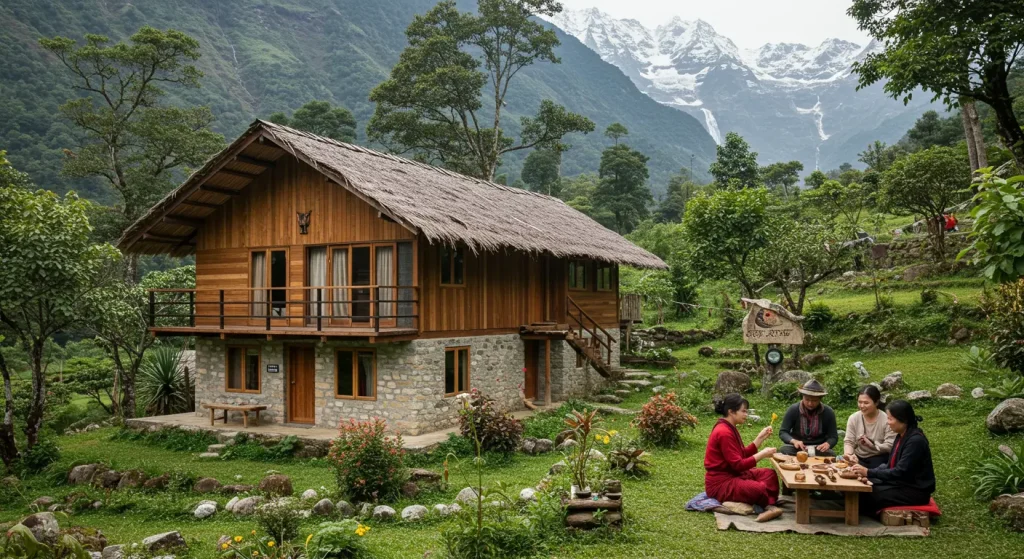
However, Nepal’s traditional tourism model, based largely on mountaineering and trekking, remains vulnerable, and is heavily exposed to global economic cycles, geopolitical tensions, and health risks, as the COVID-19 pandemic has demonstrated.3In this context, the government’s recent initiative to introduce a Digital Nomad Visa looks like more than just a tactical move, but a strategic turn to attract long-term money.
The proposed visa would allow remote workers to legally reside and work in Nepal for up to five years, subject to proof of income of at least $1,500 per month or savings of $20,000.18This is a game-changer. Digital nomads are not ordinary tourists. They live in a country for months or even years, creating a permanent rather than seasonal demand for rental housing, local services, food and entertainment. They are less sensitive to short-term shocks and bring more stable and higher income to the economy. The success of this initiative can become a catalyst for the development of high-quality urban infrastructure – high-speed Internet, co-working spaces, modern services – not only for foreigners but also for local IT specialists. This creates a powerful synergistic effect, linking the development of tourism with the growth of the entire digital economy of the country.
1.4. Agriculture: In the Shadow of the Mountains
Although the agricultural sector employs more than 60% of Nepal’s population, its contribution to GDP is only about 21%.19This indicates extremely low labor productivity. Increased production of rice and other crops periodically supports the overall economy.1, but the sector as a whole remains in the shadow of more dynamic industries.

The main challenge for Nepalese agriculture is climate change. Nepal is one of the most vulnerable countries in the world to climate change. About 80% of its population is exposed to risks associated with floods, droughts, landslides and other natural disasters that directly destroy crops, agricultural lands and lead to food insecurity.15
The implications go far beyond food security. Climate-induced degradation of agriculture is a powerful driver of internal and external migration. Farmers who have lost their land and livelihoods are forced to move to cities, putting enormous pressure on already weak urban infrastructure and the labor market, or to join the ranks of labor migrants moving abroad. Climate change in agriculture thus directly fuels the economy’s dependence on remittances, creating a vicious circle. This means that investments in climate-resilient agriculture—the introduction of modern agricultural technologies, the construction of irrigation systems, crop insurance—are not just industry policies, but instruments for ensuring national security and macroeconomic stabilization in the long term.
2. “Jokers” in the deck: three forces that can change the game
Standard economic models often fail to take into account factors that can radically change the rules of the game. For Nepal, there are three such “jokers”: domestic politics, geopolitics, and climate. It is their interaction that will determine which scenario the country’s development will follow.
2.1. Joker #1: Political Turbulence
Every international report, from the World Bank to the IMF, points to political instability and frequent changes of government as a key risk to Nepal’s economy.1This abstract, at first glance, factor has very specific and destructive economic consequences.

First, it leads to chronic “budget paralysis.” The government adopts ambitious plans and budgets, but year after year, capital expenditures intended for roads, hospitals, schools, and power plants are only partially implemented.2The problem is not a lack of money or plans, but the inability of the state machine to effectively use them. Frequent changes of ministers and officials, politicized appointments, failure of tenders and corruption lead to long-term projects either not being started or being frozen.1
Secondly, political instability undermines investor confidence. A striking example is the huge gap between declared foreign direct investment (FDI) and its actual inflow. It is estimated that only 32-35% of promised funds actually enter the country.20Investors see the lack of predictable and stable “rules of the game” and prefer not to take risks. Thus, any foresight analysis based only on economic indicators without taking this “wild card” into account will be overly optimistic. The ability or inability of Nepal’s political elite to reform the public administration system and ensure policy continuity is the main indicator of the country’s future success or failure.
2.2. Joker #2: Geopolitical “Great Game”
Nepal’s geographic location – between two rival Asian giants, India and China – makes its economy a geopolitical battleground.21This competition manifests itself in all areas.

China is actively promoting its global Belt and Road Initiative (BRI) in Nepal, investing in strategic infrastructure such as international airports and hydroelectric power plants.4Trade with China is growing rapidly but is characterized by a huge imbalance: Nepal’s imports from China ($696 million) are many times greater than its exports ($12.3 million), creating risks of debt dependence.21
India, in turn, is Nepal’s traditional and largest trading partner, a key market for future electricity exports and a source of deep cultural influence.22Delhi is jealously watching Beijing’s growing influence in the region and is using its leverage to counter it.22
For Nepal, this means that any major economic decision becomes a geopolitical act. The choice of an investor for a major hydropower plant – Chinese or Indian – is not just a commercial matter. It can elicit approval from one side and hidden or overt opposition from the other. For example, India may refuse to buy electricity from a hydropower plant built with Chinese money, making the project unprofitable. This geopolitical competition significantly increases the risks and costs of implementing large infrastructure projects. In this light, the “digital leap” strategy based on the development of the IT sector and carbon credit trading becomes especially attractive. The global IT market or the carbon quota market are much less susceptible to direct pressure from Delhi or Beijing than physical infrastructure.
2.3. Joker #3: Climate Challenge
Climate change is not a distant threat for Nepal, but an existential reality. The country consistently ranks among the top ten most climate-vulnerable countries in the world.15Annual direct economic losses from natural disasters are estimated at $218 million, and a single major flood, like the one that occurred in September 2024, could cause more than $340 million in damage.24
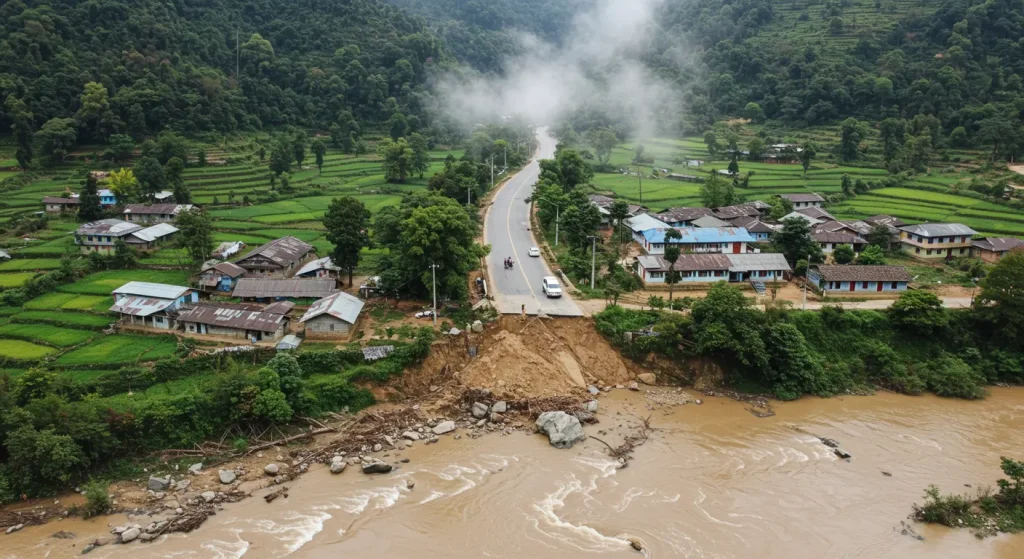
It is important to understand that climate risk is not just a separate problem, but a multiplier of all other risks. It hits all four pillars of the economy: it destroys agricultural crops, makes hydroelectric power generation unpredictable, destroys tourism infrastructure, and increases migration.
Moreover, it exacerbates the effects of other “wild cards.” The constant need to spend resources on disaster relief diverts already tight and poorly managed budgets from long-term investments, exacerbating “fiscal paralysis.” Growing reliance on international humanitarian aid to combat the consequences of disasters can become another lever of external geopolitical influence. Finally, the main burden of climate costs falls on the poorest and most vulnerable, exacerbating social inequality and tensions.15Thus, any long-term strategy for Nepal that does not have climate adaptation at its core is doomed to fail. This turns green technologies and green finance from a niche trend into a matter of national survival.
3. Foresight Analysis: Three Scenarios for Nepal by 2035
The interaction of the above-described pillars of the economy and unpredictable “wild cards” could lead Nepal to three fundamentally different futures. We present three scenarios for the country’s development until 2035: inertial, optimistic, and transformational.
3.1. Scenario 1: “Himalayan Tiger on Paper” (Inertial)
This scenario assumes that the key “wild cards” – political instability and ineffective state apparatus – continue to dominate Nepal’s reality. The country moves along an inertial trajectory, maintaining the appearance of progress, but without a qualitative breakthrough.

In this scenario, the economy grows at a moderate rate of about 4-5% per year, in line with current World Bank and IMF forecasts.1However, this growth remains superficial. The ambitious targets of the 16th National Plan to achieve 7.3% growth and achieve middle-income status by 2030 remain on paper.6
Large infrastructure projects, especially hydropower, are progressing slowly and only partially. The 15,000 MW power export target is being thwarted by persistent bureaucratic delays, corruption and the failure to attract the necessary long-term investment.8The gap between declared and actual foreign direct investment remains high.20The economy still rests on two pillars: remittances from migrants and international aid for development and disaster relief. Nepal will remain a lower-middle-income country by 2035, stuck in a “stability trap” where external injections help avoid collapse but prevent a breakthrough.
3.2. Scenario 2: “Energy Breakthrough” (Optimistic)
This scenario becomes possible if Nepal manages to neutralize the “wild card” of political instability, at least with respect to strategically important projects. The country develops a strong cross-party consensus on the need to develop energy as a national priority.
Stable and predictable policies attract the necessary $46 billion in investment into the sector, as envisaged in the Energy Development Roadmap.9A construction boom begins: cascades of hydroelectric power plants and new power lines are erected. By 2035, Nepal becomes a major exporter of clean energy, supplying 10,000-15,000 MW to India and possibly Bangladesh.14
This triggers a powerful multiplier effect across the economy. Electricity exports dramatically reduce the trade deficit.2The budget receives significant revenues, which are used to develop the remaining infrastructure, education and health care. The economy enters a sustainable growth trajectory of 7-8% per year, and Nepal confidently moves towards the status of a middle-income country. However, the price of this breakthrough is the emergence of a new, “energy” dependence on one product and one market. The economy becomes extremely vulnerable to any changes in relations with India and to the long-term effects of climate change on river flows.
3.3. Scenario 3: “Digital Leap from the Shadows” (Transformational)
This scenario assumes that the country’s leadership, recognizing the risks of the raw materials model (scenario 2) and the dead-end nature of the inertial path (scenario 1), makes a strategic bet on diversifying the economy and developing intangible assets. This path does not cancel the development of hydropower, but supplements it with two new powerful growth drivers.

The first driver is Nepal’s transformation into an IT hub in the Himalayas. The government is implementing radical reforms: completely removing restrictions on foreign investment in the IT sector20, actively promotes and simplifies obtaining a “digital nomad visa”18, invests in the development of digital infrastructure and eliminating the deficit of digital skills among the population.8As a result, Nepal is becoming a significant player in the global IT outsourcing market and an attractive destination for remote work. The country is beginning to move toward its ambitious goal of exporting billions of dollars worth of IT services.27
The second driver is green monetization. Nepal is actively entering the global carbon credit market. Using its vast forest resources (which absorb carbon) and the green status of its hydropower, the country is beginning to systematically sell carbon credits to international companies and governments seeking to meet their climate commitments.28Considering that this market could reach $100 billion by 2030, this is becoming a significant source of income.30
As a result, by 2035 a more sustainable, diversified and “smart” economy will be formed, less dependent on the whims of neighbors and the climate. GDP growth in this scenario may not be as explosive as in the “Energy Breakthrough”, but it will be of higher quality, more inclusive and long-term.
Table 2: Foresight 2035: Three Scenarios for Nepal’s Economy

4. Unobvious opportunities and strategic conclusions
An analysis of the three scenarios shows that Nepal’s future is not predetermined. It will depend on the strategic choices the country makes in the coming years. For investors and businesses, the key is to recognize the indicators that point to the country’s movement along one trajectory or another, and to see the subtle opportunities that each path offers.
4.1. New niches for investment
Beyond traditional sectors such as tourism and hydropower, three new high-potential niches are emerging.
- “Green” monetization: The opportunity is not just selling electricity, but selling its green attribute. International companies and entire countries are willing to pay significant amounts of money for carbon credits to meet their climate commitments under the Paris Agreement.30Nepalese hydropower projects can be certified by international standards such as the Global Carbon Council and sell carbon credits on the global market, creating an additional revenue stream.29The same applies to the country’s forest resources within the framework of REDD+ programs.28This opens the market for investment in certification consultancy services, reforestation projects and the development of national emission measurement and verification (MRV) systems.
- IT hub in the Himalayas: The potential here goes beyond simple outsourcing. It is about creating a complete ecosystem for the digital economy. This includes investments in commercial real estate (coworking, coliving), in private IT education to eliminate the shortage of qualified personnel26, to venture funds to support local startups, and, of course, to improve the quality and availability of Internet infrastructure.18
- Agrotechnologies and climate-resilient agriculture: Given the enormous vulnerability of the agricultural sector to climate change15, the demand for adaptation technologies will be huge and guaranteed. This creates opportunities for investment in modern drip irrigation systems, in the development and introduction of drought-resistant crop varieties, in the use of agrodrones for field monitoring, in the creation of digital platforms for farmers (with weather forecasts, market prices and agronomic advice) and in the development of crop insurance systems against climate risks.
4.2. Indicators for the investor: What to look for?
To assess in real time which scenario Nepal is heading in, investors and analysts should monitor the following key indicators:
Indicators of movement towards Scenario 2 (“Energy Breakthrough”):
- Signing large, legally binding agreements on foreign direct investment in hydropower with specific deadlines and financial commitments.
- Physical pace of construction of cross-border power transmission lines towards India.
- Political stability in the post of energy minister and in the leadership of the state-owned power utility Nepal Electricity Authority. Long tenure of key figures in their positions will signal the existence of a political consensus.
Indicators of movement towards Scenario 3 (“Digital Leap”):
- The number of issued “digital nomad visas” and the actual influx of remote workers into the country.
- Dynamics of growth of IT services exports in official trade statistics of Nepal.
- Volume and value of carbon credit sales transactions concluded by Nepalese organizations on international platforms.
- Adoption of new, liberal legislation in the field of IT and the digital economy, in particular, updating the outdated Telecommunications Act.8
Conclusion: Choosing a Path
Nepal’s future until 2035 is at a bifurcation point. The country can follow the inertial path, stuck in a poverty trap despite formal GDP growth. It can make a risky bet on a raw materials “energy breakthrough” that will bring quick money but also high dependence. Or it can make a “digital leap”, building a more modern, diversified and sustainable economy based on global trends of decarbonization and digitalization.
For an outside observer, investor, or policy partner, Nepal will be a unique case study in the coming decade. It is a living laboratory testing whether a small, climate-vulnerable country, sandwiched between giants, can harness global megatrends to completely rewrite its economic destiny. The answer to this question in the coming years will shape not only Nepal, but the entire Himalayan region for generations to come.
Sources used
- Nepal’s Economy Expected to Remain Resilient in Face of …
- IMF Executive Board Completes the Fifth Review under the …
- Nepal’s Economy to Strengthen in FY2025 and Further in 2026 | Asian Development Bank
- Nepal’s political and economic uncertainty – GIS Reports
- The Sixteenth Plan – MOEST eLibrary – Ministry of Education …
- 16th plan sets economic growth rate target of 7.3 per cent – The Rising Nepal
- Fiscal Year 2025-26: Budgetary Outlook: Structural Challenges and Immediate Priorities
- Nepal: World Bank Report Outlines Key Reforms to Boost Growth, Create Jobs
- Nepal: Economy | Asian Development Bank
- ADB: Nepal To Grow By 4.4 Percent | New Spotlight Magazine
- 2025 Monitoring Report – the United Nations
- Nepal Country Partnership Strategy (2025–2029): Inclusive and Sustainable Growth Assessment – Asian Development Bank
- Nepal’s ambitious energy vision – The Kathmandu Post
- Nepal’s Roadmap to Produce 28500 MW by 2035 – myRepublica
- Climate Change in Nepal: Who Pays the Price?
- Climate risks, exposure, vulnerability and resilience in Nepal – World Bank Documents and Reports
- Nepal News Evening Economic Brief – May 3, 2025
- Nepal to launch five-year digital nomad visa for global remote …
- Nepal Case Study | Climate Refugees – Othering & Belonging Institute
- FDI commitments increase, improvement in inflows expected – The Annapurna Express
- Dynamics and Geopolitical Interests in China-Nepal Relations – SpecialEurasia
- Geopolitical rivalry between India and China in Nepal
- Geopolitical Dynamics in South Asia: A Comparative Study of Chinese and Indian Interests in the Sovereignty and Politics of Nepal – ResearchGate
- Adapting to Adversity: Nepal’s Journey Toward Disaster Preparedness – CAF America
- (PDF) Upgrading for Sustainable Development Goal through 16th Plan of Nepal: A Study of Its Challenges and Opportunities – ResearchGate
- Nepal’s potential in digital sector faces regulatory, skill and cost issues
- Nepal launches major push to become global IT hub – Outsource Accelerator
- Nepal’s Carbon Trade: Big Hopes, Small Gains – The Himalayan …
- Nepal Hydropower Event Explores Green Monetisation – Global Carbon Council
- Nepal’s carbon market potential – The Kathmandu Post
- Nepal: World Bank Group’s New Country Partnership Framework Prioritizes Jobs and Resilience