Nepal’s Quiet Digital Revolution
Imagine a Kathmandu resident walking down the street and seeing an old bus belching thick plumes of black smoke. In the past, he might have just shaken his head in disgust. Today, he takes out his smartphone, shoots a short video, and uploads it to an online platform. After a while, he receives a notification: his complaint has been accepted, and the municipal authorities are already dealing with the polluting vehicle.1This is not a scene from the future, but a real-life example of how technology is changing civic engagement in Nepal, a country better known for its majestic Himalayas than for digital innovation. At the heart of this transformation are two interrelated phenomena: “open data” and “civic tech.”
To understand the essence of this quiet revolution, let us define these key concepts in simple terms. Open Data — is information that anyone can freely and without charge use, reuse, and distribute.3Imagine a huge library where all the data collected by the state is stored: budgets, health statistics, election results, air quality data. For a long time, these “books” have been gathering dust in closed archives. The concept of open data is to put them on public shelves. And it is important not only to have legal permission to use (legal openness), but also technical feasibility: the data must be presented in a format convenient for computer processing (for example, CSV tables), and not as scanned PDF documents from which information must be extracted manually.5

If open data is a library, then civil technologies (civic-tech) — these are the tools that help us navigate it. These are technologies that improve interactions between citizens and government: mobile apps for filing complaints, web portals for tracking government spending, online forums for discussing bills.7They serve as a bridge between ordinary people and those in power, enabling them not only to receive information but also to act on it. These tools can be roughly divided into two categories: those aimed at increasing government transparency (e.g., open data portals) and those that facilitate collective citizen action (e.g., petition platforms).8
Nepal’s openness movement is less a top-down initiative and more a civil society effort. What makes it unique is that local tech organizations have taken on the role of translators and facilitators. On the one hand, they take complex, fragmented, and often dirty government data and turn it into understandable and useful information for citizens.10On the other hand, they collect complaints, ideas and needs of people and put them into a structured form that is understandable to the bureaucratic machine and requires a response from it.2This role as a mediator, building bridges between two worlds that do not speak the same language, is a real engine of innovation in Nepalese civil society.
Right to Know: The Legislative Framework for Transparency in Nepal
The current open data and civic-tech movement in Nepal did not emerge out of nowhere. It is based on a solid foundation laid decades earlier: the right to information legislation. Technology has become a powerful tool that has enabled the implementation of a right that for a long time existed mainly on paper.
The origins of this right go back to 1990, when the Constitution of the Kingdom of Nepal first enshrined the right to information as one of the fundamental rights of citizens.13This set an important legal precedent recognizing that access to publicly important information is an integral part of the democratic process.
However, the real breakthrough was the adoption Right to Information Act (RTI) in 2007.15This law became one of the most progressive in South Asia and laid down specific mechanisms for the implementation of the constitutional norm. Its main goal is to make the state’s activities open and transparent, and officials accountable to citizens.13The law clearly defines the “right to information” as the right of any citizen to request and receive information of public importance held by government agencies. This includes not only receiving copies of documents, but also the ability to study materials, observe meetings, and even obtain samples of materials used in government projects.13
The RTI Act has imposed several practical obligations on government agencies:
- Assignment of information officers: Each agency is required to appoint a designated person responsible for providing information.15
- Proactive disclosure: Government bodies must voluntarily publish information on 21 categories, including their structure, functions, budgets and decisions taken.16
- Response times: A citizen’s request must be responded to within a specified time frame – usually within 15 days.15
The adoption of this law created a legal basis for what can be called a “demand” for information from the public. Citizens received a legal tool to “pull” data from government structures. However, this process was often slow and required persistence and knowledge of procedures.19
This is where open data came in, offering a fundamentally different model—the “supply” model. Instead of waiting for individual requests, open data proposes that governments proactively “push” entire data sets into the public domain.18Open data thus became a technological development of the spirit of the Right to Information Act. It allowed the transition from a reactive, individual model of transparency to a proactive and systemic one. This transition has dramatically reduced the barriers to accessing information, expanding opportunities not only for goal-oriented activists and journalists, but also for ordinary citizens, developers and entrepreneurs who can now use this data to create new useful services.
Architects of Change – An Introduction to Nepal’s Civic-Tech Ecosystem
Nepal’s digital transformation has been driven not by government directives, but by the energy and initiative of civil society. Several key non-profit organizations have formed a vibrant ecosystem, each with their own unique contribution. These groups have become catalysts for change, bridging the gap between the formal right to information and the actual ability to use it.22

Open Knowledge Nepal (OKN)
Open Knowledge Nepal (OKN) — one of the oldest and most influential organizations in this field. Founded in 2013 as a local chapter of the international Open Knowledge Foundation, OKN has become a pioneer in promoting openness in Nepal.23The organization’s mission is to use open knowledge to build a just and sustainable future.
OKN’s activities cover a wide range of areas: from research and advocacy to training and development of technological tools. Over the years, the organization has trained more than 7,000 people and implemented dozens of projects, covering 25 districts of the country.26
OKN’s flagship projects include:
- Open Data Nepal Portal: A centralized resource (opendatanepal.com) that collects, cleans and publishes government data in machine-readable format from sectors ranging from finance and education to health and agriculture.27
- Open Data Awareness Program: A series of seminars and trainings for students, journalists and civil servants aimed at developing data science skills.29
- Integrated Data Management System (IDMS): A project that helps local governments combine disparate data from various departmental systems into a single platform for more efficient management.10
Accountability Lab Nepal (ALN)
Accountability Lab Nepal (ALN) focuses on the human dimension of accountability. The organization’s mission is to develop a new generation of active citizens and responsible leaders who can make public administration truly work for the people.31
ALN is known for its creative campaigns and programs. Rather than focusing solely on technology, they focus on people. A key area of their work is an incubator for “accountapreneurs” – social entrepreneurs who have innovative ideas for increasing government accountability.33
The most famous ALN initiatives are:
- Accountability Incubator: A program that provides mentoring and financial support to young innovators. It was from this incubator that one of Nepal’s most successful civic-tech projects, the petition platform, grew Speak Up Nepal.33
- Integrity Icon: An annual competition that, instead of punishing corrupt officials, celebrates and promotes honest public servants who become role models for the entire system.35
- Youth Camps under RTI: Practical training sessions to teach young people how to use the Right to Information Act to monitor the actions of local authorities.33
Kathmandu Living Labs (KLL)
Kathmandu Living Labs (KLL) — is a civic-tech company specializing in geospatial data and open mapping. Their mission is to connect data, technology, and people to solve social problems.36KLL is the main driver of OpenStreetMap (a global project to create a free, editable map of the world) development in Nepal.
KLL uses the power of crowdsourcing and local knowledge to create detailed maps that have applications in everything from urban planning to disaster management. KLL gained international recognition for their monumental work during the devastating 2015 earthquake.38
KLL’s key projects:
- Crisis mapping: During the 2015 earthquake, KLL coordinated thousands of volunteers from around the world to create actionable maps of devastated areas that were used by rescuers and humanitarian organizations.38
- Mapping Community Assets: Projects to map important social facilities (schools, hospitals, water sources) by the residents themselves.
- Mapping in agriculture: Creating maps for food security analysis and optimization of agricultural activities.37
Code for Nepal
Code for Nepal is a non-profit organization registered in the United States but working for the benefit of Nepal. Its mission is to empower Nepalese people, especially women and youth, through digital literacy and open data.40
The organization brings together volunteers, mostly from the tech industry, to create digital products that are of social benefit. They also run educational programs and provide scholarships for coding education.40
Among their projects:
- NepalMap: A web application for visualizing and analyzing data about Nepal that makes complex statistics understandable to a wide audience.40
- AskNepal: A platform developed in collaboration with OKN that helps citizens find information about government agencies and their functions.43
These organizations do not compete, but actively collaborate, creating a synergistic effect. For example, OKN and Accountability Lab Nepal jointly held a “datathon” (a data marathon) to analyze information about government institutions.26OKN and Code for Nepal have partnered to create the AskNepal platform.43And during the earthquake, KLL coordinated its efforts with dozens of other local and international groups.38The Accountability Lab even created a co-working space, OpenGov Hub, in Kathmandu to provide a common space for these organizations to collaborate.34It is this culture of collaboration, and not the activities of any one “super-organization,” that is the key to the sustainability and success of the entire civic-tech movement in Nepal.

From Data to Action – Platforms that Empower Citizens
Having open data and active organizations is only half the battle. Real change begins when this information is turned into concrete tools available to ordinary citizens. In Nepal, civic-tech platforms are developing in two main directions: some help society monitor the government and fight corruption, while others allow people to directly participate in improving the lives of their communities.
Monitoring the authorities and fighting corruption
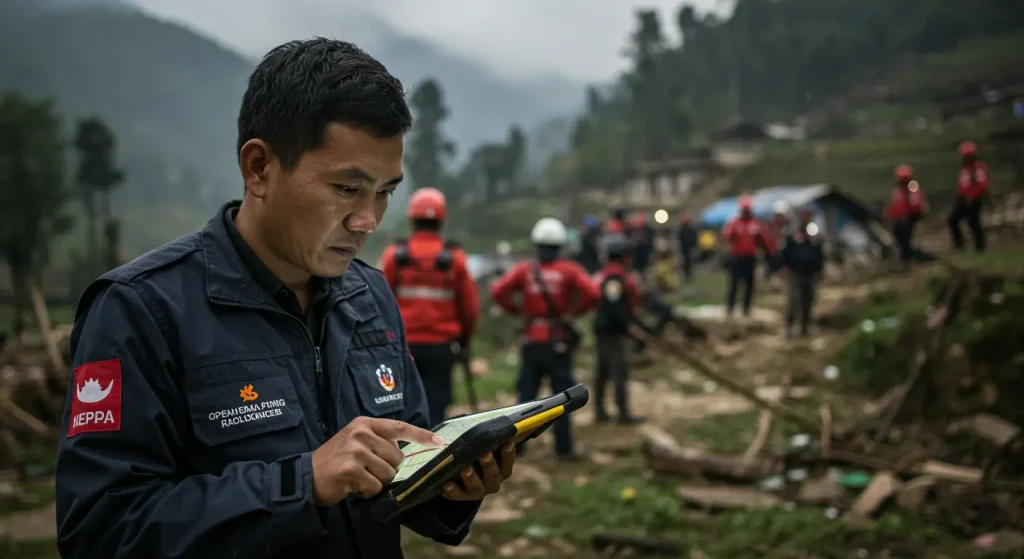
The key resource for public control is the portalOpen Data Nepal(opendatanepal.com) Created by Open Knowledge Nepal, it serves as a central repository for a variety of datasets, from government budgets and procurement data to education and health statistics.11The main goal of the portal is to solve the problem of fragmentation and inconvenient format of government information. OKN activists manually or with the help of scripts collect data from dozens of government websites, where it is often published as PDF files, and convert it into machine-readable formats (CSV, JSON), accompanying it with the necessary descriptions.11This turns “dead” reports into living material for analysis, accessible to journalists, researchers and developers.
A striking example of how access to data helps to uncover abuses is an investigation conducted by the organization Freedom Forum. Their target was the so-called Constituency Development Funds (CDFs) – special funds allocated directly to members of parliament for projects in their constituencies.44These funds have long been the subject of suspicions of mismanagement and corruption.
Using the Right to Information Act, Freedom Forum activists spent time painstakingly requesting documents from 75 districts of the country: what money was spent on, how decisions were made, whether procedures were followed. The process was grueling: officials often refused to provide information, and appeals had to be filed.44In the end, they managed to collect data on 68 districts, and the picture was depressing. Money intended for building roads and other infrastructure was spent on buying musical instruments, renovating monasteries and buildings for party cells. Projects were chosen not according to the needs of residents, but in order to “thank” their political supporters.44
After collecting and analyzing this data, Freedom Forum did more than just publish a report. They partnered with leading Nepali media outlets, including newspapers Kantipur And Republic, as well as the popular weekly Himal Media. The journalists, having received a ready-made array of evidence, published a series of high-profile exposés.44This case showed how data obtained through RTI and processed by civil activists becomes a powerful weapon in the hands of the independent press. This work is supported at the systemic level
Centre for Data Journalism Nepal (CDJN), which trains reporters in modern methods of collecting, analyzing and visualizing data to conduct in-depth investigations.45
Direct citizen participation in improving community life
Civic-tech in Nepal is not only a tool for elite investigations, but also a way to solve everyday problems. Platforms for direct civic participation allow anyone with a phone in their hands to contribute to the development of their neighborhood.

One of the most successful examples was the air pollution campaign launched by the platform Speak Up Nepal. The project, which grew out of the Accountability Lab Nepal incubator, bills itself as a “digital Maitighar Square” (Maitighar Mandala is a famous protest site in Kathmandu), providing citizens with an online space for collective petitions and appeals.33
The campaign was very simple and visual. Kathmandu residents were asked to film and send to the platform cars that emit excessive amounts of exhaust gases into the atmosphere.1
Speak Up Nepal did more than just store these videos. The organization’s staff systematized the materials they received and officially handed them over to the Environment Department of the Kathmandu Municipality (KMC).2
The authorities’ reaction was immediate. The head of the department officially confirmed that they were using the data provided by citizens. In cooperation with the traffic police and the transport department, KMC began tracking the offending vehicles, conducting unscheduled exhaust toxicity tests and applying sanctions, including confiscating the vehicle.2The campaign was one of the first examples of successful collaboration between local government and a citizen data initiative in Nepal, demonstrating a direct link: citizen reporting -> structured data -> government response -> real change.
A similar principle underlies other platforms, such as applications Shasan App. It allows residents to mark on a map and send messages to authorities about local problems: uncollected garbage, open manholes, flooded streets.49
It is important to understand that the success of these platforms is not based on technology alone. These are not fully automated systems where everything happens automatically. Behind every successful campaign is the painstaking work of people – moderators, analysts, affiliate managers. Employees Speak Up Nepal manually process and forward complaints to the municipality. Freedom Forum activists spend months trying to obtain data through RTI before handing it over to journalists. OKN organizers hold “datathons” to actively engage people in working with the data.26Thus, the most effective civic-tech projects in Nepal operate on the human-in-the-loop model. Technology serves as a channel for communication and information processing, but it is human efforts, building trust and partnerships with the government and the media that provide the final result.
Case Study: Trial by Fire: The 2015 Earthquake and the Dawn of Open Mapping
There is one event in the history of Nepal’s civic-tech movement that became a true moment of truth for it: the devastating earthquake of 2015. This tragedy not only claimed thousands of lives, but also became a powerful catalyst that proved the vital value of open data and crowdsourcing technologies, turning them from a niche hobby of activists into a tool of national importance.
On April 25, 2015, a magnitude 7.8 earthquake and a series of aftershocks struck central Nepal. The consequences were catastrophic: nearly 9,000 people died, millions were left homeless, and a third of the country’s population was affected in some way.39Rescuers and humanitarian organizations faced a daunting task: how to provide aid in a mountainous country with destroyed infrastructure and, most importantly, without accurate maps of the affected areas? The existing maps were outdated and did not reflect the actual location of roads, buildings and settlements, especially in rural areas. This threatened to seriously slow down rescue operations and the delivery of aid.14
At this critical moment, local civic-tech organizations have come to the forefront, most notably Kathmandu Living Labs (KLL). Drawing on its experience in open mapping gained before the disaster, KLL launched an operation of unprecedented scale.38Working literally out of the parking lot of their office because it was unsafe to enter the building, the KLL team became the focal point for a huge network of digital volunteers.
The response was truly global and collaborative:
- International volunteers: Using fresh satellite images, thousands of volunteers from around the world began mapping collapsed buildings, collapsed roads and temporary camps online, coordinated through a platform Humanitarian OpenStreetMap Team (HOT), which made it possible to divide a huge territory into small areas and distribute tasks among thousands of participants.39
- Local KLL volunteers and staff: In Kathmandu itself, the KLL team and local volunteers worked on the ground, walking around the city, mapping the damage, and collecting information from social media, where people were posting photos and messages about the destruction.39
- Platform for citizens: KLL promptly launched the website QuakeMap.org. With phone service out in many areas, the internet became a lifeline. Victims could use the site to send messages about their location and what kind of help they needed — water, food, medicine, or rescuers to clear the rubble.39
The result of this titanic work was the creation of the most detailed and up-to-date map of the affected areas, which was available to everyone in an open format. And this map did not remain just a pretty picture. It was actively used to make vital decisions:
- Nepal Army and international rescue teams used these maps to plan routes and identify priority areas for search operations.38
- Humanitarian organizations, such as the Red Cross and UN agencies, were able to distribute aid more efficiently, directing it to where it was needed most.38
The 2015 earthquake was what sociologists call a “focusing event.” It instantly moved civic-tech organizations from the periphery of public attention to the center of a national crisis. Before that, the open data movement had been the province of enthusiasts.22The disaster created a critical information need that traditional government structures could not meet with the necessary speed. Into this vacuum stepped KLL and its partners, demonstrating that their model of open, collaborative, technological problem solving not only works, but saves lives.39The success was noticed and appreciated at the highest levels – by the government, the military, international donors. This gave the entire movement enormous legitimacy and likely accelerated its further development, opening the door to new funding and partnerships. The earthquake was tragic but undeniable proof that civic technology is not a toy for geeks, but a vital element of national resilience.
Obstacles in the Way – Challenges in Nepal’s Digital Landscape
Despite the inspiring successes and heroic efforts of activists, the path to digital and open governance in Nepal is littered with serious obstacles. An optimistic narrative about innovation would be incomplete without an honest look at the systemic problems that are holding back progress and limiting its reach. These challenges lie on three dimensions: technological, qualitative, and institutional.

“Digital divide” and low literacy
The first and most fundamental obstacle is “digital divide”. Although internet penetration is growing in Nepal, access to it remains a privilege. As of early 2025, 55.8% of the population was using the internet, meaning that almost half of the country (44.2%) was still offline.54A year earlier, this figure was even lower – 49.6%.55
The gap is clearly geographical and social. The report, based on the 2022/23 Living Standards Survey, shows a shocking difference: in the Kathmandu Valley, 79.3% of households have access to the internet, compared to just 17.4% in rural areas. The wealth gap is even more striking: only 9.5% of households living below the poverty line have access to the internet.56This means that the benefits of civic tech – the ability to complain about an official, get information about the budget, or participate in the development of your village – are not yet available to the most vulnerable and marginalized groups of the population.
Even where there is internet access, a second problem arises: low digital literacy. The overall literacy rate in the country is about 71%57, but the ability to use digital tools effectively is much less common.57This applies not only to citizens, but also to civil servants themselves. Especially at the local level, many officials lack the basic technical skills to work with digital systems, and IT departments in municipalities may consist of one or two people who fix computers rather than manage data.10
The problem of data quality and availability
The second major obstacle is the state of government data itself. Even when governments are willing to provide it, its quality and format often make it virtually useless.
- Data Silos: The state digital infrastructure is extremely fragmented. There are more than 120 isolated information systems in various ministries and departments that are incompatible with each other.60Each agency collects data for itself, which leads to duplication of efforts, inconsistencies and the inability to conduct a comprehensive analysis.
- Incompatible formats: This is perhaps the most common complaint from activists and journalists. The vast majority of government data is published in formats that are not designed for automated processing: as PDF reports, and sometimes just scanned images of documents.6To extract figures from such a document, analysts have to spend hours and days on manual work, which makes the analysis process extremely labor-intensive.61
- Low quality and lack of trust: The data that does manage to be obtained in a usable form is often “dirty”: with errors, missing values, inconsistencies, and a mix of Nepali and English.10This undermines trust in information. The situation is aggravated by recent incidents of data loss on the servers of the National Information Technology Centre (NITC), which calls into question the reliability of the entire state IT infrastructure.62
Bureaucratic and institutional barriers
The third group of problems is related to the internal culture and capabilities of the state apparatus itself.
- Lack of resources and competencies: Government agencies themselves acknowledge that the main barrier to using data in decision-making is the lack of qualified personnel and resources for analysis.59Most officials are able to collect data and produce simple reports, but they lack the skills to perform deep analysis and extract useful insights from the data.59
- Culture of closure: Despite the existence of the Right to Information Act, the culture of secrecy is still strong in the civil service. Some civil servants view information as a source of personal power and are reluctant to share it, fearing criticism or simply not understanding the benefits of openness.14
These challenges force Nepal’s civic-tech community to play a dual role. On the one hand, they must be advocates, convincing the government to release more quality data. On the other hand, they must be “data cleaners,” building tools and spending resources to clean up the bad data the government releases. OKN, for example, developed the Open Data Editor (ODE) tool not for itself, but to help municipalities clean up their own “dirty” data.10In essence, civil society is now subsidizing the lack of government capacity in data management, which poses serious risks to the long-term sustainability of the entire movement.

Future Horizons – What’s in Store for Civic-Tech in Nepal?
Despite the challenges, the future of civic tech in Nepal looks promising. The energy coming from below, from civil society, is beginning to meet the ambition coming from above, from the government. Whether these two vectors coincide will determine the trajectory of the country’s digital development in the coming decade.
Government ambitions: “The Decade of Information Technology”
Recently, the Nepal government made a big announcement by announcing the period from 2024 to 2034 “The Decade of Information Technology” (IT Decade).56The goals are extremely ambitious: to turn Nepal into a regional IT hub, increase IT services exports to 3 trillion Nepalese rupees (about $22.5 billion) and create 1.5 million jobs in the sector.56
This plan is supported by a number of other initiatives, such as the strategy Digital Nepal Framework, developing laws on e-governance and data protection, and plans to provide broadband internet access to all schools and health facilities in the country.56This shows that at the highest political level there has been an understanding of the importance of digital transformation for the future of the country.
New trends in civil technologies
Meanwhile, the civic-tech community itself continues to evolve, mastering new approaches and technologies that correspond to both global trends and local realities.
- Focus on mobile platforms: In a country where the number of cellular connections exceeds the population (132% in early 2025), the mobile phone is becoming the primary tool for civic participation.54The success of platforms like Speak Up Nepal, actively using social networks (TikTok, Facebook) to collect complaints, and applications such asShasan Appshows that the future lies in mobile, simple and accessible solutions.1This is completely in line with the global trend mobile-first civic engagement.67
- Artificial Intelligence (AI) and Data Analysis: The potential of AI for civil technologies is enormous. Already, discussions are underway on the possibility of using AI chatbots to provide 24/7 consultations to citizens or using machine learning algorithms to identify anomalies in public procurement and budget expenditures.67The Nepalese government is already working on a national AI policy, which will provide a framework for the implementation of such technologies in the future.69
- Hyperlocalization: Nepal’s transition to a federal system of government has created a huge demand for data and citizen participation tools at the 753 municipal level.22The future of civic-tech is in solving specific, local problems: from tracking the construction of a local road to monitoring the work of a rural school. OKN’s work with individual municipalities to implement data management systems is a shining example of this trend.10
The Critical Question of the Future
The big question facing Nepal today is whether the government’s growth- and export-oriented “IT Decade” strategy and the grassroots civic-tech movement focused on domestic public good can come together.
There is a risk of cultural and target mismatch. The government speaks in the language of trillions of rupees in exports and job creation – this is commercial logic.56Civic-tech organizations like OKN, ALN, and KLL are nonprofits and speak the language of accountability, transparency, and community development—the logic of the public good.23
The success of the next decade will depend on whether the government can see the civic tech sector as more than just a group of activists, but as a strategic partner in the country’s digital transformation. If ambitious plans for e-government and digital literacy are backed by real support and sustainable funding for NGOs that have already laid the foundation for digital civic participation, Nepal will have a unique opportunity to build a digital economy that is not only commercially successful but also socially responsible and inclusive. If the focus is solely on commercial IT outsourcing, the real engine of citizen innovation risks being under-resourced and under-served.
Conclusion: A New Chapter in Nepal’s Governance
The story of Nepal’s digital transformation is not one of smooth implementation of government programs. It is a story of how, despite a deep digital divide, poor data quality, and bureaucratic resistance, a powerful movement emerged from the bottom up.
Its driving force was not government, but a resilient and surprisingly cohesive ecosystem of nonprofit civic-tech organizations. Acting as translators, brokers, and “data janitors,” these groups turned abstract rights to information into tangible tools for change. They trained journalists to conduct data-driven investigations, empowered citizens to report problems via mobile apps, and helped first responders navigate the chaos of a natural disaster.
Nepal’s journey to full digital democracy is far from over. The challenges of poverty, inequality of access to technology, and skills gaps remain formidable. But the groundwork laid already proves beyond doubt that open data and civic technology tools give Nepalis a real opportunity to actively participate in building a more transparent, accountable, and responsive state. They are no longer passive observers, but active participants who are writing a new chapter in their country’s democratic history with their own hands.
Sources used
- Day 410 of Sharing Good News from Nepal! Start your day with positivit…
- SpeakUp Nepal: Amplifying Citizens’ Voices
- opendatatoolkit.worldbank.org
- What is open data?
- Open Data in 60 Seconds | Data – Open Government Data Toolkit – World Bank
- why can’t the government manage and publish their data properly? : r/Nepal
- What’s the Difference Between Civic Tech and GovTech?
- Civic technology
- What is Civic Tech? A Comprehensive Study
- Open Data Editor in Action: Empowering local governments in Nepal
- Beta Version of Open Data Nepal – A Portal to Make Nepal’s Data Accessible Online
- A huge shoutout to everyone who sent in videos of vehicles emitting ex…
- Right to Information from the Nepalese Legal Perspective
- Open Government Data: A First Step Towards Evidence Based Decision Making
- Right to Information Act, 2064 (2007 )
- Right to Information Act, 2007
- Right to Information in Nepal
- Briefing Note – Women in Data
- Right to information & Nepali press
- NIMJN Talk: Using RTI for Investigative Journalism
- Open Data – Useful Resources From Nepal
- Driving the data revolution
- Open Knowledge Nepal
- About | Open Knowledge Nepal
- Open Knowledge in Nepal
- Open Knowledge Nepal: Liberating Knowledge for Opportunities
- Open Data Nepal Portal
- Open Data Nepal – – Data Portals
- Open Data Awareness Program – Open Knowledge Nepal
- Transforming Nepal’s Data Ecosystem: 2024 in Review – Open Knowledge Blog
- Accountabilitylab Nepal
- Our People | Accountabilitylab Nepal
- Annual Report Nepal 2024 | Accountability Lab
- 4 ways to build resilient networks: Lessons from Accountability Lab Nepal
- Accountability Lab: Integrity as a norm in public service | The Annapurna Express
- Kathmandu Living Labs – Global Partnership for Sustainable Development Data
- Kathmandu Living Labs – OpenStreetMap Wiki
- Kathmandu Living Labs – Wikipedia
- Nepal Earthquake Recovery – Open Data’s Impact
- Code for Nepal – GuideStar Profile
- Code for Nepal
- Read Nikesh’s insights about Code for Nepal
- Nikesh Balami | Personal Website
- Exposing Wrongs With the Right to Information: Freedom Forum’s Work With the Media in Nepal
- Arun Karki – Centre for Investigative Journalism
- Pilot in Nepal – London – Centre for Investigative Journalism
- Struggles that led to activism – The Kathmandu Post
- Crackdown on polluting vehicles shifts public attitude on engine maintenance
- Shaasan: Transforming Nepal’s Democracy Through Civic Engagement and Technology –
- PublicBodies Datathon: Rethinking Access to Public Information in Nepal
- case-nepal.pdf – Open Data’s Impact
- Nepal Overview: Development news, research, data | World Bank
- Community Mapping for Risk Identification and Communication by HOT
- Digital 2025: Nepal — DataReportal – Global Digital Insights
- Digital 2024: Nepal — DataReportal – Global Digital Insights
- STATE-OF-DIGITAL-RIGHTS-AND-SAFETY-IN-NEPAL-2024-1-1-2.pdf
- Digital Governance in Nepal: Challenges, Progress & Future Insights
- Nepal’s long-term growth may stall below 4 percent, World Bank warns
- in Nepal – Development Gateway
- Bridging Data And System Silos – Open Knowledge Nepal
- Data Transparency in the New Nepal | THE GOVLAB BLOG – The Governance Lab
- Digital data loss is troubling Nepal in front of the helpless government
- Right To Information – The Rising Nepal
- Open Knowledge Nepal – GitHub
- Decoding the Creative Industry – Thuprai
- World Bank Document
- The Future of Civic Tech: Emerging Trends in Citizen Engagement – GovPilot
- Open Data: Definition, Importance, and Best Practices – Denodo
- Year 2081 in review: Nepal’s digital transformation amid progress and perils
- Report on “Advancing U.S.-Nepal Commercial Relation – II”
- Supporting Nepal in the sharing and use of (open) data for development