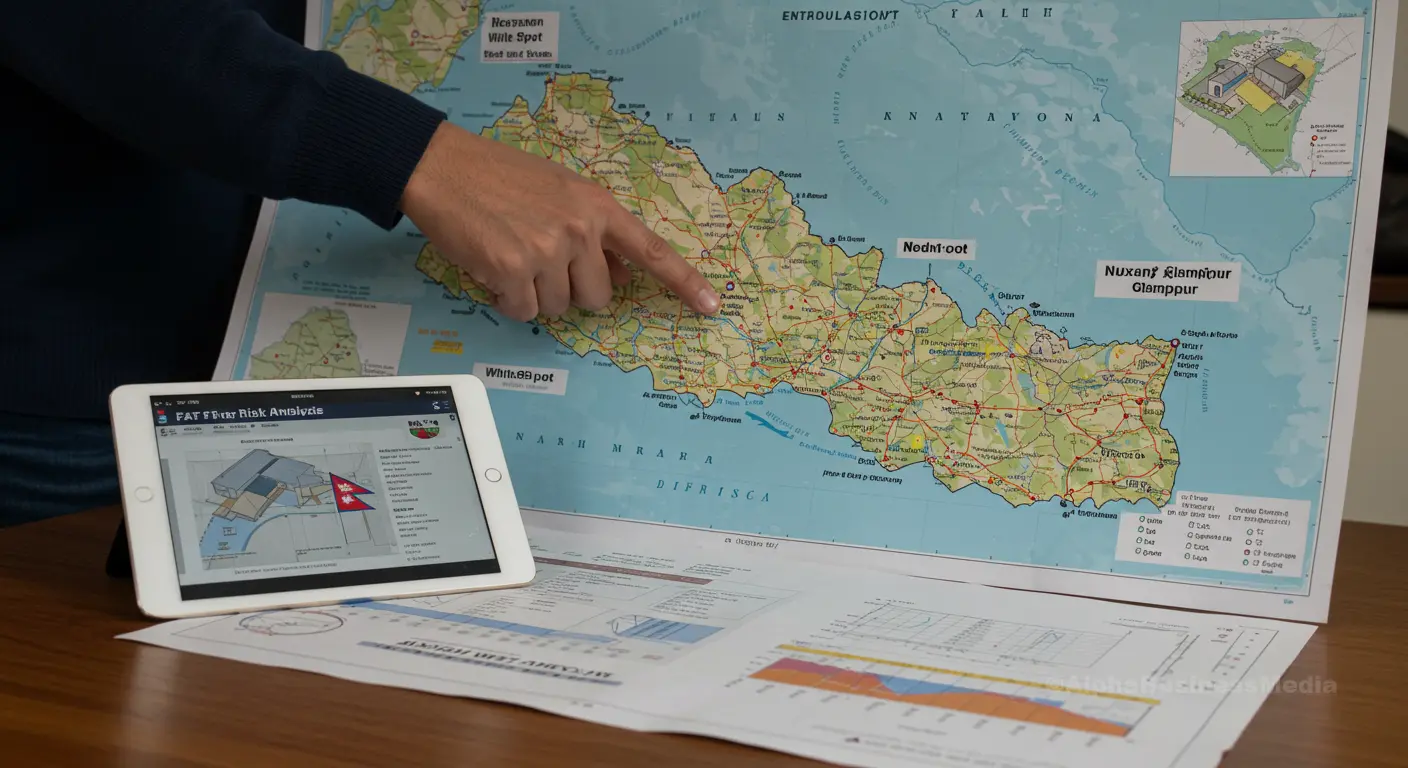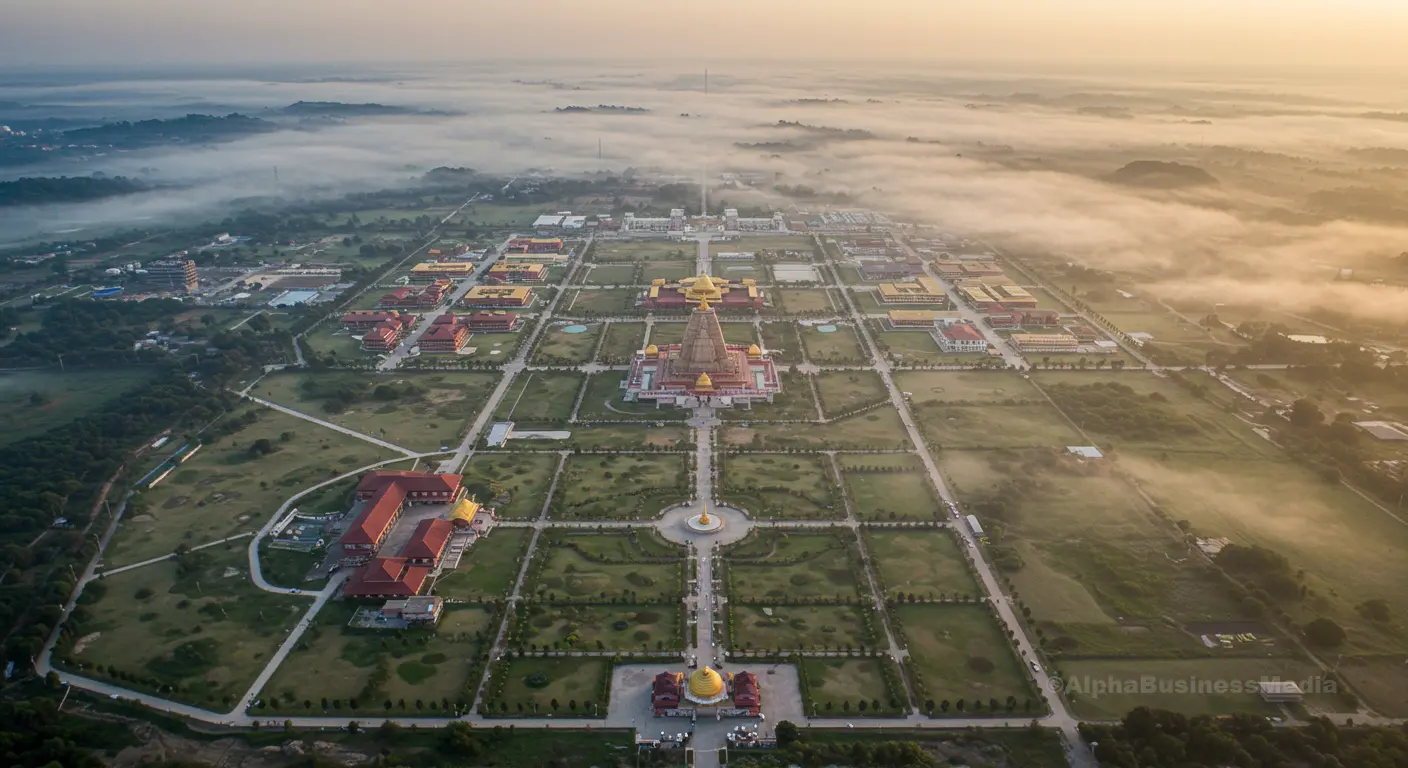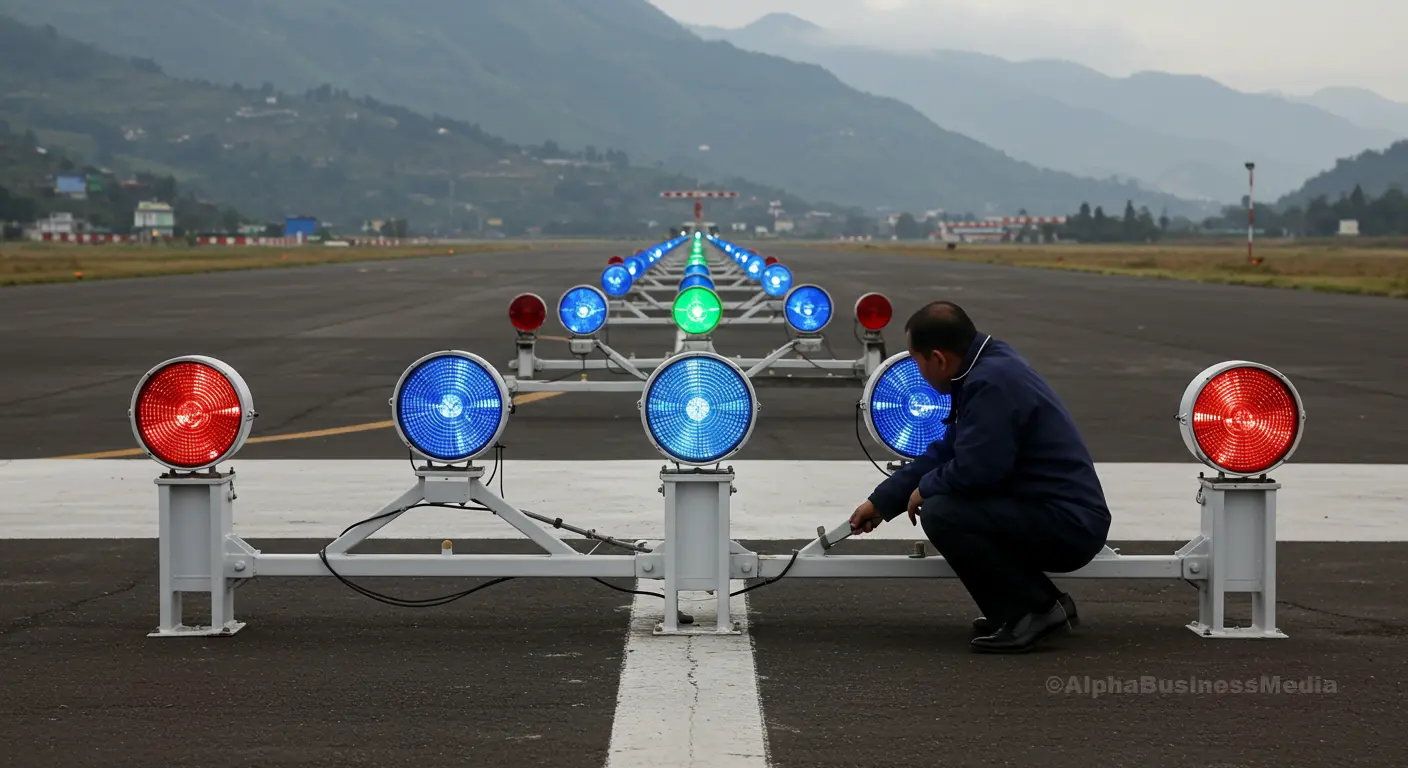
Nepal’s tourism landscape is showing signs of transformation in 2025, driven in large part by the expected opening of two new international airports – Pokhara International Airport (PIA) and Gautam Buddha International Airport (GBIA) in Bhairahawa. This study analyses their real impact on the country’s tourism map by mid-2025, identifying both the successes achieved and the remaining challenges, and assessing which regions have unexpectedly gained momentum.
Key findings indicate that, despite ambitious plans, full international operation of the PIA and GBIA by mid-2025 remains limited.1Tribhuvan International Airport (TIA) in Kathmandu, despite its own modernization challenges and temporary disruptions due to reconstruction4, retains its dominant role as the country’s main international air hub.6The new airports have initiated some changes in accessibility to the Pokhara and Lumbini regions, but their impact is constrained by a number of factors, including the infrequency of international flights, high air travel costs, infrastructure constraints and geopolitical aspects such as the difficulty in obtaining new air corridors from India.7
Overall tourist flow to Nepal is showing positive dynamics of recovery from the COVID-19 pandemic, with record figures in some months of 2025.8However, revenue growth from key markets such as India and China remains weak or below expectations.4
As for the “unexpected” regional leadership, there are no clear breakthroughs directly related to the international activities of new airports by mid-2025. However, there are prerequisites for growth in regions actively developing alternative tourism products (e.g. ecotourism, adventure tourism in new locations) and potentially benefiting from improved internal transport accessibility or redistribution of tourist flows. The province of Koshi, with its active marketing campaign and focus on border tourism with India10, demonstrates ambition and potential for future growth.
Overall, the real change in Nepal’s tourism map that the new airports will bring by 2025 is evolutionary rather than revolutionary. Their full potential will be realized as operational issues are resolved, supporting infrastructure is improved, the international situation stabilizes, and national and regional tourism promotion programs are effectively implemented. Nepal’s recent inclusion in the FATF “grey list” has also had a negative impact, creating risks to financial transactions and the country’s international image.11
2. Nepal’s New Aviation Gateways: Pokhara (PIA) and Bhairahawa (GBIA) in 2025
This section provides a detailed report on the status of Nepal’s two new international airports, focusing on their operational performance in 2025 and the direct impact on their respective regions.
2.1 Pokhara International Airport (PIA): Expectations and Reality
Operational status and international communications (beginning 2025):
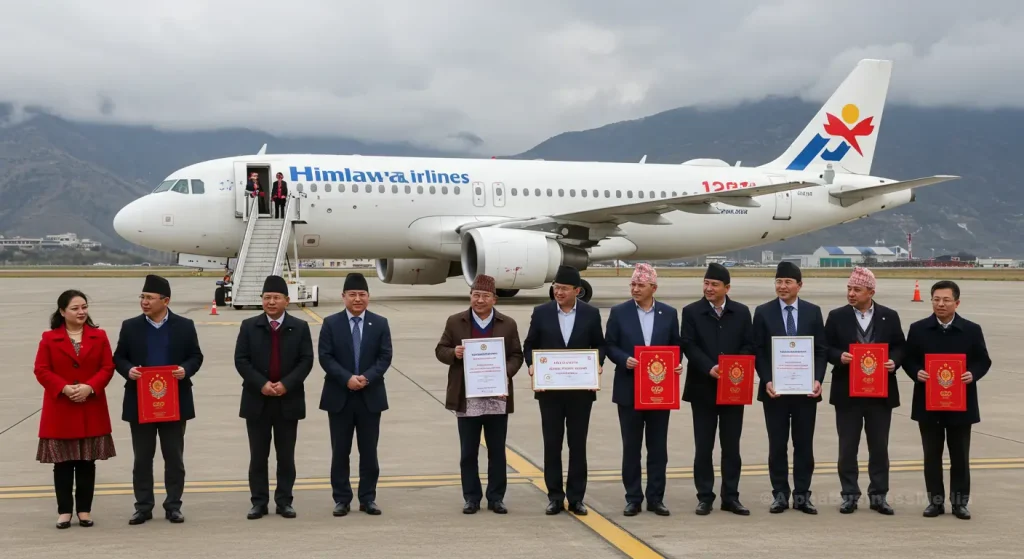
Pokhara International Airport (PIA), which was inaugurated on January 1, 20233, had been waiting for regular international flights for a long time. A landmark event was the launch of the first scheduled international passenger flight by Himalaya Airlines from Lhasa to Pokhara on 1 April 2025, initially with a frequency of once a week.3 This came 27 months after the inauguration, during which the airport only handled international charter traffic.14 By March 2025, PIA had received 13 international charter flights, mostly from China.14 Sichuan Airlines also operated charter flights from Chengdu.3 In April 2025, Bangladeshi airline Air Astra expressed interest in operating flights to Pokhara.15 Domestic services are active, with Buddha Air, Yeti Airlines, and Shree Airlines operating flights to Kathmandu and other cities.17 The launch of Himalaya Airlines’ first scheduled international flight to Lhasa is a critical milestone for PIA in 2025. However, its sustainability and attracting other international carriers remain key issues. The reliance on charter flights and the slow adoption of the airport by international airlines, despite incentives offered, point to deeper problems. The “Visit Pokhara Year 2025” 19 and China’s “Visit Nepal Year 2025” 21 campaigns are clearly aimed at boosting traffic through PIA.
Passenger flow and load:
Specific data on PIA’s international passenger traffic in early 2025, beyond the inaugural flight to Lhasa (107 arrivals, 30 departures 3), is limited. Overall flight operations from PIA reportedly declined between July and December of the previous fiscal year (2081/82 in the Nepalese calendar, corresponding to mid-2024 to mid-2025), although passenger numbers (likely mostly from domestic traffic) increased slightly due to better aircraft utilisation.22 China’s CAMC Engineering, the contractor for the construction, claimed that PIA’s annual passenger traffic would reach 904,771 in 2023 and 989,852 in 2024, exceeding its design capacity of 800,000.23 These figures likely include both domestic and a limited number of international charter passengers. The discrepancies between the Civil Aviation Authority of Nepal (CAAN) figures of flight cuts 22 and CAMC claims of high passenger numbers 23 require clarification, perhaps by separating the statistics into domestic and international segments. The high passenger numbers reported by CAMC, if accurate and sustainable, would indicate high domestic loads or successful charter programmes, but the key issue of regular international services remains unresolved.
Problems and contradictions:
The PIA, a $215.96 million Belt and Road Initiative project3, has faced significant challenges. A parliamentary inquiry in April 2025 found alleged irregularities and corruption amounting to billions of rupees (about $106 million, or two-thirds of the project cost), design flaws (for example, the runway was built 20 feet below natural ground level, rendering the PAPI lights inoperative), and questionable agreements.25 India’s reluctance to provide new air corridors over its territory has negatively affected PIA’s profitability for international airlines.7 Despite waiving fees (landing, parking, ground handling, passenger handling for two years3), airlines find it expensive to operate, partly due to high aviation fuel prices in Nepal.3 The Hotels Association of Nepal (HAN) noted in its 2025 yearbook that PIA (like GBIA) “is not functioning at full international capacity even two years after opening.”27 Tourism experts also point to the underutilization of these airports as a serious problem.28 Allegations of corruption and design flaws cast a shadow on PIA’s operational efficiency and international reputation. Combined with geopolitical factors (India’s reluctance to open up air routes) and operational costs, this seriously limits its potential to transform the tourism map on its own.
2.2 Gautam Buddha International Airport (GBIA), Bhairahawa: Gateway to Lumbini
Operational status and international communications (beginning 2025):
GBIA, which opened in May 20221, stepped up efforts to ensure full operations in March 2025, including facilitating procedures for migrant workers and tourists.2 A satellite-based approach system (RNP-AR) was introduced to address ILS issues and weather-related flight cancellations.2 However, as of May 2025, international flights from GBIA were suspended as airlines had not applied for slots in the summer schedule.1 This contradicts earlier reports of FlyDubai, Jazeera Airways and Thai AirAsia flying in February 2025.29 Jazeera Airways was mentioned as the only airline operating direct international flights to Lumbini (GBIA) in the general list for 2025.30 Deputy Prime Minister Paudel assured in March 2025 that GBIA would be “fully operational soon” and that special discounts were being offered to international airlines packages.31 GBIA’s international operations appear highly volatile and seasonal, with the airport struggling to maintain regularity despite government assurances and infrastructure upgrades. The suspension of international flights for the summer season 1 is a major blow.
Passenger flow and load:
In February 2025, GBIA handled almost 6,800 international passengers on 115 flights (FlyDubai, Jazeera Airways, Thai AirAsia, Nepal Airlines charters), the highest number since the resumption of operations in November 2024.29 This compares to 1,365 passengers in January 2025; 3,878 in December 2024; and 4,279 in November 2024.29 The total passenger traffic for 2024 was 8,157. From January to 20 March 2025, the airport handled 13,181 passengers2; this figure likely includes domestic and transit traffic. The HAN Yearbook 2025 confirms that GBIA, like PIA, is not operating at full international capacity.27 Hotel investment in the GBIA area is suffering due to the lack of flights.1 Although there was a peak in February 2025, the subsequent suspension of international flights for the summer season indicates severe underutilization and GBIA’s inability to establish itself as a sustainable international hub. This has a negative impact on the local tourism industry.
Problems:
The main problems of GBIA are the lack of sustained interest from international airlines despite the incentives offered.1 Initial difficulties with ILS and weather conditions have been partly addressed by the introduction of RNP-AR.2 Geopolitical factors similar to those of PIA (India’s reluctance to provide new air corridors) also affect GBIA due to its proximity to the Indian border.7 The need to go through all international procedures (visas, work permits for migrants) in Kathmandu reduces the practical value of GBIA.1 GBIA’s success is closely linked to attracting airlines to routes serving Buddhist pilgrims (Lumbini) and migrant workers. Operational instability and dependence on Kathmandu for ancillary services undermine its attractiveness.
Table 2.1: Comparative operating status of PIA and GBIA (first half of 2025)
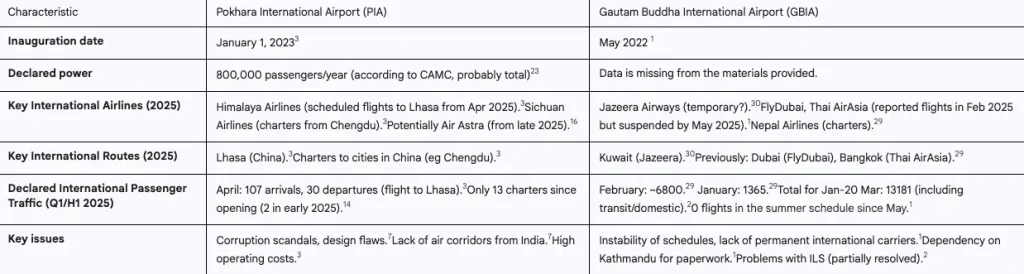
This table clearly shows the current status and challenges of both airports, highlighting their limited impact on international tourism flows by mid-2025.
3. Transforming Nepal’s Tourism Landscape in 2025
This section analyses the broader shifts in Nepal’s tourism sector in 2025, considering the impact of new airports in conjunction with other critical factors.
3.1 Overall trends in tourist arrivals and key markets (2023 – first half of 2025)
The dynamics of tourist arrivals to Nepal in the period 2023-2025 indicates a gradual recovery of the industry after the pandemic, but is characterized by heterogeneity and dependence on a number of external and internal factors.
- 2023 year: The country was visited by 1,014,885 foreign tourists, which is 65.1% more than in 2022.32Lumbini alone received 998,938 visitors, of which 266,510 were from India and 76,210 were from other countries (excluding Nepalese).33
- 2024 year: The number of arrivals increased to 1,147,024, an increase of 13.02% compared to 2023.32Lumbini was visited by 1,172,304 people (an increase of 17.36%), of which 300,889 were Indians and 111,425 tourists from other countries.34Pokhara is estimated to receive 40-45% of the total tourist arrivals in Nepal, which is approximately 400,000 foreign tourists per year.35Tribhuvan International Airport (TIA) in Kathmandu handled 4.96 million international passengers in 2024.6
- Beginning of 2025 (January-May): In total, 501,264 foreign tourists visited the country in the first five months.36
- January: 79,991 tourists (India: 20,485; China: 8,191; USA: 8,063).8This figure was 98.4% of the pre-COVID level in January.4
- February: 96,880 tourists (India: 19,187; USA: 10,348; China: 8,283).8Total arrivals decreased by 0.6% year-on-year (y/y).39Arrivals from India fell by 25% y/y.40
- March: 121,687 tourists (India: 21,412; China: 11,443; USA: 11,092).8Total arrivals fell by 5.1% y/y.4Arrivals from India have fallen by about 30%4, from Europe – by 13%.4
- April: 116,490 tourists – a record figure for April (India: 25,933; USA: 10,053; China: 9,037).8Exceeding the pre-COVID level of April 2019 by 106.5%.8
- May: 86,216 tourists (India: 28,160; USA: 9,074; China: 8,824).42
- Key markets: India remains the largest market, but flows are expected to stagnate or decline in early 2025.8The recovery of the Chinese market is also slower than expected despite the “Visit Nepal Year 2025” campaign.43The US demonstrates a stable presence.
- Update for Q1 2025: Data from4of 298,558 arrivals for Q1 2025 (January-March) and a decrease of 2.1% y/y are confirmed by summing up monthly data from.8This confirms the decline in the first quarter. The growth in April is a positive signal, but requires sustainable dynamics.
Despite the overall recovery trajectory from COVID-19, the outlook for early 2025 is mixed, with a worrying decline in arrivals from key markets India and China. New airports have yet to reverse the trend at the national level. Record April arrivals are encouraging, but continued efforts are needed to ensure sustainable growth. TIA disrupted by upgrades4likely contributed to the first quarter decline, masking any potential positive effect from new airports. The April surge8important, but requires analysis in the context of the resumption of normal operations of TIA, the effectiveness of specific campaigns or the general revival of the tourism market.
3.2 The continuing dominance of Kathmandu (TIA) and its modernization
Tribhuvan International Airport (TIA) in Kathmandu continues to be the main air gateway of Nepal. In 2024, TIA handled 4.96 million international passengers, an increase of 9.29% over the previous year.6This underlines its central role in the country’s international air traffic.
From November 2024 to March 2025, TIA underwent major upgrades, including the construction of a parallel taxiway, expansion of the international apron and hangar area.4These works have reduced the airport’s operating hours, causing disruptions to schedules, higher airfares and a decline in tourism in the second quarter of the 2024/25 fiscal year. The World Bank estimates that these disruptions, along with the impact of the floods, have reduced Nepal’s GDP growth by almost 1%.4
By March 2025, TIA expansion work was 60% complete, and the airport’s daily closure hours were reduced as of April 1.5The new parallel taxiway is expected to reduce runway occupancy time by approximately 22.5%.5
In the budget for the financial year 2025-26, the government has allocated NPR 4.15 billion to transform TIA into a “boutique international airport”.45First introduced in 2019, the concept aims to enhance the passenger experience and reflect Nepal’s unique cultural and architectural heritage.
Investment in upgrading TIA and plans to turn it into a “boutique airport” indicate that the authorities do not see the new airports at Pokhara and Bhairahawa as immediate replacements for the capital’s hub. At this stage, PIA and GBIA are designed to complement, not displace, TIA in terms of international traffic. The disruption to TIA has directly affected national arrivals, demonstrating its key role.
3.3 National and Regional Tourism Campaigns: Catalysts or Formality?

In 2025, Nepal will implement several tourism campaigns to boost the industry.
- “Visit Pokhara Year 2025”: The campaign launched on February 15, 2025, with the goal of attracting 2 million tourists.19The focus is on sustainable tourism, new attractions, infrastructure development and support for local businesses.19Tax incentives for tourism enterprises and simplification of visa procedures are envisaged.19
- China’s “Visit Nepal Year 2025” campaign: Announced in January 2025 to mark 70 years of diplomatic relations.21The aim is to increase the flow of Chinese tourists, which should potentially increase the profitability of the PIA, built as part of China’s Belt and Road Initiative.21However, in early 2025, the influx of tourists from China was weak.9
- Province of Koshi “Tourism Year 2082 (2025/2026)”: Launched under the slogan “Beautiful Koshi”.10The focus is on identifying tourist sites, organising events, promoting cultural, adventure and rural tourism, and adjusting policies (such as lobbying for increasing the limit on import of Indian currency for tourists).
- “Community Connect 2025”: An initiative by the Community Guest House Network (CHN) supported by NTB to develop immersive community based tourism in areas such as Dhankuta, Narchang, Hemjakot and Kathmandu Valley.48
- Digital Nomad Politics: Proposed in the Economic Reform Implementation Plan for 2025, to be implemented within a year. Aimed at attracting high-income remote workers by providing a 5-year multiple-entry visa. Requirements include income over $1,500 per month or a bank balance over $20,000, as well as health insurance for $100,000. Provides for the possibility of opening bank accounts, owning a vehicle, and a 5% income tax when staying in the country for more than 183 days.50
A multitude of overlapping tourism campaigns indicate active efforts to promote tourism. However, their success will depend on addressing fundamental issues (connectivity, infrastructure, cost, perception of safety). The digital nomad visa is a promising initiative, but its immediate impact in 2025 will be small. Focus on community and sustainable tourism48is in line with global post-pandemic trends.54Linking China’s “Visit Nepal Year” Campaign to PIA’s Increased Profitability21is an important geopolitical aspect.
Table 3.1: Tourist arrivals to Nepal by key markets (January-May 2025 vs. January-May 2024)

Note: Monthly country-specific arrivals data for 2024 are not always available in the materials provided, so y/y comparisons for individual countries are difficult, except for general trends for India and China. “Growth stagnation” for India and China in April is based on NTB qualitative estimates.8
This table illustrates the dynamics of arrivals from key countries, helping to assess whether new airports are changing the structure of tourist flows. The decline in the number of tourists from India and China in the first quarter, despite promotional efforts, is an important indicator.
4. Unexpected Regional Leaders: Beyond Pokhara and Lumbini

The key aspect of this study is to identify regions that have “surprise risen to the top” on Nepal’s tourism map in 2025, influenced, directly or indirectly, by new airports.
4.1 Defining “unexpected” leadership
Unexpected leadership refers to regions that have not traditionally been among Nepal’s major international tourism destinations or do not have direct international air links through PIA or GBIA, but are showing significant growth in tourism attractiveness or activity. Leadership may be demonstrated by a significant percentage increase in visitor numbers (even from a low base), the development of new, in-demand tourism products, investment in tourism infrastructure, or active market positioning.
4.2 Potential candidates and contributing factors
- Province of Koshi: Announcement of the campaign “Year of Tourism Koshi 2082 (2025/2026)”10is in itself a testament to the region’s ambition to lead. The province has 82 designated tourism sites and is making efforts to develop inter-provincial and cross-border (with India) tourism. Proximity to India and a diverse offering are advantages. An active campaign in Koshi, coupled with the potential for improved domestic air accessibility by offloading TIA with new international airports, could position it as a surprise winner. Focus on addressing issues for Indian tourists (currency limits, vehicle levies)10) is a practical move. New international airports may not directly serve Koshi with international flights, but they could (a) increase overall awareness of Nepal as a tourist destination, (b) potentially free up domestic airline capacity if some international routes are transferred from TIA, making domestic flights to places like Biratnagar (Koshi) more accessible/cheaper, or (c) inspire other provinces like Koshi to more aggressively develop and market their tourism potential. The “surprise” is that it is not the region immediately adjacent to the airport.
- Remote Western and Mid-Western regions (e.g. Karnali): These regions have traditionally been underserved by tourism due to their remoteness. Improving road infrastructure such as the Karnali corridor57, although a long-term project, is gradually opening up these areas. If new airports ease the load on TIA on domestic routes or create new domestic hubs, accessibility to these remote areas could improve. While significant breakthroughs by 2025 are unlikely for these very remote areas solely due to PIA/GBIA, any nascent signs of increased interest from independent travellers or a new focus from tour operators, facilitated by improved overall national connectivity, would be noteworthy. The Community Connect 2025 initiative, targeting areas such as Dhankuta (eastern Nepal, near Koshi)48, also points to a strategy of diversification beyond traditional areas. The logic here is one of secondary effects. If PIA and GBIA end up taking over some of TIA’s international load, or if domestic airlines re-route using PIA/GBIA as secondary hubs, it
Maybeimprove connections to smaller, more distant airfields at Karnali or Sudurpaşım. This is a 2025 assumption, but it is worth examining for “unexpected” shifts. Karnali Corridor57— it’s a land-based project, but it speaks to a broader theme of opening up remote regions that air travel can complement. - Regions with specialized offers (health tourism, adventure tourism beyond Annapurna/Everest): Global trend towards sustainable tourism, wellness retreats and exploring new trekking routes54could benefit regions that have these niche offerings and can market them effectively, especially if accessibility improves even slightly. New airports may not be the direct cause of a region becoming a leader, but they could be part of a broader effort to modernize and diversify tourism in Nepal that allows certain niche regions to gain greater visibility. If tourists coming to PIA or GBIA are looking for experiences outside the immediate area (e.g., wellness retreats in lesser-known areas, new adventure routes), these regions could see growth. The “surprise” element would be if these niche offerings begin to attract significant enough numbers of tourists to be considered “leaders” or fast-growing.
4.3 Difficulties in detecting and quantifying growth
The main challenge is the lack of detailed regional tourism statistics for 2025 in the available data. Most data are national in nature or focus specifically on Pokhara and Lumbini. The ‘unexpected’ nature of the leadership means that these regions may not yet appear in official statistics as leaders, but may show strong local growth or future potential. The analysis will rely on a comparison of data on infrastructure improvements, policy initiatives and changing tourist demands, acknowledging the limitations of the data in finalising the ‘unexpected leaders’ by the first half of 2025, but highlighting regions with high potential.
5. Critical Factors Affecting the New Tourism Map
This section takes a closer look at the broader factors that are facilitating and hindering the shaping of Nepal’s tourism landscape under the influence of new airports.
5.1 Persistent infrastructure and operational weaknesses
- Road conditions: The poor condition of the road network remains a major constraint, affecting travel times and the travel experience, even to areas accessible from the new airports.4For example, a trip from Kathmandu to Pokhara (200 km) takes 10-12 hours.28A new airport is only part of the journey. If getting to/from the airport or to subsequent destinations is difficult, expensive or unsafe due to poor roads or limited/expensive domestic flights, the advantage of a new international airport is significantly diminished. This is a critical factor in explaining why the travel map may not change as dramatically as expected.
- Domestic air traffic and airfare: Despite the presence of new international airports, the efficiency and availability of domestic feeder flights remain key. Overall increase in airfares4and, in particular, due to the modernization of TIA4, has had a negative impact on the number of arrivals. VAT on air tickets makes domestic tourism services expensive.59
- Airport operating restrictions: In addition to the problems of PIA and GBIA, TIA itself faces congestion and restrictions, although modernization continues.6Lack of full night flying capabilities at new airports or issues such as the PAPI lights malfunctioning at PIA25, are essential.
New airports cannot operate in isolation. Their success is inextricably linked to the quality and cost-effectiveness of the entire transport ecosystem. Failure to address these systemic issues will limit their transformative potential.
5.2 Politics, Management and External Perception
- Inclusion in the FATF “grey list”: Nepal to be included in FATF grey list in February 202511creates risks to international transactions, financial reputation, remittances and foreign investment. This may indirectly affect tourism by creating negative perceptions and potentially complicating financial transactions for tourists and operators.4Tourists and investors in the tourism sector consider the overall country risk. Inclusion in the FATF “grey list”11signals weak financial management, which could discourage investment in tourism infrastructure and make transactions difficult for tourists.
- Political stability and policy consistency: Political instability and frequent policy changes have historically discouraged investment in Nepal.63While the current government is pushing tourism initiatives, long-term stability is key. Policy change from take-or-pay to take-and-pay power purchase agreements (PPAs) affecting hydropower64, although not directly related to tourism, demonstrates how policy unpredictability can affect investor confidence in major infrastructure sectors.
- Corruption and governance: Corruption allegations linked to PIA7, damage Nepal’s image and discourage reliable international partners.
- Perception of safety: Recent violent street protests4and past plane and bus crashes40contribute to concerns among potential tourists about safety. Political protests4directly affect the perception of security. These are macro-level constraints.
- Air Pollution: Dangerous levels of air pollution in Kathmandu and other areas are a growing tourism and health concern.4
Factors not directly related to tourism, such as financial management (FATF) and general political stability, have a significant impact on the tourism environment. Addressing them is as important as building new airports.
5.3 Changing tourist preferences and opportunities
- Sustainable and Community Tourism: A growing global trend, Nepal is implementing initiatives such as “Community Connect 2025”48, and also focuses on eco-lodges, carbon neutral trekking and ethical wildlife tourism.52This could attract a new segment of travellers and benefit rural/remote areas. If PIA makes Pokhara more accessible and Pokhara develops new adventure/wellness products52, it is a direct link. If GBIA makes Lumbini more accessible and new cultural/heritage experiences are developed there33, this is another connection. “Unexpected” regional growth could occur in areas close to these airports, which can quickly meet these new tourist demands.
- Diversification of adventure tourism: In addition to the classic tracks, new routes are appearing (Manaslu, Kanchenjunga, Mundum56) and types of active recreation (paragliding, ziplining, mountain biking in Pokhara52).
- Health tourism: Yoga and meditation retreats are gaining popularity.55
- Cultural tourism: Revitalization of heritage sites and promotion of festivals.55
- Visas for digital nomads: Significant opportunity to attract long-term, high-value tourists if effectively implemented with the support of appropriate infrastructure.50
New airports could improve access to regions offering these diverse experiences, but only if they are integrated with product development and marketing that targets these changing preferences. The shift to sustainability and community engagement is a major opportunity for Nepal to stand out.
6. Conclusion and Strategic Outlook for Alpha Business Media
6.1 Verdict on 2025: Real Change or Incremental Shifts?
By mid-2025, Pokhara International Airport (PIA) and Gautam Buddha International Airport (GBIA) had started handling some international flights, but were far from operating at full capacity or significantly decentralizing international arrivals from TIA. The tourism map shows signspotentialdiversification driven more by national/regional promotion efforts and changing tourist demands for sustainable/community/adventure tourism than solely by the direct international connectivity of new airports. “Real change” is in its infancy and heavily dependent on overcoming significant operational, infrastructural, political and reputational challenges.
6.2 Unexpected Leaders: Potential Outweighs Proven Results (1H25)
Based on the available data, no region has “surprise jumped” into the lead by mid-2025 solely due to new airports. However, provinces such as Koshi and certain areas specializing in community or niche tourism (adventure, wellness) are showing strongambitions And potentialbecome significant players if the right conditions are met. Their “leadership” is currently manifested more in active development and marketing than in the massive redirection of tourist flows thanks to new airports.
6.3 Key Successes and Remaining Vulnerabilities
- Successes: Record number of arrivals in April 2025 (national total)8, launch of regular flights from PIA3, government attention to tourism promotion (campaigns, visa for digital nomads50), growing interest in sustainable/community tourism.49
- Vulnerabilities: Underutilization and scandals around new airports1, TIA congestion during upgrade4, stagnant growth from key Indian/Chinese markets4, poor road infrastructure4, high operating costs3, inclusion in the FATF “grey list”11, political instability.63
6.4 Ideas and stories for an article in ‘Alpha Business Media’
- “Nepal tourism in two gears: new airports stall, old problems remain”: Focus on the contrast between investment in new airports and the remaining fundamental problems that limit their full impact.
- “Beyond Everest and Annapurna: Is Nepal’s tourism map really changing?”: An examination of diversification attempts and an assessment of whether new leading regions are actually emerging or whether this is more of a declaration of intent.
- “The Geopolitics of Runways: How China’s Belt and Road Airports and India’s Concerns Shape Nepal’s Tourism Future”: An analysis of the PIA situation and air route issues in a geopolitical context.
- “Finding the Right Tourist: Nepal’s Pivot to Sustainability and High-Value Tourism Amid Infrastructure Gaps”: Discussing digital nomad visas, community tourism and sustainable travel trends as potential avenues for growth despite airport challenges.
- “Nepal Tourism 2025: Navigating Grey Lists, Potholes and Empty Airport Lounges”: A more critical look at the obstacles facing the sector.
This analysis provides a basis for an in-depth look at the current situation in Nepal’s tourism industry, focusing on the real, rather than the declared, impact of new infrastructure projects and identifying potential, although not always obvious, growth points.# Two new airports: How Pokhara and Bhairahawa have really changed the tourism map of Nepal in 2025 and which regions have unexpectedly taken the lead?ntry more comfortable, safe, rich and memorable, attracting new customers and ensuring sustainable development of the industry for many years to come.
Source used
- Investors, hoteliers left waiting as flights vanish from Bhairahawa airport – The Kathmandu Post
- Efforts underway for full operation of GBIA – myRepublica
- $215.96 million new Pokhara airport sees first passenger flight
- Insulate Tourism Sector From Setbacks – The Rising Nepal
- TIA expansion work achieves 60 percent progress
- Kathmandu airport nears 5 million international flyers
- The Unfolding Sorry Saga of Nepal’s China-built Airport at Pokhara …
- Nepal sees record 116490 tourists in April, signals robust tourism recovery
- Arrivals of Chinese tourists in Nepal falls short of expectations despite ‘Visit Nepal Year’ efforts – myRepublica
- Promotion of tourist destinations underway in Koshi – The Rising Nepal
- Floods, airport upgrade cut GDP growth by 1 percent – The Kathmandu Post
- AML and Terror Financing Risks As Nepal Returns to FATF Grey List
- Pokhara Regional Int’l Airport– the first BRI project in Nepal– being inaugurated today
- PRIA to begin regular int’l flights after 27 months – myRepublica
- Air Astra wants Airbus planes to operate on international routes – bdnews24.com
- Novoair eyes exit, Air Astra plans international expansion – Daily Sun
- (PKR Departures) Pokhara Airport Departures – FlightStats
- VNPK Pokhara Airport (VNPK) – FlightAware
- Experience the Exciting ‘Visit Pokhara 2025’ Campaign – Nepal Hiking
- Nepal’s Tourism Capital Pokhara Gears Up for ‘Visit Pokhara 2025’ to Attract 2 Million Tourists from Across Asia and Beyond: Here’s more you need to know – Travel And Tour World
- China’s ‘Visit Nepal Year 2025’: Tourism Drive or Geopolitical …
- Flights from Pokhara International Airport shrink, number of …
- China CAMC Slams ‘Inaccurate’ Public Accounts Committee’s Report on Pokhara Intl’ Airport
- Pokhara International Airport Scandal: Uncovering Foul Play in China-Loaned BRI Project
- Parliamentary Report Reveals Widespread Corruption in Pokhara Regional International Airport Project – epardafas.com
- Pokhara airport: China’s soft power, Nepal’s hard landing – The Kathmandu Post
- NEPAL HOTEL – Hotel Association Nepal
- ‘Airports left underutilized, Rs 1.8 trillion investment at risk’ « Khabarhub
- 6,800 international passengers at Gautam Buddha International …
- [suspicious link removed]
- Gautam Buddha International Airport to operate at full capacity soon …
- Tourism in Nepal – Wikipedia
- Lumbini, World Tourism Destination In 2025 – myRepublica
- Lumbini Records Tourist Arrival of 1.17 Million in 2024
- New Impetus To Boost Pokhara Tourism – The Rising Nepal
- Total Number of Tourist arrival in Nepal in year of 2025 is 5,01,264
- Number of Tourist Arrival in Nepal each month of year 2025
- Nepal Visitor Arrivals [Chart-Data-Forecast], 1991 – 2025 – CEIC
- Nepal Visitor Arrivals Growth [Up-to-date Chart & Data], 1992 – 2025 – CEIC
- Declining visitor numbers threaten peak tourism season – The Kathmandu Post
- 116,000 foreign tourists visit Nepal in April marking record high …
- Over 500,000 foreign tourists visit Nepal in five months
- Record-Breaking Tourist Arrivals in Nepal: April 2025 Marks Highest Ever Influx of Foreign Visitors | NEPSE Trading
- Tribhuvan International Airport Enforces Reduced Nightly Flight Hours for Enhancement Project – Breakfree Adventures
- Rs4.15 billion allocated to develop TIA as boutique international …
- InCrisp: TIA undergoing upgradation. What’s being updated and added?
- Nepal Visit Year 2025 Officially Announced – epardafas.com
- Community Connect 2025 – Nepal Tourism Board
- Community Connect 2025: Unveiling Nepal’s Hidden Gems Through Responsible Tourism
- Nepal eyes tourism, economic boost with new digital nomad visa …
- Community-Based Tourism in Nepal: A Sustainable Travel Approach – Footprint Adventure
- Nepal Travel Trends 2025: What’s New for Trekkers and Tourists
- Green Tourism in Nepal: Leading the Way in Sustainable Travel for 2025 – Binita Karki
- From Everest to Kilimanjaro: The Biggest Adventure Travel Trends for 2025 – EverTrek
- Visit Nepal 2025: Trekking, Culture & Travel Guide
- Why Visit Nepal in 2025: Ten Reasons – Mountain Monarch
- 2025 Monitoring Report – the United Nations
- Karnali Corridor: Nepal’s Strategic Crossroads between China and India – myRepublica
- HAN applauds tax exemptions for hotels, resorts – myRepublica
- Budget tourism-friendly, says HAN – Nepal News
- NATTA expresses reservations over keeping VAT on airfares – Online Radio Nepal
- FIU-Nepal Newsletter (May, 2025) – Issue IV
- 2024 Investment Climate Statements: Nepal – State Department
- Nepal’s energy sector rocked by ‘take-and-pay’ budget policy – The Kathmandu Post