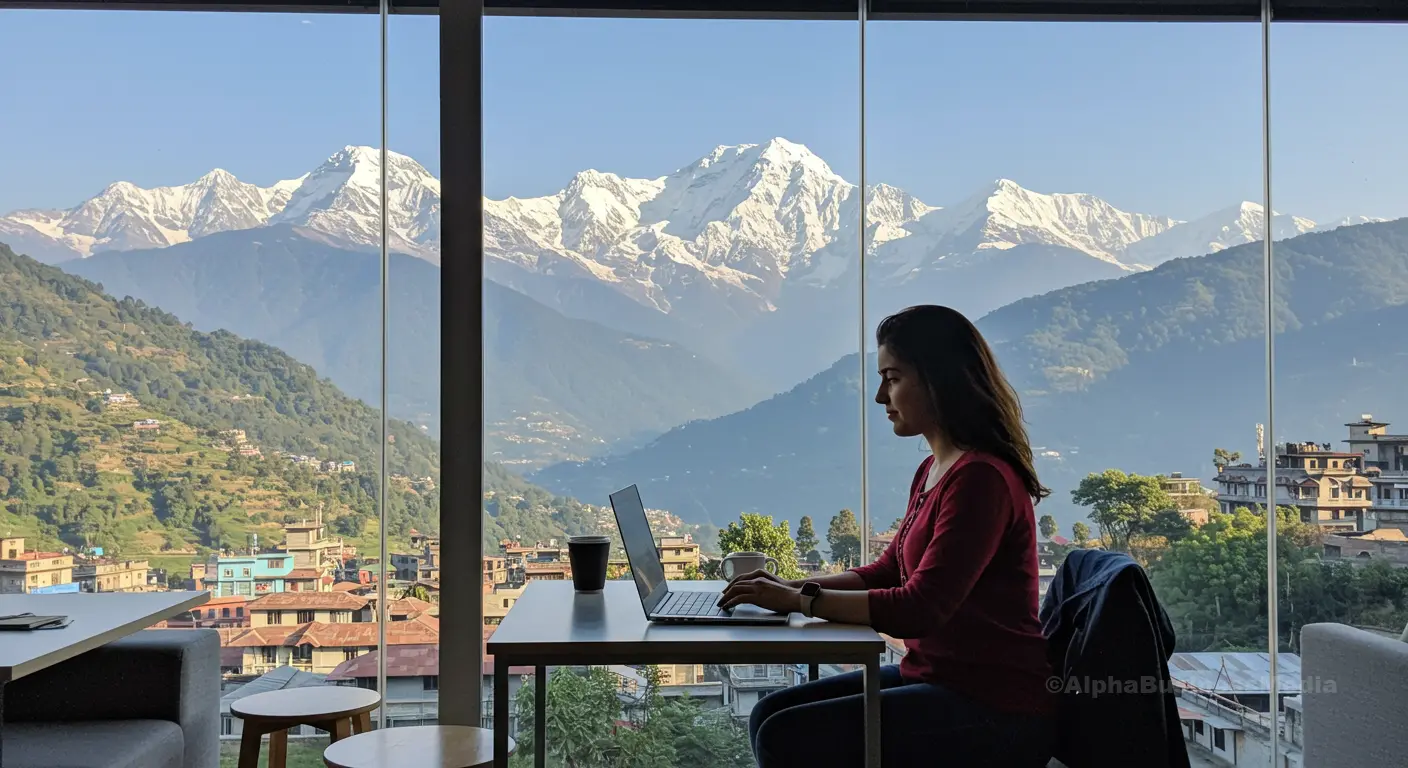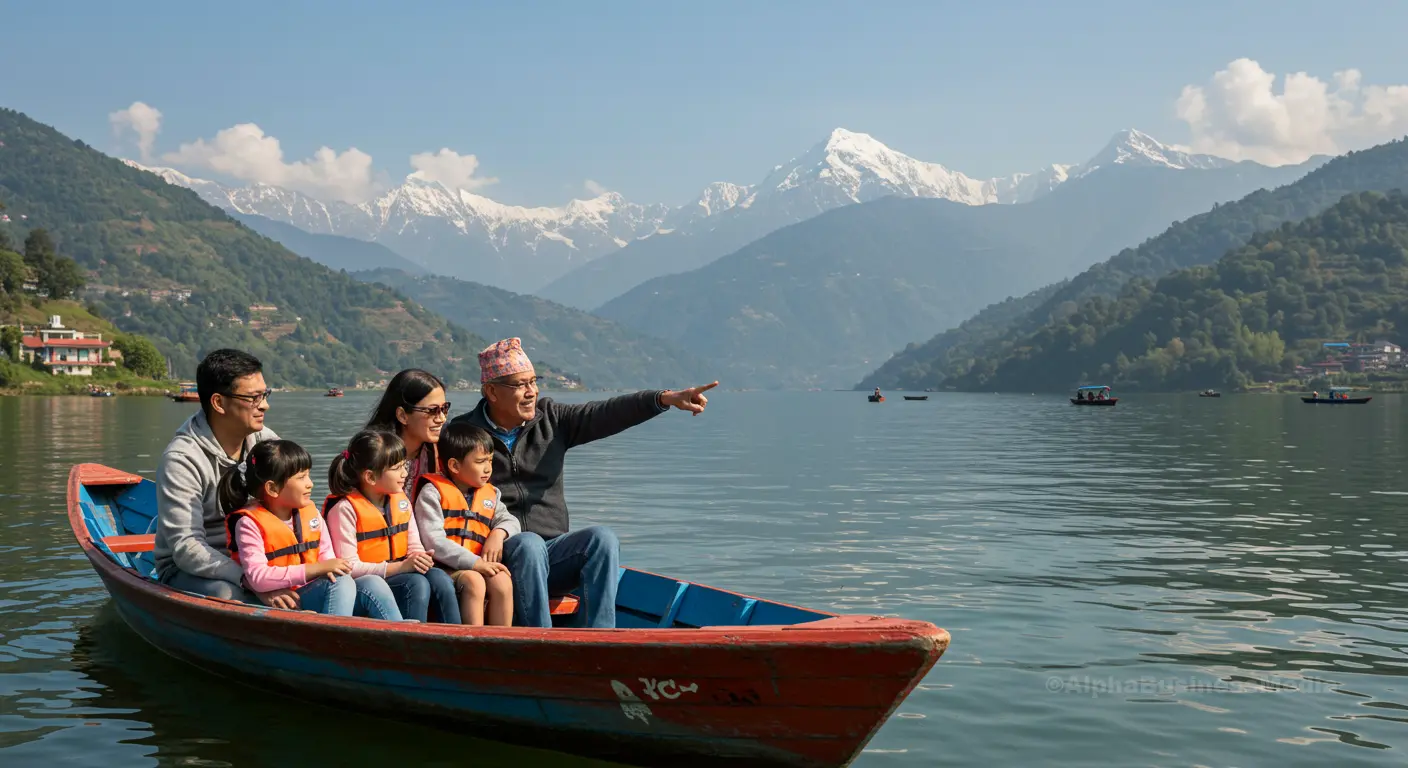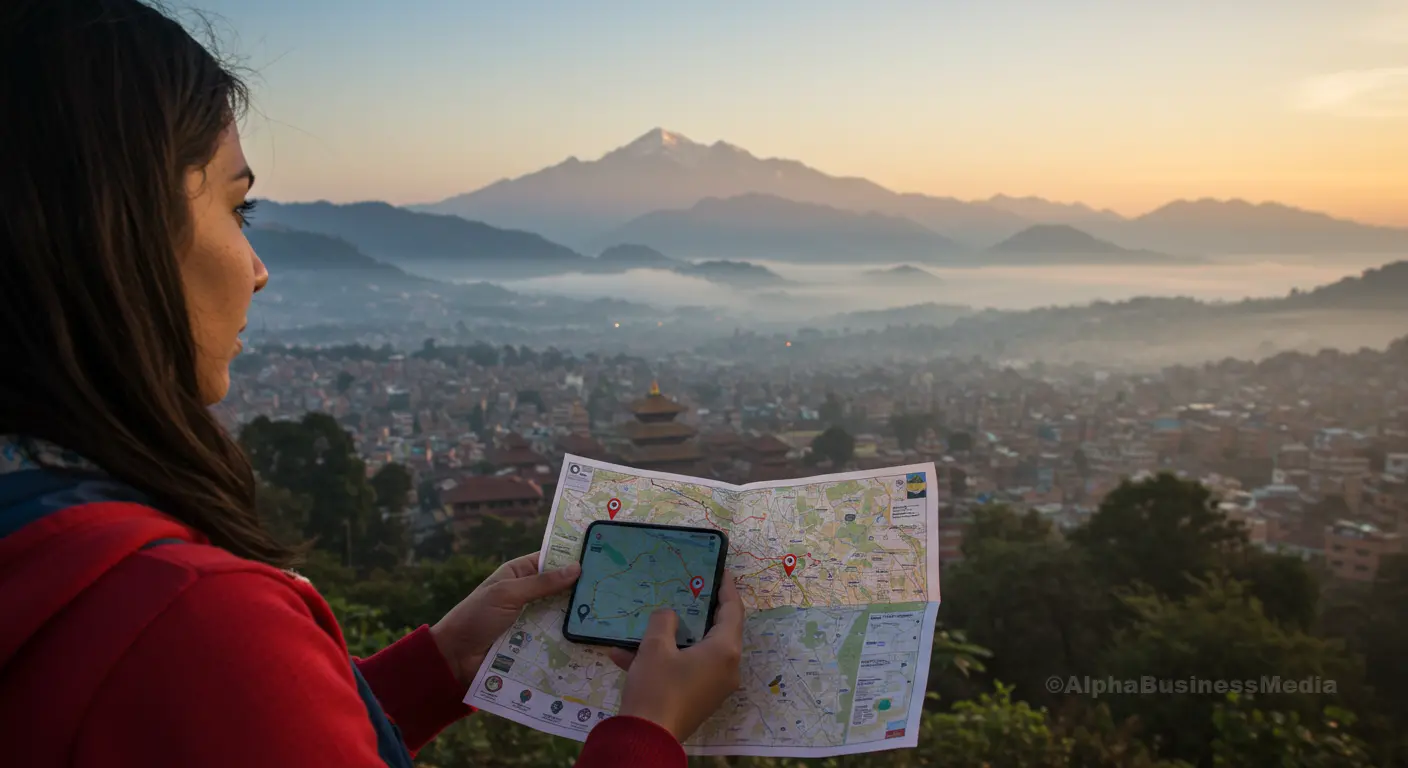
Nepal, a land of breathtaking Himalayan peaks and ancient culture, has always attracted travelers. But in 2025, the expectations of those travelers are rapidly changing. Armed with a smartphone and accustomed to instant access to information, the modern traveler is looking not just for beautiful views, but for personalized, convenient, and technologically advanced experiences. In response to this global trend, the Nepalese tourism industry is beginning to embrace the concept of smart tourism, introducing artificial intelligence (AI), virtual reality (VR), augmented reality (AR), and feature-rich mobile apps.
However, on this path of innovation, it is important to separate real working tools that bring measurable benefits to businesses and tourists from expensive “toys” that look impressive but do not solve pressing problems. Which technologies really help attract more clients, improve the quality of service and increase the profitability of the Nepalese tourism business, and which ones risk remaining just a fashionable but ineffective investment? Alpha Business Media analyzes the current state and prospects of “smart” tourism in Nepal.
Global Smart Tourism Trends and their Relevance to Nepal

The concept of smart tourism encompasses a wide range of technologies aimed at improving all aspects of travel – from planning and booking to on-site experiences and post-trip feedback.
Artificial Intelligence (AI) for personalization and efficiency
AI is finding increasing application in the tourism industry around the world.
- Personalized recommendations: AI algorithms analyze tourists’ preferences, travel history, and online behavior to offer customized itineraries, hotels, excursions, and entertainment.
- Chatbots and virtual assistants: Provide 24/7 customer support, answer frequently asked questions, assist with bookings, and resolve issues that arise, reducing the workload of staff. Nepalese banks are already implementing AI chatbots for customer service1, indicating the availability and applicability of this technology in the country.
- Optimization of operational processes: AI is used to forecast demand, manage pricing, optimize hotel and transport occupancy, and improve logistics.
Relevance for Nepal: For Nepal, with its diverse tourism offerings (from trekking to cultural tours and pilgrimages), AI can be a powerful tool for creating personalized itineraries that take into account individual interests, fitness levels, and budgets. Chatbots in Nepali and English can significantly improve communication with potential customers and enhance the quality of service.
Virtual (VR) and Augmented (AR) Reality: Immersion Before and During the Trip

VR and AR technologies open up new possibilities for marketing and enriching the tourist experience.
- Virtual tours: VR tours of landmarks, hotels or trekking routes allow potential tourists to “try” a product before buying, which is especially important for expensive or remote destinations.
- Augmented reality on routes: AR applications can overlay digital information onto real objects – for example, showing historical reconstructions of ancient temples, providing information about mountain peaks or rare plants on the track.
- Interactive museum exhibits: VR and AR make visiting museums and cultural centers more exciting and educational.
Relevance for Nepal: VR tours of the Himalayas or the ancient cities of the Kathmandu Valley can be a powerful marketing tool to attract foreign tourists. AR apps can greatly enrich the experience of trekkers and pilgrims by providing them with contextual information in real time.
Mobile applications: Universal assistant for tourists

Mobile applications have become an integral part of modern travel.
- All-in-one platform: Applications that combine the functions of route planning, accommodation and transport booking, navigation, purchasing tickets for events, obtaining information about attractions and emergency communications.
- Offline maps and navigation: Particularly important for trekking in remote areas of Nepal where internet access may be limited.
- Integration with local services: Possibility to order food, call a taxi, purchase local SIM cards through the application.
- Feedback and rating systems: Help tourists choose quality services and contribute to raising standards in the industry.
Relevance for Nepal: Given the high mobile penetration rate in Nepal (132% of the total population at the beginning of 20252), the development of high-quality mobile applications for tourists is an extremely promising direction. Such applications can significantly simplify planning and staying in the country, increase the safety and satisfaction of tourists.
Internet of Things (IoT) and Smart Infrastructure

IoT technologies make it possible to create “smart” tourism infrastructure.
- “Smart” hotels: Automation of lighting, temperature and security control in rooms; personalized services based on guest preferences.
- “Smart” cities/resorts: Systems for managing traffic flows, informing tourists about the congestion of facilities, and monitoring the environmental situation.
- Safety on routes: Using sensors and wearables to monitor the health of trekkers, weather conditions and warn of potential hazards.
Relevance for Nepal: Implementing smart infrastructure features in popular tourist destinations such as Kathmandu and Pokhara, as well as on trekking routes, can improve the comfort, safety and overall attractiveness of Nepal as a tourist destination.
“Smart” Tourism in Nepal – 2025: Real Cases and Expensive Toys
An analysis of the current situation in Nepal shows that the introduction of smart technologies in tourism is at an early stage, but there are already both successful examples and areas where investments are not yet bringing the expected returns.

What really works and brings benefits?
Digital payment systems and online booking
- Reality: Nepal has seen significant growth in the use of digital payment systems such as eSewa and Khalti, as well as mobile banking.3These platforms are actively used by both locals and tourists to pay for services, bills, and buy tickets. The number of hotels and tour operators offering online booking through their own websites or international platforms is growing.
- Benefit: Convenience, speed and security of transactions; reduced dependence on cash; the opportunity for businesses to reach a wider audience and automate processes.
- Prospects: Further integration of local payment systems with international ones, expansion of the QR payment acceptance network, especially in remote tourist areas.
Mobile applications for tracking and navigation
- Reality: There are a number of international and some local mobile apps that offer Nepal trekking maps, GPS tracking, altitude, weather and points of interest information. Some of them have offline functionality.
- Benefit: Increased safety for trekkers, improved navigation, access to up-to-date information.
- Prospects: To create a single, official Nepali mobile trekking app with verified routes, up-to-date information on trail and lodge conditions, SOS function and integration with local emergency services.
AI Chatbots for Basic Customer Support
- Reality: Some major hotels and tour operators are starting to implement chatbots on their websites and messengers to respond to standard customer queries. Nepal’s banking sector is also actively embracing this technology.1
- Benefit: Reducing the load on call centers, prompt provision of information 24/7.
- Prospects: Developing smarter chatbots that can understand Nepali and provide personalized recommendations.
Online Review and Reputation Management Systems
- Reality: Platforms like TripAdvisor, Booking.com, Google Reviews are actively used by tourists to rate hotels, restaurants and attractions in Nepal. Nepalese companies are increasingly paying attention to monitoring and responding to reviews.
- Benefit: Increasing market transparency, stimulating competition and improving the quality of services.
- Prospects: Integrate feedback collection systems directly into local tourism apps and platforms.
What is still an “expensive toy” or has limited use?
Large-scale implementation of VR/AR technologies
- Reality: Although some companies may experiment with creating VR tours or AR elements, there is no mass and commercially successful application of these technologies in Nepalese tourism. Creating quality VR/AR content requires significant investment and specific skills.
- Restrictions: High development costs, need for special equipment for users (for VR), limited practical value for many types of tourism in Nepal, where the main thing is real experiences of nature and culture.
- When it can “shoot”: For marketing purposes to attract attention at international exhibitions; as a supplement to museum exhibits; for virtual preparation for difficult climbs.
Integrated smart city/resort systems based on IoT
- Reality: There are no full-fledged “smart cities” or resorts in Nepal that integrate multiple IoT solutions to manage tourist flows, transport and resources. There are only point implementations (for example, individual “smart” hotels).
- Restrictions: Requires huge investments in infrastructure, a high degree of coordination between various public and private entities, and solutions to problems with the reliability of electricity supply and Internet coverage.
- When it can “shoot”: In the long term, as the country’s overall infrastructure develops and successful pilot projects emerge in individual tourist areas.
Personalization based on Big Data and sophisticated AI
- Reality: Collecting and analyzing big data on tourists for deep personalization of offers is in its infancy in Nepal. Most companies do not yet have the data, technology, or expertise to implement such complex AI solutions.
- Restrictions: Lack of quality data, shortage of Data Science and AI specialists, high cost of developing and implementing advanced AI systems.
- When it can “shoot”: As data accumulates through digital platforms and more accessible and tailored AI tools for travel businesses emerge.
Table 1: Assessment of the maturity and effectiveness of smart technologies in Nepal tourism (2025)

Strategies for Successful Implementation of Smart Tourism in Nepal
For smart tourism technologies to truly help attract customers and improve service in Nepal, rather than remaining expensive toys, a strategic and pragmatic approach is needed.
Focus on solving real problems of tourists and businesses

The implementation of any technology should begin with answering the question: what specific problem does it solve? For Nepal, these could be:
- Safety on trekking routes: Mobile applications with GPS tracking, offline maps and SOS button.
- Information support: AI chatbots that answer questions about visas, transport, weather; AR guides to attractions.
- Convenience of payments and booking: Further development and integration of digital payment systems and online booking platforms.
- Language barrier: Mobile applications with translation functions, phrasebooks.
- Navigation in cities and in nature: High-quality digital maps, including for public transport.
Priority of mobile solutions (“Mobile-First”)
Given the high level of mobile penetration2and the growing number of smartphone users, the focus should be on developing user-friendly and functional mobile applications. These applications should be lightweight, work offline (where possible) and be available in Nepali and English.
Public-private partnership (PPP) and support for innovation

The development of “smart” tourism requires joint efforts of the state and private business.
- The role of the state: Creating a favourable regulatory environment, investing in basic digital infrastructure (Internet, communications), supporting TravelTech startups, creating national standards and platforms (e.g. a single tourism portal or app). The recent launch of the Digital Finance Innovation Hub by Nepal Rastra Bank6and plans to create a regulatory sandbox6are positive steps that can contribute to the development of fintech solutions applicable to tourism.
- The role of the private sector: Development of innovative products and services, investments in technology, personnel training. Cooperation between large players (hotels, airlines) and technology startups is important.
Collecting and analyzing data to improve the service
Digital technologies make it possible to collect vast amounts of data on tourist behavior and preferences. This data must be analyzed to identify trends, personalize offers, optimize marketing campaigns, and improve the quality of tourism products. It is important to ensure that data is collected in accordance with ethical standards and data protection laws.
Training and improving digital literacy
Digital literacy programs are needed for both tourism industry personnel and tourists (especially locals involved in community tourism) to better utilize new technologies and avoid the digital divide. Low overall financial and digital literacy in Nepal9is a significant barrier that must be overcome.
A Pragmatic Approach to VR/AR and IoT
The implementation of expensive technologies such as VR/AR or complex IoT systems should be economically justified and targeted at specific segments or tasks where they can bring the greatest return (e.g. marketing, security, improving the museum experience). It is necessary to start with pilot projects and evaluate their effectiveness.
Conclusion: Smart Nepal is not a fantasy but a strategy for survival and growth

In 2025, smart tourism for Nepal is no longer a distant future, but an urgent need to remain competitive in the global market and meet the needs of a new generation of travelers. Artificial intelligence technologies, mobile applications and digital platforms are already demonstrating their effectiveness in solving specific problems – from simplifying bookings and payments to improving safety and information support for tourists.
However, it is important to avoid blindly copying global trends and investing in technology for the sake of technology. The success of smart tourism in Nepal will depend on a pragmatic approach focused on solving real problems, taking into account local specifics, the level of infrastructure development and digital literacy of the population.
The key areas should be:
- Development of mobile services: Creation of convenient, multifunctional and, if possible, offline-working mobile applications for tourists.
- Improving digital infrastructure: Providing reliable and accessible internet connection in tourist areas.
- Personalization based on available data: Using AI to analyze preferences and offer relevant services, starting with simple and accessible solutions.
- State support and coordination: Creating a unified strategy for the development of “smart” tourism, supporting innovative start-ups and ensuring a favorable regulatory environment.
- Education and training: Improving digital literacy among both industry employees and local populations involved in tourism.
Technologies like VR/AR and large-scale IoT solutions may still remain “expensive toys” for widespread use in Nepal, but their targeted use in marketing or to improve security at individual sites may be justified.
The main thing is that smart tourism in Nepal serves the main goal: to make travel in this amazing country more comfortable, safe, rich and memorable, attracting new customers and ensuring sustainable development of the industry for many years to come.
Source used
- Nepal Fintech Festival 2025 concludes, highlighting digital finance advancements – B360
- Digital 2025: Nepal — DataReportal – Global Digital Insights
- Access to Finance in Nepal: New Survey Evidence – Milken Institute
- Can Nepal Continue Building Fintech Foundations to Support Economic Development and Growth?
- An Imperative on Green Financing in the Perspective of Nepal – ResearchGate
- Nepal Rastra Bank launches digital finance innovation hub to boost fintech
- A CITY-CENTRIC APPROACH TO ESTIMATE AND EVALUATE GLOBAL URBAN AIR MOBILITY DEMAND – arXiv
- Financial Literacy and Digital Payment System in Nepal – ResearchGate
- Baseline Survey on Financial Literacy in Nepal
- Nepal Journal of Multidisciplinary Research (NJMR) Analysis of Foreign Aid Effectiveness for School Education Improvement and Ec
- Central Bank Digital Currency (CBDC) – Virtual Handbook – International Monetary Fund (IMF)
- Keeping The Faith: Religious Pilgrimages Are Back In A Big Way – Religion Unplugged
- Urban Air Mobility Market Growth and Trends: Key Insights into …
- Bhutan contributes 1.5% to Nepal’s tourism market