Nepal’s agriculture is at a critical crossroads. Although the sector provides employment for the vast majority of the population, its contribution to GDP is disproportionately low, reflecting systemic inefficiencies and low productivity. This problem is compounded by a worrying demographic shift: the exodus of young people from rural areas in search of work abroad is leaving the agricultural sector with a rapidly ageing workforce, threatening the country’s long-term food security. This report provides a comprehensive analysis of this multifaceted challenge and offers a policy roadmap to address it.
The proposed strategy is based on a fundamental transformation of agriculture from an activity perceived as a burden to a modern, profitable and prestigious profession that is attractive to Nepal’s young generation. The report argues that the key to this transformation is a comprehensive, multi-pronged approach based on four interrelated pillars: creating a new image, reforming education, providing access to land and finance and introducing technologies.
Agricultural cooperatives have been identified as the central institutional mechanism for implementing this transformation. Despite current governance challenges, their vast network provides an unrivalled infrastructure for disseminating knowledge, technology, financial services and collective marketing. Analysis shows that successful cooperatives, supported by external partners, already demonstrate the potential to significantly increase farmers’ incomes and commercialise agriculture.
The report’s key recommendations include:
- Formation of a new image: Launching a national media campaign celebrating successful young “agpreneurs” and integrating their stories into educational programs to change the negative perception of farming.
- Education reform: Modernising the agricultural education and training (AET) system with a focus on practical skills, agribusiness and digital technologies, and creating strong links between educational institutions, research centres and farmers.
- Providing access to land and finance: Implementation of land consolidation policies through “land banks” and cooperatives to overcome the problem of fragmentation, as well as the creation of innovative financial instruments to close the “financing gap” for young entrepreneurs.
- Technological modernization: Prioritize the implementation of simple but highly effective technologies to reduce post-harvest losses and support agritech startups offering digital solutions for farmers.
Implementing this comprehensive strategy requires coordinated efforts by the Government of Nepal, international development partners, and the private sector. Only by transforming agriculture into a dynamic, technologically advanced, and economically viable sector will Nepal be able to retain its youth, harness its demographic dividend, and ensure food security for future generations.
The Looming Crisis: The Youth Exodus and the Future of Nepalese Agriculture

Nepal’s future food security is threatened by a profound structural crisis in its agricultural sector. This crisis is characterized by a troubling paradox: a country with a young and growing population faces the prospect of an aging and shrinking farm labor force. The exodus of youth from rural areas, exacerbated by economic stagnation and negative perceptions of agriculture, creates a vicious cycle that undermines the country’s productive capacity and calls into question its ability to feed itself in the future. This section examines the scale and impact of this crisis, identifying the interrelated demographic, economic, and social factors that underlie the sector’s current sorry state.
The demographic paradox: the “youth boom” and the “youth exodus”
Nepal is experiencing a unique demographic period known as the “youth boom” or “demographic dividend.” A significant portion of the country’s population, about 40.68%, is in the 16-40 age group, while youth aged 16-25 constitute approximately 20.8%.1In theory, this demographic structure provides a rare opportunity for accelerated economic growth, since a large share of the working population can stimulate production, innovation, and consumption.
In practice, however, this potential dividend is turning into a serious problem. Instead of becoming an engine of domestic development, Nepalese youth are leaving the country in droves. Every month, about 65,000 young people leave the country in search of better opportunities.2More than 660,000 overseas work permits were issued in the last 10 months of the 2022–23 financial year.3This mass exodus, or “youth exodus,” is driven by a number of factors, including a lack of decent jobs at home, political instability, corruption and, most importantly for the agricultural sector, deep-rooted negative social perceptions of farm work.2
A dangerous paradox thus emerges. Instead of the youth boom helping to modernize agriculture – a sector that desperately needs energy, innovation and new talent – it is, on the contrary, accelerating its decline. The young and ambitious people who could be catalysts for change see agriculture as a dead end rather than a prospect, and are voting with their feet by moving abroad.2As a result, the demographic dividend, which was supposed to be a national asset, is turning into sectoral passivity, as the most valuable human capital is washed out of the agricultural sector, leaving it in the care of an aging and less innovative generation.7This is not just a brain drain; it is a drain of brawn and future that directly threatens Nepal’s long-term food security.
Economic Imbalances: High Employment, Low Productivity and the Remittance Trap
Nepal’s economy exhibits serious structural imbalances, most evident in the agricultural sector. Agriculture remains the country’s largest employer, employing between 60% and almost 70% of the workforce.8However, despite such massive employment, its contribution to the gross domestic product (GDP) is disproportionately low and continues to decline, amounting, according to various estimates, to between 23% and 27%.9This gap between the share of employment and the share of GDP is a direct and irrefutable indication of the extremely low productivity of labour in the sector, which in turn means low incomes for millions of farm households.
With the agricultural sector stagnating, Nepal’s economy has become dangerously dependent on remittances from migrant workers. These remittances account for nearly 30% of the country’s GDP, one of the highest rates in the world.1While these funds play an important role in reducing poverty and supporting consumer demand, they create the so-called “remittance trap.” The influx of foreign currency masks the fundamental weakness of domestic productive sectors and creates the illusion of economic stability.
This dependence creates a vicious circle that directly undermines agriculture. First, the outflow of young people who generate these remittances causes an acute labor shortage in rural areas.1Secondly, remittances flowing to families reduce the economic incentive to engage in hard and low-paid farm work, creating a culture of economic passivity.1Third, the decline in domestic food production, combined with increased purchasing power due to remittances, leads to a sharp increase in food imports.19Migration thus weakens agriculture, making migration an even more attractive alternative, and this cycle perpetuates dependence on remittances and imports, which is in direct contradiction to the national goal of achieving self-sufficiency as enshrined in the Agricultural Development Strategy (ADS).
Impact on agriculture: aging workforce and abandoned land
A direct consequence of the massive exodus of youth is the rapid ageing of Nepal’s farming population.1Young, energetic and potentially more receptive to innovation people are leaving agriculture on the shoulders of their parents and older relatives. This age group often has limited physical capacity to perform heavy work and is less inclined to adopt new technologies, modern farming methods and risky but potentially more profitable agribusiness initiatives.7
This leads to acute labour shortages, especially during peak seasons such as planting and harvesting, further reducing productivity and increasing costs for those who continue to farm.1Farms, deprived of young hands, cannot effectively cultivate their lands.
The most alarming and visible result of this process is the increase in abandoned or unused arable land. According to some estimates, up to 20% of arable land in Nepal remains uncultivated precisely because of labor migration.1This is a direct reduction in the country’s production capacity, which directly undermines its food security and increases its dependence on imports.
Migration also has a gender dimension. Since it is predominantly men who migrate, the burden of farming falls increasingly on women. Today, women make up more than 70% of Nepal’s agricultural workforce.25However, despite their key role, they often face additional barriers such as limited access to land, finance, training and, importantly, decision-making processes, further exacerbating the sector’s problems.
Rethinking the Farm: Creating a Prestigious and Profitable Image for Agriculture
Any technical, financial or educational reforms in Nepal’s agricultural sector are doomed to fail unless a fundamental socio-cultural barrier—the negative image of farming—is overcome. To attract the next generation, the perception of farming must be fundamentally changed from one associated with poverty and hard work to one that is prestigious, intellectually challenging and lucrative. This section argues that such a transformation is possible and proposes a strategy based on showcasing real-life success stories and a targeted national campaign to rebrand the farming profession.
Deconstructing Stigma: From Last Resort to Desired Career
Currently, Nepalese society has a very negative perception of agriculture. It is seen as a “burdensome” occupation with low returns, lacking prestige, and often a “last resort” or fallback option for those who have failed to achieve success in other areas.4Talented and ambitious students are usually oriented towards careers in medicine or engineering, while agriculture remains outside their aspirations.26
This stigma is one of the main obstacles to attracting educated and proactive youth to the sector. Young people see farming as hard physical labor without adequate remuneration and social recognition, which pushes them towards labor migration.4Therefore, the first and key task is to destroy this stereotype, replacing it with a new, positive and, most importantly, realistic image of a modern farmer-entrepreneur.
The New Face of Farming: Success Stories of a Modern Agri-Entrepreneur

The most powerful tool for changing public opinion is real, compelling and inspiring success stories. The analysis shows that Nepal already has striking examples of young people, including returned migrants and women, turning agriculture into a high-tech and profitable business. These stories should form the basis for a new national narrative.
- Tech-savvy repatriate: History Shiva Kumara Tamanga is a textbook example. Returning from his studies in Israel, he was refused financing by banks. However, after receiving a low-interest loan through the Sana Kisan cooperative, he established a modern organic farm. Using advanced technology such as drip irrigation in 47 greenhouses and breeding improved goat breeds (crossbreeding local breeds with Boer goats), he specializes in growing vegetables in the off-season. Today, his farm generates an annual income of about 3.5 million Nepali rupees and provides jobs for five young people.27This story demonstrates that agriculture can be a global, highly skilled and technological profession.
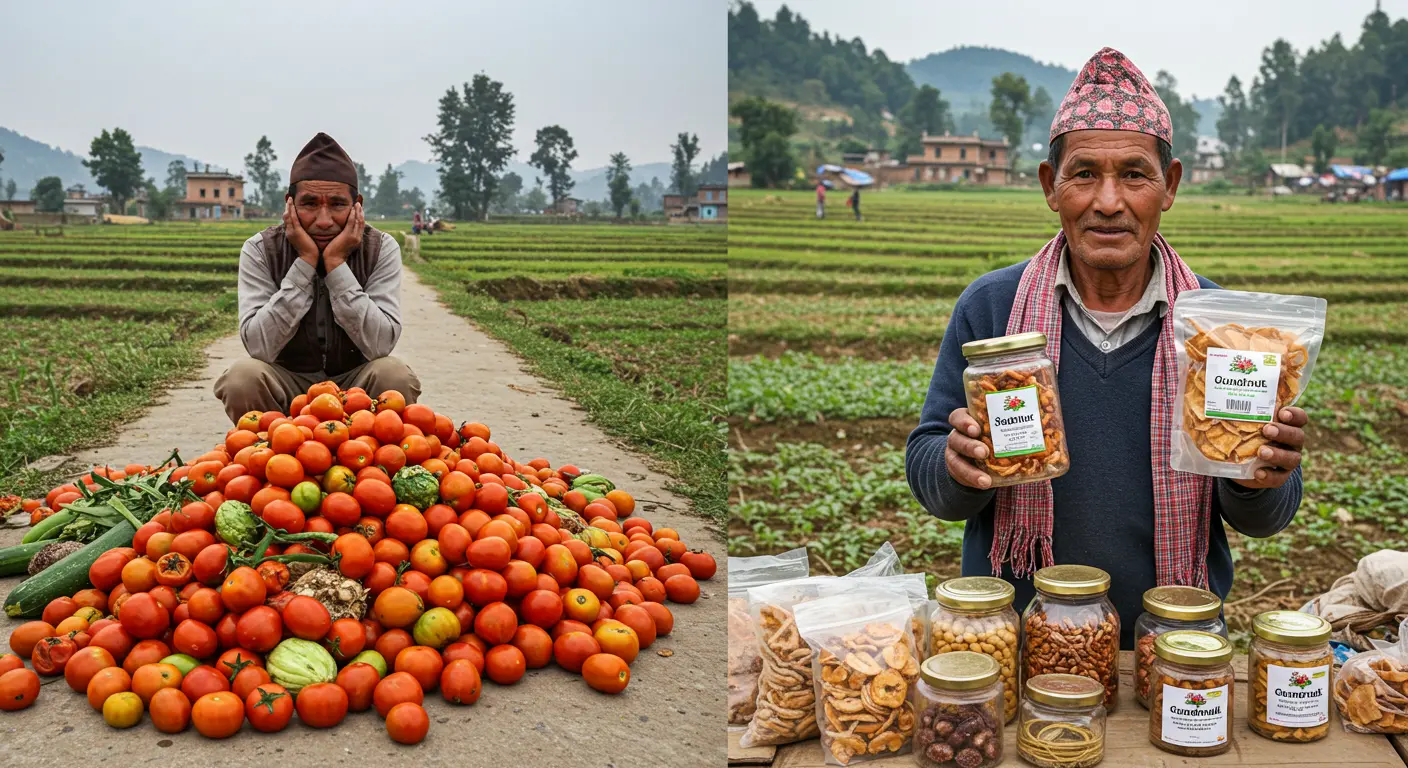
- Value Chain Master: Example Chura Bahadur BK illustrates how a simple but clever innovation can dramatically change the economics of a farm. Through training at the Airavati Cooperative, he learned how to build a low-cost storage facility for ginger that cost just US$120. This technology allowed him to store his crop and sell it during the off-season, when market prices are at their highest. As a result, the selling price rose from NPR 20 per kilogram (which barely covered the cost) to over NPR 150, and NPR 220 during peak months.28This proves that an entrepreneurial approach and post-harvest management can increase profitability many times over.
- The collective power of women: Women’s Cooperative Galda Social Entrepreneurs Women’s Cooperative is a shining example of the power of collective action. With the support of the international organization Heifer Nepal, this cooperative of 272 women was able to move from selling ginger to unstable local markets to creating a full-fledged production chain. They received processing equipment, achieved organic certification, and successfully exported over 4,460 kg of dried ginger to Europe.29This story shows how cooperation, value addition and access to international markets are turning women farmers into powerful economic players.
- Diversification and profitability: Success stories of other farmers such as Pipla Bhandari, earning 2 million rupees a year from fish farming, Sita Dura, earning Rs 2 million from vegetable and goat farming, and Bhoj Bahadur Tamang, whose net income from integrated organic farming is Rs 1.8 lakh, provide compelling evidence that commercial farming, if properly managed and with access to finance through cooperatives, is a highly profitable business.30
Two groups deserve special attention as the vanguard of agrarian transformation: return migrants and organized women’s collectives. Returnees bring with them not only capital, but also new skills, a global vision, and an entrepreneurial spirit, transforming their farms into modern enterprises rather than returning to subsistence farming.27They are living proof that you don’t have to stay abroad to succeed. At the same time, women, who form the backbone of the workforce in the sector,25, become powerful economic agents when they join together in cooperatives and receive support from partners such as Heifer International.29It is their stories that should be central to the rebranding campaign, as they are the most authentic and influential “thought leaders” capable of changing the thinking of their peers and communities.
National Campaign to Raise the Prestige of Agriculture
To systematically change public perception, a targeted, multi-platform national campaign must be launched under the auspices of the Ministry of Agriculture and Livestock Development in partnership with leading media holdings, the private sector and cooperative federations.
Strategic directions of the campaign:
- Promotion of “Champions of Agropreneurs”: Create a series of documentaries, TV shows and viral social media campaigns that highlight the success stories of young farmers like those mentioned above. It is important to show not only their income, but also their lifestyle, use of technology, innovation and contribution to their communities.
- Integration into education: Including modules on “agri-entrepreneurship” in school and university curricula. Organizing guest lectures and master classes from successful young farmers so that students can learn first-hand about the opportunities in the sector.
- Establishment of national awards “Farmer of the Year”: Establishment of prestigious, highly publicized national awards to reward innovation, productivity and entrepreneurial success in agriculture. Award ceremonies should be held at a high national level to highlight the importance of the profession.
- Using the network of cooperatives: Engaging a vast network of agricultural cooperatives as channels for disseminating success stories and promoting a new image of farming at the local, grassroots level.
Such a campaign will systematically create a new image of the farmer – not a poor man exhausted by labor, but a successful, technologically savvy and respected entrepreneur who makes a key contribution to the economy and food security of the country.
Fundamental reforms: education and skills for the modern farmer

Attracting youth to the agricultural sector is impossible without creating a modern education system that produces not just agronomists but skilled agro-entrepreneurs who can run profitable and technology-driven businesses. The current agricultural education and training (AET) system in Nepal suffers from systemic weaknesses that make it inadequate to meet the demands of the times. This section critically examines the AET system and proposes a comprehensive reform agenda to build the human capital needed to modernize agriculture.
AET System Diagnostics: The Gap Between Theory and Practice
The AET system in Nepal faces a number of deep-rooted challenges that hinder the development of human resources for the modern agricultural sector.
- Outdated Curriculums: Academic programs in agriculture are largely outdated. Many were developed decades ago with the help of foreign consultants and have remained largely unchanged since then. They are overly theoretical, inflexible, and do not respond to the diverse needs and challenges of farming communities in Nepal’s various agro-ecological zones.26
- Lack of practical skills: Undergraduate and postgraduate education is focused on theory, which does not prepare students for real careers or give them an understanding of the practical problems farmers face. As a result, graduates do not have the necessary skills to run a business, which leads to a gap between their qualifications and the needs of the labor market.26
- Institutional disunity: A critical weakness is the lack of functional linkages between educational institutions (such as the Agricultural and Forestry University (AFU), Institute of Agriculture and Animal Science (IAAS)), research organizations (Nepal Agricultural Research Council (NARC)), and government extension services (Department of Agriculture (DOA)). These entities fall under different ministries and lack effective collaboration mechanisms, which hinders the transfer of innovations from the lab to the field.26
- “Brain drain”: A significant proportion (up to 30% annually) of the most capable and proactive agricultural graduates leave Nepal in search of better career opportunities abroad. This exacerbates the country’s skills shortage, leading to an aging workforce in the sector and the emergence of many vacant positions.26
The current system not only fails to prepare specialists for the future, but also actively contributes to the formation of a negative image of agriculture. Theoretical education, divorced from practice, makes the agricultural specialty unattractive to ambitious young people. Education reform is therefore not just a technical task to eliminate the skills deficit, but a strategic tool for a fundamental rebranding of the entire sector. By creating a “product” – a graduate ready to run a business, manage value chains and implement technologies – the AET system can attract a completely different, more motivated type of student and change the very idea of what it means to be a professional in agriculture.
Reform Project: Creating a 21st Century AET System
To overcome the current shortcomings, a comprehensive reform of the AET system is needed, covering all levels – from school to university and vocational.
Modernization of educational programs:
- Content: There is a need for a mandatory revision of the curriculum with an emphasis on agribusiness management, entrepreneurship, climate-smart agriculture and digital agricultural technologies. The programmes should be flexible and adapted to the specificities of the different agro-ecological zones of Nepal.
- Practice: Introducing mandatory, long-term internship programs for students in successful cooperatives, private agribusinesses, and agritech startups. This will allow students to gain practical experience and establish professional connections.26
- Professional orientation: Incorporate agricultural courses into the school curriculum, starting in primary school, to foster a positive perception of the sector from an early age. School gardens and practical activities can make the subject more interesting and visual.26
Bridging Institutional Gaps:
- Model “Land-Grant”: Establish a formal, funded mechanism for collaboration between universities, NARC and extension services. This model, which has proven successful in other countries, will ensure that research is tailored to the real needs of farmers and that its results are effectively implemented.35
- Partnership with the private sector: Active involvement of private companies and successful cooperatives in developing curricula, conducting practical training and providing internships.
Strengthening the Technical and Vocational Education and Training (TVET) system:
- The Role of CTEVT: Strengthening the role of the Council for Technical Education and Vocational Training (CTEVT) in the agricultural sector.35
- Short courses: Develop and implement certified short courses targeting youth and returned migrants. These courses should focus on specific, in-demand skills in high-value value chains such as organic certification, post-harvest handling for export, and greenhouse management.36
- International cooperation: Using support from international partners, such as the EU-Nepal TVET reform programme, to scale up and improve the quality of vocational education.37
The implementation of these reforms will create a dynamic and modern AET system that will not only train qualified specialists, but also serve as a powerful tool for raising the prestige of the agricultural profession and attracting talented and motivated young people to the sector.
Unlocking Potential: Providing Access to Land and Finance
Even with the necessary skills and desire, young Nepalis face two fundamental structural barriers that prevent them from entering and succeeding in agriculture: limited access to land and lack of finance. The problem is compounded by the fact that these two factors are closely interrelated. Without land, it is impossible to obtain credit, and without credit, it is impossible to use land effectively. This section examines the nature of these barriers and proposes specific policy and institutional solutions to overcome them.
The Land Puzzle: Fragmentation, Insecurity and Political Solutions

Nepal’s agricultural landscape suffers from extreme land fragmentation, which is one of the main obstacles to commercialization and modernization.
- The scale of the problem: The average farm size in Nepal is woefully small and declining. According to the 2021/22 Agricultural Census, the average holding size has decreased to 0.19 hectares, with each holding consisting of an average of 2.8 fragmented plots.24By comparison, in 2001 the average farm size was 0.79 hectares.39This process is primarily driven by traditional inheritance practices, in which land is divided among sons.40
- Consequences: This fragmentation makes it impossible or highly inefficient to use modern agricultural machinery, increases labour and transport costs, and prevents long-term investment in soil improvement and irrigation. As a result, farmers are locked into low-productivity, subsistence or semi-subsistence farming that is unable to generate sufficient income.40
This situation creates a vicious circle: small, scattered plots make agriculture unattractive to young people, which encourages their migration.4In turn, the outflow of labour and remittances means that more land remains uncultivated, further undermining the rural economy.1Land policy in Nepal is thus inextricably linked to youth retention policy. Without addressing fragmentation, any other incentives for young farmers will have limited impact.
Political levers:
- Land banks: The government’s proposed “land bank” concept needs to be accelerated and practically implemented. This initiative involves the consolidation of unused and abandoned lands and their subsequent leasing to young entrepreneurs and cooperatives for commercial farming.44
- Stimulating voluntary consolidation: Developing tax and other incentives for farmers who voluntarily combine their plots into cooperatives or other forms of collective farming.
- Securing land rights: Addressing land tenure insecurity, particularly for tenants, is key to attracting investment. Farmers will not invest in improving their land unless they are confident of their long-term rights to it.21
The Financial Barrier: Bridging the “Missing Middle” Gap
Access to finance is consistently identified as the top barrier to business development in Nepal.45The agricultural sector suffers doubly from this.

- The essence of the problem: Although the government obliges commercial banks to direct a certain share of their loan portfolio to agriculture (for example, under the Priority Sector Lending Program), these funds often do not reach small and medium-sized agribusinesses.46Banks perceive them as high-risk borrowers and require significant collateral (usually real estate), which young farmers do not have. Paradoxically, over the past decade, the share of farmers using agricultural loans has fallen from 22% to just 12%.38
- “Missing Middle”: Young entrepreneurs find themselves in a financial trap. The amounts they need to launch a modern agribusiness exceed microcredit limits, but they do not meet commercial banks’ criteria for standard business loans. This gap, known as the “missing middle,” is a major financial brake on youth agribusiness.
The data shows a classic market failure: there is capital in the banking system and a government mandate to lend47, there is a high demand for this capital from entrepreneurs45, but the transaction does not occur due to a mismatch in risk perception and collateral mechanisms. The solution is not to strengthen mandates, but to create specialized intermediaries and risk-mitigation tools.
- Innovative solutions:
- Partnerships to Reduce Risks: Models like the partnership between NMB Bank and GreenToCompete Hub need to be scaled up. In this model, the hub provides technical assistance (business plan development, training), making entrepreneurs “bankable” and reducing risks for the bank.46
- Alternative forms of collateral: Active promotion and legislative consolidation of the use of alternative forms of security, such as group guarantees (when members of a cooperative vouch for each other) and project financing (when the business project itself serves as collateral). Such models are already being piloted within the framework of projects, for example, NSAF.48
- Cooperatives as financial intermediaries: Strengthening the role of well-managed agricultural cooperatives as financial intermediaries. They have a better understanding of local conditions, can more adequately assess risks and distribute credit to their members efficiently, as demonstrated by numerous success stories.27
- Targeted subsidies: Reforming government interest rate subsidy programs to make them more accessible and targeted, specifically for young entrepreneurs and women, with transparent and simple mechanisms for obtaining them.52
For clarity, below is a comparative table of existing financial products, which can serve as a guide for policymakers and young entrepreneurs.
Table 1: Comparative Analysis of Agricultural Credit Products and Subsidies for Young Farmers in Nepal

Note: Rates and limits may change as per the policies of the Central Bank of Nepal (NRB) and the government.
Technological revolution: from natural farming to smart farming
Modernization of Nepal’s agriculture and its attractiveness to young people are unthinkable without the widespread introduction of modern technologies. The technological revolution must proceed in two key directions: first, the introduction of simple and affordable solutions to dramatically reduce colossal post-harvest losses, which will give a quick economic effect; second, the development of advanced digital and agronomic technologies that will transform farming into a high-tech and intelligent industry.

Eliminating the main leak: combating post-harvest losses
One of the most serious and at the same time most solvable problems of Nepalese agriculture is the huge losses of crops after harvest.
The scale of the problem:
According to various estimates, losses of perishable fruit and vegetable products in Nepal range from 20% to 50%.54This means that up to half of the harvest does not reach the consumer, which is equivalent to a huge loss of income for farmers and food for the country. Reducing these losses is the fastest and most effective way to increase farmers’ incomes and improve food security. While production requires time and significant capital investment, preserving what has already been grown gives an immediate return.
Reasons for losses:
The main reasons are poor harvesting and processing methods, lack of infrastructure (poor roads, insufficient warehouses and refrigeration capacity), improper packaging and rough transportation.58
Simple but effective solutions:
There are affordable and highly effective technologies that can make a dramatic difference:
- Improved storage: An example is the low-cost ginger storage built by the Airavati Cooperative using local materials for just US$120. It has enabled farmers to keep their crops fresh and sell them for 7-10 times the price they would have paid in the harvesting season.28In mountainous areas, cellar storage is an effective solution, allowing you to store fruits, such as apples, for up to 6 months.55
- Modern packaging: Introduction of biodegradable Modified Atmospheric Packaging (MAP) bags made from corn starch. These bags slow down the “breathing” of products, extending their shelf life. Tests have shown that using MAP bags for Akbare hot peppers reduced weight loss from 10% to 2% in 5 days.54
- Logistics optimization: In mountainous areas, gravity ropeways are an effective solution for safe and fast transportation of products, significantly reducing time and risks compared to manually carrying loads along dangerous paths.60
Prioritising the dissemination of these relatively simple and inexpensive technologies should be the cornerstone of the national strategy. This will enable farmers to achieve a rapid and tangible increase in income, which will be the most powerful incentive for further investment and attracting young people to the sector.
Agritech Frontier: Integrating Digital Tools into Farming

In parallel with addressing the issue of losses, there is a need to actively implement digital technologies that can make agriculture more precise, efficient, and attractive to the tech-savvy younger generation. Nepal is already seeing the emergence of an ecosystem of agritech startups offering innovative solutions.
New startups:
- Consulting platforms: Krishi Guru provides farmers with real-time weather forecasts, pest management recommendations and best agronomic practices.61
- E-commerce: Mero Agrocreates digital marketplaces, directly connecting farmers with buyers and eliminating middlemen.61
- Financial technologies (Fintech): Aria Technologies developed a platform Balance for credit scoring of farmers, making it easier for them to access bank loans.62
- Traceability and quality: E-Satya using blockchain technology creates a system Agri Clear, which allows you to trace the origin of organic products, confirming their quality and increasing consumer confidence.62
Advanced agricultural technologies:
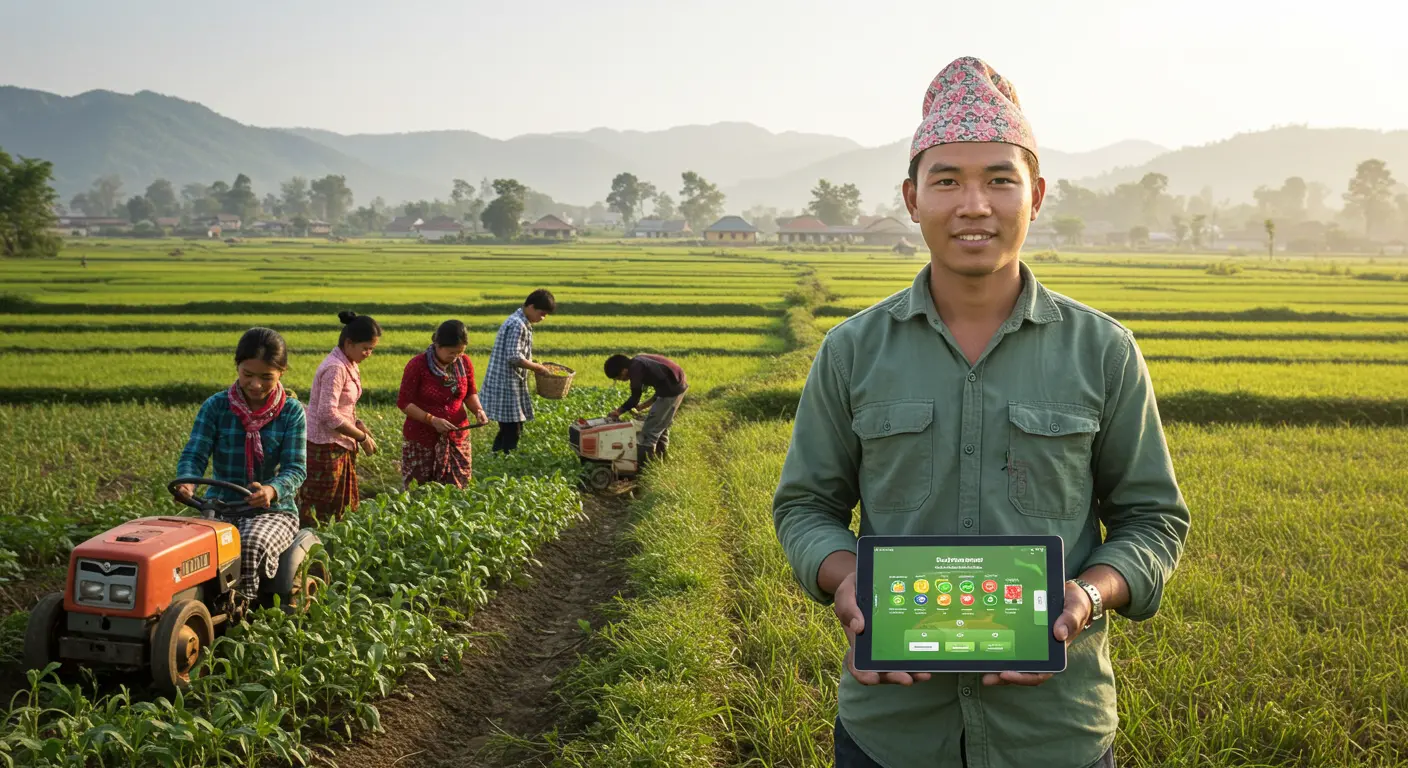
- Precision farming: Using drones for targeted irrigation and monitoring crop conditions, as well as IoT sensors to control soil moisture and other parameters, allows us to optimize the use of resources (water, fertilizers) and increase crop yields.61
- Biotechnology: The use of improved, disease-resistant seed varieties and biological fungicides such as Trichoderma to control ginger root rot significantly reduces the risks and increases yields.63
- Digital finance: E-payment platforms like eSewa and Khalti expand financial inclusion for farmers61, and initiatives like Prabhu Money’s project to digitise the dairy chain are making payments between farmers and cooperatives easier and faster.64
Overcoming the infrastructure deficit
Despite the enormous potential of technology, its widespread adoption in Nepal faces a major obstacle – the infrastructure deficit. Poor road conditions, especially in rural areas, lack of reliable electricity supply and limited access to high-speed internet are the main barriers holding back the technological revolution in the agricultural sector.6Without addressing these fundamental issues, even the most advanced technologies will remain out of reach for most farmers. Therefore, public investment in the development of the “last mile” of rural infrastructure – roads, electricity, and communications – is absolutely essential for the successful modernization of Nepal’s agriculture.
Cooperative Engine: A Mechanism for Youth Agrarian Transformation
Agricultural cooperatives occupy a unique and paradoxical position in the Nepalese economy. On the one hand, they represent a powerful institutional force with enormous potential for development, but on the other, they suffer from a profound crisis of governance and trust. This section provides a comprehensive analysis of the role of cooperatives, arguing that despite the existing problems, reformed and reoriented cooperatives should be the central element, the engine of the proposed strategy to attract youth to the agricultural sector.

The Cooperative Paradox: Nepal’s Greatest Strength and Weakness
Potential and power:
Cooperatives are officially recognized as the third pillar of Nepal’s economy, along with the public and private sectors.65There are more than 30,000 registered cooperatives in the country, which cover millions of members and form a network of unprecedented scale, penetrating the most remote corners of the country.67Historically and practically, they have proven to be an effective channel for providing farmers with access to training, financial services, technology and markets.25In a context where public services are ineffective and the private sector is not interested in working with small farmers, cooperatives remain the only viable model for collective action.
Crisis and weakness:
At the same time, the cooperative sector is in deep crisis, marred by high-profile scandals of embezzlement (such as the Rs 87 billion embezzlement scandal), poor governance, political interference and lack of transparency.65This has led to a serious loss of public confidence. Moreover, many agricultural cooperatives have in practice abandoned their core mission. Instead of supporting the production and marketing of agricultural products, they have essentially become savings and credit unions, focusing exclusively on financial transactions that are simpler and more profitable for covering administrative costs.74This means that their potential for commercialization of agriculture remains untapped.
Success Projects: Cooperative Models for Replication
Despite common challenges, Nepal has numerous examples of high-performing cooperatives whose success is based on clear and replicable models. Analysis of these models provides concrete recommendations for reform and reorientation of the entire sector.
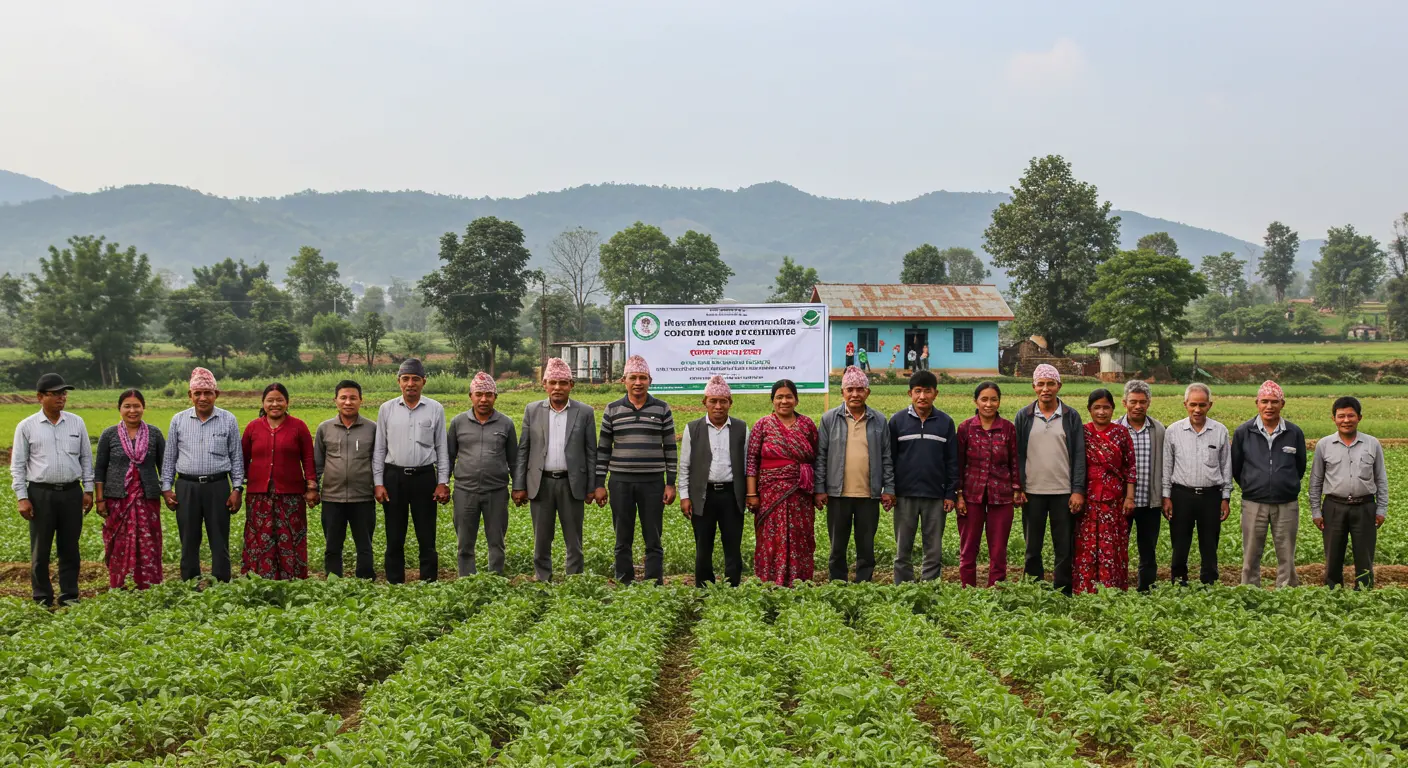
- Value Chain Integration Model: Successful cooperatives such as Galda SEWC (ginger) And Atipriya (goats), go beyond simply facilitating production. They take on the management of the entire value chain: from collectively purchasing quality inputs (seeds, fertilizers) and providing training to processing raw materials (ginger drying) and organizing collective marketing to high-value markets, including export.29This allows farmers to receive a significantly larger share of the final price of the product.
- Technology Implementation Model: Cooperative “Airavati” is a shining example of how the introduction of even one simple, low-cost technology can bring enormous benefits. By building a communal storage facility for ginger, the cooperative has enabled its 1,221 members to avoid bargain-basement sales during the harvest season and multiply their income many times over.28
- Model of public-private-cooperative partnership: The success of many cooperatives is directly linked to their ability to attract external partners. These catalysts for change include international NGOs (Heifer International, Swisscontact), development agencies (FAO, USAID) and private companies. They provide critical resources: technical expertise, business planning, access to new technologies (e.g. improved livestock breeds) and, most importantly, access to stable markets and sources of finance.25This experience shows that cooperatives rarely transform in isolation; they need external impetus and expert support.
- Integrated service model: Model Small Farmers Cooperatives (SFACL), supported by umbrella organizations such as the National Agricultural Cooperative Federation of Nepal (NACCFL), demonstrates a way out of the narrow specialization of credit. These cooperatives have a three-tier structure and provide their members with a comprehensive package of services that includes both financial (savings, credit) and non-financial services (training, market access, advocacy).29
To illustrate the success factors, below is a matrix that analyses several successful cooperatives. This table is intended to serve as a practical guide for policymakers and donors, showing which models work and why.
Table 2: Analysis Matrix of Successful Agricultural Cooperatives in Nepal

A dual strategy to revive cooperatives
For cooperatives to become a real engine of agricultural transformation, a dual strategy of reform and reorientation is needed.
Reform:
There is a need to strengthen the regulatory framework and ensure strict enforcement of the Cooperative Act 2017. This includes the implementation of universal cooperative principles: democratic control by members, transparency of financial activities, accountability of management and regular turnover of leaders.51Supervisory authorities need to be strengthened to prevent fraud and political interference that undermine trust in the sector.
Reorientation:
It is necessary to strategically shift the focus of agricultural cooperatives from predominantly credit activities to comprehensive servicing of agribusiness. It is necessary to stimulate their transformation into a full-fledged Agribusiness hub. Such hubs must provide their members with a full range of services:
- Supply: Collective purchase of high-quality seeds, fertilizers and other resources at wholesale prices.
- Mechanization: Creation of a fleet of equipment for rent by members of the cooperative.
- Training: Organization of training on modern agricultural technologies, business planning and marketing.
- Recycling: Creation of capacities for primary processing, packaging and storage of products.
- Marketing: Organizing collective marketing of produce to more profitable markets, including the cooperative-to-cooperative (C2C) model developed by NACCFL, which links rural producers with urban consumer cooperatives.80
Only through this dual strategy – cleansing from abuses and reorienting towards the real needs of agribusiness – will cooperatives be able to realize their enormous potential and become a reliable support for a new generation of Nepalese farmers.
A Unified Strategy for Tomorrow: Comprehensive Recommendations and a Roadmap for Action
The future of Nepal’s agriculture and its ability to feed the nation depend on decisive and coordinated action now. The analysis presented in the previous sections shows that the problem of youth exodus from agriculture is systemic and requires a unified, comprehensive strategy rather than piecemeal measures. This strategy must seek to simultaneously transform the image, education, economic conditions, and technological base of agriculture. This final section synthesizes the key findings and offers a roadmap with concrete, actionable recommendations for key stakeholders.
Rethinking the Agricultural Development Strategy (ADS) with a focus on youth
The current Nepal Agriculture Development Strategy (ADS 2015-2035) lays a solid foundation by identifying improved governance, increased productivity, profitable commercialization and competitiveness as key areas.18However, for this strategy to be truly effective in today’s environment, it needs to be reconsidered and reoriented through the prism attracting and retaining young people.
Every policy, program and investment under the ADS must be assessed against one main criterion: “How does this make agriculture a more viable, profitable and prestigious career for a young Nepali?” This means that the youth aspect should not become one of the components, but a central, cross-cutting theme of the entire strategy.
Integrated Roadmap: Key Recommendations for Stakeholders
Implementing this youth-focused strategy requires concerted action by government, international partners and the private sector.
For the Government of Nepal (federal, provincial and local levels):
- Image and prestige:
- Action: Launch a nationwide media campaign, “Champions of Agripreneurs,” involving successful young farmers.
- Justification: It is necessary to radically change the negative public perception of farming, presenting it as a modern and respected profession.4
- Education and skills:
- Action: Initiate and fund reform of the Agricultural Education and Training (AET) system. Introduce mandatory curricula in agribusiness, entrepreneurship and digital technologies. Strengthen the TVET system for agriculture.
- Justification: The current system does not prepare personnel for modern agribusiness. Reform is needed to close the skills gap and make agricultural specialties more attractive.26
- Access to land:
- Action: Accelerate the implementation of the “land bank” policy to consolidate abandoned lands. Develop a legislative framework to stimulate voluntary land consolidation through cooperatives.
- Justification: Land fragmentation is a key structural barrier to commercialization and mechanization. Overcoming it will create the conditions for profitable agriculture.38
- Access to finance:
- Action: Establish a targeted “Agri-entrepreneurship Fund” to reduce the risks of loans to young people. Scale up “missing middle” financing models in partnership with commercial banks and cooperatives.
- Justification: Young entrepreneurs cannot access standard banking products. Innovative financial instruments are needed to bridge this gap.45
- Technologies and infrastructure:
- Action: Prioritize public investment in rural last-mile infrastructure (roads, electricity, internet). Develop a national program to disseminate technologies to reduce post-harvest losses.
- Justification: Infrastructure is a prerequisite for the implementation of technologies. Reducing losses will give the fastest economic effect to farmers.43
- Cooperatives:
- Action: Strengthen regulatory oversight of cooperatives to ensure proper governance. Introduce a system of incentives (grants, subsidies) for cooperatives that transform into full-fledged Agribusiness Hubs.
- Justification: Cooperatives are an ideal platform for implementing reforms at the local level, but they need to be reformed and reoriented from credit activities to comprehensive servicing of agribusiness.75
For international development partners (FAO, USAID, World Bank, etc.):
- Action: Align your aid programs with the youth-oriented ADS. Prioritize supporting projects that advocatecatalyststransformation of cooperatives.
- Justification: External expertise and seed funding are critical to kick-starting the modernisation process in cooperatives, as successful examples show.29
- Action: Provide targeted technical assistance in reforming the AET system, developing land policies and creating innovative financial instruments.
- Action: Support knowledge exchange programs by sending promising young farmers and cooperative managers on international internships (similar to the successful training model in Israel).27
For the private sector (banks, agribusinesses, technology companies):
- Action: Partner with cooperatives and development agencies to create and scale innovative financial products and value chains.
- Action: Invest in Nepalese agritech startups and develop technologies tailored to the needs of local smallholder farmers.
- Action: Participate in public-private partnerships to develop rural infrastructure and vocational training programs.
Conclusion: Who will feed Nepal tomorrow?
The answer to this question is no secret. Nepal will feed its own youth tomorrow. But this will only happen if they are given the tools, opportunities, and respect to be able and willing to do so. The current crisis of youth exodus from agriculture is not inevitable, but the consequence of systemic failures that can and must be corrected.
The proposed strategy is not just a set of recommendations, but a call for a paradigm shift. Agriculture must cease to be synonymous with backwardness and poverty. It must become a symbol of innovation, entrepreneurship, and prosperity. By transforming the image, education, economic conditions, and technological base of agriculture, and by making reformed cooperatives the engine of this change, Nepal can turn its demographic dividend from a liability into its greatest asset. This is the only way to ensure long-term food security and build a prosperous future for the entire nation.country.
Source used:
- Exporting Talent, Importing Cash: Nepal, Youth Migration and …
- Retain Youth For Development Of Nation – The Rising Nepal
- Exploring the exodus: Impact of youth migration on Nepal’s future – Peoples’ Review
- Farming the future: Youth enthusiasm and transforming Nepal’s economy through agriculture
- CONSEQUENCES OF NEPALESE YOUTH MIGRATION TO OVERSEAS FOR FOREIGN EMPLOYMENT | Jurnal Sosiologi Nusantara – eJournal UNIB
- The Commercialization of Smallholder Farming—A Case Study from …
- Aspects of the Aging Farming Population and Food Security in Agriculture for Thailand and Japan – ResearchGate
- In Nepal, farming families stick together
- Information about Nepal – Embassy
- Nepal – EXPORT.BY
- Nepal Percentage of Agricultural Land – data, chart
- Nepal – GDP Growth Rate (YoY) | 1993-2024 Data – EN | TRADINGECONOMICS.COM
- Economy | Nepal | World Bank Data360
- (PDF) The Role of Agriculture in Nepal’s Economic Development: Challenges, Opportunities, and Pathways for Modernization – ResearchGate
- Women-s-Non-Farm-Employment-in-Nepal-A-Landscape-Review-of-Organizations-and-Interventions.pdf – World Bank Documents and Reports
- Agricultural Development in Nepal: Contribution to Economic Growth, Food Security and Poverty Reduction – ResearchGate
- Nepal – Food and Agriculture Organization of the United Nations
- Nepal: Supporting the Agricultural Sector – DT Global
- NEPAL – Catalysing the sustainable and inclusive transformation of food systems
- View of Impact of Youth Migration on the Agricultural Sector in Nepal
- A homegrown vision of commercial agriculture in Nepal that puts small-scale farmers at its heart | International Institute for Environment and Development
- AGRIBUSINESS IN NEPAL, CHALLENGES AND OPPORTUNITIES: A PRIVATE SECTOR PERSPECTIVE – CABI Digital Library
- AGRICULTURE LAND USE IN NEPAL: PROSPECTS AND IMPACTS ON FOOD SECURITY RH Timilsina1
- Highlights from the new census: The shifts in Nepal’s agriculture landscape
- Improving the Quality of Life: Farmers’ Cooperatives …
- AGRICULTURE EDUCATION AND TRAINING (AET … – ResearchGate
- Empowering Agricultural Cooperatives and Small … – NACCFL
- Farmer-to-Farmer Nepal Host Impact Story – Catholic Relief Services …
- With Love from Nepal to Europe: The Ginger Story – Heifer …
- Success stories from the field—and the farm – The Kathmandu Post
- From Struggles to Strength: The Journey of Atipriya Women’s …
- Nepali Women Farmers Celebrate Success | Heifer International
- (PDF) AGRICULTURE EDUCATION AND TRAINING (AET) SYSTEM IN NEPAL: PRESENT STATUS, CHALLENGES AND FUTURE PRIORITIES – ResearchGate
- TECHNICAL AND VOCATIONAL EDUCATION REFORM STRATEGIC PLAN (TRSP) 2080-2089 BS – Planipolis
- Assessment of agricultural education institutions in Nepal
- TVET Reform in Federal Republic Nepal
- EU- Nepal Practical Partnership for Technical Vocational Education and Training reform (TVET- PP) | EEAS
- Agriculture Census 2021/22: Agricultural land in the country has …
- Fragmentation and conversion of agriculture land in Nepal and Land Use Policy 2012 – Munich Personal RePEc Archive
- Number and size of landholding households and parcels in Nawalparasi district
- (PDF) Land Fragmentation in Nepal: An Overview – ResearchGate
- (PDF) COMMERCIALIZATION OF AGRICULTURE: FORMS, SIGNIFICANCE, CONSTRAINTS, AND SOLUTIONS – ResearchGate
- Opportunities, Challenges And Way Ahead – The Rising Nepal
- (PDF) Overview of Agriculture in Nepal: Issues and future Strategies – ResearchGate
- Access to Finance in Nepal: New Survey Evidence – Milken Institute
- Unlocking Nepal’s agricultural potential through innovative financing | ITC
- credit and financial access in nepalese agriculture: prospects and challenges – Nepal Journals Online
- Improved access to finance can boost seed business in Nepal – CIMMYT
- Unleash Agro Potential – The Rising Nepal
- Managing Risks and Designing Products for Agricultural Microfinance – CGAP
- Cooperatives in agricultural transformation – The Kathmandu Post
- Agricultural Loans and Subsidies in Nepal
- Cooperative Bhabishya Nirman Sana Kishan – Coops4Dev
- Reducing post-harvest loss through Logistics Services – News – Site
- Postharvest horticulture in Nepal – MedCrave online
- A REVIEW PAPER ON POST-HARVEST LOSS ON FRUITS AND VEGETABLES
- (PDF) Post-harvest practices of horticultural crops in Nepal: Issues and management
- Postharvest Management of Horticultural Crops in Nepal
- post-harvest losses of horticultural produce
- Connecting Nepalese farmers – Practical Action
- Time to Harness Technology in Nepal’s Agriculture and FMCG …
- Meet Nepal’s Top Two AgriTECHs – Transforming Agriculture Through Innovative Digital Solutions
- Spice of Success: Cardamom, Ginger and the Mercy Corps | Happening | ECSNEPAL
- Digitizing the Dairy Value Chain in Nepal – UN Capital Development …
- Addressing Critical Issues Facing Nepali Cooperatives – myRepublica
- Application of Universal Cooperative Principles in Agricultural Cooperatives: A Case Study from Nepal – International Journal of English Literature and Social Sciences (IJELS)
- Marketing System of Agricultural Cooperatives in Nepal – Society of Interdisciplinary Business Research
- How to End Hunger and Empower Lives: The Heifer’s Way | AESA
- Supporting cooperatives around the world also helps farmers | ShareAmerica
- A/60/138 General Assembly
- What you need to know about Nepal’s Cooperative Crisis
- 2822-1966 (P) 140 – Challenges and Opportunities in Cooperatives Development in Nepal
- Promoting Good Practices In Cooperatives – The Rising Nepal
- Government Policy and Performance of Agricultural Cooperatives: A Case Study in Chitwan District, Nepal – MDPI
- (PDF) Agricultural cooperatives and the failure to achieve …
- A Farmer’s Dream: Birendra’s Journey from Struggle to Success – News – Site – Swisscontact
- USAID Launches its Partnership for Poultry Activity with the Private Sector, Cooperatives, and Government of Nepal
- USAID’s KISAN II Project Boosts Nepal’s Farming Sector – U.S. Embassy in Nepal
- USAID Activity Snapshot | Nepal seed and fertilizer – ReliefWeb
- Introduction – NACCFL | Empowering Agricultural Cooperatives and Small Farmers in Nepal
- About Partner Cooperatives | Sana Kisan Bikas Laghubitta Bittiya Sanstha Ltd.
- Application of Universal Cooperative Principles in Agricultural Cooperatives: A Case Study from Nepal – ResearchGate
- Application of Universal Cooperative Principles in Agricultural Cooperatives: A Case Study from Nepal : Free Download, Borrow, and Streaming – Internet Archive
- Nepalese Cooperatives: Deviating from Cooperative Values and Principles? – myRepublica
- Agriculture Development Strategy (ADS) Joint Sector Review (JSR) Fifth Annual Report May 2024
- Adapting the Agriculture Development Strategy to the Federal System in Nepal: ADS Orientation and Planning Workshop – || CEAPRED ||
- Agriculture Development Strategy 2015-2035 – Climate Change …
- Nepal’s Agricultural Development: Civic Analysis of Agricultural Development Strategy of Nepal – ForestAction Nepal
- Agriculture Development Strategy