1. Lumbini: A Global Spiritual Beacon with Untapped Economic Resonance
1.1 The Unrivaled Significance of Lumbini:
Lumbini’s status as the revered birthplace of Lord Buddha and a UNESCO World Heritage Site is its fundamental asset.1This provides an internal, unique spiritual and historical value, recognized throughout the world.
This unique heritage positions Lumbini as a key destination for more than 500 million Buddhists worldwide.76and for a wider audience interested in peace, mindfulness and cultural history. The sacredness of the place is of paramount importance.4
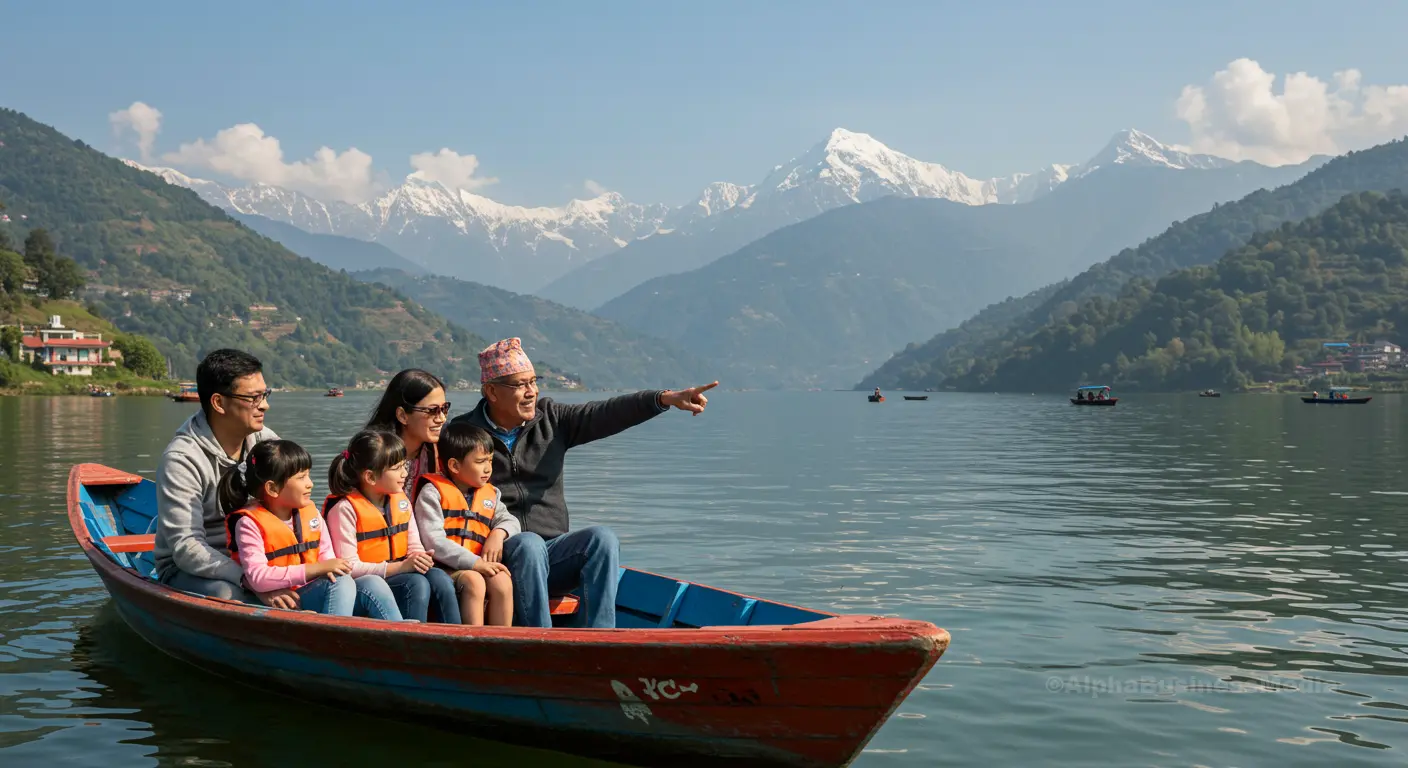
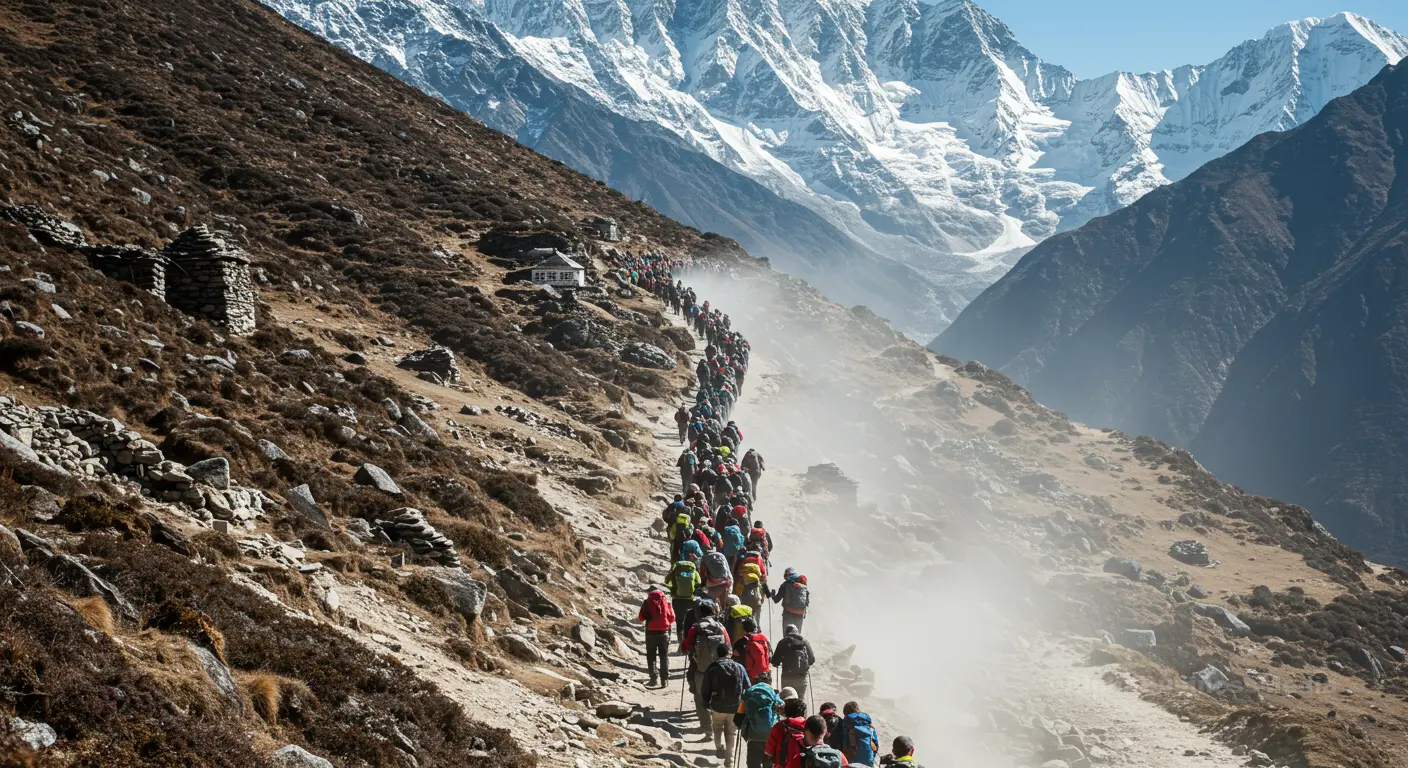
Lumbini’s universal appeal extends beyond Buddhism. Buddha’s teachings focus on peace and compassion4, have a universal appeal that transcends religious affiliation. In an era of growing global stress and an intensifying search for meaning and well-being (as evidenced by the rise of wellness tourism)8), Lumbini can be positioned as a sanctuary for spiritual seekers of all persuasions, not just devout Buddhists. Lumbini’s inclusion in the New York Times’ list of the best places to visit in 20251is indicative of this broader appeal. Marketing and development should therefore strategically target not only the Buddhist pilgrim market, but also the rapidly growing global wellness and mindfulness tourism segments. This significantly broadens the potential visitor base.
1.2. The Current Tourism Landscape: A Basis for Growth, But Under-Utilized
Visitor statistics and trends:
- In 2024, Lumbini was visited by 1,172,304 people, an increase of 17.36% from 998,938 visitors in 2023.9
- The breakdown for 2024 is: Nepalese nationals: 759,990 (up 15.81%); Indian visitors: 300,889 (up 12.90%); other foreign passport holders: 111,425 (up 46.36%).9
- Leading “other international” markets in 2024: Sri Lanka (23,569), Thailand (21,496), China (13,012), Myanmar (10,517), Vietnam (8,500).9
Data for Nepal as a whole for the beginning of 2025 (January-May) shows 501,264 international arrivals.11April 2025 was a record month for Nepal with 116,490 arrivals.16However, the growth in arrivals from India and China to Nepal showed signs of stagnation/decline in early 2025.16Specific data for Lumbini for early 2025 is limited, but data from the Belakhia border crossing (near Lumbini) showed around 29,000 third-country arrivals in January-March 2023, with Thai visitors leading the way.21, and in January-March 2024, Lumbini was visited by 42,474 foreign nationals and more than 70,000 Indian tourists.22This indicates that there is a strong flow, especially from neighboring India and the Buddhist countries of Southeast Asia.
Existing infrastructure and development framework:
- Lumbini Development Trust (LDT) is the main body overseeing the development.1
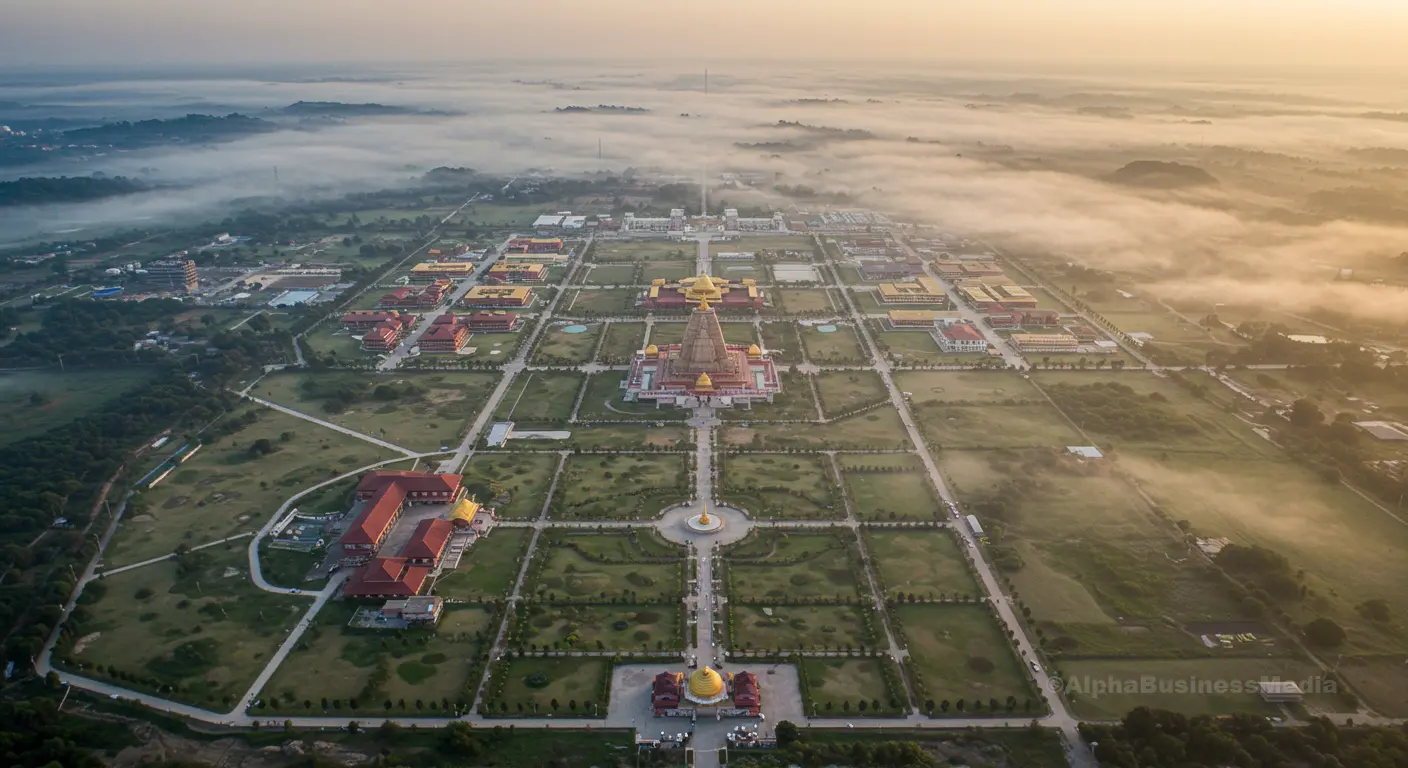
- The Kenzo Tange Master Plan (1978) is approximately 70% complete with significant funds (NPR 7 billion) having been spent but critical components still awaiting completion (NPR 1.3 billion in payments, NPR 3 billion in works).5The original concept included a Sacred Garden, a Monastic Area and a New Lumbini Village.5
- A ‘Lumbini Grand Master Plan’ is being discussed for the integrated development of adjoining areas like Tilaurakot (Kapilavastu), Ramgram and Devdaha.4
The paradox of growth amid restrictions is that the number of visitors to Lumbini, especially from third countries, is showing a significant percentage growth (46.36% in 2024 for non-Indian international visitors9). This growth occurs despite significant infrastructure problems in Nepal as a whole.18and the lack of efficiency of the nearby Gautam Buddha International Airport (GBIA).27This demonstrates that there is strong domestic demand for Lumbini, which is currently under-supplied. Thus, targeted investments in Lumbini accessibility (especially in the efficient operation of GBIA) and the quality of on-site services could yield disproportionately high returns in terms of increased visitor numbers and revenues, as the underlying demand is clearly strong.
Domestic and Indian pilgrimage tourism serve as a sustainable economic pillar. Domestic (759,990 in 2024) and Indian (300,889 in 2024) visitors account for the vast majority (over 90%) of current arrivals.9This segment is often more resilient to global economic shocks and geopolitical events than long-haul international travel. Their constant flow provides a stable economic base for local businesses. Therefore, in an effort to attract high-value international tourists, the plan must also consider and enhance the experience of Nepalese and Indian pilgrims, ensuring that facilities and services meet their needs and price expectations. This large, stable base can support local SMEs and justify basic infrastructure.
1.3. The Undervalued Magnet: Quantifying the Gap Between Current Reality and Global Potential
Lumbini attracts around 1.2 million visitors1, while the world’s Buddhist population is about 500 million.7This represents only 0.24% penetration of the core religious demographic market.
Comparative Global Pilgrimage Sites: Mecca (Hajj alone – over 1.83 million in 202429, the total number of visitors is significantly higher), the Vatican (millions of visitors annually), the Golden Temple in Amritsar (30 million visitors annually).2These sites demonstrate the enormous scale that can be achieved with focused development and management.
The global religious tourism market is estimated to be worth $1.29 trillion in 2024, with growth forecast to reach $2.01 trillion by 2031.29
The discrepancy between Lumbini’s current visitor numbers and the size of its potential market, as well as comparable global properties, vividly illustrates its ‘undervalued’ status and the scale of its multi-billion dollar opportunity. The multiplier effect of the Lumbini Great Buddhist Circuit is significant. The development of a complete route including Tilaurakot (ancient Kapilavastu, the youth of the Buddha)31), Ramgram (the only intact stupa containing Buddha’s relics33) and Devdahu (the mother house of Queen Maya Devi35), transforms a visit to Lumbini from a one-day visit into a multi-day immersive pilgrimage. This significantly increases the potential length of stay, the expenditure per tourist and the overall attractiveness of the region. Thus, the “multi-billion dollar potential” is not limited to the Sacred Garden of Lumbini alone, but is enhanced by the development of the entire sacred geography. This requires comprehensive planning, infrastructure and marketing for the entire route.
Lumbini has the potential to become a catalyst for regional economic development in Western Nepal. A thriving tourism hub in Lumbini will stimulate a wide range of related economic activities in Lumbini Province and Western Nepal, a region that has historically lagged in economic development. This includes demand for agricultural products, handicrafts, transport services, construction and skilled labour, contributing to poverty reduction and balanced regional growth. This is in line with Nepal’s broader development goals.37The comprehensive plan should clearly link Lumbini’s development to broader regional economic strategies, ensuring that benefits flow to local communities and contribute to the upliftment of the entire region. This includes promoting SME growth and local employment.
2. Multi-Billion Dollar Vision: A Comparative Analysis of Lumbini Potential
2.1. The Global Pilgrimage and Cultural Tourism Market: A Trillion Dollar Arena
Market size and growth:
- Global Religious Tourism Market: Valued at $1.29 trillion in 2024, projected to grow to $2.01 trillion by 2031 (CAGR 6.5%).29Another source estimates the market at $16.09 billion in 2024, growing to $33.26 billion by 2032 (CAGR 9.5%).88
- US religious tourism market alone: $34.4 billion in 2024, projected to reach $79.6 billion by 2030 (CAGR 15.4%).38
Key drivers: Growing global interest in religious/spiritual travel, increasing affordability of travel, expansion of organised tours, growth of wellness/spiritual tourism, digital booking platforms.8
These figures highlight the enormous scale of the market that Lumbini is aiming to capture a large share of. The continued growth, even in mature markets such as the US, is evidence of a sustained and expanding interest in this form of travel.
The untapped potential of the Buddhist diaspora and followers of this teaching represents a significant reserve. There are approximately 500 million Buddhists worldwide7, while the current number of international (excluding India) visitors to Lumbini (111,425 in 20249) is negligible. This points to a huge, directly relevant demographic that is largely unreached or faces significant barriers to visiting. A key component of the multi-billion dollar strategy must therefore be significantly improving outreach, accessibility (flights, visas) and tailored services for these key Buddhist populations. Even modest increases in penetration from these countries represent millions of potential visitors.
2.2 Comparative Analysis: Lessons from Global Pilgrimage Centres
Examples from practice:
- Mecca, Saudi Arabia: Attracts over 1.83 million pilgrims annually for Hajj29and about 13 million visitors in total.2Demonstrates enormous logistical capabilities, developed infrastructure and strong government support for religious tourism.
- Vatican City: Millions of visitors annually, a combination of religious significance, art, history and well-managed tourist infrastructure.
- Bodh Gaya, India: A key Buddhist pilgrimage site, demonstrating the potential of Buddhist sects to attract large numbers of people. (Assuming a well-known fact relevant for comparison).
- Golden Temple, Amritsar: 30 million visitors annually2, is known for its community service (langar) and spiritual atmosphere, emphasizing the importance of the visitor experience beyond the physical location itself.
These examples illustrate the scale that is achievable and highlight the critical success factors: robust infrastructure, effective visitor management, strong marketing, government commitment and a holistic visitor experience.
Infrastructure acts as a great creator (or destroyer). All successful large-scale pilgrimage sites have invested heavily in specialized transportation (airports, roads, railways), accommodation, and crowd management infrastructure. Nepal’s current infrastructure problems, especially with the capacity and efficiency of international airports (underutilization of GBIA27; PIA problems39; TIA congestion43) and the quality of roads18, stand in stark contrast to this and are the main obstacles to scaling up tourism in Lumbini. The multi-billion dollar vision for Lumbini therefore depends on transformational investment in dedicated and efficient supporting infrastructure, particularly in making GBIA a fully functional and attractive international gateway.
A “spiritual ecosystem” is more than just a central shrine. Leading pilgrimage destinations often offer a comprehensive “spiritual ecosystem” that includes study centers, meditation complexes, libraries, cultural performances, and opportunities for extended stays and deeper immersion. The inclusion of monastic areas and the Lumbini New Village in the Lumbini Master Plan hints at this.5, but the key is full implementation. To maximize the value and length of stay, Lumbini must develop a rich ecosystem of support services and experiences that meet the diverse needs of pilgrims and spiritual tourists, from short-term visitors to those seeking longer retreats or study programs.
2.3. Defining Lumbini’s Unique Selling Proposition (USP) in a Competitive Global Market
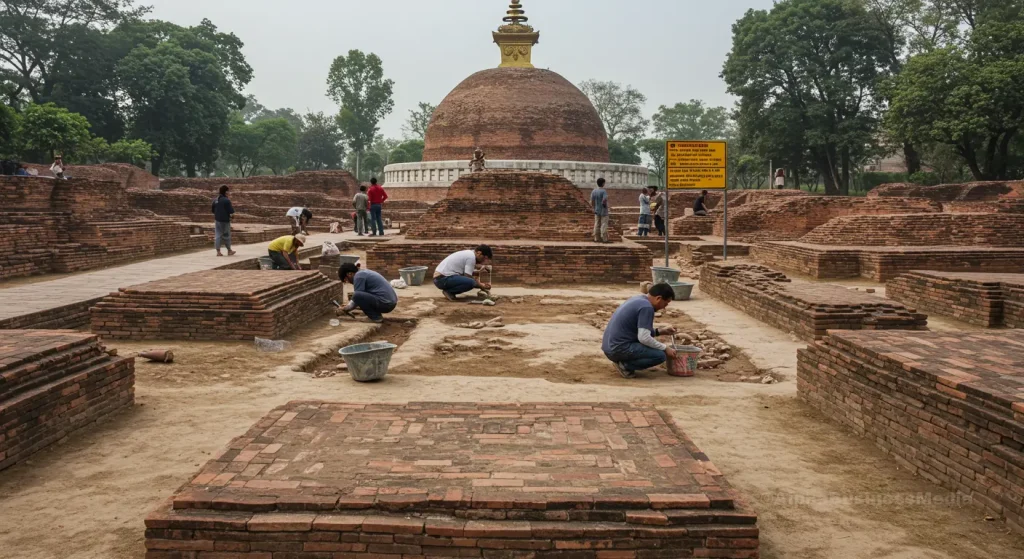
The Undisputed Birthplace of Siddhartha Gautama1, offering unrivaled authenticity and a direct link to the origins of world philosophy/religion. It is a unique, unrepeatable asset.
The presence of Ashoka’s pillar as historical evidence5, potential for tranquility and meditation in the Sacred Garden and monastic areas4, as well as a collection of international monasteries showcasing diverse Buddhist traditions.
Authenticity + Profound Experience + Universal Message = Compelling USP. Lumbini’s strength lies not only in its historical significance, but also in its potential to offer an authentic, immersive experience focused on peace, mindfulness and the fundamental teachings of Buddhism. This combination appeals to a wider range of people than just religious followers. Consequently, all development and marketing must protect and enhance this authenticity. There is a need to avoid over-commercialising the Sacred Garden, ensure that the Monastery Zone offers an authentic spiritual experience and promote Lumbini as a living centre for Buddhist philosophy and peace studies.
Using UNESCO World Heritage status to enhance credibility and conservation. UNESCO World Heritage Designation2gives international credibility, attracts culturally oriented tourists and highlights the global importance of preserving the site. It can also act as a lever to attract international expertise and funding for conservation. Therefore, UNESCO status should be actively promoted in all international marketing campaigns. All development plans should strictly comply with UNESCO guidelines to preserve the integrity and universal value of the site. It can also serve as a seal of quality assurance for discerning international travellers.
3.Comprehensive Transformation Plan
3.1 Pillar I: World Class Infrastructure and Enhanced Accessibility
3.1.1 Gautam Buddha International Airport (GBIA): The main international gateway
Current status and issues:
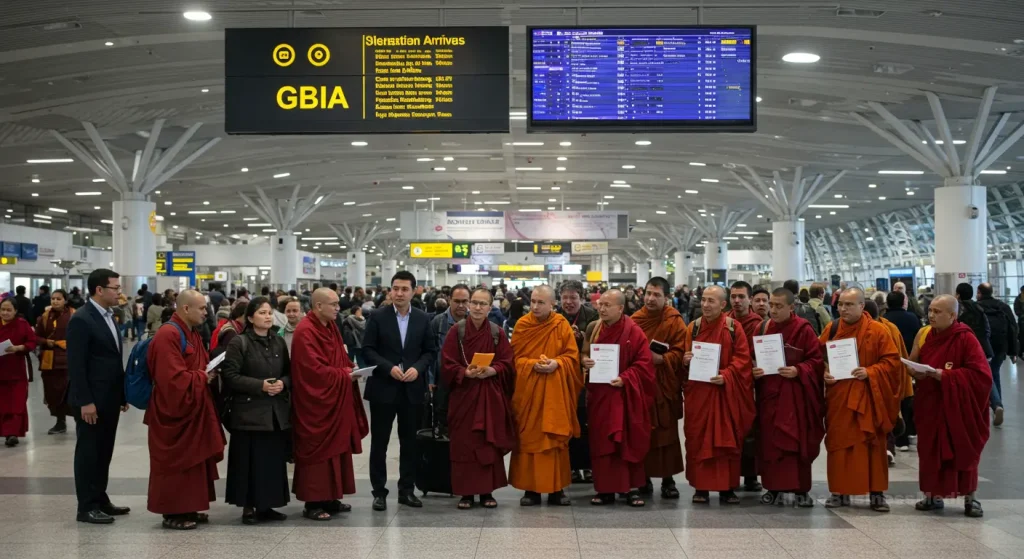
The airport will open in May 2022.27, but suffers from undercapacity and irregular/suspended international flights.27Thai AirAsia plans to resume flights from October 2025.50Previously, flights were operated by FlyDubai, Jazeera Airways, Thai AirAsia and Nepal Airlines, including transit flights.51Passenger traffic: 8,157 in 2024; 13,181 from January to March 20, 2025.28Key issues: centralization of migration formalities in Kathmandu27, lack of interest from airlines despite incentives27, possible negative impact of Pokhara airport problems.39Deputy Prime Minister Paudel assured that the airport is fully loaded and there are plans to build a new terminal.52
Suggested actions:
- Policy and Procedure Reform: Immediate decentralization of all international tourism formalities (visas, work permits, health checks) to Bhairawa, making GBIA a self-sufficient entry/exit point.27
- Aggressive development of the airline route network: Implementation of substantial, multi-year incentive packages (in addition to current benefits)52) for airlines to launch and maintain routes from key Buddhist source countries (Thailand, Sri Lanka, Myanmar, China, Vietnam, South Korea, Japan) and major hubs (Bangkok, Singapore, Kuala Lumpur, Delhi, Dubai). This may include marketing support, reduced ground handling charges and initial funding of route profitability gaps.
- Operational Excellence: Ensure full functionality of the RNP-AR landing system for all-weather operation.28Upgrading the passenger terminal to international standards (multilingual staff, prayer/meditation rooms, efficient baggage handling, quality food).
- New International Terminal: Speeding up planning and construction of a new, larger international terminal, Deputy Prime Minister Paudel said52, to service the projected future capacity.
The viability of GBIA is a prerequisite for Lumbini’s global ambitions. Without direct, reliable and affordable international air service to GBIA, Lumbini cannot realistically aspire to be a global hub attracting millions. The current low volume of international flights and reliance on Kathmandu as the main hub creates significant inconvenience for travellers, deterring many potential visitors, particularly from Southeast and East Asia. The failure to decentralise essential services to Bhairavu27is a direct cause of underutilisation. Therefore, addressing GBIA’s operational and connectivity issues must be a high priority. This requires decisive government action on policy reform and proactive, commercially attractive engagement with international airlines.
Restoring confidence in Nepal’s aviation infrastructure has broader implications. Controversies and underperformance at new airports like Pokhara54, may create a negative perception among international airlines regarding airport management and commercial viability in Nepal. Successful operation of GBIA can help restore this trust. Thus, a transparent, well-managed and successful capacity expansion of GBIA can serve as a positive example, potentially attracting more airlines not only to Lumbini but to Nepal as a whole.
3.1.2. Road Infrastructure: Unhindered travel in and around Greater Lumbini
Current status and issues:Key national highways such as Narayanghat-Butwal (linking to Lumbini) are undergoing slow reconstruction/upgradation.49Poor road conditions have been identified as one of the major constraints to tourism in Nepal.18The internal roads in Humla, although in a different region, are an example of Nepal’s wider problems with rural transport accessibility.26
Suggested actions:
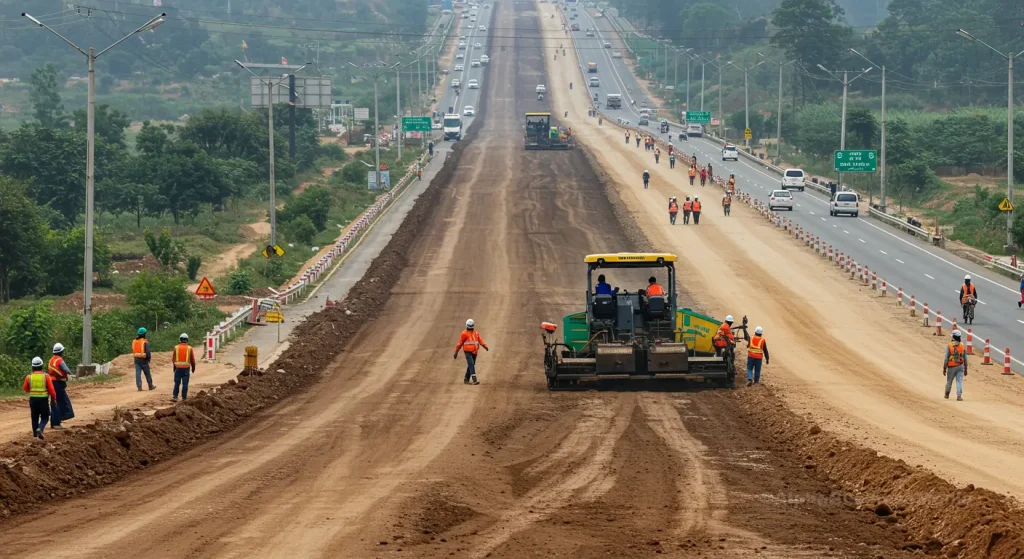
- Modernization of trunk routes: Expedite the completion of the Narayanghat-Butwal section of the highway and bring it up to international standards (multi-lane, high-quality pavement, safety features). Improve road connectivity from Indian border points (e.g. Belakhia)21) to Lumbina.
- Roads of the “Great Lumbini Circuit”: Create a network of well paved, signposted tourist roads connecting Lumbini with Tilaurakot, Ramgram, Devdahi and other important sites. Ensure that these roads are suitable for tourist buses.
- Modernization of local transport: Introduce a fleet of comfortable, reliable and eco-friendly tourist transport vehicles (e.g. electric buses, e-rickshaws for travel within the sites, licensed taxis with fixed fares) plying between GBIA, Lumbini and key points along the route. Address the problems associated with the current use of e-rickshaws in Devdah36, through their standardization and modernization.
- Intelligent traffic management: Implement intelligent traffic management systems, especially during peak seasons, to prevent congestion.
The quality of roads directly impacts the visitor experience and the viability of tourist routes. Difficult, uncomfortable or unsafe travel between sites in the Greater Lumbini area will discourage tourists from completing the entire route, thereby reducing the length of stay and costs. Current condition of some major highways49reflects a systemic problem that must be addressed if the Lumbini development plan is to be successful. Investment in high-quality road infrastructure is therefore not just about providing a physical connection, but about improving the overall visitor experience and making the multi-site pilgrimage route a practical and enjoyable option.
3.1.3. Sustainable Local Public Services and Digital Transformation
Current status and issues:
Nepal faces problems with constant power supply55and reliable internet in non-urban areas.57Digital literacy also varies.59Although mobile penetration is high (96% of households have mobile phones68; 132% of mobile phone connections to the population69), internet penetration is 55.8%69, while access to home Internet in cities (59%) is higher than in rural areas (34%).68
Suggested actions:
- Green Energy and Utilities: Priority provision of reliable, 100% renewable energy supply (solar energy, using Nepal’s potential71) for Lumbini and its tourism infrastructure. Implementation of advanced water management systems (rainwater harvesting, wastewater treatment) and solid waste management systems based on circular economy principles.
- Digital communication: Providing high speed, reliable internet (public Wi-Fi zones, fibre to hotels/key sites) throughout Lumbini and the Greater Lumbini tourist route.
- Smart Lumbini Initiative: Development of an integrated digital platform for tourists:
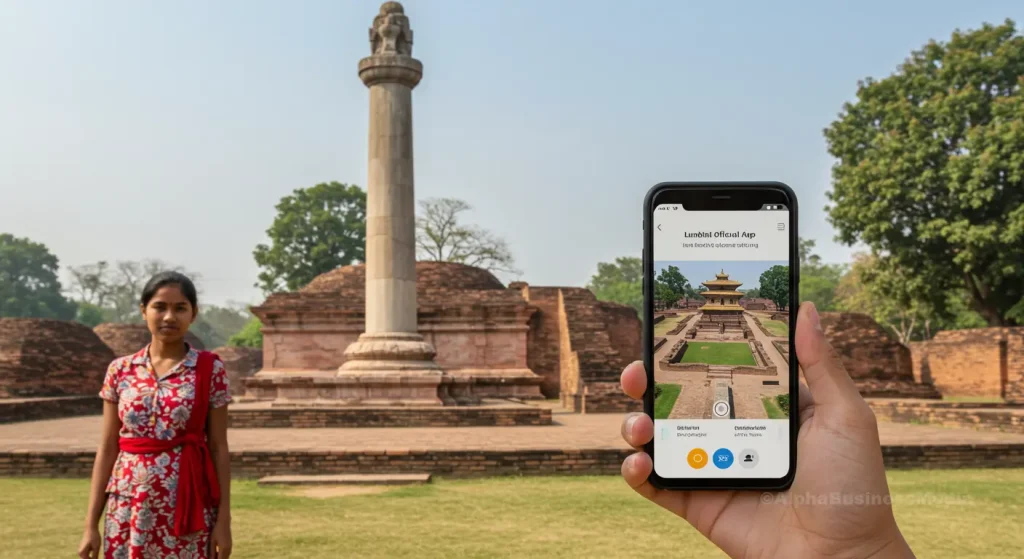
- Lumbini Official App: Information, Interactive Maps, AR/VR for Heritage Sites, Transport/Accommodation/Event Booking Services, Emergency Assistance. Digital ticketing and access control to all facilities. Intelligent parking and traffic management.
- Digital Literacy: Conduct digital literacy programmes for local tourism SMEs and service providers to enable them to use these digital tools.
Lumbini can become a showcase for Nepal’s digital and green aspirations. The successful implementation of the Smart and Green Lumbini project can serve as a national and international model for sustainable and technologically advanced tourism development. This is in line with Nepal’s broader Digital Nepal agenda.73Therefore, priority should be given to investing in the Smart Lumbini initiative, which integrates technology into all aspects of tourism management and visitor services. This could also create new entrepreneurial opportunities for local technologists.
3.2. Pillar II: Improving Customer Service and Product Diversification

3.2.1 Acceleration and Development of Lumbini Master Plan
The 1978 Kenzo Tange Master Plan covers an area of 1 x 3 sq. miles divided into the Sacred Garden, Monastery Area and Lumbini New Village. It is 70% complete but key elements such as administrative buildings, river control, dispensary, souvenir shop are still incomplete. Initial cost $55 million, spent about 7 billion Nepali rupees, pending payments of 1.3 billion Nepali rupees, outstanding work of 3 billion Nepali rupees.5
Suggested for inclusion of Tilaurakot, Ramgram, Devdahi for integrated development.4
The initial master plan provides a solid foundation, but its slow progress and outdated estimates are problems. The GLMP concept is critical to expanding the tourism offering beyond a single site.
Suggested actions:
- Secure funding and expedite completion of the remaining 30% of Kenzo Tange’s original Master Plan, prioritizing key visitor attractions and conservation elements.
- To formally adopt and resource the Lumbini Grand Master Plan, preparing detailed development plans for Tilaurakot, Ramgram, Devdahi and other ancillary sites, ensuring archaeological integrity and sustainable tourism infrastructure.
- Integrate modern sustainable design principles and visitor flow management methods into all new developments.
- Implementation of the master plan requires a renewed governance and funding model. The ten-year delay in completing the original plan suggests problems with funding, project management, or political will. Simply proposing a new, more ambitious plan without addressing these underlying issues will lead to similar stagnation. It is therefore necessary to establish a high-level, autonomous “Greater Lumbini Development Authority” with dedicated funding sources (including international aid, private investment, and government appropriations) and clear implementation mandates to oversee both the completion of the old plan and the implementation of the new one.
3.2.2. Modernization and Diversification of Accommodation Facilities
Existing hotels in Lumbini area.79Need for quality and variety. The trend towards eco-lodges and community guesthouses in Nepal.81
Current accommodation facilities may not meet the diverse needs and quality expectations of a much larger and more international tourist base.
Suggested actions:
- To zone areas for different types of accommodation (luxury hotels, mid-range hotels, budget guest houses, health retreats, monastery style accommodation) in Lumbini New Village and suitable locations in the Greater Lumbini area.
- To encourage investment in high-quality, internationally branded and eco-certified hotels and resorts.
- Support the development of authentic community tourism (guest houses) in surrounding villages, ensuring benefit sharing and cultural integrity.85
- To promote the development of wellness and meditation retreats offering long-term stay programs.
Accommodation should be an integral part of the Lumbini experience, not just a place to sleep. For pilgrims and spiritual tourists, the setting of their stay makes a significant contribution to the overall experience. Health tourists are clearly looking for an environment that supports their goals. Therefore, accommodation design that reflects Buddhist aesthetics, offers a tranquil environment, incorporates sustainable practices, and provides spaces for meditation/reflection should be encouraged. Such thematic alignment can be a key selling point.
3.2.3. Development of Supervised Pilgrimage Routes and Thematic Programs
The Great Buddhist Route Lumbini-Tilaurakot-Ramgram-Devdaha.4Potential for peace tours, meditation retreats, courses in Buddhist philosophy, cultural immersion with local Tharu communities and more.33
Moving from single site visits to offering structured, multi-day itineraries will significantly increase visitor engagement and length of stay.
Suggested actions:
- Develop and clearly mark various pilgrimage routes (e.g. the ‘Footsteps of Buddha’ route).
- Create theme tours: “Buddhist Art and Architecture”, “Meditation and Mindfulness in Lumbini”, “Living Buddhist Traditions (Exploring the Monastic Zone)”, “Archaeological Discoveries of the Shakya Kingdom”.
- To collaborate with international Buddhist organizations and academic institutions to offer accredited courses and seminars.
- Develop cultural exchange programs with local communities.
It is important to consider the different levels of spiritual and intellectual involvement of visitors. Visitors will range from devout pilgrims seeking a profound religious experience to curious cultural tourists interested in history and philosophy. A one-size-fits-all approach will not work. Therefore, a multi-level spectrum of experiences should be offered – from basic excursions to intensive meditation retreats and scientific programs – to suit a variety of interests, time commitments, and budgets.
3.2.4. Improving the Interpretation of Objects, Visitor Amenities and Safety
Improvement of site interpretation (museums, signage, guides), visitor centres, rest areas, sanitation, accessibility for disabled visitors and safety. Tilaurakot Museum exists but could be improved.31
A world-class destination requires first-class visitor services to ensure comfort, understanding and safety.
Suggested actions:
- Modernize existing museums and develop new interpretation centers using modern technologies (interactive displays, AR/VR).
- Install multilingual signs at all sites.
- Train and certify a corps of knowledgeable, multilingual local guides.
- Provide clean and accessible toilets, drinking water points and shaded rest areas.
- Implement robust safety measures and emergency response protocols.
- Improve accessibility for visitors with disabilities.
Professionalisation of tourism services as a factor in job creation. Improving visitor amenities and services requires trained staff. This creates local employment opportunities in guiding, hospitality, facility maintenance, security and retail. It is therefore necessary to link infrastructure development with vocational training programmes for local youth, with a particular focus on skills relevant to the tourism and hospitality industry.
3.3 Pillar III: Strategic Global Marketing and Partnerships

3.3.1. Target Marketing for Key Source Markets
India, China, Sri Lanka, Thailand, Myanmar, Vietnam, South Korea, Japan (traditional Buddhist countries9). Also Western countries for cultural/spiritual/health tourism.81
Marketing efforts must be tailored to the specific motivations and travel patterns of these diverse source markets.
Suggested actions:
- Develop separate marketing campaigns for (a) the Buddhist pilgrimage markets, (b) the heritage tourism markets, and (c) the health/spiritual retreat markets.
- Use digital marketing, social media and partnerships with Buddhist organizations, spiritual leaders and specialized travel media.
- Organize international roadshows, study tours for tour operators and media from target countries.
- Address specific concerns in key markets such as accessibility and safety for Indian tourists20, ease of access for Chinese tourists.88
The “China opportunity” requires a delicate approach. Although China has a large Buddhist population and has declared 2025 “Visit Nepal Year”89, the actual number of arrivals was lower than expected.88High airfares and potentially locked-in travel packages limit wider economic benefits.88Therefore, it is necessary to work with Chinese tour operators to develop more inclusive tour packages that will benefit local Nepali businesses. Work to improve direct flights and competitive airfares. Focus on the quality of the experience, not just volume.
3.3.2. Use of National and Regional Advertising Platforms
“Visit Nepal Year 2025”89, “Visit Pokhara Year 2025”91, “Year of Tourism of Koshi Province 2082”94, “Public Association 2025”.85
These existing and planned campaigns provide broader publicity support in which Lumbini can be prominently featured.
Suggested actions:
- Ensure that Lumbini and the Lumbini Great Buddhist Circuit become central components of all national and relevant provincial tourism campaigns.
- Develop joint promotional packages linking Lumbini with other key Nepalese destinations (e.g. Pokhara, Chitwan, Kathmandu).
Cross-promotion synergies to enhance Nepal’s overall attractiveness as a destination. Promoting Lumbini in conjunction with Nepal’s other diverse offerings (adventure, nature, other cultural sites) can attract tourists with a variety of interests, potentially increasing overall length of stay and spending in the country, not just in Lumbini. Marketing narratives therefore need to be developed that position Lumbini as a key spiritual/cultural anchor within the broader, multi-faceted Nepali tourism experience.
3.3.3. Building Strategic Alliances
International airlines, major tour operators specializing in pilgrimage/cultural tours, international hotel chains, Buddhist organizations worldwide, UNESCO, development finance institutions (DFIs such as IFC, ADB for sustainable projects95).
Transforming Lumbini requires a collaborative effort that goes beyond local capabilities.
Suggested actions:
- Actively seek partnerships with international airlines to develop direct routes to GBIA.
- To attract global tour operators to include Lumbini itineraries in their South Asian programs.
- Attract investment from reputable international hotel brands.
- Collaborate with international Buddhist federations and societies to promote and develop content.
- Seek technical and financial assistance from UNESCO and DFI for heritage conservation and sustainable infrastructure development.
Airline partnerships are key to international growth. Without direct and affordable international air links to GBIA, the potential to attract large volumes of international pilgrims and tourists remains severely limited. Airlines need a compelling business case for launching new routes. A dedicated task force should therefore focus on developing airline network capacity, armed with market data, incentive packages and a clear vision for passenger growth.
3.3.4. Digital Promotion and Modern Branding
Nepal is pushing towards digitalization.73High level of mobile penetration.69
Modern tourism marketing relies heavily on digital channels.
Suggested actions:
- To develop a world-class multilingual tourism portal for Lumbini and the Lumbini Greater Buddhist Circuit, featuring virtual tours, interactive maps, booking capabilities and rich content.
- Implement targeted social media campaigns and digital advertising in key source markets.
- Collaborate with international travel bloggers, vloggers and spiritual opinion leaders.
- Proactively manage your online reputation (reviews, feedback).
- Brand Lumbini not just as a historical place, but as a living centre of peace, wisdom and spiritual renewal.
User-generated content and digital storytelling as authentic marketing. Today’s travelers, especially the younger generation and cultural explorers, often trust peer reviews and authentic stories more than traditional advertising. Therefore, encourage and facilitate visitors to share their experiences online. Run contests, collaborate with content creators, and highlight personal transformation stories related to Lumbini. This can create a powerful and credible organic marketing effect.
3.4. Pillar IV: Sustainable Development and Community Empowerment
3.4.1. Promotion of Community Based Tourism (CBT) and Local Entrepreneurship
Growing Attention to CBT in Nepal.85The SME sector is vital to Nepal’s economy but faces funding challenges.95
Sustainable tourism requires that local communities directly benefit and are empowered as stakeholders.
Suggested actions:
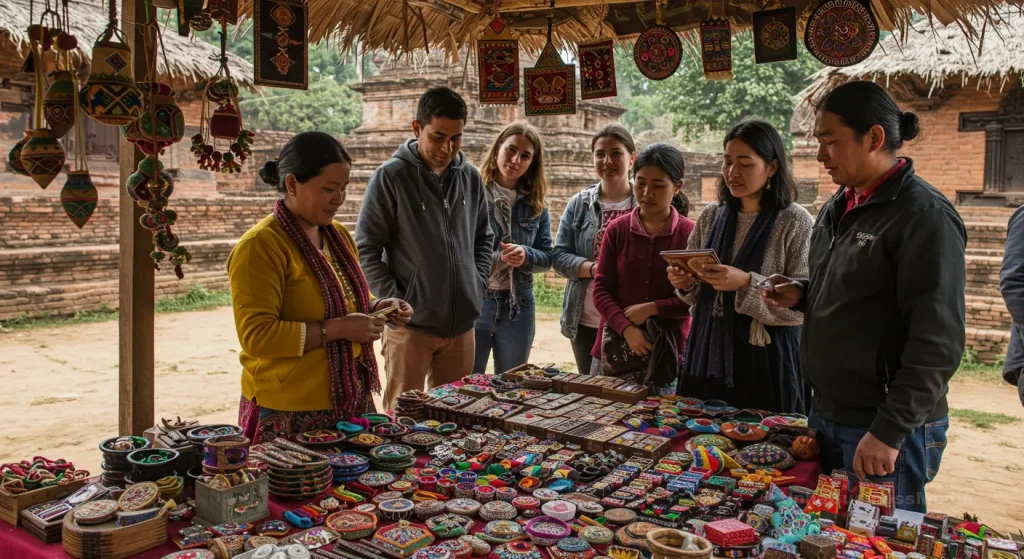
- To promote CBT initiatives (guest houses, local food traditions, handicraft markets) in villages around Lumbini and Greater Lumbini sites.
- Provide training and access to microfinance/loans for SMEs98for local entrepreneurs in the tourism services sector.
- Ensure fair trade practices and direct market access for local artisans and producers.
- Involve community representatives in tourism planning and management bodies.
Community-based tourism (CBT) is a tool for authentic experiences and poverty reduction. CBT offers visitors more genuine cultural interactions and ensures that tourism revenues directly impact local livelihoods, contributing to poverty reduction and reduced out-migration. This is in line with Nepal’s broader development goals.37It is therefore necessary to integrate the development of CBT into the core tourism strategy of Greater Lumbini, not as an add-on, but as a fundamental component of its value proposition and sustainability.
3.4.2. Integrating Green Finance and Sustainable Operations
Nepal’s commitment to green development, renewable energy (hydropower, solar power71) and sustainable finance (Green Finance Taxonomy, Green Bonds107). Banks such as NMB and Global IME offer green loan products.117
Lumbini’s development as a global destination must adhere to sustainability principles to protect its serene environment and meet the expectations of modern, conscious travellers.
Suggested actions:
- Introduce mandatory green building standards for all new tourism infrastructure.
- Promote the use of renewable energy (solar) for hotels, facilities and transport.
- Implement comprehensive measures for waste management, water conservation and pollution control.
- Encourage purchasing of food and materials from local suppliers.
- To seek green certificates for tourism enterprises.
- Direct green finance108for sustainable projects in Lumbini.
Lumbini as a model for ‘green pilgrimage’: Positioning Lumbini as a leader in sustainable pilgrimage can create a powerful global brand image, attracting eco-conscious tourists and potentially opening up access to specialist green/impact investment funds. This is in line with the Buddha’s teachings of compassion for all living beings and respect for nature. A ‘Green Lumbini’ charter should therefore be developed and promoted, outlining commitments to sustainable development and inviting visitors to participate in conservation activities. This could become a unique selling proposition.
3.4.3. Skills Development and Local Workforce Engagement
Need for skilled labor in Nepal’s tourism and hospitality sector. Importance of financial literacy for entrepreneurs.123
A larger and more complex tourism industry requires a well-trained local workforce.
Suggested actions:
- Establish vocational training centres in Lumbini region in hospitality, guiding, sustainable tourism practices and digital skills.
- Partner with hotel chains and tourism companies to offer internships and on-the-job training.
- To promote employment of local population in all enterprises related to tourism.
- Include financial literacy and business management training for SMEs.
Long-term sustainability depends on building local capacity. Relying on external expertise or labour is not sustainable in the long term. Investment in local human capital ensures that the benefits of tourism remain in the community and that service quality can be continually maintained and improved. It is therefore necessary to make local skills development a core component of all tourism investment and development projects in Lumbini.
3.4.4. Preservation of Cultural and Natural Heritage
Risks of overtourism and commercialization affecting heritage sites.129The need to protect archaeological integrity.31
The very assets that make Lumbini attractive are vulnerable unless development is carefully managed.
Suggested actions:
- Strict adherence to UNESCO World Heritage site guidelines.
- Conducting capacity studies and visitor management plans for sensitive areas.
- Invest in archaeological research, conservation and protection of sites throughout the Greater Lumbini area.
- To raise awareness among tourists and local people about heritage conservation.
The balance between development and conservation is an ongoing process. As visitor numbers increase, pressure on heritage sites and the local environment will increase. Conservation cannot be an afterthought; it must be an ongoing, adaptive process. Therefore, a percentage of tourism revenue should be allocated directly to a dedicated Lumbini Heritage and Greater Lumbini Sites Conservation Fund, providing resources for ongoing monitoring, maintenance and research.
4.Overcoming Difficulties and Reducing Risks
4.1 Addressing Common Problems of Nepal Tourism Sector
Apart from Lumbini’s specific problems, overall tourism in Nepal suffers from poor national road infrastructure.18, unstable air traffic and inefficient operation of new international airports such as PIA and GBIA.24TIA congestion and modernization are also causing disruptions.24
Problems with policy clarity, consistency of implementation and bureaucratic red tape impact investment and development.140Political instability can also be a deterrent.140
The success of Lumbini is closely linked to the overall health and perception of Nepal’s tourism sector. National level issues will inevitably impact Lumbini.
Mitigation strategies:
- Lobbying at the national level for the priority development of tourism infrastructure, especially key highways and the efficient operation of international airports.
- Promoting stable, long-term tourism policies and simplified approval procedures for tourism investments.
- Improving interdepartmental coordination in matters of tourism development.
Lumbini can be a catalyst for national tourism reform. The high profile of the Lumbini transformation project and its significant economic potential can provide impetus for broader reforms in Nepal’s tourism sector. Success in Lumbini can demonstrate best practices and create momentum for change. Therefore, the Lumbini development plan should be positioned not just as a standalone project, but as a model for future tourism development in Nepal, advocating for policy and infrastructure improvements that will benefit the entire sector.
4.2. Mitigating the Consequences of Inclusion in the FATF Grey List
Nepal was placed on the FATF grey list in February 2025 due to deficiencies in its AML/CFT system.24
Damage to international transactions, financial reputation, reduction in remittances, reduction in FDI, increase in transaction costs for FIs, negative impact on tourism and trading partnerships.24
Inclusion on the grey list could discourage international investors and partners, and complicate financial transactions for tourism companies and tourists themselves.
Mitigation strategies:
- Communicate transparently Nepal’s commitment and action plan to exit the grey list.
- Strengthen AML/CFT compliance in the tourism sector (e.g. for hotels, tour operators processing large transactions).
- Work with financial institutions to ensure uninterrupted payment channels for tourists despite increased scrutiny.
- Emphasize that the grey listing is a systemic issue that is being addressed, and not a specific issue of safety or the quality of the tourist experience in Lumbini itself.
There is an opportunity to improve financial transparency in tourism. Addressing FATF-related issues requires strengthening financial governance. This could be an opportunity to promote more formal and transparent financial practices in the tourism sector, reducing the share of the shadow economy (estimated at 51% of Nepal’s GDP)147) and improving tax collection on tourism revenues. The momentum from FATF compliance should therefore be used to encourage digital payments, formal business registration and transparent accounting among tourism SMEs, potentially linking this to access to finance or other support programmes.
4.3. Managing Geopolitical Influences and Ensuring Long-Term Stability
Nepal is located between India and China.26China’s “Visit Nepal Year 2025” initiative has geopolitical overtones and is aimed at justifying infrastructure investments such as the PIA.89India’s historical influence and concerns about Chinese projects.89Broader global geopolitical risks impacting investment sentiment.162
Large-scale development in a strategically sensitive location such as Lumbini could attract geopolitical interest. Ensuring that development serves Nepal’s long-term interests and remains stable despite regional power dynamics is critical.
Mitigation strategies:
- To maintain a balanced foreign policy by welcoming investment and cooperation with all friendly countries based on Nepal’s development priorities.
- Ensure transparency of all large scale investment deals related to Lumbini.
- Give priority to projects that bring demonstrable economic and social benefits to Nepal and the local Lumbini community.
- Focus on building broad international stakeholder support for the development of Lumbini as a global peace and heritage site beyond bilateral geopolitical considerations.
Lumbini can become a zone of peace and international cooperation. Lumbini’s inherent identity as the birthplace of Buddha and a symbol of peace can be used to position it as a neutral site for international cultural and spiritual exchange, thereby depoliticizing its development to some extent. Therefore, it is necessary to actively promote Lumbini as a venue for international peace conferences, interfaith dialogues, and cultural festivals involving various countries. This can help create global interest in its protection and sustainable development, while shielding it from bilateral tensions.
5. Investment Roadmap and Projected Economic Impact
5.1 Identifying Key Investment Opportunities
Areas:
- Infrastructure: GBIA modernization and operation, road networks, local transport, smart city solutions, renewable energy, waste/water management. (Based on Section 3.1)
- Hotel business: Luxury and theme hotels, wellness/meditation retreats, mid-range and budget accommodation, eco-lodges, community guesthouse upgrades. (Based on Section 3.2.2)
- Services and experiences for visitors: Museums, interpretation centres, guide training, digital tourism platforms (apps, AR/VR), event organisation (festivals, conferences). (Based on Sections 3.2.3, 3.2.4, 3.3.4)
- SME Development: Support for local crafts, catering, transport and other small businesses related to tourism. (Based on Section 3.4.1)
These are specific areas where private and public investment is needed to implement the transformation plan.
A phased approach to investment, aligned with the absorptive capacity of the market, is appropriate. Trying to develop everything at once can lead to misallocation of resources and oversupply. Investments should be made in stages, starting with critical enabling infrastructure (GBIA operations, access roads) and gradually expanding to higher-end offerings as demand increases. Therefore, a 5-year, 10-year and 15-year investment roadmap should be developed with clear priorities, funding targets and milestones for each stage.
5.2. Potential of Public-Private Partnership (PPP)
Nepal has a legal framework for PPPs and they are seen as an important tool for infrastructure development.37
Given the scale of investment required, PPPs will be important.
Proposed PPP models:
- Airport operations and route development at GBIA.
- Development and management of large accommodation facilities and convention centres.
- Smart city solutions and digital infrastructure.
- Toll roads or premium transport services.
Clear legal frameworks and risk mitigation are key to attracting private investors to PPPs. Private investors in PPPs seek clear rules, fair risk sharing, and confidence in long-term policy stability. Nepal’s challenges with policy consistency140may become a deterrent. It is therefore necessary to develop a special PPP framework for Lumbini tourism projects that offers attractive terms, transparent processes and reliable guarantees to reduce political and regulatory risks.
5.3. Projected Economic Impact: Multi-Billion Dollar Dividend
Metrics:
- Direct income: Increase in tourists’ expenses on accommodation, food, transportation, entrance tickets, souvenirs, and guide services.
- Indirect income: Growth in related industries (agriculture, construction, utilities) that support the tourism sector.
- Induced income: Expenditures of those directly and indirectly employed in the tourism sector.
- Income from foreign currency: Critical to Nepal’s balance of payments.149
- Job creation: Direct employment in hotels, airlines, tour operators; indirect employment in supporting sectors.151
- Contribution to GDP: Increasing the share of tourism in national and provincial GDP (current contribution of national tourism ~6-6.7% of GDP130).
Forecasting Methodology:
- Scenario projections (conservative, moderate, optimistic) based on target visitor growth (e.g. target 3-5 million international visitors to Lumbini annually by 2035, up from ~0.4 million currently including India).
- A comparative analysis of the economic impact of similar global pilgrimage/cultural sites.
- Taking into account the increase in length of stay and expenditure per tourist through product diversification and the Greater Lumbini Circle.
Illustrative forecast: If Lumbini attracts 3 million international visitors annually, with an average expenditure of $500 per visitor (conservatively), the direct revenue would be $1.5 billion. Multiplier effects could significantly increase the overall economic impact.
Lumbini has the potential to become an engine of economic growth for Western Nepal. The economic benefits of a transformed Lumbini will spread beyond the immediate site to the wider Lumbini Province and Western Nepal, creating a new economic hub, diversifying the economy away from reliance on agriculture or remittances, and potentially reducing regional disparities. The development plan should include regional economic integration strategies to ensure that surrounding communities and provinces also benefit from improved infrastructure, supply chain linkages, and employment opportunities.
5.4 Estimated Return on Investment (ROI) for Strategic Investments
While a full financial model is beyond the scope of this study, the report will highlight that investments in key enabling infrastructure (GBIA commissioning, key access routes) and high-quality, differentiated visitor experiences (e.g. wellness retreats, iconic cultural programs) are likely to deliver the greatest returns by unlocking pent-up demand and attracting higher-spending tourists.
First-mover advantage for investors in niche segments. As Lumbini grows in global stature, there will be significant demand for specialized services (e.g. luxury wellness retreats, accredited Buddhist study programs, ecotourism) that are currently underserved. Investors who establish a strong presence in these niches early on will be able to capture significant market share. The investment strategy should actively target investors with expertise in these high-potential niche segments.
6. Conclusion: Revealing Lumbini’s Destiny as a Leading World Tourist Destination
Joint Imperative
Local communities: To actively participate in the development of tourism, develop entrepreneurship and act as custodians of the heritage and hospitality of Lumbini.stomers and ensuring sustainable development of the industry for many years to come.
Government of Nepal: Prioritize policy reforms, ensure political stability, accelerate the creation of critical infrastructure, champion the Lumbini vision internationally, and create an investment-friendly environment. Proactively address FATF-related issues.
Lumbini Development Fund and Local Authorities: Lead the effective implementation of master plans, ensure heritage conservation, promote community engagement and maintain high operational standards.
Private sector (domestic and international): Use investment opportunities in the hotel business, services and infrastructure. Implement best international practices and innovations.
International partners (UNESCO, FRI, Buddhist organizations): Provide technical assistance, funding for sustainable development and heritage conservation, and support for global promotion.
[elementor-template id=”1573″]
Source used
- Lumbini, World Tourism Destination In 2025 – myRepublica
- Unlocking Religious Tourism in Lumbini – Nepal Economic Forum
- www.adventurevisiontreks.com
- Lumbini Master Plan – Saarang
- The Masterplan – Lumbini Social Service Foundation (LSSF)
- Buddhism – Wikipedia
- Buddhist Countries 2025 – World Population Review
- Faith Based Tourism Market Size, Growth and Forecast 2032 – Credence Research
- Lumbini Records Tourist Arrival of 1.17 Million in 2024
- Over 1.1 million visit Lumbini in 2024 – The Rising Nepal
- Over 500,000 foreign tourists visit Nepal in five months
- Total Number of Tourist arrival in Nepal in year of 2025 is 5,01,264
- Number of Tourist Arrival in Nepal each month of year 2025
- Tourist arrival drops in May – The Rising Nepal
- Over 500000 foreign tourists visit Nepal in five months – The Himalayan Times
- Nepal sees record 116490 tourists in April, signals robust tourism recovery
- 116,000 foreign tourists visit Nepal in April marking record high …
- Insulate Tourism Sector From Setbacks – The Rising Nepal
- Record-Breaking Tourist Arrivals in Nepal: April 2025 Marks Highest Ever Influx of Foreign Visitors | NEPSE Trading
- Declining visitor numbers threaten peak tourism season – The Kathmandu Post
- Lumbini getting more tourists through Belahia – The Kathmandu Post
- Number of tourists coming to Lumbini by land growing – The Rising Nepal
- Discussions on Greater Lumbini Master Plan begin – The Rising Nepal
- Floods, airport upgrade cut GDP growth by 1 percent – The Kathmandu Post
- 2025 Monitoring Report – the United Nations
- Karnali Corridor: Nepal’s Strategic Crossroads between China and India – myRepublica
- Investors, hoteliers left waiting as flights vanish from Bhairahawa …
- Efforts underway for full operation of GBIA – myRepublica
- Keeping The Faith: Religious Pilgrimages Are Back In A Big Way – Religion Unplugged
- Religious Tourism to experience significant growth through 2031
- Tilaurakot: Visit Ancient City of Kapilvastu in Nepal
- Tilaurakot – Wikipedia
- RAMAGRAMA STUPA – Lumbini Development Trust
- ‘Mega Planning’ in Ramagrama – Meronews
- Fostering Tourism Potentials in Devdaha, Lumbini: Some Critical Remarks – SciSpace
- Tourism development planning in local level government: A proposal for Devdaha Municipality, Nepal
- Nepal’s potential for blended finance: A country-level study – Southern Voice
- US Religious Tourism Market Size & Outlook, 2024-2030
- Billions embezzled in Pokhara airport works, probe finds – The Kathmandu Post
- The Unfolding Sorry Saga of Nepal’s China-built Airport at Pokhara …
- Pokhara International Airport Scandal: Uncovering Foul Play in China-Loaned BRI Project
- Pokhara airport: China’s soft power, Nepal’s hard landing – The Kathmandu Post
- TIA expansion work achieves 60 percent progress
- Rs4.15 billion allocated to develop TIA as boutique international …
- Tribhuvan International Airport Enforces Reduced Nightly Flight Hours for Enhancement Project – Breakfree Adventures
- InCrisp: TIA undergoing upgradation. What’s being updated and added?
- Flights to and from TIA severely disrupted due to dense haze – The Himalayan Times
- Piplamod section of Nagdhunga-Naubise road to partially close for 15 days
- Never complete – The Kathmandu Post
- Thai AirAsia to resume regular flights to Bhairahawa from October 26 – myRepublica
- 6,800 international passengers at Gautam Buddha International …
- Gautam Buddha International Airport to operate at full capacity soon …
- $215.96 million new Pokhara airport sees first passenger flight
- Parliamentary Report Reveals Widespread Corruption in Pokhara Regional International Airport Project – epardafas.com
- An analysis on barriers to renewable energy development in the context of Nepal using AHP
- Scaling Renewable Energy Program in Low Income Countries (SREP) – Climate Investment Funds (CIF)
- Promoting Sustainable Financial Services through Cashless Transactions: An Empirical Analysis of Small and Medium Enterprises (SMEs) in Nepal
- Nepal’s Cashless Future: The Rise of Digital Payment Systems – Sunway College
- The Impact overview of Financial Literacy in Nepal – Bankingkhabar
- Baseline Survey on Financial Literacy in Nepal
- STATE OF FINANCIAL INCLUSION IN NEPAL – Issuu
- Financial Literacy Survey of the National Bank: Half of young people aged 13 to 15 say that they partially know how to manage their money
- Result of the 2022 National Financial Literacy and Financial Inclusion Survey
- How UNESCO is reaching marginalized communities in Nepal with literacy
- Reading The Past, Writing The Future:A Report On National Literacy Campaign And Literate Nepal Mission – UN Digital Library Nepal: View Document
- Interaction Program on Current Issues & Financial Literacy at Chitwan and Birgunj
- Nepal Rastra Bank – Alliance for Financial Inclusion
- Nepal 2019 – Unicef
- Digital 2025: Nepal — DataReportal – Global Digital Insights
- Nepal: Population Vulnerability and Resilience Profile – U.S. Census Bureau
- Nepal and small-scale renewable energy | EBSCO Research Starters
- Sustainable energy solutions: Hydropower vs solar for green hydrogen production
- Nepal’s central bank proposes peer-to-peer lending to support MSMEs growth
- Digital Financial Services in Nepal – International Finance Corporation
- FY 2023/24 – Nepal Rastra Bank
- CONSULTATIVE DOCUMENT ON PEER-TO-PEER LENDING AND CROWDFUNDING Nepal Rastra Bank
- (PDF) Crowdfunding Prospects in Nepal – ResearchGate
- Nepal: Fifth Review Under the Extended Credit Facility Arrangement and Request for Modification of a Performance Criterion—Supplementary Information in – IMF eLibrary
- 11 Best Hotels in Lumbini, Nepal – Agoda.com
- Hotel Lumbini International BOOK Bodhgaya Hotel – MakeMyTrip
- Visit Nepal 2025: Trekking, Culture & Travel Guide
- Nepal Travel Trends 2025: What’s New for Trekkers and Tourists
- Green Tourism in Nepal: Leading the Way in Sustainable Travel for 2025 – Binita Karki
- Revolutionizing the Skies: The Rise of eVTOLs and a Greener Future
- Community Connect 2025 – Nepal Tourism Board
- Community Connect 2025: Unveiling Nepal’s Hidden Gems Through Responsible Tourism
- Community-Based Tourism in Nepal: A Sustainable Travel Approach – Footprint Adventure
- Arrivals of Chinese tourists in Nepal falls short of expectations despite ‘Visit Nepal Year’ efforts – myRepublica
- China’s ‘Visit Nepal Year 2025’: Tourism Drive or Geopolitical …
- Nepal Visit Year 2025 Officially Announced – epardafas.com
- Experience the Exciting ‘Visit Pokhara 2025’ Campaign – Nepal Hiking
- Nepal’s Tourism Capital Pokhara Gears Up for ‘Visit Pokhara 2025’ to Attract 2 Million Tourists from Across Asia and Beyond: Here’s more you need to know – Travel And Tour World
- New Impetus To Boost Pokhara Tourism – The Rising Nepal
- Promotion of tourist destinations underway in Koshi – The Rising Nepal
- Blended Finance for SME Growth: Evidence from Nepal – DAI Blogs
- Nepal SREP Small Hydropower Finance Program – Climate Investment Funds (CIF)
- Nepal Signs Landmark Green Bond Deal to Drive Sustainable Growth
- Changing Structure of Concessional Loan in Nepal – Nepal Journals …
- Government Funds: Loan Support for Entrepreneurs in Nepal (FY 2075/76)
- Subsidized Loans: Continuation Announced, But Budget Shortage Remains
- Interest-free loans draw youths to entrepreneurship – The Kathmandu Post
- Government Finally Defines “Startup” Business in Nepal – Khatapana
- Shortlisted for Nepal Government’s Startup Loan? Here’s What to Do Next – Khatapana
- Government Funds: Loan Support for Entrepreneurs in Nepal (FY 2075/76)
- Effectiveness of Women Subsidy Loan in Promoting Women Entrepreneurship in Banke District, Nepal
- ENERGY SECTOR SYNOPSIS REPORT 2024
- Nepal Budget Statement 2025-26 – T.R. Upadhya & Co.
- Green Finance Taxonomy – Nepal Rastra Bank
- NRB’s forward-thinking policy on green finance taxonomy – myRepublica
- Unpacking Climate Finance in Nepal: Gaps, Challenges and Opportunities – AWS
- Navigating Climate Finance: Nepal’s Challenges and Pathways to Resilience – myRepublica
- Nepal’s first green bond launches with $60 million from BII, IFC and MetLife – Impact Alpha
- NMB Bank Pioneers Nepal’s First Green Bond, Advancing Sustainable Finance
- Nepal’s First Public Issuance of Green Bond: NIFRA Secures Regulatory Approvals with GGGI and KOICA’s Support
- An Imperative on Green Financing in the Perspective of Nepal – ResearchGate
- Nepal’s energy sector rocked by ‘take-and-pay’ budget policy – The Kathmandu Post
- Banking on sustainability: Global IME weaves ESG values into the …
- Training on Energy-Efficient Building for Valuators in Partnership with Global IME Bank Ltd.
- NMB Green Savings
- Nabil Bank launches ‘Nabil Eco-Friendly Business Loan’ « Nepal …
- NMB BANK
- Nabil Sustainable Banking
- Behavioral factors driving stock market investment decisions among individuals in Nepal
- (PDF) Behaviour Bias and Investment Decision in Nepalese Investors – ResearchGate
- Financial literacy and investment decisions of individual investors in the Nepal Stock Exchange – Research Repository – University of Gloucestershire
- NRB makes it mandatory for BFIs to invest in financial literacy programs – myRepublica
- Global Money Week: What programs is the Securities and Exchange Board of Nepal doing for financial literacy? – Insurance Khabar
- Financial Literacy and Digital Payment System in Nepal – ResearchGate
- Effectiveness and Significance of Nepal Tourism Years – ResearchGate
- Tourism in Nepal – Wikipedia
- NEPAL HOTEL – Hotel Association Nepal
- [suspicious link removed]
- PRIA to begin regular int’l flights after 27 months – myRepublica
- (PKR Departures) Pokhara Airport Departures – FlightStats
- VNPK Pokhara Airport (VNPK) – FlightAware
- ‘Airports left underutilized, Rs 1.8 trillion investment at risk’ « Khabarhub
- FORESIGHT AFRICA – Brookings Institution
- More investigation required to unearth Pokhara airport-related irregularities
- Tourism industry is in trouble, but government’s response is tepid – The Kathmandu Post
- 2024 Investment Climate Statements: Nepal – State Department
- Investment Climate in Nepal in the Changing Geopolitical Dynamics in the Himalayas: Policies, Institutions, and Challenges
- [suspicious link removed]
- FIU-Nepal Newsletter (May, 2025) – Issue IV
- AML and Terror Financing Risks As Nepal Returns to FATF Grey List
- Action Plan For Exiting fatf Grey List – The Rising Nepal
- Nepal’s greylisting by FATF: A wake-up call for systemic reforms – The Himalayan Times
- Nepal’s informal economy estimated at 51% of GDP, global average rests at 11.8%
- Mapped: The Size of Each Country’s Shadow Economy – Visual Capitalist
- Economic Survey 2023/24
- IMF Executive Board Completes the Fourth Review of Nepal’s Extended Credit Facility
- THE VALUE OF AIR TRANSPORT TO NEPAL – IATA
- IFC’s $56-Million Investment in Global IME Bank to Bolster Gender and Climate Financing in Nepal
- Expanding Access to Finance for Small and Medium Enterprises: An Analysis of Demand and Supply Side Constraints of Nepal
- Exploring SME Financing Facilities in Nepal
- “Small and Medium Enterprises Are the Backbone of the Economy; There Is No Major Credit Issue in This Sector” – NRB Executive Director – Banking Samachar
- What Changing Face of Leadership at FNCCI Means – B360 – Business 360°
- Foneloan – Reshaping Digital Lending in Nepal – Blogs
- Giving start-ups a head start | Nepali Times
- Consultation on Responsible Business Conduct and Competition in Supply Chains – International Labour Organization
- 116568-WP-Feb-2014-SEDF-II-Program-Completion-Evaluation-PUBLIC.txt – World Bank Documents and Reports
- NIMB SME Loans Nepal Guide: Best Business Financing – ICT Frame
- Global Economic Outlook: May 2025 | S&P Global
- 2025 global economic outlook: momentum and uncertainty | EY – US
- How Tariffs and Geopolitics Are Shaping the 2025 Global Economic …
- Shifting ‘superfundamentals’ shake up global economic outlook
- Top Ten Global Risks for 2025 • Stimson Center
- Global Supply Chain Disruptions in 2025: Causes, Effects, and Resilience Strategies
- Top geopolitical risks 2025 – KPMG agentic corporate services
- Conflicts to Watch in 2025 amid Global Focus on Trade War | Steptoe
- 2025 global economic outlook – a highly uncertain world